Alongside the revolution in television broadcasting, a similar battle of the airwaves is being waged on the radio. Will this forever wipe away the narrow choices offered by existing stations? Or is it possible to have faith in a revolution being waged from Downing Street? Grant Goddard examines the background to the first franchise application in London and looks at the way ahead for both winners and losers.
It was a little after 6am when Gordon Mac made his first phone call to the Independent Broadcasting Authority [IBA]. This was the long-awaited day when it would be announced whether his station ‘KISS FM’ had won the new Londonradio licence. But, despite an assurance that someone would be at work in the IBA’s Radio Division at this time, a recorded message merely told him to call again during normal office hours.
Mac was bursting to know whether the last seven month’s work making a huge written application to the IBA had been a success. KISS FM had earned an enviable reputation as London’s best dance music station during four years of pirate broadcasting.
But transmissions had been stopped from December ’88, in line with the government’s demands, to try and win the single London FM licence advertised by the IBA.
Mac left home in a hurry and drove across town to the KISS FM office in Finsbury Park. The railstrike had already clogged the streets with traffic, leaving him too much time to ponder the outcome of this crazy licence lottery.
By the time he reached the office just after 8am, the day’s post had already been delivered. The embossed IBA envelope enclosed a two-page letter, but the second sentence said it all: “I am afraid the decision is, for you and your colleagues, a disappointing one.”
Thirty other applicants were opening similarly apologetic letters across the city, but there was one group who could now celebrate in style – ‘London Jazz Radio’ [LJR] had just won the first new city-wide music radio licence since ‘Capital Radio’ in 1973.
The IBA’s press conference that afternoon was a strangely defensive affair. There were not many questions about LJR, but plenty of time was spent discussing why KISS FM had failed to win. Though the IBA refused to elaborate on the relative placings of the 31 losers, KISS FM was definitely in the short-list of five or six, and most probably the runner-up.
The awkward sensitivity shown towards KISS FM’s rejection reflects an awareness that they were certainly the public’s choice for a new London station. KISS FM was the only applicant to have already established a strong awareness among Londoners of its name, its music and its presenters.
The recent success of KISS FM team members Coldcut, Jazzie B, Richie Rich and Derek B in the popcharts has confirmed the station’s role as an important catalyst in the growth of home-produced dance music.
A further embarrassment was caused as this affair was the second occasion in recent years when a carrot has been dangled in front of pirate broadcasters to induce them to quit the airwaves. And the second time the carrot has been unexpectedly pulled away at the last minute.
The first voluntary pirate shutdown happened in 1985 when the Home Office encouraged them to apply for experimental community radio licences. Then, after lengthy prevarication and the receipt of 286 applications, the plan was abandoned.
The second carrot was offered last year with the unveiling of the IBA’s ‘incremental contract’ scheme for 21 new stations. Only those pirates who quit the airwaves before 1 January 1989 would be allowed to apply, so several stations (including KISS FM) duly complied and shut down. So now that the London licence has been awarded to a wholly non-pirate group, it was hardly surprising to see yet another carrot pulled out of the bag and shoved in KISS FM’s face.
“KISS FM put in a very strong application,” admits Peter Baldwin, the IBA’s director of radio. “IBA members felt very strongly that there were a number of applicant groups who could have been offered a contract, and we are seeking the government’s agreement to release additional frequencies so we can broaden the offers to these applicant groups.”
So KISS FM could be given a licence soon as a sort of prize for runners up?
“One has no idea where KISS FM will come in that,” says Baldwin, “but I’m bound to say that, given the government’s attitude towards pirate broadcasting, I think it would be imprudent for anyone to go back on the air if they have an aspiration towards broadcasting [legally].”
But this third carrot sounds equally precarious if it depends on the IBA’s success in evincing government agreement to more stations.
“Two more FM frequencies could be available in a short space of time – six to nine months,” explains Baldwin. “It would be for the government to decide. The IBA’s view is ‘should the listeners of London who haven’t got certain genres of broadcasting have to wait 18 months for that moment to arrive?’”
So the message to KISS FM is: sit tight, don’t do anything stupid (like return to piracy) and, some day soon, you may yet win a licence if we can persuade the Home Secretary of its political expediency.
Back in the KISS FM office, the disappointment of not winning is evident in the grim faces of a small group of station staff and presenters who are answering a stream of phone calls from well-wishers and listeners wanting to know the outcome. Three bottles of champagne sit unopened on the corner of Gordon Mac’s desk, where they remain unnoticed for the next week.
Mac himself is busy supplying quotes to enquiring journalists and does a live phone interview on the BBC London station ‘GLR’ with sympathetic soul DJ Dave Pearce. Some members of the KISS FM team who are not so close to the sharp end of the operation are unenthused by the carrot consolation prize, but Mac understands the need for cautious diplomacy now more than ever.
Seven months have already been spent raising more than £1million in capital, and a five-figure sum has been sunk into the application procedure to date.
A carefully worded press release is prepared, expressing “extreme disappointment” that KISS FM did not win the licence, but backing the IBA’s demand for more frequencies to be allocated to further London stations. KISS FM’s campaign focuses on 104.8 FM which becomes free in November when ‘Radio 1’ vacate their temporary London channel.
KISS FM presenter Heddi still feels the need for more direct action to satisfy the dozens of listeners who have phoned up asking what they can do to help. Over the next weekend, she visits several London clubs and solicits more than 3,000 letters of support addressed to the Home Office demanding the release of further frequencies for stations such as KISS FM. Gordon Mac delivers them personally to Douglas Hurd’s office exactly a week after the IBA’s fatal announcement. No acknowledgement or response is returned.
Mac seems to be treading a fine emotional line between huge personal disappointment at the outcome of several years’ hard work and cautious optimism that a licence still remains within the realms of possibility.
“Whether it takes three months or three years,” he says to GLR, “we will carry on campaigning until we are given the chance to be a legal radio station in London.”
In a more salubrious part of town, champagne bottles are being put to good use. London Jazz Radio’s nine-year campaign for a licence has paid off handsomely, particularly with its development of an all-party parliamentary lobby to argue the merits of its case.
The station’s founder, David Lee, is a 59-year-old jazzmusician whose distinguished career has included TV themes, jingles and the writing of Peter Sellers and Sophia Loren’s 1960 hit ‘Goodness Gracious Me’. He wrote to the IBA suggesting the idea but received a faintly dismissive reply explaining (wrongly, in retrospect) that new legislation would be necessary before such a station could be introduced.
So Lee started on the road for the necessary legislation to be enacted. “I happened to bump into a guy I’d known but hadn’t seen for over 20 years, who was an amateur drummer but also a member of the Gilbey’s Gin family and working as a board member of Grand Metropolitan Hotels.” This was Jasper Grinling, ex-managing director of International Distillers, ex-director of corporate affairs with Grand Met, and now chairman of LJR.
“He happened to know an MP by virtue of his high rank,” continues Lee, “so we asked him and, in a very short time, we had a 14-strong all-party group. I call it my ‘Parliamentary Jazz Band’. Based upon that parliamentary support, we felt we could start to move. We would literally have got nothing without it. It allowed us to get the ear of people of reason.”
The “people of reason” Lee reached included the Home Secretary himself. Before the award of the licence, Lee admitted: “I have great admiration for Douglas Hurd and, if it hadn’t been for his understanding, we wouldn’t be in the position we are today.”
“He was one of the first people to realise that it is quite wrong for a place the size of London not to have a station to represent so large a minority. He realised it and made sure those ‘people who know’ realised it.”
Indeed, Hurd on several occasions cited a London jazz station as an example of the new type of radio service he was intending to introduce. In retrospect, this should have been observed as an omen that parliamentary lobbying had already proven effective, long before the contract for the new London service was advertised.
The IBA are understandably keen to stress it was their decision to award the licence to LJR, based upon their assertion that the station will cater for a wide variety of musical tastes. Paul Brown, the IBA’s head of programming, explains: “LJR is a jazz radio station but, in assembling their application, they did a lot of research which told them that an audience would prefer to have a jazz radio station that provided a wide spectrum of jazz including, for example, Afro-Caribbean rhythms, salsa and also some of the big band performances.”
The station’s research showed that 41 per cent of those adults sampled liked to hear jazz on its own, while 63 per cent preferred to hear it mixed in with other styles of black music. But LJR’s own programme plans actually reject these findings and propose a fairly narrow jazz-dominated music policy.
A computerised playlist system is planned which will schedule one Afro-Caribbean record every two hours, one “boogaloo/soul” record every two hours, and one R&B record every 12 hours. Hardly a great concession to broader tastes.
Yet the IBA insist that LJR’s intended schedule also include “a good range of music styles derived from and related to jazz, including big band music, vocal standards, R&B and forms of Latin American jazz.” This statement is inconsistent with LJR’s own description of their output as “20th century jazz and jazz influenced music” in their ‘Promise of Performance’ – the legally binding statement of their programme plans.
Selecting such a specialised music station would have proven a hard decision for the IBA to defend, particularly when other applicants such as KISS FM were proposing to integrate jazz alongside many other styles of music. So have the IBA now insisted that LJR adopt a more catholic music policy in order to make their choice more politically acceptable?
“We are specifying that there must be a broad spectrum of output,” says the IBA’s Peter Baldwin, “and therefore what LJR accept will be a Promise of Performance that the IBA will write for them and not necessarily reflecting exactly what they applied for.”
Confidence in LJR’s ability to incorporate diverse and newer styles of ‘jazz-influenced music’ is not instilled by the station’s choice of senior staff. Apart from the presence of DJ Gilles Peterson on the board, the average age of the other nine directors is 56.
All this political manoeuvring is pretty galling for the unsuccessful bidders for the licence, who see accommodations being made for LJR’s shortcomings and the IBA adopting a defensive attitude towards their choice of winner. Several applicants made a positive commitment to jazz programmes alongside other neglected forms of music. KISS FM had already enrolled Gilles Peterson as a member of their own jazz presentation team.
When LJR comes on-air in February [1990], the proof of their commitment to these diverse music styles will be evident from their first day’s programmes. In the meantime, KISS FM can only wait for a Home Office decision as to whether additional frequencies will be allocated to further London stations. The KISS FM team will not return to pirate broadcasting, but will continue to campaign for the right to have a legal dance music station in London.
A week after the IBA’s announcement, Gordon Mac called a meeting of KISS FM’s staff and presenters to explain the whole situation. There was righteous indignation among many of those present that, once again, the government had pulled a fast one and made empty promises to the pirate community, while at the same time rewarding their own friends.
There were predictions that pirate activity in London would increase as a consequence of general ill-feeling towards the authorities. There was even an undercurrent that KISS FM had been duped by the second carrot-on-a-stick and would be foolish to wait for the outcome of a further open ended half-promise. Several members of the KISS FM team were absent from the meeting. Jonathan More and Matt Black (alias Coldcut), Hardrock Soul Movement, Jazzie B and Norman Jay were all in New York attending the ‘New Music Seminar’. It’s a dreadful irony that, while many of the individuals involved in KISS FM’s championing of British dance music have recently reaped huge popular success, the station itself is now off-air and still waiting for its day to come.
Last Monday, Home Secretary Douglas Hurd finally agreed to licence two more London-wide FM radio stations. After taking legal advice, the IBA has determined that it must publicly advertise these two new contracts, inviting bids from previous applicants and new groups by a November deadline. KISS FM will be one of more than 50 likely applicants, and the outcome will be announced by the end of the year.
The writer is a supporter of KISS FM’s campaign to secure the new London waveband.
[First published as ‘Kissed Off’, New Musical Express, 26 August 1989, p.31]
Technological advances made during the last two to three decades have changed our world almost beyond recognition. Everyone now has the ability to be almost permanently ‘connected’ to a world beyond their immediate personal space.
Has BBC radio fully embraced the benefits of these technological advances? From an external perspective, the answer appears to be both ‘yes’ and ‘no’. BBC radio seems to have implemented new technologies less obviously than BBC television. Yes, BBC radio programmes and stations now have an online presence, receive e-mails and tweets, and distribute their output live and on-demand via IP. But no, the basics of radio production have changed very little beyond a conversion from analogue tape to digital hard-drive storage.
In the 1920’s, a male radio announcer would sit in a BBC radio studio, dressed in a dinner jacket and reading a pre-prepared script. In order to be interviewed, guests would have to physically come to the studio. Everything had to be broadcast live, as there was no technology to include ‘actuality’ from beyond the studio’s confines. All the news and information had to be filtered through the on-air presenter. Listener involvement was limited to letters submitted, selected, edited and read on-air by the presenter.
Surprisingly, the radio production format has changed little in the interim ninety years. Presenters still sit in studios filled with expensive radio hardware and they still act as filters for the information that flows into the studio. Only three substantial changes are evident: recording systems have allowed interviews and actuality to be incorporated into programmes, and a programme itself to be time-shifted; phone-ins have allowed listener voices to be put live on-air via the telephone; and BBC reporters can be incorporated live into programmes via ISDN or IP from around the world. All these developments were pioneered by the BBC.
If we look at BBC television, we see that an increasing amount of content broadcast on the ‘BBC News’ channel comes in the form of photographs, poor quality mobile phone video (viz the ‘Arab Spring’ in Syria), eyewitness reports by phone line and Skype video/audio interviews supplied by the public from their offices or homes. In the current jargon, much of this could be called ‘user generated content’.
However, in radio, this revolution has simply not happened. When did you last hear a piece of audio on BBC radio that had been recorded and submitted by a member of the public? Never? In radio, public participation in the output still remains limited to content initiated or filtered by the production team. A member of the public will be asked to connect to the studio for a formal interview with a presenter either live in the studio, from a BBC contribution studio or via a phone line. Or a reporter may take a portable audio recorder out to interview a member of the public on location and the outcome is edited before transmission into an audio ‘package.’
The result is that, just as in the 1920’s, what we hear on the radio has still been filtered through the programme presenter and producer, so that the resulting programme is delivered from the confines of a cosy, air-conditioned studio. Radio is still largely produced in a vacuum that is far apart from the real world. Of course, there are obvious exceptions such as ‘From Our Own Correspondent’ and ‘Question Time.’ But these remain exceptions.
The continuing reliance within radio upon the hardware-equipped studio is particularly hard to understand when digital audio equipment is smaller, lighter, more portable and cheaper than its analogue ancestors. A radio programme can be produced, mixed, edited and broadcast from a basic laptop computer using software-based technology rather than considerably more expensive hardware. In this sense, radio should by now be far ahead of television, where digital equipment remains expensive, complex and still requires substantial bit rates and data storage for broadcast quality.
These incredible technological advances in radio production have been well understood and seized upon by people outside the BBC who do not have privileged access to expensive hardware-based recording studios. In their thousands, these people are making their own radio programmes (‘podcasts’) and creating their own online radio stations. The technology has filtered down so far that even a local primary school has its own radio production studio, linked to a low-power FM transmitter on the school’s roof so that children can listen on ordinary radios to the programmes they make.
London is one of the most exciting cities in the world. Yet, when I listen to ‘BBC London 94.9 FM’, I do not hear that excitement reflected much in its output. What I do hear are presenters sat in hardware-based studios, talking with guests they have invited there or talking via phone lines to selected contributors outside. What is sorely missing is ‘actuality.’ News stories are often reduced to ‘packages’ that can be inserted into hourly news bulletins. Yet the technology already exists (smartphones, IP, 3G) so that the hundreds of news stories that happen in London each day could be put to-air quickly using actuality live or ‘as-live’ recorded by either BBC reporters or the public.
Existing technologies could be implemented to create an exciting news and information driven radio station for London that more closely reflected life in the capital. It would entail taking risks, but it is only through risk-taking that innovation will happen. BBC London’s share of radio listening in London is only 1.4% and the station reaches only 5% of the population each week. Licence Fee payers could be better served by a local radio station in London that used new technologies to create an audio soundtrack that reflected their lives in this city. Such opportunities to use new technologies to change the face of radio are being missed, or being left to television to implement.
I lived in Toronto for five years and the city’s only independent television station, ‘CityTV’, offered one of the most impressive uses of new technology I have ever seen. For a start, the station did not have traditional TV studios. News programmes were presented by anchors perched on the corner of their own office desks. The nightly one-hour local news programme was filled to the brim with reports from a small team of one-person ‘videographers’ who whizzed around the city all day and recorded every available story using a single handheld camera. Sometimes the quality was not great, but the content accurately reflected the life of the city much better than any other local medium in Toronto.
At CityTV, the weekday morning show was presented from the station’s ground floor foyer. Cameras, lights, cables, production staff were all left in-shot, as were the people on the busy street outside and casual visitors to the station’s offices. CityTV’s owner, ‘media visionary’ Moses Znaimer, called this infrastructure “the streetfront/studioless television operating system” and it worked fantastically. Every Friday evening, the same foyer was turned into a free nightclub that was televised live for several hours with DJs, visiting music acts and short interviews. Admittedly, CityTV’s output was sometimes chaotic but it used cheap, lightweight technologies to successfully break down the barrier that had existed previously between formal, studio-limited programmes and their audiences. The people of Toronto felt truly connected with CityTV because every city dweller knew the location of its downtown building and could wander in, even during its live shows.
I had marvelled at CityTV’s bold use of cutting-edge technology fifteen years ago. And, since then, technologies for television have advanced much further. But it is the medium of audio where even more fundamental breakthroughs have taken place. The ability to use a smartphone, a laptop or a cheap audio recorder to record perfect digital sound quality in WAV format has opened up the possibility to produce content for broadcast much more significantly than in television. Yet, from the outside, there seems to be no strategic vision to implement these technologies within the BBC in order to change the way in which radio more pro-actively involves itself with the world outside its radio studios.
Individual BBC reporters are doing amazing things with new technology. Nick Garnett provided live interviews for ‘Radio Four’ about the outcome of the last election from a moving tram in Sheffield using only his smartphone installed with the ‘Luci Live’ application for broadcasters. His personal website demonstrates in videos his evangelism for these new technologies. He contrasts his ability to produce live coverage of the recent Salford/Manchester riots safely using only his handled smartphone with the impossibility twenty years earlier when a high-tech van was necessary, even for a short live report, and the job of holding the microphone remained the responsibility of a BBC Studio Manager.
At the heart of technological change is a necessary accompanying change in working practices in many parts of BBC radio. Whilst television underwent fundamental change when it was transformed into ‘BBC Vision’, the radio infrastructure has remained much the same. Whilst BBC television has been mostly casualised by freelance staff, radio remains dominated by full-time employees. Although BBC television has stiff competition from commercial stations, BBC radio attracts the majority of listening (54% currently) and its share continues to grow. The grave danger is that complacency in BBC radio from high ratings can stunt innovation.
Whilst there is no doubt that technological innovations have been successfully incorporated into current working practices within BBC radio, it is a much greater challenge to incorporate the disruptive influences of those technologies in a way that forces change in current working methods. For example, at present, producers and editors of radio programmes set the agendas of programmes themselves and then seek to fulfil those plans by inviting ‘talking heads’ and commissioning ‘packages’ to make their points. This is a demand-led production system, working from the demands of the producer.
However, in a world where there are already hundreds of pieces of audio content available to choose from to make a programme, the production system could become more supply-led. The editor would use a mix of commissioned pieces and the best or most appropriate of what already existed from BBC contributors or the public. In fact, the radio editor would become more like an editor of a newspaper, selecting from what content already existed, rather than commissioning every item from scratch.
If the thought of including ‘user generated content’ from the British public in network radio output proves alarming, it is worth remembering that there are dozens of media courses up and down the country whose students would love to add some BBC radio contributions to their CVs. There are also 300 community radio stations that have an existing ‘Memorandum of Understanding’ with the BBC to share content in both directions. Yet BBC radio at network level does not seem to have reached out to the wider constituency of audio producers beyond its own staff and ex-staff. When I interviewed senior BBC network radio staff last year for a ‘BBC Trust’report and asked why no audio was being recycled from BBC local radio, student radio or podcast producers, I was told that they would not meet the ‘quality’ threshold. Equally, you might ask why the Sony Award-winning ‘Hackney Podcast’ is not a regular part of BBC London’s output.
This ‘quality’ barrier is an anachronism that remains in place in radio and yet seems to have been largely overcome in television. Within BBC radio, ‘quality’ is even used as a means to segregate one division’s content from another’s. In television, if the content communicates something newsworthy or significant, blurry mobile phone footage is broadcast. Yet, in radio, the audio quality often seems more important to producers than the content itself. This requires not so much a change in technology, as a change in attitudes and editorial policies that have not caught up with the technological possibilities.
A station such as ‘BBC 1Xtra’ should be an exciting and ground-breaking experience to listen to. Yet, on the occasions I have listened, its output has seemed hideously studio-bound and insular to me. There appears to be little difference between 1Xtra and 1920’s BBC radio, as a presenter still sits in a hardware studio, but with an assistant who reads tweets instead of letters. During one show I heard recently, the presenter was reduced to bemoaning that he had left his lip balm at home, and a clip was used of musician interviews made days earlier backstage at an awards ceremony.
Surely a station such as BBC 1Xtra that is aimed at young people should have an immediacy and an incredibly ‘live’ feel to it that is able to challenge the speed of competing information sources delivered via the internet. 1Xtra should be overflowing with exclusive news, information and music, artists dropping in for short chats and ‘actuality’ broadcast live or ‘as-live’ that reflect the diversity of the British black music scene. Yet I do not hear this kind of excitement when I listen to 1Xtra. The station would be a perfect candidate to adopt CityTV’s studio-less operating system, where it could operate from an open-door shopfront rather than from the remote bowels of a BBC office. It could even broadcast from different cities week to week, like an ever-travelling roadshow.
I have a particular interest in 1Xtra because, twenty years ago, I had launched ‘KISS FM’ in London as the UK’s first black music radio station. Even then, I had used what few new technologies were available to make the programme content less studio-bound. I regularly sent one reporter out with my mobile phone (at a time when they were uncommon) and her interviews and actuality were put live to air using nothing more sophisticated than the phone’s low-quality microphone. The audience loved that immediacy. Then, after work, I would take a digital recorder to London clubs and record the whole night’s DJ set for subsequent broadcast. These technological innovations made KISS FM one of the most successful station launches of its time because listeners understood that the station was ‘out there in London’ rather than always studio-bound.
Let us be clear here. Radio needs to implement as many new technologies as possible in order to adapt and change what it can do if it is to remain relevant and valuable to its audiences. Although, in total, radio listening in the UK has reached an all-time high (partly as an outcome of the increasing population), there are some disturbing long-terms trends. Six years ago, 15–24-year-olds started to spend significantly less time listening to broadcast radio. More recently, 25–34-year-olds are also spending less time with broadcast radio. If this trend continues, part of an entire generation could lose the radio habit.
BBC Radio needs to compete for consumers’ time with every other distraction out there – particularly the internet, games, social networking and video. To do that, radio has to re-invent itself so that it is exciting and entertaining for a whole new generation. That requires radio to respond to the disruptive influences of new technology, not in a defensive way, but to embrace change and to understand that, just as with other businesses, if you do not change and adapt with the times, your brand could easily die.
At present, the BBC’s strategy for implementation of new technologies in radio could appear to be somewhat slow, scattershot and disjointed. What is needed is a joined-up roadmap to bring BBC radio firmly into the 21st century, a determined push to move radio beyond its 1920’s production methods, and a programme to combat internal complacency and inertia through persuasion and education. The biggest enemy to such change often derives from the people entrenched in an organisation, not from the availability of technologies. In that sense, the imperative for change has to come from within.
The BBC has a long tradition of being at the forefront of new technological developments in radio. It is admired the world over for its innovation in the radio medium and the quality of its outputs. The biggest current danger is that, unless a strategy is developed for BBC radio that combines the implementation of new technologies with changing methods of radio production, the BBC’s track record of innovation could be acceded elsewhere.
In our enlarged, globalised radio marketplace, it would be perfectly possible for Google or Microsoft to invest sufficient R&D seed money to develop a new style of radio that could set the youth of the world on fire (viz Facebook). Until now, the main threat to broadcast radio from the internet has been in back-to-back music applications (Spotify, Last.fm) which add no value to widely available pre-recorded music. However, compared to the visual medium, it would prove relatively cheap to add value to that audio content if you could identify the appropriate editorial that will appeal to a whole new generation as ‘the new radio.’ It is important that BBC radio faces this global threat by implementing innovation as a must-have-now rather than as a long-term objective.
Within the BBC, there are already plenty of staff embracing such change on an individual level. More than 300 BBC staff have signed up to Audioboo, a UK-based online exchange for short audio clips. Similarly, some BBC programme makers are contributing to PRX, a US-based online marketplace for both complete programmes and short audio clips. I understand that the BBC is currently developing its own in-house version of these sort of E-Bay‘s for audio content.
The imperative to centralise data storage of BBC audio so as to create an internal ‘cloud’ system for radio content provides the perfect opportunity to develop new production systems that can share content, both internally and from outside the BBC. The traditional ‘silo’ system, whereby individual radio programmes and individual radio stations have managed their own content resources, cannot be productive during a time when the Licence Fee produces pressures to share and consolidate resources as much as possible.
More than ever, in BBC radio, change is necessary. But change can also be very hard to make happen, particularly within large organisations. I would suggest that the task ahead is to develop an interlocking roadmap for radio technologies that embraces:
more agile content ingest, storage and accessibility (avoiding transcoding)
radio production processes that focus on the intrinsic public value of content, more than its audio quality or source
the evolution of radio studios from fixed hardware to portable software
a plan for multi-platform distribution based on cost-benefit analysis and accurate usage data (RAJAR platform data are inaccurate)
IP delivery of radio via frictionless technologies, reducing bandwidth through multicasting
a focus on content availability, connectivity and ‘searchability’
the unlocking of BBC archive radio content
an appropriate and future-proof metadata architecture for audio content distribution
use of commodity software or collaborations with external suppliers wherever possible.
The aim: to ensure that the connections between BBC radio and its audiences are maximised through available technologies, delivering content efficiently and easily wherever and whenever it is demanded.
[In 2011, London recruitment agency Lonmoor invited me to apply for the vacancy of ‘Technology Controller, Audio & Music’ at the BBC. Following initial discussion, it was suggested I submit these ideas on paper, after which I received an email response: “We shall conclude our shortlisting process in the next week and be back in touch.” I am still waiting. It became the fifty-ninth consecutive BBC job for which my application was rejected.]
It was only just daylight when I suddenly realised that the phone was ringing. It seemed to take me ages to drag my weary body out of bed, as the phone continued to ring long and hard. Who on earth would want to phone me at this early hour on a Saturday morning? I toyed with the notion that it might be my former girlfriend, who seemed determined to inflict as much hurt on me as possible, despite our relationship having ended abruptly through her own infidelity and lies.
But it was not her. It was [‘KISS FM’ managing director] Gordon McNamee, calling me from his mobile phone. He said he was standing in the middle of his local park, walking his dog, accompanied by his mother. I could hear in the background that it was pouring with rain. McNamee asked if I had the home phone number of any of the Independent Broadcasting Authority [media regulator IBA] staff so that he could find out whether KISS FM had won the licence. I asked him why he was so anxious to find out at such an early hour in the morning. McNamee told me that ‘Music Week’ magazine’s radio correspondent, Bob Tyler, had rung him at home at around eight o’clock that morning to find out if he knew who had won the licences. McNamee admitted that he had heard nothing, despite knowing that the decisions had been made by the IBA at its Thursday meeting and should be announced imminently. McNamee told me that he had stayed at the KISS FM office [in Finsbury Park] all day Friday, but there had still been no phone call from the IBA, so he assumed that KISS FM had lost the licence for the second time, and had returned home.
Bob Tyler had phoned McNamee a second time at around nine o’clock that morning to say that he had just heard a rumour that KISS FM had won a licence, though there was still no means of official confirmation. McNamee, feeling agitated and frustrated, had decided to get out of bed and take his dog for a walk in the local park. Halfway across the park, it had started to pour with rain. Then, just as he, his mother and his dog had run for shelter, McNamee’s mobile phone had rung again. This time it was Richard Brooks, media editor of ‘The Observer’ newspaper, offering his congratulations to McNamee on KISS FM’s win of one of the two licences, and asking for a comment to include in the next day’s issue. McNamee thanked Brooks for his call, but emphasised that he himself had not been told the news and so would have to obtain official confirmation from the IBA before he could say anything publicly. Brooks assured him that he had seen a letter sent to one of the losing applicants which definitely stated that KISS FM and easy listening applicant ‘Melody Radio’ were the two winners. McNamee promised to ring him back as soon as possible.
There was jubilation in the park, despite the torrential rain. McNamee and his mother leapt up and down with excitement, watched by an astonished old man who was also sheltering from the storm. The old man asked them what all the fuss was about and, when McNamee told him he had just won a hotly contested radio licence, the old man offered him a celebration roll-your-own cigarette and apologised for not having a cigar. Now, McNamee needed to find out from the IBA if the news was true, and why it had been broken to him by a journalist, rather than in an official IBA communication. That was when he had rung me. I told McNamee that I probably had the home phone number of one of the IBA officers, if the paperwork had not disappeared from my flat, so I would find it and try to obtain official confirmation. I quickly found the home phone number of the IBA press officer, Stuart Patterson, on the top of an old press release he had sent me. I called him and, although he himself refused to confirm or deny whether KISS FM had won, he promised to arrange for someone from the IBA radio division to call me as soon as possible.
It was only a few minutes later that David Vick, the IBA’s principal radio development officer, called me. At first, he was pre-occupied with explaining to me the protocol of the IBA announcement, and did not tell me outright that KISS FM had won:
“Hi, it’s David Vick from the IBA. I gather you’re the only people who haven’t got the news officially yet … I’ve just had a quick word with Stuart, obviously … We’ve told the winners that they might expect calls from journalists. What we’re anxious not to happen, and maybe it’s a false hope now, is for journalists to ring losers before they’ve got their letters. But clearly, the Christmas post is so unpredictable that our best laid plans have fallen apart this morning.”
“I didn’t ring Stuart as a journalist,” I interrupted. “It was the KISS FM side … Did we get it or didn’t we?”
“Yes, of course you did,” answered Vick.
“Oh, brilliant,” I screamed. I was elated. Until now, I and the rest of the KISS FM team could only have dreamed of this moment when the IBA would ring us to say that we had won a radio licence. Now, it had really happened. I was very tired. I was still shattered from the long journey home [from a holiday in The Gambia the previous evening]. I had only just woken up, but I was also incredibly happy that my hard work on the licence application had won out in the end.
“Congratulations,” said Vick, while I gasped with joy at the other end of the call. He remained far more composed than I was right now, and he continued to explain the detail of the announcement: “I don’t know how The Observer got hold of it. Clearly, one of the losers has talked to The Observer fairly early on this morning, because they’ve been hot on the trail from quite early on. So congratulations on that.”
I was still laughing and whooping at my end of the conversation, as Vick continued: “We normally do ring winners on Saturday morning but, this time, we’ve been playing it so laid back and ultra cool that I hadn’t actually planned to do that. All the letters seem to have got through, but clearly some of the most serious applicants have given business addresses, and they’re the ones who haven’t actually got the letters. You’re not unique. We’ve had a vexed Lord Hanson [of Melody Radio, the other licence winner] ring us this morning, asking what’s going on and why is he being rung by journalists.”
Vick continued: “You and Lord Hanson have been in the identical situation this morning of being rung by The Observer and others at the crack of dawn, and not known what was going on … What we didn’t want was for losers who haven’t got their letters this morning to find out from the newspapers either on Sunday or ideally on Monday … We had a terrible botch-up with the Post Office on one of the previous months. And, this time, I rang the district postmaster yesterday afternoon and said ‘look, we’ve got another run of letters going through.’ And he said he’d do his best to catch them the moment they arrived at the sorting office and hustle them straight through for us. And he’s clearly done the job with unfailing skill and everything’s arrived this morning. But the ones going to business addresses, yours and Hanson’s and some of the other quite serious applicants, have ended up hearing about it through the grapevine as a result.”
“Oh, this is brilliant,” I gasped. I was still far from composed and I was barely taking in Vick’s pre-occupation with the minor points of the procedure. We had won! That was all that was important to me right there and then. We had won! Vick continued regardless: “We told everybody our press release would be [published] Tuesday morning. But I’ve spoken to Peter Baldwin [IBA director of radio] and Stuart [Patterson], and that’s clearly crazy now, so we’re going to issue the press release early Monday morning. So, if you could bear to at least smile inwardly and say as little as you can to the press until then …”
I was muttering words of agreement without really taking in all the detail that Vick was relating. He could tell my excitement was getting the better of me, so he suddenly changed gear: “Well done. We’ll obviously have a lot to do with each other in the months ahead. One of the things we’ve said in the letter is that, if you could come in [to the IBA office] and meet us all in the next couple of weeks, that would be super.”
“We would love to,” I replied, still giggling uncontrollably. Once more, Vick was keen to discuss the nitty gritty, right here and now on a Saturday morning: “Very well done. It was an excellent application. The trouble is that you’re going to get a lot of griping comment now from people saying that they [the IBA] only did it to keep the pirate lobby happy. The fact was that it was a bloody good application that got it on merit, because we certainly wouldn’t have given it to you if the application hadn’t been deserving of it.”
It was incredibly pleasing to hear Vick credit the KISS FM application after all the hard work I had put into it. I felt that, finally, I had been vindicated for my insistence to McNamee that the whole licence application had to be as perfectly presented as possible on this occasion. I thanked Vick for his kind comments, and he continued: “I think, to be honest, that the extra six months actually did you a lot of good. Not that the first application was bad or anything but, in this one, you had clearly learnt so much over the last six months, and you had strengthened it in so many ways. And, fortunately, by majoring on the new release aspect of the daytime [music] playlist, you’ve given us a very solid peg to hang the ‘diversity’ point on. Because, when ‘Capital [Radio]’ and others predictably start complaining, we can actually point to the fact that you are going to be playing the music before it gets in the charts, and they will play it after it gets in the charts, which gives greater diversity.”
Since its launch in 1973, Capital Radio had been London’s one and only commercial pop music station, and it was still eager to defend what it considered to be its own rightful territory – a monopoly over playing pop music in the capital. The IBA was charged with widening the choice of radio stations available to listeners, whilst not duplicating the existing output of Capital Radio. The emphasis I had placed in the KISS FM application on the station’s championing of new music had proven to be precisely the argument the IBA could use to defend a decision to award KISS FM the licence. Admittedly, Capital Radio did play dance music within its programmes, but it only played songs that were already in the ‘Top Forty’ singles chart. KISS FM would be playing mostly new releases, before they gained widespread popularity. My strategy for the KISS FM application had worked exactly as I had intended, which Vick confirmed as he continued to relate the detail: “The press release actually says that KISS FM has been chosen as a station that will be in the forefront of music tastes and that’s your market position, as we define it.”
McNamee must have returned home by now, so I gave his home telephone number to Vick and thanked him for calling me so promptly. It was absolutely brilliant news and I was still utterly ecstatic. I tried to phone McNamee straight away, but Vick must have managed to get through to him first. I continued re-dialling for several minutes, until the phone eventually rang. McNamee was shouting down the phone to me over the top of a loud conversation I could hear in the background:
“Grant, you c*nt,” he greeted me, in his typically perverse way. “We’ve got it! I can’t believe it! David Vick just phoned me and we went through the whole lot. I can’t fucking believe it.”
There was loud laughter in the background and McNamee already sounded drunk on the news, in spirit, if not in reality: “You’ve got a job! Your gamble worked out. We’ve all got a job. Fucking wonderful! It’s wonderful! It’s just unbelievable. I’m going to be down at Dingwalls [nightclub in Camden] tonight and the whole world will be, I should think. I’m going to phone everyone today. I’ll talk to you later on. I’ve got to phone all the bosses, and I’ll talk to you later.”
McNamee was right. My gamble had paid off. I had believed that KISS FM could win the licence, if only someone was prepared to work hard on the application this time around. Then, when McNamee had failed to take up the challenge, I had decided to take on the task myself. While McNamee had been pre-occupied with his initial failure, I had been determined to turn KISS FM’s second application into a winner. Asked subsequently what had persuaded the IBA to award KISS FM a radio licence, David Vick answered: “A well-researched application and musical knowledge.”
It was pleasing to know that my strategies had been proven correct. It was my detailed research and my belief in KISS FM’s musical expertise that had swung the licence bid. Now, here I was, having learnt the good news only hours after arriving back in the country. If KISS FM had lost its licence bid this second time around, I would have had no job to return to. Plus, my flat had been deliberately and spitefully emptied [by my former girlfriend whilst I had been away]. But these things did not matter to me anymore. The dream I had cherished for so many years of a legal black music radio station in London was about to become a reality at last. I had played my part in turning that dream into reality. I was absolutely thrilled. For me, it was literally a dream come true.
WORLD MUSIC? The phrase is used with such regularity by the media in recent times that you might think the term had existed forever. But ‘world music‘ was in fact a name artificially created by a small group of music industry people who met monthly during 1987 in a public house in London, England (somewhat appropriately named ‘The Empress Of Russia’). ‘World music’ was devised as an appropriate answer to a simple problem.
Since the early 1980’s, a handful of small, independent record labels had sprung up in Britain that were releasing music recorded in Africa, East Europe, Asia and Latin America. These record companies were not interested in the traditional music or quaint ‘ethnic’ recordings from these continents that western record companies had dabbled in since the earliest days of the phonograph. Instead, upstart labels such as Earthworks, Globestyle and Sterns were interested in bringing the vibrant, contemporary, popular music from other continents to the attention of music fans in Europe and North America. The problem was that record stores throughout the western world had no obvious place to display or file such recordings in their inventory. A record-buyer looking for an album by, for example, The Super Rail Band in music stores had no obvious place to find it. It could be in the ‘folk’ section, though it was not folk music. It might be in the soul section (“well, the musicians are black, aren’t they?”) but the music certainly was not soul. So The Super Rail Band was most likely to end up in the ‘S’ division of the huge ‘rock/pop’ alphabet, lost in a sea of pouting, preening third-rate mediocrity.
The independent record companies were frustrated by this situation and hurting financially. The potential buyers of their releases were failing to find these albums in record stores. And the record stores were caught in the middle of the situation. If they ordered this type of music product, where should they file it to maximise sales? It was a real problem for all parties. By 1987, a label such as Globestyle had developed an extensive catalogue of 25 album titles, and there needed to be an obvious single point in every record store where potential buyers could find its releases.
The result was a series of regular meetings in ‘The Empress of Russia’ attended by the managers of twelve pioneering British record labels, as well as DJ’s of the few radio shows that played this music, and representatives of record distributors that specialised in this music. By the third meeting, the ad hoc group had agreed upon the name ‘world music’ as descriptive of all their releases, and each record company contributed £50 per album title towards a jointly funded generic marketing campaign.
Twelve-inch plastic divider cards with the words ‘WORLD MUSIC’ emblazoned across the top were distributed to every record store across Britain, enabling each to establish a brand new section in its display of album sleeves (this was the pre-CD era). 25,000 copies were distributed of a single-sheet, monochrome leaflet that listed 73 albums available from the twelve record companies. Press releases explaining and describing this new genre called ‘world music’ were sent to everyone on a media list created by pooling the contacts of the individual record companies.
The interest from all sections of the British media was overwhelming. Many magazines and newspapers ran feature articles about the campaign, as well as spotlights on individual artists whose recordings were being promoted. In October 1987, the popular weekly music newspaper ‘NME‘ produced a special ‘NME World Music Cassette‘ which acted as a sampler for all the record labels’ individual releases. By the end of the year, the term ‘world music’ had been adopted as a new genre of music, not only in Britain, but across Europe.
And what exactly did the phrase ‘world music’ mean? One of the press releases produced in the marketing campaign explained: “Trying to reach a definition of ‘world music’ provoked much lengthy discussion [within the committee], and finally it was agreed that it means practically any music that isn’t, at present, catered for by its own category e.g.: reggae, jazz, blues, folk. Perhaps the common factor unifying all these world music [record] labels is the passionate commitment of all the individuals to the music itself.”
Eleven years later, the debate about the meaning of ‘world music’ continues to ignite much passion, but the original campaign succeeded beyond its participants’ wildest dreams. A section of ‘world music’ – whatever it is – can now be found in music stores across the western world.
[First published in ‘Toronto World Arts Scene’ magazine, August 1998(??)]
“Clackety-clack clackety-clack, from Kalamazoo to Timbuctoo, from Timbuctoo and back!”
As a young reader, I learned these words by heart from a favourite children’s book, ‘The Train to Timbuctoo’ written in 1951 by Margaret Wise Brown. I daydreamed about the journey between these two strangely-named railway stations, evoked so perfectly by the author’s prose and accompanying illustrations. Decades later, I discovered I had been sold a fantasy, it being as improbable to take a train from Kalamazoo (a city in Michigan) to Timbuktu (an ancient city in Mali) as it would to line up at Marrakesh station ticket office behind Graham Nash. Only recently did I learn that Timbuctoo (a different spelling from the Mali one) is in fact the name of: a ghost town in California; a small settlement in New Jersey; and a failed farming community in upstate New York, none of which boast a railway station. Whichever were the book’s fantasy locations, I never did manage to travel there … by train or other means. But it had stimulated dreams of foreign sojourns.
Although I never read the book, the haunting instrumental theme music to the French dramatisation of ‘Robinson Crusoe’ remains embedded in my memory, half a century after having watched its thirteen black-and-white dubbed episodes repeated ad nauseum on BBC children’s television. Seven-year-old suburban me was enthralled by the prospect of living beside the sandy beach of a sunny tropical island, despite my aversion to spiders and snakes. Scenic landscapes filmed on Gran Canaria looked picture-postcard remarkable in the era before ‘package holidays’ and ‘charter flights’ opened up international travel. The series fomented a childhood dream of one day relishing a ‘simple’ life beside a gently lapping sea … perhaps accompanied by a ‘Girl Friday’ such as Tuesday Weld whom I had just ogled alongside ‘Richard Kimble’ in ‘The Fugitive’, my parents’ favourite TV serial. It was ‘Robinson Crusoe’ that fostered dreams of island-living.
For a month during early 2004, much of my time was wasted sat at a desk in the air-conditioned open-plan BBC office in Phnom Penh with a workload stymied by disagreements with management over the danger of fulfilling my contract in the crumbling Radio National Kampuchea headquarters, following the recent workplace death of a staff member. Seeking escapism from these frustrations, I listened to the few extant streaming reggae music stations of the time, but found none were playing the selection of ‘roots’ oldies I desired. My fruitless search had identified a gap in the global online market for listeners like me who had grown up during reggae’s most fertile and creative period between the 1960’s and 1980’s.
On my return to the UK later that year, I spent months awaiting the follow-up BBC work contracts I had been promised, but which never materialised. Without employment, I busied myself creating an automated online music station ‘rootsrockreggae’, digitising 15,000 reggae recordings I had collected since childhood. Broadcast from servers in Jamaica, I managed the operation remotely, generating revenue from a few local advertisers and commissions from listeners buying compact discs of music they had heard. It started small but, using an early iteration of ‘Google Ads’ to target North American reggae fans, the audience grew quickly. Within a few years, Winamp/Shoutcast ranked it amongst the five most listened to online reggae radio stations in the world, attracting an audience of tens of thousands each day. Its online player displayed constantly updated headlines from Jamaica, reggae news and weather reports, using my computer programming skills first learnt in the 1970’s. Like most online start-ups, sadly it never turned a profit.
Out of the blue, I received an email from the engineer of an FM radio station ‘Kyak 106’, asking if it could re-broadcast rootsrockreggae’s online overnight stream of dub and DJ music when no live presenters were available. I found the station’s website, listened and loved its enthusiasm for reggae, broadcasting to an island called Carriacou of which I knew absolutely nothing. I responded positively. This random communication prompted me to find out more about the location where my online station was suddenly being broadcast on 106.3 FM.
I discovered that Carriacou is a 12-square-mile island in the southeast Caribbean Sea with a population of 9,000. It is part of the former British colony of Grenada, independent since 1974 but retaining King Charles III as head of state. Physically, it is closer to Saint Vincent & The Grenadines (another independent former British colony, population 110,000, 4 miles away) than to the main island of Grenada (population 120,000, 17 miles away). Reading what little I could find online, I was quickly charmed by Carriacou’s old-style, friendly, relaxed way of life. It was not a resort island for rich Americans, its single airstrip too small for commercial planes, its colourful buildings were low-rise and its capital Hillsborough (population 1,200) had the feel of a quaint village with a short ‘High Street’.
Such was my enthusiasm, buoyed by regular listening to Kyak 106’s live shows, that I started to sketch a budget holiday plan for Carriacou, taking a Monarch Airlines flight from the UK to Grenada, a ferry to the island and staying at ‘Ades Dream Guesthouse’. Initially, it was time constraints that delayed such a visit because my workload had permitted only a single day off that year (to attend my daughter’s graduation). Then, having unexpectedly and suddenly lost my over-demanding job and unable to find another, finance became the restricting factor.
Inevitably, life moved on. Although the listenership to my reggae station had continued to grow, revenues fell precipitously when the dollar commissions earned from compact disc sales were replaced by mere cents generated by newly legalised MP3 download sales. Lacking a job, I reluctantly closed rootsrockreggae in 2009, even though it was now regularly ranked the most-listened online reggae station in the world after five years continuously on-air. It was a disappointing and frustrating time. Without access to development funds, life had to be focused on survival above all else. I promised myself to retire to Carriacou as soon as I won the lottery.
Kyak 106 closed in 2014, the product of a falling-out between two of its three directors that escalated as far as a 2022 High Court judgement. Station engineer Michael Ward, having been summarily sacked by presenter Kimberlain ‘Kim D King‘ Mills, proceeded to commandeer the radio station and continue broadcasting from its Belair studio in Carriacou, until Mills called time and unilaterally shut the operation. Subsequently, Ward transformed Kyak 106 into an automated online reggae music station, adopting a slogan ‘Roots Rock Reggae from Carriacou’ that sounded remarkably familiar!
28 August 2008. When tropical storm Gustav arrived in Jamaica, I was listening for news to FM talk radio station ‘Power 106’ where presenter Althea McKenzie remained barricaded in its Bradley Avenue studio in Half Way Tree for hours on end. You could hear the wind and the rains aggressively pounding the building as she valiantly relayed information updates for residents and took phone calls from listeners, her voice sometimes wracked with dread and emotion. It produced some of the most impressive (but frightening) live radio I have ever heard, for which she should have won some broadcasting award. Gustav resulted in fifteen deaths and US$210m in damages on the island. McKenzie is still heard daily from 5am on this excellent station. I still dreamt of living on a Caribbean island, despite weather disasters such as this.
October 2017. I had accompanied my daughter for a meal in a Wokingham pizzeria when my sister asked me: “If you could live anywhere in the world, where would you want to be?” Without hesitation, repetition or deviation, I responded: “Carriacou.” The dream was still alive.
1 July 2024. Category 4 Hurricane Beryl tore through Carriacou on Monday morning, destroying 98% of its buildings, cutting its electricity, water supply and mobile phone coverage. Houses were reduced to matchsticks. Huge trees were uprooted. All vegetation was stripped away, turning the island from luscious green to brown. Several people (number still unconfirmed) died. Roads became impassable. All communication with the outside world was lost. To discover what had happened there, I turned to YouTube. There I discovered award-winning American journalist and ‘storm chaser’ Jonathan Petramala who had arrived on the island the previous day with colleague Brandon Clement to document the hurricane’s passage. His videos provided an absolutely remarkable record of the devastation.
Two decades earlier, when I had first sought information about Carriacou, YouTube was yet to launch. Today there are dozens of videos about the island. Petramala captured the ‘calm before the storm’ mere hours before the hurricane struck, incorporating drone footage illustrating the charm of its colourful buildings and its ‘paradise’ sandy beaches. His impassioned commentary heralded the calamity that was to come and, although the island’s one petrol station had closed after a run on fuel and the mini-mart was busy, there was no evident panic. “It’s going to be horrific,” he said … and it was.
The following day’s video was a bleak testament to the destruction Carriacou had endured. “This island is shredded,” Petramala commented. “These people are in desperate need of help.” A resident said: “Right now, Carriacou is finished for a couple of years.” I had never seen anything weather-related as shocking as the complete devastation shown here. It resembled a war-zone. The drone shots were heartbreaking. Another shell-shocked resident said: “The thing is: we have three [storm] systems right behind it. What about the people who don’t have the time to recover, who don’t have a roof over their head, who don’t have the resources to rebuild?”
This video was unique because communications (mobile, internet, radio) had been completely lost on the island in the hurricane’s aftermath. Carriacou has no TV station and its two local FM radios (‘Vibes 101.3’ and ‘Sister Isles 92.9’) had been knocked out. Using a vehicle battery, Petramala uploaded his video via the Starlink satellite. That Tuesday, there was no other footage online. Residents could be seen filming on their mobile phones but there was no signal coverage to share or upload videos and no electricity to keep their phones charged. The island’s population was in an evident state of shock. Petramala’s footage, in which he made repeated appeals for outsiders to help the population, was used in weather stories broadcast by television stations the world over to illustrate the disaster, deservedly garnering millions of views.
The next day, Wednesday, roads in the capital had been partially cleared by residents, allowing Petramala to explore beyond by vehicle. His next video showed the ‘Dover Government School’, designated as one of eight emergency shelters on the island, entirely reduced to rubble. Those who were sheltering there had to evacuate to its tiny library outbuilding completed in April 2023 that remained standing. In March 2023, the 40-bed Princess Royal Smart Hospital had reopened in Belair with fanfare as the island’s sole hospital after having been “retrofitted to improve [its] resistance to disasters like hurricanes”, using funds from the UK government and Pan American Health Organization. This video showed all its facilities unusable due to water damage.
Then, arriving at the government’s Emergency Operations Centre on Carriacou, also in Belair, Petramala explained to its seemingly baffled staff:
“I’m the only journalist on the island. We have a Starlink [satellite terminal] so we’ve been able to get in touch with the government down in Grenada. I think we’re the only people who have contact with the outside [world]. They want to be able to get in touch with you guys but nothing is working. … We can set [Starlink] up outside and give you guys ten minutes if you want to call down to the government in Grenada and communicate what has happened here.”
Surprisingly, the Centre did not appear to be a hive of activity after such total devastation. We did learn that only five of the island’s eight emergency shelters had survived (for 9,000 population?). Although the building’s generator was powering lighting, its “communications hub” (as promised by the US Charge d’Affaires) had not survived the hurricane, despite this “fantastic facility” having only been completed in 2021 with US$3m funding from the US Embassy. Did we see a basic radio transceiver (even a retail amateur radio set) to provide SOME two-way inter-island communication? No. Did we see walkie-talkies used by emergency staff for intra-island communication? No. An apparent dependence on commercial mobile phone networks (operators Digicell and Flow) was, er, unwise when their towers prove so vulnerable to weather and power issues.
Set up in their vehicle, Petramala and Clement allowed nearby traumatised residents to use their Starlink satellite link to contact their loved ones overseas, leading to emotional scenes. Later that day, a helicopter landed at Carriacou’s airport, Grenada prime minster Dickon Mitchell emerged and, interviewed by Petramala, resembled a deer caught in headlights (commented my wife). He promised aid “from tomorrow” but proposed recruitment of volunteers from the mainland and assistance from other countries over guaranteeing immediate assistance from his government. For islanders who had no homes, no water, no electricity, no food and no petrol, with vehicles destroyed and roads blocked, the unfortunate impression was of a lack of urgency two days after the hurricane had hit. (Excellent silent drone footage of the devastation recorded by Clement fills six YouTube videos.)
While Petramala and Clement had been arriving in Carriacou on the eve of the hurricane, Belair resident Rina Mills had been similarly filming from her vehicle the calm that reined that Sunday before the storm (accompanied by Belair youth worker Shem ‘Ambassador’ Quamina). Employed by the Carriacou office of the ‘Grenada Tourism Authority’, Mills’ warnings about the impending disaster were stark and serious. With hindsight, this video (like her many others) was a testament to the beauty of the island though, within a few hours, it sadly became a historic record of how much habitat and infrastructure were about to be destroyed. Her exceptional knowledge of the geography, history and culture of Carriacou, combined with her informal conversations, made her videos compelling. She promised: “After the storm, we’ll do an update as well.”
However, the next day’s destruction of mobile phone masts prevented Mills from updating viewers until Friday, when her 24-minute live feed was managed only by climbing to a high point on the south of the island to connect over the horizon to an antenna on the mainland. Mills and her partner had lost their home, like many other islanders, and appeared in an understandable state of shock whilst cataloguing the “total devastation” of their island and five known associated deaths. It was a sad, upsetting video that acknowledged how precarious is our day-to-day existence, whilst also demonstrating the resilience of the population and its sense of community in the face of unprecedented disaster. The contrast with Mills’ chatty pre-disaster videos could not have been starker. Coincidentally, I heard Mills interviewed that weekend on the BBC World Service show ‘Newshour’ about Beryl’s impact on Carriacou.
Once partial mobile communication was restored on the island, Mills uploaded video previously recorded in the aftermath of the hurricane. In the centre of the capital Hillsborough, next to the destroyed Post Office, a mobile water desalination plant had been set up to offer free drinking water to residents. This vital resource had been provided by American religious charity ‘Samaritan’s Purse’ which amazingly had dispatched a DC-8 cargo plane to Grenada (video of landing) the day after the hurricane, loaded with materials (video) to establish a field hospital, desalination plants around the island, foodstuffs, tarpaulins, clothing and bedding. Two dozen of its volunteers were airlifted to Carriacou and a barge was chartered the following day to bring the equipment there from Grenada. It was a much-needed vital resource at a time when Grenada government assistance was still not visible. “Hats off to Samaritan’s Purse,” commented Mills’ partner. “They were the first to get here, in my opinion.”
I had never heard of Samaritan’s Purse but was incredibly impressed by the scale and urgency of its work, operating a fleet of 24 aircraft and two helicopters from North Carolina. Video of a public tour of this DC-8 plane at the Dayton Air Show only days earlier demonstrated the huge volume of supplies it had carried. Its volunteers quickly spread across the island, distributing materials to residents from churches (Pastor Happy Akasie’s church in Brunswick in this video). By the following week, it had set up its second field hospital in Carriacou with doctors, nurses, medications and counsellors (video). Despite the island’s hotels/B&B’s having been destroyed, the charity operates self-sufficiently, building its own accommodation and bringing food and water for staff. It seems to embody the fictional Tracy family’s ‘International Rescue’.
Towards the end of this video, Mills understandably rails against sightseers arriving by ferry from Grenada merely to video the destruction in order to attract ‘hits’ to their social media channels. One example of this was bizarre ‘Coleen AKA Bright Diamond’ from the mainland who appeared to enjoy her ‘day out’ on the destroyed island, travelling on the back of an aid truck, making inappropriate comments, drinking from a wine bottle in the back of a car and buying bottled beer. Afterwards, the Grenada government introduced vetting of ferry travellers to Carriacou to prevent further ‘disaster tourists’ consuming the island’s scarce resources. Fortunately, these self-promoting types were in a minority, overshadowed by the many people and organisations who arrived on Carriacou to genuinely help out.
British solicitor and author Nadine Matheson had been visiting her parents’ house on Carriacou when the hurricane struck and recorded this scary video of its almost total destruction. Once back home, she is recording informative updates on her parents’ situation and a fundraising effort to replace the house’s roof. The structure is now covered by a temporary blue tarpaulin which, like so many other properties, was donated by Samaritan’s Purse.
Meanwhile, videos published by the Grenada government since the disaster have proven a quite surreal soft-focus experience after the stark wholesale destruction visible in locally-made videos. After its prime minister (who is additionally minister for disaster management) visited the island, one video showed him standing on the wreckage of a resident’s home, looking wistfully into the distance, accompanied by soft tinkling music. Its editor seems to be a big fan of 1980’s Lionel Ritchie music videos. There is lots of footage of government officials in fluorescent vests talking to each other, pointing at the destruction and being interviewed explaining what WILL happen but – dare I say? – not much footage of action IMMEDIATELY to tackle this humanitarian crisis. Initially, the government’s media focus (including its partly owned GBN television channel) was much more on the relatively minor damage suffered on the main island, rather than the total destruction of ‘sister isle’ Carriacou.
Watching hours and hours of government press conferences uploaded online, I was struck by the preoccupation with ‘process’ they exhibit, talking endlessly about which department and which officers are responsible, which meetings WILL take place and who reports to whom. This habitual use of the future tense is alarming when what should be stated was what had ALREADY happened and what was happening RIGHT NOW. The government’s adoption of the slogan ‘Carriacou and Petite Martinique Will Rise Again!’ for the disaster seems symptomatic of this somewhat wishful thinking. It raises the big question: WHEN? Electricity is unlikely to be restored to the whole island for many months. Petrol remains in short supply. The situation on-the-ground for islanders remains dire.
The government press briefing on 9 July, eight days after the hurricane had hit, promised: a 2,000-gallon water truck loaned by a company on St Lucia “will commence distribution to residents starting Wednesday July 10th 2024”; then “a second 1,800-gallon water truck loaned by the Barbados Water Authority is expected to arrive on Carriacou during the coming week.” Does Grenada not own one water truck? How have 9,000 people on Carriacou been expected to survive without government-supplied fresh water for more than a week? Why does the co-ordinator of Grenada’s ‘National Disaster Management Agency’ (whose last web site news update was three weeks ago), Dr Terence Walters, seem to consider in this press conference that distributing 2,000 food packages to residents (who number 9,000) five days after the hurricane hit was a satisfactory response?
Coincidentally, a mere four days before Hurricane Beryl hit Carriacou, a 120-page report entitled ‘Grenada: National Disaster Preparedness Baseline Assessment’ had been published by the ‘Pacific Disaster Center’. It concluded that:
“… results for Grenada showed significant multi-hazard exposure including hurricane winds, earthquakes, and volcanoes with nearly the entire population exposed. […] The assessment pointed to vulnerabilities due to Environmental Stress, Information Access, and Gender Inequality and significant deficiencies in coping capacity areas such as Air Support and Transportation Capacity indicating enhancements are necessary to bolster Grenada’s disaster response capabilities. Addressing these gaps, alongside targeted efforts to mitigate the identified vulnerabilities, will strengthen the nation’s overall resilience to disasters. […] Strengthening communication and information management systems is essential to support effective disaster response and comprehensive risk reduction strategies.” [emphasis added]
In 2019, the World Bank had allocated US$20m to be drawn down by Grenada to address natural catastrophes, but had noted in its report:
“[Grenada’s] Institutional capacity for implementation [risk] is rated Substantial due to weak inter-institutional coordination and the lack of technical expertise. Implementing the proposed operation will require the integrated work of several actors at the national and local levels to move the proposed policy actions forward. This could result in scattered, low impact, and/or uncoordinated actions.” [emphasis added]
Estimated damages and losses to Grenada’s economy from its most significant disasters suffered between 1975 and 2018 were estimated by the World Bank to have totalled US$967m (at 2017 prices). Hurricane Beryl’s financial impact is likely to be greater than these prior disasters combined, eclipsing the island’s annual GDP several times. Evidently, the fiscal catastrophe of accelerating climate change not only decimates small economies such as Grenada’s but cumulatively will precipitate a global diversion of resources away from consumption towards mitigation and repair of weather, temperature and sea level changes.
It was evident in videos posted online that aid had quickly arrived from diverse sources: generous individuals, volunteers and groups on mainland Grenada, other Caribbean islands, the United Nations, France providing boats of supplies and troops on the ground (Grenada has no army), global charities. I watched a video of the French ambassador to Grenada interviewed whilst off-loading aid. Have I similarly seen the British high commissioner or governor general on Carriacou? Maybe I missed them. On 5 July, the UK provided £0.5m of immediate aid to Grenada and St Vincent, but will more substantial longer term assistance be forthcoming from the island’s former colonial power?
In 1983, the United States had sent 7,300 troops to invade and occupy Grenada because president Reagan chose to believe its newly built airport, funded partially by the British government, would be used to land Soviet bombers. 45 Grenadians were killed and 358 wounded. Today, if a major power were to devote similar resources to rebuild Carriacou quickly, its population might be able to endure the hardship it currently faces. However, despite residents suffering no electricity, water, food or a roof over their heads and with several emergency shelters destroyed, the government in Grenada has no current plan for significant evacuation of the island, preferring to remove only pregnant women, residents of old people’s homes and the hospitalised. How long are its citizens expected to survive when no cash is available from destroyed banks or ATM’s, forcing residents to make a four-hour round trip to the mainland? In 2024, these generous and stoic island people have been marooned in a hellish medieval landscape.
My dream of island-living is over for now. Carriacou can never be the same again. What will happen there is difficult to fathom. Its economy, seemingly reliant on retirees from the diaspora and small-scale tourism (independent travellers and two marinas of yachts) is ruined, forcing its people to make lifechanging decisions. Nowhere have I read that Grenada main island’s schools and sports halls have been opened to Carriacou refugees who have lost everything. At a time when thousands of its residents remain sat amongst the ruins of their dwellings, the Grenada government announced precipitously that:
“… the [Cayman Islands] Premier is extending an invitation to Grenadians who wish to work in the Cayman Islands, to return with her on Tuesday July 16 2024.”
The premier of this British Overseas Territory (population 85,000) was due to deliver aid relief to Grenada that day, but not before a further press statement had to hurriedly clarify that “no such offer was made during the courtesy call made to the Prime Minister of Grenada by the Premier of the Cayman Islands” and withdraw the implied invitation to potential economic migrants. Oh dear. (I recall when 8,000 refugees out of a population of 13,000 left the decimated Caribbean island of Montserrat following its 1995 volcanic eruption.)
I never got to visit Carriacou but, compared to the suffering endured presently by its resilient people, my regrets are insignificant. Watching the news from Carriacou engenders a sense of helplessness in the face of such overwhelming humanitarian need. I am highlighting Carriacou here only because it has been on my mind for two decades since receiving that fateful email from Kyak 106. The neighbouring islands of Petit Martinique and Union Island have been just as badly devastated by Hurricane Beryl. Though I am continuing to follow events in Carriacou, the mainstream media has inevitably moved on swiftly to other disasters elsewhere.
Observing the aftermath of this catastrophic event since 1 July has merely reinforced the devastating impact of ‘climate change’ us humans have foisted upon populations who have done nothing to cause it. Nobody on Earth can afford to ignore this issue because its effects will inevitably be coming to your corner of the world soon. Nobody will be immune. It is coming to get you, whether or not you choose to believe it is real. Voicing this eloquently was an emotional call-to-arms video (initially at https://youtu.be/oYn-XarQM3M but mysteriously deleted since) by United Nations climate change executive secretary Simon Stiell who is seen hugging his grandmother amongst the ruins of her home on Carriacou, his homeland.
After having viewed Beryl’s immediate impact from a helicopter, Grenada prime minister Dickon Mitchell had described the destruction as “Armageddon-like” in a press briefing and promised:
“We know it is not something that will happen overnight, but we certainly believe that in the next week to two and a half weeks we should have a complete clean up.”
Weeks later, new videos from Carriacou continue to show a post-Armageddon catastrophe that could last months and years for its beleaguered population.
POSTSCRIPT
On 27 Jul, this blog entry had suggested “Hurricane Beryl’s financial impact [on Grenada’s economy] is likely to be greater than these prior disasters [1975 to 2018] combined, eclipsing the island’s annual GDP several times.” The World Bank had previously documented that “damages and losses” from Hurricane Ivan in 2008 had amounted to 148% of Grenada’s then GDP.
On 30 Jul, Grenada prime minister Dickon Mitchell, closing the 47th CARICOM heads of state meeting he hosted and chaired there, suggested that the country’s early estimated losses from Hurricane Beryl would amount to EC$ 1,000,000,000 = US$ 370,000,000.
A back-of-the envelope calculation of this assertion:
Grenada GDP = US$ 1,320,000,000 (source: World Bank)
98% of buildings destroyed or damaged in Carriacou & Petit Martinique (source: Grenada government)
estimated population of Carriacou & Petit Martinique = 9,000estimated number of buildings (homes + businesses + public buildings) = 5,000 (wild guess)
estimated impact on GDP = 28%
estimated impact per building on GDP = US$ 75,500
However, the destroyed buildings included public schools, emergency shelters, Carriacou’s hospital, post office and police station, each likely to cost millions to rebuild/repair. Additional costs include destroyed infrastructure such as island-wide overhead electric cabling, ports, marinas, airport, beaches, agriculture, fishing, environment plus lost tourism income (14% of Grenada GDP in 2019, source: UN).
I only knew ‘Roger Tate’ (real name Bob Tomalski) through listening to his programmes on the radio. He was a DJ on ‘Radio Invicta‘, London’s first soul music radio station, launched in 1970. Invicta was a pirate radio station. Back then, there were no legal radio stations in the UK other than the BBC.
The notion of a campaign for a soul music radio station for London had been a little premature, given that no kind of commercial radio had yet existed in Britain. But that is exactly what Radio Invicta did. As Roger Tate explained on-air in 1974:
“Who are Radio Invicta? You may well be asking. Well, we’re an all-soul music radio station. We’re more of a campaign than a radio station, I suppose. We believe in featuring more good soul music on the radio.”
By 1982, ‘Black Echoes‘ music paper reported that Radio Invicta was attracting 26,000 listeners each weekend for its broadcasts. By 1983, Radio Invicta had collected a petition of 20,000 signatures in support of its campaign for a legal radio licence. There was sufficient space on the FM band for London to have dozens more radio stations. By then, local commercial radio had existed in the UK for a decade. But nobody in power wanted to receive the station’s petition and Invicta’s Mike Strawson commented:
“I have tried to speak to the Home Office about it, but it shuts the door.”
Radio Invicta eventually closed for good on 15 July 1984, the date that the new ‘Telecommunications Act’ had dramatically increased the penalties for getting caught doing pirate radio to a £2,000 fine and/or three months in jail. By then, ‘Capital Radio’ had enjoyed its licence as London’s only commercial radio music station for eleven years. Its monopoly reign was still to run for a further six years.
It might have seemed in 1984 that Radio Invicta’s fourteen-year struggle to play soul music on the radio in London had come to absolutely nothing. The Invicta team went their separate ways after the pirate station’s closure. Roger Tate continued his career as a successful technology journalist. After his death in 2001, aged only forty-seven, one of his friends, Trevor Brook, spoke of Tate’s determination to play soul music on the radio in the face of opposition from the government and the radio ‘establishment.’ His eulogy at the funeral of his friend included these comments:
“The government told the story that there were no frequencies available. Now Bob was not stupid. He had enough technical knowledge to know that this was simply not true. So, either government officials were too dim to realise the truth of the situation … or they were just lying. Nowadays, we have 300 independent transmitters operating in those same wavebands, so you can probably work out which it was. Anyway, in Britain, the result was that any proper public debate about the possible merits of more radio listening choice was sabotaged by this perpetual claim that it was impossible anyway.
So, we had pirates. Other countries which had not liberalised the airwaves had pirates as well, but some of them took the refreshingly realistic approach that no harm was being caused, and they permitted unlicensed operations to continue until they got round to regularising the situation. Ambulances still reached their destinations and no aeroplanes fell out of the sky. Not so in this country though. The enforcement services here were too well funded and the established orthodoxy too well entrenched. That ‘frequency cupboard’ was going to be kept well and truly locked!
Bob had thrown himself into running a regular soul station, Radio Invicta. He built a studio, tore it apart and built a better one. He eventually sectioned off part of the flat as a separate soundproofed area. He built transmitters – and got them working. But Bob was nothing if not multi-skilled, and he excelled in producing the programmes themselves. Using nothing more impressive than an old four-track reel-to-reel tape recorder, Bob would create highly polished jingles and station identifications. ‘Roger Tate, super soul DJ.’ Other stations, both official and unofficial, listened to what Bob and his colleagues did and their ideas were copied or imitated.
Faced with the authorities, Bob was remarkable, because he was absolutely fearless. He was certain they were in the wrong and, given enough time, were going to lose the battle. It was a war of attrition and only perpetual piracy was ever going to bring about change. And he was quite right about that. The government kept winning the battle in the courts but began to lose the moral one. Eventually the law was changed.
Do we have free radio now? In the sense that anybody can decide to start up a new magazine, find the finance and get on with it, no, we don’t have that for radio. The process is bound up with a longwinded regulation and approval process involving a statutory body which has had its fingers burnt in the past by the odd bankruptcy and the odd scandal. So they play safe and issue more licences to those who already have stations. The consequence is that originality and creativity get crushed into blandness and mediocrity. My own teenagers constantly flip between stations in the car, but they don’t care enough about any of them to listen indoors. Fresh people don’t get to control stations. Behind boardroom doors, they might think it privately, but in what other industry would the chairman of the largest conglomerate in the market dare to say publicly that even the present regime was too open and, I quote, ‘was out of date and was letting inexperienced players into the market’? That is a disgraceful statement. Where would television, theatre, comedy, the arts, and so on be, if new and, by definition, inexperienced people didn’t get lots of exposure? The industry is stale, complacent and rotten. Bob, there are more battles out there and we needed you here.”
Ten years later, these words are just as pertinent. It is hard to believe that a bunch of enthusiastic soul music fans who wanted to play their favourite music to their mates could have posed such a threat to the established order. But the history of radio broadcasting in the UK has demonstrated repeatedly that ‘the great and the good’ consider the medium far too important to let control fall out of their hands. Their arguments, however ridiculous, were taken completely seriously because they were the establishment.
Peter Baldwin, deputy director of radio at the ‘Independent Broadcasting Authority’ [regulator], said in 1985:
“We wouldn’t want to be dealing with two current local stations [in one area]. If it’s Radio Yeovil [operating as the only commercial station in Yeovil], well, that’s okay … But we couldn’t subscribe to competition [for existing local commercial pop music station Swansea Sound] from Radio Swansea, unless it was in Welsh or concentrated on jazz – and there probably wouldn’t be sufficient demand for that kind of service.”
James Gordon (now Lord Gordon), then managing director of ‘Radio Clyde‘, wrote in ‘The Independent‘ newspaper in 1989:
“It has to be asked whether there is really evidence of pent-up demand from listeners for more localised neighbourhood stations … Eight to ten London-wide stations would be enough to cater for most tastes.”
David Mellor MP told the House of Commons in 1984:
“The government do not believe that it would be sensible or fair to issue pirate broadcasters with licences to broadcast. To do so, on the basis suggested by the pirate broadcasters, would be progressively to undermine the broadcasting structure that has evolved over the years.”
However, within five years, the government did indeed license a pirate radio station to broadcast in London. Once Invicta had disappeared in 1984, it was superseded by newer, more commercially minded, more entrepreneurial pirate radio stations – ‘JFM’, ‘LWR’, ‘Horizon’ – that played black music for Londoners. In 1985, a new pirate station called ‘KISS FM’ started, quite hesitantly at first. Its reign as a London pirate proved to be much shorter than Invicta’s but, by the time KISS closed in 1988, it was probably already better known than Invicta.
KISS FM went on to win a London radio licence in 1989 and re-launched legally in 1990. It carried with it the debt of a twenty-year history of black music pirate radio in London started by Radio Invicta and then pushed forward by hundreds of DJ’s who had worked on dozens of London black music stations. KISS FM would never have existed or won its licence without those pirate pioneers.
Sadly, the importance of KISS FM’s licence as the outcome of a twenty-year campaign seemed to be quickly forgotten by its owners and shareholders. The lure of big bucks quickly replaced pirate ideology during a period of history when ‘get rich quick’ was peddled by government as the legitimate prevailing economic philosophy. KISS FM lost the plot rapidly and soon became no more than a money-making machine for a faceless multimedia corporation.
Right now, there remains as big a gap between pirate radio and the licensed radio broadcasters as existed twenty years ago or even forty years ago. London’s supposedly ‘black music’ stations, KISS FM and ‘Choice FM‘, now sound too much of the time like parodies of what they could be. Whereas pirate radio in London still sounds remarkably alive, unconventional and creative. More importantly, only the pirates play the ‘tunes’ that many of us like to hear.
The issue of how black music was ignored by legal radio in London, and then betrayed by newly licensed black music radio stations, is on my mind because of my new book ‘KISS FM: From Radical Radio To Big Business.’ It documents a small part of the history of black music pirate radio in London, and it charts the transformation of KISS FM from a rag tag group of black music fanatics into a corporate horror story. I was on the inside of that metamorphosis and it was an experience that, even twenty years later, remains a sad and terrible time to recall.
In 1974, Roger Tate had wanted more black music to be heard on the radio in London. Ostensibly, that objective has been achieved. But the black music I hear played on white-owned stations in London (there is no black-owned station) is a kind of vanilla ‘K-Tel‘ ‘black music’ that is inoffensive and unchallenging.
If Croydon is the dubstep capital of the world, how come there is no FM radio station playing dubstep in Croydon, or even in London? How come I never hear reggae on the radio when London is one of the world cities for reggae? How come I had to turn to speech station ‘BBC Radio Four‘ to hear anything about the death of Gil Scott-Heron in May? Why is it that Jean Adebambo’s suicide went completely unremarked by radio two years ago?
Legitimate radio in London seems just as scared of contemporary cutting-edge black music as it was in the 1970’s when Roger Tate was trying to fill the gaping hole with Radio Invicta. Nothing has really changed. Except now there exists the internet to fill that gaping hole. And FM pirate radio in London continues to satisfy demands from an audience that legitimate radio has demonstrated time and time again that it doesn’t give a shit about. Is it any surprise that young people are deserting broadcast radio?
Forty years ago, I listened to Roger Tate and London pirates like Radio Invicta because they played the music I wanted to hear. Forty years later, I find it absolutely ridiculous that I am still listening to a new generation of London pirates because they still play the music I want to hear. As Trevor Brook suggested at Roger’s funeral, our radio system is so consumed by “blandness and mediocrity” that “the industry is stale, complacent and rotten.”
Roger Tate R.I.P. You may be gone, but you and your campaign at Radio Invicta are as necessary as ever today. Sad but true.
It was a little after seven o’clock in the morning when the phone rang. Normally, I would already have been out of bed by that hour on a weekday. However, the previous night’s ‘DJ meeting’ [open to all 44 KISS FM presenters] had tired me out. I was awake, but I was still trying to urge my body to get out of bed. The mobile phone stationed beside my bed rang noisily and forced my brain into action far faster than it wanted.
It was [KISS FM personal assistant to managing director] Rosee Laurence on the line, asking if I could schedule a meeting that morning with [KISS FM managing director] Gordon McNamee. I scrambled out of bed to retrieve my diary from the battered ‘WH Smith’ black plastic briefcase I always took to work. Requests for meetings at such short notice were common although, during the last few days, McNamee had had no contact with me. Laurence suggested ten o’clock. I explained that I already had an editorial meeting [of my programming department] scheduled for half past ten, but I could fit it in as long as the meeting was not going to last too long. She assured me that it would not. I scribbled “10am – Gordon” in my diary, replaced the mobile phone in its charger and got on with the business of waking up properly.
My diary told me that I had two further meetings that afternoon – a weekly sponsorship get-together at one o’clock with [KISS FM finance director] Martin Strivens and the sponsorship manager, Gordon Drummond, followed by a debriefing session in the boardroom at three o’clock with KISS FM’s partners in the Pepsi promotion. During the drive from my flat to the office, I reflected on the possible reason for the early morning phone call. Was McNamee going to tell me what had happened at the previous day’s board meeting? Was he going to pretend that nothing untoward had happened and that the board had approved all his [unachievable] targets for Year Two?
I was already running late when I became caught up in the worst of the rush-hour traffic along Holloway Road. Although my work day officially started at half past nine, I liked to arrive at work earlier so that I could snatch a little time to myself before the inevitable mayhem started in the department. However, that day, there was only time to down a quick cup of tea before walking up to the top floor in time for my ten o’clock appointment. Gordon McNamee was sat in his corner office when Laurence ushered me in. After exchanging morning greetings, I sat facing McNamee across his huge wooden desk. He shuffled from side to side in his chair a few times, avoiding looking directly into my eyes, and he sighed unusually heavily. Several times, he looked up at me as if he was going to say something, but then stopped short.
I stared at him blankly, not knowing what to expect. Eventually, he started mumbling something apologetically, but still he was making little sense. I knew then that McNamee had bad news to break to me. He had always been excellent at whipping his team into a frenzy of enthusiasm when something good was happening, but he was almost incapable of breaking negative news to anyone. He started speaking slowly and managed to explain that he had been “extremely vexed” by the memo I had delivered to him two days earlier. ‘Vexed’ was one of McNamee’s favourite words to use in situations when somebody had done something that displeased him. Anyone else might have been angry, but McNamee was always ‘vexed.’
As he reflected upon the contents of my memo and how ‘vexed’ it had made him, McNamee seemed better able to talk to me directly and to break the bad news. He explained that the board had met the previous afternoon and had decided that the company no longer needed my services. He muttered something about this being the hardest thing he had ever had to do and how he regretted the decision, but I was barely listening to his words. Instead, I was thinking how cowardly was this man sitting in front of me. I was thinking that, even now, he had no intention of telling me the truth of what had taken place at the board meeting, or how he had probably acted to save his own skin. What I wanted to know was what he had told the board about my dissent and what he had told the board of my contributions to the station’s success.
But there seemed little point in saying anything at all to the cowering figure sat in front of me, with whom I had worked so closely for more than two years. I got up to leave the room. McNamee had failed to deliver my promised rewards on so many occasions that I did not need to hear another fabricated story about why I was not getting things to which I felt I was entitled. As I left his office, McNamee said that it would be necessary for me to leave the building immediately, and he thrust some documents into my hand. I walked straight out of his office, shocked that, even at this stage in our relationship, McNamee was still incapable of telling me truthfully why I had to go.
Before I could reach the staircase to return to my office, McNamee had caught up with me and was asking me to stop. For a second, I felt as if I should ignore him totally and just carry on walking, but I turned towards him at the very top of the building’s stairwell.
“We could say that you had resigned, to make it easier for you, if you wanted,” McNamee suggested to me.
I stared at him coldly with a combination of anger and hatred that I could feel welling up inside me.
“Gordon, that’s a fucking insult,” I spat at him. Then I turned and walked down the staircase leading to my office on the next floor.
I was incensed. After all the sweat, blood and toil I had poured into this company. After all the personal sacrifices I had made to ensure that KISS FM succeeded. After my hard work had produced the required results more quickly than had ever been anticipated [Year One target of one million listeners per week achieved within first six months on-air]. Now, I was being asked to resign from a job in which I had achieved nothing but success. McNamee’s cheek to even suggest such a thing had made me really angry. I was in a rage as I stormed into my office. The programming floor was starting to fill up, as staff trickled into work. My first thought was the speed with which McNamee had insisted I must leave the station. Rather than suffer the indignity of being forcibly removed from the building by the station’s security guard, I started to pack up my possessions.
[KISS FM head of music] Lindsay Wesker caught my attention as he walked onto the floor from the staircase. He was one of my senior team members, so I felt I should break the bad news to him personally. The only private place I could think of to talk was the men’s toilet in the stairwell of the floor, so we crowded into the tiny cubicle.
“I’ve just been sacked,” I said to Wesker, “and I’ve been told to leave the building immediately.”
Wesker looked thoughtful, but did not seem particularly shocked. I suddenly understood that Wesker must have been the only member of my team to know what was going to happen to me, before I did.
“Just as you’ve said before,” said Wesker calmly, “it’s always the programming department that gets the chop.”
These were the very words I had shared with Wesker more than a year earlier, during the first programme planning meeting I had convened at [former KISS FM office] Blackstock Mews. Wesker had mulled over my words carefully then and, now, I realised why he had found those words so interesting. In Wesker’s eyes, he had got rid of me at last. I exited the men’s toilet without saying another word.
Having received no sympathy from Wesker for my predicament, I walked back to my office and continued assembling my personal effects. I had spent far more of my waking hours in that building during the last year than I had at home, so many of my own possessions were intermingled with that of the company. There was the portable television I had brought to the office when the Gulf War had started, there was a portable cassette player I used, the records I had used to make station jingles, and unread magazines that were cluttering the floor. These were all mine. I started gathering them together into a manageable pile to take away with me. Other staff on the floor noticed me through the clear plastic partition of my office and started to wonder what was going on.
I told Philippa Unwin, who had worked with me closely as the department administrator since the Blackstock Mews days, what had just happened to me. She became visibly upset. As I told other members of my team, they stood around the floor in disbelief and shock.
[KISS FM head of talks] Lorna Clarke said to me: “They can’t sack you just like that. You’re the only one who knows how this whole station works.”
I felt pressured by the urgency to get out quickly, so I started carrying boxes of my things down three flights of stairs to put in my company car parked at the back of the building. I suddenly realised that my hasty and unexpected departure from KISS FM could be explained away to the staff on any pretext, unless I could make some kind of statement myself. The memo that had ‘vexed’ Gordon so much had recorded all the significant events of the previous week, as well as having stated my unambiguous position on wanting KISS FM to adopt a realistic strategy for its future.
After less than a year on-air, one of the staff’s major criticisms was the lack of information about company decisions that trickled down to them from the senior management. Only those staff working most closely with me in the programming department understood that I was just as ill-informed about what was going on at board level as everybody else was in the building. Using a Prit-Stick from the top drawer of my desk, I glued a copy of my memo to Gordon McNamee onto the clear plastic partition of my office. My room opened onto the floor’s entrance lobby and the partition could be seen by everyone passing through the department. Alongside the memo, I glued the document detailing the programming policy changes I had been ordered by McNamee to devise.
While I continued to gather together my possessions, staff in the department started to read my two memos, all the while expressing outrage that my dismissal could be so abrupt. Then, Wesker burst into my office and handed me a sheet of ledger paper.
“Rosee [Laurence] upstairs says these things are KISS property which you have to give back before you go,” said Lindsay sheepishly.
Inscribed in red ink was a list:
“1) security tag 13-92 + ID pass. 2) office & studio keys. 3) car keys.”
It was evident that Wesker had been anticipating my dismissal and was acting as messenger boy for the management staff on the top floor who were too cowardly to talk to me directly. I snatched the piece of paper from him, but ignored it. I asked him, rhetorically, how I was expected to take home all my personal possessions without being able to use the company car?
Before leaving the station for the last time, I walked around the programming department and said my hurried goodbyes to the few staff who were already at their desks. Because the majority of my team worked shifts, there were only a few people there. In the DJs’ office, [daytime presenter] David Rodigan was sat at his desk, facing the front windows that looked out over Holloway Road. His back was towards the office door, so I had to interrupt his preparations for that day’s lunchtime show to bid him farewell. He expressed outrage at my sacking and seemed bewildered by the speed with which I was being forced to leave.
There was nothing left to do except thank everyone who was in the department for the good times we had spent together and to give many of them one last hug. Some of the staff were crying, others were visibly angry, and some did not seem to believe the events that were unfolding right in front of their eyes. Wesker was the only person who seemed unmoved by the whole scene. He was busy protesting that I had not left the company’s property that he had been given responsibility to collect. I could not have cared less.
I got into my company car, half expecting someone to rush out and stop me driving it away. But they did not, and I drove away from the station’s car park for the very last time. I had arrived at work barely two hours ago. Now, I was already on my way home again. It felt as if some ghastly mistake had happened, some chance mishap over which I had been able to exert no control. I could not believe that this would really be the very last day I ever worked at KISS FM. The traffic was much lighter on the roads, now that the rush hour was over, so I reached home within half an hour. By then, I was feeling neither upset nor angry about my dismissal. More, I was stunned that the end could have come so abruptly, and without McNamee having offered any gratitude for my significant contributions to KISS FM’s success.
“Bob Marley has died!” I exclaimed. Having switched on the car radio before starting the engine, one of Marley’s songs was playing on John Peel’s ‘BBC Radio One’ ten-to-midnight show. I knew immediately what that meant. Peel was a longtime reggae fan, though I had not heard him play a Marley track for years. There was no need to await Peel’s voice announcing the sad news. I had read that Marley was ill but had not understood the terminal gravity of his health.
Peterlee town centre was dark and desolate at that late hour. I had walked to my little Datsun car across a dark, empty car park adjacent to the office block of Peterlee Development Corporation, accompanied by my girlfriend who was employed there on a one-year government job creation scheme. We had attended a poetry reading organised by Peterlee Community Arts in the building, an event she had learnt of from her marketing work. It was my first poetry reading. Only around a dozen of us were present, everyone else at least twice our age. But what we heard was no ordinary poetry.
Linton Kwesi Johnson had coined his work ‘dub poetry’ in 1976 and already published three anthologies and four vinyl albums, voicing his experiences as a Jamaican whose parents had migrated to Britain in 1962. Peterlee new town seemed an unlikely venue for a ‘dub poet’, a deprived coal mining region with no discernible black population, but working class Tyneside poet Keith Armstrong had organised this event as part of his community work there to foster residents’ creative writing. Johnson read some of his excellent poems and answered the group’s polite questions. It was an intimate, quiet evening of reflection.
Due to my enthusiasm for reggae, I was familiar with Johnson’s record albums as one strand of the outpouring of diverse innovation that Britain’s homegrown reggae artists had been pioneering since the early 1970’s. Alongside ‘dub poetry’ (poems set to reggae), there was ‘lovers rock’ (soulful reggae with love themes sung mostly by teenage girls), UK ‘roots reggae’ (documenting the Black British experience) and a distinctly British version of ‘dub’ (radical mixes using studio effects). One name that was playing a significant writing/producing role spanning all these sub-genres was Dennis Bovell, alias ‘Blackbeard’, of the British group ‘Matumbi’. His monumental contributions to British reggae are too often understated.
Until then, there had been plenty of reggae produced in British studios and released by UK record labels such as ‘Melodisc’, ‘Pama’ and ‘Trojan’, but most efforts had been either a rather clunky imitation of Jamaican reggae (for example, Millie’s 1964 UK hit ‘My Boy Lollipop’ [Fontana TE 17425]) or performed by ‘dinner & dance’-style UK groups such as ‘The Marvels’. I admit to having neglected Matumbi upon hearing their initial 1973 releases, cover versions of ‘Kool & The Gang’s ‘Funky Stuff’ [Horse HOSS 39] and ‘Hot Chocolate’s ‘Brother Louie‘ [GG 4540]. It was not until their 1976 song ‘After Tonight’ [Safari SF 1112] and the self-released 12-inch single ‘Music In The Air’/’Guide Us’ [Matumbi Music Corp MA 0004] that my interest was piqued as a result of the group’s creative ability to seamlessly bridge the ‘lovers rock’, ‘roots reggae’ and ‘dub’ styles. Both sides of the latter disc remain one of my favourite UK reggae recordings (sadly, these particular mixes have not been reissued).
In 1978, Matumbi performed at Dunelm House and, after attending the gig, it was my responsibility as deputy president of Durham Students’ Union to sit in my office with the band, counting out the cash to pay their contracted fee. They were on tour to promote their first album ‘Seven Seals’ self-produced for multinational ‘EMI Records’ [Harvest SHSP 4090]. It included new mixes of the aforementioned 12-inch single plus their theme for BBC television drama ‘Empire Road’, the first UK series to be written, acted and directed predominantly by black artists. Sensing my interest in reggae, the group invited me to join them for an after-gig chat, so I drove to their motel several miles down South Road and we sat in its bar for a thoroughly enjoyable few hours discussing music.
As part of my manic obsession with the nascent ‘dub’ reggae genre, I had bought albums between 1976 and 1978 credited to ‘4th Street Orchestra’ entitled ‘Ah Who Seh? Go Deh!’ [Rama RM 001], ‘Leggo! Ah Fi We Dis’ [Rama RM 002], ‘Yuh Learn!’ [Rama RMLP 006] and ‘Scientific Higher Ranking Dubb’ [sic, Rama RM 004]. They were sold in blank white sleeves with handwritten marker-pen titles and red, gold and green record labels to make them look similar to Jamaican-pressed dub albums of that era. However, it was self-evident that most tracks were dub mixes of existing UK recordings by Matumbi backing various performers, engineered and produced by Bovell for licensing to small UK labels. I also had bought and worn two of their little lapel badges, one inscribed ‘AH WHO SEH?’, the other ‘GO DEH!’, from a London record stall. During our conversation in the bar, Bovell expressed surprise that I owned these limited-pressing albums, and even more surprise that I recognised Matumbi as behind them. They remain prime examples of UK dub.
It was Bovell who had produced Linton Kwesi Johnson’s albums, and it was Matumbi who had provided the music. Alongside a young generation of British roots reggae bands such as ‘Aswad’ and ‘Steel Pulse’, Johnson’s poetry similarly tackled contemporary social and political issues with direct, straightforward commentaries. It was a new style of British reggae, an echo of recordings by American collective ‘The Last Poets’ whose conscious poems/raps had been set to music (sometimes by ‘Kool & The Gang’) since 1970, and whose couplets had occasionally been integrated into recordings by Jamaican DJ ‘Big Youth’ in the 1970’s. Of course, MC’s (‘Masters of Ceremonies’) had been talking over (‘toasting’) records at ‘dances’ in Jamaica since the 1960’s, proof that the evolution of ‘rap’ owed as much to the island’s sound system culture as it did to 1970’s New York house parties.
In Peterlee, Johnson read his poems to the audience without music, his usual performance style. It was fascinating to hear his words without any accompaniment. For me, the dub version of Johnson’s shocking 1979 poem ‘Sonny’s Lettah’ (retitled ‘Iron Bar Dub’ on ‘LKJ In Dub’ [Island ILPS 9650]) is brilliantly effective precisely when the music is mixed out to leave his line “Me couldn’t stand up there and do nothin’” hanging in silence. Sadly, memories of Johnson’s performance that night were suddenly eclipsed by the news of Marley’s death. I drove the eight miles to our Sherburn Village home in stunned silence. I was sad and shocked. It was only then that his sudden loss made me realise how much Marley had meant to me.
Despite having listened to reggae since the late 1960’s, I admittedly arrived late to Bob Marley’s music. Though I had heard many of his singles previously, it was not until his 1974 album ‘Natty Dread’ [Island ILPS 9281] that I understood his genius. At that time, I was feeling under a lot of personal pressure which I tried to relieve by listening to this record every day for the next two years. At home, my father had run off, leaving our family in grave financial difficulties. At school, I was struggling with its inflexibility, not permitted to take two mathematics A-levels, not allowed to mix arts and science A-levels, not encouraged to apply to Cambridge University. Back in my first year at that school, I had been awarded three school prizes. However, once my parents separated and then divorced, I was never given a further prize and the headmaster’s comments in my termly school reports became strangely negative, regardless of my results.
Feeling increasingly like an unwanted ‘outsider’ at grammar school, Marley’s lyrics connected with me and helped keep my head above encroaching waters rising in both my home and school lives. I knew I was struggling and needed encouragement from some source, any source, to continue. For me, that came from Marley’s music. While my classmates were mostly listening to ‘progressive rock’ albums with zany song titles (such as Genesis’ ‘I Know What I Like In Your Wardrobe’), I was absorbed by reggae and soul music that spoke about the daily struggle to merely survive the tribulations of life. After ‘Natty Dread’, I rushed out to buy every new Marley release.
During the months following Marley’s death, I was absorbed by sadness. It felt like the ‘final straw’. The previous year, I had landed a ‘dream job’, my first permanent employment, overhauling the music playlist for Metro Radio. Then, after successfully turning around that station’s fortunes, I had unexpectedly been made redundant. I was now unemployed and my every job application had been rejected. That experience had followed four years at Durham University which had turned out to be a wholly inappropriate choice as it was colonised by 90%+ of students having arrived from private schools funded by posh families. I felt like ‘a fish out of water’. I loved studying, I loved learning, I desired a fulfilling academic life at university … but it had proven nigh on impossible at Durham.
“This is what I need This is where I want to be But I know that this will never be mine”
Months later, my girlfriend awoke one morning and told me matter-of-factly that she was going to move out and live alone. She offered no explanation. We had neither disagreed nor argued. We had been sharing a room for three years, initially as students in a horribly austere miners’ cottage in Meadowfield whose rooms had no electrical sockets, requiring cables to be run from each room’s centre ceiling light-fitment. Now we were in a better rented cottage in Sherburn, though it had no phone, no gas and no television. Her bombshell announcement could not have come at a more vulnerable time for me. I had already felt rejected by most of my university peers and then by my first employer. At school previously, I had passed the Cambridge University entrance exam but had been rejected by every college. At Durham, I had stood for election as editor of the student newspaper, but its posh incumbent had recommended a rival with less journalistic experience. A decade earlier, my father had deserted me and his family, and now the person I loved the most had done the same.
I just could not seem to navigate a successful path amidst the world of middle- and upper-class contemporaries into which I had been unwittingly thrown, first at grammar school, then at Durham, and now in my personal life too. Most of those years, I felt that circumstances had forced me to focus on nothing more than survival, whilst my privileged contemporaries seemed able to pursue and fulfil their ambitions with considerable ease. I had to remind myself that I had been born in a council house and had attended state schools, initially on a council estate. My girlfriend had not. I had imagined such differences mattered not in modern Britain. I had believed that any ‘socio-economic’ gap between us could be bridged by a mutual feeling called ‘love’. I now began to wonder if I had been mistaken. I felt very much marooned and alone. My twenty-three-year-old life was in tatters.
Fast forward to 1984. I had still not secured a further job in radio. I was invited to Liverpool for a weekend stay in my former girlfriend’s flat. We visited the cathedral and attended a performance at the Everyman Theatre. It felt awkward. I never saw her again. It had taken me months to get over the impact of Bob Marley’s death. It took me considerably longer to get over my girlfriend ending our relationship.
“That clumsy goodbye kiss could fool me But looking back over my shoulder You’re happy without me”
“I’m SO sorry,” I grovelled to the petite musician on whose foot I had just accidentally trodden. We were stood side-by-side in the record library – my ‘office’ – of local commercial station ‘Metro Radio’ in Newcastle. Kate Bush was kindly autographing several copies of the new album she was visiting to promote, which were about to be awarded as competition prizes to listeners. She had just been interviewed live on-air by one of the station’s daytime presenters and was soon to be whisked away by car to visit yet another local station somewhere across the country.
I had been basking in a brief moment of hit-picking glory, feted by Bush’s record company ‘EMI Records’ for having simultaneously added two singles by singer Sheena Easton (‘Modern Girl’ and ‘9 to 5’) to the station’s ‘current hits’ playlist, the shortest list of any UK station following my radical overhaul of its music policy, guaranteeing substantial airplay for the label’s newest rising star. Relationships with record companies were always a rollercoaster ride. Months later, after I had refused to add Queen’s ‘Flash’ single to the playlist, on the grounds that it sounded more an advertising jingle than a proper song, EMI declined to offer further artist interviews and stopped supplying the station with its new releases altogether (requiring me to drive to the nearest record shop with a weekly shopping list). Bribery, blackmail and boycotts were widespread music industry practices.
After having first heard Bush’s debut single ‘Wuthering Heights’ on John Peel’s evening ‘BBC Radio One’ show two years previously, I had loved her 1978 debut album ‘The Kick Inside’ for its clever arrangements of smart songs with unexpectedly frank subject matter. I had considered the same year’s follow-up ‘Lionheart’ rather insubstantial comparatively and over-theatrical. After a two-year wait, the next album ‘Never For Ever’ was a return to form with a more diverse song list and extensive use of brand-new Fairlight sampler technology invented in 1979. Bush had visited ‘Metro Radio’ to promote this album’s release in September, after three singles extracted from it (‘Breathing’, ‘Babooshka’ and ‘Army Dreamers’) had already reached 16, 5 and 16 respectively in the UK charts.
After a further two-year wait, fourth album ‘The Dreaming’ was a revelation with songs referencing even more startling subject matter, produced in a dense soundscape that was the aural equivalent of Brion Gysin’s and William S Burroughs’ ‘cut-up’ techniques, interlacing samples, sound effects and dialogue from the Fairlight (think 1973’s analogue ‘The Dark Side Of The Moon’ on digital steroids). I have always been intrigued by its track ‘Suspended in Gaffa’ as an incredibly outspoken criticism of EMI Records on an album released by … EMI.
This was by no means the first occasion that musicians had criticised their record company within their recordings. During the 1970’s, I recall several reggae artists obliquely criticising Jamaican producer Joe Gibbs for his sharp ‘business practices’ (eventually Gibbs’ business was bankrupted after prosecution in the US for stealing songwriter royalties). Closer to home, reggae DJ ‘Prince Far I’ criticised British company ‘Charisma Records’ explicitly in his track ‘Charisma’ (credited to collective ‘Singers & Players’) after his 1981 deal to release three albums (‘Showcase In A Suitcase’, ‘Sign Of The Star’ and ‘Livity’) on its ‘PRE’ label had been soured by negligible sales. Part of its lyrics were:
“I see no idea in your place, Charisma. […] Wipe them out, Jah!”
“You call yourself [Richard, Virgin co-founder] Branson but I know that Branson is a pickle with no place on my plate. You call yourself [Simon, co-founder] Draper but I know draper is known to cover human bodies. You see ‘Frontline’, I see barbed wire. Opportunity to make big money. Irie, Jumbo [Vanreren, Frontline A&R manager]. I won’t forget you take the master tape and hang it up on your shelf. Music has no place in a gallery.”
This ‘lost’ album was finally released in 1998 [Pressure Sounds PSLP18], long after Prince Far I (and his wife) had been tragically murdered in Jamaica in a 1983 house break-in. In 1992, Virgin Records was acquired for a reported £560m by EMI Records which, returning to our story, had signed sixteen-year-old Kate Bush in 1975 to a four-year contract after hearing her three-song demo tape, paying a £3,000 advance. In 1976, Bush created her own company, Novercia Limited (Latin for ‘she who is new’), that she and her family alone controlled in order to manage her career and maintain the copyrights in her recordings and songs.
From the initial contract’s expiry in July 1979, Bush could finally renegotiate a replacement EMI contract which would allow Novercia to retain the copyright (instead of EMI) and henceforth lease her recordings to EMI for release. At that time, it was unusual for such a young artist to insist upon taking control of their career from their record company, particularly when it was as globally huge as EMI. Bush no longer wanted to be contractually required to do promotional tours, such as her visit to Metro Radio, and she was insisting upon complete artistic control. I imagine that these negotiations between opposing lawyers sat around expansive tables in bare conference rooms on an upper floor of EMI headquarters in Manchester Square (immortalised on The Beatles’ 1963 debut albumcover photo) must have been tense and lengthy, particularly for twenty-one-year-old Bush.
Not only would these contractual back-and-forth’s have delayed the release of new recordings, but the inordinate time they must have consumed would have eaten into Bush’s ability to compose and record. During this period, Bush’s musical creativity would frustratingly have been put on hold by the ‘red tape’ of legal negotiations, alluded to in the song’s title (‘gaffa’ being a reference to ‘gaffer tape’, the all-important ‘WD40’-like fix-all of musicians in studios and on tour). At the same time, EMI was demanding to hear proof of Bush’s new material to ensure it was sufficiently commercially marketable to guarantee another ‘hit’ single. Her song ‘Suspended in Gaffa’ starts:
“They’ve told us that, unless we can prove that we’re doing it, we can’t have it all. EMI want it all.”
Except that the ‘E’ from ‘EMI’ must have been removed from the mix, either upon EMI lawyers’ insistence or upon the recommendation of Bush’s legal team. Only once you re-imagine that ‘E’ does the song make perfect sense in terms of record label/artist contractual disputes. The role of Bush’s lawyer in the negotiations is referred to:
“He’s gonna wrangle a way to get out of it [the initial EMI contract that had included renewal options].”
The impact of the tedious negotiations upon Bush’s creativity and the impatient EMI’s demands to hear her new songs are referenced in the chorus:
“Suddenly my feet are feet of mud. It all goes slo-mo [slow motion]. I don’t know why I’m crying. Am I suspended in gaffa [caught up in ‘red tape’]? Not ‘til I’m ready for you [EMI] can you have it all [my new recordings].”
EMI (then) managing director Bob Mercer later confirmed that Bush had burst into tears during their business meetings. The record company’s patronising response to her demands is referred to in the lines:
“… that girl in the mirror. Between you and me, she don’t stand a chance of getting anywhere at all. Not anywhere. No, not a thing. She can’t have it all.”
If Bush had not successfully agreed a new contract with EMI, it might have been threatening that she would be jeopardising her future success. I had witnessed the blackmail tactics of EMI in my job at Metro Radio. The significance of concluding these negotiations successfully was imperative for Bush, and she noted the impact it would have on her finally taking total control of her destiny:
“Mother, where are the angels? I’m scared of the changes.” (Bush’s mother appears briefly in the video, comforting her.)
The key to understanding the song’s theme is to recognise that the most telltale line “EMI want it all” was sung eleven times. Record companies almost inevitably want to have their cake and eat it simultaneously, regardless of the fallout for their own artists. Why else would EMI have refused to send its new record releases to Metro Radio if it was not prepared to cut off its nose to spite its face?
If all this speculation sounds farfetched, you have to ask why EMI was happy to license ‘Suspended in Gaffa’ to its partners for release as a single in European countries, but did not similarly release the song as a single in the UK? Would its London executives want to hear a track played on the radio every day that they knew obliquely criticised their own business strategies? As a result, this excellent song languished as a little played album track in Bush’s homeland. Perhaps that was the company men’s notion of ‘revenge’.
At the time of its release in 1982, I was barely watching television so had missed the video for this song, written and directed by Bush herself. Viewing it more than forty years later, I hoped to find hidden references to ‘EMI’ in the visuals. It looks as if Bush (“wearing a designer straightjacket,” interjected my wife) has been kidnapped and locked in a boarded-up wooden shed alongside huge chains and large wheels of (the music?) industry. Outside a huge (legal?) storm is blowing, from which she cannot escape, despite kicking up dust but running nowhere. Is that what it felt like to be under contract to EMI? Bush was always far too subtle to provide explicit messaging that would explain her songs. Perhaps I am missing something she communicates via her animated hand movements? In one brief section of the video, wrists apparently bound in gaffer tape, Bush tumbles head-over-heals through the vacuum of galactic space, maybe a visualisation of her feelings in the midst of lengthy legal wranglings. Prior to that, the video portrays her ‘head in the clouds’, perhaps how she had sensed her initial teenage success with EMI.
As I discovered from my own job at Metro Radio, EMI want it all. Perhaps that is why I felt I understood Bush’s message within ‘Suspended in Gaffa’ from my first listen. It remains a truly remarkable song.
The first record played on the first week’s show of the first reggae music programme on British radio was a single by Alton Ellis, a magnificent singer/songwriter too often overlooked when reggae legends are named. I immediately fell in love with his soulful voice, his perfect pitch and his beautifully clear enunciation, rushing out to buy ‘La La Means I Love You’ [Nu Beat NB014], unaware it was recorded two years earlier. Like many of Ellis’ recordings, this was a cover version of an American soul hit (despite the label’s songwriter credit), though Ellis distinguished himself from contemporaries by also writing his own ‘message’ songs with striking lyrics and memorable hooks. My next single purchases were noteworthy Ellis originals:
‘Lord Deliver Us’ [Gas 161] included an unusual staccato repeated bridge and lines that demonstrated Ellis’ humanitarian pre-occupations, including “Let the naked be clothed, let the blind be led, let the hungry be fed” and “Children, go on to school! Be smarter than your fathers, don’t be a fool!” Its wonderful B-side instrumental starts with a shouted declaration “Well, I am the originator, so you’ve come to copy my tune?” that predates similar statements on many DJ records.
‘Sunday’s Coming’ [Banana BA318] has imaginative chord progressions, a huge choir on its chorus and lyrics “Better get your rice’n’peas, better get your fresh fresh beans’’ that locate it firmly as a Jamaican original rather than an American cover version. Why does it last a mere two minutes thirty seconds? The B-side’s saxophone version demonstrates how ethereal the rhythm track is and shows off the dominant rhythm guitar riff beautifully. It’s a masterclass in music production.
It was only after Ellis had emigrated to Britain in 1973 that a virtual ‘greatest hits’ album of his classic singles produced by Duke Reid was finally released the following year, entitled ‘Mr Soul Of Jamaica’ [Treasure Isle 013]. I recall buying this import LP in Daddy Peckings’ newly opened reggae record shop at 142 Askew Road and loved every track on one of reggae’s most consistently high-quality albums (akin to Marley’s ‘Legend’). It bookended Ellis’ most creative studio partnership in Jamaica when Reid had to retire through ill health.
What was it that made Ellis’ recordings so significant? Primarily, as the album title confirms, it was that his voice uniquely sounded more ‘soul’ than ‘reggae’, occupying the same territory as Jamaica’s ‘Sam & Dave’-like duo ‘The Blues Busters’. I have always harboured the sentiment that, if he had been able to record in America during the 1960’s, Ellis could have been a hugely popular soul singer there. Maybe label owner Duke Reid shared this thought, having recorded ‘soul’ versions of some of Ellis’ biggest songs for inclusion in a 1968 compilation album ‘Soul Music For Sale’ [Treasure Isle LP101/5]. However, at the time, reggae was a completely unknown genre in mainstream America, so Reid’s soul recordings remained obscure there. [The sadly deleted 2003 compilation ‘Work Your Soul’ [Trojan TJDCD069] collected some fascinating soul versions by Reid and other producers.]
Secondly, Ellis’ superb Duke Reid recordings were backed by Treasure Isle studio house band ‘Tommy McCook & the Supersonics’ whose multitude of recordings during the ska, rocksteady and reggae eras on their own and backing so many singers/groups demonstrated a tightness and professionalism that is breathtaking. Using only basic equipment in the studio above Reid’s Bond Street liquor store, engineer Errol Brown produced phenomenal results for the time, operating a ‘quality control’ that belied the release of dozens of recordings every month.
Finally, Ellis’ recordings displayed a microphone technique that was unique in reggae and demonstrated his astute knowledge of studio production techniques. At the end of lines, he would sometimes turn his head away from the microphone whilst singing a note. Because Jamaican studios were not built acoustically ‘dead’, Ellis’ head movement not only translated into his voice trailing off into the distance (like a train pulling away) but also allowed the listener to hear his voice bouncing off the studio walls. ‘Reverberation’ equipment to create this effect technically was used minimally in studios until the 1970’s ‘dub’ era, so Ellis seemed to have improvised manually. Perhaps he had heard this effect on American soul records of the time?
On one of his biggest songs from 1969, ‘Breaking Up Is Hard To Do’ [Treasure Isle 220], you can hear Ellis use this effect during the chorus when he sings the words “everybody knows”, particularly just prior to the fade-out. It is similarly evident on Ellis’ vocal contribution to the brilliant DJ version of the same song, ‘Melinda’ by I-Roy [on album Trojan TRLS63] recorded in 1972.
The same vocal technique is audible on other songs including ‘Girl I’ve Got A Date’ [Treasure Isle DSR1691] in which Ellis elongates the word “tree” into “treeeeee”, as well as “breeze” into “breeeeeeze”, whilst moving his head away from the microphone.
I had always been intrigued by Ellis’ recording technique but had not thought anything more of it until, entirely by accident half a century later, I found startling 1960’s footage recorded at the Sombrero Club on Molynes Road up from Half Way Tree, Jamaica. Backed by Byron Lee’s Dragonaires, an uncredited vocal group I presume to be ‘The Blues Busters’ performed their 1964 recording “I Don’t Know” [Island album ILP923] during which one of the duo (Lloyd Campbell or Phillip James) moves his head away from the microphone at the end of lines, similar to what can be heard on Ellis’ recordings.
This started me searching for 1960’s footage of Ellis performing live. Sadly, I found nothing (either solo or in his previous duo with Eddie Parkins as ‘Alton & Eddy’ [sic], similar to ‘The Blues Busters’) to see if he emulated this vocal technique on stage too. For me, it remains amazing that the smallest characteristics audible in a studio recording (particularly from analogue times) can offer so much insight into the ad hoc techniques adopted to overcome the limitations of available technology. The ingenuity of music production in Jamaica during this period was truly remarkable.
Prior to emigration, Ellis had toured Britain in 1967, performing with singer Ken Boothe. Whilst in London, he recorded a single ‘The Message’ [Pama PM707] in which he raps freestyle rather than sings, fifteen years prior to Grandmaster Flash’s hit rap track of the same name, and declares truthfully “I’m the rocksteady king, sir”. Its B-side pokes fun at ‘English Talk’ that he must have heard during his visit. The backing music is the clunky Brit reggae of the time, but Ellis’ subject matter is fascinating for its innovation.
1971’s ‘Arise Black Man’ [Aquarius JA single] includes the lyric “From Kingston to Montego, black brothers and sisters, arise black man, take a little step, show them that you can, ‘coz you’ve got the right to show it, you’ve got the right to know it”. The verses and chorus “We don’t need no evidence now” are backed by a big choir. It’s a phenomenal tune despite not even having received a UK release at the time. (Was the chorus a reference to Britain’s 1971 Immigration Act in which a Commonwealth applicant was “required to present […] forms of evidence” to “prove that they have the right of abode” in the UK?)
The same year, ‘Back To Africa’ [Gas GAS164] has the chorus “Goin’ to back to Africa, ‘coz I’m black, goin’ back to Africa, and it’s a fact’ backed by a choir once again. There’s an adlibbed interjection “Gonna stay there, 1999, I gotta get there” that predates Hugh Mundell’s seminal song ‘Africans Must Be Free By 1983’.
Again in 1971, Ellis re-recorded his song ‘Black Man’s Pride’ [Bullet BU466], previously made for producer Coxson Dodd [Coxson JA single], with it’s shocking (at the time) chorus “I was born a loser, because I’m a black man”. The verses are a history lesson in slavery: “We have suffered our whole lives through, doing things that they’re supposed to do, we were beaten ‘til our backs were black and blue” and “I was living in my own land, I was moved because of white men’s plans, now I’m living in a white man’s land”. I consider this phenomenal song the direct antecedent of similarly themed, outspoken recordings by Joe Higgs (‘More Slavery’ [Grounation GROL2021]) and Burning Spear (‘Slavery Days’ [Fox JA pre]) in 1975. If only this Ellis song was as well-known as Winston Rodney’s! [In initial recorded versions, “loser” was replaced by “winner” and the song retitled ‘Born A Winner’.]
I first discovered Ellis’ song ‘Good Good Loving’ [FAB 165] as the vocal produced by Prince Buster for a DJ track by teenager Little Youth on the 1972 compilation album ‘Chi Chi Run’ [FAB MS8, apologies for the language] called ‘Youth Rock’. At the time, I was crazy about this recording, combining a high-pitched youthful talkover with a solid rhythm and Ellis’ trademark voice in the mix. I will be forever mystified as to why the DJ (sounding like Hugh Mundell/Jah Levi) seems to refer to “Cool Version by The Gallows [sic]” in his lyrics!
In 1973, Ellis released the song I never tire of hearing, ‘Truly’ [Pyramid PYR7003], that benefits from such a laid-back rhythm that it feels it could come to an abrupt stop at times. It is one of Ellis’ simplest but most effective songs and has become a staple of reggae ‘lovers’ singers since, employing wonderfully unanticipated chord changes. It sounds like a self-production, even though UK sound system man Lloyd Coxsone’s name is on the label. This should have been a huge hit record!
There are so many more Ellis tracks from this fertile early 1970’s period that make interesting listening, recorded for many different producers and released on different labels. Sadly, no CD or digital compilation has managed to embrace them all. I still live in hope.
After Ellis moved permanently to Britain during his late thirties, he must have struggled in the same way as some of his contemporaries, trying to sustain their careers in the ‘motherland’. Despite UK chart successes, Desmond Dekker, Nicky Thomas, Bob Andy and Jimmy Cliff were very much viewed as one-off ‘novelty’ hitmakers by the mainstream media rather than developing artists. Worse, Ellis had never touched the British charts. Neither did the majority of reggae tracks produced then in British studios sound particularly ‘authentic’ to the music’s audience, let alone the wider ‘pop’ market. Ellis performed at the many reggae clubs around Britain but the rewards must have been limited.
Ellis’ British commercial success came unexpectedly when another ‘novelty’ reggae single shot to number one in the UK charts in 1977. Its story is complicated! The previous year, Ellis’ 1967 song ‘I’m Still In Love With You’ had been covered in Jamaica by singer Marcia Aitken [Joe Gibbs JA pre]. A DJ version by Trinity over the identical rhythm followed called ‘Three Piece Suit’ [Belmont JA pre]. Then two young girls, Althia & Donna, recorded their debut as an ‘answer’ record to Trinity on the same rhythm and named it ‘Uptown Top Ranking’ [Joe Gibbs JA pre]. Other producers released their own ‘answer’ records, rerecording the identical rhythm, all of which could be heard one after the other blaring from minibuses’ sound systems in Jamaica at the time. Unfortunately for Ellis, Jamaica had no songwriting royalty payment system in those days.
I remember first hearing ‘Uptown Top Ranking’ as an import single on John Peel’s ‘BBC Radio One’ evening show. Even once it had been given a UK release [Lightning LIG506], Ellis was still omitted from the songwriting credit by producer Gibbs. Legal action followed and eventually Ellis was rewarded with half of the record’s songwriting royalties (for the music but not the lyrics), a considerable sum for a UK number one hit then. The same track (re-recorded due to producer Joe Gibbs’ intransigence) was then included on an album that Althia & Donna made for Virgin Records the following year [Front Line FL1012] that had global distribution, earning Ellis additional royalties.
Also in 1977, Ellis produced twenty-year-old London singer Janet Kay’s first record, a version of hit soul ballad ‘Lovin’ You’, released on his ‘All Tone’ label [AT006] that, prior to emigration, he had created in Jamaica to release his own productions. Ellis’ soul sensibilities and music production experience inputted directly into the creation of what became known (accidentally) as ‘lovers rock’, a uniquely British sub-genre that perfectly blended soul and reggae into love songs recorded mostly by teenage girls. This ‘underground’ music went on to dominate British reggae clubs and pirate radio stations for the next decade, even pushing Kay’s ‘Silly Games’ [Arawak ARK DD 003] to number two in the UK pop singles chart two years later.
Into the 1980’s and 1990’s, Ellis continued to release more UK productions on his label, including a ‘25th Silver Jubilee’ album [All Tone ALT001] in 1984 that revisited nineteen of his biggest hits, celebrating a career that had started in Jamaica as half of the duo in 1959. I recall Ellis visiting ‘Radio Thamesmead’ in 1986, the community cable station where I was employed at the time. He was living on London’s Thamesmead council estate and was interviewed about his label’s latest releases.
On 10 October 2008 at the age of seventy, Ellis died of cancer in Hammersmith Hospital. He had been awarded the Order of Distinction by the Jamaica government in 1994 for his contributions to the island’s music industry. I continue to derive a huge amount of satisfaction from listening to his many recordings dating back to the beginning of the 1960’s and wish he was acknowledged more widely for his outstanding contributions to reggae music.
Now, when I think of Alton Ellis, I fondly recall my daily car commute into work at KISS FM radio, Holloway Road in 1990/1991 with colleague Debbi McNally, us both singing along at the top of our voices to my homemade cassette compilation playing Alton Ellis’ beautiful 1968 rocksteady version of Chuck Jackson’s 1961 song ‘Willow Tree’ [Treasure Isle TI7044].
“Cry not for me, my willow tree … ‘coz I have found the love I’ve searched for.”
[Click each record label/sleeve to hear the tune. I have curated an Alton Ellis playlist on Spotify though many significant recordings are unavailable.]


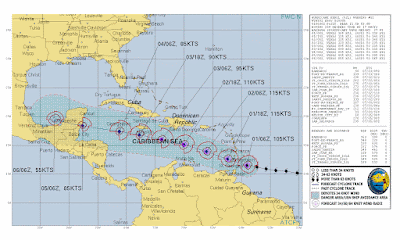


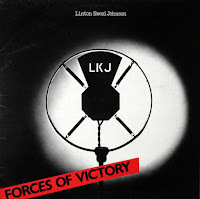


 Grant Goddard : radio broadcasting expert : media analyst : writer/author