Since we last spoke before Xmas, I have made a move …. to Phnom Penh. I am writing this sitting on a hotel balcony overlooking the Mekong River. How did this happen? Nearly two years ago, when I was living in Brighton, I was interviewed by the BBC World Service Trust for a job managing their projects in Africa and Asia. I didn’t get the job but they said they would get back to me if something suitable came up. I heard nothing more until the week before Xmas, when a message was left on my voicemail asking me to call the BBC office about a possible consultancy job in the New Year. Apparently, they had contacted Owen [Leach, former colleague at Star TV India and Metromedia International Inc.] to track down where I was now, he had told them about my job at the Radio Authority, which they found was closed, so they tried Ofcom. They wanted me to go to Cambodia as early as possible in 2004 to support their project there that was partnered with three Phnom Penh radio stations. Could I spare two or three months? [see blog]
Only a week earlier, my line manager at Ofcom (who too transferred from the Radio Authority) had told me that I would have no work to do during the first quarter of the year and that “there is nothing for you to contribute to” with regard to Ofcom’s strategic review of the whole radio licensing process. So I asked if I could take unpaid leave to do the BBC work. My request was refused. I asked if I could take paid leave to do the work, since I had eight weeks of holiday accrued that had to be taken by year-end 2004. My request was refused. Suddenly, I was told that there were essential tasks that I would be needed to work upon during the first quarter of the year. I was also told that, when the radio licensing regime restarted in the second quarter, it would be essential for me to be there. So when could I take the vacation to which I was entitled? I received no answer. I thought long and hard about the options open to me. I had applied for all sorts of jobs internally with Ofcom that were more suited to my skills (in departments dealing with audience research, market intelligence, policy & strategy), but no one had offered me anything. The prospect of spending at least three months sitting at my desk doing nothing (just like my job at the Radio Authority) whilst the new Ofcom radio licensing strategy was being decided by others did not appeal to me. I had already spent a year doing almost nothing. So I quit. [see blog]
A week later, I was heading for Cambodia. I arrived here on Tuesday of last week without even had a meeting with the BBC World Service in London. They sent me the airline tickets, a contract and a certificate of health insurance. I am here initially for two months, but which is likely to be extended to three months. They are paying for my hotel bill at a very nice, newly built ‘boutique’ hotel owned by two French businessmen. My room is huge. The hotel has wireless internet access and a modern restaurant. They have contracted me as a consultant (their first, so the contract is numbered WST 001), but the manager in London says that, if the work is successful, I should get further work out of the BBC. He has been very honest and admitted that I am helping them out of a large hole. The project is paid for by the UK government Department for International Development (DfID) who want results by their year-end this April before they will renew funding for 2004/5. My job is to produce the required results. The pay isn’t great (£750/week + US$100/week pocket money) which they have admitted, but they say they are eking it out of the existing budget, as a consultant was not budgeted for.
The BBC set up an office here last year (there is no BBC Phnom Penh correspondent) which now employs around 40 people. It is in a beautiful colonial villa next door to the British Embassy. It has everything you could want – drivers, computers, mobile phones, photocopiers, etc and the essential air conditioning. There are several UK staff here – the project manager is an ex-‘Panorama’ filmmaker, the head of radio is an ex-World Service studio manager, the head of TV was executive producer of ‘EastEnders’. I had no briefing before I left as to what I was expected to do here, so I have spent this weekend reading all the BBC documents about the project, and now have a better idea. The BBC is shifting its strategy from simply making the odd programme or series to be broadcast in developing countries towards a more holistic approach of training staff of existing radio stations in developing markets (i.e. Cambodia) to be market leaders. But the BBC doesn’t have any staff who can do that because existing staff are used to having huge BBC resources available to them to achieve even simple objectives. Small-scale cheap commercial radio is simply not their forte. Even a simple phone-in, in BBC terms, is thought to need a staff of at least 5 full-time people for a single weekly show. The BBC has signed contracts with three stations here to deliver a mixture of pre-recorded spots, phone-in shows and management training (combined with hardware purchase) that will make these stations market leaders. There are 18 stations in Phnom Penh. My job is the training. Money is almost no object. DfID has given the BBC £3.3m for 3 years, not only for radio but also for the production of a two episode/week soap for TV. [see blog]
Phnom Penh isn’t as basic as I expected. True, there is no public transport or taxis, but every fifth vehicle is a 4-wheel drive and there are internet cafes on every corner. Although it’s the winter, it is very hot and dusty here, particularly in the middle of the day when the city closes down for a daily two-hour siesta. There are fewer shops than India and no corner convenience stores. I have just found the nearest supermarket to my hotel this morning, which is almost a mile away, but was surprised to find it took credit cards. There are no ATM’s in Cambodia. Everything is denominated here in US dollars as the local currency is worthless. The city is filled with Westerners as there are so many aid projects here of one sort or another. There is a daily English-language newspaper and an English radio station (‘Love FM’), despite the fact that very few Cambodians speak English. All shop signs and road signs are in Khmer and English because of the sheer number of aid workers here. The city is laid out in the Parisian style by the French with wide boulevards (though the traffic travels in both directions on both sides of the street) and vast gardens that stretch down to the river. Lots of Buddhist temples everywhere. Not so much outright poverty as Mumbai, but then Phnom Penh is a small city and there is no apparent rural-to-urban drift. Most people that survived Pol Pot lived in the countryside and stayed there. [see blog]
Anyway, enough of me. Let me know how things are going. I have intermittent wireless internet access at the hotel, and more reliable internet access at the office. If your itinerary passes this end of the world, please drop in. I’m sitting here eating mince pies (made in Australia) that I bought from the supermarket and thinking about ordering a pizza delivery tonight. Sometimes I wonder if I am really in Cambodia at all (although the endless karaoke phone-in shows on all radio stations remind me that I am not somewhere ‘normal’) [see blog]. Our only worry at the moment is that King Sihanouk has left for China to have a serious operation and, if he were not to survive, there is no succession plan in place and the likelihood of a people’s revolution because parliament has never been recalled since the last election. Oh, and the chicken flu that has arrived here Friday from Vietnam and Thailand. Apart from that, things are fine.
India? I might have loved the 1980 song of that name by ‘The Psychedelic Furs’ but had never entertained going there. Then an email arrived from John Catlett, who had hired me the previous decade to assist him rebooting radio stations in Russia and East Europe, informing me that he had just been contracted for three years to launch and manage India’s first local commercial FM radio stations. Did I want to join him on a six-month on-site consulting contract? Desperation made that decision for me.
I had moved to Toronto in 1996 whilst working for huge American public corporation Metromedia International Inc. Within a year of that relocation, my job had suddenly and unexpectedly come to an abrupt end. ‘Suddenly’ because I had been invited down to its New York City office supposedly to finalise my appointment as vice president (promised by Metromedia International Group president Carl Brazell), only to be told to my face by recently appointed marketing president Bill Hogan that I was to be replaced immediately by a newly recruited American. ‘Unexpectedly’ because, during the previous four years, I had implemented very successful strategies that relaunched radio stations Metromedia had acquired in Russia, Hungary and Latvia.
Since that setback, I had spent three years making approaches and job applications to Toronto’s dozens of radio stations, none of which cared to reply. The industry there turned out to be incredibly insular, dominated by national media groups and family businesses who had no interest in hiring an ‘outsider’. I had already had to leave Britain after having failed to secure a radio job there, despite having managed the most successful station launch of the decade at London’s ‘KISS FM’. Now I was having to relocate temporarily to India because Toronto had proven an equally impossible nut to crack. By then, I was desperate for radio work after a gap of three years.
On 11 October 2000, I brought my completed visa application form to the Indian Consulate in Toronto at the 9.30am opening time, took a numbered ticket from the dispenser and waited patiently for two hours until my number was called. I passed my documents to the clerk at the window, who told me the visa charge was $120. I asked her why, when the form itself stated the fee was $78 for a one-year visa. She waved me to an office at the end of the counter to see someone else.
I waited my turn to enter this small office, where a male officer asked me what my problem was. I explained that there was no problem, but that the form said the visa was $78. “This is an old form,” he said, “the price has changed.” I showed him that my form, printed by the Toronto Consulate, was dated August 2000 and I had collected it only a few days ago. The officer quickly became very angry and told me: “What does it matter to you how much it is? We give you a receipt.” I explained that I had brought with me my budgeted cash amount of $78. The officer slammed my passport and papers down on his desk and shouted at me: “Either you want a visa, or you don’t want a visa.” So I picked up my papers and exited his office.
I returned to the line of visa windows and waited for a clerk to become free again. But the officer had followed me out of his office and now stood right in front of me, pushing me back from the windows and shouting in my face: “You are a crazy man. You are a crazy, crazy man. Who do you think you are, coming in here and demanding preferential treatment? What makes you so special? You must wait your turn, just like everybody else. Why do you want to be treated so special? You are a crazy, crazy man.” Then he stormed off. I was dumbstruck. The only thing I had done was ask why the price had suddenly increased by $42. The crowd of more than a hundred people in the waiting room looked at me in astonishment. I patiently waited my turn again and the same clerk at the same window I had visited earlier charged me $130, a further increase of $10 within only a few minutes.
“Clackety-clack clackety-clack, from Kalamazoo to Timbuctoo, from Timbuctoo and back!”
As a young reader, I learned these words by heart from a favourite children’s book, ‘The Train to Timbuctoo’ written in 1951 by Margaret Wise Brown. I daydreamed about the journey between these two strangely-named railway stations, evoked so perfectly by the author’s prose and accompanying illustrations. Decades later, I discovered I had been sold a fantasy, it being as improbable to take a train from Kalamazoo (a city in Michigan) to Timbuktu (an ancient city in Mali) as it would to line up at Marrakesh station ticket office behind Graham Nash. Only recently did I learn that Timbuctoo (a different spelling from the Mali one) is in fact the name of: a ghost town in California; a small settlement in New Jersey; and a failed farming community in upstate New York, none of which boast a railway station. Whichever were the book’s fantasy locations, I never did manage to travel there … by train or other means. But it had stimulated dreams of foreign sojourns.
Although I never read the book, the haunting instrumental theme music to the French dramatisation of ‘Robinson Crusoe’ remains embedded in my memory, half a century after having watched its thirteen black-and-white dubbed episodes repeated ad nauseum on BBC children’s television. Seven-year-old suburban me was enthralled by the prospect of living beside the sandy beach of a sunny tropical island, despite my aversion to spiders and snakes. Scenic landscapes filmed on Gran Canaria looked picture-postcard remarkable in the era before ‘package holidays’ and ‘charter flights’ opened up international travel. The series fomented a childhood dream of one day relishing a ‘simple’ life beside a gently lapping sea … perhaps accompanied by a ‘Girl Friday’ such as Tuesday Weld whom I had just ogled alongside ‘Richard Kimble’ in ‘The Fugitive’, my parents’ favourite TV serial. It was ‘Robinson Crusoe’ that fostered dreams of island-living.
For a month during early 2004, much of my time was wasted sat at a desk in the air-conditioned open-plan BBC office in Phnom Penh with a workload stymied by disagreements with management over the danger of fulfilling my contract in the crumbling Radio National Kampuchea headquarters, following the recent workplace death of a staff member. Seeking escapism from these frustrations, I listened to the few extant streaming reggae music stations of the time, but found none were playing the selection of ‘roots’ oldies I desired. My fruitless search had identified a gap in the global online market for listeners like me who had grown up during reggae’s most fertile and creative period between the 1960’s and 1980’s.
On my return to the UK later that year, I spent months awaiting the follow-up BBC work contracts I had been promised, but which never materialised. Without employment, I busied myself creating an automated online music station ‘rootsrockreggae’, digitising 15,000 reggae recordings I had collected since childhood. Broadcast from servers in Jamaica, I managed the operation remotely, generating revenue from a few local advertisers and commissions from listeners buying compact discs of music they had heard. It started small but, using an early iteration of ‘Google Ads’ to target North American reggae fans, the audience grew quickly. Within a few years, Winamp/Shoutcast ranked it amongst the five most listened to online reggae radio stations in the world, attracting an audience of tens of thousands each day. Its online player displayed constantly updated headlines from Jamaica, reggae news and weather reports, using my computer programming skills first learnt in the 1970’s. Like most online start-ups, sadly it never turned a profit.
Out of the blue, I received an email from the engineer of an FM radio station ‘Kyak 106’, asking if it could re-broadcast rootsrockreggae’s online overnight stream of dub and DJ music when no live presenters were available. I found the station’s website, listened and loved its enthusiasm for reggae, broadcasting to an island called Carriacou of which I knew absolutely nothing. I responded positively. This random communication prompted me to find out more about the location where my online station was suddenly being broadcast on 106.3 FM.
I discovered that Carriacou is a 12-square-mile island in the southeast Caribbean Sea with a population of 9,000. It is part of the former British colony of Grenada, independent since 1974 but retaining King Charles III as head of state. Physically, it is closer to Saint Vincent & The Grenadines (another independent former British colony, population 110,000, 4 miles away) than to the main island of Grenada (population 120,000, 17 miles away). Reading what little I could find online, I was quickly charmed by Carriacou’s old-style, friendly, relaxed way of life. It was not a resort island for rich Americans, its single airstrip too small for commercial planes, its colourful buildings were low-rise and its capital Hillsborough (population 1,200) had the feel of a quaint village with a short ‘High Street’.
Such was my enthusiasm, buoyed by regular listening to Kyak 106’s live shows, that I started to sketch a budget holiday plan for Carriacou, taking a Monarch Airlines flight from the UK to Grenada, a ferry to the island and staying at ‘Ades Dream Guesthouse’. Initially, it was time constraints that delayed such a visit because my workload had permitted only a single day off that year (to attend my daughter’s graduation). Then, having unexpectedly and suddenly lost my over-demanding job and unable to find another, finance became the restricting factor.
Inevitably, life moved on. Although the listenership to my reggae station had continued to grow, revenues fell precipitously when the dollar commissions earned from compact disc sales were replaced by mere cents generated by newly legalised MP3 download sales. Lacking a job, I reluctantly closed rootsrockreggae in 2009, even though it was now regularly ranked the most-listened online reggae station in the world after five years continuously on-air. It was a disappointing and frustrating time. Without access to development funds, life had to be focused on survival above all else. I promised myself to retire to Carriacou as soon as I won the lottery.
Kyak 106 closed in 2014, the product of a falling-out between two of its three directors that escalated as far as a 2022 High Court judgement. Station engineer Michael Ward, having been summarily sacked by presenter Kimberlain ‘Kim D King‘ Mills, proceeded to commandeer the radio station and continue broadcasting from its Belair studio in Carriacou, until Mills called time and unilaterally shut the operation. Subsequently, Ward transformed Kyak 106 into an automated online reggae music station, adopting a slogan ‘Roots Rock Reggae from Carriacou’ that sounded remarkably familiar!
28 August 2008. When tropical storm Gustav arrived in Jamaica, I was listening for news to FM talk radio station ‘Power 106’ where presenter Althea McKenzie remained barricaded in its Bradley Avenue studio in Half Way Tree for hours on end. You could hear the wind and the rains aggressively pounding the building as she valiantly relayed information updates for residents and took phone calls from listeners, her voice sometimes wracked with dread and emotion. It produced some of the most impressive (but frightening) live radio I have ever heard, for which she should have won some broadcasting award. Gustav resulted in fifteen deaths and US$210m in damages on the island. McKenzie is still heard daily from 5am on this excellent station. I still dreamt of living on a Caribbean island, despite weather disasters such as this.
October 2017. I had accompanied my daughter for a meal in a Wokingham pizzeria when my sister asked me: “If you could live anywhere in the world, where would you want to be?” Without hesitation, repetition or deviation, I responded: “Carriacou.” The dream was still alive.
1 July 2024. Category 4 Hurricane Beryl tore through Carriacou on Monday morning, destroying 98% of its buildings, cutting its electricity, water supply and mobile phone coverage. Houses were reduced to matchsticks. Huge trees were uprooted. All vegetation was stripped away, turning the island from luscious green to brown. Several people (number still unconfirmed) died. Roads became impassable. All communication with the outside world was lost. To discover what had happened there, I turned to YouTube. There I discovered award-winning American journalist and ‘storm chaser’ Jonathan Petramala who had arrived on the island the previous day with colleague Brandon Clement to document the hurricane’s passage. His videos provided an absolutely remarkable record of the devastation.
Two decades earlier, when I had first sought information about Carriacou, YouTube was yet to launch. Today there are dozens of videos about the island. Petramala captured the ‘calm before the storm’ mere hours before the hurricane struck, incorporating drone footage illustrating the charm of its colourful buildings and its ‘paradise’ sandy beaches. His impassioned commentary heralded the calamity that was to come and, although the island’s one petrol station had closed after a run on fuel and the mini-mart was busy, there was no evident panic. “It’s going to be horrific,” he said … and it was.
The following day’s video was a bleak testament to the destruction Carriacou had endured. “This island is shredded,” Petramala commented. “These people are in desperate need of help.” A resident said: “Right now, Carriacou is finished for a couple of years.” I had never seen anything weather-related as shocking as the complete devastation shown here. It resembled a war-zone. The drone shots were heartbreaking. Another shell-shocked resident said: “The thing is: we have three [storm] systems right behind it. What about the people who don’t have the time to recover, who don’t have a roof over their head, who don’t have the resources to rebuild?”
This video was unique because communications (mobile, internet, radio) had been completely lost on the island in the hurricane’s aftermath. Carriacou has no TV station and its two local FM radios (‘Vibes 101.3’ and ‘Sister Isles 92.9’) had been knocked out. Using a vehicle battery, Petramala uploaded his video via the Starlink satellite. That Tuesday, there was no other footage online. Residents could be seen filming on their mobile phones but there was no signal coverage to share or upload videos and no electricity to keep their phones charged. The island’s population was in an evident state of shock. Petramala’s footage, in which he made repeated appeals for outsiders to help the population, was used in weather stories broadcast by television stations the world over to illustrate the disaster, deservedly garnering millions of views.
The next day, Wednesday, roads in the capital had been partially cleared by residents, allowing Petramala to explore beyond by vehicle. His next video showed the ‘Dover Government School’, designated as one of eight emergency shelters on the island, entirely reduced to rubble. Those who were sheltering there had to evacuate to its tiny library outbuilding completed in April 2023 that remained standing. In March 2023, the 40-bed Princess Royal Smart Hospital had reopened in Belair with fanfare as the island’s sole hospital after having been “retrofitted to improve [its] resistance to disasters like hurricanes”, using funds from the UK government and Pan American Health Organization. This video showed all its facilities unusable due to water damage.
Then, arriving at the government’s Emergency Operations Centre on Carriacou, also in Belair, Petramala explained to its seemingly baffled staff:
“I’m the only journalist on the island. We have a Starlink [satellite terminal] so we’ve been able to get in touch with the government down in Grenada. I think we’re the only people who have contact with the outside [world]. They want to be able to get in touch with you guys but nothing is working. … We can set [Starlink] up outside and give you guys ten minutes if you want to call down to the government in Grenada and communicate what has happened here.”
Surprisingly, the Centre did not appear to be a hive of activity after such total devastation. We did learn that only five of the island’s eight emergency shelters had survived (for 9,000 population?). Although the building’s generator was powering lighting, its “communications hub” (as promised by the US Charge d’Affaires) had not survived the hurricane, despite this “fantastic facility” having only been completed in 2021 with US$3m funding from the US Embassy. Did we see a basic radio transceiver (even a retail amateur radio set) to provide SOME two-way inter-island communication? No. Did we see walkie-talkies used by emergency staff for intra-island communication? No. An apparent dependence on commercial mobile phone networks (operators Digicell and Flow) was, er, unwise when their towers prove so vulnerable to weather and power issues.
Set up in their vehicle, Petramala and Clement allowed nearby traumatised residents to use their Starlink satellite link to contact their loved ones overseas, leading to emotional scenes. Later that day, a helicopter landed at Carriacou’s airport, Grenada prime minster Dickon Mitchell emerged and, interviewed by Petramala, resembled a deer caught in headlights (commented my wife). He promised aid “from tomorrow” but proposed recruitment of volunteers from the mainland and assistance from other countries over guaranteeing immediate assistance from his government. For islanders who had no homes, no water, no electricity, no food and no petrol, with vehicles destroyed and roads blocked, the unfortunate impression was of a lack of urgency two days after the hurricane had hit. (Excellent silent drone footage of the devastation recorded by Clement fills six YouTube videos.)
While Petramala and Clement had been arriving in Carriacou on the eve of the hurricane, Belair resident Rina Mills had been similarly filming from her vehicle the calm that reined that Sunday before the storm (accompanied by Belair youth worker Shem ‘Ambassador’ Quamina). Employed by the Carriacou office of the ‘Grenada Tourism Authority’, Mills’ warnings about the impending disaster were stark and serious. With hindsight, this video (like her many others) was a testament to the beauty of the island though, within a few hours, it sadly became a historic record of how much habitat and infrastructure were about to be destroyed. Her exceptional knowledge of the geography, history and culture of Carriacou, combined with her informal conversations, made her videos compelling. She promised: “After the storm, we’ll do an update as well.”
However, the next day’s destruction of mobile phone masts prevented Mills from updating viewers until Friday, when her 24-minute live feed was managed only by climbing to a high point on the south of the island to connect over the horizon to an antenna on the mainland. Mills and her partner had lost their home, like many other islanders, and appeared in an understandable state of shock whilst cataloguing the “total devastation” of their island and five known associated deaths. It was a sad, upsetting video that acknowledged how precarious is our day-to-day existence, whilst also demonstrating the resilience of the population and its sense of community in the face of unprecedented disaster. The contrast with Mills’ chatty pre-disaster videos could not have been starker. Coincidentally, I heard Mills interviewed that weekend on the BBC World Service show ‘Newshour’ about Beryl’s impact on Carriacou.
Once partial mobile communication was restored on the island, Mills uploaded video previously recorded in the aftermath of the hurricane. In the centre of the capital Hillsborough, next to the destroyed Post Office, a mobile water desalination plant had been set up to offer free drinking water to residents. This vital resource had been provided by American religious charity ‘Samaritan’s Purse’ which amazingly had dispatched a DC-8 cargo plane to Grenada (video of landing) the day after the hurricane, loaded with materials (video) to establish a field hospital, desalination plants around the island, foodstuffs, tarpaulins, clothing and bedding. Two dozen of its volunteers were airlifted to Carriacou and a barge was chartered the following day to bring the equipment there from Grenada. It was a much-needed vital resource at a time when Grenada government assistance was still not visible. “Hats off to Samaritan’s Purse,” commented Mills’ partner. “They were the first to get here, in my opinion.”
I had never heard of Samaritan’s Purse but was incredibly impressed by the scale and urgency of its work, operating a fleet of 24 aircraft and two helicopters from North Carolina. Video of a public tour of this DC-8 plane at the Dayton Air Show only days earlier demonstrated the huge volume of supplies it had carried. Its volunteers quickly spread across the island, distributing materials to residents from churches (Pastor Happy Akasie’s church in Brunswick in this video). By the following week, it had set up its second field hospital in Carriacou with doctors, nurses, medications and counsellors (video). Despite the island’s hotels/B&B’s having been destroyed, the charity operates self-sufficiently, building its own accommodation and bringing food and water for staff. It seems to embody the fictional Tracy family’s ‘International Rescue’.
Towards the end of this video, Mills understandably rails against sightseers arriving by ferry from Grenada merely to video the destruction in order to attract ‘hits’ to their social media channels. One example of this was bizarre ‘Coleen AKA Bright Diamond’ from the mainland who appeared to enjoy her ‘day out’ on the destroyed island, travelling on the back of an aid truck, making inappropriate comments, drinking from a wine bottle in the back of a car and buying bottled beer. Afterwards, the Grenada government introduced vetting of ferry travellers to Carriacou to prevent further ‘disaster tourists’ consuming the island’s scarce resources. Fortunately, these self-promoting types were in a minority, overshadowed by the many people and organisations who arrived on Carriacou to genuinely help out.
British solicitor and author Nadine Matheson had been visiting her parents’ house on Carriacou when the hurricane struck and recorded this scary video of its almost total destruction. Once back home, she is recording informative updates on her parents’ situation and a fundraising effort to replace the house’s roof. The structure is now covered by a temporary blue tarpaulin which, like so many other properties, was donated by Samaritan’s Purse.
Meanwhile, videos published by the Grenada government since the disaster have proven a quite surreal soft-focus experience after the stark wholesale destruction visible in locally-made videos. After its prime minister (who is additionally minister for disaster management) visited the island, one video showed him standing on the wreckage of a resident’s home, looking wistfully into the distance, accompanied by soft tinkling music. Its editor seems to be a big fan of 1980’s Lionel Ritchie music videos. There is lots of footage of government officials in fluorescent vests talking to each other, pointing at the destruction and being interviewed explaining what WILL happen but – dare I say? – not much footage of action IMMEDIATELY to tackle this humanitarian crisis. Initially, the government’s media focus (including its partly owned GBN television channel) was much more on the relatively minor damage suffered on the main island, rather than the total destruction of ‘sister isle’ Carriacou.
Watching hours and hours of government press conferences uploaded online, I was struck by the preoccupation with ‘process’ they exhibit, talking endlessly about which department and which officers are responsible, which meetings WILL take place and who reports to whom. This habitual use of the future tense is alarming when what should be stated was what had ALREADY happened and what was happening RIGHT NOW. The government’s adoption of the slogan ‘Carriacou and Petite Martinique Will Rise Again!’ for the disaster seems symptomatic of this somewhat wishful thinking. It raises the big question: WHEN? Electricity is unlikely to be restored to the whole island for many months. Petrol remains in short supply. The situation on-the-ground for islanders remains dire.
The government press briefing on 9 July, eight days after the hurricane had hit, promised: a 2,000-gallon water truck loaned by a company on St Lucia “will commence distribution to residents starting Wednesday July 10th 2024”; then “a second 1,800-gallon water truck loaned by the Barbados Water Authority is expected to arrive on Carriacou during the coming week.” Does Grenada not own one water truck? How have 9,000 people on Carriacou been expected to survive without government-supplied fresh water for more than a week? Why does the co-ordinator of Grenada’s ‘National Disaster Management Agency’ (whose last web site news update was three weeks ago), Dr Terence Walters, seem to consider in this press conference that distributing 2,000 food packages to residents (who number 9,000) five days after the hurricane hit was a satisfactory response?
Coincidentally, a mere four days before Hurricane Beryl hit Carriacou, a 120-page report entitled ‘Grenada: National Disaster Preparedness Baseline Assessment’ had been published by the ‘Pacific Disaster Center’. It concluded that:
“… results for Grenada showed significant multi-hazard exposure including hurricane winds, earthquakes, and volcanoes with nearly the entire population exposed. […] The assessment pointed to vulnerabilities due to Environmental Stress, Information Access, and Gender Inequality and significant deficiencies in coping capacity areas such as Air Support and Transportation Capacity indicating enhancements are necessary to bolster Grenada’s disaster response capabilities. Addressing these gaps, alongside targeted efforts to mitigate the identified vulnerabilities, will strengthen the nation’s overall resilience to disasters. […] Strengthening communication and information management systems is essential to support effective disaster response and comprehensive risk reduction strategies.” [emphasis added]
In 2019, the World Bank had allocated US$20m to be drawn down by Grenada to address natural catastrophes, but had noted in its report:
“[Grenada’s] Institutional capacity for implementation [risk] is rated Substantial due to weak inter-institutional coordination and the lack of technical expertise. Implementing the proposed operation will require the integrated work of several actors at the national and local levels to move the proposed policy actions forward. This could result in scattered, low impact, and/or uncoordinated actions.” [emphasis added]
Estimated damages and losses to Grenada’s economy from its most significant disasters suffered between 1975 and 2018 were estimated by the World Bank to have totalled US$967m (at 2017 prices). Hurricane Beryl’s financial impact is likely to be greater than these prior disasters combined, eclipsing the island’s annual GDP several times. Evidently, the fiscal catastrophe of accelerating climate change not only decimates small economies such as Grenada’s but cumulatively will precipitate a global diversion of resources away from consumption towards mitigation and repair of weather, temperature and sea level changes.
It was evident in videos posted online that aid had quickly arrived from diverse sources: generous individuals, volunteers and groups on mainland Grenada, other Caribbean islands, the United Nations, France providing boats of supplies and troops on the ground (Grenada has no army), global charities. I watched a video of the French ambassador to Grenada interviewed whilst off-loading aid. Have I similarly seen the British high commissioner or governor general on Carriacou? Maybe I missed them. On 5 July, the UK provided £0.5m of immediate aid to Grenada and St Vincent, but will more substantial longer term assistance be forthcoming from the island’s former colonial power?
In 1983, the United States had sent 7,300 troops to invade and occupy Grenada because president Reagan chose to believe its newly built airport, funded partially by the British government, would be used to land Soviet bombers. 45 Grenadians were killed and 358 wounded. Today, if a major power were to devote similar resources to rebuild Carriacou quickly, its population might be able to endure the hardship it currently faces. However, despite residents suffering no electricity, water, food or a roof over their heads and with several emergency shelters destroyed, the government in Grenada has no current plan for significant evacuation of the island, preferring to remove only pregnant women, residents of old people’s homes and the hospitalised. How long are its citizens expected to survive when no cash is available from destroyed banks or ATM’s, forcing residents to make a four-hour round trip to the mainland? In 2024, these generous and stoic island people have been marooned in a hellish medieval landscape.
My dream of island-living is over for now. Carriacou can never be the same again. What will happen there is difficult to fathom. Its economy, seemingly reliant on retirees from the diaspora and small-scale tourism (independent travellers and two marinas of yachts) is ruined, forcing its people to make lifechanging decisions. Nowhere have I read that Grenada main island’s schools and sports halls have been opened to Carriacou refugees who have lost everything. At a time when thousands of its residents remain sat amongst the ruins of their dwellings, the Grenada government announced precipitously that:
“… the [Cayman Islands] Premier is extending an invitation to Grenadians who wish to work in the Cayman Islands, to return with her on Tuesday July 16 2024.”
The premier of this British Overseas Territory (population 85,000) was due to deliver aid relief to Grenada that day, but not before a further press statement had to hurriedly clarify that “no such offer was made during the courtesy call made to the Prime Minister of Grenada by the Premier of the Cayman Islands” and withdraw the implied invitation to potential economic migrants. Oh dear. (I recall when 8,000 refugees out of a population of 13,000 left the decimated Caribbean island of Montserrat following its 1995 volcanic eruption.)
I never got to visit Carriacou but, compared to the suffering endured presently by its resilient people, my regrets are insignificant. Watching the news from Carriacou engenders a sense of helplessness in the face of such overwhelming humanitarian need. I am highlighting Carriacou here only because it has been on my mind for two decades since receiving that fateful email from Kyak 106. The neighbouring islands of Petit Martinique and Union Island have been just as badly devastated by Hurricane Beryl. Though I am continuing to follow events in Carriacou, the mainstream media has inevitably moved on swiftly to other disasters elsewhere.
Observing the aftermath of this catastrophic event since 1 July has merely reinforced the devastating impact of ‘climate change’ us humans have foisted upon populations who have done nothing to cause it. Nobody on Earth can afford to ignore this issue because its effects will inevitably be coming to your corner of the world soon. Nobody will be immune. It is coming to get you, whether or not you choose to believe it is real. Voicing this eloquently was an emotional call-to-arms video (initially at https://youtu.be/oYn-XarQM3M but mysteriously deleted since) by United Nations climate change executive secretary Simon Stiell who is seen hugging his grandmother amongst the ruins of her home on Carriacou, his homeland.
After having viewed Beryl’s immediate impact from a helicopter, Grenada prime minister Dickon Mitchell had described the destruction as “Armageddon-like” in a press briefing and promised:
“We know it is not something that will happen overnight, but we certainly believe that in the next week to two and a half weeks we should have a complete clean up.”
Weeks later, new videos from Carriacou continue to show a post-Armageddon catastrophe that could last months and years for its beleaguered population.
POSTSCRIPT
On 27 Jul, this blog entry had suggested “Hurricane Beryl’s financial impact [on Grenada’s economy] is likely to be greater than these prior disasters [1975 to 2018] combined, eclipsing the island’s annual GDP several times.” The World Bank had previously documented that “damages and losses” from Hurricane Ivan in 2008 had amounted to 148% of Grenada’s then GDP.
On 30 Jul, Grenada prime minister Dickon Mitchell, closing the 47th CARICOM heads of state meeting he hosted and chaired there, suggested that the country’s early estimated losses from Hurricane Beryl would amount to EC$ 1,000,000,000 = US$ 370,000,000.
A back-of-the envelope calculation of this assertion:
Grenada GDP = US$ 1,320,000,000 (source: World Bank)
98% of buildings destroyed or damaged in Carriacou & Petit Martinique (source: Grenada government)
estimated population of Carriacou & Petit Martinique = 9,000estimated number of buildings (homes + businesses + public buildings) = 5,000 (wild guess)
estimated impact on GDP = 28%
estimated impact per building on GDP = US$ 75,500
However, the destroyed buildings included public schools, emergency shelters, Carriacou’s hospital, post office and police station, each likely to cost millions to rebuild/repair. Additional costs include destroyed infrastructure such as island-wide overhead electric cabling, ports, marinas, airport, beaches, agriculture, fishing, environment plus lost tourism income (14% of Grenada GDP in 2019, source: UN).
1995. The evening weatherwoman was standing in front of a wall map of the nation, reading the forecast for tomorrow’s conditions. In her hand were symbols for rain, sunshine and cloud that she went to place on relevant locations on the map. The icons remained there for no more than a few seconds before tumbling noisily to the floor. She bent down to pick them up and attempted once again to attach them to the map … with the same outcome. She soldiered on bravely until her script was completed in front of a wholly symbol-free map, then turned towards the camera with a weary farewell gaze that communicated: ‘why do I have to work with this rubbish technology?’
Was this ‘malfunction’ happening every evening on the Kenya government’s national television channel? I recognised her supposedly magnetic symbols from having watched nightly ITV regional weather forecasts during my childhood in Britain. Perhaps her masters had purchased a ‘job lot’ of second-hand apparatus from a classified advert in the back pages of ‘Broadcast’ magazine placed by one of those lazy UK commercial television stations that had eventually had their ‘licence to print money’ removed by the regulator. Wincey Willis, all is forgiven.
2014. I was lodging in a small town in southern Spain over the New Year. Just before midnight on 31 December, I impetuously took a ten-minute walk from the rented apartment to the main square to observe how the noisy Spanish were celebrating the impending change of calendar. There I found … they weren’t. Christmas decorations strung across the streets were fully illuminated, but not a soul was to be seen. In the town square, you would have heard a pin drop. It was eerie in a community of 15,000 to encounter deafening silence on entirely vehicle-free, human-free streets. Did the Spanish’s ‘reluctance’ to exert themselves (long daily siestas, shops closed during summer afternoons, holidays lasting weeks) extend to New Year’s Eve celebrations? I returned home, mystified.
There, switching on Spanish television, I caught a typically abysmal live variety show welcoming the New Year by parading a succession of uninspiring musicians and poorly choreographed dancers in front of a studio audience. Like so much of Spain’s TV, this circus was fronted by a male presenter whose suit seams were suffering immense stress and a young woman dressed like a high-class prostitute who would obligingly laugh loudly at her co-host’s every witticism. At twelve o’clock, the two of them indulged in Spain’s tradition of gulping down one grape at each of the twelve strokes of the midnight bell. For this, you can buy tiny cans of precisely twelve grapes in Spanish supermarkets.
Naturally, both presenters found utterly hilarious their inability to successfully complete this annual task, sat on their over-high bar stools. Then, amongst all the fake joviality, it became evident that the woman had wet herself and it was visibly trickling down her inside legs below an over-short, sparkly dress. What impact did this have on proceedings? None whatsoever. Everyone involved carried on as if nothing at all had happened. It was yet another of those television moments when you begin to question whether you really did see something THAT ‘abnormal’ on your TV. ‘Entertainment’ arrives in strange forms in Spain (The Inquisitions?) so, for all I know, she was probably invited back the following year.
2024. I have been lucky enough to be in France witnessing the run-up to the Paris Olympic Games. On 9 May, as the Olympic flame arrived in Marseille by boat from Greece, the French state broadcaster launched an online television channel dedicated solely to the impending event. Presently, the flame is passing through 68 of France’s 96 geographical ‘departments’, in each of which it is carried through streets of six or seven towns/villages consecutively by a relay of local volunteers walking/jogging around 200 metres each. In total, by the time the Games commence in July, the flame will have been carried during 68 days by 10,000 individuals through 450 of France’s 35,000 ‘communities.’
The new TV channel (confusingly named ‘Paris 24’ like longstanding news station ‘France 24’) offers around eight hours per day of live coverage of the torch as it wends its way up hills and down dales through France. The dominant visuals derive from Ronin Steadicam cameras held by two videographers sat facing backwards on the rear of peddle-powered tricycles, filming the torchbearer running towards them. This is supplemented by two scooter riders with lightweight cameras attached to their handlebars, a roving reporter interviewing people with another Steadicam, and two overhead drones. The vision mixer seems to be in situ (in a van behind the torchbearer?) and has a fondness for abrupt cutaways from the torchbearer, often of no more than a few seconds, as if directing an urgent pop music video. A bored male voiceover reads a script extolling the history of the town/village and the name, age and occupation of each volunteer carrier.
The results are often scrappy but make intriguing viewing. The satellite link occasionally fails, cameras temporarily lose their signals under bridges, inside buildings and when scooter riders collide with obstacles. There seems to be no ‘talkback’ facility, requiring camera operators to occasionally communicate using hand signals in front of their lenses. This coverage initially appeared somewhat amateurish, but quickly became addictive for this armchair viewer. What better way to visit so much of France’s rich land than the view from the back of a slow-moving tricycle? I have already accompanied the flame’s journey to mountain peaks above clouds, to caves of prehistoric art, across magnificently modern bridges, on kayaks down fast-flowing rivers and through historical theme parks. Watching the way France has beautifully maintained and restored its phenomenal history helps you understand why the majority of the French take their annual holiday within their country. There is so much to experience here!
Simultaneously, the sheer humanity on view has proven heartwarming in these ‘challenging’ times. Volunteers chosen to carry the flame have been of all ages, visually diverse and many with disabilities they have overcome to participate. One very elderly man with an arm in a sling shuffled along the route more than walked, taking an age to complete 200 metres, but was patiently accommodated. One torchbearer fell to his knees en route and proposed to his girlfriend as he passed her amongst bystanders. The crowds that have attended each stage of the torch’s journey have been huge and enthusiastic, particularly the hordes of children given the day off school to display the results of their Olympic Games art projects. There have regularly been very moving, spontaneous little moments that pre-scripted, sanitised television can never achieve.
On 9 June, the flame skipped out of mainland France for the first time to travel through the department of French Guyana in South America. I was very much looking forward to watching a travelogue through this little-known, far-flung outpost … until it emerged that, instead of coverage being mixed on-the-ground as usual by ‘France TV’ staff, responsibility had been inexplicably handed to the organisation’s local television station ‘Guyane La Première’. Instead of the focus remaining on the journey of the torch, the dozens of torchbearers and the communities passed, its station management turned this potentially historic outside broadcast into a studio-based programme. Had they not read the memo from head office? Had they not watched online the coverage of the torch journey to date? Or had they merely decided to do what the hell they wanted regardless? The outcome was predictably disastrous.
The TV station’s morning broadcasts omitted any live coverage of the flame arriving by boat in the village of Camopi at 0620 and its 1km journey through the town. The usual cameras and drones were on-site but their raw videography was edited down to an inadequate two-minute roundup repeatedly broadcast later in the day. The thrill of continuous live coverage had been completely lost. When the morning studio programme eventually started, it was led by a well-dressed man and woman (Nikerson Perdius and Geniale Attoumani) sat side-by-side at a desk covered in sheets of paper scripts. They appeared so under-confident that the man constantly shuffled their papers while the woman rung her hands. Occasionally, their eyes would meet with a look of ‘what the hell should we do next’. Instead of simply giving us the live feed of the flame, they viewed their role as interviewing their equally nervous two non-Olympic sportsman studio guests who used the airtime to complain about the lack of professional quality sports facilities locally. The studio presentation continued in this style for 90 minutes, repeatedly reading out the times and locations of the torch’s journey as if it were a radio show, but failing to show us more than sporadic visuals of the flame.
Unbelievably, after a break, the same two presenters returned for a further three-hour studio-based show that still failed to provide much live coverage. The flame’s 800-metre journey at 1110 around the huge high-tech satellite launching pad ‘space station’ at Kourou should have provided a great opportunity to appreciate Guyana’s technological significance. Instead, we saw almost nothing of the event because the presenters decided, at that critical moment, inexplicably to reshow the edited package of the flame’s early morning arrival at Camopi. I was moved to repeatedly shout at the television: “what the hell is the editor doing?” Much more important to the station were more endless studio chats with another set of non-Olympic sports guests. Just as bizarre were the live vox-pops with people on the streets who had observed the flame’s progress … instead of allowing us viewers to watch the flame’s progress first-hand.
Surely, the station’s afternoon coverage could not be worse? Don’t underestimate. Whereas the early shift presenters were under-confident, the afternoon team (Tamo Brasse and Charly Torres) appeared supremely over-confident, particularly in their own self-importance, one inexplicably wearing a ‘Tram Tours, Lisboa, Portugal’ tee-shirt. For 140 minutes, they talked and talked and talked with their sporting studio guests. The station’s on-the-ground contributors providing live commentary on the flame’s passage proved professional but were far too infrequently used. By now, my wife was also shouting at the television for the hosts to shut up because, once again, they seemed to imagine they were on the radio and left no space unfilled by their voices, instead of allowing us view the live images and accompanying ambient sound. Ironically, whilst they chatted interminably, a large-screen TV was visible on the wall behind them in the studio, displaying the live feed of the torch’s progress … a visual they and their editor were preventing us from viewing.
In the evening, when the flame made its final journey of the day through the capital Cayenne, these same presenters returned for a further one-hour show. Now with two on-the-ground live reporters, this should have been a more satisfying viewing experience .. but wasn’t. The only reason they talked less animatedly and, instead, mumbled to each other was the absence of studio guests or their possible exhaustion. Suddenly, just when it seemed possible that we might view some uninterrupted live local coverage, the station inexplicably cut to a live feed of the European Athletics Championships women’s 100m semifinal from Italy in which French athlete Gemima Joseph was competing. By now, we were both screaming at the television: “the Olympic flame happens once in a lifetime in Guyana!”. (Incidentally, Britain’s Dina Asher-Smith won and Joseph came second.)
Could it get worse? Yes. The station was now interrupting its live coverage with pre-recorded packages, each lasting several minutes, about preparations for the Olympic flame’s arrival that had already been broadcast within the station’s two daily local news bulletins on previous days. Why choose this ‘filler’ when there is a once-a-century live event happening in your backyard? The icing on the cake for this unmitigated television disaster happened just as the flame was about to arrive at its final destination in the capital Cayenne where, at 1920, it would light the Olympic cauldron in front of a huge crowd. Twenty minutes before that, the two presenters folded their arms and, looking pleased with their performances, bade their audience a final farewell … BEFORE the flame had reached the crowning glory of its journey. Live coverage terminated. We screamed our heads off.
Had these presenters viewed the event as a once-in-a-lifetime opportunity to show off their chat skills beyond French Guyana on a television channel watched across mainland France? Were their efforts a pitch for some kind of longform chat show? Their station’s mediocre efforts were an insult to the many local volunteers carrying the torch, to the communities in Guyana it passed through, and to the hundreds of Olympic Games staff on the ground who enabled the torch to pass through the landscape. While the broadcasters had sat self-absorbed in their cosy TV studio, the hard work of on-the-ground videographers had been marginalised and mostly discarded. I tuned in wanting to actually see French Guyana and what I got instead were ‘talking heads’ in a studio. It was a disgraceful betrayal of everything the Olympics stands for.
Did nobody from state TV’s Paris HQ phone up and demand to know what the hell their employees in Guyana were doing? We will never know. Will heads roll? Unlikely because employment in France’s public sector is mostly a ‘job for life’. You would have to murder a client to be sacked. Watching television in mainland France, its output is filled with ‘the great and the good’ talking endlessly on studio panel discussion shows about anything and everything. It’s essentially cheap ‘talk radio’ programming parading as ‘television’.
Whenever ‘the system’ screws up in France, there are never apologies, never sanctions. Any problem is passed down to the user, the consumer, the citizen to suffer the consequences. The day after the Guyana station’s contemptuous Olympic flame coverage, ‘France TV’ HQ in Paris suddenly blocked online viewers from watching that local station’s live output. The many Guyanese living in France are now denied the ability to keep up with news from ‘home’, paying the price for their public servants’ failures.
Should you think my criticism is unfair on tiny French Guyana (population 295,385) for its efforts, six days later I watched the Olympic flame pass through Caribbean island Guadeloupe (population 378,561) where coverage by its own outpost of the state television station ‘La Premiere’ proved absolutely excellent. Somebody there had evidently read and understood the memo.
[Sadly, links here to ‘France TV’ content may not work outside France.]
Kapow! There was an explosion. Before I even grasped what had just happened, I could see I was covered with shards of glass. What was that noise? The train window I was sat next to had suddenly vanished and was in pieces on me and the seat. Luckily, I had not been looking towards the window at the time, otherwise my face would have been injured. Luckily, because it was winter, I was wearing an army surplus hat with furry earflaps that had protected my head and ears. Luckily, I was wearing a coat over my school blazer, gloves and long trousers that had shielded me, these winter woollies necessary because trains’ heating systems rarely functioned adequately.
I caught the ten-past-eight number 28 train every day for seven years from Camberley station to my school half-an-hour away in Egham. It was part of a commuter route propelling workers on the one-hour journey into London’s busy Waterloo terminus. Travelling to school this way felt like stepping into Narnia through the wardrobe door of our suburban British Rail station. Journeys were populated by strange characters not present in my normal day-to-day homelife. The station platform was awash with bowler-hatted, suited gentlemen carrying leather briefcases and rolled-up umbrellas. Women were a rare sight. Humourless station staff in uniforms shouted announcements about delays in the tone of army drill sergeants. Bumptious Terry-Thomas ticket inspectors walked through train carriages, looking down their noses at our thick green cardboard season tickets as if we were interlopers on their Orient Express.
At least the trains on our line were relatively modern electric rolling stock. As a small child, I recall standing at the top of the open footbridge over Camberley station, looking down at the signal box beside the level crossing and feeling clouds of smoke envelope me from a steam train passing underneath. Or was that a ‘Railway Children’-inspired false memory, acquired from reminiscences by my grandfather who had worked unloading timber for local building firm ‘Dolton, Bournes & Dolton’ in the goods yard beside the station? He had been made redundant in the early 1960’s for the yard to be replaced by a new ring road and Camberley ‘bus station’, in reality no more than a line of bus stops and tiny shelters without a waiting room. After my afternoon arrival in Camberley by train to await the hourly 39B (40 minutes past every hour) or two-hourly 34A bus (15 minutes past even hours) for the final two-mile journey home, I would have to walk over to the railway station lobby and sit opposite the ticket window to keep warm and dry.
My schoolfriends and I were the Pevensie children of Camberley, rendezvousing every morning at the very rear of the station’s eastbound platform that could accommodate only four carriages, despite our train normally being eight. When the train driver pulled up close to the signal at the top of the platform, we could just about clamber up to open the first door of the fifth carriage from the platform’s sloping end. Those rear four carriages became our playground because, until the train reached Ascot station’s longer platform, we had that section entirely to ourselves. No other passengers, no train staff. We could be as loud and unruly as we wanted. We would walk down the corridor to sit at the very rear of the train because, eventually alighting at Egham station’s full-length platform, we would be right next to the exit gate.
When the incident happened that morning, the train had slowed down to pull into Bagshot station and was about to cross the Guildford Road viaduct, a massively tall structure of four arches built in 1878. On either side of this bridge carrying dual train tracks were high embankments with steep, near vertical sides. On the north side, below the railway, was a vast tract of land owned by ‘Waterers Nurseries’ since 1829 to grow and sell plants. Before reaching that was Bagshot Infant School, set back from the embankment, on School Lane that ended in a footpath passing under the embankment towards Bagshot Green farm on the south side. At the time, undeveloped land stretched on both sides and (unlike now) the embankment was not bordered by trees.
Could a person have thrown a stone from the north side to make the train window next to me shatter? Unlikely because the embankment on which the train passed was too steep to stand upon. If the culprit had stood further away, below the embankment, a rock could not have reached the height necessary to make contact with the train, nor would it have retained sufficient momentum to smash the window with enough force for it to have not merely cracked, but to have shattered in its entirety.
What kind of projectile could have caused such damage? A powerful gun of some kind could have generated the necessary velocity and momentum for its bullet to shatter the thick glass window. A gunman (or woman?) would have needed practiced skill to aim upwards from the land below the embankment, or possibly to have lain half-way up the embankment adjacent to the footpath (now ‘School Lane Field’). In either case, it would have required planning and experience to succeed in such a challenging topography next to the train route. Since only two trains per hour travelled in either direction, this act could not have been a spur-of-the-moment impulse.
Why was the window I had sat beside targeted? As the train decelerated to enter Bagshot station, the rear carriages would have passed at a slower speed, making them an easier moving target than the front ones. Us schoolboys were habitually the only passengers anywhere in those rear four carriages, making my head the one visible sign of on-board life amongst dozens of otherwise empty train windows. That implies that my window must have been purposefully selected as the intended target. It was a dark winter morning and the internal carriage lighting would have made my outline visible from outside the train.
So where did the bullet land? Only one thing was certain: it had not hit me, otherwise I would not be here to tell the tale. Did we look to see if a bullet had passed over my head and become embedded in the carriage’s structure? No. In that pre-‘CSI’ era, forensic science remained an unknown foreign land. From watching weekly television detective shows, all we understood was that ‘McCloud’ cracked cases by riding his horse down Broadway, ‘Columbo’ used his raincoat and ‘McMillan’ solved crimes by getting into bed with sweatshirt-wearing wife Sally. In the aftermath, I had not even deduced that I had likely been targeted by somebody shooting a gun. That is how unworldly I must have been, though I had always enjoyed the pellet-gun target shooting stall at the fair’s bi-annual visits to Camberley Recreation Ground.
So how DID I react to this dramatic event? Did I scream? Cry? Sob uncontrollably? No, I simply stood up, brushed off the glass fragments that had covered me, and our little group moved to an adjoining carriage where the breeze through the vacant window would not make us feel colder. Even had we wanted to, there was nothing we could have done immediately. There were no train staff in those rear carriages and, once the train stopped in Bagshot station, its platform was too short to get out. Only once we reached Ascot was the platform long enough to deboard. So, did we? No, because if we had raised the alarm, we realised the fickle finger of fate might have pointed to us bunch of schoolboys for having broken the window. Which British Rail jobsworth would have believed our story that someone laying on a grassy knoll in Bagshot must have targeted me for assassination?
Leaving the train at Egham twenty-five minutes later, we could see the void where the window had exploded in front of our eyes. Nobody else seemed to have noticed the gaping hole or had bothered to halt the train to investigate. If they had, we might have arrived late for school that day. That would have been a fate worse than death. We had already brushed aside the incident and were more concerned with the school day ahead of us. Once I returned home that evening, I did not even bother mentioning to my parents what had happened. Only years later would I realise what a close call I had experienced that winter morning at the age of thirteen.
For us kids, trekking from one end of Surrey to the other every weekday on public transport, strange events would occur regularly in this otherworld. Our trains were sometimes cancelled, or rerouted through stations that were unknown to us, or suspended when someone jumped to their death off the footbridge at Egham station. In the latter case, some of us would watch morbidly for the arrival of emergency services whose crew had to scoop up the person’s bloodied remains spread along the tracks by a speeding train. Our unspoken attitude was: almost anything could happen on our way to and from school … and often did. It was a daily expedition into a world beyond ours, populated by weird adults to whom we appeared to be invisible.
Once a year, during ‘Royal Ascot’ week in June, our train would fill with bizarrely overdressed racegoers with strange toff accents and extremely loud voices who carried bottles of alcohol, swayed precariously and occasionally were sick on the carriage floor. They were much worse behaved than we had ever been, their conversations often ribald and filled with profanities. Did anyone chastise them, force them off the train or tell them to act respectfully in front of us children? Not at all! They did precisely what the upper classes are wont to do with their own children: they ignored us totally and appeared completely unembarrassed by their own behaviours.
I recalled the Bagshot train incident when, half a century later, I went for a run through rural France on a bright summer morning. There was no traffic and no visible human activity as I ran down the middle of a tarmacked road flanked on both sides by flat agricultural land. The only noise was birdsong until … a high velocity bullet whizzed above my head from left to right. I stopped running, turned in the direction from which it had come and shouted profanities (in English) at the top of my voice. Without my glasses, I was unable to see far enough into the distance to spot the culprit. This was no accident. I could not have been mistaken by a hunter for an animal. I was clearly visible on a ‘departmental’ road, not in the middle of woodland. But I had been the only object moving in this static landscape and that seemed sufficient to unwittingly make me a target.
If I were superstitious, I might be worried about ‘third time lucky’.
I was standing over the motionless body of my line manager. He was dead to the world, naked under the sheet on his bed. Neither my arrival in his studio apartment through its wide-open front door, nor the chatter of little ‘street boys’ passing up and down the building’s internal staircase, nor the morning sunshine streaming through the open windows, nor the noise of rush hour traffic on the road below seemed to have stirred him. Should I call out? Should I nudge him? Since the limit of my responsibilities to the BBC had already been sorely tested by a recent health & safety ‘issue’, I decided that playing butler to my boss would stretch my patience one step too far. I turned around, leaving him asleep, walked out and descended the stairs to rejoin the driver waiting out front in the BBC SUV.
It was the ‘big day’ in March when my trainees were to interview candidates for two radio presenter jobs. Charles ‘Chas’ Hamilton had asked to attend too, so I had arranged a detour at eight o’clock to pick him up en route from my hotel to the radio station. This was unusual because, to date, he had demonstrated scant interest in my 28 hours per week of sessions training teams at two Phnom Penh radio stations in production skills, apparently preferring to remain at his desk in the air-conditioned, open-plan BBC office. On my arrival in Cambodia, rather than having furnished a training plan or schedule, Hamilton had invited me for an evening meal in his apartment, bending my ear with gossip about the BBC World Service Trust’s recently arrived Canadian manager. Now I was having to spend what remained of my seven-day working week determining which skills I needed to demonstrate to my teams and how to instruct them when I understood not one word of Khmer.
Hamilton was oblivious to the supreme irony of my bedside presence that morning. Before departing London, BBC management had confided that, only after having signed contracts in December 2003 to supply radio training to two Cambodian stations, had it understood that its prior internal appointee to head the country’s radio projects had no experience producing live radio programmes. Having been hurriedly headhunted as a result of my international track record in radio production and presentation during three decades, my latest mission was necessary solely to bail out a consequence of the Corporation’s arcane appointment system. Meanwhile, in spite of my radio experience, my own applications over two decades for 43 BBC vacancies had resulted in thirteen interviews but not a single job offer.
Although the BBC contract required me primarily to train in radio production, it quickly became evident that, in order for my young but enthusiastic trainees to appoint inexperienced presenters for the station’s new youth phone-in programme, I needed to teach them how to word a job vacancy advertisement, shortlist applicants, interview candidates and take personnel decisions. They were fortunate that, after a decade assisting in my father’s self-employed architectural business, I had taken my first management post in 1978, hiring and firing people since then and managing teams of more than fifty. In Cambodia, my role became necessarily upgraded to informal ‘management consultant’ despite having had to accept a BBC freelance pay rate lower than the mediocre job at Ofcom from which I had just resigned in the UK … and undoubtedly lower than Hamilton’s pensioned salary as head of radio.
On arrival at the Women’s Media Centre that morning, I found my trainees already assembled in the first-floor radio studio to commence job interviews. I waited in the downstairs lobby to greet the candidates (a bow accompanying ‘hello’ the limit of my Khmer communication skills) and usher them upstairs. However, as Hamilton had yet to arrive, the schedule soon started to run over and resulted in successive applicants seated together in the reception area, a situation I had hoped to avoid. Eventually appearing apologetically an hour late, Hamilton would never be told about that morning’s ‘sleeping beauty’ encounter. It was more important to proceed with the tasks at hand.
During previous weeks’ sessions, the trainees had agreed upon three candidate tasks: an interview by the production team with a prepared list of questions allocated to each member; a script I had written and had translated, to be read into a studio microphone for recording; and a faked phone conversation recorded with a production member pretending to be a caller, to test each potential presenter’s spontaneity and improvisation skills. None of the candidates had prior radio experience, which it why it was imperative to identify ‘potential’ rather than ‘accomplishment’. The planned radio show was destined to become Cambodia’s first live youth phone-in, for which we needed one male and one female presenter.
Having completed the interview round, we broke for the mandatory two-hour lunch, me and Hamilton returning to the BBC office by car. I shared lunch with local staff at the kitchen table, while Hamilton took his usual sojourn with the ex-pat employees to a local restaurant. Afterwards, he did not accompany my return to the radio station for the afternoon session in which my trainees discussed and contrasted the candidates’ performances, assisted by BBC translator Keo Sothearith. I was incredibly impressed by the professionalism with which they ranked the candidates against criteria we had previously decided and then unanimously agreed upon the most suitable pair of applicants.
I was pleased that the whole interview process had been done and dusted so competently and quickly. However, just as I was ready to pat myself on the metaphorical back, a passionate conversation broke out amongst my trainees that the translator seemed reluctant to explain in English. I had to press him repeatedly to tell me what new issue had arisen, since there had been undivided agreement only a few minutes earlier.
“They say it is not possible to employ the woman because she is Chinese,” he explained embarrassedly. “They agree she is the most competent … but the job has to be given to a Khmer woman.”
I was shocked. Clarification was necessary for me to understand this issue. Though I could not discern the distinction, I was told the woman was ethnically Chinese (0.6% of Cambodia’s population) though not a recent immigrant, apparently speaking Khmer perfectly. Wikipedia explains:
“Most Chinese are descended from 19th–20th-century settlers who came in search of trade and commerce opportunities during the time of the French protectorate.”
I had read about ethnic tensions in Cambodia, but primarily involving neighbouring Thailand with which there had long been territorial disputes. In January 2003, following an alleged remark by Thai actress Suwanna Konying that Cambodia’s Angkor Wat temple actually belonged to Thailand, a mob in Phnom Penh had burnt down the Thai embassy and attacked Thai businesses, forcing the evacuation by military aircraft of 400 Thai citizens to their homeland. I had recently passed Thailand’s newly opened replacement embassy in Phnom Penh, surrounded by high walls for improved security.
“Although anti-Chinese riots are rare in Cambodia, the ethnic Chinese in Cambodia during the Khmer Rouge era experienced some of the most severe repression in the world. The situation had improved by the 1990s, following the Hun Sen government’s abolishment of discriminatory policies towards them.”
“After 1990, [the Chinese] were allowed to celebrate Chinese festivals and religious practices, then to re-establish Chinese associations and conduct business activities. They subsequently started operating their own schools…”
For the next hour, I felt compelled to argue that it was morally wrong to discriminate against a job applicant purely on the grounds of their ethnicity. It was essential to appoint the best candidate for the job. I told my trainees that the BBC would never countenance such behaviour and, since the BBC was funding their training, it was essential to follow guidelines set out within the BBC editorial handbook (a copy of which I usefully brandished from my briefcase). The trainees had already written a sign that said ‘BBC office’ (in Khmer) on their production room within the radio station, even though they were not BBC employees (as neither was freelance me).
However, I was internally conflicted by my own argument. As a 43-time applicant to the BBC who had been rejected 43 times, I was well aware from personal experience that discrimination was alive and well and living inside the Corporation. Following one of my post-interview rejections at the end of a three-month wait, I had phoned the BBC to ask precisely why I had been rejected yet again and was informed that it would be necessary for me to prove to interviewers that I was “one of us”. The unspoken implication was that I could not join the BBC ‘club’ unless either I was posh, spoke a certain way, had attended private schools or been educated at Oxford or Cambridge. Perhaps I needed a relative who was already employed there. None of the above qualified me.
Even BBC director general Greg Dyke had commented in 2001:
“I think the BBC is hideously white. […] The figures we have at the moment suggest that quite a lot of people from ethnic backgrounds that we do attract to the BBC leave. Maybe they don’t feel at home, maybe they don’t feel welcome.”
Though I had the advantage of being white, it was evident that the BBC discriminated on multiple levels. During the decades since my love of radio had blossomed at primary school, my ambition had always been to work in BBC radio. Apart from my current freelance contract, dispatched to the opposite side of the world due to the Corporation’s ineptitude, my dream was never to be realised.
In the end, I had to give up arguing with my trainees. Cambodia was not my country. I could not pretend to understand its culture or heritage. Its history was turbulent. The people’s identity was complex. I gave in to their desire to appoint the second-best female candidate for the job. I hated myself for giving in. I had been on the receiving end of discrimination on too many occasions over too long a period in several countries. But I had lost the argument. I returned to the BBC office with the names of the two presenters whom the team had chosen. Yes, I confirmed, they were the best candidates (cringe). Both quickly became astoundingly competent radio presenters.
Later that month, Charles Hamilton arrived in our Phnom Penh office one morning and explained that he had lost a BBC laptop computer on the journey from home. It would need to be replaced. Within the hour, the number of laptops he said he had lost that day had increased to two. His comments, combined with the memory of my early morning visit to his apartment, made me contemplate that the BBC staff induction programme should be appended with an additional topic: ‘How to close and lock the front door of your accommodation’.
“Which bus goes to the University, please?” I asked. The man replied helpfully, but I could not understand a word he had said. He spoke English, though not an English I had heard before. I was confused by all the bus stops, having just exited Lancaster railway station. At which one did I need to wait? There was no bus map. There were no obvious students to ask. I had never been north of Luton until then. I had never watched ‘Coronation Street’. I was a southerner who barely understood a word that was being said to me there, hundreds of miles from home.
I had left the house that morning at the crack of dawn to make a day trip to check out Lancaster University. It was one of five universities I had selected on my UCCA form, all of which had offered me a place, conditional upon A-level results, without requesting an interview. However, if I was going to spend three years far away from home, I wanted to go see each one to help me choose. I had never visited a university before. Aside from my teachers, I had never met anyone who had attended university. That year, I hoped to be one of the 6% of school leavers who would go on to university, a proportion that had multiplied from 2% the year I had been born.
My state school had provided no useful advice how to choose a university or course. Our designated ‘careers counsellor’ was actually a moonlighting English teacher who would merely direct us to a row of dogeared university prospectuses on his office shelf. Some were out-of-date, many were missing. We were offered no ‘careers’ seminars. Surrey County Council had compelled each sixth-former to complete a multiple-choice questionnaire and then informed us for which career we were supposedly suited. Further studies were never suggested. You were on your own when it came to an academic future.
I understood that my choice of university could be a life-changing decision, one that required me to review the maximum amount of available information. If neither my family nor my school could provide useful advice, I would research all the options myself. I wrote a letter to every UK university outside London (where I realised accommodation was unaffordable), requesting their current prospectus and details of their economics courses. I chose that subject simply because it had provided my best academic results at school. I had known for a decade that I desired a career in ‘radio’, though university courses in media or broadcasting did not exist. If I had known then that Britain’s first ‘media studies’ degree had been launched at the Polytechnic of Central London (later renamed the University of Westminster) in 1975, I might have rethought my plans.
Seven years earlier, at my council estate junior school, I had been one of three children out of my class of thirty (10%) to have passed the ’11-Plus’ examination, necessary to progress to ‘grammar school’. However, at that time, around 20% of UK pupils attended these ‘selective’ secondary schools, the difference attributable to the substantial numbers of privately educated children who were crammed intensively at fee-paying ‘preparatory schools’ to pass the exam and who then dominated grammar schools’ intakes. From my ‘year’ of sixty students at Strode’s School, only around ten of us progressed to university, an indication that the ’11-Plus’ was less a successful method of identifying Britain’s brightest children, and more a route for middle-class parents to secure their offsprings an elitist secondary education paid for by the state. Has this situation since improved? In 2008, the Sutton Trust reported that grammar schools were enrolling “…half as many academically able children from disadvantaged backgrounds as they could do”.
I was fortunate that Surrey County Council would pay my train fares for visits to five universities, whether an interview was required or not. I had to determine when each institution offered ‘open days’, book my place, arrange train tickets and inform the school of my impending absence. It required considerable organisation, particularly as these visits necessitated train connections in London. These were days when I would not return home until almost midnight and would have to go to school the following day. I had never travelled so many miles on public transport or seen so much of England from a train window.
I must have been the only student at my school to own a copy at home of almost every UK university’s current prospectus. My request for economics course information proved less successful. Many sent me nothing, the remainder provided a single sheet outlining a course that merely encompassed all aspects of the subject. I read absolutely everything I was sent and concluded that every university claimed to be absolutely perfect and their courses the best. I had merely filled my bedroom bookshelf with marketing propaganda. Instead, I decided to select four universities that already operated student radio stations as this was my long-term career objective … plus Durham.
Although Durham University had no radio station, I learned it was apparently thought of highly. If I were rejected by Cambridge, I considered it might be a reputational substitute. Due to the 300-mile distance, my trip to Durham required an overnight stay in Collingwood College which was offered free to those attending ‘open days’. After a long train journey followed by an uphill walk, I was given an undergraduate bedroom within the college and met several other visitors who were there for the same reason. We took the university’s guided tours together the next day and ate as a group in the college’s dining room, offering us a first taste of undergraduate life.
The following morning, we packed our bags and met together for the thirty-minute walk to Durham railway station on the opposite side of town to catch our trains back to ‘the south’. However, we found the platforms deserted and, eventually locating a member of staff, we were told that a strike had started that morning and there were no trains departing in any direction. Returning to the college with our tails between our legs, we explained our problem and it kindly offered to extend its hospitality until we could depart. Each of us changed our banknotes into piles of ten-pence coins and queued at the college’s one public phone in the basement to contact our parents and schools to explain that we did not yet know when we could return. A quick visit had unexpectedly transformed into something longer.
I took the opportunity to wander around Durham’s compact town centre and explore more places, particularly the ‘Musicore’ record shop. The university library and the cathedral were both impressive, as was the brutalist concrete student union building ‘Dunelm House’ and adjoining ‘Kingsgate Bridge’ constructed by architect Ove Arup in 1963. The other universities I had visited were campus-based, requiring a bus journey to the nearest town. I quite liked Durham’s integration into the city and the ability to walk from one end to the other without need of transport.
The next morning, before breakfast in the college dining room, I phoned Durham railway station, to be informed that no trains would be running for the second consecutive day. This was the only method to obtain information in those days. I met the others and we phoned our families with our disappointing update. We spent most of that day sat together in the Junior Common Room chatting, sharing our university visit experiences and our hopes for the future. For me, it was particularly interesting to meet young people for the first time who shared my situation.
I made another call to the railway station the next morning, anticipating more bad news, but was told a single train was expected that day. It would be heading north, the opposite direction to what we required. I asked if there was any alternative route to London and it was explained that, although the east coast route was still on strike, we could try travelling via the west coast on the opposite side of the country. When was this one train expected? In an hour, I was told. Action stations!
I located my fellow visitors and, without taking breakfast, we all signed out of college and rushed off to the station. There was no information available there about the time of the train, on which platform it would arrive or where it would be heading. While we waited, we examined a British Rail route map in the ticket office which showed a cross-country route from east to west coast that started in Newcastle, the next major stop north of Durham. We were the only people awaiting a train and did wonder whether we had been sent on a wild goose chase, only to have to return to the college for yet another night.
Then the day’s promised one train appeared and pulled into the station. Unsurprisingly, it was almost empty. Who would have known it would be running in the midst of a crippling strike? We boarded and waved farewell to Durham, not knowing if any of us would ever return. Within a quarter-hour, we alighted in Newcastle. It was the first of many times that day that we were required to explain to confused railway staff that, although our tickets to London were dated days earlier, the unanticipated strike had forced us to take the only train available … in the opposite direction.
Next, to cross England to the west coast, we discovered we had to take a less regular, slower train that would depart in an hour. The wait gave us an opportunity to walk out of Newcastle railway station, buy some breakfast and wander around the city. Compared to Durham, it appeared a huge, busy scruffy city centre with huge Victorian stores and old-fashioned shopping arcades. Even the clothes people wore seemed dated and dowdy, particularly seeing many men wearing flat caps. It was an industrial city where time seemed to have stood still fifty years earlier.
Our ninety-minute journey in a local train from Newcastle to Carlisle took us across the bleak terrain of the North Pennine hills, stopping only at tiny towns with strange, unfamiliar names like Prudhoe, Corbridge, Hexham and Haltwhistle. Once again, we were required to explain to the train’s on-board ticket inspector why we were travelling in the wrong direction with out-of-date tickets. He knew about the strike and laughed heartily at our story, wishing us well on our journey home. It began to feel like a kind of ‘expedition’ where, at every step, it proved necessary to explain why our little group of seventeen-year-olds were taking a route no sane person would choose to follow.
The train terminated at Carlisle, a two-thousand-year-old city on the border between England and Scotland, fifty-five miles west and north of Durham. It was midday by now and, from there, we could now take a west coast ‘Intercity’ train southbound. We did not venture outside the station as this would have entailed having to explain our tickets once more and we feared not being allowed entry back into the station. This region was unaffected by the strike and trains seemed thankfully to be running as scheduled.
Our four-hour journey to London was comfortable until a ticket inspector arrived. We explained our story but he seemed unaware of the rail strike on the east coast and disbelieved our narrative. Initially, he demanded we pay for new tickets. We refused because we each held a valid, paid-for British Rail ticket that we had been prevented from using by the strike. The argument continued and he demanded we write down our names and addresses in order that the police could be contacted so that we would be fined for travelling without valid tickets. He was a ridiculous ‘jobsworthy’ who showed no sympathy for our plight. His attitude ruined the longest, most gruelling part of that day’s journey.
Reaching London’s Euston station, our small group split up to head different directions home. It was a sad parting of ways as we had no idea if we would ever see each other again or even which university each of us might attend (no social media or mobile phones then!). The last few days had required us to bond in the face of adversity, forcing us to make a round-Britain trip we had never imagined. It would be quite a story to tell our classmates.
I crossed London by Tube, caught a train from Waterloo station to Camberley and then a bus, reaching home more than twelve hours after having left Collingwood College in Durham. My school might not have been happy about my extended absence but, later that year, those awaydays would play a major role in my decision to study in Durham. I felt as if I was already sufficiently familiar with the college and the town as a result of that elongated visit. I imagined that my fellow Durham students would be similar to those with whom I had travelled the length and breadth of England.
Did I receive correspondence from British Rail or the police as a result of the unfriendly ticket inspector we had encountered? Thankfully, no. Did I ever see my newfound friends again? Sadly, no.
“Gimme your money!” he shouted, pointing a pistol at me. He had jumped out from behind some bushes. It was a dark winter evening. I was alone. Nobody was about. I was ten metres from the entrance to New Cross railway station, about to return home, having walked my girlfriend to her train after an evening together. Street lighting beyond the railway was abysmal. I jumped with surprise. It was my first mugging. It was my first year living in London. I was aware of the advice: hand over your wallet and do not argue. I knew the fate of Thomas Wayne.
Except that I had no wallet to give. I had a five-pound note in the left pocket of my black Levi 501’s and some loose change. That was it. No credit cards. In London, I knew to carry as little as possible. I had not carried a wallet since an embarrassing incident in 1978 when I had parked my little yellow Datsun at the end of Upper Gordon Road, opposite Elmhurst Ballet school, and walked into the town centre. Within the hour, I returned to the car and drove home, only to receive a phone call from Camberley police station. Somebody had picked up my wallet from the gutter and handed it in. It must have fallen from the side pocket of my jacket as I stooped to enter the car. I had no idea it was missing. I collected the wallet and found it intact. I have never forgotten that anonymous ‘good Samaritan’. After that, I gave up carrying a wallet.
Later that same year, I had robbed myself through carelessness as a twenty-year old student union vice-president. Following an extensive survey of the photocopier market, having used such machines since the 1960’s, I decided that the Rank Xerox 3600 was the most modern and robust to rent and install on the mezzanine level of the student building in Durham. Once the company’s technicians had set it up and departed, I was so keen to test it that I wanted to make the first copy. However, I had not been carrying any papers so I reached into my pocket and pulled out the only banknote I had. It was £50 because, in the pre-debit card era, I would withdraw £100 monthly from Lloyds Bank’s cash machine opposite Dunelm House. I put the note on the platen, pressed the button and out came a perfect monochrome copy which I then rushed off to let my peers admire. Minutes later, I realised I had left the £50 note in the machine and returned to find it … gone. The copier’s first student user must have been delighted!
Now, accosted in the shadow of South London 24-storey high-rises, within seconds I had to decide how to react. I had no wallet. If I were to offer my meagre five-pound note, this highwayman might become angry and violent. It was never a good idea to argue with a man pointing a gun at you. I stared at my mugger, his face mostly hidden by a blue bandana. He was barely five feet tall. Was he even an adult? 1981’s ‘Stand and Deliver’ music video flickered in my head (no relation). I recalled childhood streets that encompassed Gibbet Lane where, times past, robbers like him on the main road to London had been hanged. I took the rash decision to simply turn and walk away … briskly. I might be shot in the back. I might be attacked from behind. My heart was beating so fast but I knew not to break into a run. And, incredibly luckily, nothing at all happened.
Home was five minutes’ walk away. On the payphone inside the front door, I immediately called 999 to report the incident. While I was sat waiting in the kitchen for a police officer to arrive and take my statement, one of my female co-tenants arrived. I explained breathlessly what had just happened. She quietly recounted that she had suffered the same experience in precisely the same place, a few days previously, and had been relieved of her handbag. Had she reported the robbery? No. I was aghast. Why not? I waited several hours, no police arrived. In the weeks and months that followed, my crime report was never followed up. I lost my faith in ‘the Met’ that night.
What the hell was I doing living in this rundown, sometime scary part of London? It was desperation. In January 1986, I had taken my first job in London, managing a job creation scheme at ‘Radio Thamesmead’. The daily commute by coach and multiple trains from my mother’s home in west Surrey to southeast London was hellish, consuming four to six hours per day. My government pay was too low to afford private rented accommodation in London. Neither could I register for council housing because I was not already dwelling in a London borough. I consulted ‘Yellow Pages’ directories in Camberley library and typed individual letters to every housing co-operative in London, enquiring whether I could rent a room. There was only one encouraging reply, from ‘Deptford Housing Cooperative’, telling me it would contact me when a place became available.
Months passed without a word. I wrote again. I was invited to a meeting. I was eventually offered a three-metre by three-metre room in a ten-person house at a reasonable rent. I took it. My travel-to-work time was cut from hours to minutes and my cost to very little as I was journeying the opposite direction to suburban commuters. The morning trains I was now taking to work were almost empty, whereas I would never forget my first day at Radio Thamesmead when, changing trains at London Bridge station, I had been knocked down the staircase of platform six by a hard briefcase wielded like a battering ram by a descending bowler-hatted gentleman. It had been my first lesson in commuter rage.
Some of my nine new housemates were lovely, some not quite so. Before my arrival, they had jointly decided at a ‘house meeting’ to rent a colour television from ‘Radio Rentals’ but, within weeks, it had disappeared one night from the living room, allegedly stolen and fenced by housemate Knollys. There were characters. One young bearded dropout seemed to model himself on ‘Citizen Smith’, railing against capitalism whilst living on benefits, wearing a denim jacket covered in badges and smoking roll-your-owns. One young woman attended a friend’s Berber wedding in the mountains of Algeria and returned with amazing photos and stories.
My room in the house was thankfully dry and secure, though somewhat noisy as it was adjacent to the railway line. However, I quickly learned never to use the ground-floor kitchen. Switching on the kitchen light triggered a loud sound like the noise of a receding wave washing pebbles down a beach. I learned it was made by cockroaches scuttling to hide from the light, a phenomenon new to me. Not dozens of them. Hundreds! We contacted the housing manager who ordered a pest control specialist to come and fumigate the kitchen. Days later, the noise was still occurring. If you opened any kitchen drawer, you could watch them scatter.
A further visit by pest control was organised. This time, the kitchen and adjoining living room were fumigated simultaneously and cordoned off-limits for a whole day. We were more hopeful. But hope proved not enough to kill the vermin. Within days, the expert had to be recalled to examine our evidence that bugs were still present in massive numbers. He looked. He saw. He told us: “the only way to get rid of so many of them would be to demolish the building”.
Demolition was not going to happen. Our house was in the middle of a terrace of eight three-story units on Rochdale Way that had only been constructed in 1978. Yet already our unit should have been condemned as unsanitary. But notification to health inspectors would have made all ten of us homeless. Instead, we suffered the bugs and I saw some housemates continue to use the kitchen for preparing meals, despite the evident health risk.
Filth and crime quickly became my initial impressions of London living. When my cassette deck developed a fault, I returned it to the closest branch of ‘Comet’ in nearby Lewisham which agreed to repair it under guarantee and return it within a fortnight. A month later, I was still waiting. The shop stonewalled me for a few weeks more before admitting that its lorry, with my equipment inside, had been stolen. Would I accept a brand-new replacement? Yes, I would and selected a top-of-the-range model that would substitute perfectly for my vanished bottom-of-the-range purchase.
After having started work in Thamesmead in January 1986, it had taken until September for me to be offered this room in Deptford, six miles away. However, my one-year work contract there ended in December, after which I took a seasonal job at ‘Capital Radio’ in central London. Then, in the new year, I started a long commute three days a week to work at ‘Ace Records’ in Harlesden, twice as far away on the opposite side of the city. Once again, most of my earnings were being spent on travelling to work. I would have saved more money if I could have used my house’s kitchen, rather than having to buy takeaway meals every evening.
It was time to find somewhere to live nearer my new workplace, hopefully a self-contained flat rather than another house share. My one year in Deptford had proven interesting – Deptford High Street market, Pearlie kings and queens, Jamaican patties, second-hand record shops, pirate radio, nearby Greenwich Sunday market – but it would be nice to sleep soundly without worrying whether thousands of cockroaches could climb the staircase overnight to invade my bedroom. I started buying the weekly ‘Willesden Chronicle’ local newspaper from the stand outside Harlesden station to scan the small ads. Presently, my house was not a home.
“Just putting you through, dear.” Thousands of calls received each day demanding telephone numbers of businesses and individuals across the country. Shelves of phone directories and ‘Yellow Pages’ for every area of the UK. Banks of phones with operators wearing headsets sat at desks, staring into flickering screens. An impending deal with the Caribbean island of Nevis to ‘offshore’ customer service to a new call centre opened by the country’s premier where staff could be paid as little as £300 per month. My mother was doing all this?
From the early days of telephony, Britain’s ‘directory enquiries’ service had been a successful ‘public service’ available free by dialling ‘192’ to speak with a helpful human being until … Tory government dogma forced privatisation of the country’s phone system in 1984. You can tell Sid that Thatcher’s promise to Britain’s financially illiterate population that they could sit on their sofa and ‘get rich quick’ by merely purchasing a few shares in former public utilities was an outright lie. In 1991, users of ‘192’ started to be charged for the service, despite British taxpayers having contributed billions since 1912 to build the country’s public telegraphy system. Why were we now required to pay shareholders for the privilege of using a service that generations had already paid for?
A Labour government in 2003 opened up the previously singular ‘192’ service to ‘entrepreneurs’ who were permitted to charge an arm and a leg for a brief call to request a phone number. The government regulator did nothing to control this legalised extortion until 2015, by which time there were 200 competing private ‘directory enquiry’ services, all allocated phone numbers that started ‘118’. How on earth were the public expected to choose between so many companies charging varying prices for exactly the same information? What had once been a universal free ‘192’ service had been transformed into a costly logistical nightmare for consumers in the name of ‘market choice’. Unsurprisingly, the number of callers to directory services fell by 38% PER ANNUM after 2014.
Visiting my mother’s home, I saw no signs of a ‘directory enquiries’ start-up business in her tiny terraced house in the Home Counties. In fact, her landline phone rarely rang at all and quarterly bills I received listed few calls. Neither was there space in her postage-stamp back garden for a ’home office’ shed. No computer was visible in the house either because, in the 1980’s, her workplace accounts department’s upgrade from handwritten ledgers to huge concertinaed computer printouts had traumatised her, necessitating me to help interpret and reconcile them on our kitchen table. Despite this overwhelming lack of evidence, nothing could convince Virgin Mobile that my mother was not operating a ‘directory enquiries’ business on her phoneline … whose number happened to begin ‘0118’, as did all landlines in the Reading area. It started like this:
• 6 December 2014 @ 1600. I phoned my mother’s landline on my Virgin Mobile phone, its roaming function enabled, to let her know I had arrived safely in Spain. We spoke for 11 minutes. • 7 December 2014 @ 2004. I phoned my mother again. We spoke for 3 minutes. • 9 December 2014 @ 1841. I phoned my mother again. We spoke for 13 minutes. • 14 December 2014 @ 1708. I phoned my mother again. We spoke for 16 minutes.
I tried to use my mobile phone later that week and found my account had been suspended. I logged in online and was surprised to find that Virgin Mobile believed my maximum monthly credit limit had already been exceeded. The four calls to my mother were bizarrely billed as “Roaming Directory Enquiries” with amounts of £30.15, £9.30, £36.90 and £44.76 respectively (plus VAT at 20%). I had regularly called my mother from abroad, where I often worked, and never encountered this problem previously. Her phone number had not changed. Evidently, a fault must recently have been introduced into Virgin Mobile’s billing system. I expected it to be quickly fixed once I explained the mistake. For heaven’s sake, who would call a ‘directory enquiries’ number and talk for 16 minutes?
I was so so wrong. I am sufficiently ancient to recall a long-gone era when ‘customer service’ meant listening to a client’s problem and then doing the utmost to bring it to a satisfactory conclusion. I am evidently a dinosaur. Call a helpline now and you might speak with someone in the Philippines whose purpose is to never admit corporate liability for any mistake, to direct you to a non-existent web page and to read a lengthy on-screen script (pre-approved by lawyers) that has zero pertinence to your issue. Having been a customer of Virgin Media for more than a decade, I had already suffered pain trying to get the simplest problems fixed. On one occasion, my wife became so angry with its ‘customer service’ that she had demanded the mobile number of its departmental boss and, phoning it, he answered only to explain he was presently aboard his yacht. How the other half live!
I persevered anyway, phoning Virgin’s customer service to complain twice on 18 December and again on 5 January, calls for which I was charged £12.62 because I was abroad. I was attempting to avoid my impending 6 January invoice being mistakenly inflated. I was lied to, told that my query would be investigated and I would be called back within 24 hours. I was disbelieved, told that I must have forgotten that I had used ‘directory enquiries’ to call my mother, even though her landline is ex-directory. I was fobbed off, told that the issue could not be investigated until Virgin had dispatched my next monthly invoice. I was told I could pay the overcharged amounts immediately so as to restore my credit limit, enabling me to make further calls. I was even told that, because my mother’s UK phone number started with ‘0118’, she MUST be a ‘directory enquiries’ service. Remarkably, one customer services person admitted that a previous customer services person I had spoken to had lied to me when having promised to resolve the problem.
Virgin’s invoice arrived and included the overcharges, forcing me to submit an online complaint on 9 January. I received an automated confirmation but no response. I sent the same complaint by letter to Virgin’s complaints department in Swansea. I received no response. I was forced to let Virgin take the £145 overcharge from my bank account or my mobile service would never be resumed.
Now I was unable to call my mother for fear of incurring further crazy charges. Though she had a mobile phone my sister had bought for her, she habitually left it in a drawer uncharged. I added cash to my Skype account but 99% of attempts to call her landline failed as I was told her number did not exist, had been disconnected or was permanently ‘busy’, none of which were true. I had to resort to using phone booths in Spanish internet cafés or calling my sister’s mobile when I knew she was visiting my mother, neither of which enabled frequent communication. To my frail mother, it must have seemed like sudden ‘radio silence’ from her eldest son.
By March 2015, having received no response from Virgin, I registered a formal complaint with ‘CISAS’, the organisation arbitrating customer complaints against Virgin Mobile. In April, it responded that “we have received confirmation from the communications provider that they are settling your claim in full” and it “now has 20 working days to provide you with everything you claimed”. That should have been the end of the four-month affair … except that Virgin Mobile did not pay!
You might imagine CISAS would chase Virgin Mobile for payment on behalf of the customer. You would be wrong. My subsequent correspondence with CISAS to inform that Virgin had still not paid was met with indifference: “We note the points and concerns you have raised and will be contacting the company. We will revert back to you promptly…” Except it never did.
In June 2015, I wrote to CISAS again: “You have failed to “revert back to [me] promptly”, as stated in your correspondence below. It is more than a month since I sent my e-mail to you noting that Virgin Mobile had failed to execute any of the agreed remedies from April 2015. It is more than three months since I submitted my complaint about Virgin Mobile to CISAS. You have failed to address the questions raised in my e-mail of 13 May. I continue to be making expenditures as a direct result of Virgin Mobile failing to remedy the billing problem I initially raised with them in December 2014…”
By July 2015, having received no response, I lodged a complaint about CISAS’ inaction to a related organisation named ‘IDRS’. Although I had been informed in March by CISAS that Virgin Mobile had agreed to settle my claim in full, it appeared that, after refusing to pay, Virgin wished to open up a new attack front on my complaint which it suddenly wanted to pursue to the bitter end. There followed a completely bizarre, intense correspondence in which I had to provide a detailed ‘defence’ to Virgin’s accusations in correspondence with an IDRS employee named “Jean-Marie Sadio BA (Hons) Bsc ( Hons) ACIarb” [sic].
Tellingly, Virgin Mobile now claimed to have sent me a letter dated 10 March 2015 in which it had mentioned the value of compensation I was seeking, a value I had not calculated until nine days later when my complaint to CISAS was submitted. Perhaps Virgin’s litigator had been dozing during Law School lectures, daydreaming that ‘Hot Tub Time Machine’ was a reality movie. The reason I had never received Virgin’s letter was because it was evidently a work of post factum fiction.
Another of Virgin’s fictions in March was its assurance that it had “take[n] action to prevent future overcharges” when I called my mother’s landline. Strange because a short test call I made to my mother on 4 April 2015 was still charged at the exorbitant ‘directory enquiries’ rate. At any point during this gigantic waste of time, all it needed was for one of Virgin’s thousands of employees to have called my mother’s phone number in order to verify that it was not in fact a ‘directory enquiries’ service. I am certain my mother would have been happy to give the Virgin staffer a forthright piece of her mind, had they requested the phone number of the nearest pizza takeaway.
Happy ending? Not really. Later in 2015, I did eventually receive the compensation amount from Virgin Mobile I had been promised in March, but only after this ridiculously long and exhausting struggle. What a way to run a railroad!
However, what was not returned to me was the ability to call my mother’s home phone from my mobile without incurring further massive expenses. Skype was still rejecting 99% of my calls to her number, despite attempts every few days. In Spain, the waiting time to install a home landline was more than a year. As a result, between December 2014 and the tragic episode when my mother contracted COVID whilst waiting to be discharged from hospital after a successful minor operation then died at home in March 2021, my ability to communicate with her from overseas had been reduced to almost zero.
In my mind, Virgin Mobile looms large over memories of the final years of my mother’s life. In this brave new world where global communication is supposed to have been made so straightforward, nothing can replace the loss of personal contact I suffered during her last days. COVID travel restrictions conspired against my presence during her final months on Earth and at her funeral.
[Correspondence from Virgin, CISAS and IDRS not reproduced here due to long ‘confidentiality’ warning paragraphs]
I blame Jesse James. Though cowboys and westerns held zero interest for me, something about the record ‘Jesse James’ appealed, much as an Israeli novelty song ‘Cinderella Rockefella’ the previous year had possessed sufficient charm to become my first ever vinyl single purchase. Now, having heard this reggae tribute to the outlaw played on ‘BBC Radio One’ or ‘Radio Luxembourg’, I placed my order at the record counter on the first floor of ‘Harveys’ department store in Camberley and, within a fortnight, it arrived. There was no song, merely Laurel Aitken shouting ‘Jesse James rides again’ with gunshot effects over an incessant rhythm. Nevertheless, I had just purchased my first reggae record [Nu Beat NB 045] and I loved it. It was 1969.
After that, my reggae buying accelerated as fast as pocket money would permit. There was the intriguing instrumental single ‘Dynamic Pressure’ [London American HLJ 10309] recorded at Federal Studio, but so-named as the original had been cut by Byron Lee at his Dynamic Studio. I inexplicably bought the terrible cover version by Brit studio band The Mohawks of ‘Let It Be’ [Supreme SUP 204] for reasons I cannot recall. A recently opened second Camberley record shop in the High Street displayed a rotating stand of reggae albums from which I bought ‘The Wonderful World of Reggae’ [Music for Pleasure MFP 1355] because it cost only 14/6 for twelve tracks. I had been unaware it actually comprised (half-decent) cover versions by London session musicians of recent reggae songs heard on the radio.
In 1970, I bought several reggae singles that had reached the UK charts, including ‘Young Gifted and Black’ [Harry J HJ 6605], ‘Montego Bay’ [Trojan TR 7791] and ‘Black Pearl [Trojan TR 7790], all of which I was to discover later were cover versions of American songs. During this era prior to Jamaican sound engineers’ creation of ‘dub’, most B-sides were straight instrumental ‘versions’ of their A-sides. However, it was the occasional exceptions that offered my earliest insight into the remarkable creativity and fresh ideas issuing from Jamaica’s (and London’s) recording studios:
The B-side of ‘You Can Get If You Really Want It’ [Trojan TR 7777], a straight cover of Jimmy Cliff’s song, was a Desmond Dekker original ‘Perseverance’ with great lyrics over an amazingly fast rhythm track that came to unexpected abrupt halts. I still love it more than the A-side.
The B-side of ‘Leaving Rome’ [Trojan TR 7774], an exceptionally haunting instrumental laced with strings, was another instrumental ‘In the Nude’ with trumpet player Jo Jo Bennett double-tracked improvising over an urgent rhythm. This must have been the first ‘jazz’ recording I had heard and I loved it.
The B-side of ‘Rain’ [Trojan TR 7814], a cover of the Jose Feliciano song, had ‘Geronimo’ wrongly credited to singer Bruce Ruffin but consisted of a man shouting ‘Geronimo’ and ‘hit it’, echoed over a rhythm I later learned was by UK band The Pyramids. It was bizarre but fascinating.
Most significant was the B-side of ‘Love of The Common People’ [Trojan TR 7750], another cover version with a string arrangement overdubbed in the UK by ‘BBC Radio 2’ doyen Johnny Arthy’s orchestra. The instrumental ‘Compass’, credited to producer Joe Gibbs’ studio band ‘The Destroyers’, could not have been more different than the unrelated smooth A-side. It literally changed my life. Essentially it was a jazzy solo saxophone workout, but over an instrumental track drastically different from anything I had ever heard. The walking bass was turned up loud but had been deliberately dropped out of the mix on occasions. The continuous rhythm track had been filtered to leave only its high frequencies and then echo added, making the result impossible to determine which instruments were playing. The whole thing was bathed in enough reverb to sound as if was recorded in a bathroom.
For me, ‘Compass’ was a really radical production, emphasising the bassline and using studio effects to contort other instruments into sounds that were unrecognisable and ethereal. The sound engineer (likely Winston ‘Niney’ Holness at Gibbs’ studio in Duhaney Park, Kingston) had transformed a typical reggae rhythm track recorded (for an unrecognisable song) onto four-track tape into something completely different and incredibly creative, using only a standard mixing desk and some basic electronic effects. It was the first example I had heard of a ‘mix’ that had not tried to reproduce musical instruments as they sounded naturally, but to have deliberately distorted them into unnatural noises that created a whole new audio experience. It was the first track I had heard that stripped a recording down to so few elements: a pumping bass, a bizarre ultra-tinny ‘clop-clop’ rhythm and a booming saxophone. ‘Compass’ was a harbinger of ‘drum and bass’ mixes which reggae would soon pioneer (the first occasion I saw this term used was the B-side of Big Youth’s 1973 single ‘Dock of The Bay’ [Downtown DT 497]).
More than anything, it was ‘Compass’ that hooked me onto reggae at the age of twelve. I played that B-side at home hundreds of times but was desperate to hear more recordings like it. Not easy when you live thirty miles outside of London. Instead, my reggae research started in earnest. From the ‘Recordwise’ record shop owned by Adam Gibbs opposite my school in Egham, I collected weekly new singles release pamphlets distributed to retailers and stared longingly at the many titles of new reggae releases, more of which were issued in the UK during this period than all other music genres added together. I joined the shop’s ‘record library’ which loaned vinyl albums to customers for a fortnight for a small charge. I soon ‘worked’ in that shop during lunchtimes as my knowledge about popular music was becoming encyclopaedic. But, above all, I became obsessive about reggae.
I wrote to ‘Trojan Records’, one of London’s two major reggae distributors, requesting information and was invited to join the newly created ‘Trojan Appreciation Society’ run by two female fans. For my subscription fee, I received monthly Roneo-ed newsletters, some free records and a huge gold metal medallion imprinted with the company’s logo attached to an imitation gold chain, which I wore to school every day under my white school shirt and striped tie for the next five years … until the gold paint had worn off on my chest. I had a fold-out double-sided A2 sheet of all Trojan’s past releases, listed by each of its myriad of weird and wonderful record labels, which I would peruse in awe for hours. I so wanted to hear all this wonderful music, but how?
My luck was in. I was already an avid fan of ‘BBC Radio London’ when it launched Britain’s first ever reggae radio show, ‘Reggae Time’ hosted by Steve Barnard on Sunday lunchtimes. To the chagrin of my mother’s attempts to serve our family’s Sunday dinner, I would sit listening with headphones plugged into our hi-fi system, cataloguing a list of every record played each week from the very first show, recording songs onto cassettes. It was my much-needed window into the world of reggae and enabled me to enjoy almost two hours of new releases weekly, interviews with artists and dates of sound system events (inevitably all in London). Doing my homework on weekday nights, I would listen to my cassettes over and over again until I knew the songs by heart. From then, my pocket money was used to buy less well-known reggae records beyond those in the charts and played on mainstream radio. My personal reggae ‘wants list’ inevitably grew longer and longer.
Somehow, I discovered the existence of a music and entertainment magazine published in Jamaica named ‘Swing’. I may have finally identified its address in an international publishing directory in the local library, sending them cash for a subscription and henceforth received monthly copies by air mail. Along with interviews and features, it published advertisements for record shops and record labels in Jamaica, offering a first-hand insight into the island’s reggae industry. I devoured each A4 colour issue and treasured them like valuable artifacts.
My parents’ hands-off attitude to childrearing allowed me to pursue my interest in reggae without interference. From the Camberley High Street record shop, I bought another 1970 compilation ‘Tighten Up Volume 3’ [Trojan TTL 32] for 15/6, this time comprising twelve amazing original recordings. It became the first of many album purchases on ‘Trojan Records’. When I Blu-Tacked onto my bedroom wall its daring poster of a full-length naked woman daubed with the album’s song titles, my parents did not even blink. My mother even liked some of the reggae records I played loudly on the hi-fi system in our open-plan living room, particularly ‘Leaving Rome’.
In 1972, my father announced that he had booked a family winter holiday for the five of us to Jamaica, paid for with cash proceeds from dodgy property deals with his latest business partner Bill Beaver. He had shown no prior interest in my music and probably had no idea this was where reggae originated. It was just a lucky coincidence. Until then, the furthest our family had vacationed was Spain, making this our first long-haul destination. I was over the moon. While my family sunbathed on the beach, MY objective would be to travel to Kingston and explore the reggae music industry. I started to write out an address list of all the recording studios and record shops whose names I had found printed on record labels, album sleeves and in ‘Swing’ magazine.
As an avid reader of Charlie Gillett’s column in ‘Record Mirror’, I had ordered his 1970 book ‘The Sound of the City’ and been amazed to realise it was possible to write about popular music in a scholarly and meticulously researched format. Establishment voices then considered ‘pop music’ frivolous and worthless, condemning it as ephemeral, while their favoured classical music was deemed valuable and enduring. Gillett’s paperback opened my eyes, became my musical ‘bible’ for years to come and changed my life’s direction. I wanted to write about reggae in the same passionate yet factual way that Gillett had documented American black music so brilliantly. I already knew the names of reggae’s producers, recording studios, record labels and artists. A ‘research’ trip to Jamaica would complete the jigsaw puzzle.
I owned a Bush portable cassette recorder with microphone I would take with me to record interviews. I had a Kodak Instamatic camera and I might be able to borrow my father’s Canon Dial 35mm camera. Although I had no contacts in Jamaica, my plan was to find and hang out at the addresses I had researched. At that time, almost no journalist in Britain was writing about reggae music. Although I lacked formal training beyond my English GCE, I was already a competent writer and believed, on my return to Britain, I could approach music publications to interest them in my unique content. I could be a young reggae music journalist. I might have been a naïve fourteen-year-old, but it seemed an exciting prospect.
Then, weeks before we were due to fly to the Caribbean, my father suddenly told us he was leaving our home. I had observed my parents’ relationship recently dogged by shouting, arguments and violence, but he offered no explanation of where or why he was going. Only afterwards did we learn from our gobsmacked neighbour Mark Anthony that my father had run off with his recent teenage bride to set up house in a posh part of Weybridge. As suddenly as it had been announced, our family holiday to Jamaica was withdrawn. My father did take the vacation, but without his (former) family and instead accompanied by who knows. I was left with my list of Jamaican addresses and a working holiday plan that was in tatters.
In the years that followed, reggae was suddenly ‘discovered’ by the mainstream music press that sent journalists, sometimes knowing next to nothing about the music, to Jamaica to report on the industry there. Weeklies ‘NME’ and ‘Melody Maker’ splashed reggae artists on their front covers. More knowledgeably, Carl Gayle wrote excellently in the ground-breaking ‘Black Music’ magazine launched in December 1973. Dave Hendley started a ‘Reggae Scene’ column in fortnightly ‘Blues & Soul’ magazine. An amazing A5 fanzine ‘Pressure Drop’ was launched from Camden in 1975 by Nick Kimberley, Penny Reel and Chris Lane with a penchant I shared for lists, such as its original discography of Big Youth singles.
I read all these writers’ reggae articles avidly and was pleased to see my favourite music now exposed to a wider audience. However, my appreciation was tinged with sorrow that I had no involvement in this ‘movement’ despite the knowledge I had acquired since buying my first reggae record in 1969. It was hard not to occasionally entertain the jealous notion that ‘it should have been me’ (as the song goes). Instead, my time and resources were diverted by unexpectedly bearing the mantle of eldest of three siblings in a one-parent family while my mother held a full-time day job and cleaned offices during evenings. My ambition to write about reggae had to be put on hold until attending university in 1976 … by which time reggae music had suffered press overkill and ‘punk’ was the next big thing.
My passion for reggae continues to this day. Listening to ‘Compass’ now still makes me shiver. Four decades after buying that single and playing it to death, I accidentally discovered its original vocal version was ‘Honey’ by Slim Smith [Unity UN 542], a truly unremarkable song that had masked a remarkable rhythm track. For me, that remains one of the enduring wonders of discovering reggae’s multiple versions.
[Click on the record labels to hear their music. I curate several reggae playlists on Spotify.]


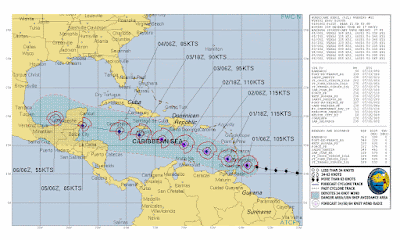


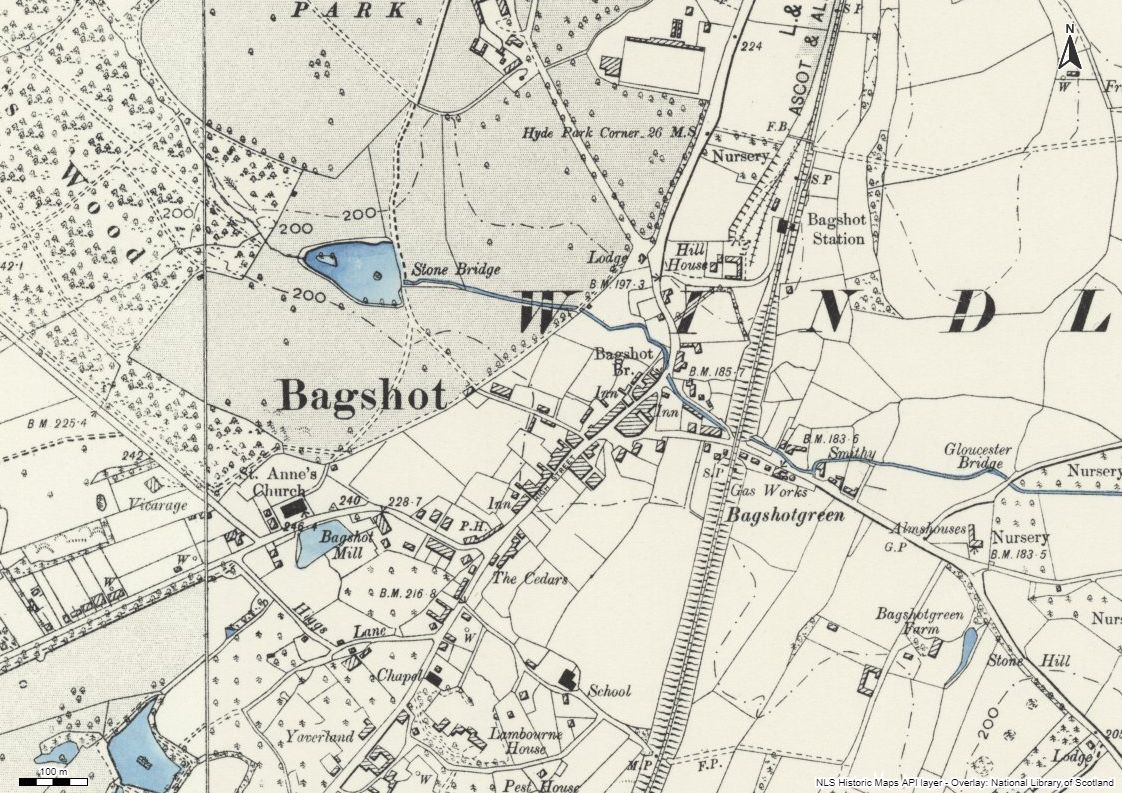


 Grant Goddard : radio broadcasting expert : media analyst : writer/author