The conversation at the Radio Academy event in London entitled ‘Is Radio Racist?’ became heated when the chairman, ‘LBC‘ morning show presenter James O’Brien [JO], was questioned by ‘BBC Five Live’ overnight presenter Dotun Adebayo [DA] about the absence of ethnic minority presenters at LBC. At the start of the event, O’Brien said he had been asked to chair the debate because “I am actually officially the whitest person working in the broadcasting industry today.”
DA: “James, you work for a London station. How many black presenters are there, when 20% of the London population is African-Caribbean or Asian? How many black presenters are there on LBC?”
JO: “That’s interesting because there aren’t any black presenters currently.”
DA: “If I ask James how many black cleaners there are at LBC, it would be a high percentage.”
JO: “For what it’s worth, that’s not true. If you had asked me about production staff, I would point at two or three colleagues, both current and former, who are from ethnic minorities. I object to that question because I don’t think their colour is relevant to their ability to do the job.”
DA: “That wasn’t the point. I gave you one example of London media where there are no [ethnic] presenters. You should be embarrassed about that, James.”
JO: “I think that, at the moment, I am the best person to be presenting my show and colour is entirely irrelevant to that equation. If someone who is better than me comes along, they will get my job, whatever colour they are. I would hope my employer would have the bravery to appoint the best person for the job and not say…..”
DA: “How can you explain the fact that there isn’t one black presenter on your station?”
JO: “How would you like to be the one who only got the job because there aren’t any black people on the station?”
DA: “I would be happy to get the job because at least it was an opportunity for me, whereas there is no opportunity for me there at the moment. There are no black presenters at LBC. That’s something that’s disgraceful and you know that.”
JO: “I dispute that entirely, but it’s not about me. If you want to hear me talk about myself, I’ll be back on LBC 97.3 FM tomorrow morning [laughter from audience].”
Later in the debate, Salim Salam [SS], a former BBC producer now working for digital station ‘Colourful Radio’, returned the discussion to the same issue:
SS: “It’s a managerial question. Given that you want to have a media industry which is broadly reflective of the society in which it operates, and in the case of the BBC is directly paid for by that society, then you should be looking to get (LBC being an example) a station which is broadly representative of the society to which it is broadcasting. And the fact that it’s not is a managerial question.”
JO: “LBC takes up 24 hours of programming, of which every single one, expect for two [hours] between 5 and 7am, is phone-in. So if you want to talk about a radio station that provides a platform and an opportunity for every single citizen in the city to put forward their case, their perspective, their experience or their opinion, a phone-in programme or a phone-in station is almost immune to these accusations.”
SS: “No, it’s not, because I’m talking about the people who present the programmes and who make the programmes, which actually affects the editorial. There are two elements to this question. One is: who’s making the programmes and who’s presenting the programmes, and who’s doing the hiring and firing? … The other question is the editorial, and it’s not always a question of people walking around deliberately looking for opportunities to discriminate against black people. It’s about the questions that you ask. Muslim people, for example, have a hell of a lot of questions to ask about a lot of things. There’s nobody asking those questions for them because the editorial lines that are being taken all come from one particular point of view, and then the questions that are asked follow the perceived lines of wisdom or the orthodoxy of the time. So, if you are looking for an industry that is broadly reflective of the society in which it operates, you have got to ask yourself why is it not (whether it is racism or not)? Secondly, if you are looking for solutions to that, look at who is doing the hiring and firing. Who do they know? Are they capable of making a rational judgement when they are faced with those applicants? The BBC’s own figures will tell you that black people, once they get to the final interview stage, are still three times less likely to get the job than their white counterparts. Are you telling me that black people are three times less talented or able? I’m not of that opinion. I think it’s either unconscious discrimination, or whatever it is.”
Jimmy Buckland, external affairs officer of RadioCentre, provided the meeting with data from the forthcoming SkillCentre 2006 Employment Census which found the radio industry overall employs 6.9% of staff from black and minority ethnic backgrounds, comprising 3.1% in commercial radio and 10.9% in BBC radio. Explaining that these results appear skewed because “commercial radio is more regional based than the BBC”, Buckland said that 19% of commercial radio’s workforce is based in London, compared to 59% of the BBC’s. He added: “What we have here is a problem of representation, definitely.”
[First published in edited form in ‘The Radio Magazine’ as ‘LBC Quizzed Over All-White Presenter Team’, #777, 28 February 2007]
“Clackety-clack clackety-clack, from Kalamazoo to Timbuctoo, from Timbuctoo and back!”
As a young reader, I learned these words by heart from a favourite children’s book, ‘The Train to Timbuctoo’ written in 1951 by Margaret Wise Brown. I daydreamed about the journey between these two strangely-named railway stations, evoked so perfectly by the author’s prose and accompanying illustrations. Decades later, I discovered I had been sold a fantasy, it being as improbable to take a train from Kalamazoo (a city in Michigan) to Timbuktu (an ancient city in Mali) as it would to line up at Marrakesh station ticket office behind Graham Nash. Only recently did I learn that Timbuctoo (a different spelling from the Mali one) is in fact the name of: a ghost town in California; a small settlement in New Jersey; and a failed farming community in upstate New York, none of which boast a railway station. Whichever were the book’s fantasy locations, I never did manage to travel there … by train or other means. But it had stimulated dreams of foreign sojourns.
Although I never read the book, the haunting instrumental theme music to the French dramatisation of ‘Robinson Crusoe’ remains embedded in my memory, half a century after having watched its thirteen black-and-white dubbed episodes repeated ad nauseum on BBC children’s television. Seven-year-old suburban me was enthralled by the prospect of living beside the sandy beach of a sunny tropical island, despite my aversion to spiders and snakes. Scenic landscapes filmed on Gran Canaria looked picture-postcard remarkable in the era before ‘package holidays’ and ‘charter flights’ opened up international travel. The series fomented a childhood dream of one day relishing a ‘simple’ life beside a gently lapping sea … perhaps accompanied by a ‘Girl Friday’ such as Tuesday Weld whom I had just ogled alongside ‘Richard Kimble’ in ‘The Fugitive’, my parents’ favourite TV serial. It was ‘Robinson Crusoe’ that fostered dreams of island-living.
For a month during early 2004, much of my time was wasted sat at a desk in the air-conditioned open-plan BBC office in Phnom Penh with a workload stymied by disagreements with management over the danger of fulfilling my contract in the crumbling Radio National Kampuchea headquarters, following the recent workplace death of a staff member. Seeking escapism from these frustrations, I listened to the few extant streaming reggae music stations of the time, but found none were playing the selection of ‘roots’ oldies I desired. My fruitless search had identified a gap in the global online market for listeners like me who had grown up during reggae’s most fertile and creative period between the 1960’s and 1980’s.
On my return to the UK later that year, I spent months awaiting the follow-up BBC work contracts I had been promised, but which never materialised. Without employment, I busied myself creating an automated online music station ‘rootsrockreggae’, digitising 15,000 reggae recordings I had collected since childhood. Broadcast from servers in Jamaica, I managed the operation remotely, generating revenue from a few local advertisers and commissions from listeners buying compact discs of music they had heard. It started small but, using an early iteration of ‘Google Ads’ to target North American reggae fans, the audience grew quickly. Within a few years, Winamp/Shoutcast ranked it amongst the five most listened to online reggae radio stations in the world, attracting an audience of tens of thousands each day. Its online player displayed constantly updated headlines from Jamaica, reggae news and weather reports, using my computer programming skills first learnt in the 1970’s. Like most online start-ups, sadly it never turned a profit.
Out of the blue, I received an email from the engineer of an FM radio station ‘Kyak 106’, asking if it could re-broadcast rootsrockreggae’s online overnight stream of dub and DJ music when no live presenters were available. I found the station’s website, listened and loved its enthusiasm for reggae, broadcasting to an island called Carriacou of which I knew absolutely nothing. I responded positively. This random communication prompted me to find out more about the location where my online station was suddenly being broadcast on 106.3 FM.
I discovered that Carriacou is a 12-square-mile island in the southeast Caribbean Sea with a population of 9,000. It is part of the former British colony of Grenada, independent since 1974 but retaining King Charles III as head of state. Physically, it is closer to Saint Vincent & The Grenadines (another independent former British colony, population 110,000, 4 miles away) than to the main island of Grenada (population 120,000, 17 miles away). Reading what little I could find online, I was quickly charmed by Carriacou’s old-style, friendly, relaxed way of life. It was not a resort island for rich Americans, its single airstrip too small for commercial planes, its colourful buildings were low-rise and its capital Hillsborough (population 1,200) had the feel of a quaint village with a short ‘High Street’.
Such was my enthusiasm, buoyed by regular listening to Kyak 106’s live shows, that I started to sketch a budget holiday plan for Carriacou, taking a Monarch Airlines flight from the UK to Grenada, a ferry to the island and staying at ‘Ades Dream Guesthouse’. Initially, it was time constraints that delayed such a visit because my workload had permitted only a single day off that year (to attend my daughter’s graduation). Then, having unexpectedly and suddenly lost my over-demanding job and unable to find another, finance became the restricting factor.
Inevitably, life moved on. Although the listenership to my reggae station had continued to grow, revenues fell precipitously when the dollar commissions earned from compact disc sales were replaced by mere cents generated by newly legalised MP3 download sales. Lacking a job, I reluctantly closed rootsrockreggae in 2009, even though it was now regularly ranked the most-listened online reggae station in the world after five years continuously on-air. It was a disappointing and frustrating time. Without access to development funds, life had to be focused on survival above all else. I promised myself to retire to Carriacou as soon as I won the lottery.
Kyak 106 closed in 2014, the product of a falling-out between two of its three directors that escalated as far as a 2022 High Court judgement. Station engineer Michael Ward, having been summarily sacked by presenter Kimberlain ‘Kim D King‘ Mills, proceeded to commandeer the radio station and continue broadcasting from its Belair studio in Carriacou, until Mills called time and unilaterally shut the operation. Subsequently, Ward transformed Kyak 106 into an automated online reggae music station, adopting a slogan ‘Roots Rock Reggae from Carriacou’ that sounded remarkably familiar!
28 August 2008. When tropical storm Gustav arrived in Jamaica, I was listening for news to FM talk radio station ‘Power 106’ where presenter Althea McKenzie remained barricaded in its Bradley Avenue studio in Half Way Tree for hours on end. You could hear the wind and the rains aggressively pounding the building as she valiantly relayed information updates for residents and took phone calls from listeners, her voice sometimes wracked with dread and emotion. It produced some of the most impressive (but frightening) live radio I have ever heard, for which she should have won some broadcasting award. Gustav resulted in fifteen deaths and US$210m in damages on the island. McKenzie is still heard daily from 5am on this excellent station. I still dreamt of living on a Caribbean island, despite weather disasters such as this.
October 2017. I had accompanied my daughter for a meal in a Wokingham pizzeria when my sister asked me: “If you could live anywhere in the world, where would you want to be?” Without hesitation, repetition or deviation, I responded: “Carriacou.” The dream was still alive.
1 July 2024. Category 4 Hurricane Beryl tore through Carriacou on Monday morning, destroying 98% of its buildings, cutting its electricity, water supply and mobile phone coverage. Houses were reduced to matchsticks. Huge trees were uprooted. All vegetation was stripped away, turning the island from luscious green to brown. Several people (number still unconfirmed) died. Roads became impassable. All communication with the outside world was lost. To discover what had happened there, I turned to YouTube. There I discovered award-winning American journalist and ‘storm chaser’ Jonathan Petramala who had arrived on the island the previous day with colleague Brandon Clement to document the hurricane’s passage. His videos provided an absolutely remarkable record of the devastation.
Two decades earlier, when I had first sought information about Carriacou, YouTube was yet to launch. Today there are dozens of videos about the island. Petramala captured the ‘calm before the storm’ mere hours before the hurricane struck, incorporating drone footage illustrating the charm of its colourful buildings and its ‘paradise’ sandy beaches. His impassioned commentary heralded the calamity that was to come and, although the island’s one petrol station had closed after a run on fuel and the mini-mart was busy, there was no evident panic. “It’s going to be horrific,” he said … and it was.
The following day’s video was a bleak testament to the destruction Carriacou had endured. “This island is shredded,” Petramala commented. “These people are in desperate need of help.” A resident said: “Right now, Carriacou is finished for a couple of years.” I had never seen anything weather-related as shocking as the complete devastation shown here. It resembled a war-zone. The drone shots were heartbreaking. Another shell-shocked resident said: “The thing is: we have three [storm] systems right behind it. What about the people who don’t have the time to recover, who don’t have a roof over their head, who don’t have the resources to rebuild?”
This video was unique because communications (mobile, internet, radio) had been completely lost on the island in the hurricane’s aftermath. Carriacou has no TV station and its two local FM radios (‘Vibes 101.3’ and ‘Sister Isles 92.9’) had been knocked out. Using a vehicle battery, Petramala uploaded his video via the Starlink satellite. That Tuesday, there was no other footage online. Residents could be seen filming on their mobile phones but there was no signal coverage to share or upload videos and no electricity to keep their phones charged. The island’s population was in an evident state of shock. Petramala’s footage, in which he made repeated appeals for outsiders to help the population, was used in weather stories broadcast by television stations the world over to illustrate the disaster, deservedly garnering millions of views.
The next day, Wednesday, roads in the capital had been partially cleared by residents, allowing Petramala to explore beyond by vehicle. His next video showed the ‘Dover Government School’, designated as one of eight emergency shelters on the island, entirely reduced to rubble. Those who were sheltering there had to evacuate to its tiny library outbuilding completed in April 2023 that remained standing. In March 2023, the 40-bed Princess Royal Smart Hospital had reopened in Belair with fanfare as the island’s sole hospital after having been “retrofitted to improve [its] resistance to disasters like hurricanes”, using funds from the UK government and Pan American Health Organization. This video showed all its facilities unusable due to water damage.
Then, arriving at the government’s Emergency Operations Centre on Carriacou, also in Belair, Petramala explained to its seemingly baffled staff:
“I’m the only journalist on the island. We have a Starlink [satellite terminal] so we’ve been able to get in touch with the government down in Grenada. I think we’re the only people who have contact with the outside [world]. They want to be able to get in touch with you guys but nothing is working. … We can set [Starlink] up outside and give you guys ten minutes if you want to call down to the government in Grenada and communicate what has happened here.”
Surprisingly, the Centre did not appear to be a hive of activity after such total devastation. We did learn that only five of the island’s eight emergency shelters had survived (for 9,000 population?). Although the building’s generator was powering lighting, its “communications hub” (as promised by the US Charge d’Affaires) had not survived the hurricane, despite this “fantastic facility” having only been completed in 2021 with US$3m funding from the US Embassy. Did we see a basic radio transceiver (even a retail amateur radio set) to provide SOME two-way inter-island communication? No. Did we see walkie-talkies used by emergency staff for intra-island communication? No. An apparent dependence on commercial mobile phone networks (operators Digicell and Flow) was, er, unwise when their towers prove so vulnerable to weather and power issues.
Set up in their vehicle, Petramala and Clement allowed nearby traumatised residents to use their Starlink satellite link to contact their loved ones overseas, leading to emotional scenes. Later that day, a helicopter landed at Carriacou’s airport, Grenada prime minster Dickon Mitchell emerged and, interviewed by Petramala, resembled a deer caught in headlights (commented my wife). He promised aid “from tomorrow” but proposed recruitment of volunteers from the mainland and assistance from other countries over guaranteeing immediate assistance from his government. For islanders who had no homes, no water, no electricity, no food and no petrol, with vehicles destroyed and roads blocked, the unfortunate impression was of a lack of urgency two days after the hurricane had hit. (Excellent silent drone footage of the devastation recorded by Clement fills six YouTube videos.)
While Petramala and Clement had been arriving in Carriacou on the eve of the hurricane, Belair resident Rina Mills had been similarly filming from her vehicle the calm that reined that Sunday before the storm (accompanied by Belair youth worker Shem ‘Ambassador’ Quamina). Employed by the Carriacou office of the ‘Grenada Tourism Authority’, Mills’ warnings about the impending disaster were stark and serious. With hindsight, this video (like her many others) was a testament to the beauty of the island though, within a few hours, it sadly became a historic record of how much habitat and infrastructure were about to be destroyed. Her exceptional knowledge of the geography, history and culture of Carriacou, combined with her informal conversations, made her videos compelling. She promised: “After the storm, we’ll do an update as well.”
However, the next day’s destruction of mobile phone masts prevented Mills from updating viewers until Friday, when her 24-minute live feed was managed only by climbing to a high point on the south of the island to connect over the horizon to an antenna on the mainland. Mills and her partner had lost their home, like many other islanders, and appeared in an understandable state of shock whilst cataloguing the “total devastation” of their island and five known associated deaths. It was a sad, upsetting video that acknowledged how precarious is our day-to-day existence, whilst also demonstrating the resilience of the population and its sense of community in the face of unprecedented disaster. The contrast with Mills’ chatty pre-disaster videos could not have been starker. Coincidentally, I heard Mills interviewed that weekend on the BBC World Service show ‘Newshour’ about Beryl’s impact on Carriacou.
Once partial mobile communication was restored on the island, Mills uploaded video previously recorded in the aftermath of the hurricane. In the centre of the capital Hillsborough, next to the destroyed Post Office, a mobile water desalination plant had been set up to offer free drinking water to residents. This vital resource had been provided by American religious charity ‘Samaritan’s Purse’ which amazingly had dispatched a DC-8 cargo plane to Grenada (video of landing) the day after the hurricane, loaded with materials (video) to establish a field hospital, desalination plants around the island, foodstuffs, tarpaulins, clothing and bedding. Two dozen of its volunteers were airlifted to Carriacou and a barge was chartered the following day to bring the equipment there from Grenada. It was a much-needed vital resource at a time when Grenada government assistance was still not visible. “Hats off to Samaritan’s Purse,” commented Mills’ partner. “They were the first to get here, in my opinion.”
I had never heard of Samaritan’s Purse but was incredibly impressed by the scale and urgency of its work, operating a fleet of 24 aircraft and two helicopters from North Carolina. Video of a public tour of this DC-8 plane at the Dayton Air Show only days earlier demonstrated the huge volume of supplies it had carried. Its volunteers quickly spread across the island, distributing materials to residents from churches (Pastor Happy Akasie’s church in Brunswick in this video). By the following week, it had set up its second field hospital in Carriacou with doctors, nurses, medications and counsellors (video). Despite the island’s hotels/B&B’s having been destroyed, the charity operates self-sufficiently, building its own accommodation and bringing food and water for staff. It seems to embody the fictional Tracy family’s ‘International Rescue’.
Towards the end of this video, Mills understandably rails against sightseers arriving by ferry from Grenada merely to video the destruction in order to attract ‘hits’ to their social media channels. One example of this was bizarre ‘Coleen AKA Bright Diamond’ from the mainland who appeared to enjoy her ‘day out’ on the destroyed island, travelling on the back of an aid truck, making inappropriate comments, drinking from a wine bottle in the back of a car and buying bottled beer. Afterwards, the Grenada government introduced vetting of ferry travellers to Carriacou to prevent further ‘disaster tourists’ consuming the island’s scarce resources. Fortunately, these self-promoting types were in a minority, overshadowed by the many people and organisations who arrived on Carriacou to genuinely help out.
British solicitor and author Nadine Matheson had been visiting her parents’ house on Carriacou when the hurricane struck and recorded this scary video of its almost total destruction. Once back home, she is recording informative updates on her parents’ situation and a fundraising effort to replace the house’s roof. The structure is now covered by a temporary blue tarpaulin which, like so many other properties, was donated by Samaritan’s Purse.
Meanwhile, videos published by the Grenada government since the disaster have proven a quite surreal soft-focus experience after the stark wholesale destruction visible in locally-made videos. After its prime minister (who is additionally minister for disaster management) visited the island, one video showed him standing on the wreckage of a resident’s home, looking wistfully into the distance, accompanied by soft tinkling music. Its editor seems to be a big fan of 1980’s Lionel Ritchie music videos. There is lots of footage of government officials in fluorescent vests talking to each other, pointing at the destruction and being interviewed explaining what WILL happen but – dare I say? – not much footage of action IMMEDIATELY to tackle this humanitarian crisis. Initially, the government’s media focus (including its partly owned GBN television channel) was much more on the relatively minor damage suffered on the main island, rather than the total destruction of ‘sister isle’ Carriacou.
Watching hours and hours of government press conferences uploaded online, I was struck by the preoccupation with ‘process’ they exhibit, talking endlessly about which department and which officers are responsible, which meetings WILL take place and who reports to whom. This habitual use of the future tense is alarming when what should be stated was what had ALREADY happened and what was happening RIGHT NOW. The government’s adoption of the slogan ‘Carriacou and Petite Martinique Will Rise Again!’ for the disaster seems symptomatic of this somewhat wishful thinking. It raises the big question: WHEN? Electricity is unlikely to be restored to the whole island for many months. Petrol remains in short supply. The situation on-the-ground for islanders remains dire.
The government press briefing on 9 July, eight days after the hurricane had hit, promised: a 2,000-gallon water truck loaned by a company on St Lucia “will commence distribution to residents starting Wednesday July 10th 2024”; then “a second 1,800-gallon water truck loaned by the Barbados Water Authority is expected to arrive on Carriacou during the coming week.” Does Grenada not own one water truck? How have 9,000 people on Carriacou been expected to survive without government-supplied fresh water for more than a week? Why does the co-ordinator of Grenada’s ‘National Disaster Management Agency’ (whose last web site news update was three weeks ago), Dr Terence Walters, seem to consider in this press conference that distributing 2,000 food packages to residents (who number 9,000) five days after the hurricane hit was a satisfactory response?
Coincidentally, a mere four days before Hurricane Beryl hit Carriacou, a 120-page report entitled ‘Grenada: National Disaster Preparedness Baseline Assessment’ had been published by the ‘Pacific Disaster Center’. It concluded that:
“… results for Grenada showed significant multi-hazard exposure including hurricane winds, earthquakes, and volcanoes with nearly the entire population exposed. […] The assessment pointed to vulnerabilities due to Environmental Stress, Information Access, and Gender Inequality and significant deficiencies in coping capacity areas such as Air Support and Transportation Capacity indicating enhancements are necessary to bolster Grenada’s disaster response capabilities. Addressing these gaps, alongside targeted efforts to mitigate the identified vulnerabilities, will strengthen the nation’s overall resilience to disasters. […] Strengthening communication and information management systems is essential to support effective disaster response and comprehensive risk reduction strategies.” [emphasis added]
In 2019, the World Bank had allocated US$20m to be drawn down by Grenada to address natural catastrophes, but had noted in its report:
“[Grenada’s] Institutional capacity for implementation [risk] is rated Substantial due to weak inter-institutional coordination and the lack of technical expertise. Implementing the proposed operation will require the integrated work of several actors at the national and local levels to move the proposed policy actions forward. This could result in scattered, low impact, and/or uncoordinated actions.” [emphasis added]
Estimated damages and losses to Grenada’s economy from its most significant disasters suffered between 1975 and 2018 were estimated by the World Bank to have totalled US$967m (at 2017 prices). Hurricane Beryl’s financial impact is likely to be greater than these prior disasters combined, eclipsing the island’s annual GDP several times. Evidently, the fiscal catastrophe of accelerating climate change not only decimates small economies such as Grenada’s but cumulatively will precipitate a global diversion of resources away from consumption towards mitigation and repair of weather, temperature and sea level changes.
It was evident in videos posted online that aid had quickly arrived from diverse sources: generous individuals, volunteers and groups on mainland Grenada, other Caribbean islands, the United Nations, France providing boats of supplies and troops on the ground (Grenada has no army), global charities. I watched a video of the French ambassador to Grenada interviewed whilst off-loading aid. Have I similarly seen the British high commissioner or governor general on Carriacou? Maybe I missed them. On 5 July, the UK provided £0.5m of immediate aid to Grenada and St Vincent, but will more substantial longer term assistance be forthcoming from the island’s former colonial power?
In 1983, the United States had sent 7,300 troops to invade and occupy Grenada because president Reagan chose to believe its newly built airport, funded partially by the British government, would be used to land Soviet bombers. 45 Grenadians were killed and 358 wounded. Today, if a major power were to devote similar resources to rebuild Carriacou quickly, its population might be able to endure the hardship it currently faces. However, despite residents suffering no electricity, water, food or a roof over their heads and with several emergency shelters destroyed, the government in Grenada has no current plan for significant evacuation of the island, preferring to remove only pregnant women, residents of old people’s homes and the hospitalised. How long are its citizens expected to survive when no cash is available from destroyed banks or ATM’s, forcing residents to make a four-hour round trip to the mainland? In 2024, these generous and stoic island people have been marooned in a hellish medieval landscape.
My dream of island-living is over for now. Carriacou can never be the same again. What will happen there is difficult to fathom. Its economy, seemingly reliant on retirees from the diaspora and small-scale tourism (independent travellers and two marinas of yachts) is ruined, forcing its people to make lifechanging decisions. Nowhere have I read that Grenada main island’s schools and sports halls have been opened to Carriacou refugees who have lost everything. At a time when thousands of its residents remain sat amongst the ruins of their dwellings, the Grenada government announced precipitously that:
“… the [Cayman Islands] Premier is extending an invitation to Grenadians who wish to work in the Cayman Islands, to return with her on Tuesday July 16 2024.”
The premier of this British Overseas Territory (population 85,000) was due to deliver aid relief to Grenada that day, but not before a further press statement had to hurriedly clarify that “no such offer was made during the courtesy call made to the Prime Minister of Grenada by the Premier of the Cayman Islands” and withdraw the implied invitation to potential economic migrants. Oh dear. (I recall when 8,000 refugees out of a population of 13,000 left the decimated Caribbean island of Montserrat following its 1995 volcanic eruption.)
I never got to visit Carriacou but, compared to the suffering endured presently by its resilient people, my regrets are insignificant. Watching the news from Carriacou engenders a sense of helplessness in the face of such overwhelming humanitarian need. I am highlighting Carriacou here only because it has been on my mind for two decades since receiving that fateful email from Kyak 106. The neighbouring islands of Petit Martinique and Union Island have been just as badly devastated by Hurricane Beryl. Though I am continuing to follow events in Carriacou, the mainstream media has inevitably moved on swiftly to other disasters elsewhere.
Observing the aftermath of this catastrophic event since 1 July has merely reinforced the devastating impact of ‘climate change’ us humans have foisted upon populations who have done nothing to cause it. Nobody on Earth can afford to ignore this issue because its effects will inevitably be coming to your corner of the world soon. Nobody will be immune. It is coming to get you, whether or not you choose to believe it is real. Voicing this eloquently was an emotional call-to-arms video (initially at https://youtu.be/oYn-XarQM3M but mysteriously deleted since) by United Nations climate change executive secretary Simon Stiell who is seen hugging his grandmother amongst the ruins of her home on Carriacou, his homeland.
After having viewed Beryl’s immediate impact from a helicopter, Grenada prime minister Dickon Mitchell had described the destruction as “Armageddon-like” in a press briefing and promised:
“We know it is not something that will happen overnight, but we certainly believe that in the next week to two and a half weeks we should have a complete clean up.”
Weeks later, new videos from Carriacou continue to show a post-Armageddon catastrophe that could last months and years for its beleaguered population.
POSTSCRIPT
On 27 Jul, this blog entry had suggested “Hurricane Beryl’s financial impact [on Grenada’s economy] is likely to be greater than these prior disasters [1975 to 2018] combined, eclipsing the island’s annual GDP several times.” The World Bank had previously documented that “damages and losses” from Hurricane Ivan in 2008 had amounted to 148% of Grenada’s then GDP.
On 30 Jul, Grenada prime minister Dickon Mitchell, closing the 47th CARICOM heads of state meeting he hosted and chaired there, suggested that the country’s early estimated losses from Hurricane Beryl would amount to EC$ 1,000,000,000 = US$ 370,000,000.
A back-of-the envelope calculation of this assertion:
Grenada GDP = US$ 1,320,000,000 (source: World Bank)
98% of buildings destroyed or damaged in Carriacou & Petit Martinique (source: Grenada government)
estimated population of Carriacou & Petit Martinique = 9,000estimated number of buildings (homes + businesses + public buildings) = 5,000 (wild guess)
estimated impact on GDP = 28%
estimated impact per building on GDP = US$ 75,500
However, the destroyed buildings included public schools, emergency shelters, Carriacou’s hospital, post office and police station, each likely to cost millions to rebuild/repair. Additional costs include destroyed infrastructure such as island-wide overhead electric cabling, ports, marinas, airport, beaches, agriculture, fishing, environment plus lost tourism income (14% of Grenada GDP in 2019, source: UN).
I only knew ‘Roger Tate’ (real name Bob Tomalski) through listening to his programmes on the radio. He was a DJ on ‘Radio Invicta‘, London’s first soul music radio station, launched in 1970. Invicta was a pirate radio station. Back then, there were no legal radio stations in the UK other than the BBC.
The notion of a campaign for a soul music radio station for London had been a little premature, given that no kind of commercial radio had yet existed in Britain. But that is exactly what Radio Invicta did. As Roger Tate explained on-air in 1974:
“Who are Radio Invicta? You may well be asking. Well, we’re an all-soul music radio station. We’re more of a campaign than a radio station, I suppose. We believe in featuring more good soul music on the radio.”
By 1982, ‘Black Echoes‘ music paper reported that Radio Invicta was attracting 26,000 listeners each weekend for its broadcasts. By 1983, Radio Invicta had collected a petition of 20,000 signatures in support of its campaign for a legal radio licence. There was sufficient space on the FM band for London to have dozens more radio stations. By then, local commercial radio had existed in the UK for a decade. But nobody in power wanted to receive the station’s petition and Invicta’s Mike Strawson commented:
“I have tried to speak to the Home Office about it, but it shuts the door.”
Radio Invicta eventually closed for good on 15 July 1984, the date that the new ‘Telecommunications Act’ had dramatically increased the penalties for getting caught doing pirate radio to a £2,000 fine and/or three months in jail. By then, ‘Capital Radio’ had enjoyed its licence as London’s only commercial radio music station for eleven years. Its monopoly reign was still to run for a further six years.
It might have seemed in 1984 that Radio Invicta’s fourteen-year struggle to play soul music on the radio in London had come to absolutely nothing. The Invicta team went their separate ways after the pirate station’s closure. Roger Tate continued his career as a successful technology journalist. After his death in 2001, aged only forty-seven, one of his friends, Trevor Brook, spoke of Tate’s determination to play soul music on the radio in the face of opposition from the government and the radio ‘establishment.’ His eulogy at the funeral of his friend included these comments:
“The government told the story that there were no frequencies available. Now Bob was not stupid. He had enough technical knowledge to know that this was simply not true. So, either government officials were too dim to realise the truth of the situation … or they were just lying. Nowadays, we have 300 independent transmitters operating in those same wavebands, so you can probably work out which it was. Anyway, in Britain, the result was that any proper public debate about the possible merits of more radio listening choice was sabotaged by this perpetual claim that it was impossible anyway.
So, we had pirates. Other countries which had not liberalised the airwaves had pirates as well, but some of them took the refreshingly realistic approach that no harm was being caused, and they permitted unlicensed operations to continue until they got round to regularising the situation. Ambulances still reached their destinations and no aeroplanes fell out of the sky. Not so in this country though. The enforcement services here were too well funded and the established orthodoxy too well entrenched. That ‘frequency cupboard’ was going to be kept well and truly locked!
Bob had thrown himself into running a regular soul station, Radio Invicta. He built a studio, tore it apart and built a better one. He eventually sectioned off part of the flat as a separate soundproofed area. He built transmitters – and got them working. But Bob was nothing if not multi-skilled, and he excelled in producing the programmes themselves. Using nothing more impressive than an old four-track reel-to-reel tape recorder, Bob would create highly polished jingles and station identifications. ‘Roger Tate, super soul DJ.’ Other stations, both official and unofficial, listened to what Bob and his colleagues did and their ideas were copied or imitated.
Faced with the authorities, Bob was remarkable, because he was absolutely fearless. He was certain they were in the wrong and, given enough time, were going to lose the battle. It was a war of attrition and only perpetual piracy was ever going to bring about change. And he was quite right about that. The government kept winning the battle in the courts but began to lose the moral one. Eventually the law was changed.
Do we have free radio now? In the sense that anybody can decide to start up a new magazine, find the finance and get on with it, no, we don’t have that for radio. The process is bound up with a longwinded regulation and approval process involving a statutory body which has had its fingers burnt in the past by the odd bankruptcy and the odd scandal. So they play safe and issue more licences to those who already have stations. The consequence is that originality and creativity get crushed into blandness and mediocrity. My own teenagers constantly flip between stations in the car, but they don’t care enough about any of them to listen indoors. Fresh people don’t get to control stations. Behind boardroom doors, they might think it privately, but in what other industry would the chairman of the largest conglomerate in the market dare to say publicly that even the present regime was too open and, I quote, ‘was out of date and was letting inexperienced players into the market’? That is a disgraceful statement. Where would television, theatre, comedy, the arts, and so on be, if new and, by definition, inexperienced people didn’t get lots of exposure? The industry is stale, complacent and rotten. Bob, there are more battles out there and we needed you here.”
Ten years later, these words are just as pertinent. It is hard to believe that a bunch of enthusiastic soul music fans who wanted to play their favourite music to their mates could have posed such a threat to the established order. But the history of radio broadcasting in the UK has demonstrated repeatedly that ‘the great and the good’ consider the medium far too important to let control fall out of their hands. Their arguments, however ridiculous, were taken completely seriously because they were the establishment.
Peter Baldwin, deputy director of radio at the ‘Independent Broadcasting Authority’ [regulator], said in 1985:
“We wouldn’t want to be dealing with two current local stations [in one area]. If it’s Radio Yeovil [operating as the only commercial station in Yeovil], well, that’s okay … But we couldn’t subscribe to competition [for existing local commercial pop music station Swansea Sound] from Radio Swansea, unless it was in Welsh or concentrated on jazz – and there probably wouldn’t be sufficient demand for that kind of service.”
James Gordon (now Lord Gordon), then managing director of ‘Radio Clyde‘, wrote in ‘The Independent‘ newspaper in 1989:
“It has to be asked whether there is really evidence of pent-up demand from listeners for more localised neighbourhood stations … Eight to ten London-wide stations would be enough to cater for most tastes.”
David Mellor MP told the House of Commons in 1984:
“The government do not believe that it would be sensible or fair to issue pirate broadcasters with licences to broadcast. To do so, on the basis suggested by the pirate broadcasters, would be progressively to undermine the broadcasting structure that has evolved over the years.”
However, within five years, the government did indeed license a pirate radio station to broadcast in London. Once Invicta had disappeared in 1984, it was superseded by newer, more commercially minded, more entrepreneurial pirate radio stations – ‘JFM’, ‘LWR’, ‘Horizon’ – that played black music for Londoners. In 1985, a new pirate station called ‘KISS FM’ started, quite hesitantly at first. Its reign as a London pirate proved to be much shorter than Invicta’s but, by the time KISS closed in 1988, it was probably already better known than Invicta.
KISS FM went on to win a London radio licence in 1989 and re-launched legally in 1990. It carried with it the debt of a twenty-year history of black music pirate radio in London started by Radio Invicta and then pushed forward by hundreds of DJ’s who had worked on dozens of London black music stations. KISS FM would never have existed or won its licence without those pirate pioneers.
Sadly, the importance of KISS FM’s licence as the outcome of a twenty-year campaign seemed to be quickly forgotten by its owners and shareholders. The lure of big bucks quickly replaced pirate ideology during a period of history when ‘get rich quick’ was peddled by government as the legitimate prevailing economic philosophy. KISS FM lost the plot rapidly and soon became no more than a money-making machine for a faceless multimedia corporation.
Right now, there remains as big a gap between pirate radio and the licensed radio broadcasters as existed twenty years ago or even forty years ago. London’s supposedly ‘black music’ stations, KISS FM and ‘Choice FM‘, now sound too much of the time like parodies of what they could be. Whereas pirate radio in London still sounds remarkably alive, unconventional and creative. More importantly, only the pirates play the ‘tunes’ that many of us like to hear.
The issue of how black music was ignored by legal radio in London, and then betrayed by newly licensed black music radio stations, is on my mind because of my new book ‘KISS FM: From Radical Radio To Big Business.’ It documents a small part of the history of black music pirate radio in London, and it charts the transformation of KISS FM from a rag tag group of black music fanatics into a corporate horror story. I was on the inside of that metamorphosis and it was an experience that, even twenty years later, remains a sad and terrible time to recall.
In 1974, Roger Tate had wanted more black music to be heard on the radio in London. Ostensibly, that objective has been achieved. But the black music I hear played on white-owned stations in London (there is no black-owned station) is a kind of vanilla ‘K-Tel‘ ‘black music’ that is inoffensive and unchallenging.
If Croydon is the dubstep capital of the world, how come there is no FM radio station playing dubstep in Croydon, or even in London? How come I never hear reggae on the radio when London is one of the world cities for reggae? How come I had to turn to speech station ‘BBC Radio Four‘ to hear anything about the death of Gil Scott-Heron in May? Why is it that Jean Adebambo’s suicide went completely unremarked by radio two years ago?
Legitimate radio in London seems just as scared of contemporary cutting-edge black music as it was in the 1970’s when Roger Tate was trying to fill the gaping hole with Radio Invicta. Nothing has really changed. Except now there exists the internet to fill that gaping hole. And FM pirate radio in London continues to satisfy demands from an audience that legitimate radio has demonstrated time and time again that it doesn’t give a shit about. Is it any surprise that young people are deserting broadcast radio?
Forty years ago, I listened to Roger Tate and London pirates like Radio Invicta because they played the music I wanted to hear. Forty years later, I find it absolutely ridiculous that I am still listening to a new generation of London pirates because they still play the music I want to hear. As Trevor Brook suggested at Roger’s funeral, our radio system is so consumed by “blandness and mediocrity” that “the industry is stale, complacent and rotten.”
Roger Tate R.I.P. You may be gone, but you and your campaign at Radio Invicta are as necessary as ever today. Sad but true.
It was a little after seven o’clock in the morning when the phone rang. Normally, I would already have been out of bed by that hour on a weekday. However, the previous night’s ‘DJ meeting’ [open to all 44 KISS FM presenters] had tired me out. I was awake, but I was still trying to urge my body to get out of bed. The mobile phone stationed beside my bed rang noisily and forced my brain into action far faster than it wanted.
It was [KISS FM personal assistant to managing director] Rosee Laurence on the line, asking if I could schedule a meeting that morning with [KISS FM managing director] Gordon McNamee. I scrambled out of bed to retrieve my diary from the battered ‘WH Smith’ black plastic briefcase I always took to work. Requests for meetings at such short notice were common although, during the last few days, McNamee had had no contact with me. Laurence suggested ten o’clock. I explained that I already had an editorial meeting [of my programming department] scheduled for half past ten, but I could fit it in as long as the meeting was not going to last too long. She assured me that it would not. I scribbled “10am – Gordon” in my diary, replaced the mobile phone in its charger and got on with the business of waking up properly.
My diary told me that I had two further meetings that afternoon – a weekly sponsorship get-together at one o’clock with [KISS FM finance director] Martin Strivens and the sponsorship manager, Gordon Drummond, followed by a debriefing session in the boardroom at three o’clock with KISS FM’s partners in the Pepsi promotion. During the drive from my flat to the office, I reflected on the possible reason for the early morning phone call. Was McNamee going to tell me what had happened at the previous day’s board meeting? Was he going to pretend that nothing untoward had happened and that the board had approved all his [unachievable] targets for Year Two?
I was already running late when I became caught up in the worst of the rush-hour traffic along Holloway Road. Although my work day officially started at half past nine, I liked to arrive at work earlier so that I could snatch a little time to myself before the inevitable mayhem started in the department. However, that day, there was only time to down a quick cup of tea before walking up to the top floor in time for my ten o’clock appointment. Gordon McNamee was sat in his corner office when Laurence ushered me in. After exchanging morning greetings, I sat facing McNamee across his huge wooden desk. He shuffled from side to side in his chair a few times, avoiding looking directly into my eyes, and he sighed unusually heavily. Several times, he looked up at me as if he was going to say something, but then stopped short.
I stared at him blankly, not knowing what to expect. Eventually, he started mumbling something apologetically, but still he was making little sense. I knew then that McNamee had bad news to break to me. He had always been excellent at whipping his team into a frenzy of enthusiasm when something good was happening, but he was almost incapable of breaking negative news to anyone. He started speaking slowly and managed to explain that he had been “extremely vexed” by the memo I had delivered to him two days earlier. ‘Vexed’ was one of McNamee’s favourite words to use in situations when somebody had done something that displeased him. Anyone else might have been angry, but McNamee was always ‘vexed.’
As he reflected upon the contents of my memo and how ‘vexed’ it had made him, McNamee seemed better able to talk to me directly and to break the bad news. He explained that the board had met the previous afternoon and had decided that the company no longer needed my services. He muttered something about this being the hardest thing he had ever had to do and how he regretted the decision, but I was barely listening to his words. Instead, I was thinking how cowardly was this man sitting in front of me. I was thinking that, even now, he had no intention of telling me the truth of what had taken place at the board meeting, or how he had probably acted to save his own skin. What I wanted to know was what he had told the board about my dissent and what he had told the board of my contributions to the station’s success.
But there seemed little point in saying anything at all to the cowering figure sat in front of me, with whom I had worked so closely for more than two years. I got up to leave the room. McNamee had failed to deliver my promised rewards on so many occasions that I did not need to hear another fabricated story about why I was not getting things to which I felt I was entitled. As I left his office, McNamee said that it would be necessary for me to leave the building immediately, and he thrust some documents into my hand. I walked straight out of his office, shocked that, even at this stage in our relationship, McNamee was still incapable of telling me truthfully why I had to go.
Before I could reach the staircase to return to my office, McNamee had caught up with me and was asking me to stop. For a second, I felt as if I should ignore him totally and just carry on walking, but I turned towards him at the very top of the building’s stairwell.
“We could say that you had resigned, to make it easier for you, if you wanted,” McNamee suggested to me.
I stared at him coldly with a combination of anger and hatred that I could feel welling up inside me.
“Gordon, that’s a fucking insult,” I spat at him. Then I turned and walked down the staircase leading to my office on the next floor.
I was incensed. After all the sweat, blood and toil I had poured into this company. After all the personal sacrifices I had made to ensure that KISS FM succeeded. After my hard work had produced the required results more quickly than had ever been anticipated [Year One target of one million listeners per week achieved within first six months on-air]. Now, I was being asked to resign from a job in which I had achieved nothing but success. McNamee’s cheek to even suggest such a thing had made me really angry. I was in a rage as I stormed into my office. The programming floor was starting to fill up, as staff trickled into work. My first thought was the speed with which McNamee had insisted I must leave the station. Rather than suffer the indignity of being forcibly removed from the building by the station’s security guard, I started to pack up my possessions.
[KISS FM head of music] Lindsay Wesker caught my attention as he walked onto the floor from the staircase. He was one of my senior team members, so I felt I should break the bad news to him personally. The only private place I could think of to talk was the men’s toilet in the stairwell of the floor, so we crowded into the tiny cubicle.
“I’ve just been sacked,” I said to Wesker, “and I’ve been told to leave the building immediately.”
Wesker looked thoughtful, but did not seem particularly shocked. I suddenly understood that Wesker must have been the only member of my team to know what was going to happen to me, before I did.
“Just as you’ve said before,” said Wesker calmly, “it’s always the programming department that gets the chop.”
These were the very words I had shared with Wesker more than a year earlier, during the first programme planning meeting I had convened at [former KISS FM office] Blackstock Mews. Wesker had mulled over my words carefully then and, now, I realised why he had found those words so interesting. In Wesker’s eyes, he had got rid of me at last. I exited the men’s toilet without saying another word.
Having received no sympathy from Wesker for my predicament, I walked back to my office and continued assembling my personal effects. I had spent far more of my waking hours in that building during the last year than I had at home, so many of my own possessions were intermingled with that of the company. There was the portable television I had brought to the office when the Gulf War had started, there was a portable cassette player I used, the records I had used to make station jingles, and unread magazines that were cluttering the floor. These were all mine. I started gathering them together into a manageable pile to take away with me. Other staff on the floor noticed me through the clear plastic partition of my office and started to wonder what was going on.
I told Philippa Unwin, who had worked with me closely as the department administrator since the Blackstock Mews days, what had just happened to me. She became visibly upset. As I told other members of my team, they stood around the floor in disbelief and shock.
[KISS FM head of talks] Lorna Clarke said to me: “They can’t sack you just like that. You’re the only one who knows how this whole station works.”
I felt pressured by the urgency to get out quickly, so I started carrying boxes of my things down three flights of stairs to put in my company car parked at the back of the building. I suddenly realised that my hasty and unexpected departure from KISS FM could be explained away to the staff on any pretext, unless I could make some kind of statement myself. The memo that had ‘vexed’ Gordon so much had recorded all the significant events of the previous week, as well as having stated my unambiguous position on wanting KISS FM to adopt a realistic strategy for its future.
After less than a year on-air, one of the staff’s major criticisms was the lack of information about company decisions that trickled down to them from the senior management. Only those staff working most closely with me in the programming department understood that I was just as ill-informed about what was going on at board level as everybody else was in the building. Using a Prit-Stick from the top drawer of my desk, I glued a copy of my memo to Gordon McNamee onto the clear plastic partition of my office. My room opened onto the floor’s entrance lobby and the partition could be seen by everyone passing through the department. Alongside the memo, I glued the document detailing the programming policy changes I had been ordered by McNamee to devise.
While I continued to gather together my possessions, staff in the department started to read my two memos, all the while expressing outrage that my dismissal could be so abrupt. Then, Wesker burst into my office and handed me a sheet of ledger paper.
“Rosee [Laurence] upstairs says these things are KISS property which you have to give back before you go,” said Lindsay sheepishly.
Inscribed in red ink was a list:
“1) security tag 13-92 + ID pass. 2) office & studio keys. 3) car keys.”
It was evident that Wesker had been anticipating my dismissal and was acting as messenger boy for the management staff on the top floor who were too cowardly to talk to me directly. I snatched the piece of paper from him, but ignored it. I asked him, rhetorically, how I was expected to take home all my personal possessions without being able to use the company car?
Before leaving the station for the last time, I walked around the programming department and said my hurried goodbyes to the few staff who were already at their desks. Because the majority of my team worked shifts, there were only a few people there. In the DJs’ office, [daytime presenter] David Rodigan was sat at his desk, facing the front windows that looked out over Holloway Road. His back was towards the office door, so I had to interrupt his preparations for that day’s lunchtime show to bid him farewell. He expressed outrage at my sacking and seemed bewildered by the speed with which I was being forced to leave.
There was nothing left to do except thank everyone who was in the department for the good times we had spent together and to give many of them one last hug. Some of the staff were crying, others were visibly angry, and some did not seem to believe the events that were unfolding right in front of their eyes. Wesker was the only person who seemed unmoved by the whole scene. He was busy protesting that I had not left the company’s property that he had been given responsibility to collect. I could not have cared less.
I got into my company car, half expecting someone to rush out and stop me driving it away. But they did not, and I drove away from the station’s car park for the very last time. I had arrived at work barely two hours ago. Now, I was already on my way home again. It felt as if some ghastly mistake had happened, some chance mishap over which I had been able to exert no control. I could not believe that this would really be the very last day I ever worked at KISS FM. The traffic was much lighter on the roads, now that the rush hour was over, so I reached home within half an hour. By then, I was feeling neither upset nor angry about my dismissal. More, I was stunned that the end could have come so abruptly, and without McNamee having offered any gratitude for my significant contributions to KISS FM’s success.
I was standing over the motionless body of my line manager. He was dead to the world, naked under the sheet on his bed. Neither my arrival in his studio apartment through its wide-open front door, nor the chatter of little ‘street boys’ passing up and down the building’s internal staircase, nor the morning sunshine streaming through the open windows, nor the noise of rush hour traffic on the road below seemed to have stirred him. Should I call out? Should I nudge him? Since the limit of my responsibilities to the BBC had already been sorely tested by a recent health & safety ‘issue’, I decided that playing butler to my boss would stretch my patience one step too far. I turned around, leaving him asleep, walked out and descended the stairs to rejoin the driver waiting out front in the BBC SUV.
It was the ‘big day’ in March when my trainees were to interview candidates for two radio presenter jobs. Charles ‘Chas’ Hamilton had asked to attend too, so I had arranged a detour at eight o’clock to pick him up en route from my hotel to the radio station. This was unusual because, to date, he had demonstrated scant interest in my 28 hours per week of sessions training teams at two Phnom Penh radio stations in production skills, apparently preferring to remain at his desk in the air-conditioned, open-plan BBC office. On my arrival in Cambodia, rather than having furnished a training plan or schedule, Hamilton had invited me for an evening meal in his apartment, bending my ear with gossip about the BBC World Service Trust’s recently arrived Canadian manager. Now I was having to spend what remained of my seven-day working week determining which skills I needed to demonstrate to my teams and how to instruct them when I understood not one word of Khmer.
Hamilton was oblivious to the supreme irony of my bedside presence that morning. Before departing London, BBC management had confided that, only after having signed contracts in December 2003 to supply radio training to two Cambodian stations, had it understood that its prior internal appointee to head the country’s radio projects had no experience producing live radio programmes. Having been hurriedly headhunted as a result of my international track record in radio production and presentation during three decades, my latest mission was necessary solely to bail out a consequence of the Corporation’s arcane appointment system. Meanwhile, in spite of my radio experience, my own applications over two decades for 43 BBC vacancies had resulted in thirteen interviews but not a single job offer.
Although the BBC contract required me primarily to train in radio production, it quickly became evident that, in order for my young but enthusiastic trainees to appoint inexperienced presenters for the station’s new youth phone-in programme, I needed to teach them how to word a job vacancy advertisement, shortlist applicants, interview candidates and take personnel decisions. They were fortunate that, after a decade assisting in my father’s self-employed architectural business, I had taken my first management post in 1978, hiring and firing people since then and managing teams of more than fifty. In Cambodia, my role became necessarily upgraded to informal ‘management consultant’ despite having had to accept a BBC freelance pay rate lower than the mediocre job at Ofcom from which I had just resigned in the UK … and undoubtedly lower than Hamilton’s pensioned salary as head of radio.
On arrival at the Women’s Media Centre that morning, I found my trainees already assembled in the first-floor radio studio to commence job interviews. I waited in the downstairs lobby to greet the candidates (a bow accompanying ‘hello’ the limit of my Khmer communication skills) and usher them upstairs. However, as Hamilton had yet to arrive, the schedule soon started to run over and resulted in successive applicants seated together in the reception area, a situation I had hoped to avoid. Eventually appearing apologetically an hour late, Hamilton would never be told about that morning’s ‘sleeping beauty’ encounter. It was more important to proceed with the tasks at hand.
During previous weeks’ sessions, the trainees had agreed upon three candidate tasks: an interview by the production team with a prepared list of questions allocated to each member; a script I had written and had translated, to be read into a studio microphone for recording; and a faked phone conversation recorded with a production member pretending to be a caller, to test each potential presenter’s spontaneity and improvisation skills. None of the candidates had prior radio experience, which it why it was imperative to identify ‘potential’ rather than ‘accomplishment’. The planned radio show was destined to become Cambodia’s first live youth phone-in, for which we needed one male and one female presenter.
Having completed the interview round, we broke for the mandatory two-hour lunch, me and Hamilton returning to the BBC office by car. I shared lunch with local staff at the kitchen table, while Hamilton took his usual sojourn with the ex-pat employees to a local restaurant. Afterwards, he did not accompany my return to the radio station for the afternoon session in which my trainees discussed and contrasted the candidates’ performances, assisted by BBC translator Keo Sothearith. I was incredibly impressed by the professionalism with which they ranked the candidates against criteria we had previously decided and then unanimously agreed upon the most suitable pair of applicants.
I was pleased that the whole interview process had been done and dusted so competently and quickly. However, just as I was ready to pat myself on the metaphorical back, a passionate conversation broke out amongst my trainees that the translator seemed reluctant to explain in English. I had to press him repeatedly to tell me what new issue had arisen, since there had been undivided agreement only a few minutes earlier.
“They say it is not possible to employ the woman because she is Chinese,” he explained embarrassedly. “They agree she is the most competent … but the job has to be given to a Khmer woman.”
I was shocked. Clarification was necessary for me to understand this issue. Though I could not discern the distinction, I was told the woman was ethnically Chinese (0.6% of Cambodia’s population) though not a recent immigrant, apparently speaking Khmer perfectly. Wikipedia explains:
“Most Chinese are descended from 19th–20th-century settlers who came in search of trade and commerce opportunities during the time of the French protectorate.”
I had read about ethnic tensions in Cambodia, but primarily involving neighbouring Thailand with which there had long been territorial disputes. In January 2003, following an alleged remark by Thai actress Suwanna Konying that Cambodia’s Angkor Wat temple actually belonged to Thailand, a mob in Phnom Penh had burnt down the Thai embassy and attacked Thai businesses, forcing the evacuation by military aircraft of 400 Thai citizens to their homeland. I had recently passed Thailand’s newly opened replacement embassy in Phnom Penh, surrounded by high walls for improved security.
“Although anti-Chinese riots are rare in Cambodia, the ethnic Chinese in Cambodia during the Khmer Rouge era experienced some of the most severe repression in the world. The situation had improved by the 1990s, following the Hun Sen government’s abolishment of discriminatory policies towards them.”
“After 1990, [the Chinese] were allowed to celebrate Chinese festivals and religious practices, then to re-establish Chinese associations and conduct business activities. They subsequently started operating their own schools…”
For the next hour, I felt compelled to argue that it was morally wrong to discriminate against a job applicant purely on the grounds of their ethnicity. It was essential to appoint the best candidate for the job. I told my trainees that the BBC would never countenance such behaviour and, since the BBC was funding their training, it was essential to follow guidelines set out within the BBC editorial handbook (a copy of which I usefully brandished from my briefcase). The trainees had already written a sign that said ‘BBC office’ (in Khmer) on their production room within the radio station, even though they were not BBC employees (as neither was freelance me).
However, I was internally conflicted by my own argument. As a 43-time applicant to the BBC who had been rejected 43 times, I was well aware from personal experience that discrimination was alive and well and living inside the Corporation. Following one of my post-interview rejections at the end of a three-month wait, I had phoned the BBC to ask precisely why I had been rejected yet again and was informed that it would be necessary for me to prove to interviewers that I was “one of us”. The unspoken implication was that I could not join the BBC ‘club’ unless either I was posh, spoke a certain way, had attended private schools or been educated at Oxford or Cambridge. Perhaps I needed a relative who was already employed there. None of the above qualified me.
Even BBC director general Greg Dyke had commented in 2001:
“I think the BBC is hideously white. […] The figures we have at the moment suggest that quite a lot of people from ethnic backgrounds that we do attract to the BBC leave. Maybe they don’t feel at home, maybe they don’t feel welcome.”
Though I had the advantage of being white, it was evident that the BBC discriminated on multiple levels. During the decades since my love of radio had blossomed at primary school, my ambition had always been to work in BBC radio. Apart from my current freelance contract, dispatched to the opposite side of the world due to the Corporation’s ineptitude, my dream was never to be realised.
In the end, I had to give up arguing with my trainees. Cambodia was not my country. I could not pretend to understand its culture or heritage. Its history was turbulent. The people’s identity was complex. I gave in to their desire to appoint the second-best female candidate for the job. I hated myself for giving in. I had been on the receiving end of discrimination on too many occasions over too long a period in several countries. But I had lost the argument. I returned to the BBC office with the names of the two presenters whom the team had chosen. Yes, I confirmed, they were the best candidates (cringe). Both quickly became astoundingly competent radio presenters.
Later that month, Charles Hamilton arrived in our Phnom Penh office one morning and explained that he had lost a BBC laptop computer on the journey from home. It would need to be replaced. Within the hour, the number of laptops he said he had lost that day had increased to two. His comments, combined with the memory of my early morning visit to his apartment, made me contemplate that the BBC staff induction programme should be appended with an additional topic: ‘How to close and lock the front door of your accommodation’.
We were standing in a concert hall designed like a futuristic room on the ‘Discovery One’ spaceship in the film ‘2001’. Every feature was brilliant white. White plastic seats. White walls. White ceiling. When the house lights were switched on, it was a dazzling sight. In 1968, my father had accompanied me to watch that sci-fi movie at our local cinema because my school project concerned the American space race. Simultaneously, maybe an unknown architect somewhere had exited a theatre, sufficiently inspired by Stanley Kubrick’s cinematic vision to design their next project, this room, all-white.
The huge hall appeared little used and surprisingly intact, despite the sprawling two-story concrete headquarters of ‘Radio National Kampuchea’ [RNK] in which it was built exhibiting significant evidence of the raging civil war that had started with the overthrow of Cambodia leader Prince Norodom Sihanouk in March 1970. I wondered to myself whether this concert hall had served as a secret location for the Khmer Rouge leadership to enjoy a Friday night knees-up after a hard week’s work torturing and murdering fellow citizens. There might be ghosts here that would be best undisturbed.
“You will be training our staff here,” ordered Tan Yan, RNK director general, waving his hand around the cavernous hall.
“Er …,” I replied, on the verge of telling him that this was no suitable venue to train a handful of his staff in radio production. But I managed to restrain myself from contradicting this Cambodia government appointee. I recalled that, only months prior, Chour Chetharith – deputy editor of an independent Phnom Penh radio station ‘Ta Prohm 90.5 FM’ critical of the country’s ruling party – had been shot dead by two gunmen on a motorbike on arrival at his workplace. Like anybody, I would like to live.
From his instruction to me, it was evident that our host likely had never made a radio programme, had scant idea how radio programmes were produced and had never needed to learn. His role, in charge of the government’s one national radio channel, was to ensure that its output caused no problems for his masters. We had just come from an initial meeting in his office, a cramped room awash with paper and lacking any twentieth century technology other than a telephone and an electric fan, but weirdly reminiscent of a North London taxi cab office. Then he had shepherded our delegation into a long narrow room, empty apart from two lines of chairs on opposing walls. Speeches were made in Khmer by government men sat opposite. My BBC colleague said something in English. We all stood up, uncomfortably close together in that small sweaty space, a photograph was taken and printed in the following day’s newspaper, trumpeting the first partnership between the Cambodia government and the BBC to produce radio programmes.
After the concert hall, our guided tour of the radio station took us to a large windowless office crammed with desks piled high with papers and occupied by scribbling staff. Our host explained that this was the nerve centre of his operation where everything had to be ‘checked’. Strangely, there were no signs of radio production equipment. The sign on the office door said ‘CENSORS’. This is where every script written by lowly radio employees was edited by important managers to ensure the words’ suitability for broadcast to the nation. Then it was recorded onto analogue tape in an unseen studio somewhere, to be returned here for checking that the announcer had not inserted any personal inflection or inference into their reading of the approved script. Every item within the station’s output was created this way. Not one minute of ‘live’ content had ever been transmitted. If aliens were to invade, this radio would inform Cambodians a week after their abduction to a distant galaxy.
We were then taken to a large darkened room in the bowels of the building, filled with standalone metal shelf units on which the station’s tape archives were stored. Thousands of items were evident, many in boxes, some not, much seemingly uncatalogued, some unspooling all over the floor. It was an unholy mess. No air conditioning. No organisation. But it was surprising it had survived at all the Khmer Rouge era. Right here, since the station’s launch in 1947 under the supervision of the Ministry of Propaganda, we were told there were priceless recordings of musicians, interviews and news reports spanning the country’s turbulent history … if you could ever find them amongst the chaos. I was awestruck.
Then it was down to work. The BBC had requested interviews with a dozen of RNK’s existing staff, from which we would choose a radio production team whom I would train to create (shock horror!) a live weekly phone-in programme, the first in the station’s history. We decamped to one of several unused rooms whose doors had been removed and that opened onto the compound, where we sat around a group of old desks pushed together in the middle. No air conditioning. Just a bare room and the three of us: the BBC’s radio manager in Cambodia, Chas Hamilton; BBC translator Keo Sothearith; and freelance me. We had a list of staff names and that was all. No CV’s. No idea who we were about to see.
One by one, our candidates arrived and what ensued was the most bizarre round of interviews I have ever encountered. Asked what their present job entailed, what skills they possessed and what they wanted to achieve in their career, most failed to answer anything at all. Some just stared at us as if we were mad. Several answered “I do what my boss tells me”. None appeared enthusiastic about their work or the potential of training with the BBC. Reluctance would be a gross understatement. I wondered to myself how they had secured their jobs in radio in the first place if their communication ‘skills’ were so poor. They seemed to consider our polite enquiries as interrogation, as if we might incarcerate them for any incorrect answer … or worse. Perhaps the government radio station staff were still being managed through ‘fear’, just as the Khmer Rouge had terrorised the population not so long ago.
By the time we reached our last interviewee, we had noticed that all our candidates had been dressed in black. We asked why. Our last man explained that one of their female colleagues at the station had recently been killed by falling masonry from the crumbling war-torn building, so the staff would be attending the funeral that afternoon. We looked at each other open-mouthed. We were sitting in a death trap. Oh dear! What were we doing there? Despite me having interviewed potential candidates for radio jobs in many countries, this selection proved the most difficult to assess because we had elicited almost no relevant information. We remained there a while afterwards to discuss our preferences, deciding to select the marginally least reticent six staff and hope for the best. I felt anxious about how I could train people who appeared so disinterested.
Our morning’s work done, we left the room and headed to the director’s office to thank him and say goodbye. It was empty. We walked out to the front gates of the compound and were astonished to find them locked from the outside. We walked back to the building and wandered around offices on the two floors, shouting ‘hello’. It was completely deserted. Like their former colonial masters, the staff must have left en masse at precisely midday and would not return for two hours. We had been locked in without anyone anticipating that their morning visitors might still be present.
All the three of us could do was walk through foliage around the inside of the high perimeter zinc fence and look for a gap to escape. Eventually we did find a small hole where the metal had suffered damage, we prised it open and, bending down, could just about crawl through. By then, we had been outdoors in the midday sun for a while and, once returned to the BBC office, we desperately needed refreshment. It was a bizarre end to a bizarre morning of meetings at the government radio station.
That afternoon, after reflecting upon our experience, I told my local line manager, Chas Hamilton, and the BBC Cambodia project manager, Giselle Portenier, that I considered the RNK premises a wholly unsuitable venue for me to train staff. Was there a room in the BBC building I could use instead? The local staff showed me a conference room with a boardroom table that seemed ideal. I almost fainted when I realised I had seen this exact space, with its large circular motif embedded in the marble floor, during a dream five years earlier. Not for the first time, ‘déjà vu’ sneaks up out of nowhere to surprise you in the strangest situations.
To me, it seemed self-evident that this room – in a secure, air-conditioned environment with access to a kitchen and toilet facilities – was the perfect solution to hold my training sessions two full days each week for the next few months. I was taken aback to be told that neither Hamilton (who had visited RNK with me) nor Portenier (who had not) agreed. Apparently, the BBC’s contract with the government insisted the training would take place on-site at RNK and that was considered the end of it. Before making that agreement, had anyone from the BBC actually visited the RNK building? This stalemate lasted more than a month. Maddeningly, in January the BBC in London had sent me to Cambodia to start work with the utmost urgency and yet, by March, I was still unable to commence training one of my two radio production teams.
In desperation, I felt forced to send this formal email on 30 March to Hamilton and Portenier:
“I feel I should flag that no specific resolution has yet been agreed to the health and safety issue of the RNK building.
After my visit to RNK on 2 March 2004, I immediately expressed my concern (verbally) to Charles and Giselle about the health and safety risk of undertaking training work at the RNK premises. In subsequent conversations with Charles, Giselle and Lori [McDougall], possible remedies were discussed that involved training RNK staff off-site.
Paragraph 10(5)(a) of the WST [BBC World Service Trust] Freelance Terms Of Trade requires the Freelance to “make an assessment of all risks to health and safety reasonably foreseeable by him/her that may affect the WST or any others arising out of or in any way connected with the performance of the Contract” and to “promptly make and give effect to arrangements to eliminate or adequately control such risks.” The Freelance is made responsible for health and safety issues.
The Freelance is obliged to “notify the WST accordingly,” which I have done (verbally), and I will reiterate (in writing) my assessment: The RNK building is in a terrible state of repair and looks as though it has not been maintained for at least a decade, maybe longer. Most exterior windows have no glass and many of the rooms no longer have doors. Only a few rooms seem to have air conditioning. We learnt that a member of staff has recently been killed by masonry falling from the building. There is little or no visible security, and the large front reception area within the building is completely empty. When we went to leave the premises at noon, we found all exit gates were padlocked, and the building devoid of any staff to assist. We eventually found an exit through a gap in a zinc fence to the rear of the building. We have yet to see any kind of refreshment facility, or inspect the toilet facilities.
I do not feel that this is a safe environment in which to spend several days a week training RNK staff. Such training could be arranged off-site without any loss of relevant radio facilities (since RNK has no live studio/production environment relevant to the training). As you are aware, I suggested that training could instead be conducted at the BBC office and/or ‘FM 102’ (or elsewhere).
I am sure that we can work together to resolve this issue and commence the training of RNK staff.”
Still enduring no local approval, I then had to write a similar email to the BBC office in London which resulted in further queries, more correspondence but, eventually, grudging acceptance that my work could be undertaken in the conference room only metres away from my office desk. The outcome was that training sessions which should have started in January did not commence until April, by which time the plan had been for me to return home. However, having just won such a frustratingly minor victory, I felt it would have been irresponsible to leave immediately, so I offered to extend my time in Cambodia a further few months. Nonetheless, the RNK phone-in programme had still not launched by the time I eventually left, sadly as a direct result of these delays attributable to the BBC. This was the first time I had been employed by the BBC, as well as my first work for an international charity, and my experience with ex-pat managers had proven far from productive.
By contrast, my training sessions in the BBC conference office with the RNK staff, about whom we had harboured such initial doubts, proved to be amazingly positive. They were wonderful people who taught me as much about Cambodia as I hopefully taught them about radio. I was so sad to leave them without having seen through their phone-in programme, which finally launched on-air in October.
I never returned to the RNK building. However, I did run into the station’s director at the press launch of some health project in Phnom Penh that the BBC insisted I attend. We stood together in silence in the garden of the venue, a small high circular table between us on which we placed our free drinks. Conversation was impossible. My knowledge of French proved irrelevant because the language had been effectively extinguished by Khmer Rouge assassinations of anyone vaguely academic in the 1970’s. This middle-aged government man smiled at me friendlily, though I found myself wondering what ‘successes’ he might have achieved in Year Zero to have sufficiently impressed the ruling party.
Once back in London, I wrote an email to UNESCO explaining that I had viewed RNK’s broadcast archives and believed they should be preserved, catalogued and stored in an improved environment because of their historical significance not only to Cambodia, but globally. No reply. I tried my best!
“You will present a weekly two-hour rock music show on Saturday night,” my manager informed me.
No if’s or but’s. No offer over which to mull. No demo tape to produce. No question asked about previous experience. Without warning, I was appointed as presenter on one of Britain’s largest commercial radio stations. I had just started a full-time backroom job at ‘Metro Radio’ but had never asked to present a show. This was my first paying job in radio and suddenly I was also to be put on-air. The start of my radio career seemed to be heading in a positive direction.
Some aspiring DJs spend their whole life trying to secure a presenting job on radio, often without success. I felt slightly guilty that this opportunity had fallen into my lap without effort. My employer did not even realise that I had started presenting for various Londonpirate stations seven years earlier, as such lawbreaking activities were not productive additions to a CV then. A decade into the future, employed as programme director of London’s ‘KISS FM’, one young hopeful desiring a DJ job would sit in the station’s reception area day after day, awaiting his opportunity to buttonhole me on my way to lunch at the ‘greasy spoon’ on Highbury Corner. Little did he know that we already had the largest DJ roster of any British radio station, or that management had just cut payments per show by half, or that several loyal presenters had been made redundant within months of launch. Oblivious, he was not so much ‘networking’ as ‘stalking’.
Management at Metro Radio seemed not to care one jot what was broadcast evenings and overnight because commercial stations then believed their advertisers were only interested in daytime shows and that their most significant audience was housewives. My small additional payment for the rock show was eaten into by the cost of driving twenty miles to the studio on Saturday night and then back again in the early hours of Sunday. Nevertheless, the station would jump at any chance to cut its minor expenses, such as the occasion excellent overnight presenter Tony Crosby was replaced in 1981 by a new DJ who offered to do the same show for free. Never mind the quality, feel the penny-pinching! (Tony went on to train as a solicitor.)
No direction was offered me as to what to do in my show. Whereas daytime presenters were required to wait outside programme controller Mic Johnson’s office for individual appointments to hear his critique whenever a JICRAR ratings book was published, management expressed zero interest in what I was doing on-air. There were already two other rock shows on the station. My line manager Malcolm Herdman played two hours of heavy metal and hard rock. Full-time producer John Coulson used his two hours to play an esoteric mix of mainstream rock and read passages from ‘beat generation’/‘new journalism’ authors. I decided to fill the evident gap for the ‘indie’ music that had emerged after several years of punk.
Music trade weekly ‘Record Business’ had published its first weekly ‘indie’ chart in January 1980, following a suggestion by Iain McNay, founder of London’s ‘Cherry Red Records’. I decided to use one hour of my show to run down this chart, playing the new entries and highest climbing singles. As far as I know, mine was the first ever British radio ‘indie’ chart show and was soon mentioned in the ‘indie’ columns of the music trade press. Most ‘indie’ releases were not supplied to commercial radio stations because there was zero possibility of them being playlisted, necessitating me to establish contact with the main ‘indie’ distributor, ‘Rough Trade’ in London, to receive copies. Each week, I would phone its very helpful director and head of promotions Scott Piering to request records that he would then mail to me (later that decade I worked in Scott’s office).
In the other hour of my show, I would play a selection of newly released album tracks, both indie and mainstream. Working full-time in the station’s record library, I had access to all major label releases that arrived either by post or from weekly visits by record company promotion staff. I would place interesting new albums in a holdall I carried back and forward to the show although, with only time to play around fifteen tracks within an hour, my hoard of unplayed recent releases grew heavier by the week. My running order ranged from ‘Steely Dan’ to ‘Joy Division’ to ‘Crass’, none of which were exposed elsewhere within the station’s output.
Although the Tyneside local band scene then was dominated by heavy metal bands and record labels such as ‘Neat’ and ‘Guardian’, there were a few ‘indie’ bands that were recording good quality demo’s or releasing their records independently. I received a nice letter from Paddy McAloon asking me to play his group ‘Prefab Sprout’s first self-published single. I had already been the lone person not walking straight past the stage when the band had performed at the Durham Miners’ Gala, so I was happy to oblige. There were some excellent local bands, including ‘Dire Straits’ and ‘The Police’ who were quickly signed by major labels, but also many that went largely unnoticed until ‘Kitchenware Records’ launch in Newcastle in 1982. I tried to play any local band recordings I found or received.
Because my two hours on-air were so precious, I talked minimally between records and rarely featured interviews. I recall receiving a telegram at home from the station one day asking me to phone it urgently. Our house had no phone so I had to walk to the one phone box in Sherburn Village and call in. Was I interested in recording an interview for my show with ‘Duran Duran’ who were promoting their first single release ‘Planet Earth’? I turned down this opportunity because the group was not local, were not ‘indie’ (having already signed to ‘EMI’) and their music was audibly more ‘pop’ than ‘rock’. However, I did interview local artists such as Pauline Murray from Ferryhill whose first solo album (after the punk group ‘Penetration’) sounded remarkably innovative and remains one of my favourite recordings.
I spent quite a lot of time each week compiling a local ‘gig guide’ from adverts in local newspapers (pre-internet newsprint) and flyers. I would update it each week, type it out myself, pin it on the radio station’s noticeboard and mail copies to all the local record shops. In my show, I would read out the following week’s concerts though I never heard any other presenter refer to my list because, beyond Malcolm and myself, the station seemed to be disconnected from the local music scene. On occasional visits to ‘Volume Records’, the only ‘indie’ record shop in Newcastle, I would secretly feel proud to see the latest A4 sheet of gigs I had mailed out pinned to its noticeboard. Like my show’s content, the reason for undertaking this research-intensive work was because nobody else seemed to be exposing this information at the time. There was no ‘what’s on’ publication for the region.
Although I had competently operated radio studio equipment myself since my days at school recording pirate radio shows, management at Metro Radio insisted I sat in a soundproofed studio in front of the microphone while a ‘technical operator’ facing me from an adjoining control room played the records, advertisements and mixed the audio. I was unfamiliar with this arrangement, which the station’s managers had brought with them from overstaffed BBC local radio stations at which they had worked previously. I was extremely lucky to have had John Oley assigned as my ‘T.O.’, one of the most professional and enthusiastic people I have had the pleasure to work with in radio. His contribution to my show was enormous and freed me to talk my rubbish on-air and answer the phone line when I occasionally held competitions.
Metro Radio showed no interest in promoting my show so it seemed a miracle when I started receiving letters from listeners who had discovered it. In the days before internet or community stations, each region of Britain was served by only one local BBC station and one commercial music station. Although my show was tucked away in the weekend schedule, it still felt groundbreaking to play music little heard outside of John Peel’s weeknight show on national ‘BBC Radio One’. There were quite a few records lasting only two or three minutes that each required several hours’ work transferring them to quarter-inch tape in order to edit out swear words with a razor blade and white editing tape on a metal block. If only those bands knew how much extra effort was necessary just for them to receive one radio play!
Living in a rural village, there were Saturday nights during winter snows when I was unable to drive to the station. Snowploughs would habitually clear the roads eastward from Durham City as far as the junction with the A1(M) motorway but, frustratingly, not the further one mile beyond to my home. I would have to trudge out in icy temperatures to the public phone box and call either Malcolm Herdman or John Coulson at home, asking if they could reach the studio to fill in for me on those days. Because they lived in Newcastle city, I think they found it hard to believe that I was literally ‘snowed in’. Unfortunately, my salary was insufficient to contemplate a relocation nearer my workplace, meaning I missed out on concerts and the city nightlife which I would have loved to explore.
All good things come to an end. Quickly in my case. Metro Radio made me redundant from my full-time job. I continued to present my Saturday night show for a while through 1981 but the expense of maintaining a car to drive to Newcastle was proving greater than my payments from the station, which had to be subtracted from my Unemployment Benefit. I was applying for any relevant vacancy in the radio and music industries but getting nowhere. In the end, I had to follow Tebbit’s advice and get on my bike (well, in my car to be accurate), leaving the region where I had lived the last five years in order to take a totally different job 218 miles down south. It was disappointing because I had acquired so much knowledge of indie music, the regional music scene and had built an audience for my unique radio show.
The start of my radio career now seemed to be heading in a negative direction. I was unable to secure work in the broadcast industry for a further four years and, only then, by taking a contract in Israel on a pirate radio ship that paid little more than expenses. However, I have always treasured the memories of my time working alongside John Oley and Tony Crosby late on Saturday nights when the only other person in the darkened Metro Radio building on a bleak industrial estate was the security guard downstairs. This was when innovative radio programmes were made … even though Metro Radio probably never realised it.
Postscript: Forty years later, I received a polite email from a member of a former local band enquiring if I still had their demo tape I had been sent and played on my Metro Radio show. Sadly, no.
“I understand you’re an expert in messaging,” said the woman sat behind the desk.
I looked blank. I had absolutely no idea what she was talking about. If she meant SMS text messaging, I did not even own a mobile phone!
“I was told you are experienced in capacity building,” continued the woman, undeterred.
I looked even more blank. What on earth was she talking about? I had just flown half way around the world. This was my first meeting with the boss of the project where I was to work. Yet I had zero understanding of what she had just said. I began to wonder if the office back in London had mistakenly sent the wrong person (me) to the wrong location (Phnom Penh, Cambodia). Did she think I was someone else? I had been sent here to do radio training. Had the international wires become crossed somewhere?
It took me several weeks to understand that Giselle Portenier, manager of Cambodia’s BBC World Service Trust project, had been addressing me in ‘NGO-speak’, an esoteric language I had never before encountered. People working in such ‘Non-Governmental Organisations’ (er, international charities) apparently use terminology that substitutes long words for concepts which the rest of the world refer to with short words. Some might call this professional obscurantism.
During my first week, Portenier insisted I attend a two-day workshop organised by the Centre for Disease Control concerning drama programmes created to communicate health issues to the population. My takeaways were that NGO staff love the sound of their own voices and try their utmost to turn simple tasks into overcomplicated diagrams and flow charts. I strained to stay awake in Cambodia’s oppressive daytime heat and quickly tired of hearing NGO people talk to each other in a language that was apparently English, but might as well have been Mongolian for all I could understand. Luckily, I managed to excuse myself from a similar two-day workshop about ‘messaging’ the following week.
Why was I in Cambodia? In July 2002, I had been unemployed and applied in desperation for an advertised role with the BBC World Service Trust in Ethiopia. The only thing I recall about that interview was sitting alongside dub poet Benjamin Zephaniah (born two days before me!) in the lobby of Bush House. Having neither attended Oxbridge nor benefited from a family member or acquaintance employed in the Corporation, I was hardly surprised to receive my thirty-seventh consecutive BBC rejection letter. The Holy Grail I had coveted since childhood was receding further over my horizon with every CV submitted.
Fast forward to December 2003. I was in a dead-end job at Ofcom where my line manager Neil Stock had met me on Christmas Eve to say “there is nothing for you to contribute to” the media regulator’s work schedule during the first quarter of the next year. I had just discovered a voicemail message on my work phone from the BBC, asking if I was the ‘Grant Goddard’ who had applied for a job the previous year. My contact details had proven a dead-end and it had resorted to contacting a referee in the United States I had listed who advised that I now worked for ‘The Radio Authority’ … which was found to have closed. I phoned back, confirmed it was me and explained that I had since changed address. Would I be interested in a consultancy role lasting two to three months? Though I had accrued eight weeks’ unused holiday at Ofcom, it refused me paid or unpaid leave to pursue this opportunity … so I resigned.
Roy Head, director of the BBC World Service Trust’s health division, explained by phone that a contract had recently been signed between the Cambodia government and the Corporation to train local staff at two radio stations to produce phone-in shows around health issues. A decade earlier, he had managed the United Nations’ radio station ‘UNTAC’ in Cambodia. Head confided that, only after signing this contract had he discovered that the BBC’s ‘executive producer, radio’ in Cambodia, despite having held numerous posts within the Corporation since 1987, apparently had no experience producing a live radio programme. Neither had the Cambodia project manager who had produced television documentaries for the BBC since 1986. I respected Head’s honesty when he admitted my involvement would help him out of a very large hole. The Cambodia government was becoming increasingly impatient for the training to start, necessitating my arrival as quickly as possible. Yes, the pay (£750 plus US$100 pocket money per week) was not great because it had had to be unexpectedly eked out of an existing budget, but Head promised me better paid similar BBC work afterwards if I would solve his pressing problem.
I nearly never made it to Cambodia. The nurse I was mandated to visit at BBC White City could not locate the required ‘BCG’ vaccination on my left arm and threatened to block my departure for several weeks to redo it. Was I born in Britain? Yes. Did I have paperwork proving I had received the vaccine? Er, I was a child. Where did I receive it? In a health clinic, long gone, at the corner of Upper College Ride and Saddleback Road on the Old Dean Estate in Camberley, 200 metres from the house in which I had been born. After an extended interrogation, as a last resort she inspected my right arm and found a faint tell-tale circular mark there, and expressed astonishment that I was the first person she had encountered with it on the ‘wrong’ arm. All I could presume was that some nurse in the 1960’s had decided it would never matter as council estate children were destined to go nowhere anyway.
On arrival in Phnom Penh, my line manager Chas Hamilton invited me to homemade dinner in his flat and filled my head with gossip about his BBC colleagues. He was particularly incensed that his boss Portenier, before her recent arrival, had allegedly demanded her flat be remodelled at considerable public expense to include, shock horror, a sunken bathtub. As a short-term consultant (given BBC contract number WST001), I preferred to avoid such office politicking. I chose to keep my burning question – how is a BBC employee promoted to a radio management role without having produced a live radio programme? – to myself. The Corporation evidently worked in mysterious ways.
After a morning visit to one of the radio stations in Phnom Penh at which I would be working, the Cambodian BBC driver was en route to the office when I requested he stop for me to buy a takeaway lunch.
“I will take you to a hotel for lunch, sir,” he kindly offered.
“No, thank you,” I said. “I can buy something at one of these roadside shacks and eat it at the office.”
“But they only serve noodles, sir,” he explained patiently.
“Yes, and that is what I want for lunch,” I insisted.
Despite his complete puzzlement, he parked the BBC four-wheel-drive alongside a random food stall, translated my order into Khmer and, minutes later, I left clutching a knotted transparent plastic bag containing my freshly stir-fried order for less than a dollar. At the BBC office, I went to the kitchen, requested a plate, emptied out my food and sat at the dining table to eat it, much to the amazement of the Cambodian staff. My new colleagues found it hard to believe that I ate noodles at home all the time.
From that day forward, I joined the local staff for lunch daily in the BBC kitchen, with between five and fifteen of us gathered around the large dining table for the mandatory two-hour break inherited from French colonialists. Each of us paid the BBC kitchen manager a dollar a day to take our preferences and venture out to numerous street stalls to fulfil our orders. The food was always fantastic and the company was excellent, though I could not understand the Khmer chatter. The project’s Cambodian receptionist sidled up to me and explained with awe:
“In all the time we have been here, not one of the foreigners working here has sat down and ate our food with us, except on special occasions such as Chinese New Year.”
So where did all the ‘foreigners’ go every day? On one occasion, sat at the kitchen table ready to eat lunch, Portenier approached me and insisted I accompany her and the other ex-pats ‘out’. We were driven in several cars to an international hotel that appeared completely devoid of guests, where we were offered menus and then waited over an hour in the lobby for our dishes to arrive. The food, the surroundings and the conversation were all mediocre, though I presume that the BBC was picking up the tab for its employees’ daily lunchtime jollies to various Phnom Penh hotels. Thankfully, I was never invited again.
The BBC had initially ordered my air ticket to return to London three months later. As my work was still far from complete, I had to spend three hours sat uncomfortably on a long wooden bench in a tiny Phnom Penh travel agency that attempted to change the date … unsuccessfully. I decided unilaterally to use the ticket (rather than waste it) to fly home for a quick visit, only to discover that Roy Head, having sent me to Cambodia, was no longer with the BBC, reportedly having become ill after a work trip to Brazil. Back in London, I was called to a meeting with his successor at Bush House, a brusque woman who demonstrated little interest in my work but asked me to spy on my line manager Chas Hamilton and report what he was or was not doing. I refused. I had been hired as a consultant solely to train people in radio, not indulge in espionage. The BBC booked my new ticket to return to Cambodia a week later and gave me boxes of radio equipment to transport in my heavily surcharged, overweight suitcases.
Returned to Phnom Penh, when one of my station projects was about to launch its new weekly live youth phone-in show, I drafted a press release and asked Portenier to approve it, transpose it onto BBC notepaper and circulate it through established PR channels. She refused. I was perplexed. Surely it was positive news to herald the successful completion of part of the BBC’s contract with the Cambodia government. Apparently not. In order not to disappoint the radio station’s production team with whom I had worked so closely for months, I was reduced to secretly commandeering a BBC car and driver when Portenier was absent from the office in order to hand deliver to each of Phnom Penh’s newspapers my press releases in Khmer and English that omitted mention of the BBC’s involvement.
This negative response was very dispiriting as it appeared that neither my local project manager, nor my local line manager, nor the replacement BBC manager in London seemed even vaguely appreciative of my success saving their bacon. My second radio station project was almost ready to launch too but I considered now was a good time to return home, having already spent twice as long in Cambodia as my contract had required. The local BBC staff organised a fantastic farewell party for me in the office and gave me presents. Neither Portenier nor Hamilton attended. To be accurate, Hamilton arrived at work after it had finished. At the airport, several of the wonderful Cambodian radio station staff I had trained arrived unexpectedly to see me off. They cried. I cried. They and the lovely local office staff had made my work worthwhile.
By the time I landed in London, my BBC e-mail account had already been cancelled, preventing continuing contact with my colleagues in Cambodia. I sent Portenier an email apologising (ahem!) for not having seen her before I left and thanking her for “all her help”. Her reply lacked a shred of gratitude:
“I know you were planning to do a handover report for David. Did that happen? I know he tried to get in touch in England, but failed.”
My BBC contract had not required me to write a report. Besides, in Cambodia I had been fully occupied each week spending four days from 8am to 5pm training two teams, one day in the radio studio and two days preparing materials for my next sessions, without any BBC input. Meanwhile, the project’s head of radio seemed to have spent most of his time sat in his cosy BBC office. Neither did I know who ‘David’ was. Nevertheless, I offered my services to help out for free in the BBC’s Bush House office, hoping to avail myself of future opportunities. I submitted six applications for advertised vacancies in the BBC World Service Trust during 2004 and 2005, for one of which I was interviewed, but without success. Nobody in the BBC thanked me for my work bailing it out in Cambodia or offered me the better paid, follow-on opportunities I had been promised. I had no idea how to contact Roy Head once he had left the BBC.
When I signed on for Unemployment Benefit, my most recent work in Phnom Penh was viewed suspiciously because, whilst I had been away, British tabloid newspaper front pages had splashed stories about 1970’s pop star ‘Gary Glitter’s exploits with underage boys in Cambodia. The young ‘JobCentre’ officer instructed me to apply for a radiology vacancy in a local hospital, not comprehending it was totally unrelated to radio production.
Giselle Portenier completed one year in charge of the Cambodia project before leaving the BBC and returning to Canada.
In 2006, Chas Hamilton lauded the youth phone-in radio show I and my trainees had created as the project’s “most popular”, noting that “all members of the production team … had no previous media experience before we plucked them from university and trained them.” His invisible ‘executive production’ role while I was there had apparently proven so successful that the BBC promoted him to manage their entire Cambodia project. I hope he enjoyed the accompanying apartment’s sunken bathtub he had seemed to envy so much.
I was dumbfounded. Nobody had ever asked me to dance. Particularly a girl!
“Er, no thanks,” I mumbled pathetically.
“Oh, go on, please,” she chivvied. Anyone else would have been flattered. But me? I was terrified.
“Sorry, but I can’t dance,” I tried to explain. The girl looked disappointed but gave up and walked back to the stage. It might have been the beginning of a beautiful friendship. But I blew it.
It was true. I have never been able to dance. Too self-conscious. Too buttoned-up in that English way. The last occasion I recall dancing wildly was the 1977 Trevelyan College Summer Ball to which fellow student Zena Carter had generously invited me and whom I must have embarrassed immensely with my feeble attempt at ‘Saturday Night Fever’ moves I had just seen at Durham’s cinema. All the posh male students in attendance wore black tuxedos, while I looked completely out-of-place in a borrowed white suit, jigging around to the local live band ‘No Exit’ featuring a certain ‘Sting’. I still cringe. Three years later, my job would be adding hit songs by his next band ‘The Police’ to local station ‘Metro Radio’s playlist.
But that was in the future. Back in 1970, another reason I turned down the girl’s invitation to dance was that I had become terribly shy. At primary school I had considered myself no different from my classmates. Then, after moving to grammar school in 1969, I was developing a creeping sense of inferiority, not comprehending why my termly school reports criticised me for not being sufficiently vocal in class. Achieving classwork and exam results near the top of my year of sixty students was seemingly judged insufficient unless you flaunted your cleverness by regularly sticking up your hand in class and pushing yourself in front of teachers. In my new ‘streamed’ school, populated by many privately educated ‘prep school’ protegees, it appeared a boy might inexplicably be considered deficient for simply being ‘quiet’ and demonstrating no interest in blowing his own trumpet. I responded to my school’s reproaches by retreating into shyness in company … which dogged me for decades to come.
I might have felt less self-conscious about the girl walking up to me in the end seat of the fourth row on the left side of the centre aisle, had my mother not been sat right next to me. I was embarrassed. I was twelve years old, though I appeared older because of my height. I had written to the BBC Ticket Unit to request a pair of tickets to attend the live broadcast of Emperor Rosko’s Saturday lunchtime ‘BBC Radio One’ show at London’s Paris Theatre. None of my new schoolfriends appeared to be interested in the music I followed, so my mother had accompanied me on the train from Camberley.
The Paris Theatre had been an art-house cinema showing French films in Lower Regent Street until the BBC acquired it in 1946 and equipped it with a radio studio to record concerts and live comedy shows before a seated audience of around 400. From 1968, the weekday lunchtime ‘Radio One Club’ show had been broadcast live from the venue, hosted by a station DJ and showcasing a live band in front of an audience who had all sent to the BBC for their ‘Club’ membership cards. It was the station’s earliest attempt at outreach to its listeners and, by the 1970’s, was extended from London to cities around the country. In 1974, it was replaced by the touring ‘Radio One Roadshow’ whose format was similar to the large summer outdoor events Rosko had been organising independently since the 1960’s.
I was a huge fan of Rosko’s weekly radio show because he played reggae and new American soul records as yet unreleased in Britain. At that time, when around 100 new singles were released a week in the UK, record companies would wait to see which American singles proved successful in North American charts before committing to a British release date. This delay could be months, often allowing British pop artists to ‘cover’ American soul hits before the original was available in shops. My parents owned Julie Grant’s single of ‘Up On The Roof’ which had reached number 33 in 1962, but they had never heard the original by The Drifters which failed to chart in Britain. Grant successfully parlayed her chart success into several television appearances and a concert tour with The Rolling Stones, another British act recycling American black music at the time.
Each week I would record Rosko’s 90-minute Saturday show onto an audiocassette and listen to it repeatedly on headphones while I did my homework, before recording the next show over it the following weekend. This was the first occasion I heard James Brown’s ‘Sex Machine’ single, Rosko playing the A-side one week and its B-side the next. It changed my life! Many outstanding tracks like this recorded onto my cassette I went on to buy as imported American singles from ‘Contempo’ at 42 Hanway Street or ‘Record Corner’ in Balham, the main retailers for new American black music as yet unreleased in the UK. Many of those songs first heard on Rosko’s show I still know by heart and treasure to this day. Without the benefit of a black music radio station in Britain (London soul pirate ‘Radio Invicta’ did not launch until December 1970), Rosko was the nearest experience available, even though he mixed reggae and soul with some pop and rock tracks.
What marked Rosko’s shows out from the rest of ‘Radio One’s output was that he simultaneously operated a mobile discotheque (the ‘Rosko International Roadshow’) and compered concerts by American soul artists touring the UK. That gave him a unique insight into the specific music British audiences wanted to hear, something that many of his studio-bound radio colleagues did not understand. The other factor was that Rosko was allowed to choose his own records to play on the radio, whereas the music in most shows was selected by ‘Radio One’ producers, the majority of whom preferred twee British novelty acts to ‘foreign’ reggae and soul. These ‘gatekeepers’ could determine through national airplay whether a record was to become a hit or not in Britain, so the charts inevitably reflected their value judgements.
I was fascinated when analysing the British singles charts from this period to discover the volume of chart-topping pop songs that are never played as ‘oldies’ nowadays because they sound embarrassingly quaint or sentimental. Compare that to the significantly lower chart positions achieved by many black music recordings considered now to be ‘classic’ or ‘standards’ [documented in my book ‘KISS FM’]. It is forgotten just how ‘white’ the BBC’s popular music station sounded overall, despite valiant attempts to play more soul by daytime DJ’s Tony Blackburn and Dave Lee Travis. My appreciation of reggae was sparked by Rosko but had to be developed by evenings tuned to ‘Radio Luxembourg’ which Trojan Records paid to play their latest reggae releases. In 1971, singer Nicky Thomas even recorded the song ‘BBC’ to chastise ‘Radio One’ for not playing enough reggae, its release accompanied by a protest march to Broadcasting House. This had no evident impact on the station’s producers who were almost exclusively recruited from the white middle-classes and who moulded ‘Radio One’ in their own image.
This was why my visit (without dancing) to the Paris Theatre that Saturday was to become such a memorable experience, having enjoyed some of my favourite soul and reggae tunes played loudly through Rosko’s enormous sound system loudspeakers. When the girl asked me to dance, Rosko had been playing Edwin Starr’s ‘War’, a remarkably innovative Motown production by Norman Whitfield recorded to protest the Vietnam War with its chorus: “war … what is it good for? … absolutely nothing!”
A few years ago, I created a Spotify playlist of several hundred Whitfield productions, such remains my unbridled enthusiasm for his work (often with songwriting partner Barrett Strong). At the beginning of October this year, something prompted me to return to this playlist and update it with songs Whitfield subsequently recorded for his own label, notably by Rose Royce. I spent the following days listening non-stop to songs from my enlarged playlist such as ‘War’, ‘Stop The War Now’, ‘Friendship Train’, ‘Unite The World’ and ‘You Make Your Own Heaven And Hell Right Here On Earth’ all recorded half a century ago, all explicitly criticising violence and promoting peace. This was the music I was listening to only days later when news broke of atrocities committed in Israel. The music was appropriate … but the timing was inexplicably spooky.
Why does Toronto have such insipid and boring radio? Our city is vibrant, artistic, culturally diverse and entertaining, so why is none of that reflected in our uninspired radio stations? Travelling in Europe and North America as a radio consultant, I listen to a lot of radio and it is tragic to concede that my own city has some of the most boring radio stations known to mankind.
Opportunities to change this sad state of radio in our city are everywhere, but have too often been ignored. When Shaw Communications purchased ‘Energy 108’ a couple of years ago, it could have reinvented the station as a cultural focus for Toronto’s young people. Instead, Shaw fired ‘Energy’s most knowledgeable DJ’s, introduced Sarah McLachlan songs once an hour (in a dance music format?) and changed the name to … ‘Energy 107.9’. Wow! How many minutes did it take the marketing department to devise a strategy that unambitious?
Rogers Media’s purchase of ‘KISS 92’ last year was a complete no-brainer. Can you name any other city of similar size in North America that has had no Top Forty radio station for a period of even a few months? And yet Toronto suffered this malaise for several years. Even if Rogers had hired a helium-voiced bimbo DJ to front a Top Forty format, it still could have captured a huge audience hungry for what used to be called ‘pop music’. And that is exactly what they did. ‘KISS’s ratings are noteworthy, not just for the hordes of spotty grade nine students who naturally gravitate towards Backstreet Boys soundalikes and terrible Canadian techno. But the station’s substantial audience over the age of twenty is a sad reflection of the lack of any other remotely exciting music station in Toronto. For those of us past our teen years, ‘KISS 92’ at least makes you feel good to be alive, compared with other FM music stations that treat listeners like senile geriatrics with one foot already in the grave.
One would hope that ‘KISS 92’s runaway success might encourage its competitors to try and become a little more imaginative in their programs. The signs so far are not particularly encouraging. ‘EZ Rock 97’ revamped its daytime line-up last week to introduce even more soporific DJ’s and has changed its slogan from ‘My Music At Work’ to ‘Soft Rock Favourites’. Station owner Telemedia appointed a new Program Director drafted from its Calgary operation to oversee these changes. Yes, Calgary – that hotbed of radical, imaginative radio formats! ‘EZ Rock’ looks certain to retain its nickname of ‘Radio Slumberland’ in our household.
Milestone Radio, scheduled to launch next year, has an incredible opportunity to turn its black music format into an exciting, inclusive station that could electrify the city. After all, black culture has never been so predominant, nor so imitated, in mainstream music and arts. With imagination, Milestone could be a very successful radio version of ‘City TV’. Whether its owners can grasp that challenge, let alone succeed with it, depends upon the station’s ability to overcome three obstacles. Milestone’s programming plans are the obvious product of committee debate, with too many worthy (but commercially disastrous) ideas generated by individuals who have particular axes to grind. Its recent effort to recruit a Program Director in the US rings alarm bells that Milestone is creating a cookie-cutter US-style urban music station that would reflect nothing of Toronto (listen to ‘WBLK’ for days on end and you will learn absolutely nothing about Buffalo, but everything about ‘strong songs’). And lastly, the spectre of minority shareholder Standard Broadcasting might be waiting quietly in the shadows for Milestone’s ambitious plans to fail in the first year, so that it can take control and resurrect the station as a smooth-jazz format, fitting perfectly alongside its mind-numbing ‘MIX 99’.
As for ‘Edge 102’ and ‘Q-107’, their owners should have been bold enough to extinguish these dinosaur formats years ago. There is so much exciting new music in the world, but you will certainly never hear any of it played on these two stations. The malaise is so bad that Toronto radio critic Marc Weisblott felt obliged to apologise in a recent column (radiodigest.com) for spending so much time listening to New York City radio via the internet. No need to apologise, Marc. Our only ray of hope is that one fine morning, some bold senior executive in Shaw/Corus, Standard, CHUM or Rogers might suddenly understand that radio which is stimulating and challenging can also be a commercial success. I would prescribe that executive a quick radio listening visit to any major city in the world to understand the potential. Otherwise, Toronto radio is condemned to be a mere revenue-generating asset designed to send us all to permanent sleep with yet another Celine Dion or Bryan Adams song.
[Submitted to Toronto weekly what’s on paper, unpublished]


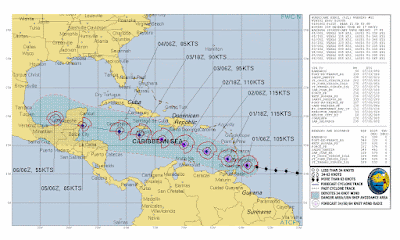


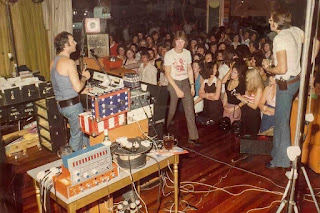

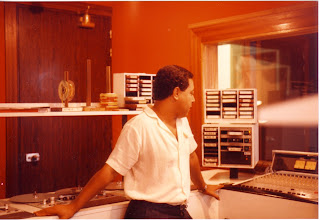
 Grant Goddard : radio broadcasting expert : media analyst : writer/author