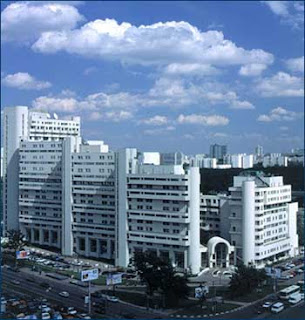
The customer is always “a crazy, crazy man” : 2000 : Indian Consulate visa office, Toronto

 India? I might have loved the 1980 song of that name by ‘The Psychedelic Furs’ but had never entertained going there. Then an email arrived from John Catlett, who had hired me the previous decade to assist him rebooting radio stations in Russia and East Europe, informing me that he had just been contracted for three years to launch and manage India’s first local commercial FM radio stations. Did I want to join him on a six-month on-site consulting contract? Desperation made that decision for me.

I had moved to Toronto in 1996 whilst working for huge American public corporation Metromedia International Inc. Within a year of that relocation, my job had suddenly and unexpectedly come to an abrupt end. ‘Suddenly’ because I had been invited down to its New York City office supposedly to finalise my appointment as vice president (promised by Metromedia International Group president Carl Brazell), only to be told to my face by recently appointed marketing president Bill Hogan that I was to be replaced immediately by a newly recruited American. ‘Unexpectedly’ because, during the previous four years, I had implemented very successful strategies that relaunched radio stations Metromedia had acquired in Russia, Hungary and Latvia.

Since that setback, I had spent three years making approaches and job applications to Toronto’s dozens of radio stations, none of which cared to reply. The industry there turned out to be incredibly insular, dominated by national media groups and family businesses who had no interest in hiring an ‘outsider’. I had already had to leave Britain after having failed to secure a radio job there, despite having managed the most successful station launch of the decade at London’s ‘KISS FM’. Now I was having to relocate temporarily to India because Toronto had proven an equally impossible nut to crack. By then, I was desperate for radio work after a gap of three years.

On 11 October 2000, I brought my completed visa application form to the Indian Consulate in Toronto at the 9.30am opening time, took a numbered ticket from the dispenser and waited patiently for two hours until my number was called. I passed my documents to the clerk at the window, who told me the visa charge was $120. I asked her why, when the form itself stated the fee was $78 for a one-year visa. She waved me to an office at the end of the counter to see someone else.

I waited my turn to enter this small office, where a male officer asked me what my problem was. I explained that there was no problem, but that the form said the visa was $78. “This is an old form,” he said, “the price has changed.” I showed him that my form, printed by the Toronto Consulate, was dated August 2000 and I had collected it only a few days ago. The officer quickly became very angry and told me: “What does it matter to you how much it is? We give you a receipt.” I explained that I had brought with me my budgeted cash amount of $78. The officer slammed my passport and papers down on his desk and shouted at me: “Either you want a visa, or you don’t want a visa.” So I picked up my papers and exited his office.

I returned to the line of visa windows and waited for a clerk to become free again. But the officer had followed me out of his office and now stood right in front of me, pushing me back from the windows and shouting in my face: “You are a crazy man. You are a crazy, crazy man. Who do you think you are, coming in here and demanding preferential treatment? What makes you so special? You must wait your turn, just like everybody else. Why do you want to be treated so special? You are a crazy, crazy man.” Then he stormed off. I was dumbstruck. The only thing I had done was ask why the price had suddenly increased by $42. The crowd of more than a hundred people in the waiting room looked at me in astonishment. I patiently waited my turn again and the same clerk at the same window I had visited earlier charged me $130, a further increase of $10 within only a few minutes.

Er, welcome to India?

[Originally published at https://peoplelikeyoudontworkinradio.blogspot.com/2024/09/the-customer-is-always-crazy-crazy-man.html ]

Flying home for Christmas … eventually : 1995 : Sheremetyevo Airport, Moscow

 “Ground staff have told me our plane is four inches too close to the gate,” the pilot announced in a tone midway between bewilderment and exasperation. “I have had to order a tow truck which will attach to the aircraft to pull it backwards, so I apologise that it will be some time before we can all disembark.”

‘Some time’ turned out to be more than an hour, during which all us passengers could do was wriggle in our seats and wait it out. The British Airways flight from London had passed uneventfully until then. However, once in airspace beyond the former Berlin Wall, absolutely anything could happen … and often did. Foreigners’ time and money proved irresistible commodities dangling like low fruit on a tree labelled ‘FLEECE ME’ that offered easy pickings for ‘communist’ opportunists who post-Glasnost had metamorphosed into ‘biznessmen’.

Welcome to Moscow! If it looks like a metropolis, is busy like a metropolis and makes the noise of a metropolis, then it must be a … but looks are deceiving. Moscow resembled one of those Wild West film sets constructed years ago in the deserts of Spain and Italy where convincing Main Street facades hide the vacuum of an absent third dimension. Some apparatchik in the Kremlin’s Department for Urban Construction must have been ordered by their Great Leader to build Russian cities just like ones he had viewed in ‘King Kong’, without either of them having ever set foot inside an American skyscraper … or airport. From the outside, everything might look normal, but nothing inside actually functioned correctly.

British Airways flights into Moscow transported a mix of world weary ‘road warriors’ who destressed holdups like this by finalising PowerPoint presentations on their laptops, and rich Russians who could afford the luxury of avoiding the discomfort and safety record of their national airline. Whilst the former passengers travelled light, all the better to avoid border guard interrogations, the latter boarded with clutches of overflowing shopping bags stamped with logos of the most expensive shops in Knightsbridge and Bond Street. Cabin crew had apparently given up informing such ‘frequent oligarch flyers’ that their voluminous purchases should be packed into a suitcase for storage in an overhead locker. Those unlucky enough to be seated next to a fur-coat clad, Gucci/Prada clotheshorse made you feel like an impoverished Bob Cratchit half-hidden at the back of a seasonal Harrods shopwindow display.

Without hesitation, Sheremetyevo is the worst airport I have ever encountered. Even Mombasa’s departure ‘lounge’, where you sit cross-legged on hot tarmac under an open canopy, comes a distant second place. During my years shuffling between radio stations owned by Metromedia International Inc at eight locations within five countries, I took an average two flights per week, routed through various European airports, but was required to visit Moscow more frequently than other destinations. Unfortunately. Most airports at least attempt to ensure their travellers’ journeys are as frictionless as possible, whereas Sheremetyevo’s apparent priority objective dreamt up within some arcane Five Year Plan was to inflict as much pain as possible on its customers.

I soon realised that around half a day had to be anticipated just to navigate the few hundred metres between deboarding the plane and the airport exit … on a good day! There were no queues organised for passengers to pass through the twin hurdles of passport control and customs checks, merely a sea of hundreds of people tightly packed into an open concourse, all jostling to exit. Some Russians simply pushed through the crowd to the front. Nobody chastised them. In Russia, those who had the power used it … ruthlessly. Nobody said a word. We all stood in silence, crushed by those around us, some smelling of vodka or BO. Russians pretended you did not exist as they trod on your foot or elbowed you out the way. Sometimes it could take three hours to be pushed along to the front.

To keep my claustrophobia at bay whilst trapped in this sea of inhumanity, I would stare upwards at the arrival hall’s high ceiling. It offered no comfort. The entire roof space had been covered with thousands of identical sliced aluminium tubes to create a vast honeycomb pattern. However, any artistic pleasure from this aesthetic was overshadowed by my observation that several of the tubes were missing. This discovery created a further phobia that, were another of those metal tubes to fall from that significant height onto the waiting crowd, its acceleration would result in serious injury for anyone below. Life in Russia was precarious at the ‘best’ of times, but death by sub-standard Russian glue smeared onto an airport ceiling was not what I wanted on my Death Certificate.

Eventually exiting the terminal building, an awaiting Metromedia driver would always enquire why it had taken me so long to appear, as if he imagined I must have been dawdling for hours in the Duty Free or supping cocktails in the airport bar. If only! All I wanted was to be somewhere where I was not surrounded by an impatient crowd who you feared might shoot you dead if you so much as acknowledged their presence or made eye contact. This ‘airport run’ was the only guaranteed occasion that Metromedia would provide me with a driver because there existed no navigable public transport or marked taxis to travel the 29km route to the city centre, and aggressive freelance drivers accosting travellers outside the terminal were, at best, likely to rob you or, at worst, dump your body in a ditch.

My visits to Moscow would last weeks or months at a time. Every day was stressful, not because of my work, but because the environment was so dangerous and unpredictable. One of my American work colleagues was arrested on a Moscow street and thrown in jail overnight for doing … nothing. Drivers were randomly stopped by uniformed men, often pretending to be officials in cars equipped with flashing blue lights, in order to extract bribes or on-the-spot ‘fines’. Even walking along a city street was unsafe because some vehicles used the pavement to accelerate around traffic jams or red traffic lights. Laws, if they existed at all, were routinely flouted with impunity.

In 1995, I was determined to reach home by Christmas, having booked a British Airways flight from Moscow to London for the morning of 20th December. At the airport, finding it was delayed, I sat in the departure lounge’s transparent plastic walled ‘waiting room’ and plugged my laptop into the power socket to finish some last-minute work tasks. Within minutes, a security guard entered the room, admonished me aggressively for stealing electricity and confiscated my UK/Russia plug adapter. You learnt to bite your tongue in these regular confrontations where exertion of ‘power’ demonstrated neither logic nor reason. Eventually the flight was called, so we handed in our handwritten exit visa forms and walked to the gate. Hours passed. No plane appeared. We were herded to the bar area where we were offered one free drink.

Many more hours passed. By now, it was dark outside and snowing. A British Airways person appeared and finally admitted that the flight had been cancelled for reasons unknown. We were to stay overnight in a hotel and board a replacement flight the following morning. However, before then, three challenges remained. We were herded to a baggage area where we were confronted with a mountain of suitcases from which we had to identify and recover our luggage without assistance or checks. Then we had to wait at immigration control where the day’s exit stamp in our passport had to be identified and cancelled with, you guessed it, a further rubber stamp over the top. Finally, we were confronted with a table on which a cardboard box had been placed, in which had been dumped all our exit visa forms. Without assistance, passengers had to sift through this pile of papers to find their own document to take it back for reuse tomorrow. Only then could we exit the airport.

I had no understanding of where we were meant to be going. I simply followed the person in front of me out of the terminal where I could see a long line of people dragging suitcases, snaking along an uphill pathway in the pitch black, the snow and the minus fifteen temperature. It was a ten-minute trudge until we reached the assigned hotel where, being British, we queued politely at the reception desk for room keys. By now, it was eleven at night and we had wasted twelve hours at the airport, where we had only been offered one drink each. I rang room service and ordered a pizza from the menu which I was told would arrive within thirty minutes. It did not. I rang room service again, only to be told that my order had not been fulfilled because British Airways passengers were not entitled to hotel food. By then, I had discovered that neither were we allowed to make international phone calls from the room’s phone, so our loved ones would have no idea why we had not already arrived home. Gggggggrrrrrrrr! At midnight, tired and hungry, I fell into bed in my clothes as it required too much effort to open and partially unpack my suitcase.

The following morning, we were finally allowed to eat for free from the hotel breakfast buffet bar. In the light of day, we all looked crumpled and exhausted by the interminable wait for a flight that had yet to materialise. Assembled together in the lobby, we were eventually led back out into the snow to snake our way down the narrow pathway to the airport, dragging our luggage. Humiliatingly, we had to repeat all the airport processing formalities already endured the previous day: check-in, luggage weighing, passport control, submission of yesterday’s visa form and customs checks. Would the plane even arrive as promised? Some of us voiced fears that an airport ‘Groundhog Day’ might strand us here through the holidays. Thankfully, the promised plane arrived at the gate, we applauded it with relief and, by the time we were seated on board, it felt as if we were half-way to British firmament. There was much relief when we finally arrived at Heathrow in time for Christmas.

Of the many times I passed through Moscow airport, there was only one occasion that could be called positive. I had coincidentally been booked onto the same incoming flight as an American senior Metromedia executive. The corporate travel department must have assumed that we both warranted some kind of ‘VIP’ service, despite me being a lowly European contractor. Immediately after exiting the plane at Sheremetyevo, we found officials holding up cards with each of our names who took us aside from the other passengers. Led along a separate corridor, we were taken to a large empty room where we were told to sit on huge throne-like chairs around its perimeter. Each of our flight’s handful of VIP’s was assigned an official who took our passport and completed entry visa. After only ten minutes, he returned with our suitcases and our passport that had been stamped appropriately without us even having been interviewed. As we were whisked away swiftly to the terminal exit, I tried to calculate how many dozen occasions I had wasted an additional two or three hours in the midst of the madding crowd just to escape this airport. How the other one percent lives!

[Originally published at https://peoplelikeyoudontworkinradio.blogspot.com/2023/09/flying-home-for-christmas-eventually.html]

From Russia with lawlessness : 1994 : Metromedia, Park Place, Moscow

 “I am a paediatric doctor,” said the young woman cleaning the toilet bowl in the bathroom of my apartment. “I work at the hospital during the day but I cannot live on my salary, so I have to work as a cleaner every evening.”

I was embarrassed. Although the doctor had been cleaning my apartment nightly, this was the first occasion I had attempted to strike up a conversation. I had mistakenly presumed that my ‘cleaner’ spoke no English. How wrong I was! Maybe she assumed I was a snobby American corporate manager who had just been posted overseas. How wrong she was! I was an unemployed Brit forced to take some freelance radio consulting work abroad, having failed to secure a job in my own backyard. Both of us were having to do what we did to survive.

I felt disorientated here. It was my first time in Russia. I would never have chosen to work here. But it could have been worse. My client, American public corporation Metromedia, had initially told me my destination was to be Nizhny Novgorod. I had had to consult a map to even locate that industrial city on the Volga. Thankfully, instead, I was sent to cosmopolitan Moscow. But looks are deceiving. My surroundings gave the semblance of a modern city but almost nothing actually worked as it should. Here was an incomplete facsimile of Western capitalist infrastructure in which the Soviet state had copied the designs without implementing the mechanisms. It recalled the era when a ‘Made in China’ label was a surefire guarantee a product that might look good would quickly fail.

My one-bedroom apartment appeared quite luxurious, about three times the size of my poky second-floor flat in London, with floor-to-ceiling glass windows on an upper floor that looked out over the permanent pollution rising from Moscow’s busy streets. It was inside a huge, newly built trio of linked office blocks containing office spaces and 330 apartments intended for foreign businesses that required a secure location 14 kilometres from the Kremlin. It was like living in one of those vast complexes portrayed in American movies about the self-destructive life of a harassed corporate ‘road warrior’. Maybe it was designed to offer ex-pats that kind of bland fictional familiarity.

In January 1994, Metromedia had bought one of the least popular FM radio stations in Moscow, planning to turn it into one of the most popular. There was a hitch. The Americans were baffled by the radio market not just in Russia, but in the whole of Europe. They could hear 30+ stations broadcasting in Moscow but they could not fathom what they were doing on-air. This was not simply a language problem. It was a challenge because Americans were accustomed to tightly defined music or speech broadcasters in their commercial radio system. You only had to listen to the vast majority of American radio stations for around ten minutes to recognise their ‘format’. Europe was not like that, largely because ‘public service broadcasting’ had been legislated as the bedrock of its broadcast systems since the invention of radio.

Before my flight to Moscow, I had purchased a Sony all-band radio from an electronics shop in Watford for almost £100. It was now put to service all day while I listened hour after hour to a particular Moscow radio station, writing notes about the music played, the talk, the advertisements, the jingles and anything else I heard. I was used to listening to radio stations in languages of which I had no comprehension, having spent so many weekend nights as a schoolboy DX-ing radio stations from all over the world on a Trio 9R59DS radio receiver. I had also analysed local radio markets in the UK for groups applying for new licences, monitoring existing stations’ broadcasts and tabulating the results. It might be boring work but at least I was being paid to do it!

One morning I received an email requesting my presence at an important staff meeting to be held in the Metromedia office within Park Place. This surprised me for several reasons: I was not an employee, I had never previously been invited to such a meeting in Moscow and, most astonishingly, nobody had told me that Metromedia even had an office within the same building where I was living. I had to call the phone number on the message to ask where precisely this office was located within the complex.

After spending so many days alone in the apartment listening to my radio and writing copious observations, it was an adventure to walk through the building’s labyrinth of anonymous floors and numbered doors to eventually locate and knock on the Metromedia office. After weeks of perpetual solitude, it felt like coming out of prison to be greeted by a surprise party. The room was full of Americans of whom I had never been aware, let alone met, all chatting away noisily. None of them had the faintest idea who I was, requiring my explanation that I too had received THE email. They were very welcoming in the American way, despite probably wondering why on earth this unknown, scraggy Englishman was present.

The meeting started soberly with an update on Metromedia’s progress attracting paying subscribers to its broadcast television service ‘Kosmos TV’ and mobile phone system it had apparently launched in 1991 in partnership with the state’s ‘Moscow Television & Transmitter Centre’. I had no idea that Metromedia had been operating in Moscow several years already and had been investing around US$5m annually in that particular joint venture business. The good news was its success in building a growing subscriber base. However, the reason for this meeting was the bad news that the Russian who had been appointed manager of the business had just disappeared with all its funds and had proven untraceable. There were long faces. Oh dear.

Welcoming the variation from my usual lonely routine, I spent the remainder of that day in the office chatting with some of my newly discovered Metromedia colleagues. At that stage, it seemed unclear whether the television business could continue and whether the office would even remain in operation. I met the corporation’s financial analyst Muema Lombe who shared my interest in pirate radio and he generously introduced me to the basics of Excel, the software that has been the mainstay of my analysis work ever since. We remain close friends since that chance introduction in Moscow.

On the way back to my apartment, I called in at the ‘Garden Ring Irish Supermarket’ in the Park Place lobby to buy my regular supplies. It was a smaller satellite branch of the bigger shop in the city centre that had opened in 1992. I was surviving on breakfast cereal, milk, bananas, tea and snacks, particularly American ‘Oreo’ cookies which I had never seen before. There was no cooking equipment in the apartment beyond a kettle, probably to encourage residents to eat in the complex’s vastly overpriced restaurant. Lacking a corporate expense account, I only ate there when my American line manager John Catlett was in Moscow, enduring hour-long waits to be served the simplest meals.

Although the Park Place shop’s range of food was limited, it felt too dangerous to shop outside as a foreigner. Russians bought provisions at kiosks where they could ask for the items they wanted, whereas foreigners like me had to frequent self-serve retailers where they became easily identifiable targets. In 1993, more than 7,000 crimes against foreigners had been reported in Russia, including the editor of the English-language ‘Moscow Times’ newspaper who had been robbed of cash and a laptop by men with knives outside the city centre’s Garden Ring Irish Supermarket. I had watched a ‘CNN’ report that Russia’s murder rate was three times higher than the United States’ and was only surpassed by South Africa.

Due to its success attracting foreign customers, the Irish Supermarket itself soon became a target. After its owners resisted a takeover by their Russian partner Dmitry Kishiev, there were reports of an alleged overnight explosion at its city centre store. The ‘Moscow Times’ reported: “Apparently fearing for their safety, the Irish partners then fled the country, urging their more than two-dozen expatriate employees to do likewise.”

Once Russians took over the ‘Irish’ supermarket, I noticed food on sale in Park Place marked with long gone expiry dates, the prices increased, customers deserted and eventually the shops closed altogether. Like everything else in Russia, ‘business’ was not considered a product of entrepreneurial spirit or managerial prowess. Instead, it was considered a lucky lottery ticket permitting almost anyone lacking relevant skills to intimidate, bully and exert power to enrich themselves over others.

Russia during the 1990’s was frequently referred to as the ‘Wild West’. There was a sense that just about anything you could imagine might happen there … and it frequently did. My corporate apartment felt like a haven of relative ‘normality’ within a crazed parallel universe. I cannot recall anyone being murdered at Park Place during my initial stay, unlike subsequent visits to Russia when I was given accommodation in hotels of variable quality and security. Never did I value boring old Britain so much as the days I would thankfully walk on the tarmac of Heathrow airport after yet another prolonged stay in Russia.

“A powerful bomb blast in the city’s centre on Saturday afternoon took the life of a Moscow student. The bomb which, according to police, had power equivalent to approximately 400 grams of TNT, had been placed inside a large metal dumpster on ul Bolshaya Spasskaya not far from Leningradsky train station. According to eyewitnesses, at the time of the blast, the 23-year-old female student of farming was walking by the dumpster. The strength of the explosion tore off one of her arms and blew out most of the windows in neighbouring buildings … Witnesses reported that just a few moments before the blast, several men had tried forcibly to enter a building next to where the explosion took place, but that after a doorman refused to let them enter the building, they threw a package into the dumpster.”

Small story on PAGE SEVEN of the ‘Moscow Tribune’, 30 January 1996

[Originally published at https://peoplelikeyoudontworkinradio.blogspot.com/2023/07/from-russia-with-lawlessness-1994.html]

The invisible manager : 1993 : Bud Stiker, Radio Juventus, Hungary

 Nazi soldiers were everywhere. Battalions of Nazis marching down wide boulevards. Nazis standing on convoys of tanks, waving flags. Row upon row of Nazis saluting speeches by their leader. Nazis fighting on battlefields. It was exhausting to watch for too long and nothing like ‘Indiana Jones’. In fact, it was a little bit frightening.

I had viewed so many hours of ‘MTV’ that I knew Stina Nordenstam’s song ‘Little Star’ by heart. Seeking alternative entertainment, I manually retuned the hotel room’s television and was shocked to discover a grainy black-and-white channel that was broadcasting Nazi propaganda twenty-four hours a day. I was like Dennis Quaid in the movie ‘Frequency’, pulling signals from the ether transmitted several decades earlier. This bizarre television service must have been a sideshow of the civil war raging on European soil only a hundred miles from my present location, atop a Budapest hill 479 metres above sea level.

My life under ‘hotel arrest’ was proving extremely tedious. To be accurate, I could leave any time I wished but my accommodation was hardly ‘Hotel California’. I was stranded alone, five miles from the city centre in countryside popular for walking holidays in summer but dead as a dodo mid-winter. No buses, no taxis, no shops, no mobile phone, no laptop, no internet access. It felt like sensory deprivation to be cooped up in a hotel room for days with absolutely nothing to do. My sole consolation was that I would be charging the client my daily rate.

My task had been to interview each of the staff of tiny ‘Radio Juventus’ in Siófok to determine their role, their skills and their future potential. The station had been launched in 1989 by a local newspaper to serve German tourists who summered at Lake Balaton. It was about to be acquired by American public corporation Metromedia, owned by billionaire John Kluge, and I had been hired to discover precisely what he was buying and to plan its transformation into Hungary’s first national commercial radio station. I had completed a fortnight’s work when…

Three soldiers in military uniform suddenly burst into the underground bunker where I was installing computer programmes, talking loudly and waving around their guns. I was surprised but not initially alarmed as I knew they guarded the gate of the compound. Every day it took them ten minutes to inspect and approve my passport before they would let me enter. Maybe today they were simply bored. However, events quickly turned nasty when station staff translated the soldiers’ demands into basic English:

“They say: ‘you must go.’ They say: ‘go now and no stop.’”

Sorry? They mean me? But I work here! I am just doing my job! The staff were adamant. The soldiers had received orders. All foreigners (which meant only me) had to leave the compound immediately. I asked if I could telephone Metromedia’s office, a one-hour drive away in Budapest. While the soldiers glared at me, seemingly eager to make an arrest, the phone just rang and rang and rang. Where was the office secretary? In her absence, there was usually an answering machine on the end of the line. But now there was nothing.

I collected my belongings and the soldiers escorted me up the narrow stairs and out of the building. The bright sunlight made my eyes squint but the fresh air was invigorating. The bunker housing the radio station received no natural light, no fresh air and was always thick with cigarette smoke. Dust lay everywhere because it had served as an underground coal store during Soviet times. The soldiers stood in a line, holding their guns menacingly, and watched as I searched for my car keys. Above us loomed huge transmitter masts that the Soviets had built during the Cold War to jam broadcasts from West European radio stations. I drove the car slowly out of the compound and gave a friendly wave to the soldiers as I passed their checkpoint. They did not respond. In the rearview mirror, I saw them lock the gates behind me and put down their guns. This must have been the most action they had seen in months.

An hour later, I was sat in the Budapest ‘office’ of Metromedia, in reality a converted bedroom within the Normafa Hotel owned by the Americans’ Hungarian business partner György Wossala. There was no sign of Bud Stiker, imported from Maine to manage this operation. No sign either of his harassed Hungarian secretary. I called Stiker’s mobile phone but it was switched off. The remainder of the afternoon, I stayed in the office but nobody came. The office phone rang regularly, which I had to ignore as I spoke no Hungarian. It had been a baffling day. I returned to my room, watched MTV and fell asleep to the sounds of loud revelry in the hotel grounds.

The next morning, I was eating breakfast in the hotel’s deserted dining room when Wossala appeared, so I asked if he knew what was happening with his American business partner. He was evasive and wanted only to talk about the wedding party that had hired his hotel the previous evening for a huge banquet and, when presented with their invoice, had drawn guns on his staff, then fled in their fleet of Mercedes.

“This is not good business,” he suggested to me.

I sat in the office again. Nothing happened until late afternoon when the secretary finally appeared, looking flustered. She had been trying to find Stiker the last two days, visiting downtown bars he was known to frequent.

“Everybody is looking for him,” she told me, “but he has just – pouf – disappeared.”

Stiker had worked for Metromedia in the 1980’s, managing radio stations in Colorado and Maryland. Prior to his arrival in Budapest, he had been executive vice president of Bonneville Broadcasting System, the US radio network owned by the Church of Jesus Christ of Latter-day Saints. I recognised that Stiker would understandably be unfamiliar with the European radio industry, probably the reason I had been hired as consultant. More puzzlingly, he appeared somewhat uninterested in visiting the business Metromedia was acquiring in Hungary, meeting the staff he was nominally managing, or creating a plan to transform the radio station … all of which was delegated to me, leaving him ‘hands off’.

Stiker’s mobile phone remained switched off and we found he had left no information about his whereabouts. The secretary checked with the hotel which confirmed he had not returned to his bedroom for two days. We were both totally confused.

The next day, the secretary arrived for work and told me she was quitting her job. She had checked her bank account and found that her wages had not been paid. Neither had the expenses she had rung up on behalf of Metromedia. I helped her carry the contents of her desk to her car outside. It did not seem to matter anymore whether the office items she was taking really belonged to her or to her former employer. I was on my own now and starting to get a little worried.

The next day, Wossala told me he was repossessing Metromedia’s office to convert back into a hotel room, despite the fact that I had observed no more than five guests staying in his hotel that mid-winter. He insisted I return the keys of the tiny Hungarian car I had been using to drive to the radio station, as he claimed it belonged to the hotel rather than Metromedia. That left me completely stranded.

My anxiety intensified the next morning when I found a hotel bill had been slipped under my door during the night, demanding I pay for my stay immediately, an expense that should have been taken care of by Metromedia. I told Wossala (truthfully) that I did not have sufficient funds to pay his bill, and neither could I change the date of my charter flight back to London, still several weeks away. The situation turned into a stalemate – he grudgingly let me continue my stay in his near-empty hotel, but now refused to serve me further meals.

I had to find food. I walked out of the hotel and turned left. There was nothing but a miniature railway, closed in winter, that would take hikers further into the forest hills. I walked back the opposite direction. About a mile from the hotel was a tiny roadside kiosk where I would point to dry biscuits, cola drinks and imported chocolate bars that I purchased with the limited amount of local currency I had previously changed. I had to eke out this basic diet the rest of the week.

Ten days after his disappearance, Bud Stiker suddenly reemerged at the hotel. Amazingly, he had almost nothing to say about his sudden absence. He barely apologised for the inconvenience he had caused me and explained only that he had been “attending to important business” elsewhere. He said that there had been a “misunderstanding” between Metromedia and its Hungarian partner. I was more shocked by his lack of candour than I was by my treatment at the hands of the Hungarian soldiers ten days earlier. I half-heartedly completed my work and counted off the remaining days longingly until I could fly home.

Back in London, I wrote and submitted my report. Stiker queried my invoice, claiming I was overcharging because he believed the rate we had agreed was ‘per month’ rather than ‘per week.’ I found insulting his attempt to cut my fee by 75%, particularly after the experience I had just endured in Budapest. It seemed a bit rich coming from one of Metromedia’s old-timers whom my colleagues later alleged were being offered US$1,000,000 per year to manage one of its newly acquired stations in Europe as a kind of pre-retirement reward for earlier corporate loyalty (Metromedia had sold all of its 27 US radio stations by 1986). I resisted vociferously and was eventually paid in full. I hoped for more consulting work like this, though I wished Metromedia would not assign me to Stiker again … but it did.

That bleak winter month spent in a Budapest hotel room, watching ‘Nazi TV’, was the closest I had come to a war zone and the scary propaganda it produced.

[Originally published at https://peoplelikeyoudontworkinradio.blogspot.com/2023/06/the-invisible-manager-1993-bud-stiker.html]

Rich man, dead man, radio man, spy : 1995 : John Kluge & Natalie Slepova, Radio 7 Moscow


He was dead. He was definitely dead, his face turned blue from the extreme cold. His body was lying face-up on the street, at the top of a staircase that led from the subway station below. I was amongst hundreds of commuters that morning who were forced to crowd to one side of the exit to avoid tripping over his corpse. Nobody gasped. Nobody said anything. Nobody stared. Nobody stopped. We all remained focused on our daily journeys to work, trying not to contemplate the precarity of our own lives.

My commute to work was arduous. I had to take two subways and then an overcrowded bus. The subway was complex to navigate and I sometimes discovered I had travelled the wrong direction or alighted at the wrong stop. I always boarded the bus at its rear door without a ticket. Not because I could not afford to pay, but because I had no idea how or where to purchase a bus ticket. The job of the bus driver was simply to drive the bus, not to sell or check tickets. During several years making this journey, I worried constantly that a ticket inspector would board the bus and bundle me away forever for having broken some law. But it never happened.

I arrived at work to be informed that this was a special day. Later that morning, a coach pulled up outside our workplace. It was no ordinary coach. It was huge, the size you imagine a football team might need, and it had darkened windows. I was amongst a line of colleagues stood waiting in the cold, opposite the door of the vehicle. It opened and several men in sunglasses and dark suits emerged, marched around the vicinity and eventually radio-ed that our location appeared safe. They completely ignored us. There was yet more waiting.

Then the coach door opened a second time and a frail old man walked slowly down the steps. He was eighty years old and his name was John Kluge. He had been named number one on Forbes’ rich list in 1987, the richest man in America. The previous year, he had sold his local television stations for four billion dollars to Rupert Murdoch, who had relaunched them as his Fox TV network. Kluge had used part of the cash to acquire all sorts of businesses, one of which he had deigned to visit that day.

Some minutes later, I was surprised to see a young woman coming down the steps of the coach. Despite the cold, she was dressed as if she had just spent the morning in a Venice Beach café. The contrast in age with Kluge could not have been greater. Maybe this was his daughter, I thought. Maybe his grand-daughter? Surely not his girlfriend? His ‘companion’? Possibly a future fourth wife? I am not certain I ever understood her identity. Apart from the ‘men in black’ and the presumed coach driver, this bizarre couple were the only passengers we saw exit the huge vehicle.

In between the parked coach and our offices located in an oversized hut, our American manager Mike Lonneke was warmly greeting his billionaire employer, overlooked by a stone bust atop a column … of Lenin. Extreme communism came face-to-face with extreme capitalism that day … on the outskirts of Moscow. We were in a large, high-security park where, only years before, a powerful Soviet radio ‘jamming’ station had created deliberate interference to broadcasts by the Voice of America and BBC. Post-Perestroika, Kluge’s business, Metromedia International, had acquired a radio station located within the park named ‘Radio 7’. Lonneke led the team charged with turning around the business from the least listened of Moscow’s 30-odd stations to top of the ratings.

Within the line of personnel greeting Kluge that day was Russian citizen Natalie Slepova. Following Kluge’s purchase of the station, its entire staff had been sacked and replaced … except for Slepova. Apparently, Russia’s arcane laws prevented employers from sacking single mothers, so she had remained on the staff. She printed her own Radio 7 business card with her preferred job title. She came to the office when she wanted, such as an occasion like today. A job in Soviet Russia had seemed merely to confer entitlement to an income, rather than an onerous responsibility to perform tasks that would be evaluated. No Annual Reviews there.

My work in Moscow required almost no interaction with Slepova, so it came as a complete surprise when one day she invited me to lunch. It would have been rude (maybe fatal?) to refuse. I was told to meet at her apartment, rather than at the radio station. Most Russian city dwellers lived in horrible high-rise concrete apartment buildings that resembled Britain’s worst post-War council estates. I found her building near the Kremlin to be a mini-palace with high ceilings, enormously wide staircases and gigantic ornate doors sized for giants. Think regal Paris chic rather than Ronan Point. If her circumstances were intended to impress me, they certainly did. But how could a single mother afford to dwell in such opulence?

We ate at a reputedly excellent restaurant in a city centre shopping plaza. The food was predictably awful. Slepova asked me dozens of questions, but not casual enquiries about me and my work. She wanted to know details about how Metromedia was organised and its long-term objectives. The only accessories missing from this inquisition were the rope around my chair and the spotlight in my eyes. I offered her no information, not only out of reluctance, but more so because I was merely a distant foreign contractor to Metromedia who knew next to nothing about its strategy. Despite my years working for the corporation, I never had a contract, a job title or even a letter of agreement. Lunch over, Slepova barely acknowledged me from then on. Evidently, I had proven completely useless to her.

To compare Moscow in 1995 to the Wild West is do it an injustice. It was much more frightening than that. Several unexplained ‘incidents’ I witnessed involved the radio station. Shortly after my arrival in Moscow, its American advertising saleswoman had been dining with potential clients in a restaurant when masked men stormed in, shot dead everyone at an adjacent table and ran off. The next day, she resigned and booked the next available flight back to the States. The restaurant cleaned up and reopened for business as if nothing had happened. So much could be witnessed in Russia that was never reported.

It was evident to foreign observers that Russian president Boris Yeltsin had been demonstrating increasingly erratic behaviour during his foreign excursions. Reputedly an alcoholic, Yeltsin had refused to leave his plane at Shannon Airport to meet the Irish prime minister in 1994. Bill Clinton alleged that, on a visit to Washington in 1995, Russia’s president had been found on the street drunk, in his underwear, trying to hail a taxi to a pizza restaurant. Yeltsin had already suffered several heart attacks and a quintuple bypass operation, so it was perceived as credible that he might die on the job.

I was asked by Radio 7 manager Lonneke to create a procedure for the station’s DJs to follow, should they learn that Yeltsin had suddenly died. He was concerned that, should a presenter continue with the popular music format following the president’s death, it could provide the government with an excuse to cancel the American-owned station’s licence. I wrote a list of instructions for the DJs, scripted appropriate announcements to be read and purchased CDs of sombre Russian classical music. My document was translated into Russian, placed in a plastic wallet with the CDs and taped to the wall of the studio under a large sign: “If the president should die, open and follow this procedure.”

Within a matter of days, I arrived at work to find unusually that the overnight DJ was still present and was upset. Apparently, in the middle of the previous night when he had been the only person present in the building, several men wearing balaclavas had burst into the studio. They seemed to know exactly where to find the instructions I had written in case of Yeltsin’s death, had ripped the plastic wallet from the wall and made off with it. They had neither identified themselves nor explained their actions. It was a dramatic raid on our little radio station.

The walled and barb-wired park in which the station was located always had armed government security guards at its only entrance, to whom I was required daily to show my identify card and clearance document. How had the masked intruders entered the property? The guards could offer no rational explanation. How did the raiders know where the station’s unmarked building was within the park? How did they know exactly where to find the document in the radio studio? How did they even know that such a document existed?

It was apparent that, as a result of us having contemplated the possibility that Russia’s president might die in service, we had attracted the attention of forces much bigger than us. The evidence pointed to the worrying conclusion that the overnight raid could only been the outcome of a knowledgeable informant having observed intimate details about our radio station’s operations. We would never know for sure who that insider could have been.

[Originally published at https://peoplelikeyoudontworkinradio.blogspot.com/2023/03/rich-man-dead-man-radio-man-spy-1995.html]