If you go down to the lemon groves today, you’re sure of a big surprise : 2017 : Mar Menor, Spain

 The motionless car stood sideways across the road with its four doors wide open. A road accident? Moving nearer, nobody was visible either in the car or on the roadway. The engine was running and its headlights were bright, but there was no sign of another vehicle or an obstruction the car could have hit. If not a traffic accident, then what had happened?

I was taking my daily early morning run, normally uneventful, along a straight, flat tarmacked ‘agricultural road’ that led three kilometres out of the Spanish village as far as the shore of the Mar Menor inland sea. When the summer heat became this oppressive, runs proved feasible only during the darkest hour just before dawn. Other than an occasional farmer on his tractor, the roads were empty at that time of day as village life did not awaken until ten o’clock. Something about the car up ahead of me was definitely not right.

Wherever I found myself in the world, my morning constitutional involved an outdoor run. This exercise regime had been thwarted only in Moscow where, after several attempts, I was choked by engine fumes and endangered by cars driven along pavements; and in Cambodia where even a short walk in its humid heat immersed you in a sauna-like furnace. I had started running regularly forty years ago as a university student to relieve stress, initially circling the little used 400-metre Maiden Castle racetrack alongside the River Wear a few times, then having built up my regime daily until it reached dozens of laps.

At school, a weekly three-mile cross-country run had felt akin to punishment during Wednesday afternoon ‘Games’ in winter for the thirty of us disinterested in playing team football. Regardless of what the weather might throw at us, PE teacher Graham Taylor would send us out on the footpath up Coopers Hill, passing the John F Kennedy Memorial, the site of the Runnymede signing and Langham Pond, to return to our school Playing Fields more than an hour later. For a cheap thrill at the outset, boys would hold hands in a line and the end one touch the electrified fence alongside the A30 Egham By-Pass, awaiting the periodic pulse that sent a shock through each of us in turn. I am grateful to Taylor for having unwittingly initiated my fitness regime, despite his indifference in the face of my disdain for competitive sport. When I visited his office on my final school day after seven years to purchase a yellow ‘Strode’s’ sweatshirt, he scoffed: “Why would you want that now?” I still have it almost half a century later!

Not that I was wearing it in Spain that morning as, even before dawn, it was already way too hot. As I ran closer towards the car in the darkness, I could see it positioned across the roadway to shine its headlights into the neat rows of the unfenced lemon groves that stretched for miles on both sides. I was close enough now to make out that the car’s back seat and passenger seat were piled high with … lemons. Aha! Even Clouseau would have deduced that I had stumbled across a lemon thief operating under cover of darkness in the middle of nowhere. Despite my temptation to stick around and view the perpetrator, I had no desire to be shot at dawn. Instead, I ran on into the darkness, reached my end-point where sunrise was emerging over the sea, paused and returned along the same route to find the thief long gone as daylight was starting to seep across the landscape.

Friday was ‘street market day’ along the village’s ‘High Street’ where, that week, I spotted a stall with a man selling loose lemons, rather than those from marked agricultural crates. Was he the fruit bandit whose nocturnal handiwork I had witnessed? I never knew and, apparently, neither did the pair of municipal police who ambled through the market. It was an example of the combination of audacity and pettiness apparent in Spain. In the centre of another village, already I had watched an old woman nonchalantly rip out plants from a municipal flowerbed in broad daylight and carry them home, apparently unconcerned who might be watching. Do the Spanish even have a word for ‘shame’?

During another early morning run on the same route, I was surprised to find a woman’s matching check bra and knickers on the ground at the edge of the lemon grove in the middle of nowhere. My initial instinct was to leave the road and walk into the grove to convince myself this was not a horrific crime scene. Then I realised it might not be construed as civic duty for the police to find me possibly standing over the remains of one of the five thousand women murdered annually in Spain. So, yet again, I simply ran on … after photographing the evidence.

The only regular sign of life I saw on my route out of the village during daily runs was a group of men who stood outside the ‘Sport Bar’ at six in the morning on weekdays. They would await the arrival of minivans whose drivers shouted out the number of men required for that day’s work in the surrounding fields. As I passed the group, they would jeer and shout at me as if the notion of an old man running in order to maintain his health was a completely alien concept to them … which in rural Spain it probably was.

There was a memorable morning when, following their usual taunts, one man emerged from the crowd and started to run alongside me. I was not intimidated. I imagined he might continue a short distance, tire quickly and return to his mates. However, once we reached the limit of the village’s lit streets, he continued into the darkness of the lemon grove. Now I began to feel intimidated, particularly as he insisted on running so close beside me that our elbows touched, despite the unlit road being sufficiently wide for two vehicles. If I were to stop running, or to say anything, I was worried that he might turn on me, so I continued and ignored him.

After a while, he switched to running behind me, but so close that I could feel his breath on the back of my neck. It was a stupid and dangerous move, as he could have easily tripped me up, so I responded by picking up my pace to pull away. This must have been misunderstood as a challenge rather than self-preservation, as he caught up, then ran closely beside me once again, then switched to running inches in front of me. If I had maintained my speed, I would have been in danger of stepping on his heels and tripping up both of us. I slowed my pace and watched as he continued to run on ahead into the darkness beyond. He must have felt so proud that day to brag to his mates how, during a quarter-hour, he had run faster than a foreigner three times his age. Angry and upset, I cut short my usual routine, turned around and re-entered the village on a longer route to avoid the ‘Sport Bar’. After that, I ensured that my morning run never passed there again.

Even everyday village life proved a challenge. Each occasion my wife and I shopped in its supermarket, we would be the only customers in the checkout queue humiliated by having to empty out the contents of our knapsack and handbag. We observed locals in its aisles pocket items from shelves with apparent impunity because it seemed self-evident that only foreigners were thieves. We also aroused ire because we paid by debit card, which the checkout person would insist on grabbing from us, inspecting this strange technology and ramming it into a prehistoric machine that only functioned sporadically and required a wait of several minutes to display ‘approved’.

Having spied a poster for an ‘open day’ at the village’s modern theatre building, we thought it would make an interesting diversion. However, before our visit inside had even reached the auditorium, we were confronted by an angry group of women who ordered us out of their building. Many such municipal projects become ‘white elephants’ created by the mayor’s ego simply to impress his chums and the electorate, regardless of practicality or cost. Belonging to neither category, we were evidently not welcome. From its published schedule, this particular theatre only staged productions on about a dozen days per year.

To make explicit this village’s unfriendliness to outsiders, it would have been an easy task to simply stick two huge posters on the outside of their building that state in big red lettering ‘DO NOT ENTER FOR NO MEMBER OF THE SOCIAL CLUB’ in English. That is exactly what the village’s social centre had done to ensure that no foreign tourist dared to cross its threshold, pointedly warning in a language we found no local spoke.

Scuttling back to our rented terraced house near the village centre, we were left to the mercy of our neighbours. On one side was a couple in their fifties who argued and watched television late at maximum volume. Friday evenings, a minibus would arrive to unload a group of primary school age children into their tiny house. Group sing-songs at high volume ensued … continuously. In pyjamas, I knocked on their front door at two o’clock in the morning to ask politely if the tuneless singing could be curtailed. The door was slammed in my face. At three o’clock, I knocked again as the noise had continued regardless. Nobody answered. Their ‘party’ ended at dawn. By afternoon, the minibus would return and take away the children. Some kind of cult?

The first we knew of our opposite neighbour’s business was our living room filling with smoke from an unidentifiable non-tobacco drug. I traced it to the electricity meter on the party wall, built so thinly that smoke from next door seeped through holes made for cables connecting the adjoining houses. Thick insulation tape had to be purchased to block the gaps around the meter and prevent us suffering involuntary highs. Noises from this neighbour’s kitchen, audible through the wafer-thin wall, sounded as if he was chopping vegetables all afternoon … but then it continued through the night. Eventually it dawned on us that he was a drug dealer cutting up supplies for customers. Why else would he drive a black sports car with gold wheel rims, darkened windows and a windscreen inscribed ‘PSAddicted’ that was parked out front? Not the kind of delinquent with whom to raise a neighbourly complaint, even though we often passed him sat outside on his front doorstep during daylight, openly smoking drugs.

One day there was a flurry of activity outside his house, including a brief visit from a local policeman. Later, a smartly dressed, middle aged man arrived and we could hear loud discussions inside the house surprisingly in French, a language never previously heard there. We could make out the lawyer instructing the dealer that he had a stark choice: negotiate with the family of the young girl he had hit while driving his car outside the local school and pay them an amount sufficiently persuasive to drop a prosecution; or flee to his native North Africa. We did not stick around long enough to learn of Kid Charlemagne’s fate.

Had we been staying in Sodom or Gomorrah? God may not have inflicted a plague of locusts on this village but he had dispatched its inhabitants a stern warning by infesting the whole place, not just the odd house, with cockroaches. You could exit your home in the heat of the noonday sun and see large bugs scuttling up the exterior walls and along the streets, totally oblivious to daylight or humans. Because household drains had been constructed without U-bends, the vermin could travel with ease through the sewers into buildings. Everything that we witnessed there resembled a biblical tableau … of a godforsaken village that was determinedly stuck in feudal times.

[Originally published at https://peoplelikeyoudontworkinradio.blogspot.com/2023/09/if-you-go-down-to-lemon-groves-today.html]
Baby, we were bored to death : 2000 : FM radio station market, Toronto

 Why does Toronto have such insipid and boring radio? Our city is vibrant, artistic, culturally diverse and entertaining, so why is none of that reflected in our uninspired radio stations? Travelling in Europe and North America as a radio consultant, I listen to a lot of radio and it is tragic to concede that my own city has some of the most boring radio stations known to mankind.

Opportunities to change this sad state of radio in our city are everywhere, but have too often been ignored. When Shaw Communications purchased ‘Energy 108’ a couple of years ago, it could have reinvented the station as a cultural focus for Toronto’s young people. Instead, Shaw fired ‘Energy’s most knowledgeable DJ’s, introduced Sarah McLachlan songs once an hour (in a dance music format?) and changed the name to … ‘Energy 107.9’. Wow! How many minutes did it take the marketing department to devise a strategy that unambitious?

Rogers Media’s purchase of ‘KISS 92’ last year was a complete no-brainer. Can you name any other city of similar size in North America that has had no Top Forty radio station for a period of even a few months? And yet Toronto suffered this malaise for several years. Even if Rogers had hired a helium-voiced bimbo DJ to front a Top Forty format, it still could have captured a huge audience hungry for what used to be called ‘pop music’. And that is exactly what they did. ‘KISS’s ratings are noteworthy, not just for the hordes of spotty grade nine students who naturally gravitate towards Backstreet Boys soundalikes and terrible Canadian techno. But the station’s substantial audience over the age of twenty is a sad reflection of the lack of any other remotely exciting music station in Toronto. For those of us past our teen years, ‘KISS 92’ at least makes you feel good to be alive, compared with other FM music stations that treat listeners like senile geriatrics with one foot already in the grave.

One would hope that ‘KISS 92’s runaway success might encourage its competitors to try and become a little more imaginative in their programs. The signs so far are not particularly encouraging. ‘EZ Rock 97’ revamped its daytime line-up last week to introduce even more soporific DJ’s and has changed its slogan from ‘My Music At Work’ to ‘Soft Rock Favourites’. Station owner Telemedia appointed a new Program Director drafted from its Calgary operation to oversee these changes. Yes, Calgary – that hotbed of radical, imaginative radio formats! ‘EZ Rock’ looks certain to retain its nickname of ‘Radio Slumberland’ in our household.

Milestone Radio, scheduled to launch next year, has an incredible opportunity to turn its black music format into an exciting, inclusive station that could electrify the city. After all, black culture has never been so predominant, nor so imitated, in mainstream music and arts. With imagination, Milestone could be a very successful radio version of ‘City TV’. Whether its owners can grasp that challenge, let alone succeed with it, depends upon the station’s ability to overcome three obstacles. Milestone’s programming plans are the obvious product of committee debate, with too many worthy (but commercially disastrous) ideas generated by individuals who have particular axes to grind. Its recent effort to recruit a Program Director in the US rings alarm bells that Milestone is creating a cookie-cutter US-style urban music station that would reflect nothing of Toronto (listen to ‘WBLK’ for days on end and you will learn absolutely nothing about Buffalo, but everything about ‘strong songs’). And lastly, the spectre of minority shareholder Standard Broadcasting might be waiting quietly in the shadows for Milestone’s ambitious plans to fail in the first year, so that it can take control and resurrect the station as a smooth-jazz format, fitting perfectly alongside its mind-numbing ‘MIX 99’.

As for ‘Edge 102’ and ‘Q-107’, their owners should have been bold enough to extinguish these dinosaur formats years ago. There is so much exciting new music in the world, but you will certainly never hear any of it played on these two stations. The malaise is so bad that Toronto radio critic Marc Weisblott felt obliged to apologise in a recent column (radiodigest.com) for spending so much time listening to New York City radio via the internet. No need to apologise, Marc. Our only ray of hope is that one fine morning, some bold senior executive in Shaw/Corus, Standard, CHUM or Rogers might suddenly understand that radio which is stimulating and challenging can also be a commercial success. I would prescribe that executive a quick radio listening visit to any major city in the world to understand the potential. Otherwise, Toronto radio is condemned to be a mere revenue-generating asset designed to send us all to permanent sleep with yet another Celine Dion or Bryan Adams song.

[Submitted to Toronto weekly what’s on paper, unpublished]

[Originally published at https://peoplelikeyoudontworkinradio.blogspot.com/2023/09/baby-we-were-bored-to-death-2000-fm.html]

Flying home for Christmas … eventually : 1995 : Sheremetyevo Airport, Moscow

 “Ground staff have told me our plane is four inches too close to the gate,” the pilot announced in a tone midway between bewilderment and exasperation. “I have had to order a tow truck which will attach to the aircraft to pull it backwards, so I apologise that it will be some time before we can all disembark.”

‘Some time’ turned out to be more than an hour, during which all us passengers could do was wriggle in our seats and wait it out. The British Airways flight from London had passed uneventfully until then. However, once in airspace beyond the former Berlin Wall, absolutely anything could happen … and often did. Foreigners’ time and money proved irresistible commodities dangling like low fruit on a tree labelled ‘FLEECE ME’ that offered easy pickings for ‘communist’ opportunists who post-Glasnost had metamorphosed into ‘biznessmen’.

Welcome to Moscow! If it looks like a metropolis, is busy like a metropolis and makes the noise of a metropolis, then it must be a … but looks are deceiving. Moscow resembled one of those Wild West film sets constructed years ago in the deserts of Spain and Italy where convincing Main Street facades hide the vacuum of an absent third dimension. Some apparatchik in the Kremlin’s Department for Urban Construction must have been ordered by their Great Leader to build Russian cities just like ones he had viewed in ‘King Kong’, without either of them having ever set foot inside an American skyscraper … or airport. From the outside, everything might look normal, but nothing inside actually functioned correctly.

British Airways flights into Moscow transported a mix of world weary ‘road warriors’ who destressed holdups like this by finalising PowerPoint presentations on their laptops, and rich Russians who could afford the luxury of avoiding the discomfort and safety record of their national airline. Whilst the former passengers travelled light, all the better to avoid border guard interrogations, the latter boarded with clutches of overflowing shopping bags stamped with logos of the most expensive shops in Knightsbridge and Bond Street. Cabin crew had apparently given up informing such ‘frequent oligarch flyers’ that their voluminous purchases should be packed into a suitcase for storage in an overhead locker. Those unlucky enough to be seated next to a fur-coat clad, Gucci/Prada clotheshorse made you feel like an impoverished Bob Cratchit half-hidden at the back of a seasonal Harrods shopwindow display.

Without hesitation, Sheremetyevo is the worst airport I have ever encountered. Even Mombasa’s departure ‘lounge’, where you sit cross-legged on hot tarmac under an open canopy, comes a distant second place. During my years shuffling between radio stations owned by Metromedia International Inc at eight locations within five countries, I took an average two flights per week, routed through various European airports, but was required to visit Moscow more frequently than other destinations. Unfortunately. Most airports at least attempt to ensure their travellers’ journeys are as frictionless as possible, whereas Sheremetyevo’s apparent priority objective dreamt up within some arcane Five Year Plan was to inflict as much pain as possible on its customers.

I soon realised that around half a day had to be anticipated just to navigate the few hundred metres between deboarding the plane and the airport exit … on a good day! There were no queues organised for passengers to pass through the twin hurdles of passport control and customs checks, merely a sea of hundreds of people tightly packed into an open concourse, all jostling to exit. Some Russians simply pushed through the crowd to the front. Nobody chastised them. In Russia, those who had the power used it … ruthlessly. Nobody said a word. We all stood in silence, crushed by those around us, some smelling of vodka or BO. Russians pretended you did not exist as they trod on your foot or elbowed you out the way. Sometimes it could take three hours to be pushed along to the front.

To keep my claustrophobia at bay whilst trapped in this sea of inhumanity, I would stare upwards at the arrival hall’s high ceiling. It offered no comfort. The entire roof space had been covered with thousands of identical sliced aluminium tubes to create a vast honeycomb pattern. However, any artistic pleasure from this aesthetic was overshadowed by my observation that several of the tubes were missing. This discovery created a further phobia that, were another of those metal tubes to fall from that significant height onto the waiting crowd, its acceleration would result in serious injury for anyone below. Life in Russia was precarious at the ‘best’ of times, but death by sub-standard Russian glue smeared onto an airport ceiling was not what I wanted on my Death Certificate.

Eventually exiting the terminal building, an awaiting Metromedia driver would always enquire why it had taken me so long to appear, as if he imagined I must have been dawdling for hours in the Duty Free or supping cocktails in the airport bar. If only! All I wanted was to be somewhere where I was not surrounded by an impatient crowd who you feared might shoot you dead if you so much as acknowledged their presence or made eye contact. This ‘airport run’ was the only guaranteed occasion that Metromedia would provide me with a driver because there existed no navigable public transport or marked taxis to travel the 29km route to the city centre, and aggressive freelance drivers accosting travellers outside the terminal were, at best, likely to rob you or, at worst, dump your body in a ditch.

My visits to Moscow would last weeks or months at a time. Every day was stressful, not because of my work, but because the environment was so dangerous and unpredictable. One of my American work colleagues was arrested on a Moscow street and thrown in jail overnight for doing … nothing. Drivers were randomly stopped by uniformed men, often pretending to be officials in cars equipped with flashing blue lights, in order to extract bribes or on-the-spot ‘fines’. Even walking along a city street was unsafe because some vehicles used the pavement to accelerate around traffic jams or red traffic lights. Laws, if they existed at all, were routinely flouted with impunity.

In 1995, I was determined to reach home by Christmas, having booked a British Airways flight from Moscow to London for the morning of 20th December. At the airport, finding it was delayed, I sat in the departure lounge’s transparent plastic walled ‘waiting room’ and plugged my laptop into the power socket to finish some last-minute work tasks. Within minutes, a security guard entered the room, admonished me aggressively for stealing electricity and confiscated my UK/Russia plug adapter. You learnt to bite your tongue in these regular confrontations where exertion of ‘power’ demonstrated neither logic nor reason. Eventually the flight was called, so we handed in our handwritten exit visa forms and walked to the gate. Hours passed. No plane appeared. We were herded to the bar area where we were offered one free drink.

Many more hours passed. By now, it was dark outside and snowing. A British Airways person appeared and finally admitted that the flight had been cancelled for reasons unknown. We were to stay overnight in a hotel and board a replacement flight the following morning. However, before then, three challenges remained. We were herded to a baggage area where we were confronted with a mountain of suitcases from which we had to identify and recover our luggage without assistance or checks. Then we had to wait at immigration control where the day’s exit stamp in our passport had to be identified and cancelled with, you guessed it, a further rubber stamp over the top. Finally, we were confronted with a table on which a cardboard box had been placed, in which had been dumped all our exit visa forms. Without assistance, passengers had to sift through this pile of papers to find their own document to take it back for reuse tomorrow. Only then could we exit the airport.

I had no understanding of where we were meant to be going. I simply followed the person in front of me out of the terminal where I could see a long line of people dragging suitcases, snaking along an uphill pathway in the pitch black, the snow and the minus fifteen temperature. It was a ten-minute trudge until we reached the assigned hotel where, being British, we queued politely at the reception desk for room keys. By now, it was eleven at night and we had wasted twelve hours at the airport, where we had only been offered one drink each. I rang room service and ordered a pizza from the menu which I was told would arrive within thirty minutes. It did not. I rang room service again, only to be told that my order had not been fulfilled because British Airways passengers were not entitled to hotel food. By then, I had discovered that neither were we allowed to make international phone calls from the room’s phone, so our loved ones would have no idea why we had not already arrived home. Gggggggrrrrrrrr! At midnight, tired and hungry, I fell into bed in my clothes as it required too much effort to open and partially unpack my suitcase.

The following morning, we were finally allowed to eat for free from the hotel breakfast buffet bar. In the light of day, we all looked crumpled and exhausted by the interminable wait for a flight that had yet to materialise. Assembled together in the lobby, we were eventually led back out into the snow to snake our way down the narrow pathway to the airport, dragging our luggage. Humiliatingly, we had to repeat all the airport processing formalities already endured the previous day: check-in, luggage weighing, passport control, submission of yesterday’s visa form and customs checks. Would the plane even arrive as promised? Some of us voiced fears that an airport ‘Groundhog Day’ might strand us here through the holidays. Thankfully, the promised plane arrived at the gate, we applauded it with relief and, by the time we were seated on board, it felt as if we were half-way to British firmament. There was much relief when we finally arrived at Heathrow in time for Christmas.

Of the many times I passed through Moscow airport, there was only one occasion that could be called positive. I had coincidentally been booked onto the same incoming flight as an American senior Metromedia executive. The corporate travel department must have assumed that we both warranted some kind of ‘VIP’ service, despite me being a lowly European contractor. Immediately after exiting the plane at Sheremetyevo, we found officials holding up cards with each of our names who took us aside from the other passengers. Led along a separate corridor, we were taken to a large empty room where we were told to sit on huge throne-like chairs around its perimeter. Each of our flight’s handful of VIP’s was assigned an official who took our passport and completed entry visa. After only ten minutes, he returned with our suitcases and our passport that had been stamped appropriately without us even having been interviewed. As we were whisked away swiftly to the terminal exit, I tried to calculate how many dozen occasions I had wasted an additional two or three hours in the midst of the madding crowd just to escape this airport. How the other one percent lives!

[Originally published at https://peoplelikeyoudontworkinradio.blogspot.com/2023/09/flying-home-for-christmas-eventually.html]

Don’t play that song for me : 2004 : unusual FM radio formats, Phnom Penh

 Here in Phnom Penh, there are seventeen radio stations on the FM dial, even though Cambodia’s capital city has a population of less than a million. But you are more likely to hear a song by Britney Spears or Madonna on the ‘BBC World Service’ (100 FM here) than on any of the local FM stations. Only one, ‘Love FM’ 97.5, plays Western music and its playlist stretches solely from the obscure (‘Pretty Boy’ seems to be the most requested song) to the bizarre (New Kids On The Block?). The rest of the local stations play exclusively Cambodian music. It’s radio, Jim, but not as we know it. Several hundred hours of radio listening suggest two Cambodian programme formats that could be adopted in the West:

KARAOKE CALL-IN RADIO

Most stations in Phnom Penh have a daily show or two of karaoke call-in. Each station employs a pair of singers (one male, one female) who sit in the radio studio with a standard karaoke CD machine plugged into the mixing desk. Listeners call in to a mobile phone number which is also routed to the desk. Most stations have no Telephone Balance Units or ‘clean feed’ system, so callers can only hear the presenter by keeping the volume of their radio turned up, which leads to howling feedback (considered normal here) during every call. Stations with Optimod-style audio processing suffer ever worse feedback loops.

There is no pre-screening of callers. There is no delay system. You hear the mobile phone ring in the studio. The presenters answer the phone on-air, ask the caller’s name, where they are calling from, and the song they wish to sing. While one presenter finds and cues the appropriate karaoke CD, the other chats amiably with the caller about the reasons they have chosen the particular song. The song starts, one of seemingly hundreds of Cambodian love songs that are all male/female duets. If the caller is female, the station singer sings the male verses, and prompts the caller to sing the female verses. If the caller is male, the reverse applies.

The karaoke machine adds echo to the singer’s voice. It is no exaggeration to say that most callers have no sense of either melody or rhythm. The majority are absolutely appalling singers and seem to have no sense of shame exhibiting their complete lack of ability on-air. Conversely, all the radio station singers are excellent, not only at singing but also at treating every caller with dignity and respect. Each caller is allowed to complete their selected song, despite their obvious lack of talent, the howling feedback and the poor-quality audio (most callers use analogue mobile phones). At the end of the song, the presenters thank the caller and, as soon as they end one call, you hear the mobile phone ring again, and they move immediately to the next caller.

Because there is no pre-screening, some callers inevitably are put directly on-air who want a different radio programme, a different radio station, or the local pizza delivery service. The presenters treat even the mistaken callers with the same respect. Each karaoke show continues in this fashion for several hours, punctuated only by batches of hideous commercials, each lasting two minutes and using more voice echo than the average King Tubby dub plate. At the end of the show, the two station singers get to sing a song together, without the humiliation of having to duet with an out-of-tune, out-of-sync caller bathed in feedback.

GRIEVANCE DROP-IN RADIO

In a country where the legal system rarely delivers results that resemble natural justice, the majority of the population look elsewhere for ways to resolve their problems. What better medium than a radio station? At the same time, in a country where the news agenda is dominated by ruling politicians’ pre-occupations, what content can journalists safely use to fill time in their news bulletins? The answer for both the people and the journalists is to air relatively minor grievances from the population that in no way threaten the government’s rule.

For state radio, this means sending journalists to distant provinces to interview farmers about agricultural problems or minor disputes with their neighbours. The results are passed off on-air as ‘news’. Imagine if ‘You & Yours’ replaced the ‘Today’ programme on ‘BBC Radio Four’. In Phnom Penh, where hard-pressed commercial radio stations can barely afford to employ journalists, some stations sympathetic to opposition parties operate an open-lobby system. Citizens who have grievances to air simply turn up at the radio station, their complaint is recorded, and then broadcast unedited and without context. The results are startling for a Westerner accustomed to hearing only carefully produced ‘packages’ of balanced opinions or only short sound bites of real people’s voices emanating from cosy UK radio stations.

This week I heard a woman sobbing and moaning her way through an unedited ten-minute monologue, explaining how her husband had allegedly been abducted by a criminal gang and disappeared. Last week, on another station, I heard a widow sobbing uncontrollably and threatening to set fire to herself and her children because ownership of the radio station belonging to her dead husband had just been awarded to another man by the municipal court. Both broadcasts moved me to tears, despite being in a language I cannot understand. Why? Because I cannot remember hearing such raw emotion spilling out of my radio set (except in drama) for a very long time.

The majority of our phone-in shows have become carefully packaged entertainment while our grievances seem trivial compared to the tribulations suffered by people here. Because the majority in Cambodia still have no access to a telephone, the radio station drop-in provides an important forum for aggrieved citizens to voice their anger and emotion. Listening to these raw, unedited voices has reminded me of the potential emotional power embodied in the radio medium, and the need for programme producers back home to play less safe, allowing more real voices on the radio that can move listeners to tears.

——

After several more months on this diet of karaoke and tear-jerking stories, I anticipate that my return home to a menu of ‘BBC Radio One’ and ‘Capital FM‘ will quickly reveal such ‘professional’ stations to be wearing the Emperor’s New Clothes. All faux excitement and faux dialogue with listeners, but nary a raw emotion in sight … or sound.

[First published in ‘The Radio Magazine‘, May 2004]

[Originally published at https://peoplelikeyoudontworkinradio.blogspot.com/2023/08/dont-play-that-song-for-me-2004-unusual.html]

Give them a foot and they’ll take a metre : 1972 : Bill Beaver, Camberley & Alicante

 It was the summer of rock’n’roll. Bill Haley. Buddy Holly. Chuck Berry. Fats Domino. The Big Bopper. Now, every time I hear one of their songs, I am reminded of a summer vacation never to be forgotten … for all the wrong reasons! Certainly, much of it had been spent lazing on a lounger beside a swimming pool, immersed in an interesting book I had brought along. However, my ears had been battered for days by continuous rock’n’roll, blasted at maximum volume from a tinny cassette machine leant against the wall of a Spanish villa’s veranda. This was not the preferred soundtrack of my teenage years.

At age fourteen, ‘oldies’ from a decade earlier already belonged to a bygone generation. I was obsessed with contemporary pop music and, since the occasion Jim Morrison had dropped his leather pants onstage, every Thursday a slice of my pocket money crossed the counter of a Frimley High Street newsagent for ‘Disc & Music Echo’, ‘Record Mirror’, ‘Sounds’, ‘NME’, ‘Melody Maker’ and ‘Blues & Soul’. I devoured their every word cover-to-cover, as well as teen magazine ‘Fab 208’ that my grandparents bought for older cousin Lynn but offered me a sneaked read. These publications’ preoccupation with the newest music (aligning perfectly with their most lucrative advertisers, the major record companies) reinforced my youthful music snobbery, as dismissive of rock’n’roll as I was of The Andrews Sisters.

Our family’s summer sojourn read like a rejected script for ‘Benidorm’. Following his impulsive visit to a Camberley travel agent to book a package holiday to Spain for the five of us, my father had handed me a pocket guide to Spanish, anticipating my fluency by the time we arrived. Although I shouldered the mantle of family administrator, this expectation proved unrealistic considering my recent struggle at school to learn French, where I had come bottom of the class during my first two years. As the teacher insisted on seating us in his classroom in rank order of our most recent termly exam result, I was placed in the front row due to my consistently dismal performances. By the time our charter flight touched down in Alicante, I had just about mastered Spanish numbers, greetings, shopping etiquette and the ordering of ‘steak and chips’.

Arrived at our hotel in the Albufereta district, the receptionist confessed that the promised restaurant and swimming pool were still ‘under construction’. Our two adjacent bedrooms on an upper floor lacked air conditioning and offered a view of only the hotel’s ongoing noisy building works. Daily pills my father took for high blood pressure had insufficient efficacy to stop him raising hell with the hotel’s management, to no avail, tipping his mood into a very un-holiday rage. To escape the confines of our half-finished accommodation, one hot afternoon we all trooped down to the beach, only for my months-old sister to put a handful of sand in her mouth. She cried, my mother panicked, my father shouted, screaming that he would never take his family to a beach again … a threat he kept.

After that incident, my father decided to hire a small Seat car so that we could explore Spain beyond the coast. One day he drove us inland to a random small village where we disembarked and wandered around in the heat of the blazing sun. It resembled a sand-blown ghost town from a television Western where everything was closed up, my parents having no knowledge of Spain’s daily siesta. The odd elderly person we encountered stopped what they were doing to stare pointedly at us, as if we resembled aliens arrived from another galaxy. They understood that only mad Brits and package holiday families came out in the midday sun. Feeling somewhat intimidated and having found nothing to do there, we retreated to the hire car to return to the ‘civilisation’ of our hotel.

My father tried to rescue our totally unedifying village visit by driving back along the picturesque Alicante seafront. Confronted by a small roundabout, he drove around it at his usual excessive speed in the wrong direction and collided with a car headed towards us. Nobody was hurt but the encounter caused visible damage to the front of both cars. The Spanish driver jumped out and understandably raged at my father, whose short fuse had been smouldering since the hour of our arrival. My translation skills were demanded, unrealistically as the pocket guide lacked a chapter on Spanish expletives. While the two drivers locked in verbal combat, the four of us sat on the low wall along the edge of the brightly tiled Alicante promenade. Passers-by stared. My baby sister was screaming. My mother was crying. The sun was baking us.

After a while, a police car arrived. My father was offered two choices. Either he could be arrested and taken to the police station to face a charge of dangerous driving, or he could pay the other driver to repair his car. While we remained sat on the promenade, my father accompanied a policeman to the nearest money exchange bureau to swap our remaining British ‘Travellers’ Cheques’ for Spanish pesetas. In the heat, it seemed like an eternity until he returned, paid the driver and we could all depart the scene of the crime. Our hire car was damaged but fortunately driveable, though there remained the problem of what to explain to the hire company at the end of our holiday from hell.

Our more immediate problem was how to survive the remainder of our fortnight now that almost all our money had been used to pay the angry driver. British credit cards might have launched in 1966 but had not been offered to families like ours. Debit cards would not exist until 1987. The limited amount of cash or Travellers’ Cheques you were permitted to take abroad had to be inscribed on the last page of your passport. Transferring funds from a British bank account to Spain, while you were in Spain, was an impossibility. During the following days, I escaped the worsening parental arguments at our hotel by finding a nearby newsagent where I would sit cross-legged on the floor for hours, looking through piles of imported DC comic titles never seen at home. I also found a record shop where I used pocket-money I had secreted to buy a Spanish 1971 James Brown picture-sleeve single (‘I Cried’) unreleased in the UK.

That summer’s rock’n’roll soundtrack was a consequence of my father’s solution to our predicament. While we would continue to sleep in our package holiday’s half-finished hotel, he had hustled an invitation to spend our remaining vacation daytimes at the nearby villa of one of his business associates. We lounged beside an Olympic-size outdoor swimming pool whose shallow end was bizarrely three times my height. The towering villa’s doorways were big enough to drive through a truck. Its rooms were the height of a church and the living room resembled a ballroom. We had traded our building-site hotel for a newly built mansion that could have easily served as a set for ‘Land of The Giants’ or the inspiration for a new ‘The Borrowers Abroad’ sequel.

The owner had purchased the plot of land, ordered a custom plan for a villa from an architect in Britain, brought the designs on paper to Spain and given them to local builders to construct during his absence. Returning only once it had been finished, he was astonished to realise that his plan’s dimensions in ‘feet’ had been misinterpreted as ‘metres’, resulting in the building and pool being three times their intended size. It was too late to remedy the error and too expensive to demolish it and rebuild. Planning regulations? What were they? The accidentally gigantic villa was there to stay … and we were now its guests.

It was the owner’s two sons, around a decade older than me, who had wired up a cassette machine outdoors to play their favoured rock’n’roll music. Though our three hosts hung around the villa and pool all day, they mostly ignored me quietly reading my book in the shade. Even the pool’s shallow end was too scary for a non-swimmer like me, however much they tried to persuade me to dive in. They were plainly enjoying their lazy, hazy days of summer on the ‘Costa del Dodgy’. I must have appeared quite a joyless nerd to them.

Our ebullient host Bill Beaver owned a successful car and truck dealership in Camberley, located on an expansive near-derelict triangle of land at the town’s western extreme. He lived in an old-style mansion named ‘Badgers’ Sett’ opposite ‘The Cricketers’ pub on Bracknell Road in nearby Bagshot. His accent was ‘Eastenders’ and his patter was pure Del Boy. My father had lately begun to forge local property redevelopment deals for which Beaver provided the cash, while he ensured local council planning approval for architectural schemes he drafted. My parents had uncharacteristically started hosting dinner parties for Beaver and his wife, despite my mother not warming to the couple’s brash ostentatiousness. My father probably hoped Beaver’s wealth would rub off on him … and, for a while, some of it did.

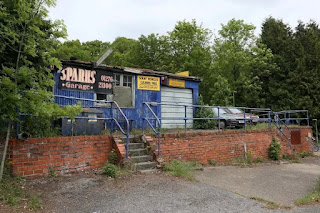
I had been pressganged into their joint enterprise to calculate the potential ‘return on investment’ of their projects, using my O-level maths studies to amortise the costs over varying numbers of years. One such development site was an anachronistic one-pump petrol station and car repair workshop that occupied a valuable rectangular plot on the busy London Road at Maultway North between Camberley and Bagshot. Owner John Sparks had inherited the business in 1966 upon the death of his father Arthur, though neither had updated its blue corrugated iron shack since 1926 when Arthur’s mother had purchased this large corner plot from the adjacent secondary school sportsground for her son to launch his one-man business.

Once I had calculated the viability of replacing the ramshackle building with flats, including the cost of removing the underground petrol tank and cleansing the polluted soil, the project was determined a ‘go’. However, we had not reckoned on Sparks’ stubborn refusal to sell. Beaver visited him. My father visited him. The Beaver sons visited him. Sparks remained intransigent. Their ‘persuasion’ techniques were evidently not working. Beaver purchased the Jolly Farmer pub on the roundabout opposite the Sparks site. One night it suffered a large unexplained fire. Sparks still refused to sell. In the end, the project had to be abandoned.

Like my mother, I was less in thrall of Beaver’s ‘entrepreneurship’ style than was my wide-eyed father, so the end of our disastrous two-week holiday in Spain and our farewells to his oversized villa came as a welcomed relief. On the flight home, I was seated next to larger-than-life Trinidadian bandleader Edmundo Ross. Despite already loving reggae and Brazilian music, my youthful snobbery regarded Ross as old-school due to his regularity on ‘BBC Radio 2’. Unaware of his fascinating life, I now regret not having chatted with him more.

A short time after our return to Britain, my father left us permanently to set up a new home with a teenage girl only a few years older than me. Our Spanish holiday seemed to have proven his last straw playing ‘happy families’. Children just got in his way. I had no further contact with the Beaver family … and I disowned my father.

In 1986, Tesco and Marks & Spencer jointly purchased a huge 76-acre site on the western fringe of Camberley to build two massive superstores (‘The Meadows’). The adjacent four-acre site, bounded by the London Road, Laundry Lane and Tank Road housed Bill Beaver’s open-air vehicle sales operation and was necessary to developers for a revised traffic flow system that included a new Sainsbury’s Homebase superstore. This plot on the far edge of town had suddenly become Camberley’s most valuable piece of land … to the benefit of its wily owner.

In 1990, John Sparks applied to Surrey Heath council for permission to build a bungalow (for his retirement?) on empty land at the back of his one-man garage. It was granted but never built. In 2014, seventy-eight-year-old Sparks retired, closed his business and sold the land to developer North Maultway Limited which demolished the workshop to build ten flats, for which planning permission was approved the following year. By 2017, the land had been sold to Seville Developments Limited which reapplied for planning permission to build nine flats. Two years later, this permission expired … leaving the former ‘Sparks Garage’ site derelict to this day.

[Originally published at https://peoplelikeyoudontworkinradio.blogspot.com/2023/08/give-them-foot-and-theyll-take-metre.html]

One small step for radio, one giant leap for black music radio in London : 1990 : KISS 100 FM launch day

 The final few days before KISS FM’s official launch were a blur of frenetic activity and outright panic. It was only at this late date that construction of the three studios was completed by the contractors. Now, at last, they were ready for the engineers from the Independent Broadcasting Authority [IBA] to test and inspect. Much to my relief, their report required only a few minor alterations to the air conditioning system, after which the IBA issued KISS FM with a certificate of technical competence. I affixed it to my office wall, alongside the poster of Betty Boo [I had pinned as my memento of DJ Tim Westwood’s ‘reason’ for reneging last-minute on his scheduled daily daytime show].

With only days to go, I held two long, evening meetings with all the part-time DJs to explain what they could and could not do legally on-air. As former pirate DJs, they were unfamiliar with the conventions of libel, slander and other legal niceties which legitimate radio DJs have to learn. It was important for me to emphasise how essential it was for KISS FM to protect itself against prosecution or rebuke by the commercial radio regulator, the IBA. I went through their employment contracts, page by page, explaining what the jargon meant and what implications the clauses had for their radio shows. Also, I had to stress the importance of playing the right advertisements at the right time. This was a contractual requirement that had been relatively relaxed on pirate stations.

The night before the station’s launch, I was still busy putting the finishing touches to the inside of the studio until the early hours of the morning. Although two on-air studios had been built, there was only time to bring one of them up to scratch with all the accessories required for live broadcasts. With only hours to go, the engineers and I were frantically drilling holes in the studio walls to hang the storage racks for audio cartridges used to play advertisements, as well as wiring up the studio lights on the ceiling. I handwrote several large posters in thick felt pen to remind the presenters of the station’s address, its phone number for requests, and what to say about the station’s launch. Then, I had to spend several hours making labels with a Dymo and sticking them onto each piece of equipment in the studio for the presenters to know precisely which button performed which task. Finally, when everything was ready, I drove home and collapsed into bed.

The next morning, Saturday 1 September 1990, was the biggest day of our lives. Some weeks earlier, [managing director] Gordon McNamee had hung a handwritten sign on his office wall that read “X DAYS TO GO” with the number being changed daily. That number was now down to zero and the sign had finally become redundant. The day had arrived at last, whether we were ready for it or not. McNamee and I met at the station in the morning and locked ourselves away inside the production studio. McNamee wanted to perform a countdown to the station’s launch at midday but, in order to ensure that it went perfectly smoothly, he wanted to pre-record it. I set the timer on my digital wristwatch to five minutes and recorded McNamee’s voice, counting down at one-minute intervals from five minutes to one minute, and then counting down the seconds during the final minute until the alarm sounded. It took two attempts to get it right.

After that, we moved to the main on-air studio, taking the tape of the countdown with us. We had decided not to allow anyone other than essential station personnel into the studio for the launch. It was not a big enough room to comfortably accommodate more than a few people, and the presence of journalists would only have made us even more nervous. McNamee had arranged for Mentorn Films, which was making the television documentary about the station, to erect a tripod camera in the corner of the studio to record the whole event. A video link had also been booked to relay the picture live to a large screen in Dingwalls nightclub, where the official KISS FM launch party was being held that day.

With all the tension that surrounded that historic day, we quickly forgot that we were being watched by a video camera from the corner of the room. I spooled McNamee’s countdown recording onto a tape machine and started it at precisely five minutes to midday. McNamee’s countdown was now automatically being superimposed over the music from the test transmission VHS cassette that had been playing continuously for the last ten days. Over the beats of the Kid Frost hip hop track ‘La Raza,’ McNamee’s voice coolly counted down the minutes. At the one-minute point, McNamee counted “59, 58, 57, 56….” and I slowly faded out the music to increase the suspense of the moment. Accompanied by the pre-recorded sound of my digital watch alarm, McNamee said the magic words “twelve o’clock.”

I turned up the microphone in the studio for McNamee to make KISS FM’s live opening speech:

“This is Gordon Mac. There are no words to express the way I feel at this moment. So, with your permission, I’d just like to get something out of my system. Altogether – we’re on air – hooray!”

Everyone in the studio joined in a loud cheer, before McNamee continued:

“Welcome, London. Do you realise it’s taken us fifty-nine months, four hundred and sixty-five thousand, seven hundred and twenty working hours, plus three and a half million pounds, as well as all of your support over the last five years, to reach this moment? As from today, London and everywhere around the M25, within and without, will have their own twenty-four-hour dance music radio station. I’m talking to you from our new studios in KISS House, which is completely different from the dodgy old studios we used to have in the past [laughter in the studio]. The odds were against us. None of the establishment fancied our chances but, with the force of public opinion and our determination, the authorities had to sit up and listen and take notice. Today, I’m being helped by Rufaro Hove, the winner of ‘The Evening Standard’ KISS 100 FM competition. Rufaro was chosen from thousands of people who entered and she will press the button for the first record. But before that, the first jingle.”

McNamee pushed the cartridge button to play a lo-fi jingle from KISS FM’s pirate days. The sound of a telephone answering machine tone was followed by McNamee’s personal assistant, Rosee Laurence, saying:

“It’s me again. I forgot to say – hooray, we’re on. Bye-bye.”

The jingle ended with the sound of a phone being put down. McNamee continued:

“There we go, Rufaro, now you can press the first one. Go!”

The first record played on the new KISS FM was the reggae song ‘Pirates’ Anthem’ by Home T, Cocoa Tea & Shabba Ranks. The song was a tribute to London’s pirate radio stations. The rallying call of the chorus was:

“Them a call us pirates

Them a call us illegal broadcasters

Just because we play what the people want

DTI tries [to] stop us, but they can’t”

One of the song’s verses narrated the story of pirate radio in the UK:

“Down in England we’ve got lots of radio stations

Playing the peoples’ music night and day

Reggae, calypso, hip hop or disco

The latest sound today is what we play……..

They’re passing laws. They’re planning legislation

Trying their best to keep the music down

DTI, why don’t you leave us alone?

We only play the music others want”

These lyrics were the perfect choice for the station’s first record. KISS FM’s pirate history may have been behind it now, but the station had proven that pirate broadcasting had been necessary to open up the British airwaves to new musical sounds and fresh ideas for the 1990s. ‘Pirates’ Anthem’ was followed by the personal choice of the Evening Standard competition winner, ‘Facts of Life’ by Danny Madden. In the studio, the atmosphere was electric. It was difficult to believe that the few of us crowded into that little room were making broadcasting history. This was the creation of the dream that some of us thought we might never witness – a legal black music radio station in London, at last. It was difficult to believe we were really on the air.

Next, McNamee thanked “all the original disc jockeys, all the backers, all the new staff and last, but not by any means least, all of the listeners that have supported us over the five years.”

He introduced the record that he had adopted as KISS FM’s theme tune – ‘Our Day Will Come’ by Fontella Bass. The station’s first advertisement followed, booked by the Rhythm King record label to publicise its latest releases. Soon, McNamee’s stint as the station’s first DJ came to an end and his place was taken by Norman Jay, whose croaky voice betrayed the emotion of the day. Jay told listeners over his instrumental ‘Windy City’ theme tune:

“After nearly two very long years, all the good times, all the bad times we shared on radio … Thanks to all of you. Without your help, this day could not have been possible. On a cold and wet October day in 1985, KISS FM was born. Gordon Mac, George Power and a long-time friend of mine, Tosca, got together to put together a station which meant so much to so many. And thanks to those guys, Norman Jay is now on-air.”

Once Jay was on the air, McNamee said farewell to the rest of us in the studio and left to attend the station’s official launch party at Dingwalls. We stayed in the studio, still thrilled to be part of the celebration of that historic moment and enjoying the music that Jay played. Throughout the rest of the weekend, each KISS FM DJ presented their first show on the newly legal station. Many of them reminisced about the pirate days of KISS FM and played music from that era, when they had last graced the airwaves of London. To the majority of the station’s audience, who might never have heard of KISS FM until now, the weekend’s broadcasts must have sounded rather indulgent. Far from most of the records played that weekend reflecting the cutting edge of new dance music that the new KISS FM had promised, the songs mostly reeked of nostalgia and the station’s former glory days as a pirate station. This brief moment of indulgence was a healing process that was necessary for the station’s staff.

I remained in the studio the rest of the day, helping the DJs to grapple with the unfamiliar equipment and showing them the new systems with which they had to contend. Despite the intensive training they had been given in the last ten days, it had been twenty months since any of them had spoken a word on the radio, let alone presented a professional show. Nearly all the DJs looked incredibly nervous, and several seemed gripped with terror at the prospect of having to present a show from a fully equipped radio studio for the first time in their lives. I stayed there until the early hours of Sunday morning, with only an occasional break for a takeaway pizza.

Everybody involved in KISS FM, apart from the small group of us left in the studio – the DJ on the air, me, [head of talks] Lyn Champion and programme assistants Colin Faver and Hannah Brack – were at Dingwalls, enjoying the party celebrations. It felt strange, during the station’s first day on-air, that the rest of the huge KISS FM building was entirely empty. In the evening, the only lights visible from outside were in the tiny studio on the first floor. By two o’clock in the morning, I was absolutely exhausted. It had been an incredibly exciting day and everything had run much more smoothly than I had expected. I drove home, having left Champion and Brack to ‘babysit’ the studio overnight to ensure that the rest of the presenters could cope with the equipment.

[Excerpt from ‘KISS FM: From Radical Radio To Big Business: The Inside Story Of A London Pirate Radio Station’s Path To Success’ by Grant Goddard, Radio Books, 2011, 528 pages]

[Originally published at https://peoplelikeyoudontworkinradio.blogspot.com/2023/08/one-small-step-for-radio-one-giant-leap.html]

Economics! Economics! Read all about it! : 1974 : Mr Hodges, Strode’s College

 “Each of you will subscribe to ‘The Times’ newspaper and read it every day,” Mr Hodges told us. “In class, we will discuss one of its news stories about economics.”

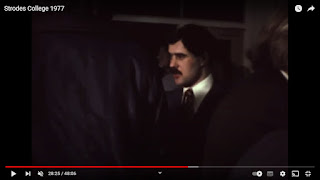
What?? It was my first lesson of a two-year Economics A-level course taught by a newly appointed young teacher wearing a dapper suit that could have been hiding a Che Guevara T-shirt underneath. His thick moustache signified the educational wind of change in the air. A revolution had torn through our school during the summer holidays and life for us students would never be the same. Ye olde buildings remained intact but events within had unexpectedly fast-forwarded to the late twentieth century.

A modest name-change from ‘Strode’s School’ to ‘Strode’s College’ failed to communicate the extent of the transformation. When I had arrived five years earlier, it was a grammar school whose calendar seemed to be set in 1869. The all-male teaching staff wafted around in faded black gowns as if momentarily materialised from the staff room of the University of Transylvania. Girls had ne’er been enrolled since Henry Strode founded the school in 1704. Latin lessons were compulsory. Boys wore bottle-green blazers, shorts and caps that were not permitted to be removed until we reached home. Pupils had to choose ‘arts’ or ‘science’ A-levels but not mix the two.

Headmaster James ‘Jock’ Brady would cane the bare backsides of boys in his office without the inconvenience of parental pre-approval. When carpeted for my first minor demeanour, as neither my parents nor my primary school teachers had ever laid a hand on me, I refused point blank to bend over and submit to Brady’s corporal punishment. Thereafter I was sanctioned with detentions, mediocre termly school reports and passed over for school prizes. Some of Brady’s staff seemed to be competing with him in a Strode’s league table of sadism. Writing on the blackboard, our biology teacher would suddenly spin around and hurl the wooden board eraser like a missile at the head of a student he suspected was not paying sufficient attention.

Our raised-from-the-dead English Literature tutor seemed to both teach and dwell in a dimly lit cobwebbed outbuilding that daylight had never touched, a hovel straight out of ‘Tom Brown’s School Days’. He would pace along our aisles of Victorian wooden desks, eager to whack his cane across our hands if we failed to recite our homework word-perfect. I can still reel off passages from ‘Henry V’ without the faintest notion of their meaning because the school never contemplated showing us a production. Neither were my parents of assistance since the only theatres I had been dragged to were a West End pantomime with Cliff Richard playing Buttons and appearances at Camberley Civic Hall by Lenny the Lion and Pinky & Perky.

For the first five years, my school ‘short break’ had passed standing beneath the window of the enigmatic Sixth Form Common Room hut at the edge of the Playing Field, hearing records played at extreme volume and banging on the window to be handed down a chilled bottle of Coke in exchange for some pocket money. Sixth-form prefects randomly picked on us younger students for minor infractions and handed out after-school detentions like confetti. I was once sent home by a teacher for wearing brown, instead of regulation black, socks. My slip-on Hush Puppies were deemed unlawful because shoes were required to have laces. My long journey home would result in missing an entire day of classes, and for what educational purpose? ‘Discipline over learning’ should have been the school motto … in Latin, of course.

I passed those years daydreaming of being chosen as a Prefect once I reached the Sixth Form. But the revolution denied me that power. Prefects were abolished. The Head Boy position was abolished. Girls were admitted. Uniforms were abolished. Morning and afternoon registration ended. Students were only required on-site when their timetable required attendance for a class. The Sixth Form Common Room was closed. A new teaching block was built for girls to learn Domestic Science. A host of new teachers, including women (gasp!), were employed for previously unknown subjects. Female toilets were built. Headmaster Mr Brady retired to his mansion in the nineteenth century from whence he had come. The canes were put away. One entire century of enlightened progress had been compressed into a single school summer holiday.

In our first Economics lesson, Mr Hodges gave each of us a text book but insisted the economic news stories we would read in ‘The Times’ were equally important. A discount student subscription enabled it to be delivered by a local newsagent every morning. My parents had always read ‘The Daily Express’ which I skimmed but found unedifying, exemplified by its anti-Common Market ‘Back Britain, Buy British’ masthead. However, ‘The Sunday Times’ had been my parents’ weekend preference since the 1960’s for its ground-breaking ‘Magazine’ colour supplement, permitting me to devour the newsprint sections they discarded unread and which introduced me to investigative journalism on topics such as the thalidomide scandal.

My daily journey to Strode’s by bus and train was one hour in the morning, but two hours in the afternoon that included a half-hour wait at Egham railway station and forty minutes at Camberley bus station. Though this travel elongated my school day to ten hours, it offered me the ideal opportunity to read newspapers thoroughly. Even before Mr Hodges introduced me to ‘The Times’, I had been purchasing ‘The Evening News’ at Egham station to read on my way home, it being unavailable as far out of London as Camberley. I recall once pushing open the waiting room door on Egham station’s westbound platform, only to be confronted by a couple wearing the uniforms of the adjacent Catholic girls’ and boys’ schools noisily engaged in sex on the wooden bench seat. After that graphic shock, I always waited outside on the platform.

Mr Hodges’ revolutionary teaching method stimulated my fierce appetite for the daily news cycle by reading ‘The Times’ cover-to-cover (except for the sports pages). Initially, it proved challenging to grasp the detail of British government machinations and the influence of global developments on the economy. However, significant events such as the 1973 oil crisis, ‘winter of discontent’ and ‘three-day week’ provided plenty of real-world material to discuss and analyse what ‘Economics’ was all about. I loved learning about the interaction of economic policy with politics and international news stories.

In the Lower Sixth form, some of my closest school friends decided to apply to study at Cambridge University, which encouraged me to do likewise. Tim, Martin and Philip planned to first complete their A-levels and then focus during a ‘year out’ solely on their applications. This avenue was not available to me as my family’s dire financial situation meant my single-parent mother could not afford to support my studies for a further year. Despite his substantial arrears, my absent father had already persuaded Farnham court on my sixteenth birthday to reduce his maintenance obligation for me to £1 per year. I had tried desperately to find a summer job in 1974 to assist my family but to no avail.

As a result, I was required to sit Cambridge’s entrance examination papers at the same time as studying for my A-levels, with extracurricular one-to-one tutorials generously fitted around my timetable by Mr Hodges and a maths teacher. Somehow, I managed to pass by a slim margin and was called for interview. I travelled to Cambridge alone, wearing the one stiff grey suit that my mother had bought for me to attend my cousin Lynn’s church wedding. On the train, I read the day’s papers thoroughly to ensure I could confidently discuss the British government’s economic policies and the latest international affairs. After all, I had applied to study economics.

“What sort of school is Strode’s?” my elderly interviewer asked.

“It’s a sixth form college,” I replied, “that used to be a grammar school.”

“Of which school sports teams have you been captain?” he asked.

“None,” I replied.

“What positions of responsibility, such as Head Boy, have you held at school?” he asked.

“None,” I replied. “Our college does not have a Head Boy or Prefects.”

“What does your father do?” he asked.

“I don’t know,” I replied truthfully.

“What do you mean you don’t know?” he immediately shot back at me.

“My parents are divorced and I haven’t seen my father for several years, which is why I don’t know what he is doing presently.”

“But he must have a profession, like a doctor or a banker or a barrister. What is his profession? Who employs him?”

“He qualified as a quantity surveyor and used to be self-employed.”

He seemed unsatisfied by my response. My father had left school at age fourteen. What could I do? I was not my father’s keeper! My interviewer waved towards a corner of the dingy interview room.

“There’s a piano over there,” he said. “Can you play something for me?”

“Sorry but I can’t,” I admitted. In my head, I was reflecting that I could name every minister in the present British government cabinet, if asked, and every aspect of its economic policy. However, my interviewer seemed convinced I was destined to be another Jane Fairfax.

“Did you not learn piano at school?” he asked.

“No. My school is focused on academic subjects, which is how I passed nine O-levels,” I replied.

The ‘interview’ continued in this same baffling style for half-an-hour. Not a single question was asked of me about economics, current affairs, news or, indeed, anything relating to the real world in which I lived. Enquiries were wholly about my success at making myself noticed by my peers and being appointed to team responsibilities by schoolteachers. There was no opportunity for me to mention having been male head of my family for the last few years, visiting solicitors, phoning courts, responding to Final Demands, writing endless letters to the tax office, utility companies and benefit agencies. Even if I had desired, I had insufficient free time to glorify my ego because I had all these responsibilities at the same time as passing three hours a day commuting to and from school.

On the long train journey home, I was not upset because I had no understanding of what had just happened. From an early age, I had had to invest and believe in the concept of ‘meritocracy’. Otherwise, I would never have bothered struggling to succeed in life. It was only years later I fully understood that my application, having lacked the benefit of wholehearted support from my school, had been made to a Cambridge college that accepted only around a hundred new undergraduates a year. Probably between zero and five of those accepted that year would arrive from state schools such as mine, regardless of how many had applied. My answers to the interviewer had merely reinforced a prevalent belief that boys like me were unsuited to aspire to study alongside the favoured elite from private schools. It had never been about academic ability alone. It required proof that you longed to be accepted by ‘them’ as ‘one of us’.

Unsurprisingly, the college I had applied to rejected me. My name was then placed in a ‘pool’ of applicants, probably filled with young people like me who had failed to prove at interview that they were ‘gentleman’ or ‘deb’ material. Eventually, I was informed that every other Cambridge college had similarly rejected me. The dream was over. It’s just one of those things you put down to experience.

What did not end was my insatiable appetite for reading newspapers, stimulated by the amazing Mr Hodges, that led me to ravenously consume a broadsheet daily for decades to come. For that I remain eternally grateful to a teacher who broke away from our school’s usual text book rote learning and opened the door to me understanding the big world beyond.

[8mm film of Mr Hodges by classmate & dear friend Martin Nichols]

[Originally published at https://peoplelikeyoudontworkinradio.blogspot.com/2023/08/economics-economics-read-all-about-it.html]

The spy who disliked me : 2003 : Eva Koekelbergh, The Radio Authority

 “Do you know who I am?” my workplace colleague shouted down the phone. “Do you know who I work for?”

I suspect customer service personnel at Fortnum & Mason (which promises “everyone remembers their first encounter with us”) endure similarly haughty conversations with their upper crust clientele day in day out and follow a scrupulously polite script such as:

“Yes, madam, I can read your name on the order for wedding guest name cards and I can tell from your posh accent that you are a member of the British elite who since 1707 have purchased ordinary things from our Piccadilly shop at extraordinary prices, BUT …”

Perhaps private school timetables schedule one period per week of ‘Privilege Studies’ during which pampered Torquil’s and Persephone’s confidently acquire the skill of always getting their own way in life by addressing the 95% of Brits who they consider not ‘one of us’ as inferior beings … though I fail to recall my state school reciprocally teaching ‘deference’. Whether the harangued employee at Fortnum & Mason (“committed to delivering a sense of pleasure”) on the other end of the call had heard of The Radio Authority I doubt. Our government quango was so marginal that there were probably people toiling in radio stations who had never heard of it.

My colleague was usually more softly spoken until an issue arose with ‘service’, at which point the inherited gene that had probably balled out ‘the help’ in centuries past suddenly emerged on the radar screen like the tip of an upper-class iceberg. On a previous occasion, a phone charger left permanently plugged in under the same colleague’s desk had burnt out with a bang while she was sat in our crowded, unventilated office, but without injury. No eavesdropping was necessary to overhear how forcibly the manufacturer would be complained to, sued and adequate compensation secured for her having suffered this apparent near-death experience.

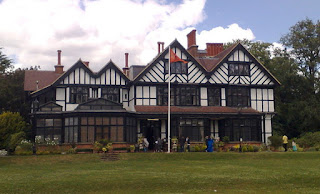
Our office proved the ideal place for my colleague to spend most of the year meticulously planning her spectacular wedding in the grounds of a hired West Country mansion. Months could pass without management delegating any work to us ‘development officers’ to do. The pay and conditions in this public sector agency were undeniably rubbish, but never have I been required to do so little work for a salary. If I exited the office even ten minutes after five o’clock, it would be my duty to switch off all the lights and lock the Radio Authority front door. So much time, so little work!

Evidently, no run-of-the-mill wedding was being planned from the desk next to mine. Its scale and lavishness would easily have triumphed in a ‘Radio Industry Wedding of the Year’ awards ceremony. Like all historic royal weddings, this was not a purely personal affair. It celebrated the alliance of two established ‘houses’ that since 1973 had been at war with each other, fighting innumerable battles over every issue known to the broadcast industry’s opposing armies. The bridegroom was a board member and director of a significant British commercial radio group. The bride worked for the government regulator of the very same commercial radio industry. It was a match made in conflict-of-interest heaven.

I had already observed that, as soon as something of even minor significance occurred at The Radio Authority, the bride-to-be would unhook her mobile phone from its charger and march to the ladies’ loo where she might remain a good while. Maybe she just suffered a weak bladder exacerbated by radio industry events. Whatever, by dint of a mysteriously indirect route, such news would magically appear within the pages of the next ‘Radio Magazine’, a weekly publication brimming with insider gossip that naturally was rabidly consumed by The Radio Authority’s staff.

Normally I would have remained coldly detached from such workplace intrigue but, this time, my life was impacted by the whiff of in-house espionage. Bob Tyler, a good friend for as many decades as I have attended radio conferences, was then news editor of the Radio Magazine and had a habit of phoning The Radio Authority switchboard and asking to be put through to me for an innocent chat. Having signed some kind of Official Secrets Act on my first day of work, I told him absolutely nothing confidential. However, his calls may have sowed seeds of doubt with my boss, David Vick, who one day discovered me alone in his office after I had entered to retrieve a document I had mistakenly left on his desk minutes beforehand. As the only employee with hundreds of published articles about the radio industry to my name, the fickle finger of fate appeared to point directly at me and, without explanation, Vick started to lock his office door when he was absent. Subsequently, I was the sole employee not to be awarded a Christmas bonus and my annual review was unremittingly negative.

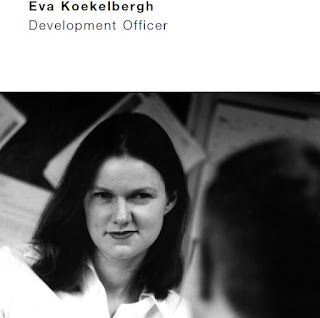
“My father worked as a spy for the Dutch government,” the bride-to-be would tell the rest of us in the office, as if addressing an interviewer for a place at Oxbridge. I wondered to myself whether such an occupation passed as a ‘family business’ amongst her peers. Could her employment with The Radio Authority be merely an undercover mission in a quiet backwater for an MI5 agent? Suspicions were further aroused when our boss David Vick insisted he vet and approve each of her wedding guests, the list apparently resembling a who’s-who of everyone who presently worked in the British commercial radio industry. Not that I ever saw it. 

As the Big Day approached, it became apparent that all who worked in our office had received an invitation … except me. In fact, everybody in our department had been invited … except me. Indeed, I suspect that just about everyone employed by The Radio Authority had been invited … except me. Not that Eva Koekelbergh ever told me to my face that I would not receive an invitation to her big fat Wessex wedding. My desk was only six feet away from hers so the ‘oh dear, it must have been lost in the post’ excuse would have been wholly redundant. I had endured almost a year of aural torture, forced to listen to every minor detail concerning the biggest day of her life being phoned through to dozens of contractors and then chased up relentlessly from her desk, yet now I was being treated as if I might deliver a homemade bomb as my gift-wrapped present.

Though there may be eight million eligible bachelors in the naked city, the universe of Britain’s 5% appears more akin to the gene pool within a rural Mormon village. The bridegroom just happened to be the former Radio Authority line manager of the bride, and he also just happened to be best man at her present line manager’s wedding, and both men just happened to have attended the same university. For the cherry on top of this cake of coincidence, one of the six people working in our office was the daughter of one of the bride’s teachers at her former private school. When people casually comment ‘it’s a small world’, do they realise what a truism it is for a certain stratum of society?

One week before the Big Day that had necessitated a year of planning, including its own internet domain with gooey photos of the couple and a lengthy wedding gift list, the bride casually asked me if I wanted to attend her post-wedding evening soiree, but not the main event. I was tempted by an appropriately pithy two-word response but instead feebly explained that I was already busy that weekend. The few friendly staff I knew at The Radio Authority had already asked me privately why I had not been invited and all I could do was shrug. I had no idea. Anybody who was anybody in the British radio industry seemed to have been invited. I could only surmise that I must be ‘nobody’, despite having planned and executed London’s most successful large-scale commercial radio station launch during the previous decade.

Naturally, the wedding juggernaut did not come to rest abruptly at the end of the Big Day. Afterwards there were still the communal experiences and the photos to be ooh-ed and ah-ed over by colleagues in the office … and the gossip. Who did what, who saw what and who said what occupied many of the staff for several weeks afterwards. I just sat at my desk pretending to be deaf, dumb and blind. All I learned was that everybody seemed to have had a good time. The wedding had at least not cost me a penny. No present, no card, no car hire, no petrol, no hotel, no tuxedo hire. Even if I had received an invitation, I might have proffered a public explanation that I could not afford all these costs on my meagre salary (particularly as I was commuting to London by train from Brighton), even whilst harbouring the private reason that the wedding’s scale and ostentatiousness seemed to be drawn from the pages of ‘Emma’.

A few months later, The Radio Authority closed and the majority of its staff transferred to a new regulator named Ofcom where we worked in a huge, open plan office overlooking the River Thames. I was relieved that my newly appointed desk was no longer next to the post-honeymoon bride, not because I disliked her, but because during my eighteen months at The Radio Authority she had insisted on running a powerful electric fan on her desk, whatever the season. It might have had the effect of making her feel like Kate Winslet on the bow of ‘The Titanic’ but the airstream had simultaneously played havoc with my sinuses. I had asked her repeatedly to adjust the fan’s angle but somehow it had still subjected me to painful headaches.

I had only transferred to Ofcom in the desperate hope of being offered some proper work tasks to tackle after having been required to do so little at its predecessor. It was not to be. My new boss Neil Stock gave me nothing to do. When the BBC called unexpectedly to offer me contract work in Cambodia, I accepted the challenge. During my last afternoon at Ofcom, I bade a fond farewell to the few lovely colleagues who had been so good to me. On route towards the exit, I passed Eva’s desk. I considered stopping to say farewell but then reflected on my experiences and resolved to walk on by.

[Originally published at https://peoplelikeyoudontworkinradio.blogspot.com/2023/07/the-spy-who-disliked-me-2003-eva.html]

The unmagical mystery tour : 1973 : Piggott’s Manor, Letchmore Heath

 There was a loud knock on the front door. Who could be visiting unannounced after dark? Certainly not Mr Dickinson from ‘The Pru’ who always called during daylight hours to collect monthly premiums in cash for our insurance policy. The opened door revealed two men in uniform whose van parked outside had a strange aerial on its roof. What had my father done? Was he about to be forcibly dragged away from our suburban Orgonon? No. The men said they were from the Post Office’s Radio Interference Service and were investigating a recent spate of complaints from residents in surrounding streets of strange patterns interrupting their television viewing. Could they come in and inspect our equipment?

My parents’ enthusiasm for modern gadgets had equipped our living room with one of Camberley’s first state-of-the-art Bush colour televisions to receive the ‘BBC2’ service launched earlier in 1964. It had required the installation of a different aerial on the roof and an amplifier to successfully receive the UHF signal from a far transmitter. Although our own television reception had been fine, the men from the ministry believed that the amplifier must be faulty, transmitting interference instead of receiving signals, a problem they had sleuthed to our house. We were required to switch off the amplifier and temporarily refrain from watching BBC2. Hullabaloo and Custard had sold us a technicolour dream though I was now to be deprived of my daily look through the square or round window with Big Ted and Jemima.

The technical problem was eventually fixed and our BBC2 viewing resumed, even after the annual Licence Fee was doubled to £10 in 1968 for the 20,428 UK households that owned a colour TV, a dismal figure that betrayed the initial failure of the technology’s launch. We missed the first black-and-white BBC1 transmission of ‘Magical Mystery Tour’ on Boxing Day 1967 because we always spent the holiday at my grandparents’ house next door, stoically without a television. Instead, we gathered in our living room expectantly on 5 January to watch BBC2 repeat the programme in colour. This film premiere had been trailed as an artistic triumph for the world’s biggest pop group.

My parents owned all The Beatles’ albums to date and had watched their films at the Camberley Odeon. Earlier that decade, my father had bought a second-hand Uher reel-to-reel tape machine and had recorded the group’s performances broadcast live on the BBC Light Programme with a microphone held to the speaker, while his family was ordered to remain silent. The resultant tapes were played repeatedly in our house at high volume, years before homemade audiocassette compilations became possible and decades before Spotify would offer the same outcome at the press of a mouse button.

Once the 52-minute film of embarrassingly indulgent pop icons acting sillily in and around a bizarre coach trip had ended, we looked around to gauge each other’s reactions. It had been an incomprehensible and barely entertaining viewing experience, we agreed. The next day at school I wrote a short account of our evening in my ‘day book’ and drew an accompanying colour picture. No classmates had watched the film. My female teacher likely presumed my parents to be hippies. Our home’s complete collection of Beatles albums came to an abrupt halt. My mother transferred her musical affections to non-stop Herb Alpert.

After this artistic disappointment, The Beatles faded from my childhood. I learned that John Lennon had moved into a mansion (‘Tittenhurst Park’) in nearby Ascot when one of my father’s clients was appalled to discover the identity of his new neighbour. I recall our family being dragged along by my father to walk around Bruce Forsyth’s house on Wentworth Drive as a possible home, the estate agent spouting that a Beatle lived nearby (Tittenhurst Park is 1.6 miles away). I was excited by our potential neighbour but appalled to contemplate a home adjacent to a golf course in the middle of nowhere. Luckily it never happened.

Years passed during which our family circumstances changed irreversibly. One morning in 1973, my father turned up unexpectedly at our home and insisted I accompany him on a trip. I adamantly refused but my mother insisted I go, hoping I might learn something about my father’s current ‘circumstances’. Only months earlier, he had quit our home for good and since had done his best to humiliate and impoverish his former family. He had even gone to court to demand regular access to his two-year-old daughter whom he had never wanted in the first place. One Friday a month, he would turn up and drive off with my baby sister, leaving my mother fretting inconsolably the whole weekend as to whether we might ever see her again. What ‘childcare’ my father provided at weekends we never learned, as he had been notably absent in his other children’s upbringing and his new lover was a mere teenager.

There was no conversation during our car journey. Not LITTLE conversation, NO conversation. My father talked though I said absolutely nothing. He still drove his left-hand-drive American Motors Javelin AMX sports car as fast and recklessly as he ever had, breaking speed limits, overtaking on blind corners and generally terrifying me. Only the air conditioning kept me cool. I hated being there. Since leaving our home, my father had ignored me, ignored my birthday, ignored Christmas and sustained his total disinterest in my life. I had no respect for him because he had never done anything to earn respect from me. He seemed not to have the faintest idea of what a father should say or do for his children. Tellingly, after he had left, I never missed my father at all. Rather than tears, I felt relief. Why would I miss someone who had only ever used my talents to further his own greedy ambitions?

After an hour and a half of stoney silence, we had travelled past Elstree and arrived before a huge mock-Tudor mansion in extensive grounds. He parked facing the front of the house and its luxurious lawns, telling me he had to go inside for a meeting and would leave me in the car for a while. I was just pleased not to have to suffer any more of my father’s dangerous driving and not to have to be in the company of someone who had always felt like a stranger to me. I switched on the car radio and listened to music.

I saw lots of people all dressed in similar orange medieval-style robes coming and going from the mansion and walking along its driveway in singles and in groups. I had never seen anything like it. Not in Britain anyway. I had seen photos of Buddhist monks in picture albums of faraway lands. But it felt eerie to be seated in a car in deepest rural Hertfordshire, surrounded on its driveway by people who looked as if they had materialised en masse from another dimension and a different time. What was I doing here and, more to the point, what was my father doing here?

Only later did I learn that Beatles member George Harrison had recently purchased this property with its seventeen acres of land, then known as Piggott’s Manor, and donated it to the Hare Krishna religious movement that had outgrown its Hindu temple in central London. The property was renamed Bhaktivedanta Manor and immediately attracted a huge volume of visiting devotees, the religion’s membership having been boosted by Harrison’s very public advocacy since The Beatles years. In the present day, 60,000 visitors annually are reported to attend its religious festivals.

For me, the irony of our visit that day was that my father’s life could not have been further from the altruistic philosophies of the Hare Krishna movement. I knew he had no interest in religion and had probably never even visited a church. If he was here, it must have been for his professional advice as a quantity surveyor. Perhaps modifications were necessary to this mansion as it had functioned as a nurses’ training college since 1957, owned by St Bartholomew’s Hospital in London. How could he have hustled this appointment? We knew from my father’s court papers that he claimed now to be living in the gated, 420-property St George’s Hill estate in Weybridge, home to many pop and entertainment celebrities, including John Lennon (before his move to Ascot) and Ringo Starr.

Did I meet George Harrison? No. Was I invited inside the mansion to hold the end of my father’s tape measure, a task required of me since I could walk? I honestly cannot remember. What happened next? I know he drove me home … again in silence. I was so consumed by the pointlessness of our father/son ‘road trip’ that almost everything else that had occurred was immediately eclipsed in my mind. Why had he insisted I accompany him? Was he trying to impress me? Was he trying belatedly to demonstrate his credential as a father? Or had he imagined I could help him secure a new client? I have no answers. It became our final day spent (un)together.

Half a century later, I was watching the 1969 Beatles footage in the fascinating 2021 ‘Get Back’ documentary when I noticed a Hare Krishna member who had accompanied George Harrison sat cross-legged on the floor of the group’s recording session. Memories of one of the strangest and most unrewarding days spent with my father came flooding back.

[Originally published at https://peoplelikeyoudontworkinradio.blogspot.com/2023/07/the-unmagical-mystery-tour-1973.html]

The man who mistook his wife for a hat : 2006-2009 : Enders Analysis

 1976. With trepidation, I knocked on the door of the Durham student newspaper to volunteer, opened it and encountered a cacophony of shrill, loud voices in an office no bigger than a two-up-two-down front room. A dozen people in close proximity were conversing at sufficient volume for their voices to project into a distant corner of a non-existent adjacent room. Never had I heard so few people generate so much noise. Not a chummy American loudness, but a commanding-the-troops ‘I’m in charge’ harshness. When one woman spoke, it sounded exactly how I imagined a horse might talk. I had stumbled into toff-land, the privileged world of the privately educated, a parallel universe of entitlement I had observed in television historical dramas but not realised still existed in the late twentieth century. Did I grow accustomed to their gratuitous noise pollution? No.

2006. With trepidation, I started my first day’s work at Enders Analysis. Its location in elite Mayfair, opposite the rear entrance of Park Lane’s Grosvenor Hotel, conveyed ‘class’. I was given a desk in a cramped room shared with colleagues who spoke loudly in plummy accents. The previous occasion I had endured transportation to toff-land, thirty years earlier, at least my commitment had been voluntary. Now I was indentured to spend forty hours a week in this socially hostile environment. Each occasion I opened my mouth seemed to confirm my appointment as the ‘accidental analyst’ to a job usually pre-ordained for yet another privately educated chap. Within days, the questions started.

“Why do you arrive at work so early every day?” asked Ian Watt one morning.

“My wife has to start work early, so I leave home with her,” I replied.

“Your wife is a banker?” my colleague suggested. I struggled to maintain a straight face at such a bizarre presumption.

“No,” I responded with hesitancy. “She works in an NHS hospital.”

There was a gap. I sensed a sharp intake of breath.

“Ooooohhhh,” said Watt with evident disappointment that betrayed a palpable disregard for public service, whether someone worked in a hospital kitchen or the deputy chief executive’s office.

If boisterous office chit-chat (“I’m off on holiday to Brazil next week”) proved insufficiently distracting, it was accompanied by personal phone calls made from colleagues’ desks, sometimes communicating disturbing content. Do I really need to hear you phoning a credit card company to increase the limit on a card in your father’s name for which you had applied and use? We all carried personal mobile phones and could go outside to make calls but, for these colleagues, there was evidently no shame or embarrassment in broadcasting their latest Famous Five-ish japes.

One regularly phoned his wife and, instead of a loving message, he would bark orders to her at the top of his voice as if she were a half-deaf scullery maid in his medieval castle. The tone of his phone calls disturbed me sufficiently to glance around our room to determine if the others had similarly felt they were being forced to eavesdrop on a suspected witch undergoing torture by the Inquisitor. None of them looked up or flinched during his tirades, as I did. I felt so alone in this workplace, observing that such humiliation of a fellow human appeared not only acceptable in toff-land but might be practised by my other colleagues.

“My wife is an opera singer,” he would turn around to tell us once his aggressive phone diatribes ended. I was uncertain whether this occupation was some kind of toff codeword for ‘slave’, or perhaps his entire household was staging a never-ending operetta in the ballroom where he had to phone in his part as the angry, posh analyst husband from Mayfair. His behaviour made me contemplate walking over and committing workplace violence but I was restrained by my poor chances in a pistol duel at dawn.

I soon discovered that ritual humiliation appeared to be my new workplace’s predominant management style. Within weeks of starting the job, I attended my first one-day radio conference at a Mayfair hotel a few hundred metres from the office. During the opening morning session, I received a text from a colleague telling me to return to the office because our boss needed me to do something unspecified urgently. Reluctantly leaving the conference, I returned to the office to be told that our boss was not there but would return soon. By the time the conference ended, I had wasted most of the day sat at my desk waiting for something, anything, to happen that required my presence.

If your private schooling imbued you with the notion that Miss Havisham was an ideal role model, such behaviour must simply propagate down your family money-tree. Many more humiliations followed, all of which I accepted with the uncomplaining resignation that a servant is forced to adopt to remain in the employ of an unhinged ‘big house’. The consequence is that the master progressively ups the ante in order to prompt a reaction, any kind of reaction, to their extensive repertoire of humiliations … and so it was.

2008. In front of my colleagues, boss Claire Enders told me she did not appreciate my work clothes. My suits were too baggy and my shirts were too patterned. I had not changed my dress style since starting work there, so I recognised this as her latest attrition. I wore a black or grey suit, a ‘designer’ work shirt, a subtly patterned tie and black shiny shoes. Once a month, my wife accompanied me on a Saturday hike around local men’s outfitters to peruse and purchase sale items. As a result of my daily cross-country run, my shoulders were broad but my waist was narrow, making any suit look ‘baggy’ on me. It was not my fault that many of my work colleagues were Billy Bunter-like!

In response, I resorted to wearing a plain white shirt and black tie every day under one of my existing suits. Then, in front of my colleagues, Enders complained I looked like an undertaker and ordered me to go to gentleman’s shops on Jermyn Street to buy new clothes. My patience with these workplace humiliations was wearing thin by my third year there. I neither agreed nor refused. As the only parent in the analyst team financially supporting their child’s university education, I could not suddenly throw my earnings at hideously expensive clothes. I had kept to my employer’s dress code at all times. I hoped that this latest humiliation might blow over … but I underestimated the persistence of my protagonist.

One week later, colleague Ian Watt told me he had been instructed to take me to Jermyn Street to buy new, more suitable clothes. We took a taxi, something I never afforded. During the one-kilometre journey, Watt wittered on about stuff while I shut my ears and stared vacantly out the window. I had decided to go along passively with his mission, as if he were demonstrating his superior breeding to a servant or slave … or wife. I did not lose my temper, argue or contradict him. I was merely a lowly bit player in his ‘Downton Abbey’ roadmap of British society. In my head, I was amused at the ridiculousness of this situation.

Inside the Dickensian shop (“Suits you, sir!”), Watt chose a new wardrobe for me. Bright pink shirts, elastic braces, ugly black shoes. I offered no opinion about his preferences. All I would have needed was a red nose to join a touring circus. He took my ‘outfit’ to the cash desk and unexpectedly asked me to pay. I refused. There was a standoff. Frustrated at not fulfilling the ultimate humiliation of making me fund my own unrequested makeover, he stormed off to replace most items on their shelves, before proffering his credit card to pay for the remaining two. During our taxi journey back to the office, I remained detached even when I heard him bellow at me:

“If you had attended a public school*, even a minor one, you would know how to dress!”

There, laid bare, was his contempt for me. It mattered not one iota that I had started working in radio more than three decades earlier and had successfully launched commercial stations attracting millions of listeners in the UK, Europe and Asia. It mattered not one iota that I had earned more mass media coverage for Enders Analysis with my published reports about the radio industry than all my analyst colleagues combined. All that mattered to him was the type of school I had attended many moons ago. The five-figure sum that his parents must have paid each term for his private school education seemed to entitle him to treat me like … you know what.

Unlike Pip, I harboured no desire to be accepted as a ‘gentleman’ by London society. You could stuff your flouncy shirts, your waistcoats, your pocket watch, your braces, your uncomfortable shoes, your sickening attitude to people like me. I knew who I was and was perfectly content in my own skin. Born in a council house, I attended school on a council estate and was obliged to become male head of my single-parent household at the age of fourteen. That is who I was. I refused to lick your … overprivileged ego.

Back at the office, the clothes bought in Jermyn Street sat in a bag beside my desk. I refused to even look at them. Naturally, further humiliations followed until, within months, I was forced out of my job. When I left for the final time, I placed the bag of new, unworn toff-wear on my empty office chair. There were no farewell drinks. There was no gratitude. There were no goodbyes. One day I was at work, then I had gone. Exiled from toff-land.

Several months later, I received an unexpected call on my mobile from Ian Watt. There was some work Enders Analysis wanted me to do. I knew from experience that Claire Enders could humiliate to the bitter end former employees who had been edged out of her workplace by asking a staff member to renew contact on her behalf. Watt droned on for a while and, though I was sorely tempted to shout an expletive at the same volume he reserved for humiliating people like me, I simply responded ‘no’ and put the phone down.

I don’t wanna go to Jermyn Street … ever again.

[* In British English, ‘public school’ confusingly means a private secondary school requiring fees.]

[Originally published at https://peoplelikeyoudontworkinradio.blogspot.com/2023/07/the-man-who-mistook-his-wife-for-hat.html]