Knock me down with a mugger : 1986 : Share A Capital Christmas, Capital Radio, London

 Blam!! A sudden force on my back knocked me over in a second. No time to figure out what had just happened. I was sprawled front-down on the floor with a weight on my back. I shouted. People around me screamed. I could sense a struggle taking place overhead. The object on my back lifted and, from my ground level line of sight, I made out the feet of someone running ahead of me into the crowd.

“Are you alright?” asked one of the group of people standing around me, looking concerned.

“We saw that man push through the crowd,” explained another, “then knock you over and jump on top of you. We managed to pull him off but he ran away.”

They helped me to my feet and I realised that I was indeed alright and thanked them profusely for their swift action rescuing a complete stranger. I was wearing a thick winter coat that had broken my fall. I had been lucky not to have hit my head and to have landed on the soft bag I had been carrying in front of me. Nothing appeared broken. As I rejoined the throng of commuters journeying home, one of the Good Samaritans added:

“It looked as if he knew you were there amongst the crowd and targeted you. It was very strange.”

Indeed, it was. I had travelled this same journey every day and nothing untoward had happened. I always left work at the end of the afternoon, walked across Euston Road to Warren Street tube station, caught the southbound train and alighted four stops later at Charing Cross, one of London’s busiest hubs. I had been walking through the narrow, low-ceiling tunnel that led up from the Underground platform to the railway station concourse when I had been jumped. The train and tunnel had been more crowded than usual because it was Christmas Eve. It seemed bizarre to be jumped on not when I was alone in the winter darkness outside, but amongst a tightly packed crowd inside a well-lit underground travel conduit.

There was one significant difference between all the other days I had travelled home without incident and that day. Stuffed down the front of my underpants was a white envelope containing a substantial amount of cash representing payment for my last six weeks’ work. I had requested my employer’s accounts department pay me by bank transfer but, for reasons unknown, it had insisted on paying cash and only at the conclusion of my contract. If this money was the reason I had been attacked, then only the accounts department staff and the handful of people in my work team knew I had been paid that day. But the latter had just been paid that same day in the same way. So had I been merely a random victim of violence … or had something more sinister happened?

A few months previously, I had applied for a full-time job at ‘Capital Radio’. I was interviewed by Steve Billington, a social worker who had left his job in 1984 managing a social work team in Harrow to become the station’s head of community affairs. Although my application was unsuccessful, he contacted me weeks later to ask if I wanted to manage its Christmas charity appeal. I was soon to finish a non-renewable, twelve-month job creation role managing a team at ‘Radio Thamesmead’ so it was an ideal time for me to switch to a ‘proper’ job. I had dreamt of working at London’s only commercial music station since it had opened in 1973 and had even contemplated not going to university in order to take a programme production role there like Annie Challis on Tommy & Joan’s daily ‘Swop Shop’ show. Back then, I was innocent of the fact that to secure such a job in the media it was rarely, if ever, WHAT you knew about radio but WHO you knew.

Now, thirteen years after its launch, I was finally working at Capital Radio. My first two weeks were spent in the office, sat opposite the amiable charities manager Millie Dunne who helped me organise files of paperwork for the huge volume of goods she had persuaded businesses to donate, a task at which she was extremely proficient. During the subsequent four weeks leading up to Christmas, I worked in the station’s foyer, organising the receipt of donated goods and their delivery to London charities who would distribute them as gifts to needy families. I managed a small team that Steve had already appointed, all of whom were incredible and worked hard collecting and delivering goods as needed.

Steve had also appointed a ‘deputy’ to help me with the project’s management. His name was Pol. Never call him ‘Paul’! Unlike me, he was loud and extrovert, networking relentlessly with anyone remotely important who passed through the revolving door entrance to the foyer. He seemed to view the job as a sinecure that would permit him to further his ambition to be … something famous. While the rest of us worked long hours and weekends, Pol was AWOL for chunks of that time, claiming that he had had to attend appointments for this or that. In the pre-mobile-phone era, it was impossible to call someone to demand “where the hell are you?” I was regularly tempted to complain to Steve about this young man’s work ethic deficiency but I had no inkling if he had been recruited by some friend or relative within the company. He appeared to possess no relevant skillset for our work so I just had to grit my teeth and hold my tongue.

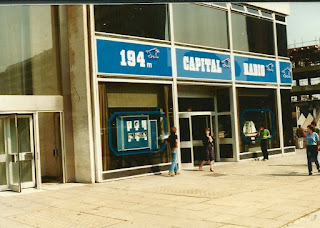
Despite this frustration, the job turned out to be one of the most enjoyable and rewarding I have done. Knowing that the radio station was making a practical difference to Londoners’ lives was incredibly heart-warming. The foyer – our ‘office’ – was enormous, more than 1000 square meters, with a ridiculously high ceiling and permanent home to three freestanding stalls: the ‘Capital Radio Shop’ sold station merchandise, ‘Capital Radio Jobspot’ offered job vacancy details and ‘Capital Radio Flatshare’ produced a printed sheet every Thursday afternoon listing rental accommodation available. The building’s ground floor full-length windows on a corner site enabled traffic passing on busy Euston Road and Hampstead Road to view the impressive Christmas decorations within, including a massive, illuminated pine tree. Pedestrians would stop and peer through the glass at us working inside.

Capital Radio’s decision prior to the station’s launch to rent the foyer and first floor was a brilliant marketing strategy, as its logo and name were emblazoned across the building at ground level around one of London’s busiest road junctions. To passers-by, it appeared that the station occupied the entire 36-storey tower, the capital’s tallest office block when completed in 1970. In reality, its upper floors were filled with unconnected businesses including the UK government’s military intelligence department intercepting mail. Capital Radio’s high-profile visibility was in stark contrast to its competitor ‘Radio One’ which had operated from an anonymous outbuilding (Egton House) since launch in 1967. BBC bigwigs had feared its youthful staff (including former pirate radio ship presenters) might scare the ‘serious’ broadcasters in Broadcasting House employed on its existing talk and classical music networks.
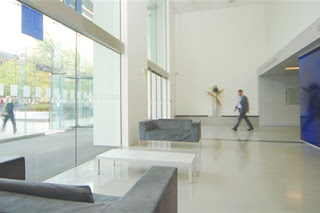
Another significant difference with its competitor was Capital’s open-door policy, permitting anyone to enter its impressive foyer through the revolving doors without a security check. Music fans would stand around hoping to get a glimpse of pop stars visiting for interviews. Radio presenters walked in and out and up the grand curved staircase to the first-floor studios. During the charity appeal, many generous listeners ventured in clutching their donations of toys which we added to the piles of presents. For amusement, we unboxed and put batteries in one state-of-the-art toy mouse that ran around on wheels with a movement sensor, enabling it to independently charge at speed across the polished floor towards anyone who entered through the revolving door and then chase them wherever they walked. Only on one occasion did we have to close and evacuate the foyer for several hours due to a bomb scare.

Christmas Eve was a sad day when the team had completed the charity appeal and parted ways for the final time. Following my mysterious attempted mugging, I reached home and found I was lucky to have escaped with mild bruising on my forearms. I packed a bag and headed to Deptford railway station, only to discover that the last train had already left. I had to return to my rented room, phone my mother and ask if she would come and collect me as there was no public transport during the next two days. Though she hated driving through London, she kindly drove fifty miles from Camberley to pick me up on Christmas morning so that I could spend the holidays with her and my sister.

In the New Year, I returned to the Capital Radio office to type up a report that catalogued, with Millie’s help, the volume of goods we had distributed during the Christmas appeal and the number of charities and families we had helped. Though no such post mortem had been requested, I considered it ‘good practice’ and I hoped to impress my boss with my thoroughness as a manager.

Much later that year, Steve Billington requested a further meeting in his office. Perhaps a full-time vacancy at the station had arisen? Sadly, it had not. I was asked if I would work on the next Christmas charity appeal. I was grateful for the opportunity. However, I was flummoxed to be told that I was to be demoted to the role of ‘deputy co-ordinator’ despite me having believed I had achieved a satisfactory job the previous year. Then I was gobsmacked to be told that the co-ordinator that year was to be … Pol. It seemed like some kind of voodoo that the person within our team who had demonstrated the least commitment last year should now be appointed to manage the rest of us.

Once activity started in December 1987, did Pol step up to his promotion and manage everything smoothly? No change of spots was evident. The only thing he seemed interested in managing was his own social calendar. It was Hobson’s choice: either the charity appeal would rapidly descend into chaos or I would have to manage it, just as I had the previous year. I took the reins informally, even though it proved frustrating when the most regularly spoken phrase by everyone involved was “Where’s Pol?” The charity appeal proved as successful as the previous year, though on this occasion Pol would take the credit. Did he write a report afterwards, as I had done? Er …

With the exception of the baffling change of co-ordinator, Steve Billington had been a fantastic boss and, in the New Year, he invited our whole team to reunite for a lunchtime meal at a restaurant in Tottenham Court Road to express his gratitude. I was appreciative of the start he had offered me at Capital Radio and the opportunity it presented to further develop my management experience. I had thoroughly enjoyed my time working there and, like my earlier job at ‘Metro Radio’, it taught me a lot about the problems that can befall a commercial radio station.

And so to ‘The Epilogue’:

In 1988, Camilla ‘Millie’ Dunne (daughter of Sir Thomas Dunne) married The Honourable Rupert Soames (grandson of Sir Winston Churchill) at a society wedding attended by her friend Lady Diana, Princess of Wales.

In 1989, I co-ordinated and wrote former pirate station ‘KISS FM’s successful second application for a London commercial radio FM licence, beating 39 competing bids.

In 1990, Capital Radio closed its community department as a result of the new commercial radio regulator ‘The Radio Authority’s ‘light touch’ strategy no longer requiring commitments from licensees to community activities. Steve Billington left Capital Radio.

In 1991, I attracted a weekly audience of more than one million listeners a week to black music station ‘KISS FM’ within six months of its successful launch, as its Programme Director, exceeding the Year One target.

As for Pol …

[Originally published at https://peoplelikeyoudontworkinradio.blogspot.com/2023/10/knock-me-down-with-stalker-1986-share.html]
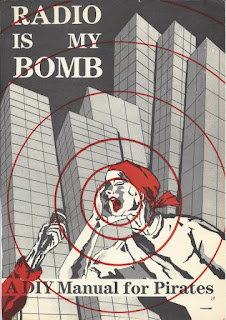
Radio is my bomb? : 2003 : the DAB digital radio customer complaint hotline, The Radio Authority

 The Bomb Squad arrived in vans, ran into the Holborn office block and up its staircase to the eighth floor. We watched events unfold from the car park below, the assembly point to which our organisation of forty-odd people had been evacuated an hour earlier.

That humdrum morning had been interrupted by a large cardboard box delivered by Royal Mail to our office. It was not particularly heavy but had lots of stamps on the outside with a ‘Belfast’ postmark. If you were a celebrity or public figure whose opinions were widely distributed, you might anticipate threats would occasionally be made against your life. If you had a desk job in a little-known British government quango, your greatest work challenge might normally be choosing where to lunch. However, that morning, the box’s addressee Soo Williams was taking no chances. The emergency services were called.

Eventually, the ‘suspicious package’ was removed by ordnance experts and exploded elsewhere. It was found to contain nothing but paper. Printed petitions signed by hundreds of Belfast citizens demanding that religious community radio stations be licensed locally. Williams’ name had been written on the box due to her recent promotion by The Radio Authority to manage the launch of ‘community radio’. Returning to our desks after the false alarm, I ruminated what those god-fearing citizens who had toiled to gather so many signatures might have thought of having been suspected by the recipient of being terrorists.

That morning’s event exemplified the disconnect between the regulator of the radio industry and the public it was supposed to serve. Someone with an interest in the UK community radio movement would have known that tiny unlicensed radio stations had existed for years on both sides of the Irish border, broadcasting church services and information to their communities. Indeed, one history argues that the Catholic Church in Ireland was “the world’s largest pirate radio operator”. However, few of The Radio Authority’s desk-bound administrators demonstrated interest in the medium they were employed to regulate. I was the only employee to have worked in a community radio station (licensed in a 1970’s experiment), having been a founder member of the Community Radio Association two decades previously. But now, within this dysfunctional workplace, I was regarded as the office junior … at the age of forty-four.

Back at my desk, I returned to taking regular phone calls from members of the public dissatisfied with the new-fangled DAB ‘digital radio’ receiver they had just purchased. I never quite understood why the switchboard regularly passed such calls to me, as I bore no responsibility for DAB radio, and my colleagues in the Development office suffered no such impositions. It was already self-evident to me that the rollout of this new radio technology had been disastrous for listeners, though I was expected to defend the system, and worse … to blame the listener for its inadequacies.

Staff were issued with a ‘helpful’ sheet of topics to raise with complainants about DAB. Suggestions to be made to members of the public experiencing difficulties tuning into stations on their new receiver included:

  • move your radio nearer a window
  • listen to the radio in an upstairs room
  • your residence might be constructed of the wrong materials
  • your residence might be located in a valley
  • your residence might be located in a dense urban area
  • your residence might be in an apartment block or a basement
  • you may need to install a rooftop antenna.

Many callers were understandably baffled and annoyed by these ‘answers’ to their problems, proffering a torrent of abuse or hanging up. Many had spent around £90 on a portable DAB receiver and expected it to deliver what the industry’s marketing had promised – ‘crystal clear’ reception of a wide choice of radio stations. The most popular receiver, the ‘Pure Evoke-1’, had been designed to be portable and had no socket to even attach the suggested external antenna, let alone the connectivity to update and improve its software. And why did it resemble a wooden post-war radio in an era when connected mobile phones were looking increasingly futuristic?

One of my callers’ commonest gripes was the result of DAB radios having been marketed and sold nationwide, even though many parts of Britain had yet to be connected to the DAB transmission system. In this instance, all I could suggest was that the consumer return their receiver to the shop and demand a refund because no digital stations were yet audible locally. I too shared this problem because, although The Radio Authority had denied me its Christmas cash bonus in 2002, I had received the DAB radio gifted to all staff. It remained in its box as I was living in Brighton, where DAB transmissions had yet to arrive.

The root of the dissatisfaction with DAB radio was not the technology itself, which had been a smart European innovation, but the way it had been implemented by Britain. Those critical roll-out decisions had been made by people like the ones in my workplace: administrators who had no experience working within the radio industry, encouraged by technologists keen to promote anything ‘digital’ with an evangelical fervour, oblivious as to whether consumer demand was evident. At the top of this unholy group of conspirators were government civil servants who mistakenly believed that Britain and British industry could dominate global markets by adopting a technological standard in which the rest of the world had shown scant interest. Meetings of this cabal seem to have merely intensified their cult-like determination.

The stumbling block their paper plan faced was the disinterest of the commercial radio industry itself which, at that time, was profitable and had expressed no dissatisfaction with its existing, robust FM radio transmission system. When The Radio Authority advertised the first national DAB multiplex licence in 1988, it faced the very real possibility that no radio companies would submit bids. To avoid this embarrassment, the regulator had to ‘strongarm’ Britain’s largest radio group into making the only application. GWR Group plc’s then chief executive Ralph Bernard later admitted:

“GWR was encouraged to apply for the national [digital] licence, and was under some pressure to invest in the opportunities for a national licence from the then regulator [The Radio Authority]. Had we not done it, there would be no national DAB platform now. Not only that, [the regulator] did not know what they would have done on the question of national radio stations with regard to the opportunities given by the then government to renew their national licences for a further period of time if they were to commit to going digital. But how can you [do that] if there are no opportunities to go digital because there is no national multiplex? When I put that question to The Radio Authority, I was told that the answer was: ‘We don’t know what would happen – there is no Plan B’. It was just an assumption that someone would go for [the national DAB multiplex].”

“When we were seduced into believing that this was going to be the only [national digital] licence, we realised that there would be substantial losses, but the payback would be when you have the opportunity to be the only player in the national market for DAB. When it’s The Radio Authority, an agency of government, you tend to believe what you are told. On that basis, the investment was justified and, at the time, getting it through my Board was not easy.”

Having rescued the regulator from potential embarrassment in its ill-judged pursuit of the DAB dream, Bernard naturally now held some sway over The Radio Authority and its decisions. There evidently did exist such a thing as a free lunch for its senior managers when Bernard would invite them to The Ivy restaurant in anticipation of outcomes coincidentally beneficial to his business. On two occasions at the regulator, my actions threw a spanner into this cosy relationship and I suffered consequences (see blogs here and here) from my bosses, despite me having acted in what I believed was the public’s interest. I learnt to my professional cost that I was supposed to be a ‘civil servant’ to commercial interests, not to our citizens.

How did the story end for commercial radio? Badly. GWR Group plc’s subsequent merger with Capital Radio Group plc, both profitable public companies prior to their investment in DAB, proved a financial disaster, their DAB assets were divested for a song, an offshore investor acquired the merged business and Bernard exited the industry. This tragedy was repeated in the lower echelons of the radio business when the entire UK commercial radio industry had to be rescued by private investors. Most local radio stations that had existed since the 1970’s were replaced by national ‘brands’. Local content all but disappeared. Thousands of radio professionals lost their jobs.

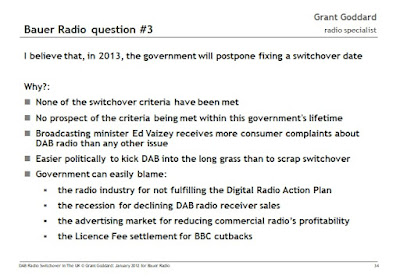
How did the story end for DAB radio? Even worse. In a presentation I was commissioned to make to the board of the second largest radio group in 2012, I predicted that the government would kick the much heralded ‘digital radio switchover’ date into the long grass. I was pooh-poohed by the company’s technologists at the meeting, but my predictions came to pass … while theirs turned to dust. Naturally, I was never invited back. British commercial radio’s enormous investment in the disastrous DAB platform impoverished the entire sector, reducing it to little more than a jukebox music service for listeners who lacked Spotify accounts.

The deluded dream finally died in 2016 when ‘Pure Digital’, the ‘great white hope’ of British designed DAB radio receivers (though manufactured in China), was sold to Austrian company ‘Aventure AB’ for £2.6m, following its £7.9m loss during 2015/6 as a result of declining sales and its “significant stock” of unsold radio inventory so old that it “needs to be assessed for risk of obsolescence.”

With the advantage of hindsight, the entire DAB debacle now seemed like a rehearsal for the similar self-harm caused by Brexit a decade later. Men in suits with little or no experience of working in the real world of commerce pursued a fever dream regardless of its practicality, oblivious to its outcomes but buoyed by their mistaken sense of superiority. Their project was to foist a uniquely ‘British’ solution on the population that would purposefully diverge the UK from the rest of the world (British DAB radios would not even function in France). Their words and documents were stuffed with misinformation and downright lies that supposedly supported their theories. Without their posh accents, they could have been mistaken for used car dealers.

Despite the wilful destruction of the commercial radio sector’s economic value, talent, creativity and public service that they had fomented, many of Britain’s DAB ‘protagonists’ went on to be lauded with industry awards, honours and lucrative jobs. For anyone who followed the Brexit disaster, it will sound like all too familiar a story.

[Originally published at https://peoplelikeyoudontworkinradio.blogspot.com/2023/10/radio-is-my-bomb-2003-dab-digital-radio.html]

Baby, we were bored to death : 2000 : FM radio station market, Toronto

 Why does Toronto have such insipid and boring radio? Our city is vibrant, artistic, culturally diverse and entertaining, so why is none of that reflected in our uninspired radio stations? Travelling in Europe and North America as a radio consultant, I listen to a lot of radio and it is tragic to concede that my own city has some of the most boring radio stations known to mankind.

Opportunities to change this sad state of radio in our city are everywhere, but have too often been ignored. When Shaw Communications purchased ‘Energy 108’ a couple of years ago, it could have reinvented the station as a cultural focus for Toronto’s young people. Instead, Shaw fired ‘Energy’s most knowledgeable DJ’s, introduced Sarah McLachlan songs once an hour (in a dance music format?) and changed the name to … ‘Energy 107.9’. Wow! How many minutes did it take the marketing department to devise a strategy that unambitious?

Rogers Media’s purchase of ‘KISS 92’ last year was a complete no-brainer. Can you name any other city of similar size in North America that has had no Top Forty radio station for a period of even a few months? And yet Toronto suffered this malaise for several years. Even if Rogers had hired a helium-voiced bimbo DJ to front a Top Forty format, it still could have captured a huge audience hungry for what used to be called ‘pop music’. And that is exactly what they did. ‘KISS’s ratings are noteworthy, not just for the hordes of spotty grade nine students who naturally gravitate towards Backstreet Boys soundalikes and terrible Canadian techno. But the station’s substantial audience over the age of twenty is a sad reflection of the lack of any other remotely exciting music station in Toronto. For those of us past our teen years, ‘KISS 92’ at least makes you feel good to be alive, compared with other FM music stations that treat listeners like senile geriatrics with one foot already in the grave.

One would hope that ‘KISS 92’s runaway success might encourage its competitors to try and become a little more imaginative in their programs. The signs so far are not particularly encouraging. ‘EZ Rock 97’ revamped its daytime line-up last week to introduce even more soporific DJ’s and has changed its slogan from ‘My Music At Work’ to ‘Soft Rock Favourites’. Station owner Telemedia appointed a new Program Director drafted from its Calgary operation to oversee these changes. Yes, Calgary – that hotbed of radical, imaginative radio formats! ‘EZ Rock’ looks certain to retain its nickname of ‘Radio Slumberland’ in our household.

Milestone Radio, scheduled to launch next year, has an incredible opportunity to turn its black music format into an exciting, inclusive station that could electrify the city. After all, black culture has never been so predominant, nor so imitated, in mainstream music and arts. With imagination, Milestone could be a very successful radio version of ‘City TV’. Whether its owners can grasp that challenge, let alone succeed with it, depends upon the station’s ability to overcome three obstacles. Milestone’s programming plans are the obvious product of committee debate, with too many worthy (but commercially disastrous) ideas generated by individuals who have particular axes to grind. Its recent effort to recruit a Program Director in the US rings alarm bells that Milestone is creating a cookie-cutter US-style urban music station that would reflect nothing of Toronto (listen to ‘WBLK’ for days on end and you will learn absolutely nothing about Buffalo, but everything about ‘strong songs’). And lastly, the spectre of minority shareholder Standard Broadcasting might be waiting quietly in the shadows for Milestone’s ambitious plans to fail in the first year, so that it can take control and resurrect the station as a smooth-jazz format, fitting perfectly alongside its mind-numbing ‘MIX 99’.

As for ‘Edge 102’ and ‘Q-107’, their owners should have been bold enough to extinguish these dinosaur formats years ago. There is so much exciting new music in the world, but you will certainly never hear any of it played on these two stations. The malaise is so bad that Toronto radio critic Marc Weisblott felt obliged to apologise in a recent column (radiodigest.com) for spending so much time listening to New York City radio via the internet. No need to apologise, Marc. Our only ray of hope is that one fine morning, some bold senior executive in Shaw/Corus, Standard, CHUM or Rogers might suddenly understand that radio which is stimulating and challenging can also be a commercial success. I would prescribe that executive a quick radio listening visit to any major city in the world to understand the potential. Otherwise, Toronto radio is condemned to be a mere revenue-generating asset designed to send us all to permanent sleep with yet another Celine Dion or Bryan Adams song.

[Submitted to Toronto weekly what’s on paper, unpublished]

[Originally published at https://peoplelikeyoudontworkinradio.blogspot.com/2023/09/baby-we-were-bored-to-death-2000-fm.html]

Don’t play that song for me : 2004 : unusual FM radio formats, Phnom Penh

 Here in Phnom Penh, there are seventeen radio stations on the FM dial, even though Cambodia’s capital city has a population of less than a million. But you are more likely to hear a song by Britney Spears or Madonna on the ‘BBC World Service’ (100 FM here) than on any of the local FM stations. Only one, ‘Love FM’ 97.5, plays Western music and its playlist stretches solely from the obscure (‘Pretty Boy’ seems to be the most requested song) to the bizarre (New Kids On The Block?). The rest of the local stations play exclusively Cambodian music. It’s radio, Jim, but not as we know it. Several hundred hours of radio listening suggest two Cambodian programme formats that could be adopted in the West:

KARAOKE CALL-IN RADIO

Most stations in Phnom Penh have a daily show or two of karaoke call-in. Each station employs a pair of singers (one male, one female) who sit in the radio studio with a standard karaoke CD machine plugged into the mixing desk. Listeners call in to a mobile phone number which is also routed to the desk. Most stations have no Telephone Balance Units or ‘clean feed’ system, so callers can only hear the presenter by keeping the volume of their radio turned up, which leads to howling feedback (considered normal here) during every call. Stations with Optimod-style audio processing suffer ever worse feedback loops.

There is no pre-screening of callers. There is no delay system. You hear the mobile phone ring in the studio. The presenters answer the phone on-air, ask the caller’s name, where they are calling from, and the song they wish to sing. While one presenter finds and cues the appropriate karaoke CD, the other chats amiably with the caller about the reasons they have chosen the particular song. The song starts, one of seemingly hundreds of Cambodian love songs that are all male/female duets. If the caller is female, the station singer sings the male verses, and prompts the caller to sing the female verses. If the caller is male, the reverse applies.

The karaoke machine adds echo to the singer’s voice. It is no exaggeration to say that most callers have no sense of either melody or rhythm. The majority are absolutely appalling singers and seem to have no sense of shame exhibiting their complete lack of ability on-air. Conversely, all the radio station singers are excellent, not only at singing but also at treating every caller with dignity and respect. Each caller is allowed to complete their selected song, despite their obvious lack of talent, the howling feedback and the poor-quality audio (most callers use analogue mobile phones). At the end of the song, the presenters thank the caller and, as soon as they end one call, you hear the mobile phone ring again, and they move immediately to the next caller.

Because there is no pre-screening, some callers inevitably are put directly on-air who want a different radio programme, a different radio station, or the local pizza delivery service. The presenters treat even the mistaken callers with the same respect. Each karaoke show continues in this fashion for several hours, punctuated only by batches of hideous commercials, each lasting two minutes and using more voice echo than the average King Tubby dub plate. At the end of the show, the two station singers get to sing a song together, without the humiliation of having to duet with an out-of-tune, out-of-sync caller bathed in feedback.

GRIEVANCE DROP-IN RADIO

In a country where the legal system rarely delivers results that resemble natural justice, the majority of the population look elsewhere for ways to resolve their problems. What better medium than a radio station? At the same time, in a country where the news agenda is dominated by ruling politicians’ pre-occupations, what content can journalists safely use to fill time in their news bulletins? The answer for both the people and the journalists is to air relatively minor grievances from the population that in no way threaten the government’s rule.

For state radio, this means sending journalists to distant provinces to interview farmers about agricultural problems or minor disputes with their neighbours. The results are passed off on-air as ‘news’. Imagine if ‘You & Yours’ replaced the ‘Today’ programme on ‘BBC Radio Four’. In Phnom Penh, where hard-pressed commercial radio stations can barely afford to employ journalists, some stations sympathetic to opposition parties operate an open-lobby system. Citizens who have grievances to air simply turn up at the radio station, their complaint is recorded, and then broadcast unedited and without context. The results are startling for a Westerner accustomed to hearing only carefully produced ‘packages’ of balanced opinions or only short sound bites of real people’s voices emanating from cosy UK radio stations.

This week I heard a woman sobbing and moaning her way through an unedited ten-minute monologue, explaining how her husband had allegedly been abducted by a criminal gang and disappeared. Last week, on another station, I heard a widow sobbing uncontrollably and threatening to set fire to herself and her children because ownership of the radio station belonging to her dead husband had just been awarded to another man by the municipal court. Both broadcasts moved me to tears, despite being in a language I cannot understand. Why? Because I cannot remember hearing such raw emotion spilling out of my radio set (except in drama) for a very long time.

The majority of our phone-in shows have become carefully packaged entertainment while our grievances seem trivial compared to the tribulations suffered by people here. Because the majority in Cambodia still have no access to a telephone, the radio station drop-in provides an important forum for aggrieved citizens to voice their anger and emotion. Listening to these raw, unedited voices has reminded me of the potential emotional power embodied in the radio medium, and the need for programme producers back home to play less safe, allowing more real voices on the radio that can move listeners to tears.

——

After several more months on this diet of karaoke and tear-jerking stories, I anticipate that my return home to a menu of ‘BBC Radio One’ and ‘Capital FM‘ will quickly reveal such ‘professional’ stations to be wearing the Emperor’s New Clothes. All faux excitement and faux dialogue with listeners, but nary a raw emotion in sight … or sound.

[First published in ‘The Radio Magazine‘, May 2004]

[Originally published at https://peoplelikeyoudontworkinradio.blogspot.com/2023/08/dont-play-that-song-for-me-2004-unusual.html]

One small step for radio, one giant leap for black music radio in London : 1990 : KISS 100 FM launch day

 The final few days before KISS FM’s official launch were a blur of frenetic activity and outright panic. It was only at this late date that construction of the three studios was completed by the contractors. Now, at last, they were ready for the engineers from the Independent Broadcasting Authority [IBA] to test and inspect. Much to my relief, their report required only a few minor alterations to the air conditioning system, after which the IBA issued KISS FM with a certificate of technical competence. I affixed it to my office wall, alongside the poster of Betty Boo [I had pinned as my memento of DJ Tim Westwood’s ‘reason’ for reneging last-minute on his scheduled daily daytime show].

With only days to go, I held two long, evening meetings with all the part-time DJs to explain what they could and could not do legally on-air. As former pirate DJs, they were unfamiliar with the conventions of libel, slander and other legal niceties which legitimate radio DJs have to learn. It was important for me to emphasise how essential it was for KISS FM to protect itself against prosecution or rebuke by the commercial radio regulator, the IBA. I went through their employment contracts, page by page, explaining what the jargon meant and what implications the clauses had for their radio shows. Also, I had to stress the importance of playing the right advertisements at the right time. This was a contractual requirement that had been relatively relaxed on pirate stations.

The night before the station’s launch, I was still busy putting the finishing touches to the inside of the studio until the early hours of the morning. Although two on-air studios had been built, there was only time to bring one of them up to scratch with all the accessories required for live broadcasts. With only hours to go, the engineers and I were frantically drilling holes in the studio walls to hang the storage racks for audio cartridges used to play advertisements, as well as wiring up the studio lights on the ceiling. I handwrote several large posters in thick felt pen to remind the presenters of the station’s address, its phone number for requests, and what to say about the station’s launch. Then, I had to spend several hours making labels with a Dymo and sticking them onto each piece of equipment in the studio for the presenters to know precisely which button performed which task. Finally, when everything was ready, I drove home and collapsed into bed.

The next morning, Saturday 1 September 1990, was the biggest day of our lives. Some weeks earlier, [managing director] Gordon McNamee had hung a handwritten sign on his office wall that read “X DAYS TO GO” with the number being changed daily. That number was now down to zero and the sign had finally become redundant. The day had arrived at last, whether we were ready for it or not. McNamee and I met at the station in the morning and locked ourselves away inside the production studio. McNamee wanted to perform a countdown to the station’s launch at midday but, in order to ensure that it went perfectly smoothly, he wanted to pre-record it. I set the timer on my digital wristwatch to five minutes and recorded McNamee’s voice, counting down at one-minute intervals from five minutes to one minute, and then counting down the seconds during the final minute until the alarm sounded. It took two attempts to get it right.

After that, we moved to the main on-air studio, taking the tape of the countdown with us. We had decided not to allow anyone other than essential station personnel into the studio for the launch. It was not a big enough room to comfortably accommodate more than a few people, and the presence of journalists would only have made us even more nervous. McNamee had arranged for Mentorn Films, which was making the television documentary about the station, to erect a tripod camera in the corner of the studio to record the whole event. A video link had also been booked to relay the picture live to a large screen in Dingwalls nightclub, where the official KISS FM launch party was being held that day.

With all the tension that surrounded that historic day, we quickly forgot that we were being watched by a video camera from the corner of the room. I spooled McNamee’s countdown recording onto a tape machine and started it at precisely five minutes to midday. McNamee’s countdown was now automatically being superimposed over the music from the test transmission VHS cassette that had been playing continuously for the last ten days. Over the beats of the Kid Frost hip hop track ‘La Raza,’ McNamee’s voice coolly counted down the minutes. At the one-minute point, McNamee counted “59, 58, 57, 56….” and I slowly faded out the music to increase the suspense of the moment. Accompanied by the pre-recorded sound of my digital watch alarm, McNamee said the magic words “twelve o’clock.”

I turned up the microphone in the studio for McNamee to make KISS FM’s live opening speech:

“This is Gordon Mac. There are no words to express the way I feel at this moment. So, with your permission, I’d just like to get something out of my system. Altogether – we’re on air – hooray!”

Everyone in the studio joined in a loud cheer, before McNamee continued:

“Welcome, London. Do you realise it’s taken us fifty-nine months, four hundred and sixty-five thousand, seven hundred and twenty working hours, plus three and a half million pounds, as well as all of your support over the last five years, to reach this moment? As from today, London and everywhere around the M25, within and without, will have their own twenty-four-hour dance music radio station. I’m talking to you from our new studios in KISS House, which is completely different from the dodgy old studios we used to have in the past [laughter in the studio]. The odds were against us. None of the establishment fancied our chances but, with the force of public opinion and our determination, the authorities had to sit up and listen and take notice. Today, I’m being helped by Rufaro Hove, the winner of ‘The Evening Standard’ KISS 100 FM competition. Rufaro was chosen from thousands of people who entered and she will press the button for the first record. But before that, the first jingle.”

McNamee pushed the cartridge button to play a lo-fi jingle from KISS FM’s pirate days. The sound of a telephone answering machine tone was followed by McNamee’s personal assistant, Rosee Laurence, saying:

“It’s me again. I forgot to say – hooray, we’re on. Bye-bye.”

The jingle ended with the sound of a phone being put down. McNamee continued:

“There we go, Rufaro, now you can press the first one. Go!”

The first record played on the new KISS FM was the reggae song ‘Pirates’ Anthem’ by Home T, Cocoa Tea & Shabba Ranks. The song was a tribute to London’s pirate radio stations. The rallying call of the chorus was:

“Them a call us pirates

Them a call us illegal broadcasters

Just because we play what the people want

DTI tries [to] stop us, but they can’t”

One of the song’s verses narrated the story of pirate radio in the UK:

“Down in England we’ve got lots of radio stations

Playing the peoples’ music night and day

Reggae, calypso, hip hop or disco

The latest sound today is what we play……..

They’re passing laws. They’re planning legislation

Trying their best to keep the music down

DTI, why don’t you leave us alone?

We only play the music others want”

These lyrics were the perfect choice for the station’s first record. KISS FM’s pirate history may have been behind it now, but the station had proven that pirate broadcasting had been necessary to open up the British airwaves to new musical sounds and fresh ideas for the 1990s. ‘Pirates’ Anthem’ was followed by the personal choice of the Evening Standard competition winner, ‘Facts of Life’ by Danny Madden. In the studio, the atmosphere was electric. It was difficult to believe that the few of us crowded into that little room were making broadcasting history. This was the creation of the dream that some of us thought we might never witness – a legal black music radio station in London, at last. It was difficult to believe we were really on the air.

Next, McNamee thanked “all the original disc jockeys, all the backers, all the new staff and last, but not by any means least, all of the listeners that have supported us over the five years.”

He introduced the record that he had adopted as KISS FM’s theme tune – ‘Our Day Will Come’ by Fontella Bass. The station’s first advertisement followed, booked by the Rhythm King record label to publicise its latest releases. Soon, McNamee’s stint as the station’s first DJ came to an end and his place was taken by Norman Jay, whose croaky voice betrayed the emotion of the day. Jay told listeners over his instrumental ‘Windy City’ theme tune:

“After nearly two very long years, all the good times, all the bad times we shared on radio … Thanks to all of you. Without your help, this day could not have been possible. On a cold and wet October day in 1985, KISS FM was born. Gordon Mac, George Power and a long-time friend of mine, Tosca, got together to put together a station which meant so much to so many. And thanks to those guys, Norman Jay is now on-air.”

Once Jay was on the air, McNamee said farewell to the rest of us in the studio and left to attend the station’s official launch party at Dingwalls. We stayed in the studio, still thrilled to be part of the celebration of that historic moment and enjoying the music that Jay played. Throughout the rest of the weekend, each KISS FM DJ presented their first show on the newly legal station. Many of them reminisced about the pirate days of KISS FM and played music from that era, when they had last graced the airwaves of London. To the majority of the station’s audience, who might never have heard of KISS FM until now, the weekend’s broadcasts must have sounded rather indulgent. Far from most of the records played that weekend reflecting the cutting edge of new dance music that the new KISS FM had promised, the songs mostly reeked of nostalgia and the station’s former glory days as a pirate station. This brief moment of indulgence was a healing process that was necessary for the station’s staff.

I remained in the studio the rest of the day, helping the DJs to grapple with the unfamiliar equipment and showing them the new systems with which they had to contend. Despite the intensive training they had been given in the last ten days, it had been twenty months since any of them had spoken a word on the radio, let alone presented a professional show. Nearly all the DJs looked incredibly nervous, and several seemed gripped with terror at the prospect of having to present a show from a fully equipped radio studio for the first time in their lives. I stayed there until the early hours of Sunday morning, with only an occasional break for a takeaway pizza.

Everybody involved in KISS FM, apart from the small group of us left in the studio – the DJ on the air, me, [head of talks] Lyn Champion and programme assistants Colin Faver and Hannah Brack – were at Dingwalls, enjoying the party celebrations. It felt strange, during the station’s first day on-air, that the rest of the huge KISS FM building was entirely empty. In the evening, the only lights visible from outside were in the tiny studio on the first floor. By two o’clock in the morning, I was absolutely exhausted. It had been an incredibly exciting day and everything had run much more smoothly than I had expected. I drove home, having left Champion and Brack to ‘babysit’ the studio overnight to ensure that the rest of the presenters could cope with the equipment.

[Excerpt from ‘KISS FM: From Radical Radio To Big Business: The Inside Story Of A London Pirate Radio Station’s Path To Success’ by Grant Goddard, Radio Books, 2011, 528 pages]

[Originally published at https://peoplelikeyoudontworkinradio.blogspot.com/2023/08/one-small-step-for-radio-one-giant-leap.html]

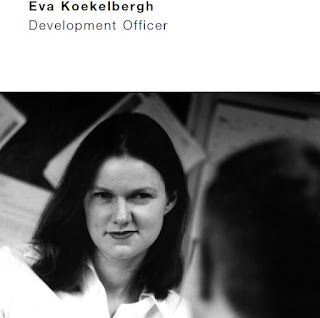
The spy who disliked me : 2003 : Eva Koekelbergh, The Radio Authority

 “Do you know who I am?” my workplace colleague shouted down the phone. “Do you know who I work for?”

I suspect customer service personnel at Fortnum & Mason (which promises “everyone remembers their first encounter with us”) endure similarly haughty conversations with their upper crust clientele day in day out and follow a scrupulously polite script such as:

“Yes, madam, I can read your name on the order for wedding guest name cards and I can tell from your posh accent that you are a member of the British elite who since 1707 have purchased ordinary things from our Piccadilly shop at extraordinary prices, BUT …”

Perhaps private school timetables schedule one period per week of ‘Privilege Studies’ during which pampered Torquil’s and Persephone’s confidently acquire the skill of always getting their own way in life by addressing the 95% of Brits who they consider not ‘one of us’ as inferior beings … though I fail to recall my state school reciprocally teaching ‘deference’. Whether the harangued employee at Fortnum & Mason (“committed to delivering a sense of pleasure”) on the other end of the call had heard of The Radio Authority I doubt. Our government quango was so marginal that there were probably people toiling in radio stations who had never heard of it.

My colleague was usually more softly spoken until an issue arose with ‘service’, at which point the inherited gene that had probably balled out ‘the help’ in centuries past suddenly emerged on the radar screen like the tip of an upper-class iceberg. On a previous occasion, a phone charger left permanently plugged in under the same colleague’s desk had burnt out with a bang while she was sat in our crowded, unventilated office, but without injury. No eavesdropping was necessary to overhear how forcibly the manufacturer would be complained to, sued and adequate compensation secured for her having suffered this apparent near-death experience.

Our office proved the ideal place for my colleague to spend most of the year meticulously planning her spectacular wedding in the grounds of a hired West Country mansion. Months could pass without management delegating any work to us ‘development officers’ to do. The pay and conditions in this public sector agency were undeniably rubbish, but never have I been required to do so little work for a salary. If I exited the office even ten minutes after five o’clock, it would be my duty to switch off all the lights and lock the Radio Authority front door. So much time, so little work!

Evidently, no run-of-the-mill wedding was being planned from the desk next to mine. Its scale and lavishness would easily have triumphed in a ‘Radio Industry Wedding of the Year’ awards ceremony. Like all historic royal weddings, this was not a purely personal affair. It celebrated the alliance of two established ‘houses’ that since 1973 had been at war with each other, fighting innumerable battles over every issue known to the broadcast industry’s opposing armies. The bridegroom was a board member and director of a significant British commercial radio group. The bride worked for the government regulator of the very same commercial radio industry. It was a match made in conflict-of-interest heaven.

I had already observed that, as soon as something of even minor significance occurred at The Radio Authority, the bride-to-be would unhook her mobile phone from its charger and march to the ladies’ loo where she might remain a good while. Maybe she just suffered a weak bladder exacerbated by radio industry events. Whatever, by dint of a mysteriously indirect route, such news would magically appear within the pages of the next ‘Radio Magazine’, a weekly publication brimming with insider gossip that naturally was rabidly consumed by The Radio Authority’s staff.

Normally I would have remained coldly detached from such workplace intrigue but, this time, my life was impacted by the whiff of in-house espionage. Bob Tyler, a good friend for as many decades as I have attended radio conferences, was then news editor of the Radio Magazine and had a habit of phoning The Radio Authority switchboard and asking to be put through to me for an innocent chat. Having signed some kind of Official Secrets Act on my first day of work, I told him absolutely nothing confidential. However, his calls may have sowed seeds of doubt with my boss, David Vick, who one day discovered me alone in his office after I had entered to retrieve a document I had mistakenly left on his desk minutes beforehand. As the only employee with hundreds of published articles about the radio industry to my name, the fickle finger of fate appeared to point directly at me and, without explanation, Vick started to lock his office door when he was absent. Subsequently, I was the sole employee not to be awarded a Christmas bonus and my annual review was unremittingly negative.

“My father worked as a spy for the Dutch government,” the bride-to-be would tell the rest of us in the office, as if addressing an interviewer for a place at Oxbridge. I wondered to myself whether such an occupation passed as a ‘family business’ amongst her peers. Could her employment with The Radio Authority be merely an undercover mission in a quiet backwater for an MI5 agent? Suspicions were further aroused when our boss David Vick insisted he vet and approve each of her wedding guests, the list apparently resembling a who’s-who of everyone who presently worked in the British commercial radio industry. Not that I ever saw it. 

As the Big Day approached, it became apparent that all who worked in our office had received an invitation … except me. In fact, everybody in our department had been invited … except me. Indeed, I suspect that just about everyone employed by The Radio Authority had been invited … except me. Not that Eva Koekelbergh ever told me to my face that I would not receive an invitation to her big fat Wessex wedding. My desk was only six feet away from hers so the ‘oh dear, it must have been lost in the post’ excuse would have been wholly redundant. I had endured almost a year of aural torture, forced to listen to every minor detail concerning the biggest day of her life being phoned through to dozens of contractors and then chased up relentlessly from her desk, yet now I was being treated as if I might deliver a homemade bomb as my gift-wrapped present.

Though there may be eight million eligible bachelors in the naked city, the universe of Britain’s 5% appears more akin to the gene pool within a rural Mormon village. The bridegroom just happened to be the former Radio Authority line manager of the bride, and he also just happened to be best man at her present line manager’s wedding, and both men just happened to have attended the same university. For the cherry on top of this cake of coincidence, one of the six people working in our office was the daughter of one of the bride’s teachers at her former private school. When people casually comment ‘it’s a small world’, do they realise what a truism it is for a certain stratum of society?

One week before the Big Day that had necessitated a year of planning, including its own internet domain with gooey photos of the couple and a lengthy wedding gift list, the bride casually asked me if I wanted to attend her post-wedding evening soiree, but not the main event. I was tempted by an appropriately pithy two-word response but instead feebly explained that I was already busy that weekend. The few friendly staff I knew at The Radio Authority had already asked me privately why I had not been invited and all I could do was shrug. I had no idea. Anybody who was anybody in the British radio industry seemed to have been invited. I could only surmise that I must be ‘nobody’, despite having planned and executed London’s most successful large-scale commercial radio station launch during the previous decade.

Naturally, the wedding juggernaut did not come to rest abruptly at the end of the Big Day. Afterwards there were still the communal experiences and the photos to be ooh-ed and ah-ed over by colleagues in the office … and the gossip. Who did what, who saw what and who said what occupied many of the staff for several weeks afterwards. I just sat at my desk pretending to be deaf, dumb and blind. All I learned was that everybody seemed to have had a good time. The wedding had at least not cost me a penny. No present, no card, no car hire, no petrol, no hotel, no tuxedo hire. Even if I had received an invitation, I might have proffered a public explanation that I could not afford all these costs on my meagre salary (particularly as I was commuting to London by train from Brighton), even whilst harbouring the private reason that the wedding’s scale and ostentatiousness seemed to be drawn from the pages of ‘Emma’.

A few months later, The Radio Authority closed and the majority of its staff transferred to a new regulator named Ofcom where we worked in a huge, open plan office overlooking the River Thames. I was relieved that my newly appointed desk was no longer next to the post-honeymoon bride, not because I disliked her, but because during my eighteen months at The Radio Authority she had insisted on running a powerful electric fan on her desk, whatever the season. It might have had the effect of making her feel like Kate Winslet on the bow of ‘The Titanic’ but the airstream had simultaneously played havoc with my sinuses. I had asked her repeatedly to adjust the fan’s angle but somehow it had still subjected me to painful headaches.

I had only transferred to Ofcom in the desperate hope of being offered some proper work tasks to tackle after having been required to do so little at its predecessor. It was not to be. My new boss Neil Stock gave me nothing to do. When the BBC called unexpectedly to offer me contract work in Cambodia, I accepted the challenge. During my last afternoon at Ofcom, I bade a fond farewell to the few lovely colleagues who had been so good to me. On route towards the exit, I passed Eva’s desk. I considered stopping to say farewell but then reflected on my experiences and resolved to walk on by.

[Originally published at https://peoplelikeyoudontworkinradio.blogspot.com/2023/07/the-spy-who-disliked-me-2003-eva.html]

From Russia with lawlessness : 1994 : Metromedia, Park Place, Moscow

 “I am a paediatric doctor,” said the young woman cleaning the toilet bowl in the bathroom of my apartment. “I work at the hospital during the day but I cannot live on my salary, so I have to work as a cleaner every evening.”

I was embarrassed. Although the doctor had been cleaning my apartment nightly, this was the first occasion I had attempted to strike up a conversation. I had mistakenly presumed that my ‘cleaner’ spoke no English. How wrong I was! Maybe she assumed I was a snobby American corporate manager who had just been posted overseas. How wrong she was! I was an unemployed Brit forced to take some freelance radio consulting work abroad, having failed to secure a job in my own backyard. Both of us were having to do what we did to survive.

I felt disorientated here. It was my first time in Russia. I would never have chosen to work here. But it could have been worse. My client, American public corporation Metromedia, had initially told me my destination was to be Nizhny Novgorod. I had had to consult a map to even locate that industrial city on the Volga. Thankfully, instead, I was sent to cosmopolitan Moscow. But looks are deceiving. My surroundings gave the semblance of a modern city but almost nothing actually worked as it should. Here was an incomplete facsimile of Western capitalist infrastructure in which the Soviet state had copied the designs without implementing the mechanisms. It recalled the era when a ‘Made in China’ label was a surefire guarantee a product that might look good would quickly fail.

My one-bedroom apartment appeared quite luxurious, about three times the size of my poky second-floor flat in London, with floor-to-ceiling glass windows on an upper floor that looked out over the permanent pollution rising from Moscow’s busy streets. It was inside a huge, newly built trio of linked office blocks containing office spaces and 330 apartments intended for foreign businesses that required a secure location 14 kilometres from the Kremlin. It was like living in one of those vast complexes portrayed in American movies about the self-destructive life of a harassed corporate ‘road warrior’. Maybe it was designed to offer ex-pats that kind of bland fictional familiarity.

In January 1994, Metromedia had bought one of the least popular FM radio stations in Moscow, planning to turn it into one of the most popular. There was a hitch. The Americans were baffled by the radio market not just in Russia, but in the whole of Europe. They could hear 30+ stations broadcasting in Moscow but they could not fathom what they were doing on-air. This was not simply a language problem. It was a challenge because Americans were accustomed to tightly defined music or speech broadcasters in their commercial radio system. You only had to listen to the vast majority of American radio stations for around ten minutes to recognise their ‘format’. Europe was not like that, largely because ‘public service broadcasting’ had been legislated as the bedrock of its broadcast systems since the invention of radio.

Before my flight to Moscow, I had purchased a Sony all-band radio from an electronics shop in Watford for almost £100. It was now put to service all day while I listened hour after hour to a particular Moscow radio station, writing notes about the music played, the talk, the advertisements, the jingles and anything else I heard. I was used to listening to radio stations in languages of which I had no comprehension, having spent so many weekend nights as a schoolboy DX-ing radio stations from all over the world on a Trio 9R59DS radio receiver. I had also analysed local radio markets in the UK for groups applying for new licences, monitoring existing stations’ broadcasts and tabulating the results. It might be boring work but at least I was being paid to do it!

One morning I received an email requesting my presence at an important staff meeting to be held in the Metromedia office within Park Place. This surprised me for several reasons: I was not an employee, I had never previously been invited to such a meeting in Moscow and, most astonishingly, nobody had told me that Metromedia even had an office within the same building where I was living. I had to call the phone number on the message to ask where precisely this office was located within the complex.

After spending so many days alone in the apartment listening to my radio and writing copious observations, it was an adventure to walk through the building’s labyrinth of anonymous floors and numbered doors to eventually locate and knock on the Metromedia office. After weeks of perpetual solitude, it felt like coming out of prison to be greeted by a surprise party. The room was full of Americans of whom I had never been aware, let alone met, all chatting away noisily. None of them had the faintest idea who I was, requiring my explanation that I too had received THE email. They were very welcoming in the American way, despite probably wondering why on earth this unknown, scraggy Englishman was present.

The meeting started soberly with an update on Metromedia’s progress attracting paying subscribers to its broadcast television service ‘Kosmos TV’ and mobile phone system it had apparently launched in 1991 in partnership with the state’s ‘Moscow Television & Transmitter Centre’. I had no idea that Metromedia had been operating in Moscow several years already and had been investing around US$5m annually in that particular joint venture business. The good news was its success in building a growing subscriber base. However, the reason for this meeting was the bad news that the Russian who had been appointed manager of the business had just disappeared with all its funds and had proven untraceable. There were long faces. Oh dear.

Welcoming the variation from my usual lonely routine, I spent the remainder of that day in the office chatting with some of my newly discovered Metromedia colleagues. At that stage, it seemed unclear whether the television business could continue and whether the office would even remain in operation. I met the corporation’s financial analyst Muema Lombe who shared my interest in pirate radio and he generously introduced me to the basics of Excel, the software that has been the mainstay of my analysis work ever since. We remain close friends since that chance introduction in Moscow.

On the way back to my apartment, I called in at the ‘Garden Ring Irish Supermarket’ in the Park Place lobby to buy my regular supplies. It was a smaller satellite branch of the bigger shop in the city centre that had opened in 1992. I was surviving on breakfast cereal, milk, bananas, tea and snacks, particularly American ‘Oreo’ cookies which I had never seen before. There was no cooking equipment in the apartment beyond a kettle, probably to encourage residents to eat in the complex’s vastly overpriced restaurant. Lacking a corporate expense account, I only ate there when my American line manager John Catlett was in Moscow, enduring hour-long waits to be served the simplest meals.

Although the Park Place shop’s range of food was limited, it felt too dangerous to shop outside as a foreigner. Russians bought provisions at kiosks where they could ask for the items they wanted, whereas foreigners like me had to frequent self-serve retailers where they became easily identifiable targets. In 1993, more than 7,000 crimes against foreigners had been reported in Russia, including the editor of the English-language ‘Moscow Times’ newspaper who had been robbed of cash and a laptop by men with knives outside the city centre’s Garden Ring Irish Supermarket. I had watched a ‘CNN’ report that Russia’s murder rate was three times higher than the United States’ and was only surpassed by South Africa.

Due to its success attracting foreign customers, the Irish Supermarket itself soon became a target. After its owners resisted a takeover by their Russian partner Dmitry Kishiev, there were reports of an alleged overnight explosion at its city centre store. The ‘Moscow Times’ reported: “Apparently fearing for their safety, the Irish partners then fled the country, urging their more than two-dozen expatriate employees to do likewise.”

Once Russians took over the ‘Irish’ supermarket, I noticed food on sale in Park Place marked with long gone expiry dates, the prices increased, customers deserted and eventually the shops closed altogether. Like everything else in Russia, ‘business’ was not considered a product of entrepreneurial spirit or managerial prowess. Instead, it was considered a lucky lottery ticket permitting almost anyone lacking relevant skills to intimidate, bully and exert power to enrich themselves over others.

Russia during the 1990’s was frequently referred to as the ‘Wild West’. There was a sense that just about anything you could imagine might happen there … and it frequently did. My corporate apartment felt like a haven of relative ‘normality’ within a crazed parallel universe. I cannot recall anyone being murdered at Park Place during my initial stay, unlike subsequent visits to Russia when I was given accommodation in hotels of variable quality and security. Never did I value boring old Britain so much as the days I would thankfully walk on the tarmac of Heathrow airport after yet another prolonged stay in Russia.

“A powerful bomb blast in the city’s centre on Saturday afternoon took the life of a Moscow student. The bomb which, according to police, had power equivalent to approximately 400 grams of TNT, had been placed inside a large metal dumpster on ul Bolshaya Spasskaya not far from Leningradsky train station. According to eyewitnesses, at the time of the blast, the 23-year-old female student of farming was walking by the dumpster. The strength of the explosion tore off one of her arms and blew out most of the windows in neighbouring buildings … Witnesses reported that just a few moments before the blast, several men had tried forcibly to enter a building next to where the explosion took place, but that after a doorman refused to let them enter the building, they threw a package into the dumpster.”

Small story on PAGE SEVEN of the ‘Moscow Tribune’, 30 January 1996

[Originally published at https://peoplelikeyoudontworkinradio.blogspot.com/2023/07/from-russia-with-lawlessness-1994.html]

The invisible manager : 1993 : Bud Stiker, Radio Juventus, Hungary

 Nazi soldiers were everywhere. Battalions of Nazis marching down wide boulevards. Nazis standing on convoys of tanks, waving flags. Row upon row of Nazis saluting speeches by their leader. Nazis fighting on battlefields. It was exhausting to watch for too long and nothing like ‘Indiana Jones’. In fact, it was a little bit frightening.

I had viewed so many hours of ‘MTV’ that I knew Stina Nordenstam’s song ‘Little Star’ by heart. Seeking alternative entertainment, I manually retuned the hotel room’s television and was shocked to discover a grainy black-and-white channel that was broadcasting Nazi propaganda twenty-four hours a day. I was like Dennis Quaid in the movie ‘Frequency’, pulling signals from the ether transmitted several decades earlier. This bizarre television service must have been a sideshow of the civil war raging on European soil only a hundred miles from my present location, atop a Budapest hill 479 metres above sea level.

My life under ‘hotel arrest’ was proving extremely tedious. To be accurate, I could leave any time I wished but my accommodation was hardly ‘Hotel California’. I was stranded alone, five miles from the city centre in countryside popular for walking holidays in summer but dead as a dodo mid-winter. No buses, no taxis, no shops, no mobile phone, no laptop, no internet access. It felt like sensory deprivation to be cooped up in a hotel room for days with absolutely nothing to do. My sole consolation was that I would be charging the client my daily rate.

My task had been to interview each of the staff of tiny ‘Radio Juventus’ in Siófok to determine their role, their skills and their future potential. The station had been launched in 1989 by a local newspaper to serve German tourists who summered at Lake Balaton. It was about to be acquired by American public corporation Metromedia, owned by billionaire John Kluge, and I had been hired to discover precisely what he was buying and to plan its transformation into Hungary’s first national commercial radio station. I had completed a fortnight’s work when…

Three soldiers in military uniform suddenly burst into the underground bunker where I was installing computer programmes, talking loudly and waving around their guns. I was surprised but not initially alarmed as I knew they guarded the gate of the compound. Every day it took them ten minutes to inspect and approve my passport before they would let me enter. Maybe today they were simply bored. However, events quickly turned nasty when station staff translated the soldiers’ demands into basic English:

“They say: ‘you must go.’ They say: ‘go now and no stop.’”

Sorry? They mean me? But I work here! I am just doing my job! The staff were adamant. The soldiers had received orders. All foreigners (which meant only me) had to leave the compound immediately. I asked if I could telephone Metromedia’s office, a one-hour drive away in Budapest. While the soldiers glared at me, seemingly eager to make an arrest, the phone just rang and rang and rang. Where was the office secretary? In her absence, there was usually an answering machine on the end of the line. But now there was nothing.

I collected my belongings and the soldiers escorted me up the narrow stairs and out of the building. The bright sunlight made my eyes squint but the fresh air was invigorating. The bunker housing the radio station received no natural light, no fresh air and was always thick with cigarette smoke. Dust lay everywhere because it had served as an underground coal store during Soviet times. The soldiers stood in a line, holding their guns menacingly, and watched as I searched for my car keys. Above us loomed huge transmitter masts that the Soviets had built during the Cold War to jam broadcasts from West European radio stations. I drove the car slowly out of the compound and gave a friendly wave to the soldiers as I passed their checkpoint. They did not respond. In the rearview mirror, I saw them lock the gates behind me and put down their guns. This must have been the most action they had seen in months.

An hour later, I was sat in the Budapest ‘office’ of Metromedia, in reality a converted bedroom within the Normafa Hotel owned by the Americans’ Hungarian business partner György Wossala. There was no sign of Bud Stiker, imported from Maine to manage this operation. No sign either of his harassed Hungarian secretary. I called Stiker’s mobile phone but it was switched off. The remainder of the afternoon, I stayed in the office but nobody came. The office phone rang regularly, which I had to ignore as I spoke no Hungarian. It had been a baffling day. I returned to my room, watched MTV and fell asleep to the sounds of loud revelry in the hotel grounds.

The next morning, I was eating breakfast in the hotel’s deserted dining room when Wossala appeared, so I asked if he knew what was happening with his American business partner. He was evasive and wanted only to talk about the wedding party that had hired his hotel the previous evening for a huge banquet and, when presented with their invoice, had drawn guns on his staff, then fled in their fleet of Mercedes.

“This is not good business,” he suggested to me.

I sat in the office again. Nothing happened until late afternoon when the secretary finally appeared, looking flustered. She had been trying to find Stiker the last two days, visiting downtown bars he was known to frequent.

“Everybody is looking for him,” she told me, “but he has just – pouf – disappeared.”

Stiker had worked for Metromedia in the 1980’s, managing radio stations in Colorado and Maryland. Prior to his arrival in Budapest, he had been executive vice president of Bonneville Broadcasting System, the US radio network owned by the Church of Jesus Christ of Latter-day Saints. I recognised that Stiker would understandably be unfamiliar with the European radio industry, probably the reason I had been hired as consultant. More puzzlingly, he appeared somewhat uninterested in visiting the business Metromedia was acquiring in Hungary, meeting the staff he was nominally managing, or creating a plan to transform the radio station … all of which was delegated to me, leaving him ‘hands off’.

Stiker’s mobile phone remained switched off and we found he had left no information about his whereabouts. The secretary checked with the hotel which confirmed he had not returned to his bedroom for two days. We were both totally confused.

The next day, the secretary arrived for work and told me she was quitting her job. She had checked her bank account and found that her wages had not been paid. Neither had the expenses she had rung up on behalf of Metromedia. I helped her carry the contents of her desk to her car outside. It did not seem to matter anymore whether the office items she was taking really belonged to her or to her former employer. I was on my own now and starting to get a little worried.

The next day, Wossala told me he was repossessing Metromedia’s office to convert back into a hotel room, despite the fact that I had observed no more than five guests staying in his hotel that mid-winter. He insisted I return the keys of the tiny Hungarian car I had been using to drive to the radio station, as he claimed it belonged to the hotel rather than Metromedia. That left me completely stranded.

My anxiety intensified the next morning when I found a hotel bill had been slipped under my door during the night, demanding I pay for my stay immediately, an expense that should have been taken care of by Metromedia. I told Wossala (truthfully) that I did not have sufficient funds to pay his bill, and neither could I change the date of my charter flight back to London, still several weeks away. The situation turned into a stalemate – he grudgingly let me continue my stay in his near-empty hotel, but now refused to serve me further meals.

I had to find food. I walked out of the hotel and turned left. There was nothing but a miniature railway, closed in winter, that would take hikers further into the forest hills. I walked back the opposite direction. About a mile from the hotel was a tiny roadside kiosk where I would point to dry biscuits, cola drinks and imported chocolate bars that I purchased with the limited amount of local currency I had previously changed. I had to eke out this basic diet the rest of the week.

Ten days after his disappearance, Bud Stiker suddenly reemerged at the hotel. Amazingly, he had almost nothing to say about his sudden absence. He barely apologised for the inconvenience he had caused me and explained only that he had been “attending to important business” elsewhere. He said that there had been a “misunderstanding” between Metromedia and its Hungarian partner. I was more shocked by his lack of candour than I was by my treatment at the hands of the Hungarian soldiers ten days earlier. I half-heartedly completed my work and counted off the remaining days longingly until I could fly home.

Back in London, I wrote and submitted my report. Stiker queried my invoice, claiming I was overcharging because he believed the rate we had agreed was ‘per month’ rather than ‘per week.’ I found insulting his attempt to cut my fee by 75%, particularly after the experience I had just endured in Budapest. It seemed a bit rich coming from one of Metromedia’s old-timers whom my colleagues later alleged were being offered US$1,000,000 per year to manage one of its newly acquired stations in Europe as a kind of pre-retirement reward for earlier corporate loyalty (Metromedia had sold all of its 27 US radio stations by 1986). I resisted vociferously and was eventually paid in full. I hoped for more consulting work like this, though I wished Metromedia would not assign me to Stiker again … but it did.

That bleak winter month spent in a Budapest hotel room, watching ‘Nazi TV’, was the closest I had come to a war zone and the scary propaganda it produced.

[Originally published at https://peoplelikeyoudontworkinradio.blogspot.com/2023/06/the-invisible-manager-1993-bud-stiker.html]

A little radio knowledge is a dangerous thing : 2003 : Neil Romain, The Radio Authority

 It was a hostage situation. I was sat on a chair in a large, empty room. An angry man was pacing in circles around me, shouting questions: “What have you done?” and “Why did you do that?” and “Who told you to do what you did?”

Were my family about to receive a ransom note? Unlikely. The room I was in was not some dirty disused dockside warehouse but the plush boardroom of the British government quango where I was employed. My captor was the organisation’s finance and personnel director Neil Romain. Had he mistaken his well-worn DVD of ‘Reservoir Dogs’ for a textbook such as ‘Introduction to Personnel Management’? Was his qualification for this job an earlier life as a school prefect?

My transgression was to have written a ten-page paper analysing the degree of competition between commercial radio stations in Britain’s twenty largest local markets. Qualified in maths and economics, in 1980 I had started to tabulate data about the British radio industry on A3 accountancy sheets which I then transferred to digital spreadsheets in the 1990’s. Prior to this job at The Radio Authority, I had spent most of the previous decade working overseas, hence my UK industry datasets were rather outdated. As no work tasks were given me for the first few months, I used that time to sit at my desktop computer updating my knowledge base.

At lunchtimes, management were regularly being wined and dined by commercial radio bosses at The Ivy restaurant, while I would be searching the stacks of the London School of Economics library for papers in academic economic journals that analysed the American radio industry. What I found inspired me to write my own paper contrasting the significant competitiveness evident in American local radio markets with the high levels of market concentration in Britain. I was not surprised. The United States system of radio had embraced listener choice and commercial competition from its inception in 1920, while the British system of commercial radio had been founded in 1973 upon the notion of monopoly power. My paper demonstrated these divergent outcomes by analysing UK data using a technique favoured by the US Department of Justice. In December 2002, I sent my finished paper to managers in my workplace, hoping for feedback. Zilch.

In January 2003, the government’s Competition Commission announced an investigation into the £12.5m acquisition of Bristol-based local commercial radio station ‘Galaxy 101’ by a joint venture of two large UK radio groups, one of which (GWR Group plc) already had a significant presence in the area. The Commission requested relevant evidence concerning competitiveness within local radio markets. I emailed my paper and received a response requesting my appearance before the Commission to discuss my paper. That was when all hell broke loose around me at work.

At that time, 13 companies owned 177 of Britain’s 259 commercial radio stations. The largest radio groups were lobbying politicians for the ownership law to be changed to allow them to gobble up even more stations, a notion to which The Radio Authority appeared to raise no objection. However, my paper showed that 15 of the UK’s 20 largest local radio markets already exhibited ‘highly concentrated’ ownership. Such a change in the law would only worsen this situation, reducing choice for listeners and advertisers. However, the commercial radio industry and, more surprisingly, the government were keen to argue that even greater concentration of ownership would be a positive change:

“Listeners will be the real winners, with companies like GWR being able to build local centres of excellence offering local output of greater range and quality,” said GWR Group chairman Ralph Bernard.

“A certain amount of consolidated ownership can help to create ‘localness’ by committing the necessary investment,” said Chris Smith MP (and Disney consultant).

The UK government Department for Culture, Media & Sport wrote: “Without any consolidation of ownership, the risk is that a number of small companies will all tend to aim their content at the same middle ground, all seeking the largest possible share of the mass audience…”

These statements would be understood as bollocks by anyone possessing a modicum of economics knowledge, but maybe MP’s and civil servants too had enjoyed free lunches at The Ivy. The reason my little paper created so much anger was that it challenged this bizarre avalanche of propaganda intended to persuade that the fewer companies owned Britain’s commercial radio system, the better the outcomes. Between 1973 and 1990, commercial stations in all local markets (except London) had enjoyed monopoly status. Owners were now demanding the clock be turned back to those uncompetitive times.

This is why Neil Romain had transformed into The Inquisitor, demanding to know why I had written a paper that nobody had asked me to and, then, why I had sent it to the Competition Commission when nobody had asked me to. I explained that it was a personal paper that only analysed publicly available data and which I had submitted individually, not on Radio Authority letterhead. The Commission had asked for evidence and, to the best of my knowledge, nobody else had written a recent analysis of competition issues and market concentrations in British commercial radio.

The subtext of Romain’s angry tirade was me having published incontrovertible evidence that contradicted the prevailing ‘industry’ view that further consolidation would prove more beneficial for radio listeners, rather than less. I was the fly in the ointment. I had refused to drink the Kool-Aid. I had already been given a minor job at The Radio Authority. I was meant to demonstrate gratitude by just sitting at my desk doing absolutely nothing.

This sense of absurdity was underlined after I was pushed into the office of my manager, David Vick, for a further dressing down. I was on the receiving end of another mad outburst which eventually ended with Vick demanding that I should not talk to anyone about radio, nor write anything about radio that had not been requested of me. I felt compelled to point out that I was studying an MA in media management (paid for by my employer) that required me to write and talk about the media.

“I forbid you,” he shouted. “You are not to talk to anyone about radio while you are employed here.”

It was apparently a crime to be an authority on radio at The Radio Authority. Was this ‘1984’? Rather, the situation recalled the absurd bureaucracy in the 1985 film ‘Brazil’, with me cast as Sam Lowry, the man who knew too much; Vick playing Lowry’s boss Mr Kurtzmann, the man who stymied Sam’s career; and Romain as Jack Lint, the family man who enjoyed a dose of mundane torture in his office. All that Vick and Romain’s actions confirmed was that I was working in an organisation that pretended to be a public regulator but whose levers were being pulled by commercial interests. Their reaction to my paper revealed once again the real men behind the curtain. I vowed to ignore their ridiculous posturing and continue writing papers about radio.

In April 2003, The Radio Authority funded Romain to attend the annual National Association of Broadcasters convention in Las Vegas. I asked him beforehand if he could purchase a short list of books about radio that I knew would be on sale at the convention book stall, me having attended the same event a decade earlier. Unavailable online, these materials would assist my research. On his return, I asked Romain if he had managed to purchase my requested books, to which he answered simply “no” without apology or explanation. He was subsequently promoted to deputy CEO. I had been exiled to the naughty step.

In May 2003, the Competition Commission announced that the conclusion of its investigation was to block the sale of ‘Galaxy 101’ to new owners on the grounds that GWR Group already dominated the local radio markets in Bristol and Bath. This outcome forced GWR to sell its half-share in the joint venture. I was pleased that my analysis had informed the Commission’s decision-making, though I was realistic that my chance now of ever finding employment within a large commercial radio group in the UK would be zero … and so it was.

At the end of 2003, as the Authority merged into new regulator Ofcom, Romain was appointed managing director of commercial radio group London Media Company Ltd. This was surprising on two counts: to the best of my knowledge, Romain had not previously managed a radio station; and the company he joined was owned by Avtar Lit whose activities in the radio industry were already, er, notorious. ‘The Sunday Times’ newspaper in Sri Lanka alleged that Lit had accrued 177 convictions for fraud and petty crime by 1998.

I had had occasional contact with Lit since the late 1980’s when he had claimed to run a West London pirate station ‘Sina Radio’ whose broadcasts I had never found, despite living only a few miles away. He would phone me at home for free advice on his imminent application for a legal ‘incremental’ radio licence, and I attended some of his public meetings where I heard all sorts of crazy talk.

In 1998, Avtar Lit and Radio Authority employee Janet Lee had been arrested on charges of alleged corruption in connection with Lit’s successful licence application for new London Asian station ‘Sunrise Radio’. Was Lee sacked by disciplinarian personnel director Neil Romain? No, she clung on to her management post at the Authority until it was dismantled five years later. Was Lit’s licence revoked? On the contrary, the Authority renewed it in 2000 for a further eight years because its “application for licence renewal complies with the statutory requirements”.

Only months later, The Radio Authority fined Lit’s station £10,000 for having broadcast propaganda supporting his (unsuccessful) campaign to be elected Southall’s MP. The regulator inexplicably provided Lit with the licence to operate London’s first and sole Asian commercial radio station from 1989 to 2003, enriching him sufficiently by 2005 to be lauded as one of the “twenty most powerful Asians in British media.” In 2007, ‘Forbes’ magazine profiled Lit’s success at building a global business empire, without mention of its foundation on a monopoly radio licence that allegedly had been awarded corruptly by the regulator.

The tiny local radio stations acquired by Lit’s London Media Company, managed by Neil Romain, proved to be unmitigated commercial disasters. In 2009, I wrote a 6,000-word essay analysing the abject failure and closure of two of them. In 2010, Sunrise Radio’s accounts declared a loss of £10m. In 2013, the station was prosecuted for £390,000 in unpaid taxes. In 2014, Lit was declared bankrupt by the High Court and Sunrise Radio was placed into administration. Lit’s radio group was then acquired by Ketan Somaia whose interests, ‘The Guardian’ reported at the time, “once included hotels, banking, motoring and media, [and who] is being prosecuted [at the Old Bailey] for fraudulently taking £14m in a series of deals dating back to 1999”.

Corners of the UK commercial radio industry can appear to resemble a ‘pass the parcel’ game in a pawn shop.

[Originally published at https://peoplelikeyoudontworkinradio.blogspot.com/2023/06/a-little-radio-knowledge-is-dangerous.html]

Watch out! Watch out! There’s a Houdini about : 1980 : Metro Radio record library

[presenter Stephen Ayres in Metro Radio record library, 1980]

 Do you believe in destiny? Not the Bardot-like Angels squadron leader Destiny who battled evil-ised Captain Black and the mysterious Mysterons. No, destiny as in fate. The notion that our futures are determined long before we realise it ourselves.

My earliest job, having just learned to write, was to take it upon myself to sort my parents’ two-dozen albums and two-score singles into some kind of order and to biro sequential numbers on their covers and labels. Nobody had told me to. Then I instructed my parents to always put their vinyl records back in the correct sleeves and return them to the shelf in the correct order.

Almost two decades later, my first full-time job required me to instruct my colleagues to always put the vinyl records back in the correct sleeves and return them to the shelves in the correct order. Destiny? Or was it fate? My office desk was located in the first-floor record library of local commercial stationMetro Radio’ in Newcastle. It was not strictly MY desk. It belonged to my line manager, Malcolm Herdman, who had just been seconded to record a jingle package in the station’s ground-floor studio. I had been appointed to perform Malcolm’s tasks as head of music, albeit as his deputy, and to create a new daytime playlist system that could reverse the station’s ratings decline.

Two other staff worked in the same room: at one end, young librarian Liz Elliott who was enthusiastic, helpful, chatty and a music fan; and, at the other, middle-aged Ann who was not. They faced each other with my desk positioned midway like a tennis referee. Liz catalogued newly arrived records, returned items to their shelves and maintained the card catalogue index. Ann was busy doing, er … mostly chatting with the station’s presenters or on the office phone to her friends. Colleagues alleged that she enjoyed a close personal relationship with the station’s managing director, Neil Robinson, who just happened to be paying her husband to write a computerised library programme … that never made an appearance while I was working there. I attempted small-talk with Ann but her preferred communication was to glare at me in silence.

Just inside the record library was a grey metal, two-door, six-foot tall stationery cupboard. It held spare copies of currently playlisted singles and valuable albums autographed by visiting pop and rock musicians that awaited mail-out to listeners as competition prizes. Soon after starting work, I found that records I had locked in this cupboard seemed to disappear overnight. The first occasion, I thought I must have been mistaken. However, on the second occasion, I was convinced that items I had secured had somehow been stolen. To replace them, I had to drive to the nearest record shop and buy multiple copies of our playlisted singles. The problem started to reoccur regularly. I was somewhat baffled.

When I told my colleagues about the suspected thefts, they described an event that had happened before I joined the station. The lone key to this stationery cupboard had disappeared (I cannot recall how), then was allegedly found several days later by helpful daytime DJ Giles Squire on the carpet immediately in front of the cupboard. This surprised my colleagues who had hunted high and low throughout the library for the key over several days, without success. How could it have suddenly appeared days later exactly where it had been lost? It was as if the key had been temporarily hidden by some kind of ‘Star Trek’ cloaking device. I was told that, after the key reappeared, things had started to go missing from inside the cupboard.

Theft from the library was a wider problem. Some library shelves of catalogued albums had visible gaps where items had not been returned. Behind Liz’s desk was a pigeonhole A-to-Z system where newly released seven-inch vinyl singles were filed by artist name. The station received multiple copies of around sixty newly released singles each week, most of which were stored there openly. So how come the pigeonholes rarely became overcrowded? It seemed that hundreds of new records were disappearing. I had the embarrassing task of having to phone record companies and ask for further copies of records that had already been delivered to us by post or by visiting reps. There were only so many occasions you could blame the Post Office.

The library had to be left open at night and over weekends because presenters were required to select records to play within their programmes. A security person was present twenty-four hours a day inside the station’s front door but their responsibility was apparently only to stop unwanted persons entering the building, not to frisk those leaving. Thus, theoretically it would have been easy for a presenter to exit to their truck in the car park carrying boxes of the radio station’s vinyl records that could then be exchanged for animal feed to use on their farm in Northumberland.

I embarked upon a ‘good cop’ strategy, sticking post-it notes on the most valuable items inside the cupboard with a handwritten message: ‘Dear Thief. Please leave this record which is essential to the running of the station and is needed for […]. Thank you, Grant.’ It made no difference. These items would still disappear overnight and the post-it notes would be left behind without any kind of riposte from the thief. Back to the drawing board.

I went to my manager, programme controller Mic Johnson, and informed him what had been happening. I always wondered if he was stuck with Velcro to his office chair as he was so rarely seen on the station’s ‘shop floor’. If he wanted to meet someone, rather than simply approaching them for a chat, his secretary would place a typed ‘docket’ in their pigeonhole. Sometimes I would see several presenters waiting in the corridor outside his office door, as if he were headmaster of Xavier’s School for Gifted Wafflers, where DJ’s whose latest ratings were sub-par should expect a good spanking to improve their superpowers. Did Mic wish to do anything about the thefts? No.

I switched to a ‘bad cop’ strategy. I visited a hardware shop and bought a thick metal chain that I wrapped tightly around the door handles of the stationery cardboard and secured with a large padlock. I was the only person with the key. For a few weeks, nothing disappeared from the cupboard. I no longer wrote post-it notes for the thief. Some staff laughed at my chain which admittedly looked hideous but, for a while, it worked until … records started disappearing once again. I was angry and frustrated. How could that happen? There were no signs that the chain had been cut or that the padlock had been replaced. Could the thief have tracked down the padlock I had purchased and found one that used exactly the same key? Had the culprit recently attended a GCSE evening class in lockpicking at a local den of thieves?

It was hard to accept that I had failed. However, the atmosphere within the station had recently turned icy as the result of a strike for increased pay by staff who were union members. Management had bigger fish to fry than my problem of vinyl records being pilfered by some Houdini. Presenters began to keep discs they wanted to use (or had used) inside the security of their personal lockers. Producer John Coulson stashed records he wanted to play on his weekend rock show behind the snack machine in the station canteen. If I needed Van Morrison’s latest album, he showed me, this is where I could find it.

Six months into my job, Malcolm Herdman was excited to play me the station identification jingles he had just finished producing. I went downstairs to the station’s recording studio for the first time and listened. Oh dear! Whereas ‘jingles’ are meant to be of only a few seconds’ duration to be used between records and adverts, Malcolm’s efforts were short ‘songs’ that lasted a minute, sometimes longer. How do I tell my boss, particularly when he has been so generous to me, that his last six months’ work was wasted? I tried to offer constructive criticism but had to point out that, if these longform jingles were played regularly, then fewer playlisted songs would be heard each hour … the very content for which listeners tuned in to the station.

This jingle project had been the outcome of an agreement with the Musicians’ Union, made seven years earlier upon the launch of commercial radio in Britain, requiring each local station to spend 3% annually of its net advertising revenues on Union members’ performances. For most stations, this translated into them paying local music acts to either perform at events or record songs for airplay. However, Metro Radio decided to blow the whole of that year’s budget on recording identification jingles by local band Lindisfarne who were already signed to a major label and since 1972 had achieved four Top Forty singles, including two in the Top Five. Hardly a struggling local band! The outcome was that, as long as Metro Radio paid its 3% to Union members, it mattered not a jot whether the results were ever broadcast.

If I had been asked earlier, I could have offered some advice. As a teenager, I had recorded jingles on my two-track tape machine initially for one London pirate radio station, only to be asked by other stations to produce similar work. Had the ill-fated Metro Radio jingles been some kind of reverse destiny where, sat only one floor away from this impending disaster, I might have rescued the project if only I had known?

Destiny quickly transformed into fate when I was called into managing director Neil Robinson’s office. It was the first occasion we had met because he and his fellow managers kept their distance from the rest of the staff and took lunches from the station canteen to their separate dining room. He told me I was being made redundant. So long and no thanks for all the fish.

[Originally published at https://peoplelikeyoudontworkinradio.blogspot.com/2023/06/watch-out-watch-out-theres-houdini.html]