31 March 1990 was the memorable day when London‘s first licensed [South Londoncommunity of interest] black music station, ‘Choice 96.9 FM’, arrived on-air. Until then, the availability of black music on legal radio had been limited to a handful of specialist music shows, even though about half of the singles sales chart was filled with black music. The decision by then regulator the Independent Broadcasting Authority [IBA] to license a London black music station was part of a huge government ‘carrot and stick’ campaign to rid the country of pirate radio. On the one hand, new draconian laws had been introduced that made it a criminal offence even to wear a pirate radio tee-shirt or display a pirate radio car sticker. On the other hand, the establishment knew that some kind of olive branch had to be offered to the pirate stations and their large, loyal listenership.
Many pirate stations, having voluntarily closed down in the hope of becoming legitimate, were incensed when the IBA instead selected Choice FM for the new South London FM license. Its backers had no previous experience in the London pirate radio business, but had previously published ‘Root’ magazine for the black community in the 1970’s. Although it was impossible for one station to fill the gap left by the many pirates, Choice FM tried very hard to create a format that combined soul and reggaemusic with news for South London’s black community, which was precisely what its licence required. The station attracted a growing listenership and it brought a significant new audience to commercial radio that had hitherto been ignored by established stations. With Choice FM, the regulator succeeded in fulfilling two aspects of public broadcasting policy: widening the choice of stations available to the public; and filling gaps in the market for content that only pirate radio had supplied until then.
In 2000, Choice FM won a further licence to cover North London with an additional transmitter. For the first time, the station was now properly audible across the whole capital and had access to more listeners and more potential advertisingrevenues. Its listening doubled and, at its peak in 2006, Choice FM achieved a 2.8% share, placing it ahead of ‘TalkSport’ and ‘BBC London’ in the capital. Choice FM had no direct competitor in London, although indirectly some of its music had always overlapped ‘KISS FM’. The station’s future looked rosy.
However, the Choice FM shareholders must have realised just how much their little South London station was worth, at a time when commercial radio licences were being acquired at inflated prices. Already, in 1995, Choice FM shareholders had won a second licence in Birmingham, but had then sold the station in 1998 for £6m to the Chrysalis plc group, who turned it into another local outlet for its network dance music station ‘Galaxy FM’. At a stroke, the black community in Birmingham had lost a station that the regulator had awarded to serve them. Black radio in Birmingham was dead. The die was cast.
The then regulator, the Radio Authority, had rubber-stamped this acquisition, stating that it would not operate against the public interest. The Authority requested some token assurances: at least one Afro-Caribbean member on the station’s board; an academy for training young people, especially from the black community, in radio skills; and market research about the impact of the format change on the black community. None of these made any difference to what came out the loudspeaker. Birmingham’s black community was sold down the river.
Changes in UKmedia ownership rules were on the horizon that would soon allow commercial radio groups to own many more stations within a local market. As a result, in 2001, the UK’s then largest radio group, Capital Radio plc, acquired 19% of Choice FM’s London station for £3.3m with an option to acquire the rest. In 2003, it bought the remaining 81% for £11.7m in shares, valuing the London station at £14.4m. The Choice FM shareholders had cashed in their chips over a five-year period and had generated £21m from three radio licences. What would happen to Choice FM London now?
Graham Bryce, managing director of Capital Radio’s London rock station ‘Xfm’ (which Capital had acquired in 1998 for £12.6m), said then:
“Our vision is to build Choice into London’s leading urban music station, becoming the number one choice for young urban Londoners. Longer term, we intend to fully exploit the use of digital technology to build Choice nationally into the UK’s leading urban music station and the number one urban music brand.”
Capital Radio and subsequent owners seemed to want to turn Choice FM into a station that competed directly with KISS FM (owned by rival EMAP plc). But they never seemed to understand that KISS FM was now a ‘dance/pop’ station, whereas Choice FM had always been firmly rooted in the black music tradition of soul, reggae and R&B. Such semantics seemed to be lost on Choice FM’s new owners and on the regulator, but certainly not on Choice FM’s listeners, who had no interest in Kylie Minogue songs.
In 2004, Capital Radio moved Choice FM out of its South London base and into its London headquarters in Leicester Square. The station’s final link with the black community of South London it had been licensed to serve was discarded. In 2005, Capital Radio merged with another radio group, GWR plc, to form GCap Media plc. In March 2008, [offshore] Global Radio Ltd bought GCap Media for £375m. In July 2008, Choice FM managing director Ivor Etienne was suddenly made redundant. One of the station’s former founder shareholders commented:
“I’m disappointed that the new management decided to relieve Ivor Etienne so quickly. My concern is that I hope they will be able to keep the station to serve the community that it was originally licensed for.”
However, from this point forwards, it was obvious that new owner Global Radio had no interest in developing Choice FM as one of its key radio brands. In the most recent quarter, the station’s share of listening fell to an all-time low of 1.1% (since its audience has been measured Londonwide). Sadly, the station is now a shadow of its former self, even though it holds the only black music commercial radio licence in London (BBCdigital black music station ‘1Xtra’ has failed to dent the London market, with only a 0.3% share).
This week, news emerged from Choice FM that its reggae programmes, which have been broadcast during weekdayevenings since the station opened, will be rescheduled to the middle of the night (literally). One of the UK’s foremost reggae DJ‘s, Daddy Ernie, who has presented on Choice FM since its first day, will be relegated to the graveyard hours when nobody is listening. From 2003, after the Capital Radio takeover, reggae songs have been banished from the 0700 to 1900 daytime shows on Choice FM. Now the specialist shows will be removed from evenings, despite London being a world centre for reggae and having more reggae music shops than Jamaica.
Station owner Global Radio responded to criticism of these changes in ‘The Voice’ newspaper: “Choice [FM] has introduced a summer schedule which sees various changes to the station including the movement of some of our specialist shows.”
Once again, the regulator will roll over obligingly and rubber-stamp these changes. For Global Radio, the endgame must be to transform the standalone Choice FM station into a London outlet for its Galaxy FM network. At present, London-based advertisers and agencies can only listen to Galaxy on DAB or via the internet. A London Galaxy station on FM would bring in more revenue for the brand as a result of more listening hours and its higher profile in the advertising community. It would also provide a direct competitor to KISS FM London (ironic, because Galaxy FM had been launched in 1990 by an established commercial radio group as an out-of-London imitation of successful, London-only KISS FM). Global Radio’s argument to persuade the regulator will probably be that Choice FM’s audience has fallen to uneconomic levels. And whose fault was that?
Already, Global Radio’s website tells us that “Choice FM is also included as part of the Galaxy network” which “consists of evolving mainstream music supported by entertaining and relatable presenters.” And yet, according to Ofcom, Choice FM’s licence is still for “a targeted music, news and information service primarily for listeners of African and Afro-Caribbean origin in the Brixton area but with cross-over appeal to other listeners who appreciate urban contemporary black music.” How can both these assertions be true of a single station?
For the black community in London, and for fans of black music, this will be the final straw. Just as happened in Birmingham, the new owner and the regulator will have collectively sold Choice FM’s listeners down the river. Another station that used to broadcast unique content for a unique audience will have been wilfully destroyed in order to make it almost the same as an existing station, playing almost the same content. We have many commercial radio stations, but less and less diversity in the music they play. Radio regulation has failed us.
For Choice FM, the writing was on the wall in 2003 when Capital Radio bought the station and one (unidentified) former DJ commented:
“Choice [FM] was there for a reason [to be a black music station for black people], but that reason changed [since] 13 years ago. That’s why you’ve got over 30 pirate stations in London. If Choice FM kept to the reason why they started, you wouldn’t need all them stations. But Choice has become a commercial marketplace. They’ve sold the station out and they should just say they’ve sold the station out. What’s wrong with that? They have sold the station that was set up for the black community and they know they’ve done the black community wrong. But they’ve made some money and they’ve sold it. Why not let your listeners know?”
For me personally, as a black music fan and having listened to Daddy Ernie for twenty years, I am much saddened. In the 1970’s and 80’s, I had found little on the radio that interested me musically, so I listened to pirate stations and my own records. During those two decades, I actively campaigned for a wider range of radio stations to be licensed in the UK and, by the 1990’s, I had played a direct role in making that expansion of new radio services happen successfully. Where did it get us? Now, years later, I have gone back to listening mostly to pirate radio and my own records (and internet radio). I am sure I am not the only one.
The radio industry and the regulator seem not to understand one important reason why radio listening and revenues have been declining for most of the last decade. They need to examine how, through their decisions, they have consistently sold down the river their station audiences and the very citizens whom their radio licenses were specifically meant to serve. Listeners vote with their ‘off’ buttons when station owners renege on their licence promises and the regulator lets them. Choice FM is sadly just one example.
“Is there room to bring the content of illegal stations into the fold? One way or another, whether we like it or not, we have a large population out there listening to illegal radio. Why do they listen? We are trying to find out. But, if you listen to the stations, they are producing slightly different content and output [from licensed stations]. Some of it is very high quality. Some of it is very interesting. So, what options are there for bringing some of that content into mainstream radio?”
Seemingly, none. The last FM commercial radio licence the regulator offered in London was more than a decade ago. Last year, when two small South London FM stations (one licensed for a black music format) were closed by their owner, the regulator unilaterally decided not to re-advertise their commercial radio licences (see my story here). A pirate radio station has not been awarded a commercial radio licence by the regulator for two decades.
Why do pirate radio stations still exist? Because, just as in the 1970’s and 1980’s, there are huge gaps in the market for radio content that – in spite of BBC radio, commercial radio and their regulators – remain unfilled. It is no coincidence that the share of listening to ‘other’ radio stations (i.e. not BBC radio and not commercial radio) in London is near its all-time high at 3.1%.
Farewell, Choice FM. I knew you well for twenty years.
In March 1989, an advertisement appeared in the press, seeking staff to work for a new radio industry magazine. There had been several attempts to publish a radio-only trade publication since the launch of commercial radio in 1973, all of which had ended in failure. The industry had still not become large enough to sustain substantial amounts of paid-for advertising, or to build a large enough circulation to make such a publication financially viable. Then, EMAP plc, a major publisher of consumer magazines and regional newspapers, announced plans to launch ‘Radio & Music’, a fortnightly, glossy magazine aimed at the music radio sector. EMAP had established its reputation as one of the twenty fastest growing companies in the UK, with an annual turnover of £189m. It believed the time was right for a radio publication: “The radio industry is undergoing a radical change and deserves a radical voice to reflect the new environment … We will be the sole magazine devoted to the radio industry in all its guises …”
I was eager to secure further outlets for my writings about the radio industry, so I rang the phone number in the recruitment advert. I spoke to Brian Davis, the magazine’s managing editor, and arranged to meet him at EMAP’s John Street office at 6 pm on 22 March. There, on the top floor of ‘MEED House’, I found a group of advertising executives selling space in EMAP magazines by phone with a ferocity and aggressiveness I had never before witnessed. Davis greeted me warmly and the two of us moved into the penthouse meeting room, where he expanded upon the philosophy behind the magazine’s launch. I ran through my experience in radio [pirate radiopresenter/producer since 1972; executed turnaround strategy in 1980-81 of Newcastle’s ‘Metro Radio’ whose “audience figures show[ed] the greatest improvement [of all UK commercial stations]” and were “the highest since the station’s establishment” according to the IBA regulator; managed the production team at London community station ‘Radio Thamesmead’ in 1986; project manager at London’s ‘Capital Radio’ in 1986-88], and my writings about the radio industry [Radio Editor at London consumer magazine ‘City Limits’ since 1988; Radio Editor at ‘For The Record’ trade magazine in 1989], and I expressed interest in writing for the magazine in either a full-time or freelance capacity. Davis showed me the draft layout of a pilot issue scheduled for April publication, and he asked my opinion of some of the planned content.
He expressed interest in employing me in some capacity on the magazine, and asked me to submit two examples of my work: an opinion piece on one aspect of the radio industry that I felt was pertinent to the magazine’s readership; and a list of twenty editorial items I felt should be included regularly in the new publication. I obliged by writing an editorial on the conservatism of commercial radio playlists, and I drafted a list of twenty suggested features that included:
“sit in on a particular show & examine success/failure
pick a city/area & examine the radio market
details of artists’ radio promotion tours
who’s pushing what – record companies/pluggers’ hitlists
giveaway sampler CDs.”
I sent my suggestions to Brian Davis and awaited his response. I was still keen to be more involved in [London pirate station] ‘KISS FM’, but it was not earning me any money. Right now, some additional income from writing about radio would be particularly useful for me. I was hoping that Davis might offer me a post or, at the very least, some freelance work. While I awaited a response to the ideas I had sent to Davis, the competition for the London-wide FM radio licence was intensifying.
In a seemingly unrelated occurrence, I attended the opening ceremony of the fifth ‘UK Music Radio Conference’ on the evening of 4 April 1989, organised by the ‘Radio Academy’ at the ‘HMV Megastore’ record shop in London’s Oxford Street. The event itself was largely an opportunity for the radio industry to indulge in mutual back-slapping, but I was there in the hope that it might provide some source material for a radio article. I bumped into Brian Davis, managing editor of publisher EMAP’s new magazine Radio & Music, to whom I had not spoken since our initial meeting the previous month. I had yet to receive a response from him to the ideas I had submitted. Davis introduced me to his associate publisher, Peter Gould, and we exchanged small talk about the magazine’s impending launch. Recognising me across the crowded room, KISS FM’s Lindsay Wesker came to join our conversation and, once I had introduced him to the others, the topic switched to the ex-pirate station’s prospect of winning a London FM licence. Gould was very enthusiastic about KISS FM’s chances and showed particular interest in learning that the station was seeking a further investor. He suggested that a meeting with his superiors at EMAP could prove productive.
In early April 1989, EMAP launched the pilot issue of Radio & Music magazine although, strangely, its editorial was not particularly positive about KISS FM’s chances of winning the London FM licence. From a personal perspective, I was frustrated to find that, during this and the magazine’s following issues, several feature ideas which I had proposed had been used. The magazine’s managing editor, Brian Davis, had never contacted me again.
this is the cd version of a double lp released in 1989 with excellent sleeve notes by reggae expert steve barrow and beautiful artwork. a totally fitting tribute and great music. the first lp is a straight reissue of “dubbing with the observer” with incredible versions of niney the observer productions from 1975. the second lp is bunny lee productions from 1974-76. worth every penny.
these are all compilations from 1990 on trojan‘s offshoot label, attack, and comprise some of the best mid 1970s b-sides from bunny lee productions on his justice and jackpot labels and his work with singer johnnie clarke. i have the vinyl versions but i think they’re also out on cd with the “cdat” prefix instead of “atlp”.
a 1994 release of material from 1975-89 produced by bunny lee, again with great steve barrow sleeve notes and comprising some of the excellent versions found only on the b-sides of jamaicansingles.
all these are uk-released cds at full price, so if you’re in the us, i guess you’ll have to pay import prices [even in the uk, they are US$21 each]. but they are all the genuine article and not cash-ins on king tubby’s name, like many i have seen in the shops.
I’ve been rediscovering King Tubby these last few weeks. I’m trying to find an old album I used to have, but can’t remember the title. Does anyone have a discography they’d be willing to post?
Thanks,
ROmeo Fahl
—–
ms20@wolfe.net
————————-
From: GRANT GODDARD <GRANT@grantg.demon.co.uk>
Newsgroups: rec.music.reggae
Subject: Re: King Tubby Discography?
Date: 3 Jun 1995 22:16:18 +0100
ROmeo –
some of the best king tubby mixes were to be found on the b-sides of many hundreds of 7-inch singles that came out of JA in the 1970s. if you see any of these in secondhand shops, grab them – even if the a-side is not so hot, the dub can be incredible. otherwise, here are some vinyl albums from the period [though not entirely king tubby mixes] that you should look out for:
by no means is this a complete list!! i have only listed original vinyl LPs. since then, there have been innumerable re-compilations and re-issues of King Tubby material. beware!! beware!! many of the cd’s i have seen in shops that bear king tubby’s name may well not be mixed by king tubby – many were simply recorded or mixed in his studio. perhaps i will post a separate list of reissues at some point.
…………………………………………………………………….
postscript – excerpt from my obituary of tubby/review of “harry mudie meets king tubby……vols 1/2/3” reissues in 1989:
“…………..King Tubby’s remix skills received scant attention outside the reggae world and, sadly, always remained a sideline to his electrical repair business and sound system work. Dub was the only truly innovative popular music to emerge from the 70s, and Tubby completely redefined the creative limits of what could be produced in a basic 4-track recording studio. His legacy is embodied in twelve dub LPs that are essential to any reggae collection. It’s good to know that three of these are available again at long last.”
one entertaining source of reggae lyrics can be obtained from: jkn productions, po box 57066, nairobi, kenya. they produce a series of little printed booklets called “catch the words” that sell in music shops for 45 kenyan shillings.
catch the words volume 29 includes the lyrics to bob marley‘s “legend” album. you’ll be pleased to learn that “no woman no cry” includes the lines:
say i remember when we used to sit
in a government’s yard in swedes town
over over trampling people graves
and they would mingle with the good people we meet.
and “waiting in vain” includes these immortal words of love:
like i’ve said, there’s a continuation sound knocking on your door
and i still can knock some more
uuuh girl uuuh girl is it easy going
i wonna know now, for i do not want to mourn.
on page 32 of this booklet is printed the disclaimer:
“Every effort is made to ensure that all the information contained in the CATCH the WORDS is correct. However information can become out of date and author’s or printers error(s) can creep in…….”
In terms of delivering value for money for the Licence Fee payer, ‘Radio 3’ is easily the most expensive of the BBC‘s five analogue radio networks. My calculations for 2009/10 show it had cost 8.5p per listener hour, compared to 1.7p for ‘Radio 4’, 2.5p for ‘Five Live’, 0.9p for ‘Radio 1’ and 0.6p for ‘Radio 2’.
There may be arguments about the artistic merit of Radio 3 (though I would argue exactly the same for Radios 1 and 2), but there is no denying that, in value for money terms, it is up there with the ‘BBC Asian Network’ [9.0p per listener hour] and ‘Radio Cymru’ [14.6p] on the expensive-ometer.
Remember the network’s history. After World War Two, the BBC was ‘persuaded’ to continue the popular wartime ‘General Forces Programme’ as a new domestic network – the ‘Light Programme’. Until then, the BBC had resisted the notion of a full-time comedy and popular music network as horribly downmarket. At the same time, as a cultural response, the BBC made its own decision to launch the ‘Third Programme’ (renamed ‘Radio 3’ from 1967) on which then Director General WJ Haley promised “operas, plays, discussions, features will be given the fullest time their content needs.”
As Sean Street wrote in his excellent account of UK radio from 1922 to 1945, ‘Crossing The Ether‘: “The message for the old guard was clear: taste would not be undermined by change, culture would not be sacrificed for populism.”
Radio 3 exists because the section of the BBC that would not be seen dead listening to Radio 2 (as the Light Programme was renamed from 1967) wanted their own high-brow radio station. The question is – should the rest of us still have to pay so highly for them to enjoy that privilege?
There is no doubt that Radio 3 produces some excellent unique programmes. The problem is that too few people ever get to hear them. And, if BBC Asian Network is still on the chopping board for these very reasons, how is it that Radio 3 has always managed to justify its continuing existence as a network that is virtually ‘untouchable’ when axes fall?
[Published reader comment to ‘Radio 3 Is Letting Its Listeners Down’, Sarah Spilsbury, The Guardian, 5 Oct 2011]
“Leadership of the [UK broadcast] industry appears to remain in the hands of predominantly white, able-bodied men”. Broadcast Training & Skills Regulator, Equal Opportunities Report 2008
In the United States, ‘diversity’ has been described as:
One of the “paramount goals of broadcast regulation in America”;
“One of the foundation principles in communications policy”;
“A broad principle to which appeal can be made on behalf of both neglected minorities and of consumer choice, or against monopoly and other restrictions”.
American Professor Philip Napoli portrayed the objective of ‘diversity’ in US broadcasting policy as a derivative of First Amendment goals to promote informed decision-making, cultural pluralism, citizen welfare and a well-functioning democracy. Napoli described the ‘diversity’ objective in terms of a ‘marketplace of ideas’:
“Thus, the marketplace of ideas has been conceived by the courts, legal scholars, and policymakers as a key dimension of First Amendment freedoms, in which citizens are free to choose from a wide range of ideas (content diversity), delivered from a wide range of sources (source diversity). The citizens then partake of this diversity (exposure diversity) to increase their knowledge, encounter opposing viewpoints, and become well-informed decision-makers who are better capable of fulfilling their democratic responsibilities in a self-governing society”.
Napoli created a flowchart that outlined the primary dimensions of diversity, their component parts and their presumed relationships:
In the United States, it was thought that the ultimate public policy goal of ‘exposure diversity’ could be achieved through significant regulatory intervention in the broadcast industry to forcibly create the antecedents ‘source diversity’ and ‘content diversity’. However, the latter interventions have remained mere proxies for the policy goal and, from empirical evidence over several decades of intervention, Napoli concluded that:
“The expectation that increased diversity of sources leads to increased diversity of content is far from a certainty
It may be that increases in content diversity should be considered essentially meaningless from a policy perspective if the additional content is ignored by the audience”.
By contrast, in the United Kingdom, ‘diversity’ has not been a prime policy objective of broadcast regulation. In part, this derives from the historical difference in the development of broadcasting between the two countries. In the United States, broadcasting evolved as a wholly commercial industry, propelled by competing stations serving local markets. In Europe, the model was state-controlled broadcast monopolies serving national audiences, supplemented only relatively recently by commercial competitors. In the US, broadcast evolution has been bottom-up, whilst the European model was entirely top-down.
More recently in Europe, ‘diversity’ has come to be recognised as an important policy issue in media regulation. In 2003, the Council of Europe’s Committee of Ministers described ‘cultural diversity’ as an “essential public interest objective” in its member states’ measures to promote the democratic and social contribution of digital broadcasting.
In the UK, a report commissioned by government agency NESTA in 2001 concluded that:
“Cultural diversity amongst viewers, broadcast employees, producers and broadcast suppliers has noticeably worsened during the last ten years
Over the last decade, there have been a decline in the numbers of black people employed in influential positions in broadcasting; a decline in the numbers of programmes targeting black viewers and a decline in the numbers of black-owned production companies being commissioned by broadcasters
Diversity tools such as ethnic minority supplier targets; contract compliance; ring fenced resources; and publicly available monitoring data, have been recommended by a variety of industry organisations but have not been adopted by many broadcasters”.
The ‘diversity’ issue in broadcasting was placed centre stage when (as explained in a BBC presentation):
“In April 2000, a man stood up at the Race In The Media Awards in London and said … ‘The BBC needs to change dramatically if it is to be a serious player in 21st Century Britain.’ His name was Greg Dyke, Director General of the BBC”.
As a result, then BBC director of sport, Peter Salmon, was appointed to champion cultural diversity within the BBC, and he pledged:
“Changing the culture of the BBC has been crucial to ensuring an atmosphere in which diversity can flourish. The ‘One BBC’ initiative, which encourages risk-taking, honest discussions, creativity and dynamism across the whole of the BBC, has been an integral part of supporting our wider aims around diversity – a BBC fit for the 21st Century Britain”.
A decade after Dyke’s statement, it is instructive to document the levels of ‘diversity’ achieved in the UK radio industry as a whole, as well as in BBC radio. This is intended to help benchmark the extent to which independently commissioned radio content satisfies the ‘diversity’ requirement stipulated in the BBC Agreement. Borrowing the framework of Napoli’s flowchart, the issues of ‘source diversity’, ‘content diversity’ and ‘exposure diversity’ are examined in turn.
SOURCE DIVERSITY
1. Ownership
As a consequence of the Licence Fee system by which public broadcasting is funded, it could be argued that the BBC belongs to all paying households in the United Kingdom. The headline data on the composition of the population demonstrate that:
50.9% of the total UK population are female (31.0 million);
7.9% of the total UK population belong to ethnic minorities (4.6 million);
17.2% of the total UK population are disabled (10.6 million);
16.2% of the total UK population live in Wales, Scotland or Northern Ireland (6.9 million);
5.4% of the total population of Great Britain believe in non-Christian religions (3.1 million).
The increasing ‘diversity’ of the UK population in the 21st Century theoretically translates into a more diverse collective ownership of the BBC. Each of us expects something back from BBC radio in the form of content that reflects our particular citizenship, be that our gender, our geographical location, our ethnicity or simply our love of jazz music. This multiplicity of competing demands obviously presents a major challenge for the BBC, much of whose content is broadcast to mass audiences on national Networks.
CHART: Market shares of the commercial radio sector by owner (% share of listening to commercial radio in Q4 2009)
In the commercial radio broadcast sector, consolidation permitted by the Communications Act 2003 has resulted in more concentrated ownership of the UK’s more than 300 commercial stations. Whereas, eight years ago, the three largest station owners accounted for 54% of commercial radio listening, they accounted for 75% in Q4 2009. The largest commercial radio group, Global Radio, was responsible for 39% of commercial radio listening in Q4 2009.
At the same time, the number of commercial radio analogue stations has increased substantially from 106 in 1990 to more than 300 presently and, as a result, a more diverse range of content is now offered to listeners. For example, the first commercial radio station to target an ethnic audience was licensed in 1990, and the first religious station in 1995. The DAB digital radio platform has also carried an increasing number of stations, although the reach of these services has been limited by the slow public take-up of DAB receiver hardware.
Ofcom does not publish data on the diversity of ownership of commercial radio licensees. However, the ownership of commercial radio would appear to have narrowed substantially as a result of consolidation. Although it is clearly not the BBC’s responsibility to balance the impact of less diverse ownership within the commercial radio sector, it nevertheless highlights the imperative for BBC radio to reflect the increasing diversity of the population it serves.
Napoli’s second issue of programming ownership has little relevance for the UK radio market because the overwhelming majority of content broadcast by both BBC and commercial radio is originated by the broadcaster itself, rather than sourced externally. Hence, the diversity of programme ownership is largely a product of the diversity in ownership of the broadcast outlets.
Skillset, the Sector Skills Council for the creative media industries, conducted an Employment Census in 2009 which estimated that 19,900 persons were employed in the radio broadcasting industry (BBC and commercial). Of the total:
16% were freelance
47% were female
7.9% were from ethnic minorities
2.6% were disabled.
These results were extrapolated from only 77 completed questionnaires returned from employers in the broadcast radio sector and from 9 in the community radio sector. This response rate may also explain Skillset’s estimate that, of 400 chief executives employed in radio broadcasting, 100 are freelance, 100 are female, 50 are from ethnic minorities and 50 are disabled.
Within its analysis of employment in the radio sector, Skillset noted that:
Women make up almost half the workforce, a greater proportion than that of the audiovisual industry as a whole
The radio industry employs a low proportion of ethnic minority staff relative to its locations in London, Northwest and Southeast England, where 60% of the radio workforce is located
In London, 11% of the radio workforce is from ethnic minorities, whereas 25% of the capital’s population of working age is from ethnic minorities
Disabled people comprise a higher proportion of the radio workforce than in the audiovisual industry as a whole
The age profile of the radio workforce is slightly older than that of the creative media workforce as a whole.
Skillset’s ‘Diversity Strategy’ for the media sector stated:
“Diversity, the drive to create a genuinely inclusive culture, is increasingly recognised as a business critical issue. Managing diversity successfully helps business to respond effectively to ever more diverse markets and to achieve new levels of creativity and innovation. … However, one look at the overall demographic profile of the sector’s workforce and it becomes apparent that there is still a long way to go to make it truly inclusive of our society as a whole”.
Skillset estimated that 48% of the total radio industry workforce is employed by the BBC, 43% by commercial radio, and 9% by community radio. Skillset found that the proportion of freelancers in the commercial radio sector was twice the proportion working in BBC radio.
The Broadcast Training & Skills Regulator [BTSR] collects data from broadcasters regarding the promotion of equal opportunities and training, as required by Section 337 of the Communications Act 2003. Broadcasters employing fewer than 21 staff (the majority of local commercial radio stations) are exempt from this requirement to supply data. The latest BTSR report, based on 2008 data, collated returns from 29 companies in radio, and nine companies working in both radio and television. Unfortunately, data from the latter nine bi-media companies (which probably include the BBC, Bauer and UTV) are not separated into ‘radio’ and ‘television’, making it impossible to build up a complete picture of the radio sector.
BTSR data from the returns of 29 radio-only companies found that 7,021 people were employed in radio broadcasting in 2008, of which:
46.1% were female, of which:
12.7% at board level were female
31.8% in senior management were female
64.2% in administrative & support functions were female
38.4% on freelance or contract basis were female
3.2% were from ethnic minorities, of which:
11.4% at board level (9 persons) were from ethnic minorities
3.6% in senior management (7 persons) were from ethnic minorities
2.5% in administrative & support functions were from ethnic minorities
1.4% on freelance or contract basis were from ethnic minorities
0.4% were disabled (30 persons)
1.3% at board level (1 person) were disabled
0% in senior management were disabled
0.1% on freelance or contract basis were disabled.
Because this data must be assumed to exclude BBC radio personnel, it would seem to indicate relatively low levels of diversity achieved by respondents from the commercial radio sector within the BTSR sample.
BTSR noted that, for the broadcast industry as a whole, reports published by Ofcom “indicated that little progress was being made by the industry overall in promoting equality of opportunity”. It concluded:
“Despite several broadcasters taking some action to promote Equal Opportunities, the employment data collected for this report indicates that barriers persist to recruiting people with a disability, in particular, as well as people from minority ethnic groups, to the industry. It has been commented on elsewhere that the broadcast industry lacks a strategic approach to managing equality and diversity. Indeed, the results of this analysis indicate that very few individual broadcasters have a strategic approach to managing Equal Opportunities or diversity”.
Across its total workforce, the BBC has adopted numerical goals for achieving diversity. The current targets for delivery by December 2012 are:
12.5% from ethnic minorities (actual 12.2% at 31 December 2009)
7% from ethnic minorities in senior management (actual 5.6% at 31 December 2009)
5.5% disabled (actual 4.3% at 31 December 2009)
4.5% disabled in senior management (actual 3.4% at 31 December 2009).
Skillset’s 2006 Employment Census found that, in BBC radio, 11% of the workforce was from ethnic minorities and noted that “the majority of the BBC workforce (some 60%) is based in London, where 24% of the working population is from an ethnic minority”. In contrast, it found that only 3% of the commercial radio workforce was from ethnic minorities, a proportion close to the BTSR data. From this evidence, BBC radio appears to be achieving considerably greater ethnic diversity amongst its workforce than the commercial radio sector.
CHART: BBC Audio & Music division workforce diversity
Analysis of the workforce diversity data for the BBC’s Audio & Music division (also referred to in this report as ‘BBC Network Radio’) at year-end 2009 showed that it achieved above average diversity for gender, but below average for ethnic minorities and the disabled, compared to the BBC as a whole. Much of Audio & Music’s complement of ethnic minority staff was accounted for by two digital radio Networks, 1Xtra and the Asian Network, both of which target ethnic minority audiences. These results highlight the relatively low ethnic diversity in the workforces of the BBC’s longer established radio Networks such as Radio 2, 3 and 4, particularly as all are London-based.
In January 2009, the trade union BECTU and the Radio Independents Group had organised an event in London specifically aimed at encouraging ethnic minority professionals to work in independent radio production. The publicity for the ‘Move On Up’ open day emphasised the significance of the independent radio production sector as a means to secure employment in the radio broadcast industry:
“Working with radio indies is a key route into the industry, and engaging with these executives provides a whole new set of opportunities”.
[Commissioned by the BBC Trust to research, author and present a report on its independent productions to a meeting of its main board, I pursued interviews with BBC Radio managers. Some refused to meet, some never supplied requested data and some merely patronised me, seemingly oblivious that they were public servants whose salaries and generous pensions were funded by the British population. My supposedly ‘independent’ report was edited line-by-line by the BBC’s Gareth Barr who insisted several chapters be expunged into appendices. I was not invited to the board meeting that belatedly considered the edited version of my report which now omitted all appendices (including this and my previous blog post). During my research, the BBC’s then Senior Diversity Manager had generously offered me relevant data to create the above chart of BBC Radio workforce diversity. Within months, her ten-year tenure at the BBC ended.]
In 1930, while the new London headquarters of the BBC, Broadcasting House, were being built, a venture called the International Broadcasting Company [IBC] launched from adjacent premises in Hallam Street. It sold commercial airtime to British advertisers and incorporated these messages into pre-recorded and live programmes for broadcast on European radio stations whose signals were audible in the UK. By 1938, IBC’s radio production facilities were some of the most sophisticated in London, as noted in its publicity material:
“…. our programme unit has been responsible for nearly five thousand broadcasts on behalf of advertisers. It is currently handling productions ranging from a single voice to a cast of dozens of artistes. Any advertising agent can place this highly-skilled and efficiently-equipped organisation at the disposal of his client at no higher cost than if he were producing programmes within his own Company”.
“…. fully equipped recording studios in the basement of the South East Wing, where previously there had been a swimming pool. The studio contained two full-sized concert grand pianos, one a Chappell, the other a Steinway”.
After the outbreak of the Second World War, the BBC became the beneficiary of these accumulated investments in independent radio production facilities because:
“when the BBC took over Bush House in wartime for overseas broadcasting, the JWT studios and tape-recorders became an immediate asset for the propaganda drive”.
Although the War necessitated an interruption to the practice of recording commercial radio programmes in London for broadcast on continental stations, the model was resumed in 1946, primarily through the evening English language broadcasts of Radio Luxembourg which ran until 1992. A number of independent radio production companies emerged in the post-war period, including Ross Radio Productions which, at its peak, was making 30 programmes per week using the IBC studios at 35 Portland Place, near to Broadcasting House.
After commercial radio was launched in 1973, its regulator established a ‘Programme Sharing Unit’ which enabled programmes made by one local station to be distributed free to stations in other local markets for broadcast, an initiative that created a quasi-national market in the sector for radio productions. In 1987, a company that grew out of Manchester based Piccadilly Radio, PPM Radiowaves, started to distribute its own programmes to local commercial radio stations.
BBC Network Radio started making independent radio commissions on an ad hoc basis in 1990, when a BBC memo had noted:
“BBC Radio has been considering the use of independent productions in recent years and it is highly probable that Radio 5 will shortly commission an independent production. The volume of such programmes will, however, be very small (certainly by comparison with BBC Television)”.
It was recognised that the economic model for an independent radio production sector would prove problematic:
“The much lower production costs in Radio mean that there is little or no potential profit for the independent producer from making the programme(s) …”.
The BBC considered the initial independent productions commissioned by Radio 5 to “be a pilot in this field [which] will enable us to assess clearly how such operations might best be handled in the future”. It cautioned: “How this market is likely to develop is uncertain”.
In April 1991, David Hatch, then managing director of BBC Radio, told a BBC Board of Management meeting that:
“… guidelines had been drawn up for the benefit of network controllers and heads of department on commissioning radio programmes from independent producers. They would be sent to the independent sector and to the talent unions for comment before being adopted”.
These guidelines were carefully worded so as to avoid the issue of the comparative costs of independent and in-house BBC productions. The member of staff charged with the task noted in a memo:
“I have revised the wording in paragraph 4.1, which is now silent on the question of whether we expect independent productions to cost more or less than our own programmes”.
However, a rate card for independent productions was circulated to BBC Network Radio controllers which suggested an average price of £2,782 per hour and offered guide prices for particular programme types:
£8,995 per hour for Features, Art & Education programmes
£10,430 per hour for drama programmes.
David Hatch told the BBC Board of Management that “the policy was to give gentle encouragement to a sector which was now in its infancy” and he noted several potential benefits for the BBC:
“One was to give the BBC access to programme material that might not otherwise be available
The second was the possibility of sharing costs with a producer who could sell the relevant programme to other markets
Thirdly, the BBC would be able to demonstrate that it was primarily concerned with the listener and not determined to defend the existing arrangements. By taking the initiative, it would be more likely to avoid the imposition of a quota”.
In October 1991, a BBC Task Force chaired by Mark Byford, then controller of regional broadcasting, published a report entitled ‘The BBC and the Independent Programme Makers’. Much of the report was concerned with the BBC’s ability to meet the 25% quota for independently produced television programmes that had been stipulated in the 1990 Broadcasting Act. However, one of the three key issues considered by the report concerned “the development of independently made programmes on BBC radio” which, until then, had only existed on an ad hoc basis.
The narrative of the BBC report referred to the principal reasons for commissioning independent programmes across radio and television:
“Independent programme makers will play an increasingly important role at the BBC. The best have proved that they have the ability to provide high quality and distinctive programmes. As well as bringing fresh ideas, they enable the BBC to ensure that its costs and work practices are as efficient as possible. The BBC must demonstrate more forcefully its commitment to the independent sector”.
Amongst the report’s 30 recommendations were several that proposed changes to BBC working practices:
“Recommendation 5: The BBC must not set a fixed level of in-house or independent commissions. The size of in-house teams will stand or fall on the quality of their ideas and programmes and their efficiency. They must compete on level terms with the independent sector.
Recommendation 6: The BBC will continue to need a substantial programme making capability and resource capacity. However, there must be no minimum level set for an in-house ‘critical mass.’
Recommendation 7: Staffing levels inside the BBC ought to be maintained at a trough level to fulfil only the core in-house programme making requirements at the time. Flexibility will become the key factor for future staffing levels and contractual employment. The ‘critical mass’ of in-house production will be retained on the basis of its talent…”.
The report did not shy away from the substantial internal impact of the BBC adopting a policy to increase the proportion of its broadcast output provided by external producers:
“Clearly, as more and more of the licence-payers’ money is being used to fund independent programming, there is, equally, less and less money available for in-house production. The extra money to finance the new commissioning of independents must come from a proportionate internal reduction. Hundreds of BBC jobs have been lost and the resource capacity has been reduced significantly, particularly in the closure of a number of television studios and editing facilities”.
Included in the report, alongside its recommendations, was a manifesto-style statement entitled ‘The Future Relationship between the BBC and the Independents’ which noted:
“The BBC must improve its relationship with the independent industry. It must be more open. It must be more efficient in its dealings with independent programme makers.
The commissioning process must be seen to be open, fair and consistent.
Although considerable progress has been made recently, the BBC must create a stronger perception that it is embracing Independents willingly. It must examine its present commissioning methods and speed up the decision-making process. Commissioning must be more responsive and more flexible.
There is still a perception, felt inside and outside the BBC, that some senior programme commissioners have too many ties to in-house production: ties of loyalty, of managerial necessity, of instinctive self protection and of ‘empire building’. These attitudes are unacceptable and must be transformed”.
The report was very clear in envisaging that the relationship between the BBC and the independent production sector would not be conducted purely at arms length:
“Recommendation 11: The best independent companies and their best programmes must be attracted to the BBC rather than its competitors. Independents must be recognised as being key players in fulfilling the BBC’s television mission ‘to provide the best television service in the world’. They must be treated as colleagues, not enemies.
Recommendation 12: The BBC must be more open about its commissioning. It must be willing to publish all relevant data with more authority and confidence. It must ensure that it establishes a clear and recognised method for producing and analysing statistics, agreed with the relevant outside bodies.
Recommendation 17: More independent programme makers must be encouraged to play an active part in the BBC programme review process”.
The final five of the report’s recommendations concerned what was referred to as “the development of independently made programmes on BBC radio”. The narrative explained:
“At present, there is no radio independent programme production sector of any consequence in Britain. The main reason has been the dominance of the BBC in network radio broadcasting.
BBC radio would benefit from the establishment of a radio independent programme making industry.
Many senior staff in BBC radio are dismissive of the concept of commissioning independents. They show a resistant attitude similar to that demonstrated by their television colleagues a decade ago.
As well as ‘opening up’ the airwaves to new ideas, new programme styles and new work practices, an independent radio sector would play a key role in testing the efficiency levels of in-house production. It would allow a more accurate total costing system and an internal market philosophy to be introduced”.
These statements demonstrated that it was the BBC’s initiative to develop an independent radio production sector, rather than a reaction to external pressures. In the television medium, an independent production sector had flourished following the launch of Channel 4 in 1982, all of whose output was externally commissioned. The report noted that, by 1991, there were “around a thousand companies” engaged in independent television production, compared to “only a handful of radio independents”.
The report admitted that “throughout the early 1980s, the BBC resisted any moves to use [television] independents at significant levels” and only capitulated following “a fierce and successful lobbying campaign […] conducted by the independents”. In developing the commissioning of independent productions within its television output, the report accepted that “the BBC was deemed to be slow off the mark”. Having been bruised by mounting external pressures in the television sector, the BBC was keen to demonstrate that it could take a more pro-active role in introducing independent productions into its radio output. In this respect, the report proposed:
“Recommendation 26: The BBC must encourage a radio independent programme making sector in order to introduce fresh ideas and to ensure that its costs and work practices are, and remain, efficient and competitive.
Recommendation 27: The BBC must set clear targets for independent commissions across all Network radio starting in 1992. The aim should be for 15% of all network radio output to be made outside by 1996, to be phased over the five year period.
Recommendation 28: Specialist music programming on Radio 1, Radio 2 and Radio 3, and comedy, features strands, factual programmes, entertainment and drama on all networks should be immediate targets.
Recommendation 29: Bi-media initiatives with established leading independent television companies ought to be identified as part of the process.
Recommendation 30: Bi-media forums involving programme departments inside the BBC – e.g. comedy, entertainment, youth programming, current affairs – should be held at least once a year to discuss possible bi-media ventures with independent companies”.
These recommendations were noteworthy on two counts. Firstly, the proposed independent quota of 15% was to be applied to the entire output of BBC Network radio, not to a restricted subset of ‘eligible’ programmes, as is presently the situation.
Secondly, the BBC’s ‘bi-media’ proposals envisaged that the commissioning process for independent radio productions would become part of a pan-BBC system organised around genres or programme types. This has not happened, a result of which is that the radio commissioning system remains embedded within individual radio Networks, each of which has its own procedures for submitting proposals and commissioning independently produced content. As a result, the notion that independent content suppliers could eventually become integrated into the wider BBC eco-structure has not been realised.
Six months prior to completion of this Task Force report, BBC Network Radio had announced publicly the launch of a £250,000 fund to commission independently produced programmes for broadcast on its five national Networks. David Hatch had said he hoped the money would “kick-start the infant radio sector into sustainable orbit”. However, the Task Force was of the opinion that this sum was “insufficient to create a flourishing independent sector”.
In his speech launching the fund, Hatch had outlined his hopes for the role of the independent radio production sector:
“We strongly believe that there should be more radio; not more of the same, but more genuine choice. There is an opportunity to move from the current set menu to ‘à la carte’. During the ‘90s, I hope independents will make ever increasing contributions to the BBC, bringing new voices, talents, skills and ideas to our output and listeners”.
In October 1991, Hatch told the BBC Board of Management that “no significant independent [production] sector yet existed in radio”. Later that month, an ‘open day’ for potential independent radio suppliers to BBC radio was organised in the Concert Hall in Broadcasting House, at which Hatch reiterated his commitment to “nurturing an independent radio sector”.
Afterwards, it was reported to the BBC Board of Management that:
“… the occasion had aroused keen interest. Some 350 people had attended and nearly 100 more had had to be turned away for lack of space, though their names had been taken and they had been promised a tape-recording of the proceedings. … Notwithstanding the large attendance at the seminar, the number of genuine independent production companies was still very small. Most of those who had come were individuals working freelance”.
At its December 1991 meeting, the BBC Governors agreed a proposal to:
“… set clear targets for independent commissions across all network radio, starting in 1992. … Further action on any of these [Task Force] recommendations will return to the Board of Management for consideration”.
Subsequently, the 15% quota for independent radio productions, advocated by the Task Force report, was reduced to 10%. A BBC memo noted:
“ … some of those who served on the ‘Independents’ Task Force now consider the 15% target for radio to be over optimistic, although there is no doubting the Corporate appetite for Radio to follow Television’s lead on Independent Production as a major plank in the BBC’s bid for Charter Renewal [in 1996]”.
In July 1992, in his keynote speech to the Radio Festival in Birmingham, then BBC director general Sir Michael Checkland announced that a 10% voluntary target would be achieved by 1996/7. The BBC believed that this target would:
“Demonstrate real commitment to develop the Independent Sector in Radio
Be both challenging and stretching, but realistic
Take account of the current level of development of the Radio Independent Production Sector
Establish a critical mass of Independent Producers and external facilities
Measure performance against a clear benchmarks [sic]”.
It was at this point that the notion of ‘qualifying output’ for the independent productions quota was applied to Network Radio, adopting existing criteria used for the statutory television quota which excluded live sports coverage and repeats from the metric. Additionally, news and current affairs programmes were excluded because they were the responsibility of a different BBC directorate. However, the long-term policy remained, as recommended by the Task Force, that competition for commissions should eventually embrace all areas of radio output, as a BBC policy document emphasised:
“Network Radio has no intention of ‘ring fencing’ areas of output as unsuitable for Independent Production or for wholesale transfer of entire production specialism [sic] into the Independent Sector. However, given the early stage of development of the Radio independent Sector and the complex nature of much of Network Radio output, it seems likely that Independent Commissions for live programmes, and those in complex journalistic areas and highly specialised areas, may be fewer in number in the early years”.
It was envisaged that the commissioning decisions would be made by departmental heads and editors:
“There are currently no plans to establish a central Independent Commissioning Unit as it is thought that this would be too far removed from the normal editorial process (as well as creating a new layer of administration during a period of Corporate contraction)”.
The financial aspects of commissioning independent productions were reiterated in the report:
“Cost cutting is not a primary aim of the move towards Independent Production, however Network Radio could not sanction the use of Licence Fee payers’ funds to external productions that are more expensive than the full internal costs of a similar programme. The Producer Choice initiative will shortly allow such a realistic comparison”.
Also, the consequences for in-house production departments were made clear:
“During 1992/3, a limited additional budget has been made available to Network Radio to encourage Independent Production but, beyond this point, such commissions will need to be funded directly from reductions in in-house commissions. It is crucial that Network Radio avoids the worst excesses of ‘double spend’ and that, as Independent Production increases, there is an equal decrease in in-house production capacity, support services, etc”.
Asked about the financial information required from independent producers, the chief accountant for BBC radio commented:
“I don’t think it is our business to ask an independent producer to prepare a budget. What we want from them is a price quotation. If that requires them to prepare a budget, that is their affair”.
During 1992, the BBC held a series of ‘Independents Day’ seminars for potential radio programme suppliers, covering topics such as the drafting of programme proposals, technical quality of productions, contracts and budgets. Participants were given an accompanying handbook, a set of BBC Guidelines and cassette recordings of Q&A sessions between David Hatch and each of the five Network controllers. A questionnaire circulated to potential programme suppliers had suggested to the BBC that sixty independent radio production companies could be in existence by 1996/7.
Internally, the BBC tried to determine the extent of redundancies in programme production that the policy to commission external programmes would necessitate, as evidenced by a memo sent to all BBC radio departments:
“… I would be grateful also if Production Business Unit Managers could give thought to the likely implications of Independent Production in their area on internal staff and studio resources. In other words, now you are aware from your Controllers of the expected targets for Independent Production from your Department, could you make a rough estimate of the possible reductions in internal staff, contract staff, studio usage, etc. that will result”.
A BBC policy statement on independent radio production was attached to the memo. It documented very clearly the initial strategies for commissioning external content:
“Independent Production has been slower to emerge in UK Radio than Television. The commercial sector of Radio is unlikely to represent a major source of growth for Independent Production, but the BBC has decided to take a lead in nurturing a valuable source of new ideas, programme making techniques and facilities. After experimenting with a number of Independent Commissions, the BBC formally committed itself to the concept of Independent Production in Network Radio in 1991. The reasons for this are as follows:
In an increasingly fragmented media industry, key talent may only be available to the Corporation via Independent Production
Independent Production offers a fresh source of creativity to assist Network Controllers meet editorial objectives
It is hoped that new perspectives on programme making, both editorially and in terms of production, will emerge
Independent Production offers a useful source of cost comparison with internal production and other sources of programme material”.
However, after launching the initiative, the BBC became increasingly aware that the potential profitability of the nascent independent radio production section was not guaranteed. Bill Morris, special assistant to the managing director of BBC Network Radio, told independents that they would need to generate a significant volume of output in order to become commercially viable:
“I would not want to discourage people putting forward ideas for single documentaries. But a look at the economics of radio tells you that you won’t be hugely viable if you only offer one-off documentaries. Experience from TV suggests this pattern will apply to radio”.
Morris promised that independent commissions would not become a dumping ground for cheap, off-peak radio programming:
“We are not going into this as a cost cutting measure. That would be disadvantageous in terms of the programming we might get”.
Some within BBC Network Radio expressed concerns about the impact and the quality of independent radio productions. For example, the then Radio 4 controller noted that “there is concern about the amount of radio talent outside our doors”. The editor of one production department noted that her team were “distressed to discover that only their sort of output was being offered to independents on Radios 3 and 4” which “led them to think that this department will be the only one to bear staff cuts”. Another department head commented:
“What I will not do is invite independent commissions on behalf of second-rate freelances or inexperienced wannabes who have not previously worked for Radio 4”.
There was also concern within the BBC about the capacity of the independent production sector. Only 11 companies had attended an ‘Independents’ Day’ seminar organised in December 1992 (although the £200 fee may have proven a barrier). A memo noted:
“Last autumn’s Concert Hall Open Meeting suggested that there might be a wealth of Independent Producers awaiting the chance to meet Commissions from Network Radio. With the benefit of hindsight, this perception may be premature. Many of those who attended were solo freelances without business or technical facilities, or access to them. There appears to be less than 20 active Radio Independent Production Companies, and a number of these are predominantly television organisations seeking to diversify or use spare capacity”.
Two initiatives surfaced within the BBC to help it fulfil its 10% quota commitment: ‘sweetheart’ deals and ‘privatisation’. One production department head enquired:
“What is/will be our position on sweet-heart deals? This is crucial. If funds are going to be made available to offer attractive redundancy packages to encourage good producers to provide the foundation for a quality independent sector, then we need to know …”.
Another production department head suggested that “Pebble Mill R4 strands might be privatised”, thus helping to achieve the quota by “encouraging staff producers to go independent, in some cases taking established strands with them”.
The controller of Radio 4 supplied a list of “strands we propose to ‘privatise’ either in full or in part for 1993/4 and 1994/5” that included ‘Gardeners’ Question Time’, ‘In The Psychiatrist’s Chair’, ‘Seeds Of Faith’ and ‘Down Your Way’.
In 1993, having succeeded David Hatch as managing director of BBC Radio, former Channel 4 executive Liz Forgan reviewed the Networks’ commissioning processes and expressed doubts that the independent radio production sector was sufficiently viable. She noted that there was no sign of independent productions being commissioned by the commercial radio sector and questioned the viability of independents making programmes solely for the BBC. Forgan also expressed concern about the feasibility of the Network Radio target of 2,700 hours of independent radio productions to be commissioned in total across all Networks by 1995.
In response to such doubts about the sector’s capability to fulfil the BBC quota, a new trade organisation, the Independent Association of Radio Producers, was created and its first meeting was held in May 1993. The BBC took an active role in its organisation and Bill Morris, special assistant to Liz Forgan, mailed out agendas for the initial meeting to producers and potential producers who had expressed an interest in supplying the BBC.
In conclusion, it is evident that the BBC decided to take the lead role in the creation of a ‘new’ independent radio production sector in 1992. Coincidentally, this was the same year that Radio Luxembourg finally closed its long-running English language service and, with it, withered the last vestiges of the ‘old’ independent radio production sector that had boomed in London’s post-War period.
The BBC decision to introduce independently commissioned programmes to its Network Radio output led directly to the sector that exists today. That decision and its consequences had not been taken lightly by the BBC, as a memo in 1992 had noted:
“If we seek to increase the number of Independently Produced programmes, BBC Network Radio will need to do more than express our enthusiasm. We shall have to grow the Independent Industry and offer it support and sustenance until it reaches any level of maturity. There appears to be no other source which we can look to for help in this”.
Alongside the revolution in television broadcasting, a similar battle of the airwaves is being waged on the radio. Will this forever wipe away the narrow choices offered by existing stations? Or is it possible to have faith in a revolution being waged from Downing Street? Grant Goddard examines the background to the first franchise application in London and looks at the way ahead for both winners and losers.
It was a little after 6am when Gordon Mac made his first phone call to the Independent Broadcasting Authority [IBA]. This was the long-awaited day when it would be announced whether his station ‘KISS FM’ had won the new Londonradio licence. But, despite an assurance that someone would be at work in the IBA’s Radio Division at this time, a recorded message merely told him to call again during normal office hours.
Mac was bursting to know whether the last seven month’s work making a huge written application to the IBA had been a success. KISS FM had earned an enviable reputation as London’s best dance music station during four years of pirate broadcasting.
But transmissions had been stopped from December ’88, in line with the government’s demands, to try and win the single London FM licence advertised by the IBA.
Mac left home in a hurry and drove across town to the KISS FM office in Finsbury Park. The railstrike had already clogged the streets with traffic, leaving him too much time to ponder the outcome of this crazy licence lottery.
By the time he reached the office just after 8am, the day’s post had already been delivered. The embossed IBA envelope enclosed a two-page letter, but the second sentence said it all: “I am afraid the decision is, for you and your colleagues, a disappointing one.”
Thirty other applicants were opening similarly apologetic letters across the city, but there was one group who could now celebrate in style – ‘London Jazz Radio’ [LJR] had just won the first new city-wide music radio licence since ‘Capital Radio’ in 1973.
The IBA’s press conference that afternoon was a strangely defensive affair. There were not many questions about LJR, but plenty of time was spent discussing why KISS FM had failed to win. Though the IBA refused to elaborate on the relative placings of the 31 losers, KISS FM was definitely in the short-list of five or six, and most probably the runner-up.
The awkward sensitivity shown towards KISS FM’s rejection reflects an awareness that they were certainly the public’s choice for a new London station. KISS FM was the only applicant to have already established a strong awareness among Londoners of its name, its music and its presenters.
The recent success of KISS FM team members Coldcut, Jazzie B, Richie Rich and Derek B in the popcharts has confirmed the station’s role as an important catalyst in the growth of home-produced dance music.
A further embarrassment was caused as this affair was the second occasion in recent years when a carrot has been dangled in front of pirate broadcasters to induce them to quit the airwaves. And the second time the carrot has been unexpectedly pulled away at the last minute.
The first voluntary pirate shutdown happened in 1985 when the Home Office encouraged them to apply for experimental community radio licences. Then, after lengthy prevarication and the receipt of 286 applications, the plan was abandoned.
The second carrot was offered last year with the unveiling of the IBA’s ‘incremental contract’ scheme for 21 new stations. Only those pirates who quit the airwaves before 1 January 1989 would be allowed to apply, so several stations (including KISS FM) duly complied and shut down. So now that the London licence has been awarded to a wholly non-pirate group, it was hardly surprising to see yet another carrot pulled out of the bag and shoved in KISS FM’s face.
“KISS FM put in a very strong application,” admits Peter Baldwin, the IBA’s director of radio. “IBA members felt very strongly that there were a number of applicant groups who could have been offered a contract, and we are seeking the government’s agreement to release additional frequencies so we can broaden the offers to these applicant groups.”
So KISS FM could be given a licence soon as a sort of prize for runners up?
“One has no idea where KISS FM will come in that,” says Baldwin, “but I’m bound to say that, given the government’s attitude towards pirate broadcasting, I think it would be imprudent for anyone to go back on the air if they have an aspiration towards broadcasting [legally].”
But this third carrot sounds equally precarious if it depends on the IBA’s success in evincing government agreement to more stations.
“Two more FM frequencies could be available in a short space of time – six to nine months,” explains Baldwin. “It would be for the government to decide. The IBA’s view is ‘should the listeners of London who haven’t got certain genres of broadcasting have to wait 18 months for that moment to arrive?’”
So the message to KISS FM is: sit tight, don’t do anything stupid (like return to piracy) and, some day soon, you may yet win a licence if we can persuade the Home Secretary of its political expediency.
Back in the KISS FM office, the disappointment of not winning is evident in the grim faces of a small group of station staff and presenters who are answering a stream of phone calls from well-wishers and listeners wanting to know the outcome. Three bottles of champagne sit unopened on the corner of Gordon Mac’s desk, where they remain unnoticed for the next week.
Mac himself is busy supplying quotes to enquiring journalists and does a live phone interview on the BBC London station ‘GLR’ with sympathetic soul DJ Dave Pearce. Some members of the KISS FM team who are not so close to the sharp end of the operation are unenthused by the carrot consolation prize, but Mac understands the need for cautious diplomacy now more than ever.
Seven months have already been spent raising more than £1million in capital, and a five-figure sum has been sunk into the application procedure to date.
A carefully worded press release is prepared, expressing “extreme disappointment” that KISS FM did not win the licence, but backing the IBA’s demand for more frequencies to be allocated to further London stations. KISS FM’s campaign focuses on 104.8 FM which becomes free in November when ‘Radio 1’ vacate their temporary London channel.
KISS FM presenter Heddi still feels the need for more direct action to satisfy the dozens of listeners who have phoned up asking what they can do to help. Over the next weekend, she visits several London clubs and solicits more than 3,000 letters of support addressed to the Home Office demanding the release of further frequencies for stations such as KISS FM. Gordon Mac delivers them personally to Douglas Hurd’s office exactly a week after the IBA’s fatal announcement. No acknowledgement or response is returned.
Mac seems to be treading a fine emotional line between huge personal disappointment at the outcome of several years’ hard work and cautious optimism that a licence still remains within the realms of possibility.
“Whether it takes three months or three years,” he says to GLR, “we will carry on campaigning until we are given the chance to be a legal radio station in London.”
In a more salubrious part of town, champagne bottles are being put to good use. London Jazz Radio’s nine-year campaign for a licence has paid off handsomely, particularly with its development of an all-party parliamentary lobby to argue the merits of its case.
The station’s founder, David Lee, is a 59-year-old jazzmusician whose distinguished career has included TV themes, jingles and the writing of Peter Sellers and Sophia Loren’s 1960 hit ‘Goodness Gracious Me’. He wrote to the IBA suggesting the idea but received a faintly dismissive reply explaining (wrongly, in retrospect) that new legislation would be necessary before such a station could be introduced.
So Lee started on the road for the necessary legislation to be enacted. “I happened to bump into a guy I’d known but hadn’t seen for over 20 years, who was an amateur drummer but also a member of the Gilbey’s Gin family and working as a board member of Grand Metropolitan Hotels.” This was Jasper Grinling, ex-managing director of International Distillers, ex-director of corporate affairs with Grand Met, and now chairman of LJR.
“He happened to know an MP by virtue of his high rank,” continues Lee, “so we asked him and, in a very short time, we had a 14-strong all-party group. I call it my ‘Parliamentary Jazz Band’. Based upon that parliamentary support, we felt we could start to move. We would literally have got nothing without it. It allowed us to get the ear of people of reason.”
The “people of reason” Lee reached included the Home Secretary himself. Before the award of the licence, Lee admitted: “I have great admiration for Douglas Hurd and, if it hadn’t been for his understanding, we wouldn’t be in the position we are today.”
“He was one of the first people to realise that it is quite wrong for a place the size of London not to have a station to represent so large a minority. He realised it and made sure those ‘people who know’ realised it.”
Indeed, Hurd on several occasions cited a London jazz station as an example of the new type of radio service he was intending to introduce. In retrospect, this should have been observed as an omen that parliamentary lobbying had already proven effective, long before the contract for the new London service was advertised.
The IBA are understandably keen to stress it was their decision to award the licence to LJR, based upon their assertion that the station will cater for a wide variety of musical tastes. Paul Brown, the IBA’s head of programming, explains: “LJR is a jazz radio station but, in assembling their application, they did a lot of research which told them that an audience would prefer to have a jazz radio station that provided a wide spectrum of jazz including, for example, Afro-Caribbean rhythms, salsa and also some of the big band performances.”
The station’s research showed that 41 per cent of those adults sampled liked to hear jazz on its own, while 63 per cent preferred to hear it mixed in with other styles of black music. But LJR’s own programme plans actually reject these findings and propose a fairly narrow jazz-dominated music policy.
A computerised playlist system is planned which will schedule one Afro-Caribbean record every two hours, one “boogaloo/soul” record every two hours, and one R&B record every 12 hours. Hardly a great concession to broader tastes.
Yet the IBA insist that LJR’s intended schedule also include “a good range of music styles derived from and related to jazz, including big band music, vocal standards, R&B and forms of Latin American jazz.” This statement is inconsistent with LJR’s own description of their output as “20th century jazz and jazz influenced music” in their ‘Promise of Performance’ – the legally binding statement of their programme plans.
Selecting such a specialised music station would have proven a hard decision for the IBA to defend, particularly when other applicants such as KISS FM were proposing to integrate jazz alongside many other styles of music. So have the IBA now insisted that LJR adopt a more catholic music policy in order to make their choice more politically acceptable?
“We are specifying that there must be a broad spectrum of output,” says the IBA’s Peter Baldwin, “and therefore what LJR accept will be a Promise of Performance that the IBA will write for them and not necessarily reflecting exactly what they applied for.”
Confidence in LJR’s ability to incorporate diverse and newer styles of ‘jazz-influenced music’ is not instilled by the station’s choice of senior staff. Apart from the presence of DJ Gilles Peterson on the board, the average age of the other nine directors is 56.
All this political manoeuvring is pretty galling for the unsuccessful bidders for the licence, who see accommodations being made for LJR’s shortcomings and the IBA adopting a defensive attitude towards their choice of winner. Several applicants made a positive commitment to jazz programmes alongside other neglected forms of music. KISS FM had already enrolled Gilles Peterson as a member of their own jazz presentation team.
When LJR comes on-air in February [1990], the proof of their commitment to these diverse music styles will be evident from their first day’s programmes. In the meantime, KISS FM can only wait for a Home Office decision as to whether additional frequencies will be allocated to further London stations. The KISS FM team will not return to pirate broadcasting, but will continue to campaign for the right to have a legal dance music station in London.
A week after the IBA’s announcement, Gordon Mac called a meeting of KISS FM’s staff and presenters to explain the whole situation. There was righteous indignation among many of those present that, once again, the government had pulled a fast one and made empty promises to the pirate community, while at the same time rewarding their own friends.
There were predictions that pirate activity in London would increase as a consequence of general ill-feeling towards the authorities. There was even an undercurrent that KISS FM had been duped by the second carrot-on-a-stick and would be foolish to wait for the outcome of a further open ended half-promise. Several members of the KISS FM team were absent from the meeting. Jonathan More and Matt Black (alias Coldcut), Hardrock Soul Movement, Jazzie B and Norman Jay were all in New York attending the ‘New Music Seminar’. It’s a dreadful irony that, while many of the individuals involved in KISS FM’s championing of British dance music have recently reaped huge popular success, the station itself is now off-air and still waiting for its day to come.
Last Monday, Home Secretary Douglas Hurd finally agreed to licence two more London-wide FM radio stations. After taking legal advice, the IBA has determined that it must publicly advertise these two new contracts, inviting bids from previous applicants and new groups by a November deadline. KISS FM will be one of more than 50 likely applicants, and the outcome will be announced by the end of the year.
The writer is a supporter of KISS FM’s campaign to secure the new London waveband.
[First published as ‘Kissed Off’, New Musical Express, 26 August 1989, p.31]
It is a sad fact that, alongside other by-products of the affluent society in which we live such as the National Health Service and Unemployment Benefit, education has come to be regarded as a natural phenomenon that is in constant and seemingly endless supply. Perhaps our forefathers would not have regarded the existence of ‘free education for all’ with such dull acceptance as prevails today.
Because our society has reached such an advanced cultural state that primary education is not only freely available to all, but is compulsory, it is too often regarded by the youth as a never-ending hindrance to leisure activities rather than an opportunity to develop their minds. Perhaps it will only be in later life that those who leave school as soon as they can will look back and wish that they had taken advantage of the educational opportunity that was presented them then. It is ironic that, whilst there are thousands of children in Britain playing truant every day, mothers in Latin Americanghettos sell themselves on the street to raise enough money to send their daughters to the nearest educational establishments. The ‘Third World’ is realising that education is the sovereign road to prosperity that can break the vicious circle of poverty, but it is not a simple task to bring such schooling to the masses.
Those of us who are lucky enough to have secured a place in higher education seem to accept it as a natural progression of events leading to the ultimate goal of ‘success’ (and possibly the capitalist ideal of ‘wealth’). To be able to choose from a vast range of courses offered by dozens of universities throughout the land is not a phenomenon encountered by prospective students in many other countries of the world. The process of selection of candidates that is carried out in an efficient and fair manner and the ‘clearing’ scheme by which spare university places are filled are shining examples of the precision and co-ordination with which our higher education is planned. The fact that even a student from a poor family background can enjoy a lifestyle of comparative luxury is a credit to society that can never be emphasised enough. The constant preoccupation of the poor as to how they will be able to afford next week’s meals can be eradicated, so that enthusiastic involvement with academic pursuits can become a pleasure they may never have experienced before. These are the people who realise the full value of education, and these are the ones who will seek to learn something new every day. But how many of us idle away our time whilst taxpayers have to continually contribute more and more to meet our expensive whims? Should we not at least show our gratitude towards a society that has given us a ‘song for the asking’?
Durham University is not simply a degree factory where one can walk in with three A-levels and march out a few years later with a BA or BSc that is respected the world over. Durham University can only be what its students make it; but how many are prepared to make enough effort? It seems that, although students were quite willing to hand over innumerable subscription fees on ‘Societies Morning’, few feel obliged to attend society meetings and functions to which they are entitled. Surely an active member of a single society is of more value to the community than someone who possesses a wad of membership cards in their wallet that never see the light of day.
It is certainly a sad day when twice the number of college students who attend a Junior Common Room meeting are quite content to pass their time watching a television programme on Saturday afternoon. How long will it be before those who pay for our education begin to question our value to society as we seem more and more satisfied to sink into our insular environment and forget the real world outside?
Durham students! Contribute towards the community in which you have chosen to live! Education is the greatest treasure in the world: accept it, but offer something in return.
[First published as ‘The Value of Education’, Palatinate #299, 2 December 1976, p.4]
[My first published writing, a confused reaction after having arrived from a struggling one-parent family at a university unexpectedly 95% filled by privately educated toffs who mostly demonstrated scant interest in anything beyond their social lives.]
Letters to the Editors, Marketing Magazine, Toronto
Dear Sirs
I am a radio programming consultant based in Toronto with twenty years’ experience in the industry. My work has created successful commercial radio stations in the UK, Russia, Hungary, Latvia, Czech Republic, Estonia & Lithuania. When I start a new project in a city, the first thing I do is contact the designated agency for media ratings. On every occasion, agency staff have always been very happy to share their data with me and are always pleased to discuss their findings with a fellow professional. Some agencies have even produced custom reports to help me better understand their media market. They recognise implicitly that we are both working towards the same goal – a wider understanding of audience research data will produce a more efficient medium that delivers bigger audiences to more satisfied advertisers.
The story could not be more different in Canada. I called the Bureau of Broadcast Measurement (BBM Canada, founded 1944) this morning and was surprised to learn that it offers no public access to documents at its offices, and expressly forbids public access to any survey less than a year old, even to industry professionals such as myself. I was given two options: subscribe to BBM at a cost of over a thousand dollars; or consult back issues of surveys at Ryerson University. I had visited Ryerson earlier this week, where the latest data on the shelves is 1998 (prehistoric in media terms) and I was told by the Librarian that the University’s contract with BBM expressly forbids access to any data more recent.
I am at a complete loss to understand why the broadcasting industry in Canada funds BBM for research purposes and then does its utmost to hide the results. The radio industry may whine about declining audiences but, unless consultants such as myself are permitted to read, understand and interpret the latest market data, how can we make any positive contribution to our industry? I can call the Audit Bureau of Circulation in Canada, enquire about magazine readership, and be bombarded with reams of statistical data. But the radio industry in Canada – nothing!
In the UK in the 1990’s, I made a modest contribution to the development of radio research by tabulating and publishing the first Arbitron-style radio station rankings for every major market in the country. Such basic, easy-to-understand information seems to be impossible to collate in my own backyard, even for professional purposes. Or is that the way Canada’s cosy little media cartel wants it? And how does such a policy help grow the broadcasting industry in the long run?


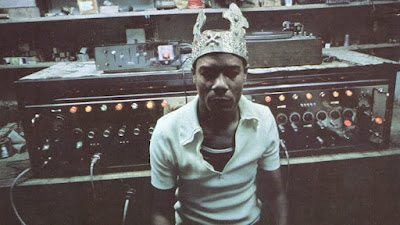


 Grant Goddard : radio broadcasting expert : media analyst : writer/author