
“I am a paediatric doctor,” said the young woman cleaning the toilet bowl in the bathroom of my apartment. “I work at the hospital during the day but I cannot live on my salary, so I have to work as a cleaner every evening.”
I was embarrassed. Although the doctor had been cleaning my apartment nightly, this was the first occasion I had attempted to strike up a conversation. I had mistakenly presumed that my ‘cleaner’ spoke no English. How wrong I was! Maybe she assumed I was a snobby American corporate manager who had just been posted overseas. How wrong she was! I was an unemployed Brit forced to take some freelance radio consulting work abroad, having failed to secure a job in my own backyard. Both of us were having to do what we did to survive.
I felt disorientated here. It was my first time in Russia. I would never have chosen to work here. But it could have been worse. My client, American public corporation Metromedia, had initially told me my destination was to be Nizhny Novgorod. I had had to consult a map to even locate that industrial city on the Volga. Thankfully, instead, I was sent to cosmopolitan Moscow. But looks are deceiving. My surroundings gave the semblance of a modern city but almost nothing actually worked as it should. Here was an incomplete facsimile of Western capitalist infrastructure in which the Soviet state had copied the designs without implementing the mechanisms. It recalled the era when a ‘Made in China’ label was a surefire guarantee a product that might look good would quickly fail.
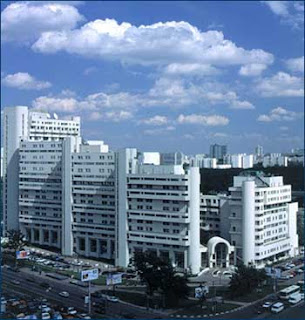
My one-bedroom apartment appeared quite luxurious, about three times the size of my poky second-floor flat in London, with floor-to-ceiling glass windows on an upper floor that looked out over the permanent pollution rising from Moscow’s busy streets. It was inside a huge, newly built trio of linked office blocks containing office spaces and 330 apartments intended for foreign businesses that required a secure location 14 kilometres from the Kremlin. It was like living in one of those vast complexes portrayed in American movies about the self-destructive life of a harassed corporate ‘road warrior’. Maybe it was designed to offer ex-pats that kind of bland fictional familiarity.
In January 1994, Metromedia had bought one of the least popular FM radio stations in Moscow, planning to turn it into one of the most popular. There was a hitch. The Americans were baffled by the radio market not just in Russia, but in the whole of Europe. They could hear 30+ stations broadcasting in Moscow but they could not fathom what they were doing on-air. This was not simply a language problem. It was a challenge because Americans were accustomed to tightly defined music or speech broadcasters in their commercial radio system. You only had to listen to the vast majority of American radio stations for around ten minutes to recognise their ‘format’. Europe was not like that, largely because ‘public service broadcasting’ had been legislated as the bedrock of its broadcast systems since the invention of radio.
Before my flight to Moscow, I had purchased a Sony all-band radio from an electronics shop in Watford for almost £100. It was now put to service all day while I listened hour after hour to a particular Moscow radio station, writing notes about the music played, the talk, the advertisements, the jingles and anything else I heard. I was used to listening to radio stations in languages of which I had no comprehension, having spent so many weekend nights as a schoolboy DX-ing radio stations from all over the world on a Trio 9R59DS radio receiver. I had also analysed local radio markets in the UK for groups applying for new licences, monitoring existing stations’ broadcasts and tabulating the results. It might be boring work but at least I was being paid to do it!
One morning I received an email requesting my presence at an important staff meeting to be held in the Metromedia office within Park Place. This surprised me for several reasons: I was not an employee, I had never previously been invited to such a meeting in Moscow and, most astonishingly, nobody had told me that Metromedia even had an office within the same building where I was living. I had to call the phone number on the message to ask where precisely this office was located within the complex.
After spending so many days alone in the apartment listening to my radio and writing copious observations, it was an adventure to walk through the building’s labyrinth of anonymous floors and numbered doors to eventually locate and knock on the Metromedia office. After weeks of perpetual solitude, it felt like coming out of prison to be greeted by a surprise party. The room was full of Americans of whom I had never been aware, let alone met, all chatting away noisily. None of them had the faintest idea who I was, requiring my explanation that I too had received THE email. They were very welcoming in the American way, despite probably wondering why on earth this unknown, scraggy Englishman was present.
The meeting started soberly with an update on Metromedia’s progress attracting paying subscribers to its broadcast television service ‘Kosmos TV’ and mobile phone system it had apparently launched in 1991 in partnership with the state’s ‘Moscow Television & Transmitter Centre’. I had no idea that Metromedia had been operating in Moscow several years already and had been investing around US$5m annually in that particular joint venture business. The good news was its success in building a growing subscriber base. However, the reason for this meeting was the bad news that the Russian who had been appointed manager of the business had just disappeared with all its funds and had proven untraceable. There were long faces. Oh dear.
Welcoming the variation from my usual lonely routine, I spent the remainder of that day in the office chatting with some of my newly discovered Metromedia colleagues. At that stage, it seemed unclear whether the television business could continue and whether the office would even remain in operation. I met the corporation’s financial analyst Muema Lombe who shared my interest in pirate radio and he generously introduced me to the basics of Excel, the software that has been the mainstay of my analysis work ever since. We remain close friends since that chance introduction in Moscow.
On the way back to my apartment, I called in at the ‘Garden Ring Irish Supermarket’ in the Park Place lobby to buy my regular supplies. It was a smaller satellite branch of the bigger shop in the city centre that had opened in 1992. I was surviving on breakfast cereal, milk, bananas, tea and snacks, particularly American ‘Oreo’ cookies which I had never seen before. There was no cooking equipment in the apartment beyond a kettle, probably to encourage residents to eat in the complex’s vastly overpriced restaurant. Lacking a corporate expense account, I only ate there when my American line manager John Catlett was in Moscow, enduring hour-long waits to be served the simplest meals.
Although the Park Place shop’s range of food was limited, it felt too dangerous to shop outside as a foreigner. Russians bought provisions at kiosks where they could ask for the items they wanted, whereas foreigners like me had to frequent self-serve retailers where they became easily identifiable targets. In 1993, more than 7,000 crimes against foreigners had been reported in Russia, including the editor of the English-language ‘Moscow Times’ newspaper who had been robbed of cash and a laptop by men with knives outside the city centre’s Garden Ring Irish Supermarket. I had watched a ‘CNN’ report that Russia’s murder rate was three times higher than the United States’ and was only surpassed by South Africa.
Due to its success attracting foreign customers, the Irish Supermarket itself soon became a target. After its owners resisted a takeover by their Russian partner Dmitry Kishiev, there were reports of an alleged overnight explosion at its city centre store. The ‘Moscow Times’ reported: “Apparently fearing for their safety, the Irish partners then fled the country, urging their more than two-dozen expatriate employees to do likewise.”
Once Russians took over the ‘Irish’ supermarket, I noticed food on sale in Park Place marked with long gone expiry dates, the prices increased, customers deserted and eventually the shops closed altogether. Like everything else in Russia, ‘business’ was not considered a product of entrepreneurial spirit or managerial prowess. Instead, it was considered a lucky lottery ticket permitting almost anyone lacking relevant skills to intimidate, bully and exert power to enrich themselves over others.
Russia during the 1990’s was frequently referred to as the ‘Wild West’. There was a sense that just about anything you could imagine might happen there … and it frequently did. My corporate apartment felt like a haven of relative ‘normality’ within a crazed parallel universe. I cannot recall anyone being murdered at Park Place during my initial stay, unlike subsequent visits to Russia when I was given accommodation in hotels of variable quality and security. Never did I value boring old Britain so much as the days I would thankfully walk on the tarmac of Heathrow airport after yet another prolonged stay in Russia.
“A powerful bomb blast in the city’s centre on Saturday afternoon took the life of a Moscow student. The bomb which, according to police, had power equivalent to approximately 400 grams of TNT, had been placed inside a large metal dumpster on ul Bolshaya Spasskaya not far from Leningradsky train station. According to eyewitnesses, at the time of the blast, the 23-year-old female student of farming was walking by the dumpster. The strength of the explosion tore off one of her arms and blew out most of the windows in neighbouring buildings … Witnesses reported that just a few moments before the blast, several men had tried forcibly to enter a building next to where the explosion took place, but that after a doorman refused to let them enter the building, they threw a package into the dumpster.”
Small story on PAGE SEVEN of the ‘Moscow Tribune’, 30 January 1996
[Originally published at https://peoplelikeyoudontworkinradio.blogspot.com/2023/07/from-russia-with-lawlessness-1994.html]

 Grant Goddard : radio broadcasting expert : media analyst : writer/author