The day the (reggae) music died : 1981 : Bob Marley, Linton Kwesi Johnson, Matumbi

 “Bob Marley has died!” I exclaimed. Having switched on the car radio before starting the engine, one of Marley’s songs was playing on John Peel’s ‘BBC Radio One’ ten-to-midnight show. I knew immediately what that meant. Peel was a longtime reggae fan, though I had not heard him play a Marley track for years. There was no need to await Peel’s voice announcing the sad news. I had read that Marley was ill but had not understood the terminal gravity of his health.

Peterlee town centre was dark and desolate at that late hour. I had walked to my little Datsun car across a dark, empty car park adjacent to the office block of Peterlee Development Corporation, accompanied by my girlfriend who was employed there on a one-year government job creation scheme. We had attended a poetry reading organised by Peterlee Community Arts in the building, an event she had learnt of from her marketing work. It was my first poetry reading. Only around a dozen of us were present, everyone else at least twice our age. But what we heard was no ordinary poetry.
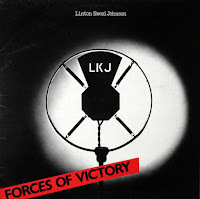
Linton Kwesi Johnson had coined his work ‘dub poetry’ in 1976 and already published three anthologies and four vinyl albums, voicing his experiences as a Jamaican whose parents had migrated to Britain in 1962. Peterlee new town seemed an unlikely venue for a ‘dub poet’, a deprived coal mining region with no discernible black population, but working class Tyneside poet Keith Armstrong had organised this event as part of his community work there to foster residents’ creative writing. Johnson read some of his excellent poems and answered the group’s polite questions. It was an intimate, quiet evening of reflection.

https://open.spotify.com/embed/playlist/0NjIxvry79Svr0G4Qzb5NR?utm_source=generator

Due to my enthusiasm for reggae, I was familiar with Johnson’s record albums as one strand of the outpouring of diverse innovation that Britain’s homegrown reggae artists had been pioneering since the early 1970’s. Alongside ‘dub poetry’ (poems set to reggae), there was ‘lovers rock’ (soulful reggae with love themes sung mostly by teenage girls), UK ‘roots reggae’ (documenting the Black British experience) and a distinctly British version of ‘dub’ (radical mixes using studio effects). One name that was playing a significant writing/producing role spanning all these sub-genres was Dennis Bovell, alias ‘Blackbeard’, of the British group ‘Matumbi’. His monumental contributions to British reggae are too often understated.

Until then, there had been plenty of reggae produced in British studios and released by UK record labels such as ‘Melodisc’, ‘Pama’ and ‘Trojan’, but most efforts had been either a rather clunky imitation of Jamaican reggae (for example, Millie’s 1964 UK hit ‘My Boy Lollipop’ [Fontana TE 17425]) or performed by ‘dinner & dance’-style UK groups such as ‘The Marvels’. I admit to having neglected Matumbi upon hearing their initial 1973 releases, cover versions of ‘Kool & The Gang’s ‘Funky Stuff’ [Horse HOSS 39] and ‘Hot Chocolate’s ‘Brother Louie‘ [GG 4540]. It was not until their 1976 song ‘After Tonight’ [Safari SF 1112] and the self-released 12-inch single ‘Music In The Air’/’Guide Us’ [Matumbi Music Corp MA 0004] that my interest was piqued as a result of the group’s creative ability to seamlessly bridge the ‘lovers rock’, ‘roots reggae’ and ‘dub’ styles. Both sides of the latter disc remain one of my favourite UK reggae recordings (sadly, these particular mixes have not been reissued).

In 1978, Matumbi performed at Dunelm House and, after attending the gig, it was my responsibility as deputy president of Durham Students’ Union to sit in my office with the band, counting out the cash to pay their contracted fee. They were on tour to promote their first album ‘Seven Seals’ self-produced for multinational ‘EMI Records’ [Harvest SHSP 4090]. It included new mixes of the aforementioned 12-inch single plus their theme for BBC television drama ‘Empire Road’, the first UK series to be written, acted and directed predominantly by black artists. Sensing my interest in reggae, the group invited me to join them for an after-gig chat, so I drove to their motel several miles down South Road and we sat in its bar for a thoroughly enjoyable few hours discussing music.

As part of my manic obsession with the nascent ‘dub’ reggae genre, I had bought albums between 1976 and 1978 credited to ‘4th Street Orchestra’ entitled ‘Ah Who Seh? Go Deh!’ [Rama RM 001], ‘Leggo! Ah Fi We Dis’ [Rama RM 002], ‘Yuh Learn!’ [Rama RMLP 006] and ‘Scientific Higher Ranking Dubb’ [sic, Rama RM 004]. They were sold in blank white sleeves with handwritten marker-pen titles and red, gold and green record labels to make them look similar to Jamaican-pressed dub albums of that era. However, it was self-evident that most tracks were dub mixes of existing UK recordings by Matumbi backing various performers, engineered and produced by Bovell for licensing to small UK labels. I also had bought and worn two of their little lapel badges, one inscribed ‘AH WHO SEH?’, the other ‘GO DEH!’, from a London record stall. During our conversation in the bar, Bovell expressed surprise that I owned these limited-pressing albums, and even more surprise that I recognised Matumbi as behind them. They remain prime examples of UK dub.

It was Bovell who had produced Linton Kwesi Johnson’s albums, and it was Matumbi who had provided the music. Alongside a young generation of British roots reggae bands such as ‘Aswad’ and ‘Steel Pulse’, Johnson’s poetry similarly tackled contemporary social and political issues with direct, straightforward commentaries. It was a new style of British reggae, an echo of recordings by American collective ‘The Last Poets’ whose conscious poems/raps had been set to music (sometimes by ‘Kool & The Gang’) since 1970, and whose couplets had occasionally been integrated into recordings by Jamaican DJ ‘Big Youth’ in the 1970’s. Of course, MC’s (‘Masters of Ceremonies’) had been talking over (‘toasting’) records at ‘dances’ in Jamaica since the 1960’s, proof that the evolution of ‘rap’ owed as much to the island’s sound system culture as it did to 1970’s New York house parties.

In Peterlee, Johnson read his poems to the audience without music, his usual performance style. It was fascinating to hear his words without any accompaniment. For me, the dub version of Johnson’s shocking 1979 poem ‘Sonny’s Lettah’ (retitled ‘Iron Bar Dub’ on ‘LKJ In Dub’ [Island ILPS 9650]) is brilliantly effective precisely when the music is mixed out to leave his line “Me couldn’t stand up there and do nothin’” hanging in silence. Sadly, memories of Johnson’s performance that night were suddenly eclipsed by the news of Marley’s death. I drove the eight miles to our Sherburn Village home in stunned silence. I was sad and shocked. It was only then that his sudden loss made me realise how much Marley had meant to me.

Despite having listened to reggae since the late 1960’s, I admittedly arrived late to Bob Marley’s music. Though I had heard many of his singles previously, it was not until his 1974 album ‘Natty Dread’ [Island ILPS 9281] that I understood his genius. At that time, I was feeling under a lot of personal pressure which I tried to relieve by listening to this record every day for the next two years. At home, my father had run off, leaving our family in grave financial difficulties. At school, I was struggling with its inflexibility, not permitted to take two mathematics A-levels, not allowed to mix arts and science A-levels, not encouraged to apply to Cambridge University. Back in my first year at that school, I had been awarded three school prizes. However, once my parents separated and then divorced, I was never given a further prize and the headmaster’s comments in my termly school reports became strangely negative, regardless of my results.

Feeling increasingly like an unwanted ‘outsider’ at grammar school, Marley’s lyrics connected with me and helped keep my head above encroaching waters rising in both my home and school lives. I knew I was struggling and needed encouragement from some source, any source, to continue. For me, that came from Marley’s music. While my classmates were mostly listening to ‘progressive rock’ albums with zany song titles (such as Genesis’ ‘I Know What I Like In Your Wardrobe’), I was absorbed by reggae and soul music that spoke about the daily struggle to merely survive the tribulations of life. After ‘Natty Dread’, I rushed out to buy every new Marley release.

During the months following Marley’s death, I was absorbed by sadness. It felt like the ‘final straw’. The previous year, I had landed a ‘dream job’, my first permanent employment, overhauling the music playlist for Metro Radio. Then, after successfully turning around that station’s fortunes, I had unexpectedly been made redundant. I was now unemployed and my every job application had been rejected. That experience had followed four years at Durham University which had turned out to be a wholly inappropriate choice as it was colonised by 90%+ of students having arrived from private schools funded by posh families. I felt like ‘a fish out of water’. I loved studying, I loved learning, I desired a fulfilling academic life at university … but it had proven nigh on impossible at Durham.

“This is what I need
This is where I want to be
But I know that this will never be mine”

Months later, my girlfriend awoke one morning and told me matter-of-factly that she was going to move out and live alone. She offered no explanation. We had neither disagreed nor argued. We had been sharing a room for three years, initially as students in a horribly austere miners’ cottage in Meadowfield whose rooms had no electrical sockets, requiring cables to be run from each room’s centre ceiling light-fitment. Now we were in a better rented cottage in Sherburn, though it had no phone, no gas and no television. Her bombshell announcement could not have come at a more vulnerable time for me. I had already felt rejected by most of my university peers and then by my first employer. At school previously, I had passed the Cambridge University entrance exam but had been rejected by every college. At Durham, I had stood for election as editor of the student newspaper, but its posh incumbent had recommended a rival with less journalistic experience. A decade earlier, my father had deserted me and his family, and now the person I loved the most had done the same.

I just could not seem to navigate a successful path amidst the world of middle- and upper-class contemporaries into which I had been unwittingly thrown, first at grammar school, then at Durham, and now in my personal life too. Most of those years, I felt that circumstances had forced me to focus on nothing more than survival, whilst my privileged contemporaries seemed able to pursue and fulfil their ambitions with considerable ease. I had to remind myself that I had been born in a council house and had attended state schools, initially on a council estate. My girlfriend had not. I had imagined such differences mattered not in modern Britain. I had believed that any ‘socio-economic’ gap between us could be bridged by a mutual feeling called ‘love’. I now began to wonder if I had been mistaken. I felt very much marooned and alone. My twenty-three-year-old life was in tatters.

Fast forward to 1984. I had still not secured a further job in radio. I was invited to Liverpool for a weekend stay in my former girlfriend’s flat. We visited the cathedral and attended a performance at the Everyman Theatre. It felt awkward. I never saw her again. It had taken me months to get over the impact of Bob Marley’s death. It took me considerably longer to get over my girlfriend ending our relationship. 

“That clumsy goodbye kiss could fool me
But looking back over my shoulder
You’re happy without me”

https://open.spotify.com/embed/playlist/291PlBjtQIVyEzOPeXNSyD?utm_source=generator

[Originally published at https://peoplelikeyoudontworkinradio.blogspot.com/2024/04/the-day-reggae-music-died-1981-bob.html ]

Mister Soul Of Jamaica … and Thamesmead : 1938-2008 : reggae artist Alton Ellis

 The first record played on the first week’s show of the first reggae music programme on British radio was a single by Alton Ellis, a magnificent singer/songwriter too often overlooked when reggae legends are named. I immediately fell in love with his soulful voice, his perfect pitch and his beautifully clear enunciation, rushing out to buy ‘La La Means I Love You’ [Nu Beat NB014], unaware it was recorded two years earlier. Like many of Ellis’ recordings, this was a cover version of an American soul hit (despite the label’s songwriter credit), though Ellis distinguished himself from contemporaries by also writing his own ‘message’ songs with striking lyrics and memorable hooks. My next single purchases were noteworthy Ellis originals:

‘Lord Deliver Us’ [Gas 161] included an unusual staccato repeated bridge and lines that demonstrated Ellis’ humanitarian pre-occupations, including “Let the naked be clothed, let the blind be led, let the hungry be fed” and “Children, go on to school! Be smarter than your fathers, don’t be a fool!” Its wonderful B-side instrumental starts with a shouted declaration “Well, I am the originator, so you’ve come to copy my tune?” that predates similar statements on many DJ records.

‘Sunday’s Coming’ [Banana BA318] has imaginative chord progressions, a huge choir on its chorus and lyrics “Better get your rice’n’peas, better get your fresh fresh beans’’ that locate it firmly as a Jamaican original rather than an American cover version. Why does it last a mere two minutes thirty seconds? The B-side’s saxophone version demonstrates how ethereal the rhythm track is and shows off the dominant rhythm guitar riff beautifully. It’s a masterclass in music production.

It was only after Ellis had emigrated to Britain in 1973 that a virtual ‘greatest hits’ album of his classic singles produced by Duke Reid was finally released the following year, entitled ‘Mr Soul Of Jamaica’ [Treasure Isle 013]. I recall buying this import LP in Daddy Peckings’ newly opened reggae record shop at 142 Askew Road and loved every track on one of reggae’s most consistently high-quality albums (akin to Marley’s ‘Legend’). It bookended Ellis’ most creative studio partnership in Jamaica when Reid had to retire through ill health.

What was it that made Ellis’ recordings so significant? Primarily, as the album title confirms, it was that his voice uniquely sounded more ‘soul’ than ‘reggae’, occupying the same territory as Jamaica’s ‘Sam & Dave’-like duo ‘The Blues Busters’. I have always harboured the sentiment that, if he had been able to record in America during the 1960’s, Ellis could have been a hugely popular soul singer there. Maybe label owner Duke Reid shared this thought, having recorded ‘soul’ versions of some of Ellis’ biggest songs for inclusion in a 1968 compilation album ‘Soul Music For Sale’ [Treasure Isle LP101/5]. However, at the time, reggae was a completely unknown genre in mainstream America, so Reid’s soul recordings remained obscure there. [The sadly deleted 2003 compilation ‘Work Your Soul’ [Trojan TJDCD069] collected some fascinating soul versions by Reid and other producers.]

Secondly, Ellis’ superb Duke Reid recordings were backed by Treasure Isle studio house band ‘Tommy McCook & the Supersonics’ whose multitude of recordings during the ska, rocksteady and reggae eras on their own and backing so many singers/groups demonstrated a tightness and professionalism that is breathtaking. Using only basic equipment in the studio above Reid’s Bond Street liquor store, engineer Errol Brown produced phenomenal results for the time, operating a ‘quality control’ that belied the release of dozens of recordings every month.

Finally, Ellis’ recordings displayed a microphone technique that was unique in reggae and demonstrated his astute knowledge of studio production techniques. At the end of lines, he would sometimes turn his head away from the microphone whilst singing a note. Because Jamaican studios were not built acoustically ‘dead’, Ellis’ head movement not only translated into his voice trailing off into the distance (like a train pulling away) but also allowed the listener to hear his voice bouncing off the studio walls. ‘Reverberation’ equipment to create this effect technically was used minimally in studios until the 1970’s ‘dub’ era, so Ellis seemed to have improvised manually. Perhaps he had heard this effect on American soul records of the time?

On one of his biggest songs from 1969, ‘Breaking Up Is Hard To Do’ [Treasure Isle 220], you can hear Ellis use this effect during the chorus when he sings the words “everybody knows”, particularly just prior to the fade-out. It is similarly evident on Ellis’ vocal contribution to the brilliant DJ version of the same song, ‘Melinda’ by I-Roy [on album Trojan TRLS63] recorded in 1972.

The same vocal technique is audible on other songs including ‘Girl I’ve Got A Date’ [Treasure Isle DSR1691] in which Ellis elongates the word “tree” into “treeeeee”, as well as “breeze” into “breeeeeeze”, whilst moving his head away from the microphone.

I had always been intrigued by Ellis’ recording technique but had not thought anything more of it until, entirely by accident half a century later, I found startling 1960’s footage recorded at the Sombrero Club on Molynes Road up from Half Way Tree, Jamaica. Backed by Byron Lee’s Dragonaires, an uncredited vocal group I presume to be ‘The Blues Busters’ performed their 1964 recording “I Don’t Know” [Island album ILP923] during which one of the duo (Lloyd Campbell or Phillip James) moves his head away from the microphone at the end of lines, similar to what can be heard on Ellis’ recordings.

This started me searching for 1960’s footage of Ellis performing live. Sadly, I found nothing (either solo or in his previous duo with Eddie Parkins as ‘Alton & Eddy’ [sic], similar to ‘The Blues Busters’) to see if he emulated this vocal technique on stage too. For me, it remains amazing that the smallest characteristics audible in a studio recording (particularly from analogue times) can offer so much insight into the ad hoc techniques adopted to overcome the limitations of available technology. The ingenuity of music production in Jamaica during this period was truly remarkable.

Prior to emigration, Ellis had toured Britain in 1967, performing with singer Ken Boothe. Whilst in London, he recorded a single ‘The Message’ [Pama PM707] in which he raps freestyle rather than sings, fifteen years prior to Grandmaster Flash’s hit rap track of the same name, and declares truthfully “I’m the rocksteady king, sir”. Its B-side pokes fun at ‘English Talk’ that he must have heard during his visit. The backing music is the clunky Brit reggae of the time, but Ellis’ subject matter is fascinating for its innovation.

1971’s ‘Arise Black Man’ [Aquarius JA single] includes the lyric “From Kingston to Montego, black brothers and sisters, arise black man, take a little step, show them that you can, ‘coz you’ve got the right to show it, you’ve got the right to know it”. The verses and chorus “We don’t need no evidence now” are backed by a big choir. It’s a phenomenal tune despite not even having received a UK release at the time. (Was the chorus a reference to Britain’s 1971 Immigration Act in which a Commonwealth applicant was “required to present […] forms of evidence” to “prove that they have the right of abode” in the UK?)

The same year, ‘Back To Africa’ [Gas GAS164] has the chorus “Goin’ to back to Africa, ‘coz I’m black, goin’ back to Africa, and it’s a fact’ backed by a choir once again. There’s an adlibbed interjection “Gonna stay there, 1999, I gotta get there” that predates Hugh Mundell’s seminal song ‘Africans Must Be Free By 1983’.

Again in 1971, Ellis re-recorded his song ‘Black Man’s Pride’ [Bullet BU466], previously made for producer Coxson Dodd [Coxson JA single], with it’s shocking (at the time) chorus “I was born a loser, because I’m a black man”. The verses are a history lesson in slavery: “We have suffered our whole lives through, doing things that they’re supposed to do, we were beaten ‘til our backs were black and blue” and “I was living in my own land, I was moved because of white men’s plans, now I’m living in a white man’s land”. I consider this phenomenal song the direct antecedent of similarly themed, outspoken recordings by Joe Higgs (‘More Slavery’ [Grounation GROL2021]) and Burning Spear (‘Slavery Days’ [Fox JA pre]) in 1975. If only this Ellis song was as well-known as Winston Rodney’s! [In initial recorded versions, “loser” was replaced by “winner” and the song retitled ‘Born A Winner’.]

I first discovered Ellis’ song ‘Good Good Loving’ [FAB 165] as the vocal produced by Prince Buster for a DJ track by teenager Little Youth on the 1972 compilation album ‘Chi Chi Run’ [FAB MS8, apologies for the language] called ‘Youth Rock’. At the time, I was crazy about this recording, combining a high-pitched youthful talkover with a solid rhythm and Ellis’ trademark voice in the mix. I will be forever mystified as to why the DJ (sounding like Hugh Mundell/Jah Levi) seems to refer to “Cool Version by The Gallows [sic]” in his lyrics!

In 1973, Ellis released the song I never tire of hearing, ‘Truly’ [Pyramid PYR7003], that benefits from such a laid-back rhythm that it feels it could come to an abrupt stop at times. It is one of Ellis’ simplest but most effective songs and has become a staple of reggae ‘lovers’ singers since, employing wonderfully unanticipated chord changes. It sounds like a self-production, even though UK sound system man Lloyd Coxsone’s name is on the label. This should have been a huge hit record!

There are so many more Ellis tracks from this fertile early 1970’s period that make interesting listening, recorded for many different producers and released on different labels. Sadly, no CD or digital compilation has managed to embrace them all. I still live in hope.

After Ellis moved permanently to Britain during his late thirties, he must have struggled in the same way as some of his contemporaries, trying to sustain their careers in the ‘motherland’. Despite UK chart successes, Desmond Dekker, Nicky Thomas, Bob Andy and Jimmy Cliff were very much viewed as one-off ‘novelty’ hitmakers by the mainstream media rather than developing artists. Worse, Ellis had never touched the British charts. Neither did the majority of reggae tracks produced then in British studios sound particularly ‘authentic’ to the music’s audience, let alone the wider ‘pop’ market. Ellis performed at the many reggae clubs around Britain but the rewards must have been limited.

Ellis’ British commercial success came unexpectedly when another ‘novelty’ reggae single shot to number one in the UK charts in 1977. Its story is complicated! The previous year, Ellis’ 1967 song ‘I’m Still In Love With You’ had been covered in Jamaica by singer Marcia Aitken [Joe Gibbs JA pre]. A DJ version by Trinity over the identical rhythm followed called ‘Three Piece Suit’ [Belmont JA pre]. Then two young girls, Althia & Donna, recorded their debut as an ‘answer’ record to Trinity on the same rhythm and named it ‘Uptown Top Ranking’ [Joe Gibbs JA pre]. Other producers released their own ‘answer’ records, rerecording the identical rhythm, all of which could be heard one after the other blaring from minibuses’ sound systems in Jamaica at the time. Unfortunately for Ellis, Jamaica had no songwriting royalty payment system in those days.

I remember first hearing ‘Uptown Top Ranking’ as an import single on John Peel’s ‘BBC Radio One’ evening show. Even once it had been given a UK release [Lightning LIG506], Ellis was still omitted from the songwriting credit by producer Gibbs. Legal action followed and eventually Ellis was rewarded with half of the record’s songwriting royalties (for the music but not the lyrics), a considerable sum for a UK number one hit then. The same track (re-recorded due to producer Joe Gibbs’ intransigence) was then included on an album that Althia & Donna made for Virgin Records the following year [Front Line FL1012] that had global distribution, earning Ellis additional royalties.

Also in 1977, Ellis produced twenty-year-old London singer Janet Kay’s first record, a version of hit soul ballad ‘Lovin’ You’, released on his ‘All Tone’ label [AT006] that, prior to emigration, he had created in Jamaica to release his own productions. Ellis’ soul sensibilities and music production experience inputted directly into the creation of what became known (accidentally) as ‘lovers rock’, a uniquely British sub-genre that perfectly blended soul and reggae into love songs recorded mostly by teenage girls. This ‘underground’ music went on to dominate British reggae clubs and pirate radio stations for the next decade, even pushing Kay’s ‘Silly Games’ [Arawak ARK DD 003] to number two in the UK pop singles chart two years later.

Into the 1980’s and 1990’s, Ellis continued to release more UK productions on his label, including a ‘25th Silver Jubilee’ album [All Tone ALT001] in 1984 that revisited nineteen of his biggest hits, celebrating a career that had started in Jamaica as half of the duo in 1959. I recall Ellis visiting ‘Radio Thamesmead’ in 1986, the community cable station where I was employed at the time. He was living on London’s Thamesmead council estate and was interviewed about his label’s latest releases.

On 10 October 2008 at the age of seventy, Ellis died of cancer in Hammersmith Hospital. He had been awarded the Order of Distinction by the Jamaica government in 1994 for his contributions to the island’s music industry. I continue to derive a huge amount of satisfaction from listening to his many recordings dating back to the beginning of the 1960’s and wish he was acknowledged more widely for his outstanding contributions to reggae music.

Now, when I think of Alton Ellis, I fondly recall my daily car commute into work at KISS FM radio, Holloway Road in 1990/1991 with colleague Debbi McNally, us both singing along at the top of our voices to my homemade cassette compilation playing Alton Ellis’ beautiful 1968 rocksteady version of Chuck Jackson’s 1961 song ‘Willow Tree’ [Treasure Isle TI7044].

“Cry not for me, my willow tree … ‘coz I have found the love I’ve searched for.”

[Click each record label/sleeve to hear the tune. I have curated an Alton Ellis playlist on Spotify though many significant recordings are unavailable.]

[Originally published at https://peoplelikeyoudontworkinradio.blogspot.com/2024/03/mister-soul-of-jamaica-and-thamesmead.html ]