One little indie music show : 1980-1981 : Saturday night 10 to midnight, Metro Radio

“You will present a weekly two-hour rock music show on Saturday night,” my manager informed me.

No if’s or but’s. No offer over which to mull. No demo tape to produce. No question asked about previous experience. Without warning, I was appointed as presenter on one of Britain’s largest commercial radio stations. I had just started a full-time backroom job at ‘Metro Radio’ but had never asked to present a show. This was my first paying job in radio and suddenly I was also to be put on-air. The start of my radio career seemed to be heading in a positive direction.

Some aspiring DJs spend their whole life trying to secure a presenting job on radio, often without success. I felt slightly guilty that this opportunity had fallen into my lap without effort. My employer did not even realise that I had started presenting for various London pirate stations seven years earlier, as such lawbreaking activities were not productive additions to a CV then. A decade into the future, employed as programme director of London’s ‘KISS FM’, one young hopeful desiring a DJ job would sit in the station’s reception area day after day, awaiting his opportunity to buttonhole me on my way to lunch at the ‘greasy spoon’ on Highbury Corner. Little did he know that we already had the largest DJ roster of any British radio station, or that management had just cut payments per show by half, or that several loyal presenters had been made redundant within months of launch. Oblivious, he was not so much ‘networking’ as ‘stalking’.

Management at Metro Radio seemed not to care one jot what was broadcast evenings and overnight because commercial stations then believed their advertisers were only interested in daytime shows and that their most significant audience was housewives. My small additional payment for the rock show was eaten into by the cost of driving twenty miles to the studio on Saturday night and then back again in the early hours of Sunday. Nevertheless, the station would jump at any chance to cut its minor expenses, such as the occasion excellent overnight presenter Tony Crosby was replaced in 1981 by a new DJ who offered to do the same show for free. Never mind the quality, feel the penny-pinching! (Tony went on to train as a solicitor.)

No direction was offered me as to what to do in my show. Whereas daytime presenters were required to wait outside programme controller Mic Johnson’s office for individual appointments to hear his critique whenever a JICRAR ratings book was published, management expressed zero interest in what I was doing on-air. There were already two other rock shows on the station. My line manager Malcolm Herdman played two hours of heavy metal and hard rock. Full-time producer John Coulson used his two hours to play an esoteric mix of mainstream rock and read passages from ‘beat generation’/‘new journalism’ authors. I decided to fill the evident gap for the ‘indie’ music that had emerged after several years of punk.

Music trade weekly ‘Record Business’ had published its first weekly ‘indie’ chart in January 1980, following a suggestion by Iain McNay, founder of London’s ‘Cherry Red Records’. I decided to use one hour of my show to run down this chart, playing the new entries and highest climbing singles. As far as I know, mine was the first ever British radio ‘indie’ chart show and was soon mentioned in the ‘indie’ columns of the music trade press. Most ‘indie’ releases were not supplied to commercial radio stations because there was zero possibility of them being playlisted, necessitating me to establish contact with the main ‘indie’ distributor, ‘Rough Trade’ in London, to receive copies. Each week, I would phone its very helpful director and head of promotions Scott Piering to request records that he would then mail to me (later that decade I worked in Scott’s office).

In the other hour of my show, I would play a selection of newly released album tracks, both indie and mainstream. Working full-time in the station’s record library, I had access to all major label releases that arrived either by post or from weekly visits by record company promotion staff. I would place interesting new albums in a holdall I carried back and forward to the show although, with only time to play around fifteen tracks within an hour, my hoard of unplayed recent releases grew heavier by the week. My running order ranged from ‘Steely Dan’ to ‘Joy Division’ to ‘Crass’, none of which were exposed elsewhere within the station’s output.

Although the Tyneside local band scene then was dominated by heavy metal bands and record labels such as ‘Neat’ and ‘Guardian’, there were a few ‘indie’ bands that were recording good quality demo’s or releasing their records independently. I received a nice letter from Paddy McAloon asking me to play his group ‘Prefab Sprout’s first self-published single. I had already been the lone person not walking straight past the stage when the band had performed at the Durham Miners’ Gala, so I was happy to oblige. There were some excellent local bands, including ‘Dire Straits’ and ‘The Police’ who were quickly signed by major labels, but also many that went largely unnoticed until ‘Kitchenware Records’ launch in Newcastle in 1982. I tried to play any local band recordings I found or received.

Because my two hours on-air were so precious, I talked minimally between records and rarely featured interviews. I recall receiving a telegram at home from the station one day asking me to phone it urgently. Our house had no phone so I had to walk to the one phone box in Sherburn Village and call in. Was I interested in recording an interview for my show with ‘Duran Duran’ who were promoting their first single release ‘Planet Earth’? I turned down this opportunity because the group was not local, were not ‘indie’ (having already signed to ‘EMI’) and their music was audibly more ‘pop’ than ‘rock’. However, I did interview local artists such as Pauline Murray from Ferryhill whose first solo album (after the punk group ‘Penetration’) sounded remarkably innovative and remains one of my favourite recordings.

I spent quite a lot of time each week compiling a local ‘gig guide’ from adverts in local newspapers (pre-internet newsprint) and flyers. I would update it each week, type it out myself, pin it on the radio station’s noticeboard and mail copies to all the local record shops. In my show, I would read out the following week’s concerts though I never heard any other presenter refer to my list because, beyond Malcolm and myself, the station seemed to be disconnected from the local music scene. On occasional visits to ‘Volume Records’, the only ‘indie’ record shop in Newcastle, I would secretly feel proud to see the latest A4 sheet of gigs I had mailed out pinned to its noticeboard. Like my show’s content, the reason for undertaking this research-intensive work was because nobody else seemed to be exposing this information at the time. There was no ‘what’s on’ publication for the region.

Although I had competently operated radio studio equipment myself since my days at school recording pirate radio shows, management at Metro Radio insisted I sat in a soundproofed studio in front of the microphone while a ‘technical operator’ facing me from an adjoining control room played the records, advertisements and mixed the audio. I was unfamiliar with this arrangement, which the station’s managers had brought with them from overstaffed BBC local radio stations at which they had worked previously. I was extremely lucky to have had John Oley assigned as my ‘T.O.’, one of the most professional and enthusiastic people I have had the pleasure to work with in radio. His contribution to my show was enormous and freed me to talk my rubbish on-air and answer the phone line when I occasionally held competitions.

Metro Radio showed no interest in promoting my show so it seemed a miracle when I started receiving letters from listeners who had discovered it. In the days before internet or community stations, each region of Britain was served by only one local BBC station and one commercial music station. Although my show was tucked away in the weekend schedule, it still felt groundbreaking to play music little heard outside of John Peel’s weeknight show on national ‘BBC Radio One’. There were quite a few records lasting only two or three minutes that each required several hours’ work transferring them to quarter-inch tape in order to edit out swear words with a razor blade and white editing tape on a metal block. If only those bands knew how much extra effort was necessary just for them to receive one radio play!

Living in a rural village, there were Saturday nights during winter snows when I was unable to drive to the station. Snowploughs would habitually clear the roads eastward from Durham City as far as the junction with the A1(M) motorway but, frustratingly, not the further one mile beyond to my home. I would have to trudge out in icy temperatures to the public phone box and call either Malcolm Herdman or John Coulson at home, asking if they could reach the studio to fill in for me on those days. Because they lived in Newcastle city, I think they found it hard to believe that I was literally ‘snowed in’. Unfortunately, my salary was insufficient to contemplate a relocation nearer my workplace, meaning I missed out on concerts and the city nightlife which I would have loved to explore.

All good things come to an end. Quickly in my case. Metro Radio made me redundant from my full-time job. I continued to present my Saturday night show for a while through 1981 but the expense of maintaining a car to drive to Newcastle was proving greater than my payments from the station, which had to be subtracted from my Unemployment Benefit. I was applying for any relevant vacancy in the radio and music industries but getting nowhere. In the end, I had to follow Tebbit’s advice and get on my bike (well, in my car to be accurate), leaving the region where I had lived the last five years in order to take a totally different job 218 miles down south. It was disappointing because I had acquired so much knowledge of indie music, the regional music scene and had built an audience for my unique radio show.

The start of my radio career now seemed to be heading in a negative direction. I was unable to secure work in the broadcast industry for a further four years and, only then, by taking a contract in Israel on a pirate radio ship that paid little more than expenses. However, I have always treasured the memories of my time working alongside John Oley and Tony Crosby late on Saturday nights when the only other person in the darkened Metro Radio building on a bleak industrial estate was the security guard downstairs. This was when innovative radio programmes were made … even though Metro Radio probably never realised it.

Postscript: Forty years later, I received a polite email from a member of a former local band enquiring if I still had their demo tape I had been sent and played on my Metro Radio show. Sadly, no.

[Originally published at https://peoplelikeyoudontworkinradio.blogspot.com/2023/11/one-little-indie-music-show-1980-1981.html]

One small step for radio, one giant leap for black music radio in London : 1990 : KISS 100 FM launch day

 The final few days before KISS FM’s official launch were a blur of frenetic activity and outright panic. It was only at this late date that construction of the three studios was completed by the contractors. Now, at last, they were ready for the engineers from the Independent Broadcasting Authority [IBA] to test and inspect. Much to my relief, their report required only a few minor alterations to the air conditioning system, after which the IBA issued KISS FM with a certificate of technical competence. I affixed it to my office wall, alongside the poster of Betty Boo [I had pinned as my memento of DJ Tim Westwood’s ‘reason’ for reneging last-minute on his scheduled daily daytime show].

With only days to go, I held two long, evening meetings with all the part-time DJs to explain what they could and could not do legally on-air. As former pirate DJs, they were unfamiliar with the conventions of libel, slander and other legal niceties which legitimate radio DJs have to learn. It was important for me to emphasise how essential it was for KISS FM to protect itself against prosecution or rebuke by the commercial radio regulator, the IBA. I went through their employment contracts, page by page, explaining what the jargon meant and what implications the clauses had for their radio shows. Also, I had to stress the importance of playing the right advertisements at the right time. This was a contractual requirement that had been relatively relaxed on pirate stations.

The night before the station’s launch, I was still busy putting the finishing touches to the inside of the studio until the early hours of the morning. Although two on-air studios had been built, there was only time to bring one of them up to scratch with all the accessories required for live broadcasts. With only hours to go, the engineers and I were frantically drilling holes in the studio walls to hang the storage racks for audio cartridges used to play advertisements, as well as wiring up the studio lights on the ceiling. I handwrote several large posters in thick felt pen to remind the presenters of the station’s address, its phone number for requests, and what to say about the station’s launch. Then, I had to spend several hours making labels with a Dymo and sticking them onto each piece of equipment in the studio for the presenters to know precisely which button performed which task. Finally, when everything was ready, I drove home and collapsed into bed.

The next morning, Saturday 1 September 1990, was the biggest day of our lives. Some weeks earlier, [managing director] Gordon McNamee had hung a handwritten sign on his office wall that read “X DAYS TO GO” with the number being changed daily. That number was now down to zero and the sign had finally become redundant. The day had arrived at last, whether we were ready for it or not. McNamee and I met at the station in the morning and locked ourselves away inside the production studio. McNamee wanted to perform a countdown to the station’s launch at midday but, in order to ensure that it went perfectly smoothly, he wanted to pre-record it. I set the timer on my digital wristwatch to five minutes and recorded McNamee’s voice, counting down at one-minute intervals from five minutes to one minute, and then counting down the seconds during the final minute until the alarm sounded. It took two attempts to get it right.

After that, we moved to the main on-air studio, taking the tape of the countdown with us. We had decided not to allow anyone other than essential station personnel into the studio for the launch. It was not a big enough room to comfortably accommodate more than a few people, and the presence of journalists would only have made us even more nervous. McNamee had arranged for Mentorn Films, which was making the television documentary about the station, to erect a tripod camera in the corner of the studio to record the whole event. A video link had also been booked to relay the picture live to a large screen in Dingwalls nightclub, where the official KISS FM launch party was being held that day.

With all the tension that surrounded that historic day, we quickly forgot that we were being watched by a video camera from the corner of the room. I spooled McNamee’s countdown recording onto a tape machine and started it at precisely five minutes to midday. McNamee’s countdown was now automatically being superimposed over the music from the test transmission VHS cassette that had been playing continuously for the last ten days. Over the beats of the Kid Frost hip hop track ‘La Raza,’ McNamee’s voice coolly counted down the minutes. At the one-minute point, McNamee counted “59, 58, 57, 56….” and I slowly faded out the music to increase the suspense of the moment. Accompanied by the pre-recorded sound of my digital watch alarm, McNamee said the magic words “twelve o’clock.”

I turned up the microphone in the studio for McNamee to make KISS FM’s live opening speech:

“This is Gordon Mac. There are no words to express the way I feel at this moment. So, with your permission, I’d just like to get something out of my system. Altogether – we’re on air – hooray!”

Everyone in the studio joined in a loud cheer, before McNamee continued:

“Welcome, London. Do you realise it’s taken us fifty-nine months, four hundred and sixty-five thousand, seven hundred and twenty working hours, plus three and a half million pounds, as well as all of your support over the last five years, to reach this moment? As from today, London and everywhere around the M25, within and without, will have their own twenty-four-hour dance music radio station. I’m talking to you from our new studios in KISS House, which is completely different from the dodgy old studios we used to have in the past [laughter in the studio]. The odds were against us. None of the establishment fancied our chances but, with the force of public opinion and our determination, the authorities had to sit up and listen and take notice. Today, I’m being helped by Rufaro Hove, the winner of ‘The Evening Standard’ KISS 100 FM competition. Rufaro was chosen from thousands of people who entered and she will press the button for the first record. But before that, the first jingle.”

McNamee pushed the cartridge button to play a lo-fi jingle from KISS FM’s pirate days. The sound of a telephone answering machine tone was followed by McNamee’s personal assistant, Rosee Laurence, saying:

“It’s me again. I forgot to say – hooray, we’re on. Bye-bye.”

The jingle ended with the sound of a phone being put down. McNamee continued:

“There we go, Rufaro, now you can press the first one. Go!”

The first record played on the new KISS FM was the reggae song ‘Pirates’ Anthem’ by Home T, Cocoa Tea & Shabba Ranks. The song was a tribute to London’s pirate radio stations. The rallying call of the chorus was:

“Them a call us pirates

Them a call us illegal broadcasters

Just because we play what the people want

DTI tries [to] stop us, but they can’t”

One of the song’s verses narrated the story of pirate radio in the UK:

“Down in England we’ve got lots of radio stations

Playing the peoples’ music night and day

Reggae, calypso, hip hop or disco

The latest sound today is what we play……..

They’re passing laws. They’re planning legislation

Trying their best to keep the music down

DTI, why don’t you leave us alone?

We only play the music others want”

These lyrics were the perfect choice for the station’s first record. KISS FM’s pirate history may have been behind it now, but the station had proven that pirate broadcasting had been necessary to open up the British airwaves to new musical sounds and fresh ideas for the 1990s. ‘Pirates’ Anthem’ was followed by the personal choice of the Evening Standard competition winner, ‘Facts of Life’ by Danny Madden. In the studio, the atmosphere was electric. It was difficult to believe that the few of us crowded into that little room were making broadcasting history. This was the creation of the dream that some of us thought we might never witness – a legal black music radio station in London, at last. It was difficult to believe we were really on the air.

Next, McNamee thanked “all the original disc jockeys, all the backers, all the new staff and last, but not by any means least, all of the listeners that have supported us over the five years.”

He introduced the record that he had adopted as KISS FM’s theme tune – ‘Our Day Will Come’ by Fontella Bass. The station’s first advertisement followed, booked by the Rhythm King record label to publicise its latest releases. Soon, McNamee’s stint as the station’s first DJ came to an end and his place was taken by Norman Jay, whose croaky voice betrayed the emotion of the day. Jay told listeners over his instrumental ‘Windy City’ theme tune:

“After nearly two very long years, all the good times, all the bad times we shared on radio … Thanks to all of you. Without your help, this day could not have been possible. On a cold and wet October day in 1985, KISS FM was born. Gordon Mac, George Power and a long-time friend of mine, Tosca, got together to put together a station which meant so much to so many. And thanks to those guys, Norman Jay is now on-air.”

Once Jay was on the air, McNamee said farewell to the rest of us in the studio and left to attend the station’s official launch party at Dingwalls. We stayed in the studio, still thrilled to be part of the celebration of that historic moment and enjoying the music that Jay played. Throughout the rest of the weekend, each KISS FM DJ presented their first show on the newly legal station. Many of them reminisced about the pirate days of KISS FM and played music from that era, when they had last graced the airwaves of London. To the majority of the station’s audience, who might never have heard of KISS FM until now, the weekend’s broadcasts must have sounded rather indulgent. Far from most of the records played that weekend reflecting the cutting edge of new dance music that the new KISS FM had promised, the songs mostly reeked of nostalgia and the station’s former glory days as a pirate station. This brief moment of indulgence was a healing process that was necessary for the station’s staff.

I remained in the studio the rest of the day, helping the DJs to grapple with the unfamiliar equipment and showing them the new systems with which they had to contend. Despite the intensive training they had been given in the last ten days, it had been twenty months since any of them had spoken a word on the radio, let alone presented a professional show. Nearly all the DJs looked incredibly nervous, and several seemed gripped with terror at the prospect of having to present a show from a fully equipped radio studio for the first time in their lives. I stayed there until the early hours of Sunday morning, with only an occasional break for a takeaway pizza.

Everybody involved in KISS FM, apart from the small group of us left in the studio – the DJ on the air, me, [head of talks] Lyn Champion and programme assistants Colin Faver and Hannah Brack – were at Dingwalls, enjoying the party celebrations. It felt strange, during the station’s first day on-air, that the rest of the huge KISS FM building was entirely empty. In the evening, the only lights visible from outside were in the tiny studio on the first floor. By two o’clock in the morning, I was absolutely exhausted. It had been an incredibly exciting day and everything had run much more smoothly than I had expected. I drove home, having left Champion and Brack to ‘babysit’ the studio overnight to ensure that the rest of the presenters could cope with the equipment.

[Excerpt from ‘KISS FM: From Radical Radio To Big Business: The Inside Story Of A London Pirate Radio Station’s Path To Success’ by Grant Goddard, Radio Books, 2011, 528 pages]

[Originally published at https://peoplelikeyoudontworkinradio.blogspot.com/2023/08/one-small-step-for-radio-one-giant-leap.html]

To win, somebody’s got to lose : 1989 : Martin Strivens, Centurion Press

 It has always been difficult for me to understand how white South Africans who built successful careers under the country’s apartheid regime can live with the guilt and shame. Does their sense of superiority extend to EVERYONE else? Do they harbour an intrinsic cruelty to others? Would they have been merciless playground bullies if they had attended school with ‘normal’ kids? Had the word ‘meritocracy’ been purged from South African dictionaries?

Our Earth has finite resources. For each ‘winner’ within society, there has to be an equivalent ‘loser’. The much-vaunted term ‘wealth creator’ is an oxymoron. No billionaire is lauded by The Financial Times for their success as a ‘poverty creator,’ despite the accelerating transfer of resources from the poor to the rich having widened inequalities. In a South Africa where apartheid legislation rigged the education, social and legal system in their favour, each white colonial who succeeded must have purposefully condemned five black Africans to failure and lifelong poverty.

Nothing could have been further from my own experience growing up in Britain. When ten-year old Jacqueline Dixon came to school one day with a red dot painted on her forehead, our teacher Mr Hales invited her to the front of the classroom to explain to the rest of us what it signified. My school explored, explained and respected the cultural differences of the mixed bunch of kids it taught. I never witnessed anyone being abused or bullied there. I imagined that the grown-up outside world would be like that too. I was wrong.

When I joined London black music pirate radio station KISS FM in 1988, its only non-music policy was rejection of South Africa’s apartheid regime. I wholeheartedly supported this stance, having boycotted South African produce, transferred my account from Barclays Bank and protested at demonstrations since the 1970’s. The majority of KISS FM’s personnel were black, not by design but because the station had attracted the most knowledgeable personnel from London’s vibrant black music scene.

To obtain a legal broadcasting licence, it was necessary to name a person qualified in finance on the application form submitted to government. I was surprised to discover that the person selected for this role at KISS FM had attended school and university in South Africa between 1965 and 1974, then been employed for four years by a Johannesburg accountancy firm. I was baffled as to how this choice squared with the station’s anti-apartheid policy.

Apparently, a family friend of KISS FM’s co-founder was David Evans (now Lord Evans) who had launched a print business named Centurion Press in 1971. It was Evans who had recommended his company’s finance director Martin Strivens, now relocated to London. If the licence application were to prove successful, Evans, Strivens and Centurion Press would become KISS FM shareholders.

From Strivens’ initial visit to the KISS FM office in his smart suit, it was immediately apparent that he was not like the rest of us. His white South African accent, his shiny briefcase and his cold attitude did not seem to fit at all with the station’s ‘Radical Radio’ slogan. Visits from a succession of similarly suited men soon followed.

After KISS FM’s first licence application managed by radio DJ Dave Cash had failed, I volunteered to take on the task of co-ordinating and writing the second application for a London licence. The important financial aspects of our application proved particularly difficult because Strivens possessed no knowledge of radio broadcasting, no knowledge of black music and no understanding of London pirate radio’s two-decade history of creating a huge underground music scene. I found that I had to explain every little requirement of a radio station … and then justify it at length, often in written form.

I never sensed that Strivens respected me or my skills. I had already written successful funding applications to government. I had managed staff. My radio career had started in London pirate radio almost two decades earlier. I was the only member of KISS FM’s management to have worked in commercial radio. I was the only team member to have implemented a successful radio station turnaround strategy. I knew intimately all the elements required to build and run a commercial radio station, yet I found that each of these elements had to be argued interminably with Strivens. He was already insisting that essential components be cut from the budget, despite him not comprehending their purpose.

Additionally, my education in economics, accountancy and law meant that I understood and could challenge the budgets and spreadsheets that Strivens shared with me. Maybe he had been accustomed to presenting swathes of computer printouts to non-financial people who simply stared at the jumble of numbers and nodded their heads. I was different. I had worked with accounts for my family since I was in junior school. I had turned around a university bookshop and food store from loss to profit within a year. Yes, I was involved in KISS FM because I was a huge fan of black music and radio … but I had practised skills in running a business too.

During 1989, out of the blue, I was told to attend a meeting late one afternoon with Strivens in Centurion Press’s office at 52 George Street. This seemed highly unusual as he normally visited the KISS FM office in Finsbury Park to discuss the station’s budget. Entering a deep lobby from the street, Centurion’s offices were located to the left on the ground floor behind two sets of plate glass sliding doors. My discussions with Strivens comprised the usual dialogue of him demanding budget cuts and me having to explain how an item was essential for a functioning commercial radio station. Our talk dragged on past five o’clock and I saw Centurion’s staff leave.

After we finished, Strivens informed me that the KISS FM office had called his receptionist and asked me to call back. I thought this was unusual because, as far as I knew, nobody was aware I was at Centurion’s office. Using one of the desk phones, I called the office and enquired why I had been contacted. While I was in conversation, Strivens interrupted and said he had to rush off.

“How will I get out of your office?” I asked him.

“Go through the first set of sliding doors, then press the button to open the second set. It is all automatic.”

I thanked him. He rushed out and left me alone in the office suite. The KISS FM office could not understand why I had been left a message to call them. Nobody there had needed to contact me that afternoon. I hung up, somewhat baffled. Strivens had left. I packed up and left too. I exited through the first set of sliding doors which closed behind me. I pressed the next button in the ‘airlock’, as instructed. Nothing happened. I pressed again. Still nothing. I turned behind me. There was a button for the doors I had passed through. Nothing happened when I pressed it. I was now trapped in a small space between two sets of thick glass sliding doors.

Despite suffering mild claustrophobia, I was reassured by the fact that the two sets of sliding doors were plate glass, so I could clearly see the office behind me and I could view the rear of the building’s lobby in front of me. There was a tiny gap between each pair of doors, not enough to prise them open, but sufficient to supply air for me not to suffocate. The floor space was about four feet by four feet, too small to lay down in but I could sit on the floor and wait for someone in the lobby to see that I was trapped. Except that nobody ever appeared. It became dark.

It was seven o’clock the next morning when a cleaner arrived, shocked to see me locked inside the small space. Using her keys, she opened the outside door. I thanked her. I had been lucky the meeting had been on a weekday. Tired and cold, I caught the Underground home, had a wash, ate breakfast and headed back into London for a normal day’s work at the KISS FM office. I told nobody what had happened. Strivens never said a word to me about the incident, though I presumed the cleaner must have shared her shock with staff at Centurion. Our budget meetings continued for many months, though I was never asked to visit Centurion’s office again.

My relationship with Strivens failed to improve. The budgets were amended to pay the station’s senior managers (except me) considerably higher salaries, while my budgets for producing the station’s programmes were cut. At the end of 1989, I was thrilled that my licence application proved successful, beating dozens of competing groups with access to many more resources than us. But, for me personally, it was the beginning of the end. I was denied the bonus I had been promised. I was denied the shareholding in the station for which I had already negotiated a bank loan. I was even denied any initial pay, despite having been ordered to give up my other work commitments. Once my KISS FM salary started, it was half the amount paid to Strivens, despite the enormity of my role as programme director, managing the majority of station staff and the largest departmental budget.

Only months after its launch in 1990, KISS FM hit financial problems as a result of its sales and sponsorship directors having failed to come even close to meeting their targets. Everyone was ordered to attend a staff meeting at which redundancies and pay cuts were announced, mostly within my department. At the same time, extra staff were to be recruited within advertising sales. We learned that Strivens would forego a promised pay rise, him having already sacrificed his Porsche company car at Centurion Press for a Jeep at KISS FM. There was anger in the room at the notion that this was a ‘sacrifice’ when DJs had just been told their payments per show would be halved.

Within six months of its launch, KISS FM’s audience exceeded one million listeners per week, the objective I had written into the station’s budget as achievable by the end of Year One. Despite having been the only manager to surpass my target, I was summarily sacked. No bonus. No pay increase. No Jeep. No gratitude. The station’s co-founder purloined my job title. It was evident that this had been his plan all along. If I had failed to achieve my target, I would have been sacked. If I succeeded, he was ready to take the credit. Within weeks, he went on to libel me in The Independent national newspaper, blaming me for the station’s problems. I was on the dole.

Despite (because of?) the drastic cuts that had been implemented, KISS FM continued to under-perform financially. By 1992, media conglomerate EMAP plc had bought out sufficient shareholders, including Strivens, Evans and Centurion Press, to take control of the company. EMAP had previously held a minority stake in the station, the outcome of an introduction I had made back in 1989. Strivens resigned as finance director of KISS FM in 1993 and returned to Centurion Press, promoted to managing director.

Strivens’ LinkedIn profile states that he “played a major role in the successful launch of London radio station Kiss 100 FM.” Rather, he epitomised the dawning of the ‘roots versus suits’ antagonism that bedevilled the station in its transition from illegal pirate station to corporate youth brand. Perhaps unknowingly, Strivens heralded the end of KISS FM’s pirate radio ethos. He and fellow shareholders’ undeclared objective had always been to transform our little black music fan club into a pop music station to rival market leader Capital Radio. Loadsamoney!

Farewell ‘Radical Radio’.

[The story of the pirate station’s transformation is detailed in my KISS FM book]

[Originally published at https://peoplelikeyoudontworkinradio.blogspot.com/2023/02/to-win-somebodys-got-to-lose-1989.html]

Radio Invicta: the genesis of black music radio in London …. still unfulfilled

I only knew Roger Tate through listening to his programmes on the radio. He was a DJ on Radio Invicta, London’s first soul music radio station, launched in 1970. Invicta was a pirate radio station. Back then, there were no legal radio stations in the UK other than the BBC.

The notion of a campaign for a soul music radio station for London had been a little premature, given that no kind of commercial radio had yet existed in Britain. But that is exactly what Radio Invicta did. As Roger Tate explained on-air in 1974:

“Who are Radio Invicta? You may well be asking. Well, we’re an all-soul music radio station. We’re more of a campaign than a radio station, I suppose. We believe in featuring more good soul music on the radio.”

By 1982, Black Echoes music paper reported that Radio Invicta was attracting 26,000 listeners each weekend for its broadcasts. By 1983, Radio Invicta had collected a petition of 20,000 signatures in support of its campaign for a legal radio licence. There was sufficient space on the FM band for London to have dozens more radio stations. By then, local commercial radio had existed in the UK for a decade. But nobody in power wanted to receive the station’s petition and Invicta’s Mike Strawson commented:

“I have tried to speak to the Home Office about it, but it shuts the door.”

Radio Invicta eventually closed for good on 15 July 1984, the date that the new Telecommunications Act had dramatically increased the penalties for getting caught doing pirate radio to a £2,000 fine and/or three months in jail. By then, Capital Radio had enjoyed its licence as London’s only commercial radio music station for eleven years. Its monopoly reign was still to run for a further six years.

It might have seemed in 1984 that Radio Invicta’s fourteen-year struggle to play soul music on the radio in London had come to absolutely nothing. The Invicta team went their separate ways after the pirate station’s closure. Roger Tate continued his career as a successful technology journalist. After his death in 2001, aged only 47, one of his friends, Trevor Brook, spoke of Tate’s determination to play soul music on the radio in the face of opposition from the government and the radio ‘establishment.’ His eulogy at the funeral of his friend ‘Bob Tomalski’ included these comments:

“The government told the story that there were no frequencies available. Now Bob was not stupid. He had enough technical knowledge to know that this was simply not true. So, either government officials were too dim to realise the truth of the situation … or they were just lying. Nowadays, we have 300 independent transmitters operating in those same wavebands, so you can probably work out which it was. Anyway, in Britain, the result was that any proper public debate about the possible merits of more radio listening choice was sabotaged by this perpetual claim that it was impossible anyway.

So, we had pirates. Other countries which had not liberalised the airwaves had pirates as well, but some of them took the refreshingly realistic approach that no harm was being caused, and they permitted unlicensed operations to continue until they got round to regularising the situation. Ambulances still reached their destinations and no aeroplanes fell out of the sky. Not so in this country though. The enforcement services here were too well funded and the established orthodoxy too well entrenched. That ‘frequency cupboard’ was going to be kept well and truly locked!

Bob had thrown himself into running a regular soul station, Radio Invicta. He built a studio, tore it apart and built a better one. He eventually sectioned off part of the flat as a separate soundproofed area. He built transmitters – and got them working. But Bob was nothing if not multi-skilled, and he excelled in producing the programmes themselves. Using nothing more impressive than an old four track reel to reel tape recorder, Bob would create highly polished jingles and station identifications. ‘Roger Tate, super soul DJ.’ Other stations, both official and unofficial, listened to what Bob and his colleagues did and their ideas were copied or imitated.

Faced with the authorities, Bob was remarkable, because he was absolutely fearless. He was certain they were in the wrong and, given enough time, were going to lose the battle. It was a war of attrition and only perpetual piracy was ever going to bring about change. And he was quite right about that. The government kept winning the battle in the courts but began to lose the moral one. Eventually the law was changed.

Do we have free radio now? In the sense that anybody can decide to start up a new magazine, find the finance and get on with it, no, we don’t have that for radio. The process is bound up with a long winded regulation and approval process involving a statutory body which has had its fingers burnt in the past by the odd bankruptcy and the odd scandal. So they play safe and issue more licences to those who already have stations. The consequence is that originality and creativity get crushed into blandness and mediocrity. My own teenagers constantly flip between stations in the car, but they don’t care enough about any of them to listen indoors. Fresh people don’t get to control stations. Behind boardroom doors, they might think it privately, but in what other industry would the chairman of the largest conglomerate in the market dare to say publicly that even the present regime was too open and, I quote, ‘was out of date and was letting inexperienced players into the market’? That is a disgraceful statement. Where would television, theatre, comedy, the arts, and so on be, if new and, by definition, inexperienced people didn’t get lots of exposure? The industry is stale, complacent and rotten. Bob, there are more battles out there and we needed you here.”

Ten years later, these words are just as pertinent. It is hard to believe that a bunch of enthusiastic soul music fans who wanted to play their favourite music to their mates could have posed such a threat to the established order. But the history of radio broadcasting in the UK has demonstrated repeatedly that ‘the great and the good’ consider the medium far too important to let control fall out of their hands. Their arguments, however ridiculous, were taken completely seriously because they were the establishment.

Peter Baldwin, deputy director of radio at the Independent Broadcasting Authority, said in 1985: “We wouldn’t want to be dealing with two current local stations [in one area]. If it’s Radio Yeovil [operating as the only commercial station in Yeovil], well, that’s okay … But we couldn’t subscribe to competition [for existing local commercial pop music station Swansea Sound] from Radio Swansea, unless it was in Welsh or concentrated on jazz – and there probably wouldn’t be sufficient demand for that kind of service.”

James Gordon (now Lord Gordon), then managing director of Radio Clyde, wrote in The Independent newspaper in 1989: “It has to be asked whether there is really evidence of pent-up demand from listeners for more localised neighbourhood stations … Eight to ten London-wide stations would be enough to cater for most tastes.”

David Mellor MP told the House of Commons in 1984: “The government do not believe that it would be sensible or fair to issue pirate broadcasters with licences to broadcast. To do so, on the basis suggested by the pirate broadcasters, would be progressively to undermine the broadcasting structure that has evolved over the years.”

However, within five years, the government did indeed license a pirate radio station to broadcast in London. Once Invicta had disappeared in 1984, it was superseded by newer, more commercially minded, more entrepreneurial pirate radio stations – JFM, LWR, Horizon – that played black music for Londoners. In 1985, a new pirate station called KISS FM started, quite hesitantly at first. Its reign as a London pirate proved to be much shorter than Invicta’s but, by the time KISS closed in 1988, it was probably already better known than Invicta.

KISS FM went on to win a London radio licence in 1989 and re-launched legally in 1990. It carried with it the debt of a twenty-year history of black music pirate radio in London started by Radio Invicta and then pushed forward by hundreds of DJs who had worked on dozens of London black music stations. KISS FM would never have existed or won its licence without those pirate pioneers.

Sadly, the importance of KISS FM’s licence as the outcome of a twenty-year campaign seemed to be quickly forgotten by its owners and shareholders. The lure of big bucks quickly replaced pirate ideology during a period of history when ‘get rich quick’ was peddled by government as the legitimate prevailing economic philosophy. KISS FM lost the plot rapidly and soon became no more than a money-making machine for a faceless multimedia corporation.

Right now, there remains as big a gap between pirate radio and the licensed radio broadcasters as existed twenty years ago or even forty years ago. London’s supposedly ‘black music’ stations, KISS FM and Choice FM, now sound too much of the time like parodies of what they could be. Whereas, pirate radio in London still sounds remarkably alive, unconventional and creative. More importantly, only the pirates play the ‘tunes’ that many of us like to hear.

The issue of how black music was ignored by legal radio in London, and then betrayed by newly licensed black music radio stations, is on my mind because of my new book ‘KISS FM: From Radical Radio To Big Business.’ It documents a small part of the history of black music pirate radio in London, and it charts the transformation of KISS FM from a rag tag group of black music fanatics into a corporate horror story. I was on the inside of that metamorphosis and it was an experience that, even twenty years later, remains a sad and terrible time to recall.

In 1974, Roger Tate had wanted more black music to be heard on the radio in London. Ostensibly, that objective has been achieved. But the black music I hear played on white-owned stations in London (there is no black-owned station) is a kind of vanilla K-Tel ‘black music’ that is inoffensive and unchallenging.

If Croydon is the dubstep capital of the world, how come there is no FM radio station playing dubstep in Croydon, or even in London? How come I never hear reggae on the radio when London is one of the world cities for reggae? How come I had to turn to speech station BBC Radio Four to hear anything about the death of Gil Scott-Heron in May? Why is that Jean Adebambo’s suicide went completely unremarked by radio two years ago?

Legitimate radio in London seems just as scared of contemporary cutting-edge black music as it was in the 1970s when Roger Tate was trying to fill the gaping hole with Radio Invicta. Nothing has really changed. Except now there exists the internet to fill that gaping hole. And FM pirate radio in London continues to satisfy demands from an audience that legitimate radio has demonstrated time and time again that it doesn’t give a shit about. Is it any surprise that young people are deserting broadcast radio?

Forty years ago, I listened to Roger Tate and London pirates like Radio Invicta because they played the music I wanted to hear. Forty years later, I find it absolutely ridiculous that I am still listening to a new generation of London pirates because they still play the music I want to hear. As Trevor Brook suggested at Roger’s funeral, our radio system is so consumed by “blandness and mediocrity” that “the industry is stale, complacent and rotten.”

Roger Tate R.I.P. You may be gone, but you and your campaign at Radio Invicta are as necessary as ever today. Sad but true.

Bauer Radio talks the DAB talk, but walks its Magic brand off DAB

Bauer Radio is the second largest commercial radio group in the UK. It publicly supports the government’s plans for DAB radio switchover. Only this month, Paul Keenan, chief executive of Bauer Media, told The Guardian: “What part if any is the BBC going to play on the local DAB level?” He went on to ask:

“Will there be some form of seismic content innovation or intervention that really pulls listeners across [to DAB]?”

Keenan need have looked no further than his own company’s DAB radio strategy to discover a form of “seismic content intervention” that might well result in pushing existing listeners away from DAB, rather than pulling them in. While Keenan was talking to The Guardian, Bauer was busy pulling the plugs on its ‘Magic’ brand from the DAB platform in the following areas:
· Aberdeen
· Ayr
· Birmingham
· Bradford & Huddersfield
· Cambridge
· Dundee & Perth
· Edinburgh
· Glasgow
· Kent
· Northern Ireland
· Norwich
· Peterborough
· Stoke
· Sussex Coast
· Swansea

If you were a loyal listener to Magic in one of these areas, your favourite station simply disappeared from the DAB menu in January 2011 (Magic had 1m out-of-analogue-area listeners per week, contributing 24% of the brand’s total hours listened, according to RAJAR). This change is surprising given that, as recently as May 2008, Bauer Radio decided to add its Magic brand to the DAB platform in the following areas:
· Aberdeen
· Ayr
· Birmingham
· Bradford & Huddersfield
· Cambridge
· Dundee & Perth
· Edinburgh
· Glasgow
· Kent
· Northern Ireland
· Norwich
· Peterborough
· Stoke
· Sussex Coast
· Swansea

In 2008, in most of these areas, Magic had replaced another Bauer brand, ‘Kiss’, which could not have pleased existing Kiss listeners. Now, in 2011, it is the Kiss brand that is replacing the Magic brand in all but three of these areas. Musical chairs, anyone?

In 2009, Bauer had said that it was investing in the “right long-term platforms for the right stations at the right time.” So, in 2008, Kiss was right for DAB whereas, in 2011, now Magic is right?

It is hard to believe that such precipitous content changes inspire consumer confidence in the DAB platform. But, sadly, the DAB platform has never really been about ‘radio’ and ‘listeners’. Loyalty to DAB radio? What’s that? For commercial radio, its pursuit of the DAB platform had been about the exercise of power, the expectation of profit and the promise of automatic renewals for the industry’s most valuable analogue radio licences.

It was also about a much coveted transfer of the power to determine which stations are broadcast to a cartel of commercial DAB multiplex owners, and away from the regulator. This is why station changes on DAB, such as Bauer’s (Kiss to Magic to Kiss) can be executed without a public consultation or impact assessment.* The regulator merely nods its head and makes a quick note in a file. So what role does Ofcom play in ensuring that the DAB radio platform “furthers the interests of citizens and of consumers” as mandated by law? The answer is: absolutely none. We might as well have a scarecrow in charge of digital radio at Ofcom.

The reason that Bauer Radio (with a 25% listening share of commercial radio) made these latest changes to DAB is that it is locked in a war with archrival Global Radio (38%). Neither company has a track record of developing its own successful radio stations from the ground up. Both companies are piled high with acquisitions and mergers of other radio businesses. As a result, the two compete with each other by moving their radio pieces around the chess board, rather than by innovation.

In January 2011, Global Radio extended its ‘Capital’ brand outside London, replacing the former ‘Galaxy’ brand and some local FM stations. Global describes the brand:

“Capital’s target audience of 15-34 year olds are big fans of popular music, they are media savvy and are on trend.”

To compete, Bauer Radio extended its Kiss brand to every available local DAB multiplex (replacing Magic). Bauer describes the brand:

“Kiss evolves around ever changing lifestyles and trends of the UK’s young 15-34 market … Every part of their day revolves around music.”

If, like me, you think that these two brands sound almost identical, understand that this phenomenon is the outcome of long understood business practice in the radio sector. In 1951, American economist Peter Steiner wrote:

“If, as is often suspected, [radio] broadcasters exaggerate the homogeneity of audiences and their preferences for certain program stereotypes, the tendencies towards [programme] duplication will be increased. … The problem, of course, is that a series of competing firms, each striving to maximize its number of listeners, will fail to achieve either the industry or the social good. Here, then, competition is providing a less than desirable result.”

In the UK, this is precisely why we have a regulator for radio broadcasting – to ensure that consumers benefit from a wider choice of content than a free market would provide. However, with its hands tied in DAB policy by the Broadcasting Act 1996, and its laissez-faire ‘do nothing until someone complains about it’ strategy, Ofcom has had no more impact on the DAB station menu than having no regulator at all.

DAB is the Wild West of radio where anything can, and often does, happen. Seemingly, it often happens with little concern for listeners or for those who paid good money for a DAB receiver. Without a sheriff in sight, or a cavalry about to ride over the horizon, the danger is that the public might come to view DAB radio as nothing more than a bunch of cowboys locked in a private war of one-upmanship.

Yet the radio industry wonders why the DAB platform is not stimulating more listening or more receiver sales.

[*NB: There was an Ofcom consultation in November 2010 about a change of format for the Kiss brand, but this did not touch upon Magic being dropped from DAB. Magic continues to be simulcast on DAB in nine areas where it is already available on FM or AM, as a contractual condition of its automatic analogue licence renewals.]

Ofra Haza: the making of world music's first international star

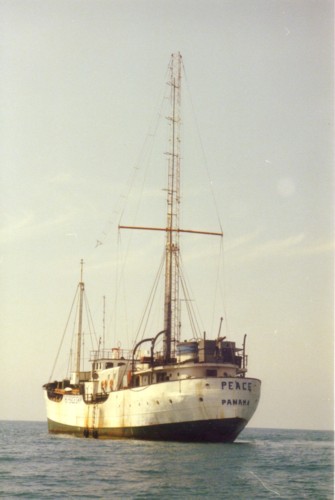
In January 1985, I had arrived in Israel to work as a DJ on a radio station, but this was no ordinary radio. The studios of ‘The Voice of Peace’ were on a ship anchored permanently in the Mediterranean Sea. Aware of my interest in cutting edge music, the station’s popular breakfast DJ Dave Asher (who had been living in Israel for some time) played me a recent 12-inch single by a young Israeli singer of Yemeni origin named Ofra Haza. It was a traditional Yemeni song, re-mixed and cut up into a state-of-the-art club tune that sounded to me like a new, exciting ‘Middle East meets West’ genre. I wanted to find out more, but the terrible winter storms and shortage of staff meant that I was stuck working on the ship for the next three months.

Eventually, during my first shore leave, I visited the Tel Aviv office of the small independent record company, Hed Arzi, that had produced the Ofra Haza single. They were baffled that a British DJ would be so interested in one of their worst selling record releases, and particularly one that seemed to have such minimal mainstream potential. They humoured me and let me sit at a desk in their office, penning handwritten letters to radio DJs and record labels that I knew back in the UK, sent by airmail along with the single and related album ‘Yemenite Songs’.

Within a month, I had received replies from John Peel at Radio One and Charlie Gillett at Capital Radio, both saying that they had played Ofra’s record on their shows and had received enquiries asking where the record could be purchased. During my next shore leave, I returned to Hed Arzi, whose staff were amazed that their song had been played on national radio in the UK. They introduced me to Ofra and her manager for the first time. I wrote again to several UK record companies and one of them, Globestyle, was convinced sufficiently by the airplay to release both the single and the album.

I returned to the UK at the end of 1985 and spent the next two years trying to convince everyone I knew of Ofra’s talent. By 1987, I had given away so many copies of her records to music industry people that the UK record company said I would be given one last free box. By chance, I had recently been invited to attend a monthly staff meeting of London pirate station Kiss FM (at the London School of Economics) and, as a last resort, I distributed copies of Ofra’s records from this last box to some of the station’s DJs.

Kiss FM DJs Jonathan More and Matt Black, recording together as ‘Coldcut’, had already enjoyed underground success with some highly original cut-up singles on their Ahead Of Our Time label. They liked the Ofra Haza songs so much that they cut up one of them into their homemade remix of US rappers Eric B & Rakim’s latest single ‘Paid In Full’. Island Records in the UK released this remix without seeking Eric B’s prior approval, and without clearing the Ofra Haza sample. By the end of 1987, the single had reached number 15 in the chart, giving Eric B his first British hit and earning significant royalties for the Israeli record company because a third of the track featured Ofra’s voice.

More than anything, the chart success of that Eric B remix stimulated huge public interest in Ofra Haza’s voice beyond the narrow market for ‘world music’ (which had just been marketed as a new genre). In early 1988, I organised interviews for a promotional visit to the UK, shepherding Ofra Haza and her manager to Radio 1, the World Service and commercial radio stations. The UK record company re-issued Ofra’s ‘Im Nin Alu’ single, which quickly garnered radio airplay this time, despite it being sung in a strange, foreign language. However, the public demand for the single was so great that the independent label had difficulty fulfilling orders, so it licensed the track to Warner Brothers. After an initial meeting with the major label, my direct involvement with Ofra Haza ended abruptly, just as she was invited back to the UK to perform on ‘Top Of The Pops.’

After the success of this single internationally, the Israeli record label invited me to London’s Sarm Studios, where the follow-up single was being mixed. It was evident that none of the Warner Brothers personnel involved had any understanding of the unique charm of Ofra’s Yemeni music in the international marketplace. Ofra’s manager was far too keen to turn her into a mainstream pop singer, which is exactly how the public perceived her in Israel. As a result, the follow-up single bombed and, sadly, it seemed as if Ofra was consigned to be a one-hit wonder as a result of poor career guidance.

In 2000, I was shocked to learn of Ofra’s death at the age of 42 from AIDS-related organ failure. Two years later, an Israeli television film crew came to London and filmed an interview about my role in creating their country’s most successful international pop star. They had just filmed a similar interview with John Peel at his home, during which he impressed them by producing the handwritten letter that had accompanied the Ofra records I had initially sent him from Israel seventeen years earlier. The interviewer asked me if I had made a fortune from ‘discovering’ Ofra Haza for the international market. All I had received was one cheque for £200 from the UK record company in 1988 to reimburse my expenses for Ofra’s first London promotional visit.

Ofra’s incredible voice lives on through the music she recorded, although I am always reminded of the parts of her life that had been unbelievably tragic. The crucial roles of the late John Peel and Charlie Gillett in her international success should not be forgotten. Ofra Haza’s music arrived in the Western world at a time when the public welcomed sounds that challenged their expectations. We are musically much the poorer for the loss of Ofra, and of John and Charlie, from our world.

‘The Israeli Madonna’
Thursday 30 December 2010
11.30am-12.00noon
BBC Radio 4


[photo: Grant Goddard]