DAB in cars: the straw that will break digital radio switchover's back

Speaking today at the Intellect conference in London, broadcasting Minister Ed Vaizey tried to assure us that digital radio switchover was still “on course” to happen in the year twenty something or other:

“On cars, the move to include digital radio as standard in new vehicles has continued over the last year. Around 14% of new vehicles have DAB as standard, up from 4% a year ago.”

Within hours, this news was misinterpreted by one online news source as Vaizey having said:

Forty per cent of cars have DAB [Digital Audio Broadcasting] radios as standard now, up from just four per cent a year ago.”

From ‘14% of new cars’ to ‘40% of all cars’ in a stroke of a keyboard! No wonder the article went on to assert that “the key driver to the take-up of the [DAB] technology looks like it will come from the car industry as manufacturers start to fit digital radios as standard.”

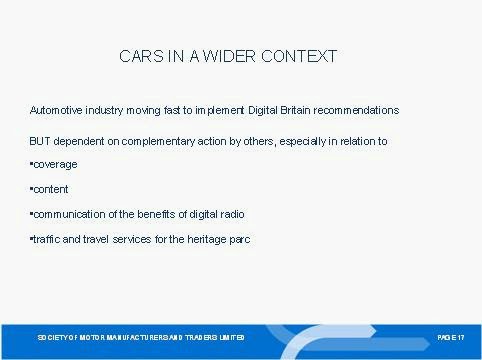
How wrong can this statement be? Fewer than 1% of vehicles on the road currently have a DAB radio. That proportion is not going to increase quickly, even by 2013 or 2015, as the government wants it to. Rather than being “the key driver” for DAB radio take-up, cars will become THE major sticking point for digital radio switchover.

The UK car industry appears to be nearing the end of its tether over the confused information that has been fed to consumers in recent years about the so-called DAB ‘switchover’ and FM ‘switch-off’ date(s). This frustration boiled over at the last government Digital Radio Stakeholders Group meeting on 17 May 2011, when Bob Davis, who heads the Digital Radio Committee of the Society of Motor Manufacturers & Traders [SMMT], stood up to offer what he referred to as a “naughty” comment:

“Jane [Humphreys, Department for Culture, Media & Sport] said earlier ‘around 2015’ for a digital radio switchover. The automotive industry has made it very, very clear, since the process began, that it needs certainty. We’ve got 2013 [as the date for a government decision on switchover] and we think we’re working towards a 2015 switchover date. With respect, Jane, I can already see tomorrow’s headlines that DCMS says ‘digital switchover delayed from 2015’ because you used the phrase ‘around 2015’. That implies a delay. It may be what potentially happens in the market – it may be 2016, it might be a bit later than that – but, for the moment, from an automotive industry perspective, every time there’s a suggestion that 2015 has stopped being the aspirational date – or might stop being an aspirational date – all that happens is [that] the automotive industry, or parts of it, is given another opportunity to say ‘it ain’t going to happen, forget all about it’ and we will end up with the bigger problem of converting vehicles already in the parc to digital, because people will just say ‘if DCMS can’t give us certainty’ – and I accept that, at the moment, you can’t – but if DCMS are saying ‘around 2015’ instead of ‘in 2015’, it reduces the opportunity for SMMT to keep telling its members there’s a deadline, and it’s ‘this’. So please could we have a little bit of caution, from an automotive industry perspective, in (particularly) government references to switchover dates.”

Jane Humpreys: “Thank you, Bob, though I think I’m right in saying that the Minister has never said ‘it will be in 2015’. He too has said that it will be in terms of … that is the target to which we are working, but what is the principal objective is that we have to meet the criteria that have been set out and we have a piece of legislation – unless I’m much mistaken – that says there will be a minimum of two years’ notice. So….”

John Mottram, DCMS: “That’s right. I’m aware of three Daily Mail articles that suggest it’s seven years, two years, five years’ delay depending upon the date, so I think in terms of coverage and it being delayed, I think that delay is already out there. But to Jane’s point, I think the Action Plan and Ed [Vaizey]’s words make it clear that it’s a consumer-led approach. The industry target date is 2015 – we’ve never shifted from that – but that decision is based on the criteria….”

At that point, the meeting was abruptly closed. What had been scheduled to be merely another ‘tick the government box’ faux consultation meeting had suddenly started to spin out of control. The natives had started to get restless. It was time to turn them out onto the street again.

Which? says: DAB radio switchover must be "consumer led or not at all"

What would have to be done to make DAB radio successful?

“What there does need to be, as Freeview and digital satellite has shown in television, is simply a sufficient combination of services, technology, simplicity and price or discount to provide a value proposition for the consumer,” suggested Stephen Carter in 2004, when he was chief executive of Ofcom.

“….. for the consumer” were the key words. They were also the words that became forgotten. The consumer was ignored in the radio industry’s pursuit of the radio industry’s own agenda for DAB radio. As a consequence, DAB radio has still not succeeded … with consumers. The failings were acknowledged by Quentin Howard, one of the architects of DAB radio in the UK:

“The mistake by broadcasters was in not understanding that ‘build it and they will come’ is no longer practical in this integrated technological age.”

Which?, the UK consumer advocacy, noted the radio industry’s lack of attention to the consumer in a February 2011 briefing paper entitled ‘Digital Radio Switchover in 2015? Consumer Led Or Not At All’:

“The transition to digital radio is currently industry led. The benefits of a transition to digital radio over the current analogue service are not clear to consumers, and the uptake of the technology over the past 10 years reflects this.”

Which? suggested that, before the government can announce a date for digital radio switchover, the following criteria should be met:

• “Uptake should be a minimum of 70% of all FM radio listening transferred to digital, leaving 30% still listening on analogue (FM/LW/MW/SW) (the Government’s Digital Radio Action Plan suggests 50%)
• The transition to digital must not be announced until coverage, including a measure of signal quality, is better than that of FM radio
• DAB must have been fitted as standard in all new cars for at least two years and an effective and affordable solution to in-car conversion must be available prior to the announcement of a switchover (which costs no more than for in-home conversion)
• Government must conduct a full cost-benefit analysis from a consumer perspective as a priority because increasing consumer desire for DAB should not focus on cost alone
• Minimum standards associated with a kite mark must be ambitious and future-proofed and any incentive scheme to switch to DAB should offer only kite marked receivers
• Consumer group representatives must be involved in the development of an information campaign independent from industry to raise awareness of the digital switchover by consumers and ensure guidance and training tools are available to retailers. In this regard, any lessons from the Digital TV switchover should be acted upon
• In its assessment of the environmental impact of a switchover to digital radio, the Government must tackle the full range of issues around recycling of analogue sets and the energy impacts of DAB”

However, in some of these areas of concern, current policy on DAB radio appears to be moving in the opposite direction to that advocated by Which?:

• The 50% criterion (50% of radio listening via digital platforms before switchover can be announced) is not mandatory because it was never included in the Digital Economy Act [see Jan 2010 blog]
• The latest plan for DAB is not to deliver reception even as good as FM, but to make it worse than FM [see recent blog]
• Only 1% of cars have DAB radios fitted and future take-up will inevitably be slow [see recent blog]
• Roberts Radio reported a 35-40% customer return rate for its in-car DAB radio adaptors [see Nov 2010 blog]
• The cost benefit analysis of DAB radio to be considered by the government will also be authored by the government, rather than commissioned independently [see Jan 2011 blog]
• Roberts Radio admitted having had to pull the plug on several DAB receiver projects, including the industry’s promised ‘£25 DAB radio’, because they could not meet Roberts’ minimum quality standards

In July 2010, after the formation of the new coalition government, culture minister Ed Vaizey had said:

“If, and it is a big if, the consumer is ready, we will support a 2015 switchover date. But, as I have already said, it is the consumer, through their listening habits and purchasing decisions, who will ultimately determine the case for switchover.” [see Sep 2010 blog]

So, it might appear that the Minister and Which? are, in fact, both lined up in agreement that digital radio switchover can only happen if it is supported by consumers. So why has the government not yet recognised that consumers already seem to have given the thumbs down to DAB?

Because there are middle men (Ofcom, DCMS, Digital Radio UK, Arqiva, DAB multiplex licence owners) who persist in keeping the DAB dream alive in Whitehall. Yet again, consumers are being drowned out by the clamour of agencies eager to pursue their own narrow objectives. And the mantra of the middle men is: DAB crisis, what crisis?

DAB Radio Downgrade? The new masterplan to deliver DAB radio reception worse than FM

When something works well, it just works. You do not need to analyse why it works. It just works. And nobody asks questions as to why or how. That is the case with FM radio. During half a century of development, more and more FM transmitters have been built across the UK (2,100 currently in operation) so as to reach the point now where almost the entire population receives an FM signal (maybe not always perfect, but some reception rather than none at all).

DAB radio was intended to replace FM radio. However, it must only be worth replacing FM with DAB if DAB is actually better than FM. Why replace a transmission system that has taken 50 years to perfect with something that is going to be worse? Unfortunately, nobody thought to conduct a cost/benefit analysis during the last two decades to determine what the cost would be of making DAB radio reception as good as FM radio, let alone better. As a result, DAB radio was foisted upon the public in 1999 without a roadmap to ensure that reception was even as good as FM radio for consumers.

Twelve years later, DAB reception remains worse than FM reception in many places, or is non-existent. Whereas poor FM reception gives the consumer a poor quality listening experience, poor DAB reception provides no listening experience whatsoever. With DAB, a poor signal is the same as no signal.

Instead of Ofcom valiantly admitting defeat over DAB radio – which might infer that the regulator and its predecessor, the Radio Authority, had screwed up the implementation of DAB in the UK – Ofcom presses ahead with increasingly desperate attempts to try and salvage this technological and regulatory disaster.

Ofcom’s latest ‘project’ is to try and understand why FM radio, more than half a century after its introduction, gives consumers acceptable radio reception. Intrinsically, the work is redundant. If FM works well, why bother to analyse why it works? The answer is: because DAB radio does not work. In order to make DAB work, an understanding is deemed necessary of why the system it was intended to replace – FM radio – does work.

Belatedly, it has been understood by the bureaucrats that the expense of making DAB as good as FM will prove too costly. It requires too many DAB transmitters, too many DAB power increases, at too great a cost for the radio industry. Might this not be a good time for them to back away from the notion of DAB radio REPLACING FM radio because it is simply too costly, even just to make it AS GOOD?

Not for the bureaucrats involved. Instead, the philosophy within Ofcom and the government is a new plan to deliberately make DAB radio NOT AS GOOD as FM radio. But still to persuade consumers that DAB is intended to replace FM radio for national and large local radio stations. Madness? Yes. Self-defeating? Yes. Contempt for radio listeners? Totally.

Peter Davies, who is responsible for radio at Ofcom, explained part of this 1984-style philosophy to replace ‘good’ FM with ‘worse’ DAB to the Digital Radio Stakeholders Group meeting in the calmest of tones on 3 February 2011. Although his presentation is lengthy, I have included Davies’ words in full below so that you too can try and decipher the logic of a solution for DAB radio that is purposefully sub-par.

Perhaps the Digital Radio UK marketing slogan next winter will be: ‘Buy a DAB radio! Worse reception than FM guaranteed. But better than no radio at all.’

Peter Davies, Ofcom: “The Coverage Planning Working Group is chaired by Ofcom, but we have effectively two groups that are feeding into this. There is the actual Working Group that is doing all the sort of hard grind of doing the planning work, and that consists of Ofcom, Arqiva and the BBC. There is also a Planning Advisory Group which consists of all the [DAB] multiplex operators, with Digital Radio UK and RadioCentre as well. So what I’m going to run you through this afternoon, quite quickly because of the time, is just what we’re doing in terms of FM. What is it we are trying to match? Secondly, how you then do that with DAB. Thirdly, looking at what we need to do to the frequency plan in the UK to achieve that. And then just onto the next steps.

So, FM coverage. I should say we are doing this for national services as well as local. So it’s both BBC and commercial national services, as well as the local. But I’m going to focus this afternoon on the local because that’s, in a way, where some of the more difficult issues are. This is a map of Manchester. I know you won’t be able to see the detail on that, but it gives you an impression, at least. So what we’ve done in each part – in fact, in the whole country – is define a set of ‘editorial areas.’ So that’s shown on this map by that dotted line – you can see around the edge, a sort of dark purple dotted line – so that everywhere in the country is covered by one or more areas – there are some overlaps – but at least everywhere is covered by one area. So the editorial areas are areas that have been agreed by the BBC and by the [DAB] multiplex operator and commercial radio operators as being the sort of area that they would, in an ideal world, like to cover. It’s also based on [DAB] multiplex areas, so it’s a bit of a compromise.

So, if you look at the actual coverage of BBC Radio Manchester [GMR] within this, that’s shown in the sort of standard way of measuring – 54 db – is shown in green but, actually, editorially BBC Radio Manchester would like to cover the bits within the dotted line. So there is coverage beyond the editorial area where people can pick up the service, but it’s not really intended for them. And, equally, there are bits within the existing editorial area which aren’t covered terribly well on FM but which, nevertheless, the station would like to think it serves.

In terms of the actual [FM] coverage, it’s been quite difficult to determine what that is. The ‘54db’ is the standard internationally agreed planning measure. So that’s 54db per μv per metre, but I’m not an engineer so don’t ask me any more detail than that. But it’s a definition that was drawn up back in the 1950s and is really about reception 10m above the ground, using a rooftop aerial and it sort of tells you whether you can get a signal on your radiogram, which is not terribly useful [now]. So we know that people use radios in very different ways, but we sort of know that this works, but it has never actually been tested. So it’s a planning definition, which is very old and slightly messy.

So what we’ve been doing as part of this work is drawing up what’s known as a ‘link budget ‘, which is effectively taking the signal strength as it leaves the transmitter and then adjusting it all the way along until it actually gets to the receiver. So, in other words, you adjust it because it’s a distance from the transmitter going over some hilly ground, going down into buildings, loss within the receiver itself and so on. So that you can work out what signal strength you will need to work to get decent FM coverage. So we’ve looked at three different strengths because we know that the 54db is probably a little bit conservative, so we also looked at 48db and 42db, again because conditions vary between what you can receive on a portable kitchen radio and what you can get in your car. We are also looking at coverage not only of households, but also of major roads as well, so it’s not just an indoor measurement we’re looking at.

What we have seen so far is actually that the link budget we have developed is that these numbers are probably about right. So 42db is probably about right for cars. But you can see that there’s not actually very much yellow on that map, so that most places either get a good solid indoor signal, or the signal’s not good at all, basically. So, for each area, we have looked at both the BBC local service – so that’s BBC Manchester – and also the commercial coverage, and we’ve taken the largest commercial station in each area. So, for Manchester, this is ‘Key 103.’ As you can see, the coverage is very different, mainly because they are using different transmitter sites and different powers on FM. But, of course, both of those services and others are on the same multiplex for DAB, so you have to think ‘what exactly is it on FM that we are trying to match?’ It’s no good just matching Key 103, you can’t just match to Key 103 because then you would be missing out BBC Manchester and other services. In this case, commercial [radio coverage] is smaller. In other cases that we have looked at, the commercial [stations] cover one part of the county but not another, but the BBC [station] will do the opposite.

So, what we’ve then done is to look at the composite coverage of both BBC local [radio] and the largest commercial station. So this is what we think people in the area would expect to be able to hear as a local service on FM. So you get either the BBC or the commercial radio [station] or both. So that’s the basis of what we think we should be trying to match. So it would be sort of green or blue for indoor, and the yellow bits for road coverage. As I say, we’ve done that for basically every area in the country, including the Nations services – so Radio Scotland, Radio Wales, etc for the BBC – and for the national services as well.

The question then is ‘how do we match DAB [to FM]?’ So the approach to that again has been to build up a link budget for DAB, starting with the transmitter and going right the way through to the receiver. And we’ve been doing receiver tests as part of that. And what we tried to do – because that sort of coverage is slightly debatable on FM – is [identify] where exactly is that band, and where exactly is that field strength? The approach we have taken is, first of all, to say that, within the editorial area, let’s plan for absolutely universal coverage. So how many transmitters – if you wanted to cover it as near as possible to 100% – how many transmitters would you need, both to get indoor coverage and road coverage as well? And we’ve tried to do that in a sort of commonsense way by starting with where the existing FM transmitters are. So rather than just look for new sites, because actually if coverage from FM is good from that site, so you should get decent coverage from DAB from that site as well. And then we’ve added on transmitters at decreasing levels of coverage until you get as close as we can to 100%.

Then, once we’ve done that, we’ve said ‘okay, actually some of those are now covering areas which aren’t covered by FM’ so actually you might not need them. So then you can then sort of roll back from that full universal coverage. The question then is ‘where do you draw the line?’ So, if you look at Manchester. Again, you’ve got the editorial area, which is a bit hard to see on this, but is the solid purple line around the edge. That is the existing local DAB coverage in Manchester, so you see 66.4% of households at the moment. In terms of households [for FM coverage], we have got 96.2% indoor at the moment, 98.2% (that’s a slightly sort of spurious measurement because it’s not actually a road measurement, but it’s households), so 96.2% for FM. So 66.4% existing [DAB] coverage from the two transmitters which are currently operating from the Manchester multiplex. It is one in central Manchester – sort of there – and there is one at Winter Hill at the top in the northwest corner.

We then looked at ‘okay, what would you do if you just increased the power of the existing transmitters and moved them up the mast a bit?’ And, actually, that gets you, as you can see, quite significantly increased coverage. In order to do that, we need to change the frequency plan, and I’ll come back to that in a minute. So that gets you up to 82% [DAB coverage] and then we keep adding on transmitters until we get as close as we can to 100%. This goes to 99% and that means 15 transmitters which are shown by the crosses dotted all over that map.

But then, as I say, you look at it and you say ‘well, actually, the two smallest of these – which are these two up here – actually have no household coverage at all, and the smallest one only adds 8km of road coverage.’ Now, obviously, if you’re driving and you lose your radio reception, then that’s a problem. But there’s a question as to whether that is essential for local coverage – it might be for national, but is it for local? So the question is ‘where do you draw that line in terms of a sort of cost/benefit analysis,’ if you like? You might decide, actually, you wouldn’t bother with those, but the question is ‘how far down the list of 15 [transmitters] do you go,’ as to what’s commercial viable and what provides an acceptable level of service to consumers?

So that’s the approach that we’ve taken. As I say, in order to do that, we need to change the frequency plan. Those are the big [frequency] blocks we use for DAB at the moment, dotted around the country. And you can see that they – the colours represent frequencies – so you can see that we have to reuse the same frequencies over and over again around the country. And that does cause interference so, at the moment, Manchester uses the same frequency as Birmingham. And, because of that, we can’t increase the power of the Manchester transmitters to get beyond that 66% to the 82% [coverage]. And that problem is repeated around the country. So what we’d like to do is re-draw the frequency map, which means that, as far as consumers are concerned, means doing a re-scan of their radio but does then allow us to boost the coverage quite significantly from existing transmitters and reduces that problem of interference which, in same places, can be quite significant. In order to that, it’s quite a long process – we need international co-ordination – but that part of the planning process we are going through at the moment.

So, the next steps are to finalise that frequency plan and begin the international co-ordination. We’ve got to complete the FM coverage maps and just check that link budget for FM, both for local and national [stations]. And then, for each of the local DAB areas and for the BBC national multiplex and for Digital One, the commercial multiplex, to produce the coverage maps and the household count and the road count as well for all of these existing multiplexes. Once we have done all of that, we plan to publish the whole thing later in the spring or early summer in a consultation so that we can then begin a debate as to whether this approach is actually right or not, and where it gets us.

Obviously, one of the big questions in all of that is actually ‘how much does it cost the broadcasters?’ I should say that that’s not something the Coverage Planning Group is looking at. It’s not something that we’ve been asked to look at, so it’s purely a technical approach at this stage but we think, sort of by the end of April, we should have the answers of how many extra transmitters you would need in order to achieve switchover.”

So the overarching question posed by the forthcoming Ofcom consultation seems to be: how poor can DAB coverage be made but still be accepted by consumers? If Peter Davies’ workplan, as explained here in February 2011, sounds vaguely familiar, it might be because he had addressed the Radio Festival in July 2008 and promised:

“Once we have defined what existing DAB coverage is, we then have to work out what it would take to get existing DAB coverage up to the level of existing FM coverage. Now, we have already done a lot of work on this, and certainly enough to inform the interim report, and the whole thing will be finalised in time for the Digital Radio Working Group final report later this year.” [see Dec 2008 blog]

Incredibly, three years late[r], the promised work is only just being completed. An amazing lack of urgency has been demonstrated by Ofcom, despite DAB radio resulting in more correspondence from angry consumers to the broadcasting minister Ed Vaizey than any other issue.

What most astonishes me is that the digital radio sector is still trying to persuade people living in Manchester to purchase a DAB radio, just as it has for the last twelve years, when it knows that there is a one-in-three chance that a Manchester household will be unable to receive ANY local stations via DAB, according to Davies. I assume a similar situation prevails in other cities.

Time for a class action by disappointed DAB radio receiver buyers?

[no accompanying graphics because DCMS explained: “Peter Davies’ Ofcom presentation is not attached as the content is still work in progress. Ofcom plan to publish all of the data later in the year.”]

Q: Who is the government commissioning to produce an objective report on the costs & benefits of DAB radio switchover? A: The government

For two decades, the British government has pursued a policy to replace analogue radio broadcasting with DAB digital radio broadcasting. Why? The real reasons might as well be lost in the mists of time (or maybe were never made public). However, this has not stopped the government and its civil servants continuing to pursue the same digital radio switchover policy since the 1980s, despite overwhelming evidence that the surrounding media landscape has changed beyond recognition in the interim.

Because the government policy to replace AM and FM radio with DAB radio had never been decided on the basis of consumer demand, commercial necessity or global standards, it was unnecessary for officials to produce a document that justified it logically. When a government decides that a particular policy is necessary, it can make legislative change happen without recourse to the consumer market outside of Parliament or the Ministries. Politics and the real world do not inhabit the same space.

In the case of DAB radio switchover, the government made no effort to produce a cost/benefit analysis until 2008, when PricewaterhouseCoopers [PWC] was commissioned by Ofcom. However, the resulting 91-page report did not provide the solid, positive argument for DAB radio switchover that the government had desired. So the PWC report was hidden from the public for a year, eventually to be released and trivialised by civil servants [see blog entry Feb 2010].


In contrast to the government’s unbridled enthusiasm for DAB, the PWC report felt that “the [radio] industry and consumers may fail to see the benefits of digital radio over the longer term.” It concluded that “there are relatively few up-sides to the estimates and several significant downside risks” from its cost/benefit analysis of DAB radio switchover [see
blog entry Jul 2010].

The House of Lords Select Committee on Communications, in a report on digital radio switchover in March 2010, expressed its dissatisfaction with the government’s attempt to bury the evidence from this PWC report:

“We strongly regret that the cost benefit analysis carried out by PricewaterhouseCoopers was not published at the time it was delivered to Ofcom and the Department for Culture, Media & Sport in February 2009.”

The government responded that “technical difficulties” had prevented the report’s publication for nearly a year. As excuses go, it would probably have been better for the government not to have responded at all.

After this embarrassing debacle over the PWC report, the government must have wanted to commission a further report that would conclude what PWC had not: that DAB radio switchover is a wonderful thing and that there are sensible economic arguments to justify forcing it upon the British public.

In June 2009, the government’s Digital Britain report promised: “We will conduct a full Impact Assessment, including a Cost/Benefit Analysis of Digital Radio Upgrade.”

In January 2010, Ofcom’s Peter Davies offered
evidence to the House of Lords Communications Committee that another report would be done:

Baroness McIntosh of Hudnall: “What about your own impact assessment?”

Mr Davies: “We haven’t done an impact assessment yet.”

Baroness McIntosh of Hudnall: “But you have been asked to – correct?”

Mr Davies: “At some point in the future. I think the Digital Britain report said that we would be asked to do one, but we haven’t been asked to do one yet. Obviously we would need to do that and we would need a much fuller cost-benefit analysis before any final decision was taken.”

In June 2010, the government stated:

“We agree that a full impact assessment is an essential part of informing the Government’s decision on whether and when to move from a primarily analogue to a digital radio landscape. Work has already begun to collect the evidence needed to support an impact assessment and analysis should begin shortly.” [emphasis added]

Here we are now, in January 2011, and there remains no sign of the long promised cost/benefit analysis of DAB radio switchover, despite the new government continuing to pursue the digital radio switchover policy of the previous government. However, in December 2010, a document from the Department for Culture Media & Sport [DCMS] (marked “UNCLASSIFIED”) disclosed:

“The Government launched a joint Government and industry Digital Radio Action Plan on 8 July 2010. This Action Plan sets out the process for providing ministers with the information and assurances necessary to make a decision on whether and how to proceed with a Digital Radio Switchover. … Fundamental to the information provided to Government as part of the Action Plan will be a comprehensive Cost Benefit Analysis on the proposals for a digital switchover. … Government is conducting the modelling of the costs and benefits in-house. This research will provide robust evidence of potential costs and benefits to consumers of digital switchover to be incorporated into the Government’s Cost Benefit Analysis.”

So the government has confirmed that the government decision on digital radio switchover will be informed by a government cost/benefit analysis of digital radio switchover that utilises government modelling of the costs and benefits. It appears that, in the case of DAB radio switchover, the government has decided to be judge, jury and executioner too. This smacks more of ‘big brother’ than of the Conservatives’ much touted ‘big society.’

The unclassified DCMS document hinted that the earlier PWC report had not produced the desired results:

“A similar piece of work was carried out by PricewaterhouseCoopers in 2008 to inform the work of the Digital Radio Working Group into the future of digital radio and the potential for switchover. That Cost Benefit Analysis raised a number of caveats, chief among which were the gaps in research into consumer behaviour and willingness to pay. Although the radio ecology has changed since that Cost Benefit Analysis was produced, the document provides useful insights and the recommendations made by PricewaterhouseCoopers on further research remain valid.”

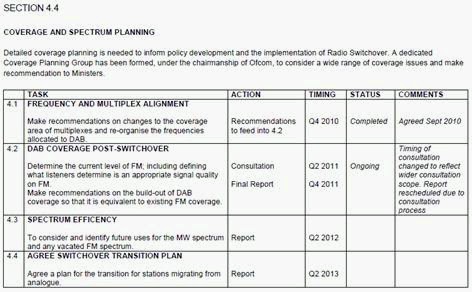
So what will be in the government’s new cost/benefit analysis report? The latest version of the government’s Digital Radio Action Plan explained:

1.4 IMPACT ASSESSMENT
Carry-out an impact assessment of the options and timings of the Radio Switchover. This will include, but not limited to, the following:
· the costs and benefits of any interventions to enable the switching the migration of all national and large local radio stations to DAB and alternative uses for the analogue spectrum vacated after the Radio Switchover;
· the rural impact of implementing the Digital Radio Switchover;
· Impact on energy consumption of a Switchover; and
· Environmental impact of analogue receiver disposal following Switchover.”

Interesting to see that neither the ‘consumer’ nor the ‘listener’ are mentioned here. For this workstream, the “first report to Ministers” is not scheduled until Q4 2011. It is evident that there is little urgency to execute this new cost/benefit analysis or for it to make a significant contribution at this juncture to any government re-evaluation as to whether to proceed with DAB radio switchover. If a cost/benefit analysis were a genuine priority, why was:
· the PWC report buried in February 2009 for a year
· a new cost/benefit analysis promised by Digital Britain in June 2009 but not prioritised subsequently
· the government saying in June 2010 that “work should begin shortly” on the analysis
· a “first report” of this work now not scheduled to be presented until Q4 2011?

If the government’s DAB radio switchover policy were but a minor issue within the DCMS Ministry, all this deceit, delay and manipulation might be considered trivial. It is not. In December 2010, Minister Ed Vaizey admitted that he receives more correspondence from angry consumers about DAB radio than about any other issue within his portfolio.

So why are we witnessing such a continued lack of government transparency on the DAB radio switchover issue, despite prime minister David Cameron’s commitment in November 2010 to make the UK “the most open and transparent government in the world”?

DAB radio & switchover: the British public speaks its mind

Q. Who will decide if/when digital radio switchover ever happens? The public. Who says so?

In July 2009, BBC ‘head of radio’ Tim Davie had
said:
“… the idea that we would move to formally engaging [digital radio] switchover without talking to listeners, getting listener satisfaction numbers, all the various things we do, would be not our plan in any way.”

In August 2009, BBC Trust chairman Sir Michael Lyons had
said:
“It is an extraordinarily ambitious suggestion, as colleagues have referred to, that by 2015 we will all be ready for [digital radio switchover]. So you can’t move faster than the British public want you to move on any issue.”

In July 2010, Culture Minister Ed Vaizey had
said:
“If, and it is a big if, the consumer is ready, we will support a 2015 switchover date. But, as I have already said, it is the consumer, through their listening habits and purchasing decisions, who will ultimately determine the case for switchover.”

Q. What is the BBC’s strategy for digital radio switchover?

In July 2010, the BBC Trust
told the BBC Executive that it:
“should draw up an overarching strategy for digital radio.”

Q. What is the public’s opinion of DAB radio?

Research published this week by the BBC Trust for the Strategy Review collated opinions voiced in 20 focus groups held in September 2010 in ten locations. Below are excerpts that relate consumers’ experiences with DAB radio and the BBC’s digital radio stations. They make sobering reading ….
Key Findings

The availability of radio services on the move (especially in-car and for those working outdoors) was felt to be of continued high importance. People expect radio to stay portable – at least the range of stations they currently have available on analogue, including local stations which are critically important in-car for their local travel information. In this context especially there was strong resistance to the idea of analogue radio switch-off, and considerable scepticism as to whether or not this will actually happen.

4.2 The range of services provided by the BBC

“Rather than spending money on Radio 57 or whatever, invest more money on the core main programmes.”
35-44, Male, C2DE, Crowthorne

4.3 Attitudes to DAB radio

Many of the distribution issues we set out to discuss in the groups related to the availability of DAB (or of certain stations on DAB). However, what became clear in the groups was that, although we did speak to some real fans of DAB, most licence fee payers we spoke to do not yet view DAB as an essential service in the way they do Freeview, for example. This certainly coloured their reaction to some of the trade-offs they encountered between funding distribution and content.

“I think they should improve the Freeview signal before they start worrying about the radio. Radio is fine.”
18-24, Female, ABC1, Inverness

These attitudes were coloured by a number of factors:
· Limited awareness of what DAB is and what it offers
· Limited awareness and uptake of the BBC’s digital-only radio stations (most digital radio listeners within the groups were using digital radio as a means of listening to stations they would otherwise be able to receive via analogue)
· Most DAB set owners we spoke to had received them as presents – they hadn’t necessarily had a compelling reason to buy one
· Many trialists of DAB in the groups had been frustrated with their experiences – e.g. intermittent/non-existent signals, limited range of their favourite stations available
· Some doubts as to whether DAB technology will be around in the long term

“I did have a DAB radio but I didn’t notice it being any better”
18-24, Female, C2DE, Cheddar

“I find DAB radio can be quite troublesome although that’s not BBC specific. The signal seems to interrupt quite regularly”
45-59, Female, ABC1, Crowthorne

“I don’t find that DAB radio is achieving a lot for me. It’s supposed to be better quality, but because of the size of the set I’ve got, it doesn’t really make any difference.”
55+, C2DE, Derby

“Aren’t we the only ones to use DAB? Europe uses a different system and America too – I don’t see the point of it now so many people have the internet as it’s as cheap to get an internet radio as it is a DAB radio and you can listen to far more stations on it”
25-44, ABC1, Fort William

“You can’t get much [on DAB in the car] – no Radio 1, no Radio 2, no Radio 5 live, no Radio 4, you just get a message saying ‘no reception’. You need to be on top of a mountain to receive it. It’s a complete waste of time.”
55+, C2DE, Derby

There was real confusion and in some cases concern about the idea of a digital switchover for radio, and some debate as to whether the mooted date of 2015 was realistic or not. Certainly in the current circumstances there would be much resistance among participants in these groups to the idea of switching off analogue radio, especially those for whom in-car listening was an important (or the dominant) part of their radio listening.

“They can’t switch off analogue radio – people are really not going to be happy with that”
18-24, Male, C2DE, Belfast

“The idea of making all radios into digital is just ridiculous… It’s not persuading you – it’s just pushing you”
18-24, Female, C2DE, Cheddar

“What about all the car radios – surely we’re not going to replace all those?”
25-34, Female, ABC1, Caernarfon

“Are you telling me my radios will be totally obsolete if they do this? That’s outrageous”
60+, Female, ABC1, Newry

5.1 Availability of services

“I’m going to sound old fashioned but the core product is BBC One, BBC Two and Radios 1 to 5”
35-44, Male, C2DE, Crowthorne

The digital-only radio stations were considered of significantly lesser importance (awareness of these was limited, and listening to them was quite sporadic through the sample). In fact in several groups it was suggested that one solution to the complex problems of making access to digital radio more easily available to people would be to get rid of the stations altogether!

“I don’t think anyone really cares about the digital channels and they won’t until all the non-digital signals have been turned off”
25-34, Male, C2DE, Newry

“It’s limited because digital radio hasn’t really taken off.. they’re talking about changing over in 2015… if it’s half the hassle of the digital [TV] switchover, it will be a dead loss”
45-64, ABC1, Merthyr Tydfil

6.1 Availability of platform choice

There was also a general consensus across the groups that, although the convergence of platforms has started to offer useful additional means of consuming ‘broadcast’ services, as a minimum the BBC’s television services should be available via a television set, and the main radio services via a radio set.

“It’s good enough to be able to get main stations on analogue radio and the others through the TV – I don’t think they need to be able to get all these radio stations on radio only.”
25-34, Female, ABC1, Caernarfon

Lack of availability of BBC Radio Derby on DAB

Local radio was considered to fulfil an important community service, particularly by those in the older group, who remarked that there had been a decline in the range of local media available (local newspapers closing, and the ITV regional television coverage now being focused on Birmingham).

As such, BBC Radio Derby was felt to be important to giving the city a sense of identity. Sports coverage was an integral part of this (for the men especially), and Derby-specific coverage was felt to help ensure that they don’t live in the shadow of nearby Nottingham. Frequently, they felt, Derby is treated like a poor relation next to Nottingham; the availability of BBC Radio Nottingham (but not BBC Radio Derby) on DAB was yet another manifestation of this, they believed.

A number of them had bought DAB radio specifically with the intention of listening to BBC Radio Derby and had thus been extremely disappointed not to be able to find it.

“I asked for a DAB set for Christmas, specifically so I would be able to listen to Radio Derby, nice and clear, around the house – not realising that you can’t get Radio Derby on DAB at all… I only found out when I pressed the ‘auto-scan’ button… Leicester, Nottingham, loud and clear, but no Derby… I felt really let down.”
55+, C2DE, Derby

“My wife bought me one for Christmas. It wouldn’t work next to the bed – we thought it was broken. We ended up just using it as an alarm clock. It never occurred to me that it might not work depending on where you live.”
40-54, ABC1, Derby

There was little awareness or understanding of the reasons why this is the case (the lack of a local commercial multiplex operator), so some participants were upset that the BBC appeared to be viewing Derby as a lower priority than neighbouring areas. Others had assumed that this was a technical issue (reception problems), rather than the station not being broadcast on DAB. (There was some awareness of a promised launch date of July 2010, but they claimed that this date had been and gone with no further update on what was happening.)

“What makes me angry is that Radio Derby comes out as one of the best local news stations in the country, but it’s not available on the latest technology.”
55+, C2DE, Derby

“If you can get the others, you’d just assume that you can get Radio Derby as well. Whose decision is it not to have it?”
40-54, ABC1, Derby

Some of the participants had experimented with some of the BBC’s digital-only stations on DAB. Radio 7 in particular was well-liked by some of the participants in the older group, and some of the younger men had used 5 live Sports Extra, but their overall impression with DAB was one of disappointment. The absence of BBC Radio Derby was a significant contributor to this, along with poor reception quality.

“The way they sell DAB it was going to be the be-all-and-end-all of radio listening, but it’s just been a great disappointment.”
55+, C2DE, Derby

Although many were disappointed with DAB in general, the absence of BBC Radio Derby from DAB was not felt to be a major problem for them as long as the station remains available on analogue (many were listening out of home in any case – traffic reports in the car, or match commentary when out and about at the weekend).

However, in line with most other groups, these participants would be extremely upset if the analogue signal were switched off and BBC Derby only then available online.

Radio Foyle on DAB

Many participants felt that they get a better reception with DAB than on analogue (in the home). Many of the older group in particular claimed to have experienced reception problems with Radio Foyle in particular on analogue, especially in bad weather. However it was not a case of a having had a desperate need to get a digital radio because they got no analogue signal previously, more that the sound was not always great and they sometimes experienced reception problems.

“DAB radio… I got it out of curiosity… everybody said it was better than analogue… the analogue sometimes you can’t tune in because you have got high pressure or rain or wind. The DAB you can pick it up.”
50+, ABC1, Londonderry

Most assumed that Radio Foyle was already on DAB, as they insisted they were listening to it on their DAB radios – it is not entirely clear whether this is confusion between DAB and analogue signals on the same set, or they have been experiencing the ‘dynamuxing’ test.

“No I didn’t know that because when I press it comes up on my DAB radio so I thought it was. I just took it that all the stations I can pick up on my DAB are digital.”
50+, ABC1, Londonderry

“Foyle on an ordinary radio is still poor I think. I am right in Derry. On the digital they do both seem clear to me.”
30-49, C2DE, Londonderry

When it was explained to them that ‘dynamuxing’ the two stations would result in two mono (as opposed to one stereo) stations, reactions were somewhat mixed. Although some participants were adamant that going from stereo to mono would compromise their listening experience, particularly when listening to music, others admitted that they were not sure what mono sound is, and probably wouldn’t be able to tell the difference! It is also worth noting that, from the description they gave of their DAB sets, the majority of participants in the groups were listening to DAB on mono-only sets anyway.

On balance, all participants would prefer both stations to be available, even if this meant mono-only broadcasting. The younger group, who were more loyal Foyle listeners, were happy enough with the availability of Foyle on analogue only, but would be concerned by the prospect of an analogue radio switch-off, in which case continued availability of Foyle would be vital.

Poor DAB coverage (in Fort William)

Most of the participants in the groups are used to struggling with coverage issues. Lack of DAB coverage is just the latest manifestation of issues they have experienced historically with analogue television and radio signals.

“I live over in a rural area completely surrounded by hills so there is no radio reception at all so all our radio listening is done through the TV box or the internet”
25-44, ABC1, Fort William

“I tried a DAB radio but it wasn’t very good – it would go for a bit then completely cut out and we have no FM signal at all out in the glens where I am”
45-64, C2DE, Fort William

As a result, satellite (by which most really meant Sky, as awareness of Freesat was very low) had become the default standard for most to receive television, especially for those outside the main town of Fort William itself, and many were increasingly using the good broadband services that are now available to them as a more reliable means of accessing media content.

“We’ve been up there seven years now and when we first moved we had a reasonable medium wave signal for Radio Scotland but then that tailed off but we get no FM and there was no TV until satellite came on stream… We had very young children at the time and they were happy just watching DVDs… There are about 250 people in our village and many of the surrounding communities have the same issues… There used to be a mast for the TV but that was turned off and now everyone has a satellite dish… satellite has been a godsend for us – especially for the radio – but we are now even more likely to be listening online. Our broadband is excellent – 8Meg – and now we even have wi-fi radios in the house.”
25-44, ABC1, Fort William

Some participants in the groups had been drawn to DAB, but left frustrated by the experience.

“I won a DAB in a Radio Scotland competition and I was really excited about being able to listen to 6 Music but there was absolutely no signal so I gave it to my dad down in Glasgow and he’s really happy with it”
25-44, ABC1, Fort William

Limited availability of Radio Wales and Radio Cymru on DAB

In common with many of the research locations across the country, issues surrounding the lack of availability of Radio Wales and Radio Cymru were caught up in other issues around the quality of DAB signal in general.

While some participants (for example, one lived near a mast) were experiencing extremely good reception via digital, others were having problems based on their location and even the prevailing weather conditions.

“If you get a rain cloud overhead, or worse than that the snow, you might as well chuck it in the bin.”
45-64, ABC1, Merthyr Tydfil

“People who live in the dips – they can’t get any kind of digital radio reception at all… they’ve got to do something to help them.”
25-44, C2DE, Merthyr Tydfil

This frustration was a manifestation of a broader dissatisfaction with digital reception in general. Many were experiencing problems with their television reception (especially, but not exclusively through Freeview). Lack of a reliable television signal was seen by most as a more significant problem than lack of a reliable radio signal.

“They said the digital signal was going to be better – that you’d be able to get S4C and Channel 4 – but it’s actually worse.”
25-44, C2DE, Merthyr Tydfil

“Wales has always got problems, we get worse service with the digital, the broadband, the post… We pay the same, we have a right to the same service.”
25-44, C2DE, Merthyr Tydfil

As a result many in the groups considered themselves to be disgruntled licence fee payers.

Most could understand that there are diminishing returns in terms of building out the transmitter network, and that those in the more mountainous parts of central Wales (for example) might not be able to have access to the same choices as people in more densely populated areas. However, in these groups the argument was most strongly made that people in these areas should have some kind of discount from their licence fee in recognition of the reduced service they receive.

“They [the BBC] can’t please everyone, they’re doing the best they can, but If people can’t get the service, why should they pay the full money.”
45-64, ABC1, Merthyr Tydfil

“You shouldn’t be penalised for living in an area where they can’t provide these services, because we have to pay extra to get Sky, for example, to be able to receive it.”
45-64, ABC1, Merthyr Tydfil

Roll up! Roll up! Enjoy the radio industry pantomime: 'DAB Radio'

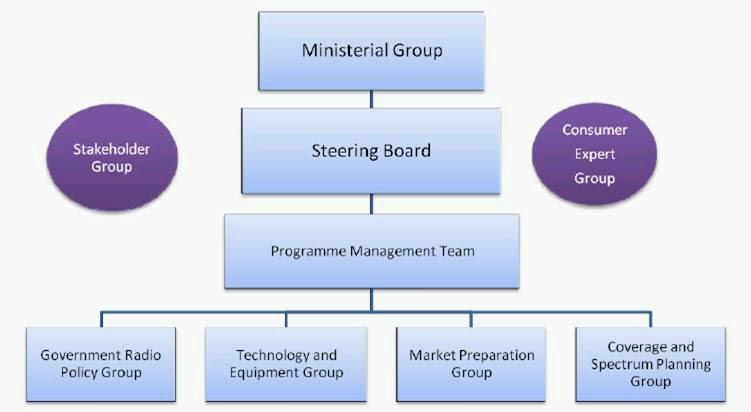
The Ministerial Group for the government’s Digital Radio Action Plan will meet tomorrow. That meeting has all the hallmarks of a radio industry seasonal pantomime, with participants dressed up in their gladrags to play the appropriate parts. A select audience has been hand picked, though the ending of the story has still to be written.

Pantomime often brings out a sense of déjà vu, of having seen the same thing during previous Christmases. This winter’s DAB radio marketing campaign has that feeling. The 2010 slogan is:

“There’s a digital radio for everyone this Christmas”

While the UK radio industry’s Christmas campaign for 2009 had been:

“Struggling to think of the perfect gift for Christmas? There’s a digital radio for everyone …”

Pantomime often stages a sleight of hand, where you are not quite sure if what you saw was real or just some cheap trick. This winter’s DAB radio marketing campaign has that feeling. On 18 November 2010, the press story was:

“The commercial radio campaign [for DAB], which breaks on November 22, covers Global [Radio], Bauer [Radio], Guardian Media Group [Radio], Absolute [Radio], UTV [Radio] and many local commercial stations.”

But, within days, that story had changed so that the campaign:

“… will run across major commercial groups” and “commercial radio stations including Absolute, UTV, Orion.”

What happened to Global Radio, Bauer Radio and Guardian Media Group Radio? Well, every pantomime has its jesters who do their best to spoil the rest of the cast’s fun. This winter’s DAB radio marketing campaign has that feeling. Two days after the Christmas DAB campaign had started, The Telegraph broke the story that:

“Leading commercial radio groups [Global Radio, Guardian Media Group] have refused to promote DAB radio …”

Every pantomime has its bully, who picks on people mercilessly and prevents them from going to the ball. This winter’s DAB shenanigans have that feeling. Commercial radio trade body RadioCentre offered its story as to why its members, Global Radio and Guardian Media Group, had pulled out of the marketing campaign:

“Commercial radio operators are currently in discussions with government about the funding of local DAB coverage. Until those discussions are resolved, we understand that some stations felt it would be inappropriate to run the digital radio Christmas campaign.”

Er, isn’t that blackmail rather than negotiation? Is it not transparent that, if you really cared about making DAB radio a success, you would think twice about cutting off your nose to spite your face by deliberately NOT promoting the very DAB platform that you have been attempting to palm off on the public for the last decade? In essence, you are trying to convince consumers that you care so much about your backward 10-year old offspring that you intend to starve it to death. In pantomime, such a tragedy might give the audience a laugh. In reality, it would be time for Social Services to intervene. It cannot be good PR for the commercial radio industry to be so convincingly playing the part of The Wicked Witch of The West.

RadioCentre’s lack of parenting skills has been evident in recent weeks:
· Its children had refused to attend the government’s Digital Radio Stakeholders Group meeting on 1 November [see earlier blog]
· Last Friday, its children refused to participate in a Westminster conference on ‘the future of UK digital radio’ organised for 7 December, resulting in the event’s postponement until April 2011.

And here is what the school notes said to explain these absences:
· “Following the announcement of the [BBC Licence Fee] settlement, RadioCentre has been in discussions with Government about the funding of local DAB coverage. As these discussions are ongoing, RadioCentre members felt it would be inappropriate to attend the Digital Radio Stakeholder meeting.” [Campaign]
· “Sensitivity of current negotiations on the future of digital radio” for the conference pull-out.

The evident paradox in this radio pantomime is that:
· The radio industry is spending £55m between now and 2015 to try and convince the public that DAB radio is the best thing since the cat’s whisker [see earlier blog]
· The radio industry big boys will not stand up in front of other stakeholders in the media sector, or in front of a conference, and explain what, why or how they are pursuing (or not really pursuing at all) the government’s DAB dreams
· Commercial radio has been demanding for several years that the BBC pays for fixing the deficiencies in commercial radio’s own DAB local transmission system. (Yes, this is the same BBC that RadioCentre has lambasted for years about its interference in commercial activities. Yes, these are the same commercial radio big boys who invested heavily in DAB in the 1990s in the hope of making profits for their shareholders.)

Pantomime is pure theatre, and tomorrow’s meeting will doubtless provide much entertainment for all involved. The only unresolved issue is how it will all end. Will the government Minister play the part of Scrooge, insisting that the commercial radio big boys should work longer hours for their living and must pay for improvements to their DAB system themselves? Or will the government play the wicked stepmother, compromising the BBC’s independence by forcing it to pay for an expensive sticky plaster to fix a commercial media sector DAB problem that has been all of its own making?

My feeling is that, in these austere times, it would be opening up another big black hole for public money to now finance such massive deficiency issues with DAB radio that could and should have been anticipated and fixed a decade ago. It is simply too expensive to commit unknown quantities of cash to transform the ugly DAB frog into a handsome prince who might never be fit enough to rival FM radio. Anyway, the BBC has already made a public commitment to not spend any more Licence Fee money on yet another ‘makeover’ show. In which case, our Cinderella DAB may not be going to the ball.

Or is all of the above just a pantomine within a farce? Is all this play-acting merely intended to allow commercial radio to walk away from DAB altogether, pointing the finger of blame elsewhere (and smug that the Classic FM automatic licence renewal is nearly almost within its grasp)?

Download The First Annual Not ‘The Ofcom Digital Radio Progress Report’ Report

Download this report here

In July 2010, Ofcom had published its first annual report on the progress made in the UK with take-up and usage of digital radio. I criticised the report in this blog for being selective with data and distorting the real picture of the slow take-up of DAB radio.

Ofcom responded to two of my criticisms in a subsequent news article in Media Week. Ofcom explained that it had “categorised ‘unspecified’ listening as ‘analogue’ rather than ‘digital’ listening because it did not want to exaggerate ‘digital’ listening.” What?

This response seems only to confirm my assertion that Ofcom invented the numbers it published. There are two possible scenarios: either Ofcom did not realise that deliberately mis-stating the results of market research breaches the Code of Conduct of the Market Research Society; or Ofcom did realise this but decided to do it anyway. I am uncertain which scenario is scarier. If Ofcom’s invented RAJAR statistics had been included in an advertisement, it would be banned by the Advertising Standards Authority. Adding the ‘don’t know’ answers to either the ‘for’ or the ‘against’ totals in any consumer survey is a crime against statistics.

Secondly, Ofcom responded to my criticism that it had not published historical data to demonstrate how close we are to achieving the 50% digital listening criterion set by government. Ofcom said that it “did not set historical figures next to the forecasts because they are not formal criteria”. What?

I suggest that Ofcom stops daydreaming about a DAB future and starts listening to the words of its government paymasters. To take just one example of dozens, on 8 July 2010, Culture Minister Ed Vaizey said very plainly:

“We will only consider implementing a Digital Radio Switchover once at least 50% of all listening is already on digital or, to put it another way, when analogue listening is in the minority.”

Besides, Ofcom’s report itself had noted (in two places) that:

“A decision on switchover could only made once two criteria had been fulfilled [sic]:
• when 50% of all radio listening is via digital platforms; and
• when national DAB coverage is comparable to FM …”

The Ofcom Digital Radio Progress Report published last month was required by the Digital Economy Act 2010 to inform the government how close the UK is to achieving this 50% criterion. Yet, bizarrely, the very numbers the government wanted to see were missing from the relevant Ofcom graph.

In the spirit of constructive action, I have collated a short collection of graphs and tables in a presentation titled The First Annual Not ‘The Ofcom Digital Radio Progress Report’ Report. It can be downloaded here for free. All of the data within are derived from freely published industry sources to which Ofcom had access.

The first section of the report demonstrates that none of the radio industry forecasts for UK digital radio take-up stand a chance of being achieved, whether those predictions were made by the government, its committees, Ofcom, RadioCentre, Value Partners or whomever. These forecasts were not just wrong – they were wildly wrong.

The inability of forecasters to observe the reality of slowing DAB radio take-up in the UK was underlined by a forecast published in August 2010 by a US company that predicted:

“By 2015, the worldwide installed base of digital radio receivers, excluding handsets, is expected to reach nearly 200 million units. … ‘The adoption of DAB radios in Europe has been led primarily by tabletop radio sales in the UK,’ says [Sam] Rosen. In addition to the US and the UK, Switzerland, Denmark, and Norway all have significant broadcast infrastructure in place, with Australia, Germany and France to complete the majority of their infrastructure in 2011.”

Yes, and pigs will fly. It has taken a decade for 11 million DAB radios to be sold in the UK, and they still only account for 16% of radio listening. Far from the UK’s DAB broadcast infrastructure being almost complete, there is an impasse about who will stump up the money to render it fit for purpose. France is still debating whether to go digital at all. Germany abandoned its first effort and is planning a second attempt. Besides, the US, UK, French and Australian technology systems for digital terrestrial radio are each mutually exclusive. There is no globally agreed standard for digital terrestrial radio, so there is no universal ‘digital radio’ receiver, and nothing like 200 million digital radios (of all types) will be sold by 2015.

But a woefully inaccurate, over-optimistic forecast is always a good excuse for writing fantasy news. In the US, Media Post reported:

“HD digital radio is poised for rapid growth over the next few years … with much of the increase coming abroad, especially in Europe, where various governments have established HD radio as the national standard. … US consumers have purchased 4 million HD radio sets, while European consumers – led by the UK – have purchased about 13.5 million.”

Oh dear. Lie One: the American HD radio system is not a national standard in any European country. Lie Two: not a single HD radio has been sold in the UK. Lie Three: maybe 13 HD radios have been sold in Europe, but certainly not 13 million.

Consequently, US broadcast industry trade body NAB summarised this completely inaccurate news story (“… the real growth is happening overseas, where governments have already established HD [radio] as a standard technology”) and sent it to everyone on its mailing list. The whole of the US radio sector must be amazed that Europe, led by the UK, has embraced American HD radio technology so warmly, while it is failing so dismally in its homeland. Wrong! In reality, no consumer in Europe has even heard of HD radio (except for a few techies testing it in Switzerland).

Closer to home, the continuing failure of the DAB digital radio system to impress European consumers seems to have impacted thinking at the European Broadcasting Union [EBU], which has supported Europe-wide implementation of DAB since 1986. In outlining the agenda of its fourth Digital Radio Conference [DRC10], the EBU came close to acknowledging that DAB is no longer ‘the future of radio’:

“Where previous [conference] editions have focused on the relative merits of the different digital radio platforms and their roll-out across Europe, DRC10 will focus on radio’s position within a pluralistic distribution model. That the discussion of digital radio’s future has, to date, been weighted towards different platforms is understandable given the uneven pace of Eureka 147 (DAB/DAB+/DMB) adoption and the rapid deployment of internet to European homes. Indeed, technical development has now reached something of a plateau. … The debate has moved forward from which platform might ‘win’ to how best to chart a digital future for radio on multiple platforms. … A more fundamental question then is ‘what is the case for digital radio?’. This is about business and social arguments for and against the development of digital radio in all its forms. It involves the economics of radio revenues and costs, the social value, the mix of public and commercial broadcasters, as well as the quality and variety of the offering.”

“Uneven pace”? “Plateau”? “Multiple platforms”? Am I the only one to smell EBU back-peddling here on the DAB issue? At last year’s EBU conference, I seemed to be the only speaker exploring “the economics of radio revenues and costs” amongst a sea of technologists whose enthusiasm for DAB remained unsullied by the constraints of the economics of radio. Maybe the penny has dropped – a platform remains no more than a platform if you cannot afford to fill it with compelling, exclusive radio content, and convince consumers to use it, and generate a profit from it.

Here in the UK, while the biggest commercial radio owners have already baled out of most of their DAB commitments (and the BBC is trying to close two of its digital stations), the digital minnows are left suffering the economic consequences of a platform that has effectively been thrown to the dogs. Passion For The Planet, an independent digital-only station that has persevered on the DAB platform since 2002, announced in August 2010 that it will no longer broadcast on DAB in London. Managing director Chantal Cooke explained:

“DAB is a great medium for radio, but squabbling within the industry and a lack of clarity and direction from Ofcom leaves us worried that radio may well have missed a great opportunity. I believe London has too many stations, and the signal on the ‘London 3’ multiplex has always been, and continues to be, very poor. The lack of a robust signal has hampered independent services from the start, yet neither the multiplex operators nor Ofcom has taken the problem seriously. Passion for the Planet has spent a small fortune broadcasting on ‘London 3’ because we believed in the platform but, while there are still so many issues to be rectified, further investment in DAB in London has become increasingly difficult to support.”

The writing on the wall for DAB’s impending failure is writ so large now that Ofcom staff must have to leave work under cover of darkness not to see it. Large parts of the radio industry evidently have no faith in DAB ever replacing analogue radio. However, over at Ofcom HQ, the futile work continues to try and convince consumers and the government that DAB is still ‘the future of radio’. We will probably never know how much public money and time has been wasted on these foolish endeavours.

[many thanks to John Catlett and Eivind Engberg for their valuable contributions]

Digital radio switchover: talk is cheap, action will never happen

Politics is the art of flip-flop policymaking (and justifying it convincingly). This is evident in the new UK government’s first statement about DAB radio and digital radio switchover, published this week. What is its new policy? Well, there is no new policy. The Conservatives are simply continuing the previous Labour government’s ill-advised determination to foist digital radio switchover on an increasingly resistant public. A critic might even be so bold as to say of new Secretary of State for Culture, Media & Sport, Jeremy Hunt:

“The Government have ducked sorting out digital radio switchover…. They are giving Ministers the power to switch over in 2015, yes, but without taking any of the difficult measures necessary to make it practical or possible.”

But wait! In fact, these were the words of Jeremy Hunt himself, in April 2010, criticising his predecessor, Ben Bradshaw, during the previous Labour government. Now that the boot is on the Right foot, Hunt seems to have simply dusted off the Labour policy he had previously lambasted, crossed out Bradshaw’s name and written in his own instead.

In his same speech to the House of Commons, Hunt had been scathing about the digital radio switchover clause in the Digital Economy Bill:

“I think that clause is so weak that it is virtually meaningless, as it gives the Secretary of State the power to mandate switchover in 2015 but the Government have not taken the difficult steps that would have made that possible, such as ensuring that the car industry installs digital radios as standard [….] and that there is proper reception on all roads and highways. As a result, a lot of people are very concerned that 110 million analogue radios will have to be junked in 2015.”

That was ‘opposition’ Hunt then. Three months later, ‘government’ Hunt appears to see nothing problematic with the digital radio switchover clause. Indeed, the new government has committed itself to exactly the same fantastical strategy for DAB radio as the old government:

• digital radio listening will somehow reach 50% of the total by 2012
• someone somewhere will pay to upgrade the DAB transmission system to render it as robust as FM
• someone somewhere will launch lots of fab new digital radio stations
• consumers will somehow be persuaded to replace all six or more of their household’s radios with new DAB ones
• analogue radio transmitters will somehow be switched off in 2015
• all cars will somehow be fitted with DAB radios by 2015
• mobile phones and portable devices will somehow all suddenly include DAB, rather than FM, radio receivers.

All these objectives always had been, and still are, pure fantasy. None, and I literally mean ‘none’, of the available evidence and data demonstrate that these things will happen. Definitely not by 2012, certainly not by 2015, and probably never.

A year ago, Hunt was very clear in marking out his party’s strategy for digital radio as more realistic than the ruling Labour government’s:

“I think the most important thing is not something the government can do, but something the industry can do is, which is to develop new services on digital platforms that actually mean there is a real consumer benefit to DAB. At the moment, the benefits are marginal. I mean, there are some benefits in terms of quality, but your batteries get used up a lot more quickly, the reception is a lot more flaky, and a lot of the things that make digital switchover attractive on TV don’t apply to radio in the same way. So I think the industry needs to do a lot more to make it in consumers’ interests to have that switchover…..

We have also got to think about consumer anger. Consumers are people that the radio sector needs. It’s going through a very tough patch. We don’t want to switch off listeners by suddenly saying that we are not going to – that we are going to force you to have a new radio, and there’s a real danger, if we do that, that they might start listening to their iPods and their CD players instead. … At the moment, we seem to be getting into this mindset where we want to force it on the public, even though the public can’t really see what the benefits are.”

So, between then and now, who is it that has convinced Hunt to backtrack and instead to endorse the status quo? The civil servants in his Department who hitched their wagon to the ‘DAB is the future’ train too long ago to let go now? The Ofcom radio staff who were appointed years ago on the strength of their promise to deliver digital radio switchover? The commercial lobbyists who still fantasise about the huge profits to be made (for Britain!) from global exports of their European DAB technology? All of them are nothing more than dreamers.

At the same time, many of these same parties are already distancing themselves from responsibility for DAB so as to save their own skins once DAB’s ‘fall from grace’ inevitably arrives:

• the government is saying that digital radio switchover depends upon the public’s take-up
• the regulator is saying that digital radio switchover depends upon the radio industry’s commitment
• the commercial radio industry is saying that digital radio switchover depends upon the BBC paying
• the BBC is saying that digital radio switchover depends upon its audiences
• the BBC Trust is saying that digital radio switchover depends upon the commercial radio sector’s commitment.

For years now, the stakeholders assembled around the table in those endless DAB committee meetings have been occupied identifying DAB’s problems yet, at the same time, every one of them has expected somebody somewhere else to fix them. But there is no sugar daddy out there. There is no cavalry about to ride over the horizon. It is you stakeholders who created such a mess of DAB and either you must fix it….. or throw in the towel.

This week’s announcement about digital radio switchover demonstrated that the new government does not have the guts to do what many, including the House of Lords Communications Committee chaired by Lord Fowler, had asked of them. To commission an objective analysis of why DAB was introduced in the first place, how close we really are to digital switchover, whether we will ever get there, what the costs have been to the radio sector to date, and to evaluate whether it is still worth pursuing these objectives thirty years after the DAB technology was invented.

Instead, the government has decreed that the present DAB unreality will continue … probably until one of these stakeholders eventually is forced by circumstance to kick the entire digital radio switchover issue into the long grass. In the meantime, the poor consumer is still on the end of misleading campaigns to persuade them that they will need to buy new DAB radios (which are mostly British), throw out their old radios (which are mostly foreign) and somehow get used to the sub-standard quality of DAB radio reception that most of us experience. No wonder they are asking in increasing numbers: ‘What was wrong with FM?’ And the correct answer is: ‘Nothing at all’.

This week’s government statement by Ed Vaizey, the new Culture Minister, was so woolly and vague that the media were able to write it up from wholly contradictory viewpoints.

“Government abandons 2015 target date for switching radio to digital signal,” said the Bloomberg News headline.

“Radio industry welcomes Tory backing for digital switchover in 2015”, said The Guardian headline.

Those two headlines cannot both be true. All the government has done this week is leave everyone more confused than ever. So why did it bother saying anything at all? A critic of Ed Vaizey’s announcement might be moved to say:

“We have got to be concerned that people will be ready before any switchover takes place and that there won’t be literally millions of analogue radios which suddenly become redundant. As you know, the government has set a provisional target date of 2015 and we are sceptical about whether that target can actually be met.”

But wait! In fact, those were the words of Ed Vaizey himself, in March 2010, criticising the then Labour government’s digital switchover plans.

Meet the new boss, same as the old boss.