Digital Radio UK meets BBC Radio Northampton listeners in a DAB black hole

In October 2007, Ofcom had awarded the DAB local multiplex licence for Northamptonshire to NOWdigital Ltd. and had required “implementation by September 2008” to put it on-air. The multiplex was to carry BBC Radio Northampton along with commercial stations. More than three years after this licence award, the DAB service has still not launched. As a result, BBC Radio Northampton is not yet available on DAB.

NOWdigital Ltd. had been owned by GCap Media, the UK’s largest commercial radio group, which was acquired by Global Radio in 2008. In 2009, NOWdigital Ltd. was sold to Arqiva, the transmission specialist which owns the lion’s share of DAB commercial infrastructure in the UK. In its application for the Northamptonshire licence in 2007, NOWdigital had boasted:

“GCap … has invested more into digital radio than any other UK operator. This investment has driven the industry forward and is helping build radio’s digital future … Having launched and operated multiplexes since 2001, NOWdigital is in an excellent position to successfully launch and operate the Northamptonshire multiplex.”

So what has Ofcom done to make this licensee comply with the stipulation that the Northampton DAB multiplex had to be launched by September 2008? Nothing. Does the commercial radio industry have a masterplan that includes a specific date for the launch of the Northamptonshire DAB multiplex? No. NOWdigital states disingenuously that its on-air date for Northamptonshire is “awaiting launch”.

Northamptonshire is one of 13 local DAB multiplex licences that Ofcom
awarded in 2007 and 2008 that have failed to materialise by their required launch dates. In 2007, Ofcom also awarded a national DAB multiplex licence to a consortium, led by Channel 4 television, that similarly failed to launch (all trace of which has been erased from the Ofcom web site).

Despite three years of broken promises to the people of Northamptonshire by Ofcom, NOWdigital, GCap Media, Global Radio and Arqiva that a local DAB radio multiplex will be launched for their area, they were not excused from this year’s Christmas radio industry campaign to sell more DAB receivers. DAB marketing organisation Digital Radio UK was interviewed by BBC Radio Northampton last week, though it was unable to offer even a vague date when either the local DAB multiplex for Northamptonshire will be launched, or when the signal of the existing DAB national multiplexes will be improved.

Although Digital Radio UK is funded jointly by the BBC, commercial radio and Arqiva, these heavyweight stakeholders could offer nothing more concrete to the people of Northamptonshire than platitudes and more promises about DAB … always in the future tense.


BBC Radio Northampton,
lunchtime show
15 December 2010 @ 1223 [excerpts]

Stuart Linnell, presenter [SL]
Jane Ostler, director of communications, Digital Radio UK [JO]

SL: You said, Jane, that the coverage and the reception is pretty good in most parts of the country. From my experience, and from what I hear people saying, where it’s good, it’s great. Where it’s not so good, it’s blooming awful.

JO: Yes. That is absolutely right, and we know that organisations like the BBC actually have a plan in place to make sure that coverage improves. And that’s not only building more transmitters, but it’s also increasing the power on transmitters, so that you don’t get the drop-out of signal that you will get in some areas. However, we know that when people do have a good signal, they absolutely love digital radio and everything that it brings …

[…]

SL: Rod in Daventry has got a question about the DAB signal in Northampton. It’s not specific to any one radio station, this question, I don’t think. It’s come in on a text. He just says: why is the DAB signal in Northampton so weak?

JO: Yeah, there are variances around the country in the signal. And, as I say, you know, there are plans in place, over the course of the next few years, to improve coverage for national radio stations and local radio stations as well. It’s one of these things that we are used to with other electronic devices like mobile phones and even Freeview signals. You know, there’s a course – an engineering programme – that’s taking place over time that will allow the signal to improve. So, if it is weak at the moment, it will get better.

[…]

JO: We believe that DAB will … is the broadcast backbone for the country. It’s free to air, it’s becoming increasingly available, and the signal is getting better all the time…

[…]

John in Corby [caller]: My question is that I watch this, I’ve been doing radio for sixty years, I’ve watched this very, very carefully, and the thing is that there are some very attractive radios which carry DAB which are available now. I take all the magazines, every magazine that’s related to radio and high fidelity in this country. And the point is this. What the $64,000 question is, dear Stuart, is: when shall DAB radio be available on Radio Northampton? Can the lady guesstimate that? That’s what’s important – all the things that have been broadcast about it – I won’t buy a DAB radio until I can get it in my locality, my local station, which makes commonsense to me.

SL: Okay. We get the point. Jane, do you know the answer to that?

JO: That is a very good question from John because I know that BBC Radio Northampton is not available on a local digital multiplex. Obviously, around the Northampton area, you can get – and Corby, you can get – the national stations but not the local ones. There are plans in place to build local coverage, and that includes BBC services by the time …

John [interrupts]: This is what will be needed and this is what will sell the radio … this is what will sell the radios, in my view. [When] this fine station in this fine county has its own DAB service.

JO: Yeah, we completely support that and we understand that. What’s happening is: there is a plan in place to develop local coverage in time for the digital radio switchover, and these plans are being worked on right now. So I can’t give you an exact date, but it will be over the next few years that local radio will be more available on digital.

SL: Because we must make it clear that John’s question is a valid one, but it’s not just BBC Radio Northampton that’s not on DAB. There are other stations as well who have not yet migrated to that platform.

JO: That’s right. The local stations in your area aren’t available. They are in some, but not in your particular area. But you can, subject to doing a postcode check, you can still get all the national services that are available …

[…]

Peter [caller]: What exactly is going to happen to existing car radios and also hi-fi stereos at home and also alarm clock radios? Is there going to be an adapter?

JO: If I deal with the car question first. That is also a very good question. There are lots of cars, there are lots of lorries and vehicles on the road, and only a small percentage of them today can actually receive digital radio. But you will start to see – and it’s starting already, and over the next few years – an increasing number of adapters coming onto the market, which you can either fit yourself or which you can get fitted by stores such as Halfords, for example. And then that’s with existing vehicles. With new cars, the motor manufacturers who import and make vehicles in the UK have committed that all new cars will have digital radio as standard by the end of the year 2013. So more and more adapters will come onto the market that are available …

SL [interrupts]: Can I just push you on that a little bit, Jane, because I heard – this is going back probably about 18 months now – that one of the largest motor manufacturers in the world, manufacturing two major brands – luxury brands – in this country, had actually withdrawn their DAB digital radios from their cars, as an optional extra even, because they said it just wasn’t working – the technology wasn’t good enough. Have all the manufacturers now signed up?

JO: They have, into the UK, of getting DAB as standard in cars – in new cars – by the end of 2013. And part of this target date that we talked about earlier on has got the motor manufacturers moving, and it’s also got other manufacturers coming up with new devices which you can fit into your existing car alongside your FM radio.

SL: And that really answers Peter’s point that, whether he has got his clock radio, his hi-fi in his lounge or the car radio, there are going to be adapters that will covert them to take DAB as well.

JO: Not, not the alarm clock. No, the alarm clock example is one where … I think, if you did want an alarm clock that had DAB radio built in, you’d have to get a new alarm clock.

SL: Buy a specific one, okay?

JO: Exactly, exactly. They are increasingly available in stores and they are becoming more affordable all the time.

SL: But for the hi-fi and for the car radio, there should be an adaptor at some stage.

JO: The hi-fi is an interesting question actually because obviously you can get digital radio tuners for hi-fi’s now which can plug in as a separate device. Quite often, a radio might be built into something like a large amplifier where the primary use is actually the amplifier rather than the radio. Ultimately, it would be down to the listener. But these devices are becoming available all the time and, if you go into any electrical store, you’ll start to see more digital radio devices.

SL: Okay, does that answer your question, Peter?

Peter: Yes, it does. I just hope that … I think it’s going to be a big sledgehammer to get a DAB adapter to fit in an existing car. There’s not a lot of room underneath dashboards.

JO: That’s absolutely fair. You can get some now which actually fit onto your windscreen and plug in around the dashboard. But soon, towards the end pf next year, when we anticipate that digital radios in cars will double during the course of next year, you will start to see these devices more hidden away in the glove compartment and that sort of thing.

[…]

SL: It’s Mike in Northants who says: digital reception on Radio Five Live for me, he says, was dreadful, so I just switched back to AM and FM and rejected DAB. No more problems.

JO: Right, well that’s … I don’t know precisely where he lives but, obviously, doing a postcode check would tell him whether he should be able to receive a good signal or not. And there are currently … until the transmitter improvements happen, there are other ways of listening to Radio Five Live, for example on the internet, and on digital television platforms as well, in fact. But, as I say, these coverage improvements are happening all the time. He should check his postcode at our web site.

[…]

Graham from Whitehills [caller]: I’m a communications buff so, as soon as DAB came out, I went and bought myself a mains portable one before I found out I couldn’t get Radio Northampton on it. The big, big problem is that it roars through batteries. It uses batteries at twice the rate of anything else I’ve ever owned.

SL: And I had a letter about this from somebody a while ago, Jane, asking why … is digital radio really environmentally friendly, because it uses up so much power?

JO: Yeah, you will find this is absolutely true for older radio sets that, you know, have been bought a few years ago, that they were quite power hungry and used a lot of batteries all the time and many people chose to operate them from the mains. But there’s been a report out in the last few months that government’s done about the battery consumption and the energy consumption of digital radios. And you’ll find that all the main manufacturers now are making really amazing claims about the battery life of the radios, that they will last for, you know, in some cases, hundreds of hours and use less power than an energy efficient lightbulb and that sort of thing. So, as technology progresses, the energy consumption gets better as well. So I’m afraid that some of those older radios do use quite a lot of energy and the new ones don’t.

SL: You need a new one for Christmas, Graham.

Graham: Yeah, eighty quid down the drain, that was. Thank you.

JO [laughs]: You can get them … you can get them from around £25 now, so you needn’t spend that much.

Graham: Yeah, but I paid eighty. Bye.

[…]

SL: Somebody’s asking: why is it that, when you’re listening to DAB, sometimes it can suddenly cut out altogether or just go to an absolutely garbled signal that sounds like it is underwater?

JO: Yeah, that’s … that’s something that happens when you’re on the edges – or on the fringes – of a reception area and, like other digital media, it can also happen during periods of high weather pressure. So you will find that, if you’re on the edges of a reception area, the signal does cut out rather than degrade gently, which is what it does with FM. So, again, as the coverage improves and the signal strength improves, that should stop happening.
DAB radio & switchover: the British public speaks its mind

Q. Who will decide if/when digital radio switchover ever happens? The public. Who says so?

In July 2009, BBC ‘head of radio’ Tim Davie had
said:
“… the idea that we would move to formally engaging [digital radio] switchover without talking to listeners, getting listener satisfaction numbers, all the various things we do, would be not our plan in any way.”

In August 2009, BBC Trust chairman Sir Michael Lyons had
said:
“It is an extraordinarily ambitious suggestion, as colleagues have referred to, that by 2015 we will all be ready for [digital radio switchover]. So you can’t move faster than the British public want you to move on any issue.”

In July 2010, Culture Minister Ed Vaizey had
said:
“If, and it is a big if, the consumer is ready, we will support a 2015 switchover date. But, as I have already said, it is the consumer, through their listening habits and purchasing decisions, who will ultimately determine the case for switchover.”

Q. What is the BBC’s strategy for digital radio switchover?

In July 2010, the BBC Trust
told the BBC Executive that it:
“should draw up an overarching strategy for digital radio.”

Q. What is the public’s opinion of DAB radio?

Research published this week by the BBC Trust for the Strategy Review collated opinions voiced in 20 focus groups held in September 2010 in ten locations. Below are excerpts that relate consumers’ experiences with DAB radio and the BBC’s digital radio stations. They make sobering reading ….

Key Findings

The availability of radio services on the move (especially in-car and for those working outdoors) was felt to be of continued high importance. People expect radio to stay portable – at least the range of stations they currently have available on analogue, including local stations which are critically important in-car for their local travel information. In this context especially there was strong resistance to the idea of analogue radio switch-off, and considerable scepticism as to whether or not this will actually happen.

4.2 The range of services provided by the BBC

“Rather than spending money on Radio 57 or whatever, invest more money on the core main programmes.”
35-44, Male, C2DE, Crowthorne

4.3 Attitudes to DAB radio

Many of the distribution issues we set out to discuss in the groups related to the availability of DAB (or of certain stations on DAB). However, what became clear in the groups was that, although we did speak to some real fans of DAB, most licence fee payers we spoke to do not yet view DAB as an essential service in the way they do Freeview, for example. This certainly coloured their reaction to some of the trade-offs they encountered between funding distribution and content.

“I think they should improve the Freeview signal before they start worrying about the radio. Radio is fine.”
18-24, Female, ABC1, Inverness

These attitudes were coloured by a number of factors:
· Limited awareness of what DAB is and what it offers
· Limited awareness and uptake of the BBC’s digital-only radio stations (most digital radio listeners within the groups were using digital radio as a means of listening to stations they would otherwise be able to receive via analogue)
· Most DAB set owners we spoke to had received them as presents – they hadn’t necessarily had a compelling reason to buy one
· Many trialists of DAB in the groups had been frustrated with their experiences – e.g. intermittent/non-existent signals, limited range of their favourite stations available
· Some doubts as to whether DAB technology will be around in the long term

“I did have a DAB radio but I didn’t notice it being any better”
18-24, Female, C2DE, Cheddar

“I find DAB radio can be quite troublesome although that’s not BBC specific. The signal seems to interrupt quite regularly”
45-59, Female, ABC1, Crowthorne

“I don’t find that DAB radio is achieving a lot for me. It’s supposed to be better quality, but because of the size of the set I’ve got, it doesn’t really make any difference.”
55+, C2DE, Derby

“Aren’t we the only ones to use DAB? Europe uses a different system and America too – I don’t see the point of it now so many people have the internet as it’s as cheap to get an internet radio as it is a DAB radio and you can listen to far more stations on it”
25-44, ABC1, Fort William

“You can’t get much [on DAB in the car] – no Radio 1, no Radio 2, no Radio 5 live, no Radio 4, you just get a message saying ‘no reception’. You need to be on top of a mountain to receive it. It’s a complete waste of time.”
55+, C2DE, Derby

There was real confusion and in some cases concern about the idea of a digital switchover for radio, and some debate as to whether the mooted date of 2015 was realistic or not. Certainly in the current circumstances there would be much resistance among participants in these groups to the idea of switching off analogue radio, especially those for whom in-car listening was an important (or the dominant) part of their radio listening.

“They can’t switch off analogue radio – people are really not going to be happy with that”
18-24, Male, C2DE, Belfast

“The idea of making all radios into digital is just ridiculous… It’s not persuading you – it’s just pushing you”
18-24, Female, C2DE, Cheddar

“What about all the car radios – surely we’re not going to replace all those?”
25-34, Female, ABC1, Caernarfon

“Are you telling me my radios will be totally obsolete if they do this? That’s outrageous”
60+, Female, ABC1, Newry

5.1 Availability of services

“I’m going to sound old fashioned but the core product is BBC One, BBC Two and Radios 1 to 5”
35-44, Male, C2DE, Crowthorne

The digital-only radio stations were considered of significantly lesser importance (awareness of these was limited, and listening to them was quite sporadic through the sample). In fact in several groups it was suggested that one solution to the complex problems of making access to digital radio more easily available to people would be to get rid of the stations altogether!

“I don’t think anyone really cares about the digital channels and they won’t until all the non-digital signals have been turned off”
25-34, Male, C2DE, Newry

“It’s limited because digital radio hasn’t really taken off.. they’re talking about changing over in 2015… if it’s half the hassle of the digital [TV] switchover, it will be a dead loss”
45-64, ABC1, Merthyr Tydfil

6.1 Availability of platform choice

There was also a general consensus across the groups that, although the convergence of platforms has started to offer useful additional means of consuming ‘broadcast’ services, as a minimum the BBC’s television services should be available via a television set, and the main radio services via a radio set.

“It’s good enough to be able to get main stations on analogue radio and the others through the TV – I don’t think they need to be able to get all these radio stations on radio only.”
25-34, Female, ABC1, Caernarfon

Lack of availability of BBC Radio Derby on DAB

Local radio was considered to fulfil an important community service, particularly by those in the older group, who remarked that there had been a decline in the range of local media available (local newspapers closing, and the ITV regional television coverage now being focused on Birmingham).

As such, BBC Radio Derby was felt to be important to giving the city a sense of identity. Sports coverage was an integral part of this (for the men especially), and Derby-specific coverage was felt to help ensure that they don’t live in the shadow of nearby Nottingham. Frequently, they felt, Derby is treated like a poor relation next to Nottingham; the availability of BBC Radio Nottingham (but not BBC Radio Derby) on DAB was yet another manifestation of this, they believed.

A number of them had bought DAB radio specifically with the intention of listening to BBC Radio Derby and had thus been extremely disappointed not to be able to find it.

“I asked for a DAB set for Christmas, specifically so I would be able to listen to Radio Derby, nice and clear, around the house – not realising that you can’t get Radio Derby on DAB at all… I only found out when I pressed the ‘auto-scan’ button… Leicester, Nottingham, loud and clear, but no Derby… I felt really let down.”
55+, C2DE, Derby

“My wife bought me one for Christmas. It wouldn’t work next to the bed – we thought it was broken. We ended up just using it as an alarm clock. It never occurred to me that it might not work depending on where you live.”
40-54, ABC1, Derby

There was little awareness or understanding of the reasons why this is the case (the lack of a local commercial multiplex operator), so some participants were upset that the BBC appeared to be viewing Derby as a lower priority than neighbouring areas. Others had assumed that this was a technical issue (reception problems), rather than the station not being broadcast on DAB. (There was some awareness of a promised launch date of July 2010, but they claimed that this date had been and gone with no further update on what was happening.)

“What makes me angry is that Radio Derby comes out as one of the best local news stations in the country, but it’s not available on the latest technology.”
55+, C2DE, Derby

“If you can get the others, you’d just assume that you can get Radio Derby as well. Whose decision is it not to have it?”
40-54, ABC1, Derby

Some of the participants had experimented with some of the BBC’s digital-only stations on DAB. Radio 7 in particular was well-liked by some of the participants in the older group, and some of the younger men had used 5 live Sports Extra, but their overall impression with DAB was one of disappointment. The absence of BBC Radio Derby was a significant contributor to this, along with poor reception quality.

“The way they sell DAB it was going to be the be-all-and-end-all of radio listening, but it’s just been a great disappointment.”
55+, C2DE, Derby

Although many were disappointed with DAB in general, the absence of BBC Radio Derby from DAB was not felt to be a major problem for them as long as the station remains available on analogue (many were listening out of home in any case – traffic reports in the car, or match commentary when out and about at the weekend).

However, in line with most other groups, these participants would be extremely upset if the analogue signal were switched off and BBC Derby only then available online.

Radio Foyle on DAB

Many participants felt that they get a better reception with DAB than on analogue (in the home). Many of the older group in particular claimed to have experienced reception problems with Radio Foyle in particular on analogue, especially in bad weather. However it was not a case of a having had a desperate need to get a digital radio because they got no analogue signal previously, more that the sound was not always great and they sometimes experienced reception problems.

“DAB radio… I got it out of curiosity… everybody said it was better than analogue… the analogue sometimes you can’t tune in because you have got high pressure or rain or wind. The DAB you can pick it up.”
50+, ABC1, Londonderry

Most assumed that Radio Foyle was already on DAB, as they insisted they were listening to it on their DAB radios – it is not entirely clear whether this is confusion between DAB and analogue signals on the same set, or they have been experiencing the ‘dynamuxing’ test.

“No I didn’t know that because when I press it comes up on my DAB radio so I thought it was. I just took it that all the stations I can pick up on my DAB are digital.”
50+, ABC1, Londonderry

“Foyle on an ordinary radio is still poor I think. I am right in Derry. On the digital they do both seem clear to me.”
30-49, C2DE, Londonderry

When it was explained to them that ‘dynamuxing’ the two stations would result in two mono (as opposed to one stereo) stations, reactions were somewhat mixed. Although some participants were adamant that going from stereo to mono would compromise their listening experience, particularly when listening to music, others admitted that they were not sure what mono sound is, and probably wouldn’t be able to tell the difference! It is also worth noting that, from the description they gave of their DAB sets, the majority of participants in the groups were listening to DAB on mono-only sets anyway.

On balance, all participants would prefer both stations to be available, even if this meant mono-only broadcasting. The younger group, who were more loyal Foyle listeners, were happy enough with the availability of Foyle on analogue only, but would be concerned by the prospect of an analogue radio switch-off, in which case continued availability of Foyle would be vital.

Poor DAB coverage (in Fort William)

Most of the participants in the groups are used to struggling with coverage issues. Lack of DAB coverage is just the latest manifestation of issues they have experienced historically with analogue television and radio signals.

“I live over in a rural area completely surrounded by hills so there is no radio reception at all so all our radio listening is done through the TV box or the internet”
25-44, ABC1, Fort William

“I tried a DAB radio but it wasn’t very good – it would go for a bit then completely cut out and we have no FM signal at all out in the glens where I am”
45-64, C2DE, Fort William

As a result, satellite (by which most really meant Sky, as awareness of Freesat was very low) had become the default standard for most to receive television, especially for those outside the main town of Fort William itself, and many were increasingly using the good broadband services that are now available to them as a more reliable means of accessing media content.

“We’ve been up there seven years now and when we first moved we had a reasonable medium wave signal for Radio Scotland but then that tailed off but we get no FM and there was no TV until satellite came on stream… We had very young children at the time and they were happy just watching DVDs… There are about 250 people in our village and many of the surrounding communities have the same issues… There used to be a mast for the TV but that was turned off and now everyone has a satellite dish… satellite has been a godsend for us – especially for the radio – but we are now even more likely to be listening online. Our broadband is excellent – 8Meg – and now we even have wi-fi radios in the house.”
25-44, ABC1, Fort William

Some participants in the groups had been drawn to DAB, but left frustrated by the experience.

“I won a DAB in a Radio Scotland competition and I was really excited about being able to listen to 6 Music but there was absolutely no signal so I gave it to my dad down in Glasgow and he’s really happy with it”
25-44, ABC1, Fort William

Limited availability of Radio Wales and Radio Cymru on DAB

In common with many of the research locations across the country, issues surrounding the lack of availability of Radio Wales and Radio Cymru were caught up in other issues around the quality of DAB signal in general.

While some participants (for example, one lived near a mast) were experiencing extremely good reception via digital, others were having problems based on their location and even the prevailing weather conditions.

“If you get a rain cloud overhead, or worse than that the snow, you might as well chuck it in the bin.”
45-64, ABC1, Merthyr Tydfil

“People who live in the dips – they can’t get any kind of digital radio reception at all… they’ve got to do something to help them.”
25-44, C2DE, Merthyr Tydfil

This frustration was a manifestation of a broader dissatisfaction with digital reception in general. Many were experiencing problems with their television reception (especially, but not exclusively through Freeview). Lack of a reliable television signal was seen by most as a more significant problem than lack of a reliable radio signal.

“They said the digital signal was going to be better – that you’d be able to get S4C and Channel 4 – but it’s actually worse.”
25-44, C2DE, Merthyr Tydfil

“Wales has always got problems, we get worse service with the digital, the broadband, the post… We pay the same, we have a right to the same service.”
25-44, C2DE, Merthyr Tydfil

As a result many in the groups considered themselves to be disgruntled licence fee payers.

Most could understand that there are diminishing returns in terms of building out the transmitter network, and that those in the more mountainous parts of central Wales (for example) might not be able to have access to the same choices as people in more densely populated areas. However, in these groups the argument was most strongly made that people in these areas should have some kind of discount from their licence fee in recognition of the reduced service they receive.

“They [the BBC] can’t please everyone, they’re doing the best they can, but If people can’t get the service, why should they pay the full money.”
45-64, ABC1, Merthyr Tydfil

“You shouldn’t be penalised for living in an area where they can’t provide these services, because we have to pay extra to get Sky, for example, to be able to receive it.”
45-64, ABC1, Merthyr Tydfil

Roll up! Roll up! Enjoy the radio industry pantomime: 'DAB Radio'

The Ministerial Group for the government’s Digital Radio Action Plan will meet tomorrow. That meeting has all the hallmarks of a radio industry seasonal pantomime, with participants dressed up in their gladrags to play the appropriate parts. A select audience has been hand picked, though the ending of the story has still to be written.

Pantomime often brings out a sense of déjà vu, of having seen the same thing during previous Christmases. This winter’s DAB radio marketing campaign has that feeling. The 2010 slogan is:

“There’s a digital radio for everyone this Christmas”

While the UK radio industry’s Christmas campaign for 2009 had been:

“Struggling to think of the perfect gift for Christmas? There’s a digital radio for everyone …”

Pantomime often stages a sleight of hand, where you are not quite sure if what you saw was real or just some cheap trick. This winter’s DAB radio marketing campaign has that feeling. On 18 November 2010, the press story was:

“The commercial radio campaign [for DAB], which breaks on November 22, covers Global [Radio], Bauer [Radio], Guardian Media Group [Radio], Absolute [Radio], UTV [Radio] and many local commercial stations.”

But, within days, that story had changed so that the campaign:

“… will run across major commercial groups” and “commercial radio stations including Absolute, UTV, Orion.”

What happened to Global Radio, Bauer Radio and Guardian Media Group Radio? Well, every pantomime has its jesters who do their best to spoil the rest of the cast’s fun. This winter’s DAB radio marketing campaign has that feeling. Two days after the Christmas DAB campaign had started, The Telegraph broke the story that:

“Leading commercial radio groups [Global Radio, Guardian Media Group] have refused to promote DAB radio …”

Every pantomime has its bully, who picks on people mercilessly and prevents them from going to the ball. This winter’s DAB shenanigans have that feeling. Commercial radio trade body RadioCentre offered its story as to why its members, Global Radio and Guardian Media Group, had pulled out of the marketing campaign:

“Commercial radio operators are currently in discussions with government about the funding of local DAB coverage. Until those discussions are resolved, we understand that some stations felt it would be inappropriate to run the digital radio Christmas campaign.”

Er, isn’t that blackmail rather than negotiation? Is it not transparent that, if you really cared about making DAB radio a success, you would think twice about cutting off your nose to spite your face by deliberately NOT promoting the very DAB platform that you have been attempting to palm off on the public for the last decade? In essence, you are trying to convince consumers that you care so much about your backward 10-year old offspring that you intend to starve it to death. In pantomime, such a tragedy might give the audience a laugh. In reality, it would be time for Social Services to intervene. It cannot be good PR for the commercial radio industry to be so convincingly playing the part of The Wicked Witch of The West.

RadioCentre’s lack of parenting skills has been evident in recent weeks:
· Its children had refused to attend the government’s Digital Radio Stakeholders Group meeting on 1 November [see earlier blog]
· Last Friday, its children refused to participate in a Westminster conference on ‘the future of UK digital radio’ organised for 7 December, resulting in the event’s postponement until April 2011.

And here is what the school notes said to explain these absences:
· “Following the announcement of the [BBC Licence Fee] settlement, RadioCentre has been in discussions with Government about the funding of local DAB coverage. As these discussions are ongoing, RadioCentre members felt it would be inappropriate to attend the Digital Radio Stakeholder meeting.” [Campaign]
· “Sensitivity of current negotiations on the future of digital radio” for the conference pull-out.

The evident paradox in this radio pantomime is that:
· The radio industry is spending £55m between now and 2015 to try and convince the public that DAB radio is the best thing since the cat’s whisker [see earlier blog]
· The radio industry big boys will not stand up in front of other stakeholders in the media sector, or in front of a conference, and explain what, why or how they are pursuing (or not really pursuing at all) the government’s DAB dreams
· Commercial radio has been demanding for several years that the BBC pays for fixing the deficiencies in commercial radio’s own DAB local transmission system. (Yes, this is the same BBC that RadioCentre has lambasted for years about its interference in commercial activities. Yes, these are the same commercial radio big boys who invested heavily in DAB in the 1990s in the hope of making profits for their shareholders.)

Pantomime is pure theatre, and tomorrow’s meeting will doubtless provide much entertainment for all involved. The only unresolved issue is how it will all end. Will the government Minister play the part of Scrooge, insisting that the commercial radio big boys should work longer hours for their living and must pay for improvements to their DAB system themselves? Or will the government play the wicked stepmother, compromising the BBC’s independence by forcing it to pay for an expensive sticky plaster to fix a commercial media sector DAB problem that has been all of its own making?

My feeling is that, in these austere times, it would be opening up another big black hole for public money to now finance such massive deficiency issues with DAB radio that could and should have been anticipated and fixed a decade ago. It is simply too expensive to commit unknown quantities of cash to transform the ugly DAB frog into a handsome prince who might never be fit enough to rival FM radio. Anyway, the BBC has already made a public commitment to not spend any more Licence Fee money on yet another ‘makeover’ show. In which case, our Cinderella DAB may not be going to the ball.

Or is all of the above just a pantomine within a farce? Is all this play-acting merely intended to allow commercial radio to walk away from DAB altogether, pointing the finger of blame elsewhere (and smug that the Classic FM automatic licence renewal is nearly almost within its grasp)?

DAB radio lies: lobbyist claims 40% of listening to Radio 4's 'Today' show is via DAB

The Today Programme, BBC Radio 4, 22 November 2010 @ 0735
Ford Ennals, chief executive, Digital Radio UK [FE]

Q: Doubts persist over this particular digital standard [DAB], don’t they? Let’s just go through some. First of all: that it’s a stop-gap and that we’d all be better off with internet radio, which will become possible in cars and all over the place, and that there will really be no need for DAB at all.

FE: Well, look, what is certain is that the future of radio in the UK, and right across Europe, is digital. And what that’s going to bring is more choice, more competition, and more innovation …

Q: [interrupts] But your particular ‘digital’ is DAB digital, isn’t it …

FE: [interrupts] Well, no. It’s …

Q: … and there are other technologies available?

FE: No, not at all. We’re here to support and promote the transition to digital radio in all its forms, whether it be online, whether it be on TV, or whether it be DAB. DAB is one of those platforms. But, what we do see is great certainty that DAB is, if you like, the broadcast transmission backbone of radio, not just in the UK, but in Europe. There are 40% of all your listeners this morning listen to this programme, are listening on a DAB radio. And, I think, the simple fact is that, if they were all listening online, it couldn’t be supported and the internet would crash. So, right now, IP, as you call it, or online, just isn’t the right technology. It can’t sustain broadcast transmission of radio, and it’s not cost-effective, and it isn’t an option in the short or medium term.

Q: [incredulous] 40% of our listeners are listening on digital? Does that include listeners in cars, because I don’t know a single person who has got a digital radio in their car, I don’t think?

FE: Well, I think you have highlighted the real opportunity here. Car manufacturers have been slow to put digital radios in cars but, since the passage of the Digital Economy Act and the launch of the Digital Radio Action Programme [sic], they’ve now committed to having all new cars with digital radios in by 2013, and we’ve started to see Ford and Vauxhall and Mini putting them in. And I think that’s very important because …

Q: [interrupts] The ‘40%.’ Sorry, though. The ‘40%’ figure – did that include people in cars?

FE: Yes, urm. The 40% does include people in cars …

Q: Really?

FE: … and the targets that government have set also includes people in cars. So, what government is saying is, and I think supported by industry, is that we want to see 50% of listening to a digital platform, including DAB, before we take a firm decision about a switchover date.

Q: Mmm. Last quarter, digital listening was actually down, wasn’t it? It sort of implies that the message isn’t getting through.

FE: Well, actually, as I said, 40% of listeners are listening on digital. That’s over 20 million people every week listening to digital. This year, we’ve seen it grow by 20%. So, typically, what we see is growth in the first half-year, it slows down in the second half, and then steps up again in the second half [sic]. So, actually, quarter-on-quarter, we’ve seen moderate growth, but 20% growth year-on-year, and we’re looking for a major step at the beginning of next year. And, what I would say to people, if you’re buying a radio for a present this Christmas, make sure it’s a digital radio.


…………………………………………………..

Dear ‘Today’

I was shocked to hear Ford Ennals, chief executive of lobby group Digital Radio UK, proclaim on your programme that:

“there are 40% of all your listeners this morning listen to this programme, are listening on a DAB radio.”

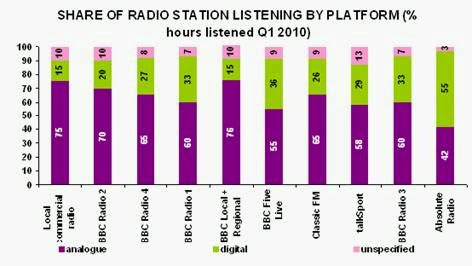
This statement is not merely an exaggeration, it is wholly untrue. The radio industry’s audience data (produced by RAJAR, published by Ofcom for Q1 2010) show that 27% of listening to Radio 4 is via all digital platforms, which include digital television, the internet … and DAB. See graph below.


In-car listening accounts for 19% of total radio usage, but this proportion is likely to be considerably higher during the morning commute period. Because DAB radios are installed in less than 1% of cars, it is probable that much, much less than 27% of listening to the ‘Today’ programme is via DAB.

Ford Ennals’ untruthful statement is only the latest in a long line of disinformation perpetuated by commercial forces that will gain financially from DAB take-up, and which are designed to mislead the public into buying DAB radios.

Yours

Grant Goddard

Trick or treat? £55m to be spent scaring UK consumers into buying DAB radios

The Daily Mail is the perfect medium to scare middle Britain into reaching for its credit card. So it was no surprise to read in Saturday’s edition that:

“Four out of five car radios are expected to become obsolete in less than five years, experts warn.”

Why? Well, according to the Daily Mail, because “the traditional FM and medium-wave signal is due to be switched off in 2015.” To back up this assertion, the Mail quoted Car magazine associate editor Tim Pollard:

“In four years’ time, 80 per cent of car stereos won’t work and many sat-navs will be unable to receive traffic data. If you’re buying a new car, you must tick the option specifying DAB now.”

Wrong. Wrong. Wrong. As the majority of the 83 Daily Mail readers who commented online about this article pointed out, the facts are:
· FM and AM radio are not going to be switched off
· 2015 has not been agreed as a date by anybody for anything
· FM and AM radios will not become “obsolete.”

So why are these untruths being distributed by Car magazine and the Daily Mail? Because they seem happy to regurgitate propaganda produced by commercial companies who, as a last resort, are reduced to scaring the public into buying DAB radios. UK car audio fitters, UK car radio manufacturers and UK audio retailers would all benefit financially from the public suddenly buying DAB radios en masse. Persuasion has failed as a tactic to grow DAB radio take-up over the last decade … so the strategy now is to scare them into putting their hands in their pockets.
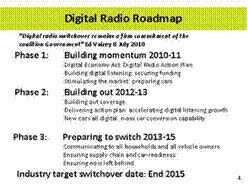
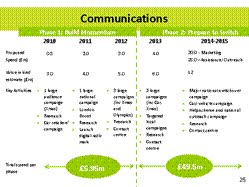
This strategy is all part of a DAB radio ‘roadmap’ developed by lobby group Digital Radio UK. Its ‘Phase 1’ activities for 2010/1 include “stimulating the market: preparing cars” or, in plain English, forcing DAB upon car owners through articles like the Daily Mail’s. Digital Radio UK revels in disinformation, consistently referring to ‘digital radio’ in its recent slide presentation to the Digital Radio Stakeholders Group, when its sole imperative is to push DAB radios.
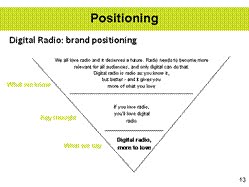
This Digital Radio UK presentation is full of stuff that reads like it was written on the back of an envelope in the pub one lunchtime. The industry has had almost two decades to come up with a powerful ‘brand positioning’ for DAB, yet the best that Digital Radio UK could create is:

· “WHAT WE KNOW. We all love radio and it deserves a future. Radio needs to become more relevant for all audiences, and only digital can do that. Digital radio is radio as you know it, but better – and it gives you more of what you love
· KEY THOUGHT. If you love radio, you’ll love digital radio
· WHAT WE SAY. Digital radio, more to love”

Expect to see these, er, important characteristics of DAB radio espoused in a £0.5m pre-Christmas marketing campaign that will tell consumers: “There’s a digital radio for everyone this Christmas.” Cynics will respond that this is because warehouses are brimming over with crates of unsold DAB radios. 2010 must have been a disastrous year for DAB receiver sales because the industry has kept the figures a closely guarded secret. Pure Digital, which accounts for the lion’s share of DAB receiver sales, said last week that its “revenues are now expected to show a decline compared with the first half of the previous financial year.” In 2009, total UK unit sales of DAB radios had already fallen year-on-year [see my earlier blog].
Between now and 2015, Digital Radio UK plans to spend £55m on campaigns to try and convince consumers once more that DAB radio is a ‘must have.’ At a time when budgets are being slashed in both commercial radio and BBC radio (which fund Digital Radio UK), you might think that somebody somewhere might ask if it is worth throwing more good money after bad. And what is the stated objective of all this effort? According to the final slide of the Digital Radio UK presentation:

“Our ‘destination’ is a healthier radio sector – and that’s good for everyone.”

A healthier radio sector? You must mean a more impoverished UK radio industry, it having already thrown £1bn into the DAB black hole. You must mean digital radio stations, none of which generate a profit because, in aggregate, they attract only 5% of radio listening. You must mean consumers who are being lied to that their FM/AM radios will no longer work in 2015. You must mean frustrated car owners (according to Roberts Radio, a 35-40% customer return rate for in-car DAB radio adapters).

How are these outcomes good for anyone other than the lobbyists and radio receiver manufacturers whose shirts will be saved if, and only if, the public complies by rushing out to buy lots of DAB radios?

[Should you remain unconvinced to buy a DAB radio in December, you can look forward to a January marketing campaign that will proclaim: “If you didn’t get a digital radio for Christmas, now’s the time.” This must be my favourite radio sales pitch of 2010.]

The Digital Radio Stakeholders Group: another 'faux consultation'

Did you hear about the inaugural Digital Radio Stakeholders Group meeting held on 1 November 2010 at the government’s DCMS [Department for Culture, Media & Sport] office? Probably not, unless you were one of the couple of dozen people who were in attendance. Otherwise, you were in the majority who were unaware of the event. There was no public pre-announcement of this meeting. Afterwards, there was only one article about it in the media trade press. Google returns ‘no results’ from an internet search for ‘Digital Radio Stakeholders Group’, even though this is the title writ across the top of the agenda circulated for the event.

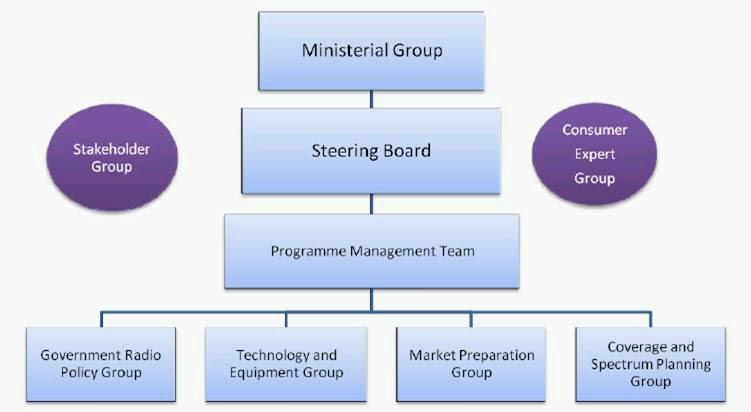
You have to look in the new government’s Digital Radio Action Plan, published in July 2010, to discover:

“The Government will chair a Stakeholder Group which will be open to a wide range on industry and related stakeholders. The principle purpose of this Group will be to inform external stakeholders of progress against the Action Plan and gather views on emerging findings. We expect that the Group will meet quarterly.”

The government’s project management plan anticipated that, by Q2 2010, it would be able to:

“secure commitment from the Government Digital Radio Group and the Stakeholders Groups to the Action Plan.” [Task 5.1]

This pre-determined outcome was justified on the grounds that:

“Successful implementation of the Digital Radio Switchover programme will only be achieved through close Government-Industry co-operation. […] This will include commissioning and delivery of reports, reviewing progress against key milestones and disseminating information to key stakeholders.”

So, essentially, the Digital Radio Stakeholders Group seems to be an almost non-existent forum that has only been convened to secure some kind of external ‘rubber stamp’ for the government’s proposals on DAB radio. It will allow the government, when challenged as to the democratic basis of its DAB radio policy, to assert confidently: “We convened a stakeholders group and it endorsed our proposals.”

This is cynical government at its worst. A ‘faux consultation’ that pretends to have asked a group of somebodies to endorse a government policy for which no mandate has ever been given by the electorate. It is similar to the manipulation practised by Ofcom in its radio policymaking (viz. Ofcom’s recent decision to permit Smooth Radio to dump its commitment to broadcast 45 hours per week of jazz music, after having acknowledged that 13 of the 15 responses submitted to its public consultation were opposed to this loss of jazz).

According to a government document, the Terms of Reference for the Digital Radio Stakeholders Group are as follows:

“Purpose
To enable a wide range of organisations to contribute to the process of delivering the Digital Radio Action Plan

Objectives
• To inform all stakeholders of progress with the Action Plan
• To seek the views of stakeholders on future progress of the Action Plan
• To provide an opportunity for all stakeholders to share news, views and concerns relevant to the Digital Radio Action Plan

Membership
Any organisation with a valid interest in the objectives of the Digital Radio Action Plan may be a member. Members will include consumer representative bodies, broadcasters, manufacturers, retailers, vehicle manufacturers, transmission network operators, content providers. The Group will be chaired by BIS in the first instance, though in principle the Chair could be any person acceptable to the majority of stakeholders and able to represent the collective views of the stakeholders to the Steering Board.

Mode of operation
The Digital Radio Stakeholders Group will meet quarterly.
The Chair will report the views of the stakeholders, as expressed through the meetings of the Stakeholders Group, to the Steering Board.”

So what happened at the first meeting? Very little, according to some of those who were present. It was a game of two halves. In the first half, the bureaucrats put their case. From the government, Jane Humphreys, head of digital broadcasting & content policy, BIS [Department for Business Innovation & Skills]; John Mottram, head of radio & media markets, DCMS; and Jonny Martin, digital radio programme director, BIS/DCMS. From Digital Radio UK, Ford Ennals, chief executive; Jane Ostler, communications director; and Laurence Harrison, technology & market development director. Then, in the second half, representatives from Age UK, the Consumer Expert Group, Voice of the Listener & Viewer and W4B raised issues on behalf of the consumer.

At the end of it, I guess the government-appointed chairman could return to her government office, tick the box on the government wall planner that says ‘stakeholder commitment’ and be pleased that this ‘rubber stamp’ had cost the taxpayer only an afternoon’s salary plus some tea and biscuits for the ‘stakeholders’. Well worth it!

More interesting than noting those who attended is identifying who was not there:
· No presentation by Ofcom, whose longstanding ‘Future of Radio’ policy has forced the DAB platform upon the public for almost the last decade
· Nobody from the largest commercial radio owners – Global Radio, Bauer Radio and Guardian Media Group – that have considerable investments in DAB multiplex licences

After the meeting, under the headline ‘RadioCentre quits digital radio meeting’, Campaign reported:

“RadioCentre, the commercial radio trade body, has walked out of discussions over the future of digital radio after the BBC licence-fee settlement did not commit BBC funds to roll out DAB radio. The body refused to attend a [Digital Radio Stakeholders] meeting on 1 November after the [BBC Licence Fee] settlement, published last week, included provision only for [BBC] national DAB [upgrade].” [I noted this development in a blog last month]

Whatever RadioCentre’s reason for non-attendance (and the story in Campaign has not been refuted), this kind of stance is a disgrace. Raising two fingers to the people you are supposed to be persuading of your DAB policy is not a clever PR strategy for the commercial radio industry. But I am not surprised. All the organisations pushing for DAB radio have increasingly adopted a ‘bunker’ mentality that precludes any direct contact with the public. What we appear to have now is:
· Ofcom refusing to engage in public discussion about its DAB ‘Future of Radio’ policy
· The government organising a Stakeholder Group to rubber stamp its unrealistic, dictatorial policy on DAB radio
· Digital Radio UK refusing to engage in public explanation of its DAB campaign work, as illustrated by its non-existent web site
· RadioCentre and its members now refusing to attend a meeting to explain just how/why DAB is still being pursued

At the same time, the public – the consumers, the 46,762,000 adults who spend 22.6 hours per week listening to radio – have been omitted altogether from these manoeuvrings that are still focused upon trying desperately to force them to purchase DAB radio receivers. The public had been omitted from the proposals at the very beginning of DAB more than a decade ago, which is precisely why it failed, and they are still being omitted today.

This is not the first time that government ‘stakeholder’ meetings about DAB radio have been organised simply to tick a box. As part of the previous government’s attempts to solve the DAB problem, in 2008 it convened a Digital Radio Working Group with two similar ‘stakeholder meetings’ held at DCMS. I attended and felt they existed purely for the bureaucrats to report back to their superiors that they had done something to ‘disseminate’ their policies. DCMS’ own write-up of the first meeting recounted bluntly:

“A stakeholders meeting was held on 10 March and offered opportunities for a wide range of views to be heard.”

A place where “views” were merely “heard”. The ineffectiveness of these earlier stakeholder meetings is demonstrated by re-visiting the agenda for the first of them. The issues tabled for discussion nearly three years ago (“How to make digital radio the predominant platform for listening to radio in the UK? What are the barriers to this? How can these barriers be overcome?”) still remained the same at this month’s meeting. Worse, none of the DAB technical problems identified then have been solved in the interim. And guess what? All trace of these 2008 meetings ever having happened has been erased from the DCMS website (in 2008, I had had to write to DCMS to get them to add the meeting details to their website).

The next meeting of the Digital Radio Stakeholders Group will be held on 3 February 2011 at DCMS/BSI, 1 Victoria Street, London SW1H 0ET. If you belong to any kind of community group or organisation (even if it is your neighbourhood watch) whose members are likely to be impacted by the government’s policy on digital radio switchover, I suggest you write to Jane Humphreys (e-mail to [first name][dot][second name]@bis.gsi.gov.uk) and ask for an invitation to this next meeting.

‘Stakeholder’ radio listeners should turn up to the February meeting and shout: “I’m mad as hell and I’m not going to take this any more!” … or maybe the DAB plug will already have been pulled by then.

BBC head of radio: DAB not "a clear enough offer to listeners"

The Tony Livesey Show, BBC Radio 5 Live, 28 October 2010 [excerpt]
Stephen Nolan, interviewer (presenter, BBC Radio Ulster) [SN]
Tim Davie, Director, BBC Audio & Music [TD]


SN: There are big problems with the digital spectrum, aren’t there, because we cannot seem to hit any target that we are given for people switching to digital?

TD: I don’t think we’ve had many targets … Let’s be honest, I don’t think we’ve had many targets in the past. Digital stations are doing well. Digital listening – we’ve got to be careful – includes online, which is doing pretty well, there’s more we can do. Then also you’ve got DAB. Now DAB, you’re right, it’s been marginally growing for a while …

SN: Why?

TD: I just don’t think it’s been a clear enough offer, in my language, to listeners. I mean, people love radio. They are very happy with their FM radio. Why on earth would you change? And I think the radio industry has to say: ‘the reason you will change is – here’s a load of content’. And there’s clues like 6 Music, or other …. you know, that people love. And here’s a load of stuff that people love, and here’s a better … this device does something better than the other one.

SN: Or, Tim, it’s for the BBC to take a huge risk, and a controversial risk at that, and to withdraw mainstream programming from the FM spectrum and put it onto DAB. Imagine how the numbers would soar if it had [BBC Radio 1 breakfast DJ Chris] Moyles or …

TD: [interrupts] Imagine my inbox!

SN: Exactly, exactly. It’s a serious point.

TD: Sure.

SN: Imagine if you had Moyles or [BBC Radio 2 breakfast DJ Chris] Evans exclusively on DAB, or a massive programme.

TD: Right! And … we could do that. The issue would be that, with current coverage levels and with the amount of devices – particularly in Northern Ireland – I would basically be saying that you can’t listen to it in your kitchen, and everyone pays the Licence Fee. So I think the strategy for digital, where we are taking things away, is not going to work. My approach would very much be that I do want you to feel a bit of pain for not having a digital radio, but that pain is not about not getting The Archers, or not getting Chris Moyles. It’s about: ‘you could get a bit more over here’, or ‘there’s a bit of [Radio] 4 Extra over here that you could really do with’, and that’s what television did with some of those channels.

SN: Do you think, in terms of the internet, that radio is going to fundamentally change?

TD: I think there will be a lot more on-demand, obviously, so people will expect to be able to call up a programme and …

SN: I’m talking about the [UK] Radioplayer, obviously, which people are describing as the new YouView for radio.

TD: Well, er, yeah. Basically, the Radioplayer is … we’ve got the whole industry together. Only about 3% of listening is online and I can’t understand that, as head of radio. I know I’m biased but, at the end of the day, when I’m shopping and doing my Tesco shop or wherever online, why aren’t I listening to the radio? [to SN] Well, you would relate to this because it means more listeners. I think that one of the things is that I think it’s a bit confusing. You’ve got the BBC on the iPlayer, which is pretty good, and we’ve got other bits and … So we’ve put it all together and there will be a thing called the Radioplayer. Now, it gets a bit complex, but I think the YouView thing that you refer to is when you’ve got an internet connection to your television. Now, when you click your television on, I want one Radioplayer icon where you can go in and listen to all the radio. Now, the …

SN: On the TV?

TD: Yeah. On any screen – sorry to sound ‘new age’ – any screen anywhere, whether it’s a … whatever the size of it, you can go and get all your radio services. We don’t currently have that.

DAB radio usage: going nowhere slowly

Sometimes it seems as if the UK radio industry operates in two parallel universes. On the one hand, there is the virtual world of the DAB radio lobbyists, a reality that only seems to exist within the confines of their Soho office and its funders. On the other hand, there is the real world of the 47 million people in the UK who listen to the industry’s radio stations each week, spread far and wide across this green and still largely analogue land.

It was only last week that Ford Ennals, chief executive of Digital Radio UK, was telling anybody who would listen that:

· “There is now real momentum in the transition to digital radio…”
· “… significant progress towards building momentum for digital radio…”
· Digital radio switchover is a “matter of when, not if”
· “We have set a course to double listening and expand coverage by 2013, and to switchover by the end of 2015”
· “We do believe it is possible to get there in the four- to five-year time period…”

Yet, today, RAJAR published the latest listening figures for UK radio. None of Ennals’ statements are in any way supported by the official radio listening data. “Momentum”? No. “Real momentum”? No. “To double [digital] listening by 2013”? You have to be joking.


The headlines for all radio listening via platforms in Q3 2010 were:
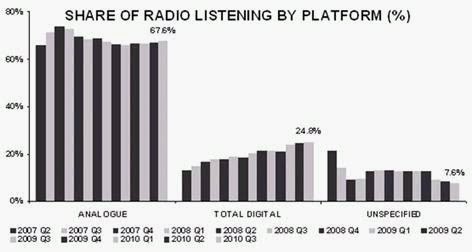
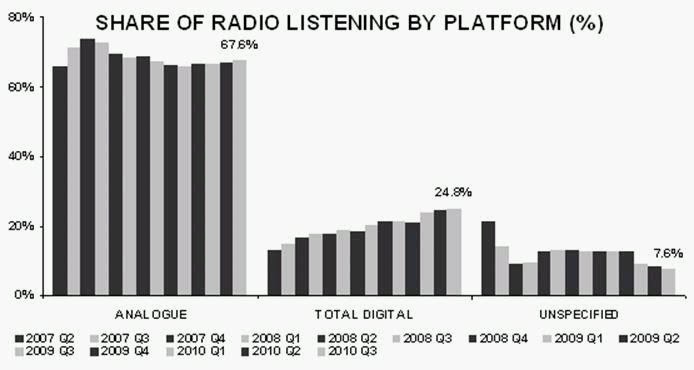
· Analogue radio’s share of listening up from 67.0% to 67.6% quarter-on quarter
· Digital radio’s share of listening up from 24.6% to 24.8% quarter-on-quarter
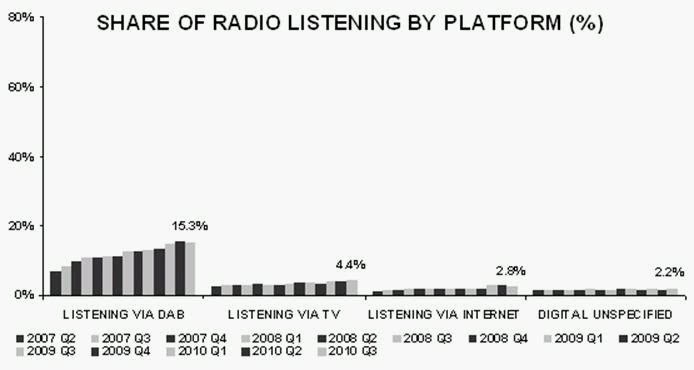
· DAB radio’s share of listening down from 15.8% to 15.3% quarter-on-quarter.


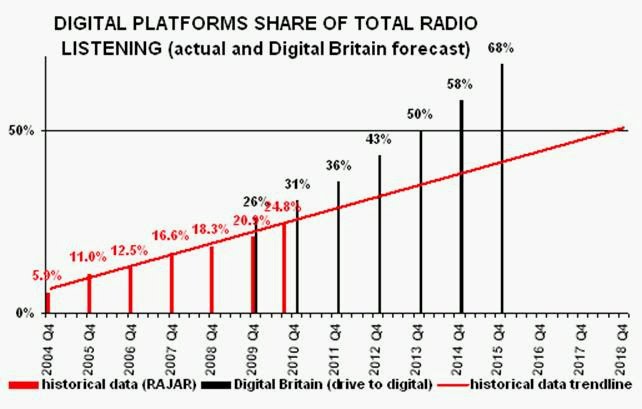
At its current long-term growth rate, the government criterion of 50% of radio listening via digital platforms would not be achieved until year-end 2018. The statistical probability of that 50% threshold being reached by 2013, the achievement of which Ennals is supremely confident, is zero. Even Derren Brown could not pull off that stunt.


And so these two radio worlds continue on their parallel paths. Digital Radio UK continues to insist that everything in the digital radio switchover garden is sweetness and light, whilst wilfully oblivious to the fact that the majority of radio listeners simply could not care less about DAB – even after more than a decade of being told by the government, Ofcom and the largest broadcasters that DAB is ‘the future of radio’.

The verdict of UK radio listeners on DAB seems perfectly transparent in the RAJAR data, though many in the radio industry still refuse to listen. On the other hand, the activities of Digital Radio UK, still trying to persuade us of DAB’s virtues, are anything but transparent. After 10 months of existence, its web site remains empty. And the web site of its forerunner, the Digital Radio Development Bureau, has been conveniently deleted so that all the empty promises, inaccurate forecasts and ridiculous propaganda that were generated about DAB over the last eight years are no longer publicly available.

Those with experience in the radio industry understand perfectly what happens to radio stations that refuse to listen to their listeners, radio stations that refuse to engage in truthful dialogue with their audience, and radio stations that are still broadcasting exactly the same tired messages as they did a decade ago. They die … and nobody misses them when they are gone.

Lies, damned lies and … Ofcom’s first digital radio progress report

Ofcom quietly published its first Digital Radio Progress Report in July 2010, without fanfare or a press release. This report has been a remarkably long time coming, given that DAB radio has been with us more than a decade. During that time, Ofcom has published 26 Digital Television Progress Reports, starting in 2003.

Here was an opportunity for Ofcom to demonstrate that it is acting in the public interest by publishing solid, objective data about the progress of digital radio in the UK. Did it take that opportunity? No. Instead, Ofcom published a set of data that are so selective and so distorted that they misrepresent the progress (or lack of it) made to date in advancing the UK towards the ‘digital radio switchover’ that our government is determined to execute. Why? Because Ofcom (like the government’s DCMS department) seems determined to persuade us that its totally unrealistic plan for DAB radio has not been an unmitigated disaster with the citizen/consumers on whose behalf it is supposed to be working.

It might appear pedantic to pick over the details of data represented in this feeble 24-page Ofcom report. However, it must be stressed that this is no nitpicking exercise. The Digital Economy Act 2010 insists that this very document submitted by Ofcom (and another by the BBC) to the government will decide whether the UK will progress to ‘digital radio switchover’. It is these data that will decide whether we can continue to receive BBC network radio stations on the 100 million analogue radios that are out there. It is these data that could mean we have to replace perfectly satisfactory analogue radio receivers in every household across the country, at a cost of millions to consumers.

To note the issues in the order they appear in the Ofcom report:

FIGURE 1
This Ofcom graph purports to show that:
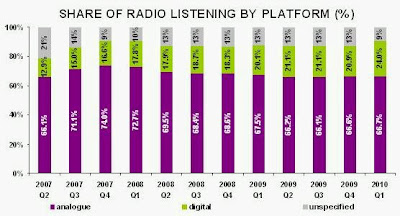
• Digital platforms’ share of radio listening increased from 12.8% to 24.0% between 2007 and 2010 (this is TRUE)
• Analogue platforms’ share of listening decreased from 87.2% to 76.0% between 2007 and 2010 (this is FALSE)

The four figures cited in Figure 1 for the analogue platform – 87.2% in 2007, 82.2% in 2008, 79.9% in 2009 and 76.0% in 2010 – are an Ofcom invention. These false data seek to demonstrate that a rapid decline in analogue listening has taken place. This is not true. As the graph below shows, analogue listening has remained remarkably static over this timeframe.


The situation is complicated by two facts: a significant proportion of radio listening remains ‘unspecified’ by respondents in RAJAR listening surveys, and that this proportion has varied greatly in size in different surveys. However, this does not detract from the falsehood of Ofcom’s attempt to demonstrate that analogue listening is in sharp decline.

FIGURE 2
This Ofcom graph purports to show that:
• 54% of 15-24 year olds use digital radio
• 57% of 25-34 year olds use digital radio
• 56% of 55-64 year olds use digital radio
• 46% of 65-74 year olds use digital radio
• 29% of 75+ year olds use digital radio.

In fact, the fine print explains that Ofcom had asked the question ‘Have you ever used digital radio?’ This ensured that the results were almost meaningless because they tell us nothing whatsoever about current usage of digital radio. For example, a 68-year old who, on a single occasion ten years ago, had listened to digital radio for 10 minutes will have answered ‘yes’, despite having made no further usage during the last decade.

Ofcom’s objective here seems to have been to highlight the large size of the resulting numbers, without indicating that they derive from an almost useless question (garbage in, garbage out). If you were to ask people ‘Have you ever bought a banana?’, almost 100% would respond ‘yes’. Their answers tell you absolutely nothing about the current market for bananas. Exactly the same is true of digital radio usage. In this context, the resulting numbers seem remarkably low because only half the population has ever tried digital radio (even once in their lifetime).

FIGURE 3
This Ofcom graph purports to show that:
• 53% of adults use digital radio
• 63% of adults in socio-economic groups AB use digital radio
• 55% of adults in socio-economic group C1 use digital radio
• 48% of adults in socio-economic group C2 use digital radio
• 42% of adults in socio-economic groups DE use digital radio.

Just as in Figure 2, the fine print explains that Ofcom had asked the question ‘Have you ever used digital radio? The same issues apply here as with Figure 2.

FIGURE 5
This Ofcom graph shows digital platforms’ share of total radio listening, but the data omit:
• A comparison with the analogue platform
• A time sequence to show how fast the market is changing.

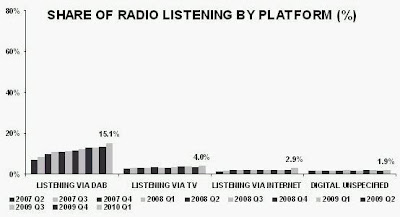
The following graph demonstrates the slow growth of digital platforms and their low level in comparison with analogue. It also demonstrates that a proportion of the growth in digital platform usage is the result of a statistical technicality caused by a reduction of ‘unspecified’ listening in recent quarters.

The following graph demonstrates the slow growth of individual digital platforms since 2007, using the same scale as applied in the preceding graph.

FIGURE 8
This Ofcom graph purports to show that:
“five digital-only services generated a weekly reach of 1 million+ listeners in Q1 2010.”

However, the fine print explains that the Ofcom data refer to “all listeners [aged] 4+”, whereas the radio industry’s standard metric is and always has been ‘adults 15+’. Indeed, all RAJAR audience data used in this same Ofcom report refer to ‘adults 15+’, except for Figure 8.

Once the graph is re-worked using ’15+’ instead of ‘4+’ data (see above), it is evident that:
• Only three digital-only radio stations generate a weekly reach of 1m+ adult listeners
• BBC World Service was included in the Ofcom graph (and was one of the five stations cited as exceeding 1m weekly reach) even though it is not digital-only, being available across a large part of the UK on 648AM
• BBC Asian Network was omitted from the Ofcom graph (also available on analogue but limited to the Midlands)
• Not only are Panjab Radio and NME Radio no longer available on the national DAB platform (as the Ofcom text notes), but Q Radio is no longer on DAB, and the BBC has proposed the closure of Asian Network
• These weekly reach data for digital-only stations should be considered in the context of analogue radio stations – for example, BBC Radio 2 has a weekly adult reach of 14.6m.

FIGURE 9
This Ofcom graph purports to show that:
• Digital radio’s current share of listening is “broadly in line with the organic growth outlined on the [government’s] forecast chart.”

Bizarrely, the Ofcom graph displays the government forecasts but has omitted the historical data that would show how successfully the forecast has been achieved to date.

The forecast published in June 2009 predicted that, by year-end 2009 (a mere six months later), digital platforms would account for 24% or 26%, the latter the result of a concerted ‘drive to digital.’ In fact, the year-end figure was 21%. The likely reason that Ofcom has failed to include the historical data is that neither of the two forecasts (‘organic growth’ or the ‘drive to digital’) has any chance of being realised. If the current growth rate is extrapolated, the 50% criterion will be reached by year-end 2018, and certainly not by either 2013 or 2015, as the forecast (credited to Value Partners) predicted.

FIGURE 14
This Ofcom graph and accompanying text assert that:
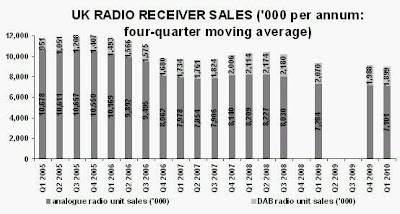
• “DAB sets made up over a fifth (21%) of all radio sales by volume” in the year to Q1 2010
• “In the portable market, DAB sets accounted for 65% of sales.”

However, Ofcom omitted to point out that:
• Fewer DAB radios had been sold in 2009 than in 2008
• DAB radios were a lower proportion of total radios sold in 2009 than in 2008
• Its reference to “the portable market” is limited strictly to ‘portable radios’ of the type used in kitchens. There is not a single mobile phone on sale in the UK that includes DAB radio, and the vast majority of portable media players that include radio do not have DAB radio.

In fact, the data in the graph above demonstrate that:
• DAB radio receiver sales volumes peaked in 2007/8 at 2.2m per annum and have declined 13% since then to 1.9m per annum
• Analogue radios contributed a greater proportion of total radio receiver sales in 2009 (79%) than they had in 2008 (78%)
• DAB has not invigorated the market for radios, with fewer radios sold now than ever, perhaps due to evident consumer confusion about ‘digital radio switchover’.

FIGURE 17
The Ofcom graph shows that:
• 17% of adults say they are likely to buy a DAB radio in the next 12 months.

However, the Ofcom graph does not offer a historical perspective. The graph above demonstrates that the propensity to purchase a DAB radio has diminished over time. In 2006, 17% of respondents said they would be likely to buy a DAB radio within the next six months. In 2010, 17% said they would be likely to buy a DAB radio within the next 12 months. This would translate into a significant reduction in DAB radio receiver sales. Additionally, the proportion of respondents who say they do not know if they will purchase a DAB radio continues to increase over time, perhaps a further symptom of market confusion or DAB indifference.
————
Given that Ofcom has had the luxury of several years to prepare this first Digital Radio Progress Report, the result is a travesty. It should not be the regulator’s role to selectively highlight and distort data that support its own policies in a document specifically requested by government in order to inform a parliamentary decision on digital radio switchover. We deserve better from our public servants. Otherwise, they might as well go and work for Digital Radio UK, the lobby group (funded by commercial interests and the BBC) busy pumping out propaganda to try and persuade consumers that they need DAB radio.

On page 5 of this first Digital Radio Progress Report, Ofcom notes:

“Our principal general duty, when carrying out our radio functions, is … to further the interests of citizens in relation to communications matters.”

Exactly how are citizens’ interests being furthered by Ofcom distorting the facts about digital radio take-up?

The DAB radio scrappage scheme – much too little, much too late

The BBC started DAB radio transmissions in the UK twenty years ago and then, ten years later, DAB was implemented commercially. During all that time, DAB radio has failed to ignite the interest of most British consumers. Neither has this European technology been successfully exported to all corners of the globe, as had been anticipated. Countries where DAB is working commercially can be counted on one hand. The end result – warehouses full of unsold DAB radios, billions of pounds of investment unlikely to ever show a return, apathetic consumers and potentially disgruntled venture capitalists.

The one-month DAB ‘scrappage’ scheme announced this week smacks of desperation. In 2009, fewer DAB radio receivers were sold than in 2007. Consumers have voted with their wallets and remain unconvinced. This downward sales trend started before the credit crunch but no action has been taken to stop it. The window of opportunity for DAB radio mass market take-up would seem to have come and gone.

During the first decade of DAB, a scrappage scheme would have been unthinkable. All parties involved in launching DAB were too busy rubbing their hands at the very anticipation of the profits that would be coming their way. High-priced DAB receivers, monopoly control of DAB airwaves and cheap, DJ-free jukebox digital radio stations. You could almost see the pound signs in the eyes of DAB stakeholders.

How times have changed. The DAB radio industry is now a salvage operation. It is a passé technology and the current objective is simply to shift as many of those brick-shaped DAB radios out of storage warehouses as possible, almost at any price. The present period before DAB is finally pronounced DOA is time limited. After that, DAB radios will become the Tamagotchi of the broadcast sector.

The most damning part of all this is the boldness with which the radio industry is still prepared to foist a technology on the public that, in many listening situations, is so technically inadequate. Instead of fixing the problems with DAB reception (which would cost a fortune), the industry just persists in maintaining its stance that DAB radio is fine. But trying to dupe your customers (particularly when radio is the most ‘trusted’ medium, according to Ofcom) must be counterproductive. Crime doesn’t pay if your business model requires loyal listeners.

Just as damning is the industry’s refusal to accept that it is ‘content’ that drives radio listening. Why would anyone buy a relatively expensive DAB radio when it offers so little content over and above what can already be accessed via AM/FM, digital TV, mobile phones and the internet? Commercial radio’s closure of most of its digital stations, followed this year by BBC proposals to axe two of its digital stations, hardly inspire consumer confidence in DAB.

Complicit in this is the radio industry’s willingness to endorse DAB radio set manufacturers’ increasingly desperate measures to shift their products. Pure, the biggest UK brand of DAB radio receivers, is circulating a booklet for consumers to pick up in-store that purportedly “dispels digital radio switchover myths”. Rather than itemise all of the booklet’s assertions that are either untrue (“AM services will either move to FM or to digital only”) or which distort the truth (“Digital radio … crystal-clear, interference-free listening”), I suggest you read it yourself here.

On the one hand, it will make you laugh with incredulity. On the other hand, if you love the radio medium, it will make you cry. Sorry, but when exactly was it that snake oil salesmen took over this industry?