FRANCE: government report recommends 2-3 year "moratorium" before launch of digital radio

A new report on the introduction of digital terrestrial radio (‘DAB radio’ in the UK) in France has recommended to the government that the launch should be delayed by two to three years. In the interim, the French media regulator CSA would be asked to establish a project to investigate the “overseas experiences” of digital radio, according to the government press release.

David Kessler, former head of state radio station France Culture, was commissioned in June 2010 by the government to produce a strategic analysis of the launch of digital radio in France. His interim report, published in November 2010 [see blog], identified the “paradox of DAB radio – it is a sufficiently attractive technology to be launched successfully, but it is insufficiently attractive to successfully allow FM broadcasts to cease.”
In the final report, published this week, Kessler said that not all the conditions had been met from an economic standpoint to permit the widespread launch of digital terrestrial radio. His report identified the significantly different challenges between digital radio switchover and digital television switchover:

“An error in logic has probably contributed greatly to making the debate [about digital radio] opaque rather than transparent. The error came from having planned digital radio switchover with reference to digital television switchover, which started in 2005 and the success of which has been staggering and immediate, so that the changeover from analogue to digital TV will be completed throughout the land by 2012. Many parties imagined that the route to digital opened up by television would be followed by radio. But this plan was wrong for three reasons.

Firstly, the television market was dominated in 2005 by five channels (TF1, France 2, France 3, France 5/Arte and M6) that attracted 75% of television viewing. The transition to a score of free channels was obviously very attractive. However, as will be discussed later, the situation in radio is quite different – the current choice of stations is one of the richest that exists in the world, after the landscape opened up in the 80s. Even if the choice is not the same in every region, none of them – some near – are in a situation where only five major stations dominate the choice.

Second is the difference in receivers. Even if digital radio switchover had been launched simultaneously with that of television, where the evolution of televisions (flat screen, HD and now 3D) resulted in a faster replacement of equipment than anticipated, digital television was accessible without changing the set through the purchase of a single adaptor at a moderate price. Digital radio switchover requires the replacement of all receivers, and households have multiple radios and the market is sluggish. Without doubt, digital radio switchover could re-invigorate the market with a simple, inexpensive high-end (with screen) radio. At this point, no one can say how quickly take-up of replacement receivers will happen. Examples overseas – particularly Britain – demonstrate a relatively slow rate of replacement, and the different situation in countries where take-up is faster – Korea, Australia – make comparisons difficult.

The third reason is that the history of television demonstrates that it works through ‘exclusive changes’ where one technology replaces another quickly. Colour television pushed out black and white television. Digital television is about to push out analogue television. But experience shows that far from all media work this way. On the contrary, some go through ‘cumulative change’. Over a short or long period of time, different technologies co-exist and content is distributed through several technologies. As Robert Darnton noted about the book, we often forget that the printed word has long co-existed with the manuscript. From this perspective, the history of radio is the opposite of television: different transmission systems are cumulative rather than exclusive. This does not exclude the possibility that, in the long run, some transmission systems will decline and no longer be used, just as printing marginalised the manuscript. But what it means is that one cannot plan the launch of digital radio by imagining that all other transmission systems will be switched off, particularly FM. Even today, despite the success of FM, Long Wave and Medium Wave transmissions are still used because they reach a sufficient number of listeners not be switched off by broadcasters.

In fact, a careful examination of the launch of digital radio in other European countries shows that a ‘cumulative change’ scenario exists that we must anticipate in France too. Indeed, the launch of digital radio in other European countries had been presented as a quick substitute for analogue radio, even though the existing choice of analogue stations was less than in France, and the choice of digital stations seemed more attractive and content-rich than offered by analogue. Even if a proportion of listeners are quickly adopting digital radio, a greater proportion are still sticking with their traditional radios, with the possible exception of Norway, where analogue switch-off seems to be seriously considered at present. This leads to a situation in which the government initially adopts a goal of analogue switch-off but then, given the impossibility of switch-off, drops or postpones the switch-off date by several years. As the choice of existing radio stations is particularly substantial in France, it would appear that this situation is most likely to be repeated if digital radio were to be launched. Radio station owners are not mistaken. Very few want a quick switch-off of FM, and some do not want any switch-off.”

These points echo evidence on digital radio switchover in the UK that I had presented to the House of Lords Select Committee on Communications in January 2010:

“With television, there existed consumer dissatisfaction with the limited choice of content available from the four or five available analogue terrestrial channels. This was evidenced by consumer willingness to pay subscriptions for exclusive content delivered by satellite. Consumer choice has been extended greatly by the Freeview digital terrestrial channels, many of which are available free, and the required hardware is low-cost.

Ofcom research demonstrates that there is little dissatisfaction with the choice of radio content available from analogue terrestrial channels, and there is no evidence of consumer willingness to pay for exclusive radio content. Consequently, the radio industry has proven unable to offer content on DAB of sufficient appeal to persuade consumers to purchase relatively high-cost DAB hardware in anywhere near as substantial numbers as they have purchased Freeview digital television boxes.”

The Kessler document should offer significant food for thought to the British government for its unworkable plans for DAB radio switchover. Whereas Kessler correctly identified that TV and radio digital switchover are two very different undertakings, our public servants working on digital radio policy in the government and in Ofcom have long failed to understand these differences. The appointment of Ford Ennals as chief executive of Digital Radio UK in 2009, on the back of his work between 2005 and 2008 managing digital television switchover, should have been viewed as barely relevant experience to achieve successful digital radio switchover.
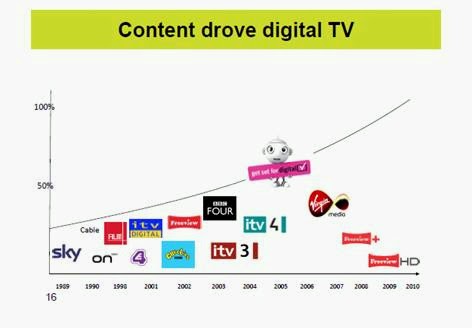
Have any of the people managing digital radio switchover for the UK ever actually worked in the radio industry? At DCMS? No. At Ofcom? No. At Digital Radio UK? No. If, like Kessler, they had radio sector experience, they would realise that all their speeches and presentations that repeatedly cite digital TV switchover as the precedent for radio are completely off-target.

Is there any wonder that failure of DAB public policy was inevitable?
French Culture Minister: launch of digital radio not “a priority”

On 29 March 2010, the French Minister of Culture & Communications, Frederic Mitterand, spoke at the monthly luncheon of the Association of Media & Communications Journalists. He was asked about the much delayed launch of digital terrestrial radio in France and replied:

“I note that the cost of the [digital radio] project is significant, that a number of the radio licensees are not at all favourable towards the project, and that it is the CSA [media regulator] that for the moment is escalating the issue. The CSA itself should still submit a report on the [digital radio] issue with recommendations, although I know roughly what will be in such a report. I have the greatest respect for the CSA, and I have the greatest feelings of respect for [CSA president] Michel Boyon, but we are not exactly on the same wavelength.”

“Without organising a funeral with great pomp and ceremony, which would presume a death, I think that everything will inevitably be digital one day. And then radio will be too. Put simply, in today’s economic conditions, in the general context of radio, and with the lack of consensus around this [digital radio] issue, I do not think its resolution is a priority and the launch of digital radio will not happen this year.”

The video is available here.

FRANCE: Digital radio “is not progressing one inch”

A meeting of radio sector stakeholders on Monday 15 March 2010 at France’s media regulator, the CSA, failed to progress the plan to launch digital terrestrial radio this year. According to Le Point, the commercial broadcasters – RTL, Europe 1, NRJ and RMC – demanded a moratorium. State broadcaster Radio France is one of the few continuing to support the CSA’s plan to launch digital radio, delayed from 2009 to mid-2010, using the T-DMB transmission standard.

A member of the Bureau de la Radio trade organisation commented: “There is no economic model [for digital radio]. The choice of the [T-DMB] broadcast standard adopted in Bercy is very expensive. The upside for listeners is not sufficient for us to fund a third broadcast platform to add to the existing Long Wave and FM [platforms]. … We are disappointed because this meeting has not enabled anything to progress. What happens next?”

According to Le Point, the regulator has responded only with “radio silence”. Its headline read: “Digital terrestrial radio is not progressing one inch.”

FRANCE: “2010 will be the last chance” to launch digital radio

2010 will be the last chance for digital terrestrial radio” to launch in France, said Alain Mear, vice chairman of the CSA [media regulator] digital radio working group. “If digital radio does not start in 2010, there will be no digital radio.” He was speaking at a roundtable meeting held 15 January at the Senate to discuss the future of radio, according to RadioActu. Mear argued that the government needed to set a deadline for the ending of radio broadcasting on FM and AM. “This is the moment of truth”, he said.

However, the view of some radio groups represented at the meeting was that radio in future would be delivered to listeners via a mix of platforms. Concern was also expressed about the financial cost of launching a new digital broadcast platform. Michel Cacouault, representing the commercial radio trade body Bureau de la Radio, predicted that there could be “no development without an economic assessment”. He stressed that the sector’s declining advertising revenues in 2009, resulting from the global economic crisis, had required “all the big groups to face re-organisation and downsizing.”

Arnaud Decker, director of corporate relations at media group Lagardere Active, said that “the authorities must ask themselves how the competitiveness of the national music radio networks can be maintained” when the launch of digital radio would increase broadcasters’ costs.

Jacques Donat-Bouillud, director of radio at transmission provider TDF, said that the cost of providing digital terrestrial radio to a population of 40m would be around 500m Euros per annum. For a single station requiring national coverage in France, he said that digital transmission would cost 3m Euros per annum, compared to 6m Euros per annum for FM transmission.

Pierre Bellanger, CEO of commercial station Skyrock, pointed out that “60% of mobile handsets are internet enabled” and cautioned that “there is no single correct answer to the question about the future of radio. The solution is a hybrid and, ultimately, the listener will be the winner.”

Bruno Patino, director of state radio station France Culture, agreed: “[State] Radio France must participate in the digitalisation of broadcasting. Digital radio delivered by IP will be there, but that will not kill the broadcast platform.”

FRANCE: de-localising RFM and Virgin Radio

Like the UK, commercial radio in France is delivered both nationally and locally. Category ‘C’ stations have local studios, employ local staff and are permitted by the regulator to sell local advertising and use a national brand name, as long as they produce a minimum of 3 hours per day of local programmes. Category ‘D’ stations are broadcast nationally from one central studio, have no local offices and are only allowed by the regulator to sell national advertising.

Now it seems as if some of the local radio operations of European media conglomerate Lagardere, branded RFM and Virgin Radio in France, might have to be closed. “We are in the process of looking at some of them,” said Lagardere Active chairman Didier Quillot. The objective, he told Le Monde, is to know “whether they are all profitable”. The newspaper commented: “the future looks bleak for those that are not.”

Monday 14 December 2009 was a busy day for Lagardere. In the morning, it made a detailed presentation to the CSA, France’s media regulator, about “the economic and financial situation” of its RFM and Virgin Radio local operations. In the afternoon, it repeated the presentation to the IRTS public body, trade unions and staff representatives of the two networks.

RFM is presently available from 192 transmitters across France, of which 55 are local Category ‘C’ stations. Virgin Radio is available from 228 transmitters, of which 146 are local Category ‘C’ stations. Each of the local stations employs at least one journalist and one producer (as required by the regulator) plus advertising sales staff. Lagardere insists that, for the moment, “no decision has been taken and no request has been filed with the regulator”.

A few weeks ago, the programme director of RFM and Virgin Radio, Jean Isnard, produced a study on the future of local radio. Its conclusion was that it would be more profitable to close down some local stations and centralise them in Paris. Such closures, converting Category ‘C’ to Category ‘D’ stations, are unlikely to be implemented until February or March 2010, once the regulator has approved. Lagardere has referred to this strategy as “drastic economic measures” although it has reiterated its “determination to maintain a significant local presence”.

One insider told Le Monde: “For Didier Quillot and Alexandre Bompard, CEO of Europe 1, the crisis impacting the radio sector is not cyclical but structural.” Lagardere is also trying to sell its Paris sports news station, Europe 1 Sport, which is losing 1.2m Euros per annum. It had acquired the station two years ago, intending to transform it into a national station on T-DMB digital radio. However, as Le Monde commented: it is “too expensive, too late!”

The journalist union, SNJ, has denounced Lagardere’s proposed re-structuring of RFM and Virgin Radio “in the strongest terms”. It suspects that 25 local offices would be closed and 40 jobs are threatened. It accused Lagardere of using the economic crisis and competition from new media as pretexts for a purge of local journalists.

Meanwhile, competing national radio station RTL (owned by Bertelsmann) has seen advertising revenues fall 10% year-on-year, despite being ranked #1 station in France for the last three years. On Thursday 17 December 2009, management requested 30 voluntary redundancies from the station’s 300 staff. Chief executive Christopher Baldelii told Le Figaro: “Being market leader is good, but we must not rest on our laurels. RTL has to be modernised to increase its competitiveness”. The objective is to save 20m Euros over the next three years.

FRANCE: Digital radio postponed until at least year-end 2010

After a period of uncertainty about a timetable for the launch of digital terrestrial radio in France, the regulator has finally admitted that the first transmissions, which had been scheduled to take place this month, will be postponed until at least year-end 2010.

During an online chat yesterday, Michel Boyon, president of the CSA [France’s media regulator], said: “While everyone recognises the need to act quickly, despite the current economic challenges, it will be year-end 2010.” He argued that “if radio does not go digital, It will slowly decline” and noted that “internet radio is very good, but it is totally inadequate to meet the demands of listeners.”

Nevertheless, the French press seems unconvinced that digital radio will ever happen.

Digital radio silence is delayed!” said the headline in trade magazine SatMag, which commented: “After having been delayed for years in favour of digital television, digital radio is taking too long and is being overtaken by other technologies.”

Too expensive, digital radio postponed indefinitely,” said the headline of Agence France-Presse the day before Boyon’s announcement. It added: “The latest figures from Mediametrie confirm the change in radio listening habits: almost 50% of listening takes place on the move, and a quarter of the population has already listened to radio via the internet. During the last year, the numbers listening to radio via mobile phones has increased by 50%.”

Has the internet killed the digital radio proposal?” asked the headline in rue89. Francoise Benhamou, professor of economics at the University of Paris 13, commented: “Consider that a cost of 600m to 1bn Euros [to implement digital terrestrial radio] over ten years is viable only if [radio] advertising revenues increase by 20 to 25%. Such a forecast would be very risky given the uncertain economic background and the competition from the internet for advertising revenues.” She added: “Many of us already receive radio broadcasts, live and on-demand covering a wide range of content, as well as associated interactive services, by connecting via broadband. Do we really have a need for digital terrestrial radio?”

Professor Benhamou concluded: “This situation does not please everyone, particularly the CSA [media regulator] who saw [digital radio] as an opportunity to extend their domain …”

It sounds all too familiar to us in the UK.

FRANCE: digital radio “already dead”?

“Digital terrestrial radio: already dead?” enquired the headline of a French news web site early on Thursday morning 26 November 2009. It proved to be prophetic.

Only hours later, a press release was published by the Bureau de la Radio (a radio trade group comprising the largest commercial radio owners) which effectively hammered another nail into the digital radio coffin in France. It stated: “As it stands, the Bureau de la Radio estimates that the cost of the [digital radio] project is not compatible with the economics of the radio medium and does not allow plans for the launch of digital radio to proceed under positive conditions”.

On Monday 23 November, more than 70 stakeholders from the radio sector had met at the offices of the CSA [France’s media regulator] to discuss digital radio. Afterwards, the CSA had issued a press statement which claimed that, during the meeting, all those present had endorsed the launch of digital terrestrial radio in France. The meeting had decided to establish four working groups to examine: resource planning, the rollout timetable, transmission signals and data content. A further meeting was planned for February 2010.

However, the Bureau de la Radio has now stated its “regret that the question of the [digital radio] economic model is not being addressed centrally” and has called on the CSA to pursue more detailed work on this issue with stakeholders.

Reflecting the seriousness of this announcment, Agence France-Presse headlined its news story “Digital Radio: commercial radio opposes the launch of digital terrestrial radio”.

There are some interesting parallels between developments in France and the situation in the UK, even though we are already ten years further down the digital terrestrial radio road. Just as in France, the UK government (through its DCMS department) and media regulator (Ofcom) have both been insistent that digital terrestrial radio must replace FM/AM radio broadcasting, without seeming to pay sufficient attention to the pre-requisite for an economic model to make it work.

In the UK:
• industry data points to minimal consumer demand for DAB, which I documented two months ago in this blog entry
• industry data points to minimal revenues from digital commercial radio stations, which I documented three months ago in this blog entry
• industry data suggests that the faster the take-up of DAB radio is accelerated, the faster commercial radio will lose more listening share to the BBC, which I documented recently in this blog entry
• the development of DAB has already proven disastrous for the financial health of the UK commercial radio industry.

After ten years of DAB radio development in the UK, precisely the same question needs to be answered here as is being asked in France this week:

Why has nobody published a realistic economic model for digital terrestrial radio which demonstrates convincingly that it is financially worthwhile?

Perhaps because one does not exist?

FRANCE: digital radio rollout hangs in the balance

The much delayed report on digital radio commissioned by the French government from Marc Tessier, former CEO of France Televisions, was published on Monday 9 November 2009. It suggested that the planned launch of France’s first digital radio stations in mid-2010 was “implausible” and it proposed that an economic model for digital radio needed to be identified before an estimated 600m to 1bn Euros is spent over the next ten years on the rollout of digital radio in France.

The 54-page report raised queries concerning almost all the various aspects of digital radio implementation: the funding, the T-DMB standard adopted in France, the date for FM switch-off, and the cost of simulcasting on both analogue and digital spectrum for a ten-year period. It concluded: “There is still time to consider the appropriateness of pursuing digital terrestrial radio, at the point when several players are unwilling to endorse its prerequisites [coverage, reception quality] or to pay for the additional transmission costs for ten years”.

Interviewed in Le Figaro, Tessier was asked if digital radio should be halted altogether. “That’s for the radio bosses to decide. But I believe there is serious doubt over the desirability of a project that will take ten years, at a time when a new radio platform is evolving at great speed via mobile phone networks. Digital terrestrial radio has less to offer now than it did three years ago. Where will we be in five years time?”

Asked what the crucial issues are, Tessier said: “The coverage area and the number of stations available to every citizen would be the main benefits of the project. That is why each radio station owner must commit to covering at least 90% of the population, which involves huge costs at a time when radio advertising revenues are declining under pressure from new media. If we reduced the coverage area to cut the costs, the project would attract little interest”.

Also interviewed in Le Figaro, Rachid Arhab, president of the CSA [France’s broadcast regulator] digital radio working group, was asked if the report threatened the future of digital radio. “I am not bothered”, he responded. “This report is but one part of the digital radio project, and we are now awaiting the Hamelin report on the funding for radio groups. I recall that the letter to Tessier commissioning this report explicitly required it ‘to map out the successful path for digital terrestrial radio’ based on the notion of public funding.”

Asked whether digital terrestrial radio would be overtaken by other radio platforms, Arhab said: “Technology is evolving very quickly. But the longer we wait, the more difficult it will be. In ten years time, perhaps a significant portion of listening will no longer be delivered by radio waves. But that would pose a major problem in terms of platform neutrality. If there is no digital terrestrial radio platform, then public radio will be obliged to negotiate with the internet service providers for distribution. The CSA does not want to take digital radio away from radio receivers. For each new problem, we find a solution”.

Asked when digital radio will launch, Arhab said: “I can no longer give a precise date.”

The commercial radio owners started meeting the evening the report was published to draft their response, which they will deliver to the CSA by 23 November.

L’Express newspaper commented: “Without a huge effort from the radio industry, which right now does not believe in it, digital terrestrial radio is doomed to failure even before it starts”.

FRANCE: Digital radio launch postponed to mid-2010

The launch of digital terrestrial radio in France has been postponed from December 2009 to mid-2010. “It will take us, I think, until the middle of next year,” said Rachid Arhab, president of the CSA [France’s broadcast regulator] digital radio working group. “I have learnt not to trust dates.” He continued: “What we had not anticipated was the impact of the credit crunch on advertising revenues, particularly in the radio sector, so the particular speeds of the different stakeholders are unknown.”
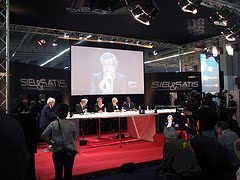
Speaking at the Siel-Satis-Radio event in Paris, Arhab switched on France’s first digital terrestrial radio transmitter and said: “The greatest difficulty is knowing if all the radio groups want to migrate to digital radio at the same speed.” “Today, I feel and I know that some of you are telling us ‘we are ready’. We are delighted. A few months ago, this was not the case.” “One must not be scared of analogue radio switch-off. Digital radio will not be a success if it has to co-exist with analogue radio for fifteen to twenty years.”
According to SatMag, at the beginning of November, there will be ‘round table’ meetings at the CSA with all the licensed digital radio operators, the set manufacturers, the transmission providers, and representatives from the Ministry of Culture & Communication and the Ministry of Finance & Industry. The CSA is awaiting two reports: one from Marc Tessier on the economic conditions for the rollout of digital radio and on competition issues; the other by Emmanuel Hamelin on the funding of community radio.
It is reported that licences have been signed, but it will take two months for the multiplex operating companies to be formalised for the launch of digital radio in the first three areas. The composition of the multiplexes has not yet been determined. The time period between which the multiplex contracts are signed and the content providers launch digital stations still needs to be fixed, probably around six months.
Elsewhere at the Paris event, SatMag reported that the issue of the T-DMB digital radio standard adopted in France was back on the table. Its report said:
“Is it right that, in France, we are using a standard that is different from the rest of Europe? Should we not be offering radio receivers that are compatible with DRM+? Alan Mear [of the CSA] says that this is not a taboo subject and will be revisited, but he also agreed with Mathhieu Quetel of SIRTI [the trade body for independent regional and local stations] that it was essential to launch digital radio and not to revisit the question of the adopted standard. Besides, Rachid Arhab agreed yesterday that the DRM+ standard was expensive and of no interest.”
“There was a big surprise from Michel Cacouault of the Bureau de la Radio which represents the main French commercial radio groups. Remember that it was they who said France had to adopt a particular digital radio standard as it was essential to transmit additional data. Today there was a complete turnaround. Michel Cacoualt reminded us that commercial radio had lost around 18% of its revenues in the credit crunch. Now, the owners want to cut their costs and are willing to choose a different standard that is less expensive. Those in the conference room familiar with this issue were amazed. Well yes! The credit crunch does makes you think. The cost of dual transmission [analogue and digital] for a single national network is estimated to be 2 to 4 million Euros [per annum], though what it will actually be we will only know when it happens.”

FRANCE: “Digital terrestrial radio: now!”

Last week, three trade bodies in the digital radio sector in France jointly wrote this opinion piece published in Radioactu magazine:

“Digital terrestrial radio: now!”

Digital terrestrial radio has been a reality since 27 May 2009. A reality that came about through the decisions of the CSA [France’s media regulator], decisions that had been anticipated for many years by many commercial radio stations and associations who have submitted applications across France and who have made financial investments in the meantime.

These companies and associations were well aware of the digital radio standard that was chosen [T-DMB], despite controversy surrounding this decision, were also conscious of the need to simulcast [FM and T-DMB] during the period of migration to digital and, finally, were aware of radio’s need to digitise in order to quickly take its place in the converged media world, in the face of attempts by television and mobile phones to turn it into a minor player.

However, the reality of digital terrestrial radio is primarily the benefit to listeners of a significantly expanded radio content offering at local, regional and national levels.

In the first three areas selected by the CSA to launch later this year, the number of stations will increase from 48 FM to 55 digital in Paris, from 29 to 41 in Marseille, and from 27 to 40 in Nice.

The reality is also the opportunity offered to radio stations to expand their existing broadcast coverage areas and become, if they wish, multi-city stations or multi-region stations which would make them “new market entrants”, something that the unavailability of FM spectrum had denied them until now.

The reality is the introduction of new listener features unprecedented in FM radio. Sound quality equivalent to CDs. The ability to go back and listen to a whole show that has already been broadcast. The introduction of a visual mini-display on receivers that shows data associated with the show (station logo, photos of the host and guests, the CD sleeve or book cover…). As well as the interactivity offered by digital terrestrial radio in conjunction with internet and mobile phone networks is the ability to offer transactions connected to the broadcast show (music, concert tickets), to access travel information, check share prices, the weather …

Finally, the reality is the choice to offer “podcasts” and to benefit from the radio medium’s mobility to access free and accurate information.

These are all qualities which, like digital terrestrial television before it, will allow millions of French citizens to benefit from new content offerings which will always be free-of-charge.

However, in recent weeks, we note that those who, only yesterday, did everything to frustrate the adoption of DAB and the CSA’s call for licence applicants in 2000 to digitise the Medium Wave; those who refused the good sense to choose a common digital radio standard, preferring ‘multi-standards’ to European harmonisation, the American proprietary IBOC system and, more recently, the Korean T-DMB standard, are carrying on their ‘’ballet”, making incessant demands and all kinds of attacks upon the CSA, using delaying tactics to choose a standard that is anything other than the one they themselves imposed.

The big operators still feel they have an absolute monopoly, as if the radio landscape has not changed since the ‘liberation of the airwaves’ so that the landscape remains frozen, they can reject competition from new entrants, and can maintain the natural order and their enrichment.

But, despite these large players continuing their efforts to maintain their monopoly, they are today showing their weaknesses. They seem almost unable to create new offerings and new content when they know perfectly well that competitors are on their doorstep with new formats, new stations and a new radio spirit which thinks of radio as a multimedia experience which only digital terrestrial radio can make happen. The global radio medium has been born and it is the listener who makes the rules. It is the end of media that are imposed on the listener, as consumption habits are changing quickly (with a capital ‘Q’), but do the big operators get this? Above all, do they have the ability to adapt to this inevitable evolution? Anyway, even if their concerns are legitimate, their attempts to prevent the launch of terrestrial digital radio are not.

Today, it is no longer up to them to decide the future of radio in France. It is up to the public bodies, notably the CSA, to take responsibility for finally launching digital terrestrial radio, which had been decided by a call for licence applicants in March 2008. Many radio owners have been licensed and are ready to open their stations, just as there are many who could be ready to open new stations but who have not been licensed due to lack of spectrum.

We created the Vivement la Radio Numerique organisation in 2002, the Digital Radio Francaises committee in 2003, and the Digital Radio association in 2005. The first two have merged into the third to increase their productivity and to make digital terrestrial radio happen more quickly. All three are a legacy of the Club DAB and pay tribute to its president Roland Faure who, on the subject of DAB, expressed regret “that the processes for the digitisation of radio are blocked, despite the success of the call for licence applicants in 2000”, a subject on which all three organisations have spoken out.

We note with regret that, since 1996, politics has zig-zagged. The call for DAB licence applicants in 2000. The call for Medium Wave licence applicants in 2003. The adoption of a legal framework for the launch of digital radio in 2004. In 2005, Minister of Industry Patrick Devedjian made the statement that “digital radio is a high priority”. Then CSA President Dominique Baudis stated that “the Higher Council for Broadcasting will soon launch a consultation on digital radio, which will be the starting point of its launch”.

The call for digital radio licence applicants made in March 2008 in response to the strong demand (after numerous consultations with stakeholders, public meetings and technical tests). Progress had already been a long and winding road over more than a decade when, in May 2009, the powers that be finally intervened.

Any slowdown, postponement or delay will be very damaging to all existing operators, new entrants and future players who are all awaiting the launch of digital terrestrial radio. We will not tolerate further delays. Any further delay would be seen as a de facto cancellation of the licence awards made on 26 May 2009, which we would totally reject.

We cannot accept that the law can be constantly violated by a handful of players whose positions are constantly changing to turn digital radio into an imaginary illusion at the expense of listeners, our businesses, our organisations and our economy.

Radio is the only medium that has not yet been digitised. Digital terrestrial radio has been promised since 1996. It now exists in law, it has a legal framework, it is on the statute book, and the CSA has called for licence applicants and has selected the winners, all events that are in the public domain.

Everything is now in place for digital terrestrial radio to be launched. The system has been validated by the Ministry of Culture. The first three areas have been selected and the licence awards made. The public utility announced its intention to own and operate digital radio multiplexes. The contracts were sent to multiplex operators and the agreements were returned by the content providers. Commitments have been made to the ‘have nots’. The technical standards have been published for broadcasters and set manufacturers. Broadcasters have announced an incentive scheme for content providers to create multiplex owners. Set manufacturers are announcing their product lines.

Also, neither the current economic crisis, nor the internet, nor the fragmentation of listening habits (which go back more than 20 years) can justify a delay to the launch of digital terrestrial radio.

Any delay or postponement would risk thousands of jobs at a time when France, like many European countries, is trying to exit the crisis.

In these difficult times, only innovation and creativity count, and no lasting victory can be won by not following common sense.

The time is ripe to keep one’s promises and commitments in a spirit of self-discipline, necessity, will and, above all, responsibility or it will be need to be explained officially and publicly why digital radio was not launched, to name those who seek to prevent its launch in France, and to compensate the licensees.

Public broadcasters have been at the forefront of digital radio in Britain and Germany. In our country, it is high time that the public broadcaster comes out of the woods and takes on the responsibility, for which it has rights and duties to all our citizens: the right to pre-empt analogue and digital frequencies and the certainty of having its own multiplex to broadcast all of its channels to cover 90% of the country.

We must start digital terrestrial on time next December because nothing more should stop it and the various operators are ready. Those who do not want digital terrestrial radio have the internet solution. Radio is not only about market share or decades of radio experience, but about a wish to move the medium forward.

For us, digital terrestrial radio is now or never! We need to start with those who want it and they are many.

Those who do not want it, or who have filed applications lightly or by reflex but will not start within the period required by law, must take responsibility and return their licences to the CSA, who will re-advertise them to the benefit of the many operators waiting for digital licences.

Shalak Jamil, President of the Association Digital Radio
Tarek Mami, President of Vivement la Radio Numerique
Joel Pons, President of the Digital Radio Francaises committee

[unabridged]

My post-script:

A digital radio trade show and conference takes place 20 to 22 October at Hall 7.3, VIParis, Porte de Versailles, Paris. The “Siel-Satis-Radio” event is billed as a “series of meetings dedicated to digital terrestrial radio which will take stock of the questions and viewpoints of stations and the aid promised to radio groups”.