The conversation at the Radio Academy event in London entitled ‘Is Radio Racist?’ became heated when the chairman, ‘LBC‘ morning show presenter James O’Brien [JO], was questioned by ‘BBC Five Live’ overnight presenter Dotun Adebayo [DA] about the absence of ethnic minority presenters at LBC. At the start of the event, O’Brien said he had been asked to chair the debate because “I am actually officially the whitest person working in the broadcasting industry today.”
DA: “James, you work for a London station. How many black presenters are there, when 20% of the London population is African-Caribbean or Asian? How many black presenters are there on LBC?”
JO: “That’s interesting because there aren’t any black presenters currently.”
DA: “If I ask James how many black cleaners there are at LBC, it would be a high percentage.”
JO: “For what it’s worth, that’s not true. If you had asked me about production staff, I would point at two or three colleagues, both current and former, who are from ethnic minorities. I object to that question because I don’t think their colour is relevant to their ability to do the job.”
DA: “That wasn’t the point. I gave you one example of London media where there are no [ethnic] presenters. You should be embarrassed about that, James.”
JO: “I think that, at the moment, I am the best person to be presenting my show and colour is entirely irrelevant to that equation. If someone who is better than me comes along, they will get my job, whatever colour they are. I would hope my employer would have the bravery to appoint the best person for the job and not say…..”
DA: “How can you explain the fact that there isn’t one black presenter on your station?”
JO: “How would you like to be the one who only got the job because there aren’t any black people on the station?”
DA: “I would be happy to get the job because at least it was an opportunity for me, whereas there is no opportunity for me there at the moment. There are no black presenters at LBC. That’s something that’s disgraceful and you know that.”
JO: “I dispute that entirely, but it’s not about me. If you want to hear me talk about myself, I’ll be back on LBC 97.3 FM tomorrow morning [laughter from audience].”
Later in the debate, Salim Salam [SS], a former BBC producer now working for digital station ‘Colourful Radio’, returned the discussion to the same issue:
SS: “It’s a managerial question. Given that you want to have a media industry which is broadly reflective of the society in which it operates, and in the case of the BBC is directly paid for by that society, then you should be looking to get (LBC being an example) a station which is broadly representative of the society to which it is broadcasting. And the fact that it’s not is a managerial question.”
JO: “LBC takes up 24 hours of programming, of which every single one, expect for two [hours] between 5 and 7am, is phone-in. So if you want to talk about a radio station that provides a platform and an opportunity for every single citizen in the city to put forward their case, their perspective, their experience or their opinion, a phone-in programme or a phone-in station is almost immune to these accusations.”
SS: “No, it’s not, because I’m talking about the people who present the programmes and who make the programmes, which actually affects the editorial. There are two elements to this question. One is: who’s making the programmes and who’s presenting the programmes, and who’s doing the hiring and firing? … The other question is the editorial, and it’s not always a question of people walking around deliberately looking for opportunities to discriminate against black people. It’s about the questions that you ask. Muslim people, for example, have a hell of a lot of questions to ask about a lot of things. There’s nobody asking those questions for them because the editorial lines that are being taken all come from one particular point of view, and then the questions that are asked follow the perceived lines of wisdom or the orthodoxy of the time. So, if you are looking for an industry that is broadly reflective of the society in which it operates, you have got to ask yourself why is it not (whether it is racism or not)? Secondly, if you are looking for solutions to that, look at who is doing the hiring and firing. Who do they know? Are they capable of making a rational judgement when they are faced with those applicants? The BBC’s own figures will tell you that black people, once they get to the final interview stage, are still three times less likely to get the job than their white counterparts. Are you telling me that black people are three times less talented or able? I’m not of that opinion. I think it’s either unconscious discrimination, or whatever it is.”
Jimmy Buckland, external affairs officer of RadioCentre, provided the meeting with data from the forthcoming SkillCentre 2006 Employment Census which found the radio industry overall employs 6.9% of staff from black and minority ethnic backgrounds, comprising 3.1% in commercial radio and 10.9% in BBC radio. Explaining that these results appear skewed because “commercial radio is more regional based than the BBC”, Buckland said that 19% of commercial radio’s workforce is based in London, compared to 59% of the BBC’s. He added: “What we have here is a problem of representation, definitely.”
[First published in edited form in ‘The Radio Magazine’ as ‘LBC Quizzed Over All-White Presenter Team’, #777, 28 February 2007]
It was only just daylight when I suddenly realised that the phone was ringing. It seemed to take me ages to drag my weary body out of bed, as the phone continued to ring long and hard. Who on earth would want to phone me at this early hour on a Saturday morning? I toyed with the notion that it might be my former girlfriend, who seemed determined to inflict as much hurt on me as possible, despite our relationship having ended abruptly through her own infidelity and lies.
But it was not her. It was [‘KISS FM’ managing director] Gordon McNamee, calling me from his mobile phone. He said he was standing in the middle of his local park, walking his dog, accompanied by his mother. I could hear in the background that it was pouring with rain. McNamee asked if I had the home phone number of any of the Independent Broadcasting Authority [media regulator IBA] staff so that he could find out whether KISS FM had won the licence. I asked him why he was so anxious to find out at such an early hour in the morning. McNamee told me that ‘Music Week’ magazine’s radio correspondent, Bob Tyler, had rung him at home at around eight o’clock that morning to find out if he knew who had won the licences. McNamee admitted that he had heard nothing, despite knowing that the decisions had been made by the IBA at its Thursday meeting and should be announced imminently. McNamee told me that he had stayed at the KISS FM office [in Finsbury Park] all day Friday, but there had still been no phone call from the IBA, so he assumed that KISS FM had lost the licence for the second time, and had returned home.
Bob Tyler had phoned McNamee a second time at around nine o’clock that morning to say that he had just heard a rumour that KISS FM had won a licence, though there was still no means of official confirmation. McNamee, feeling agitated and frustrated, had decided to get out of bed and take his dog for a walk in the local park. Halfway across the park, it had started to pour with rain. Then, just as he, his mother and his dog had run for shelter, McNamee’s mobile phone had rung again. This time it was Richard Brooks, media editor of ‘The Observer’ newspaper, offering his congratulations to McNamee on KISS FM’s win of one of the two licences, and asking for a comment to include in the next day’s issue. McNamee thanked Brooks for his call, but emphasised that he himself had not been told the news and so would have to obtain official confirmation from the IBA before he could say anything publicly. Brooks assured him that he had seen a letter sent to one of the losing applicants which definitely stated that KISS FM and easy listening applicant ‘Melody Radio’ were the two winners. McNamee promised to ring him back as soon as possible.
There was jubilation in the park, despite the torrential rain. McNamee and his mother leapt up and down with excitement, watched by an astonished old man who was also sheltering from the storm. The old man asked them what all the fuss was about and, when McNamee told him he had just won a hotly contested radio licence, the old man offered him a celebration roll-your-own cigarette and apologised for not having a cigar. Now, McNamee needed to find out from the IBA if the news was true, and why it had been broken to him by a journalist, rather than in an official IBA communication. That was when he had rung me. I told McNamee that I probably had the home phone number of one of the IBA officers, if the paperwork had not disappeared from my flat, so I would find it and try to obtain official confirmation. I quickly found the home phone number of the IBA press officer, Stuart Patterson, on the top of an old press release he had sent me. I called him and, although he himself refused to confirm or deny whether KISS FM had won, he promised to arrange for someone from the IBA radio division to call me as soon as possible.
It was only a few minutes later that David Vick, the IBA’s principal radio development officer, called me. At first, he was pre-occupied with explaining to me the protocol of the IBA announcement, and did not tell me outright that KISS FM had won:
“Hi, it’s David Vick from the IBA. I gather you’re the only people who haven’t got the news officially yet … I’ve just had a quick word with Stuart, obviously … We’ve told the winners that they might expect calls from journalists. What we’re anxious not to happen, and maybe it’s a false hope now, is for journalists to ring losers before they’ve got their letters. But clearly, the Christmas post is so unpredictable that our best laid plans have fallen apart this morning.”
“I didn’t ring Stuart as a journalist,” I interrupted. “It was the KISS FM side … Did we get it or didn’t we?”
“Yes, of course you did,” answered Vick.
“Oh, brilliant,” I screamed. I was elated. Until now, I and the rest of the KISS FM team could only have dreamed of this moment when the IBA would ring us to say that we had won a radio licence. Now, it had really happened. I was very tired. I was still shattered from the long journey home [from a holiday in The Gambia the previous evening]. I had only just woken up, but I was also incredibly happy that my hard work on the licence application had won out in the end.
“Congratulations,” said Vick, while I gasped with joy at the other end of the call. He remained far more composed than I was right now, and he continued to explain the detail of the announcement: “I don’t know how The Observer got hold of it. Clearly, one of the losers has talked to The Observer fairly early on this morning, because they’ve been hot on the trail from quite early on. So congratulations on that.”
I was still laughing and whooping at my end of the conversation, as Vick continued: “We normally do ring winners on Saturday morning but, this time, we’ve been playing it so laid back and ultra cool that I hadn’t actually planned to do that. All the letters seem to have got through, but clearly some of the most serious applicants have given business addresses, and they’re the ones who haven’t actually got the letters. You’re not unique. We’ve had a vexed Lord Hanson [of Melody Radio, the other licence winner] ring us this morning, asking what’s going on and why is he being rung by journalists.”
Vick continued: “You and Lord Hanson have been in the identical situation this morning of being rung by The Observer and others at the crack of dawn, and not known what was going on … What we didn’t want was for losers who haven’t got their letters this morning to find out from the newspapers either on Sunday or ideally on Monday … We had a terrible botch-up with the Post Office on one of the previous months. And, this time, I rang the district postmaster yesterday afternoon and said ‘look, we’ve got another run of letters going through.’ And he said he’d do his best to catch them the moment they arrived at the sorting office and hustle them straight through for us. And he’s clearly done the job with unfailing skill and everything’s arrived this morning. But the ones going to business addresses, yours and Hanson’s and some of the other quite serious applicants, have ended up hearing about it through the grapevine as a result.”
“Oh, this is brilliant,” I gasped. I was still far from composed and I was barely taking in Vick’s pre-occupation with the minor points of the procedure. We had won! That was all that was important to me right there and then. We had won! Vick continued regardless: “We told everybody our press release would be [published] Tuesday morning. But I’ve spoken to Peter Baldwin [IBA director of radio] and Stuart [Patterson], and that’s clearly crazy now, so we’re going to issue the press release early Monday morning. So, if you could bear to at least smile inwardly and say as little as you can to the press until then …”
I was muttering words of agreement without really taking in all the detail that Vick was relating. He could tell my excitement was getting the better of me, so he suddenly changed gear: “Well done. We’ll obviously have a lot to do with each other in the months ahead. One of the things we’ve said in the letter is that, if you could come in [to the IBA office] and meet us all in the next couple of weeks, that would be super.”
“We would love to,” I replied, still giggling uncontrollably. Once more, Vick was keen to discuss the nitty gritty, right here and now on a Saturday morning: “Very well done. It was an excellent application. The trouble is that you’re going to get a lot of griping comment now from people saying that they [the IBA] only did it to keep the pirate lobby happy. The fact was that it was a bloody good application that got it on merit, because we certainly wouldn’t have given it to you if the application hadn’t been deserving of it.”
It was incredibly pleasing to hear Vick credit the KISS FM application after all the hard work I had put into it. I felt that, finally, I had been vindicated for my insistence to McNamee that the whole licence application had to be as perfectly presented as possible on this occasion. I thanked Vick for his kind comments, and he continued: “I think, to be honest, that the extra six months actually did you a lot of good. Not that the first application was bad or anything but, in this one, you had clearly learnt so much over the last six months, and you had strengthened it in so many ways. And, fortunately, by majoring on the new release aspect of the daytime [music] playlist, you’ve given us a very solid peg to hang the ‘diversity’ point on. Because, when ‘Capital [Radio]’ and others predictably start complaining, we can actually point to the fact that you are going to be playing the music before it gets in the charts, and they will play it after it gets in the charts, which gives greater diversity.”
Since its launch in 1973, Capital Radio had been London’s one and only commercial pop music station, and it was still eager to defend what it considered to be its own rightful territory – a monopoly over playing pop music in the capital. The IBA was charged with widening the choice of radio stations available to listeners, whilst not duplicating the existing output of Capital Radio. The emphasis I had placed in the KISS FM application on the station’s championing of new music had proven to be precisely the argument the IBA could use to defend a decision to award KISS FM the licence. Admittedly, Capital Radio did play dance music within its programmes, but it only played songs that were already in the ‘Top Forty’ singles chart. KISS FM would be playing mostly new releases, before they gained widespread popularity. My strategy for the KISS FM application had worked exactly as I had intended, which Vick confirmed as he continued to relate the detail: “The press release actually says that KISS FM has been chosen as a station that will be in the forefront of music tastes and that’s your market position, as we define it.”
McNamee must have returned home by now, so I gave his home telephone number to Vick and thanked him for calling me so promptly. It was absolutely brilliant news and I was still utterly ecstatic. I tried to phone McNamee straight away, but Vick must have managed to get through to him first. I continued re-dialling for several minutes, until the phone eventually rang. McNamee was shouting down the phone to me over the top of a loud conversation I could hear in the background:
“Grant, you c*nt,” he greeted me, in his typically perverse way. “We’ve got it! I can’t believe it! David Vick just phoned me and we went through the whole lot. I can’t fucking believe it.”
There was loud laughter in the background and McNamee already sounded drunk on the news, in spirit, if not in reality: “You’ve got a job! Your gamble worked out. We’ve all got a job. Fucking wonderful! It’s wonderful! It’s just unbelievable. I’m going to be down at Dingwalls [nightclub in Camden] tonight and the whole world will be, I should think. I’m going to phone everyone today. I’ll talk to you later on. I’ve got to phone all the bosses, and I’ll talk to you later.”
McNamee was right. My gamble had paid off. I had believed that KISS FM could win the licence, if only someone was prepared to work hard on the application this time around. Then, when McNamee had failed to take up the challenge, I had decided to take on the task myself. While McNamee had been pre-occupied with his initial failure, I had been determined to turn KISS FM’s second application into a winner. Asked subsequently what had persuaded the IBA to award KISS FM a radio licence, David Vick answered: “A well-researched application and musical knowledge.”
It was pleasing to know that my strategies had been proven correct. It was my detailed research and my belief in KISS FM’s musical expertise that had swung the licence bid. Now, here I was, having learnt the good news only hours after arriving back in the country. If KISS FM had lost its licence bid this second time around, I would have had no job to return to. Plus, my flat had been deliberately and spitefully emptied [by my former girlfriend whilst I had been away]. But these things did not matter to me anymore. The dream I had cherished for so many years of a legal black music radio station in London was about to become a reality at last. I had played my part in turning that dream into reality. I was absolutely thrilled. For me, it was literally a dream come true.
It was a little after seven o’clock in the morning when the phone rang. Normally, I would already have been out of bed by that hour on a weekday. However, the previous night’s ‘DJ meeting’ [open to all 44 KISS FM presenters] had tired me out. I was awake, but I was still trying to urge my body to get out of bed. The mobile phone stationed beside my bed rang noisily and forced my brain into action far faster than it wanted.
It was [KISS FM personal assistant to managing director] Rosee Laurence on the line, asking if I could schedule a meeting that morning with [KISS FM managing director] Gordon McNamee. I scrambled out of bed to retrieve my diary from the battered ‘WH Smith’ black plastic briefcase I always took to work. Requests for meetings at such short notice were common although, during the last few days, McNamee had had no contact with me. Laurence suggested ten o’clock. I explained that I already had an editorial meeting [of my programming department] scheduled for half past ten, but I could fit it in as long as the meeting was not going to last too long. She assured me that it would not. I scribbled “10am – Gordon” in my diary, replaced the mobile phone in its charger and got on with the business of waking up properly.
My diary told me that I had two further meetings that afternoon – a weekly sponsorship get-together at one o’clock with [KISS FM finance director] Martin Strivens and the sponsorship manager, Gordon Drummond, followed by a debriefing session in the boardroom at three o’clock with KISS FM’s partners in the Pepsi promotion. During the drive from my flat to the office, I reflected on the possible reason for the early morning phone call. Was McNamee going to tell me what had happened at the previous day’s board meeting? Was he going to pretend that nothing untoward had happened and that the board had approved all his [unachievable] targets for Year Two?
I was already running late when I became caught up in the worst of the rush-hour traffic along Holloway Road. Although my work day officially started at half past nine, I liked to arrive at work earlier so that I could snatch a little time to myself before the inevitable mayhem started in the department. However, that day, there was only time to down a quick cup of tea before walking up to the top floor in time for my ten o’clock appointment. Gordon McNamee was sat in his corner office when Laurence ushered me in. After exchanging morning greetings, I sat facing McNamee across his huge wooden desk. He shuffled from side to side in his chair a few times, avoiding looking directly into my eyes, and he sighed unusually heavily. Several times, he looked up at me as if he was going to say something, but then stopped short.
I stared at him blankly, not knowing what to expect. Eventually, he started mumbling something apologetically, but still he was making little sense. I knew then that McNamee had bad news to break to me. He had always been excellent at whipping his team into a frenzy of enthusiasm when something good was happening, but he was almost incapable of breaking negative news to anyone. He started speaking slowly and managed to explain that he had been “extremely vexed” by the memo I had delivered to him two days earlier. ‘Vexed’ was one of McNamee’s favourite words to use in situations when somebody had done something that displeased him. Anyone else might have been angry, but McNamee was always ‘vexed.’
As he reflected upon the contents of my memo and how ‘vexed’ it had made him, McNamee seemed better able to talk to me directly and to break the bad news. He explained that the board had met the previous afternoon and had decided that the company no longer needed my services. He muttered something about this being the hardest thing he had ever had to do and how he regretted the decision, but I was barely listening to his words. Instead, I was thinking how cowardly was this man sitting in front of me. I was thinking that, even now, he had no intention of telling me the truth of what had taken place at the board meeting, or how he had probably acted to save his own skin. What I wanted to know was what he had told the board about my dissent and what he had told the board of my contributions to the station’s success.
But there seemed little point in saying anything at all to the cowering figure sat in front of me, with whom I had worked so closely for more than two years. I got up to leave the room. McNamee had failed to deliver my promised rewards on so many occasions that I did not need to hear another fabricated story about why I was not getting things to which I felt I was entitled. As I left his office, McNamee said that it would be necessary for me to leave the building immediately, and he thrust some documents into my hand. I walked straight out of his office, shocked that, even at this stage in our relationship, McNamee was still incapable of telling me truthfully why I had to go.
Before I could reach the staircase to return to my office, McNamee had caught up with me and was asking me to stop. For a second, I felt as if I should ignore him totally and just carry on walking, but I turned towards him at the very top of the building’s stairwell.
“We could say that you had resigned, to make it easier for you, if you wanted,” McNamee suggested to me.
I stared at him coldly with a combination of anger and hatred that I could feel welling up inside me.
“Gordon, that’s a fucking insult,” I spat at him. Then I turned and walked down the staircase leading to my office on the next floor.
I was incensed. After all the sweat, blood and toil I had poured into this company. After all the personal sacrifices I had made to ensure that KISS FM succeeded. After my hard work had produced the required results more quickly than had ever been anticipated [Year One target of one million listeners per week achieved within first six months on-air]. Now, I was being asked to resign from a job in which I had achieved nothing but success. McNamee’s cheek to even suggest such a thing had made me really angry. I was in a rage as I stormed into my office. The programming floor was starting to fill up, as staff trickled into work. My first thought was the speed with which McNamee had insisted I must leave the station. Rather than suffer the indignity of being forcibly removed from the building by the station’s security guard, I started to pack up my possessions.
[KISS FM head of music] Lindsay Wesker caught my attention as he walked onto the floor from the staircase. He was one of my senior team members, so I felt I should break the bad news to him personally. The only private place I could think of to talk was the men’s toilet in the stairwell of the floor, so we crowded into the tiny cubicle.
“I’ve just been sacked,” I said to Wesker, “and I’ve been told to leave the building immediately.”
Wesker looked thoughtful, but did not seem particularly shocked. I suddenly understood that Wesker must have been the only member of my team to know what was going to happen to me, before I did.
“Just as you’ve said before,” said Wesker calmly, “it’s always the programming department that gets the chop.”
These were the very words I had shared with Wesker more than a year earlier, during the first programme planning meeting I had convened at [former KISS FM office] Blackstock Mews. Wesker had mulled over my words carefully then and, now, I realised why he had found those words so interesting. In Wesker’s eyes, he had got rid of me at last. I exited the men’s toilet without saying another word.
Having received no sympathy from Wesker for my predicament, I walked back to my office and continued assembling my personal effects. I had spent far more of my waking hours in that building during the last year than I had at home, so many of my own possessions were intermingled with that of the company. There was the portable television I had brought to the office when the Gulf War had started, there was a portable cassette player I used, the records I had used to make station jingles, and unread magazines that were cluttering the floor. These were all mine. I started gathering them together into a manageable pile to take away with me. Other staff on the floor noticed me through the clear plastic partition of my office and started to wonder what was going on.
I told Philippa Unwin, who had worked with me closely as the department administrator since the Blackstock Mews days, what had just happened to me. She became visibly upset. As I told other members of my team, they stood around the floor in disbelief and shock.
[KISS FM head of talks] Lorna Clarke said to me: “They can’t sack you just like that. You’re the only one who knows how this whole station works.”
I felt pressured by the urgency to get out quickly, so I started carrying boxes of my things down three flights of stairs to put in my company car parked at the back of the building. I suddenly realised that my hasty and unexpected departure from KISS FM could be explained away to the staff on any pretext, unless I could make some kind of statement myself. The memo that had ‘vexed’ Gordon so much had recorded all the significant events of the previous week, as well as having stated my unambiguous position on wanting KISS FM to adopt a realistic strategy for its future.
After less than a year on-air, one of the staff’s major criticisms was the lack of information about company decisions that trickled down to them from the senior management. Only those staff working most closely with me in the programming department understood that I was just as ill-informed about what was going on at board level as everybody else was in the building. Using a Prit-Stick from the top drawer of my desk, I glued a copy of my memo to Gordon McNamee onto the clear plastic partition of my office. My room opened onto the floor’s entrance lobby and the partition could be seen by everyone passing through the department. Alongside the memo, I glued the document detailing the programming policy changes I had been ordered by McNamee to devise.
While I continued to gather together my possessions, staff in the department started to read my two memos, all the while expressing outrage that my dismissal could be so abrupt. Then, Wesker burst into my office and handed me a sheet of ledger paper.
“Rosee [Laurence] upstairs says these things are KISS property which you have to give back before you go,” said Lindsay sheepishly.
Inscribed in red ink was a list:
“1) security tag 13-92 + ID pass. 2) office & studio keys. 3) car keys.”
It was evident that Wesker had been anticipating my dismissal and was acting as messenger boy for the management staff on the top floor who were too cowardly to talk to me directly. I snatched the piece of paper from him, but ignored it. I asked him, rhetorically, how I was expected to take home all my personal possessions without being able to use the company car?
Before leaving the station for the last time, I walked around the programming department and said my hurried goodbyes to the few staff who were already at their desks. Because the majority of my team worked shifts, there were only a few people there. In the DJs’ office, [daytime presenter] David Rodigan was sat at his desk, facing the front windows that looked out over Holloway Road. His back was towards the office door, so I had to interrupt his preparations for that day’s lunchtime show to bid him farewell. He expressed outrage at my sacking and seemed bewildered by the speed with which I was being forced to leave.
There was nothing left to do except thank everyone who was in the department for the good times we had spent together and to give many of them one last hug. Some of the staff were crying, others were visibly angry, and some did not seem to believe the events that were unfolding right in front of their eyes. Wesker was the only person who seemed unmoved by the whole scene. He was busy protesting that I had not left the company’s property that he had been given responsibility to collect. I could not have cared less.
I got into my company car, half expecting someone to rush out and stop me driving it away. But they did not, and I drove away from the station’s car park for the very last time. I had arrived at work barely two hours ago. Now, I was already on my way home again. It felt as if some ghastly mistake had happened, some chance mishap over which I had been able to exert no control. I could not believe that this would really be the very last day I ever worked at KISS FM. The traffic was much lighter on the roads, now that the rush hour was over, so I reached home within half an hour. By then, I was feeling neither upset nor angry about my dismissal. More, I was stunned that the end could have come so abruptly, and without McNamee having offered any gratitude for my significant contributions to KISS FM’s success.
“Bob Marley has died!” I exclaimed. Having switched on the car radio before starting the engine, one of Marley’s songs was playing on John Peel’s ‘BBC Radio One’ ten-to-midnight show. I knew immediately what that meant. Peel was a longtime reggae fan, though I had not heard him play a Marley track for years. There was no need to await Peel’s voice announcing the sad news. I had read that Marley was ill but had not understood the terminal gravity of his health.
Peterlee town centre was dark and desolate at that late hour. I had walked to my little Datsun car across a dark, empty car park adjacent to the office block of Peterlee Development Corporation, accompanied by my girlfriend who was employed there on a one-year government job creation scheme. We had attended a poetry reading organised by Peterlee Community Arts in the building, an event she had learnt of from her marketing work. It was my first poetry reading. Only around a dozen of us were present, everyone else at least twice our age. But what we heard was no ordinary poetry.
Linton Kwesi Johnson had coined his work ‘dub poetry’ in 1976 and already published three anthologies and four vinyl albums, voicing his experiences as a Jamaican whose parents had migrated to Britain in 1962. Peterlee new town seemed an unlikely venue for a ‘dub poet’, a deprived coal mining region with no discernible black population, but working class Tyneside poet Keith Armstrong had organised this event as part of his community work there to foster residents’ creative writing. Johnson read some of his excellent poems and answered the group’s polite questions. It was an intimate, quiet evening of reflection.
Due to my enthusiasm for reggae, I was familiar with Johnson’s record albums as one strand of the outpouring of diverse innovation that Britain’s homegrown reggae artists had been pioneering since the early 1970’s. Alongside ‘dub poetry’ (poems set to reggae), there was ‘lovers rock’ (soulful reggae with love themes sung mostly by teenage girls), UK ‘roots reggae’ (documenting the Black British experience) and a distinctly British version of ‘dub’ (radical mixes using studio effects). One name that was playing a significant writing/producing role spanning all these sub-genres was Dennis Bovell, alias ‘Blackbeard’, of the British group ‘Matumbi’. His monumental contributions to British reggae are too often understated.
Until then, there had been plenty of reggae produced in British studios and released by UK record labels such as ‘Melodisc’, ‘Pama’ and ‘Trojan’, but most efforts had been either a rather clunky imitation of Jamaican reggae (for example, Millie’s 1964 UK hit ‘My Boy Lollipop’ [Fontana TE 17425]) or performed by ‘dinner & dance’-style UK groups such as ‘The Marvels’. I admit to having neglected Matumbi upon hearing their initial 1973 releases, cover versions of ‘Kool & The Gang’s ‘Funky Stuff’ [Horse HOSS 39] and ‘Hot Chocolate’s ‘Brother Louie‘ [GG 4540]. It was not until their 1976 song ‘After Tonight’ [Safari SF 1112] and the self-released 12-inch single ‘Music In The Air’/’Guide Us’ [Matumbi Music Corp MA 0004] that my interest was piqued as a result of the group’s creative ability to seamlessly bridge the ‘lovers rock’, ‘roots reggae’ and ‘dub’ styles. Both sides of the latter disc remain one of my favourite UK reggae recordings (sadly, these particular mixes have not been reissued).
In 1978, Matumbi performed at Dunelm House and, after attending the gig, it was my responsibility as deputy president of Durham Students’ Union to sit in my office with the band, counting out the cash to pay their contracted fee. They were on tour to promote their first album ‘Seven Seals’ self-produced for multinational ‘EMI Records’ [Harvest SHSP 4090]. It included new mixes of the aforementioned 12-inch single plus their theme for BBC television drama ‘Empire Road’, the first UK series to be written, acted and directed predominantly by black artists. Sensing my interest in reggae, the group invited me to join them for an after-gig chat, so I drove to their motel several miles down South Road and we sat in its bar for a thoroughly enjoyable few hours discussing music.
As part of my manic obsession with the nascent ‘dub’ reggae genre, I had bought albums between 1976 and 1978 credited to ‘4th Street Orchestra’ entitled ‘Ah Who Seh? Go Deh!’ [Rama RM 001], ‘Leggo! Ah Fi We Dis’ [Rama RM 002], ‘Yuh Learn!’ [Rama RMLP 006] and ‘Scientific Higher Ranking Dubb’ [sic, Rama RM 004]. They were sold in blank white sleeves with handwritten marker-pen titles and red, gold and green record labels to make them look similar to Jamaican-pressed dub albums of that era. However, it was self-evident that most tracks were dub mixes of existing UK recordings by Matumbi backing various performers, engineered and produced by Bovell for licensing to small UK labels. I also had bought and worn two of their little lapel badges, one inscribed ‘AH WHO SEH?’, the other ‘GO DEH!’, from a London record stall. During our conversation in the bar, Bovell expressed surprise that I owned these limited-pressing albums, and even more surprise that I recognised Matumbi as behind them. They remain prime examples of UK dub.
It was Bovell who had produced Linton Kwesi Johnson’s albums, and it was Matumbi who had provided the music. Alongside a young generation of British roots reggae bands such as ‘Aswad’ and ‘Steel Pulse’, Johnson’s poetry similarly tackled contemporary social and political issues with direct, straightforward commentaries. It was a new style of British reggae, an echo of recordings by American collective ‘The Last Poets’ whose conscious poems/raps had been set to music (sometimes by ‘Kool & The Gang’) since 1970, and whose couplets had occasionally been integrated into recordings by Jamaican DJ ‘Big Youth’ in the 1970’s. Of course, MC’s (‘Masters of Ceremonies’) had been talking over (‘toasting’) records at ‘dances’ in Jamaica since the 1960’s, proof that the evolution of ‘rap’ owed as much to the island’s sound system culture as it did to 1970’s New York house parties.
In Peterlee, Johnson read his poems to the audience without music, his usual performance style. It was fascinating to hear his words without any accompaniment. For me, the dub version of Johnson’s shocking 1979 poem ‘Sonny’s Lettah’ (retitled ‘Iron Bar Dub’ on ‘LKJ In Dub’ [Island ILPS 9650]) is brilliantly effective precisely when the music is mixed out to leave his line “Me couldn’t stand up there and do nothin’” hanging in silence. Sadly, memories of Johnson’s performance that night were suddenly eclipsed by the news of Marley’s death. I drove the eight miles to our Sherburn Village home in stunned silence. I was sad and shocked. It was only then that his sudden loss made me realise how much Marley had meant to me.
Despite having listened to reggae since the late 1960’s, I admittedly arrived late to Bob Marley’s music. Though I had heard many of his singles previously, it was not until his 1974 album ‘Natty Dread’ [Island ILPS 9281] that I understood his genius. At that time, I was feeling under a lot of personal pressure which I tried to relieve by listening to this record every day for the next two years. At home, my father had run off, leaving our family in grave financial difficulties. At school, I was struggling with its inflexibility, not permitted to take two mathematics A-levels, not allowed to mix arts and science A-levels, not encouraged to apply to Cambridge University. Back in my first year at that school, I had been awarded three school prizes. However, once my parents separated and then divorced, I was never given a further prize and the headmaster’s comments in my termly school reports became strangely negative, regardless of my results.
Feeling increasingly like an unwanted ‘outsider’ at grammar school, Marley’s lyrics connected with me and helped keep my head above encroaching waters rising in both my home and school lives. I knew I was struggling and needed encouragement from some source, any source, to continue. For me, that came from Marley’s music. While my classmates were mostly listening to ‘progressive rock’ albums with zany song titles (such as Genesis’ ‘I Know What I Like In Your Wardrobe’), I was absorbed by reggae and soul music that spoke about the daily struggle to merely survive the tribulations of life. After ‘Natty Dread’, I rushed out to buy every new Marley release.
During the months following Marley’s death, I was absorbed by sadness. It felt like the ‘final straw’. The previous year, I had landed a ‘dream job’, my first permanent employment, overhauling the music playlist for Metro Radio. Then, after successfully turning around that station’s fortunes, I had unexpectedly been made redundant. I was now unemployed and my every job application had been rejected. That experience had followed four years at Durham University which had turned out to be a wholly inappropriate choice as it was colonised by 90%+ of students having arrived from private schools funded by posh families. I felt like ‘a fish out of water’. I loved studying, I loved learning, I desired a fulfilling academic life at university … but it had proven nigh on impossible at Durham.
“This is what I need This is where I want to be But I know that this will never be mine”
Months later, my girlfriend awoke one morning and told me matter-of-factly that she was going to move out and live alone. She offered no explanation. We had neither disagreed nor argued. We had been sharing a room for three years, initially as students in a horribly austere miners’ cottage in Meadowfield whose rooms had no electrical sockets, requiring cables to be run from each room’s centre ceiling light-fitment. Now we were in a better rented cottage in Sherburn, though it had no phone, no gas and no television. Her bombshell announcement could not have come at a more vulnerable time for me. I had already felt rejected by most of my university peers and then by my first employer. At school previously, I had passed the Cambridge University entrance exam but had been rejected by every college. At Durham, I had stood for election as editor of the student newspaper, but its posh incumbent had recommended a rival with less journalistic experience. A decade earlier, my father had deserted me and his family, and now the person I loved the most had done the same.
I just could not seem to navigate a successful path amidst the world of middle- and upper-class contemporaries into which I had been unwittingly thrown, first at grammar school, then at Durham, and now in my personal life too. Most of those years, I felt that circumstances had forced me to focus on nothing more than survival, whilst my privileged contemporaries seemed able to pursue and fulfil their ambitions with considerable ease. I had to remind myself that I had been born in a council house and had attended state schools, initially on a council estate. My girlfriend had not. I had imagined such differences mattered not in modern Britain. I had believed that any ‘socio-economic’ gap between us could be bridged by a mutual feeling called ‘love’. I now began to wonder if I had been mistaken. I felt very much marooned and alone. My twenty-three-year-old life was in tatters.
Fast forward to 1984. I had still not secured a further job in radio. I was invited to Liverpool for a weekend stay in my former girlfriend’s flat. We visited the cathedral and attended a performance at the Everyman Theatre. It felt awkward. I never saw her again. It had taken me months to get over the impact of Bob Marley’s death. It took me considerably longer to get over my girlfriend ending our relationship.
“That clumsy goodbye kiss could fool me But looking back over my shoulder You’re happy without me”
“I’m SO sorry,” I grovelled to the petite musician on whose foot I had just accidentally trodden. We were stood side-by-side in the record library – my ‘office’ – of local commercial station ‘Metro Radio’ in Newcastle. Kate Bush was kindly autographing several copies of the new album she was visiting to promote, which were about to be awarded as competition prizes to listeners. She had just been interviewed live on-air by one of the station’s daytime presenters and was soon to be whisked away by car to visit yet another local station somewhere across the country.
I had been basking in a brief moment of hit-picking glory, feted by Bush’s record company ‘EMI Records’ for having simultaneously added two singles by singer Sheena Easton (‘Modern Girl’ and ‘9 to 5’) to the station’s ‘current hits’ playlist, the shortest list of any UK station following my radical overhaul of its music policy, guaranteeing substantial airplay for the label’s newest rising star. Relationships with record companies were always a rollercoaster ride. Months later, after I had refused to add Queen’s ‘Flash’ single to the playlist, on the grounds that it sounded more an advertising jingle than a proper song, EMI declined to offer further artist interviews and stopped supplying the station with its new releases altogether (requiring me to drive to the nearest record shop with a weekly shopping list). Bribery, blackmail and boycotts were widespread music industry practices.
After having first heard Bush’s debut single ‘Wuthering Heights’ on John Peel’s evening ‘BBC Radio One’ show two years previously, I had loved her 1978 debut album ‘The Kick Inside’ for its clever arrangements of smart songs with unexpectedly frank subject matter. I had considered the same year’s follow-up ‘Lionheart’ rather insubstantial comparatively and over-theatrical. After a two-year wait, the next album ‘Never For Ever’ was a return to form with a more diverse song list and extensive use of brand-new Fairlight sampler technology invented in 1979. Bush had visited ‘Metro Radio’ to promote this album’s release in September, after three singles extracted from it (‘Breathing’, ‘Babooshka’ and ‘Army Dreamers’) had already reached 16, 5 and 16 respectively in the UK charts.
After a further two-year wait, fourth album ‘The Dreaming’ was a revelation with songs referencing even more startling subject matter, produced in a dense soundscape that was the aural equivalent of Brion Gysin’s and William S Burroughs’ ‘cut-up’ techniques, interlacing samples, sound effects and dialogue from the Fairlight (think 1973’s analogue ‘The Dark Side Of The Moon’ on digital steroids). I have always been intrigued by its track ‘Suspended in Gaffa’ as an incredibly outspoken criticism of EMI Records on an album released by … EMI.
This was by no means the first occasion that musicians had criticised their record company within their recordings. During the 1970’s, I recall several reggae artists obliquely criticising Jamaican producer Joe Gibbs for his sharp ‘business practices’ (eventually Gibbs’ business was bankrupted after prosecution in the US for stealing songwriter royalties). Closer to home, reggae DJ ‘Prince Far I’ criticised British company ‘Charisma Records’ explicitly in his track ‘Charisma’ (credited to collective ‘Singers & Players’) after his 1981 deal to release three albums (‘Showcase In A Suitcase’, ‘Sign Of The Star’ and ‘Livity’) on its ‘PRE’ label had been soured by negligible sales. Part of its lyrics were:
“I see no idea in your place, Charisma. […] Wipe them out, Jah!”
“You call yourself [Richard, Virgin co-founder] Branson but I know that Branson is a pickle with no place on my plate. You call yourself [Simon, co-founder] Draper but I know draper is known to cover human bodies. You see ‘Frontline’, I see barbed wire. Opportunity to make big money. Irie, Jumbo [Vanreren, Frontline A&R manager]. I won’t forget you take the master tape and hang it up on your shelf. Music has no place in a gallery.”
This ‘lost’ album was finally released in 1998 [Pressure Sounds PSLP18], long after Prince Far I (and his wife) had been tragically murdered in Jamaica in a 1983 house break-in. In 1992, Virgin Records was acquired for a reported £560m by EMI Records which, returning to our story, had signed sixteen-year-old Kate Bush in 1975 to a four-year contract after hearing her three-song demo tape, paying a £3,000 advance. In 1976, Bush created her own company, Novercia Limited (Latin for ‘she who is new’), that she and her family alone controlled in order to manage her career and maintain the copyrights in her recordings and songs.
From the initial contract’s expiry in July 1979, Bush could finally renegotiate a replacement EMI contract which would allow Novercia to retain the copyright (instead of EMI) and henceforth lease her recordings to EMI for release. At that time, it was unusual for such a young artist to insist upon taking control of their career from their record company, particularly when it was as globally huge as EMI. Bush no longer wanted to be contractually required to do promotional tours, such as her visit to Metro Radio, and she was insisting upon complete artistic control. I imagine that these negotiations between opposing lawyers sat around expansive tables in bare conference rooms on an upper floor of EMI headquarters in Manchester Square (immortalised on The Beatles’ 1963 debut albumcover photo) must have been tense and lengthy, particularly for twenty-one-year-old Bush.
Not only would these contractual back-and-forth’s have delayed the release of new recordings, but the inordinate time they must have consumed would have eaten into Bush’s ability to compose and record. During this period, Bush’s musical creativity would frustratingly have been put on hold by the ‘red tape’ of legal negotiations, alluded to in the song’s title (‘gaffa’ being a reference to ‘gaffer tape’, the all-important ‘WD40’-like fix-all of musicians in studios and on tour). At the same time, EMI was demanding to hear proof of Bush’s new material to ensure it was sufficiently commercially marketable to guarantee another ‘hit’ single. Her song ‘Suspended in Gaffa’ starts:
“They’ve told us that, unless we can prove that we’re doing it, we can’t have it all. EMI want it all.”
Except that the ‘E’ from ‘EMI’ must have been removed from the mix, either upon EMI lawyers’ insistence or upon the recommendation of Bush’s legal team. Only once you re-imagine that ‘E’ does the song make perfect sense in terms of record label/artist contractual disputes. The role of Bush’s lawyer in the negotiations is referred to:
“He’s gonna wrangle a way to get out of it [the initial EMI contract that had included renewal options].”
The impact of the tedious negotiations upon Bush’s creativity and the impatient EMI’s demands to hear her new songs are referenced in the chorus:
“Suddenly my feet are feet of mud. It all goes slo-mo [slow motion]. I don’t know why I’m crying. Am I suspended in gaffa [caught up in ‘red tape’]? Not ‘til I’m ready for you [EMI] can you have it all [my new recordings].”
EMI (then) managing director Bob Mercer later confirmed that Bush had burst into tears during their business meetings. The record company’s patronising response to her demands is referred to in the lines:
“… that girl in the mirror. Between you and me, she don’t stand a chance of getting anywhere at all. Not anywhere. No, not a thing. She can’t have it all.”
If Bush had not successfully agreed a new contract with EMI, it might have been threatening that she would be jeopardising her future success. I had witnessed the blackmail tactics of EMI in my job at Metro Radio. The significance of concluding these negotiations successfully was imperative for Bush, and she noted the impact it would have on her finally taking total control of her destiny:
“Mother, where are the angels? I’m scared of the changes.” (Bush’s mother appears briefly in the video, comforting her.)
The key to understanding the song’s theme is to recognise that the most telltale line “EMI want it all” was sung eleven times. Record companies almost inevitably want to have their cake and eat it simultaneously, regardless of the fallout for their own artists. Why else would EMI have refused to send its new record releases to Metro Radio if it was not prepared to cut off its nose to spite its face?
If all this speculation sounds farfetched, you have to ask why EMI was happy to license ‘Suspended in Gaffa’ to its partners for release as a single in European countries, but did not similarly release the song as a single in the UK? Would its London executives want to hear a track played on the radio every day that they knew obliquely criticised their own business strategies? As a result, this excellent song languished as a little played album track in Bush’s homeland. Perhaps that was the company men’s notion of ‘revenge’.
At the time of its release in 1982, I was barely watching television so had missed the video for this song, written and directed by Bush herself. Viewing it more than forty years later, I hoped to find hidden references to ‘EMI’ in the visuals. It looks as if Bush (“wearing a designer straightjacket,” interjected my wife) has been kidnapped and locked in a boarded-up wooden shed alongside huge chains and large wheels of (the music?) industry. Outside a huge (legal?) storm is blowing, from which she cannot escape, despite kicking up dust but running nowhere. Is that what it felt like to be under contract to EMI? Bush was always far too subtle to provide explicit messaging that would explain her songs. Perhaps I am missing something she communicates via her animated hand movements? In one brief section of the video, wrists apparently bound in gaffer tape, Bush tumbles head-over-heals through the vacuum of galactic space, maybe a visualisation of her feelings in the midst of lengthy legal wranglings. Prior to that, the video portrays her ‘head in the clouds’, perhaps how she had sensed her initial teenage success with EMI.
As I discovered from my own job at Metro Radio, EMI want it all. Perhaps that is why I felt I understood Bush’s message within ‘Suspended in Gaffa’ from my first listen. It remains a truly remarkable song.
Magazine editors. What do they do? “They create editorial calendars, develop story ideas, manage writers, edit content and manage the production process…” according to Google. Makes perfect sense. Except sometimes…
Journalism started for me in 1976 when I volunteered for student newspaper ‘Palatinate’ and attended regular meetings under editor George Alagiah who managed a team of section editors, discussed ideas for stories and sub-edited our writing efforts. Subsequently I contributed articles to many publications, including ‘rpm Weekly’, ‘City Limits’, ‘For The Record’, ‘Jazz Express’, ‘Broadcast’, ‘Music Week’, ‘Jocks’, ‘NME’, ‘Now Radio’, ‘Music & Media’ and ‘Radio World’, whose editorial systems worked in much the same way. There was dialogue, there were meetings, story ideas were passed upwards and downwards, teamwork and editorial direction were de rigueur.
In late 2004, lifelong radio industry buddy Bob Tyler called to say he was relinquishing his job as news editor of ‘The Radio Magazine’ and asked if I wanted to take over. I was desperate for paying work, having just returned from a poorly paid freelance contract in Cambodia and then been hung out to dry by ‘BBC World Service Trust’ whose promise of further, more lucrative work never materialised. I had been applying for radio-related job vacancies but none had resulted in an offer. This was the second occasion that Tyler had passed on his editorial jobs to me, for which I remain eternally grateful.
I knew ‘The Radio Magazine’ as the only weekly publication for the UK radio broadcast industry, published as a colour A5 booklet. In May 1986, it had been launched as a scrappy paid-for fanzine named ‘Now Radio’ by Howard Rose, former pirate radio presenter under the aliases Crispian St John and Jay Jackson, filled with gossip and opinion for wireless ‘anoraks’. In October 1992, I had begun to write and publish a weekly four-page ‘Radio News’ newsletter which I photocopied and distributed for free by mail to a small group of people I thought would be interested, not as a competitor to Rose but complementary since my focus was hard news, information and statistical analysis of ratings.
Unexpectedly, within weeks of my newsletter’s debut, Rose relaunched his fanzine as ‘The Radio Magazine’ with a new layout and new features that looked remarkably similar to mine, such as an events calendar and analysis of ratings. This seemed somewhat coincidental, given his fanzine’s prior six-year, 177-issue history. Any ambition to eventually transform my tiny newsletter into a paid-for magazine had been effectively scuttled, so I persevered for twenty issues before ceasing publication. Unfortunately, ‘good ideas’ prove impossible to copyright and I had already learnt to my cost that the radio industry included people not averse to taking credit for my innovations.
Nevertheless, twelve years later, I was so desperate for income that the opportunity to write for ‘The Radio Magazine’ had to be accepted. Rose had tragically died in 2002 during routine surgery, bizarrely one week after selling his magazine business to Sir Ray Tindle, a local newspaper and radio station owner. Paul Boon had taken over as managing editor and had employed acquaintance Bob Tyler as news editor until now. Boon was asking me what payment I would require to do the job. I quoted him the National Union of Journalists’ rate per word for contributions to the very smallest publication. He responded by saying he would only pay half that rate. I was disappointed but reluctantly accepted his measly offer, reasoning that some income would prove better than none at all. After all, this job might not last long.
At the outset, I decided upon a financial survival strategy for myself. I would need to spend zero to gather news stories because my expenses were not to be reimbursed. This meant no phone calls, no interviews, no travel to meetings. I would have to depend upon second-hand sources I could cull from the internet, newspapers and magazines. In order to maximise my payments, I would submit as many news stories as I could write, since I was to be paid per word written. Doubtless, the magazine must be receiving dozens of press releases from every organisation connected with the UK radio industry. Naturally, as with my previous magazine work, I anticipated these would be regularly forwarded to me by the editor for a quick rewrite…
Except that they were not. I quickly learnt that no press releases, no news tips, no rumours, no nothing was forwarded to me by the magazine. There were no editorial discussions, no phone calls, no meetings, no guidance, no delegation of work. In fact, nothing at all except the odd emailed complaint about things I had written. I started work in December 2004 but, by New Year, Boon wrote a complaint to my predecessor Bob Tyler:
“I’ve just had David Bain of CFM on the phone complaining about an out-of-context story with the “wrong perspective” which was printed this week. It was a local press story and as we all know local reporters do not understand radio and in this case printed a story which was not factually correct. We then reprinted, courtesy of Grant the same errors. While I know it has been difficult to contact people at stations over the Christmas period I really think these types of story need to be checked out. We are not in the market of producing overtly partisan stories which demoralise staff at stations. I had a similar call from another station before Christmas.” [sic]
Already, I was baffled as to why ‘The Radio Magazine’ functioned unlike any other publication for which I had worked previously. The managing editor was printing my stories mostly verbatim (fine), sometimes chopping their ends to fit a page (okay), changing my headlines (no problem), but otherwise was only communicating with me by forwarding complaints. Another one arrived in April 2005:
“We have been fending off an irate Simon Horne of Virgin Radio who says the article you wrote (Issue 681) was based upon a mis-quote published in the Scottish Daily Record (or similar paper). Furthermore he is upset that he was not contacted over the story to either check the facts or to give them an opportunity to respond.” [sic]
Surely, this sort of beef should have been with the journalist who had originally quoted the complainant’s words, not with me who had merely extracted the quote from a respected newspaper. Normally, you might expect a managing editor to defend their staff when they had evidently done nothing wrong, but Boon’s reaction in a further email to me was:
“We just cannot let this continue. The Scottish press are notorious for getting facts wrong, heaven knows they have some big axes to grind up there. Time would have allowed for a quick call to the appropriate press officer, Collette [Hillier] can give you a list if you don’t have one. Even an email would have given us some support. Virgin are advertisers as well as news fodder, so treating them fairly seems only reasonable.” [sic]
Editorial ‘dialogue’ continued in a similar vein for my entire time as under-resourced news editor of the magazine. Every Monday morning, I emailed as many stories as I could muster, receiving no feedback other than occasional complaints from radio industry personnel who did not approve of what had been published. However, I was submitting so many news stories to maximise my earnings that the magazine regularly added additional pages to print them all, week in, week out…
Except for four issues per year when Boon required no news stories from me because, despite my training in statistics, he insisted upon covering the radio industry’s quarterly audience ratings results. Having collated and analysed radio station data since 1980, I regularly attended the RAJAR organisation’s press conferences announcing its latest numbers at a central London lecture theatre. Boon was present too but did not acknowledge me or seek to collaborate.
Apart from Boon (and Tyler), nobody was aware of my role providing the bulk of ‘The Radio Magazine’s editorial content, as a result of its news stories being published without author bylines. At the time, I was content with this arrangement because I was busy applying for full-time jobs in the radio industry and believed that I was unlikely to be offered employment if it were evident that I was reporting everything that was happening within the sector.
My somewhat distant relationship with the magazine continued until March 2007 when I received an unanticipated email from Boon:
“I am sorry to say I have been forced to bring to a close the freelance arrangement we have with you for news stories. I am sorry. […] On a personal note, I’d like to thank you for the detailed and analytical dimension you have brought to your stories covering the radio industry in these stormy times. My thanks once again.” [sic]
It was the first (and last) occasion I received positive feedback from Boon. By then, I had thankfully found better paid work as a media analyst so the resultant loss of earnings was less consequential. However, this apparent ‘warm glow’ of gratitude vanished almost immediately. Prior to my abrupt dismissal, I had registered for a free press pass to attend a forthcoming radio conference whose organisers then contacted ‘The Radio Magazine’ to rightly confirm my credentials. Boon responded to them bluntly:
“Grant Goddard does not work for this publication.”
I wrote to Boon accusing him of “rudeness” because, instead of simply explaining to the organisers truthfully that, since registration, I was no longer news editor, his words connoted I was a liar. Was he already seeking to erase my substantial and transformational involvement in his magazine during the previous two years? My suspicions were far from allayed by Boon’s response to me:
“I think rudeness is rich coming from you, but that is a separate issue. […] Just chill my friend – life is too short!” [sic]
On that sour note, our email correspondence ended once and for all.
In November 2008, Boon started a job with government regulator Ofcom’s radio licensing division in the same role I had held five years previously. Perhaps he was sat at my former desk. Given that I (and predecessor Bob Tyler) had written 90% of his magazine’s editorial, I pondered whether any number of anonymous “detailed and analytical” news stories published in ‘The Radio Magazine’ might have accidentally fallen into Boon’s journalism portfolio. Any number between zero and the 848 I had written? Those words ‘detailed’ and ‘analytical’ might even have figured in Ofcom’s job description for the role.
During Boon’s subsequent “nine-year stint” at Ofcom, his CV states he was:
“Chapter Editor of the radio & audio chapter of Ofcom’s Communications Market Report an annually published in-depth insight into UK radio and audio developments.” [sic]
My work had once again passed through Boon’s hands! In 2003, having been The Radio Authority’s staff member with a maths/analysis background, I had been ordered to undertake a mammoth project to create for Ofcom the new regulator’s first historical database combining commercial radio licence, audience and financial information in a group of interlocking Excel spreadsheets. My complex formulae were required to summarise the state of the UK commercial radio industry, for publication in Ofcom’s initial annual ‘Communications Market Report’. Naturally, uncredited once again.
A colleague would arrive at my workplace some Mondays with evident cuts and bruises. A tragic case of domestic violence? No. He was a loyal fan of Millwall Football Club, a team characterised by its “historic association with football hooliganism” (Wikipedia). Did I overhear anyone comment that it might be considered inappropriate to work in a government quango when resembling the runner-up from five rounds with Mick McManus? No. Colleagues alleged that this young buck was untouchable because he held finance qualifications that his boss lacked, despite their requirement to legally sign off public accounts. That same boss was then promoted to personnel director, despite having demonstrated to me a similar skills deficit, and then to deputy chief executive of our organisation. Ho hum.
Relevant qualifications and experience appeared to be non-essential for appointment to the management class at The Radio Authority. If you possessed ‘the right stuff’, prior employment in a Norfolk chicken processing factory could prove appropriate for a job regulating Britain’s commercial radio industry. One woman in my small crowded office talked incessantly, inserting expletives into every other sentence. Did any colleague suggest this to be inappropriate behaviour, particularly when some of us were interrogating radio station managers by phone and recording our conversations? No. Once, an interviewee enquired if I was calling from home, having overheard swearing in our office. Er, no, I just work in a madhouse.
Arriving daily to cross the threshold of our office, I felt like one of those unsuspecting visitors knocking on the front door of ‘The Munsters’ home, only to be invited into a scary otherworld that was bafflingly grotesque. Why did I choose to stay there? Because it was the only job I had been offered after countless rejected applications during months of unemployment. And I knew that my private hell would end soon. In several months’ time, the government would be merging several small regulators, including ours, into one new huge one to which staff would be transferred en masse. Well, with the exception of our only two visible minority colleagues, one of whom was dumped in the new regulator’s basement call centre, the other who was told she would have to apply for advertised vacancies despite her lengthy loyal service to our organisation. Which decisionmaker in our midst did we suspect of having never torn up their dogeared ‘NF’ membership card?
In order to prepare us for employment in a modern state-of-the-art regulator, The Radio Authority’s workforce was sent to a government conference centre to watch our new leader, Stephen Carter, talk us through PowerPoint presentations promising us a bright new future. I left these events finally feeling ‘hope’, though some colleagues seemed to sense ‘tyranny’, preferring the security blanket of a dysfunctional abusive ‘family’ already tainted by a corruption scandal exposed on national television. Preferring paperwork to floppy discs, I suspect nobody in The Radio Authority had even needed to press the ‘PowerPoint’ function on their archaic desktop computers. Why should they bother?
Though I had never witnessed our department required to function as any kind of team, we were all sent on a ‘teambuilding’ awayday organised by one of those faceless global management consultancies. We were told to pull together to solve theoretical problems, to play childish games and express our feelings in ‘breakout’ groups. I was paired with a colleague from my office who admitted her early career objective was to work on ‘BBC Radio Four’s ‘Women’s Hour’ programme, though she had never sought training in radio production. My own ‘learning experience’ from that session was something I had observed before – our privately educated elite expect to succeed in their chosen shiny career without needing to put in any graft as practitioners.
I lacked acting abilities, having always volunteered to organise the sound for school plays, but at our awayday I was picked to roleplay a radio licence hopeful whose latest application had been refused, in dialogue with the officer who had turned me down. Having endured enough of that day’s preposterous exercises, I threw myself into this role, choosing to feign a nasal Northern accent and imitate a persistent applicant from Stoke who felt the Radio Authority was discriminating against him. My colleagues laughed loudly at my desperate attempts to win the argument against my posh counterpart. In fact, my performance was art imitating life. I had heard work colleagues often lampoon the speech of a licence applicant from Stoke, despite his experience in radio broadcasting. Naturally, my play-acting did not dent their snobbishness one iota.
I had not understood how convincing my role had been that day until, during The Radio Authority chairman’s monthly walkabouts round our office, he would greet me using the ‘Wayne’ name of the Stoke persona I had adopted … and neither was he being ironic or witty. I had been renamed. I corrected him each month, but he insisted on addressing me on the next occasion as ‘Wayne’. Though he transferred to the new regulator, the majority of our senior management either were not offered jobs there or decided to accept redundancy, I know not which. Given that some had never used a work computer, preferring to order underlings do the grunt work for them, it was difficult to imagine them integrating within a modern office environment.
Everyone in our department received an email requesting our thoughts on how the radio licence application process could be improved. It had been sent by our team deputy Neil Stock, who had surprisingly been promoted by somebody somewhere to lead the radio division within the new regulator a few months hence. I had lots of ‘thoughts’ on the subject so started banging them out on my desktop computer. I was 875 words into my spiel before suddenly halting, asking myself what the hell I was doing providing free insights from hard-bitten experience. Earlier in my working life, I had spent months writing a radio licence application. Stock had never. That application had won up against 39 competitors. I had started working in commercial radio two decades ago. Stock had never. I had launched a London commercial radio station that had attracted a million listeners per week within its first six months. Stock had never. Might he not be harvesting ideas from his ‘team’ to convince his new paymasters that he possessed some kind of grand plan?
This suspicion was confirmed when, not having initially responded to his request, Stock reminded me repeatedly that he still required my contribution. He knew I considered the present application system deficient in almost every aspect because I had told him as much in previous conversations. However, I had nothing to gain from assisting his meteoric rise through the regulatory ranks without commercial radio experience. As is evident from the raw stream of consciousness I wrote then and reproduce (uncorrected) here, my verdict on my employer’s licensing system was damning as a result of having watched it contribute to an increasingly disastrous commercial radio sector in Britain. But criticising The Radio Authority meant criticising my new boss, so I never replied.
Months later, we had moved to the modern office environment of Ofcom. At last, it felt as if I was living in the present century. However, I sat at my desk day after day doing nothing, sidelined by Stock. Eventually he invited me to join his sub-committee tasked with updating the paper licence application form, which seemed like continued attrition to divine my insights. We met a couple of times, during which I retained my counsel about the disastrous system, since it was evident that Stock contemplated only minor amendments rather than a full-blown overhaul. At the end of our final meeting, Stock concluded our discussions by announcing that the application form would remain exactly as it already was, with only the old logo on the front page to be replaced by ‘Ofcom’. I was still working in a madhouse!
One day, everyone in the radio section received an email from Stock requiring their presence at a team meeting, a novelty as no such meetings had occurred at The Radio Authority. We all filed into the glass-walled room in the middle of our floor, waiting to be addressed. I wrote a header in my notebook and expected to jot some bullet points, but what followed left me open-mouthed and unable to note a single word. The sole topic of discussion was these former Radio Authority employees’ refusal to update their working methods to support Ofcom’s modernisation plan. Everyone in the room who spoke supported this strategy. I said nothing as my jaw had already hit the ground. My colleagues were a rabble of anti-revolutionaries. They wanted nothing to change. They were working in Ofcom’s office, drawing salaries from Ofcom, using Ofcom’s resources to hold this meeting … but they wanted to pretend they were still working at The Radio Authority. It was bizarre!
I was reminded of the ‘Luddites’ I had studied for economic history: textile workers in Nottingham who, between 1811 and 1817, had opposed factory owners replacing their labour with machinery. The government had sent 12,000 troops to quell their destruction of new equipment and violence against mill owners, after passing ‘The Frame Breaking Act’ that had made “machine breaking” a capital crime. Two centuries later, I was in the midst of a middle-class penpusher uprising where their disobedience was probably limited to not clearing their desks of papers before sneaking out to catch an early train home. Instead of armed troops, the most violent official response might be a polite e-mail etiquette reminder.
I returned to my desk in a state of disbelief. I must have attended hundreds of meetings during my working life, but that was the first where the consensus was to refuse to adapt to twenty-first century working methods. It felt like ‘Back to The Flintstones’. They would have been happier NOT to have computer terminals on their desks and a fast internet connection. I seemed to be in a minority of one, surrounded in our open-plan office by a couple of dozen paid-up members of the ‘Popular Front for the Liberation of Radio Regulation Reactionaries’. I was half-expecting a singsong of ‘Power to The People’ during our afternoon tea break.
I was SO disappointed. I had endured a miserable eighteen months’ employment at The Radio Authority, during which I had been shouted at repeatedly, told not to talk about ‘radio’, denied my yearend bonus and had failed my annual review on every criterion. Despite my successful track record in radio, I had been treated like a troublesome child. The only thing that had kept me arriving daily for work in Holborn was the hope that the situation at the merged regulator would prove different. Yet, within weeks of Ofcom’s launch, I was witnessing the same crazy behaviours that my colleagues had carried across the Thames with them to recreate their own private Transylvania. Like Harker, I needed to escape the clutches of these vampires if I were to retain my sanity. Could I tie together enough bedsheets?
“CRUELLA DE VIL”, our teacher had chalked onto the blackboard at the front of our classroom hut. We had been reading aloud excerpts from the 1956 children’s novel ‘The Hundred and One Dalmatians’ and were completing our lesson with content analysis for ten-year olds.
“What does her name sound like if you say it quickly?”, asked our teacher. I stuck my hand in the air.
“Cruel devil,” I blurted.
“Correct, Grant,” she replied, “and we have seen how that could be a description of the way she behaved in the story.”
Our teacher’s message for the adult lives ahead of us might have been: beware of wealthy women bearing gifts! They might end up bearing down on YOU before you know it … and skin you for their own ends. I vowed to file away that advice for the future. The year was 1968.
Four decades later, a work colleague returned to the office to recount what he considered an entertaining encounter earlier that day with a client:
“When I met her, she said ‘YOU must be Grant Goddard. I am so pleased to meet you at last’ and then she seemed disappointed when I told her that I wasn’t him.”
My young colleagues laughed aloud at this case of mistaken identity. I did not. This was not the first occasion that one of them had been dispatched to meet Carolyn McCall, the 45-year-old chief executive of ‘Guardian Media Group’ [GMG] that employed 7,200 staff with £700m turnover … and where a similar conversation had ensued. For me, it was another humiliation, not some kind of ‘Famous Five’ jape.
I had previously spent several weeks researching and designing a 48-page PowerPoint that analysed the state of the UK commercial radio industry for presentation to a conference hall of GMG’s radio staff organised by McCall in Manchester. My boss, Claire Enders, had asked me to accompany her by train there where she would present my work. Although I would not be on stage, nonetheless I was looking forward to meeting McCall and some of her radio team. One dark, cold November morning, wearing my best suit and tie, I caught the train to our central London office, sufficiently early for me and my boss to travel north together.
“I have decided to take the intern with me to Manchester instead of you,” Enders announced to me in front of my colleagues, before the two of them rushed out the door to an awaiting taxi. Evidently, the intern had known to arrive early that day.
No forewarning. No explanation. No apology. I was baffled … but not surprised. This was the latest in the succession of humiliations I had encountered since joining this, er, unusual workplace nineteen months ago. I decided to pass the rest of that day sat at my desk wearing headphones, listening to my music and purposefully doing absolutely no work, a silent (and wholly unacknowledged) protest at my treatment. I felt even more humiliated than usual because the office’s parade of ‘interns’ were, in reality, merely the pampered offspring of posh media bosses whom Enders had befriended. Sat at a spare desk in our office, their mere presence would look good on CV’s already boasting a private education, despite their evident disinterest in our work.
On a separate occasion, an initial meeting had been arranged with the new chief executive of the UK’s largest commercial radio group, Global Radio, whose wealthy father had financed its acquisition, following his offspring’s lack of success securing a significant role within the industry. I was to accompany Claire Enders to meet Ashley Tabor at his office and had prepared a list of questions to ask about his plans to resuscitate the sector’s recent dismal performance. We travelled together from our office by taxi and, only once our destination was reached, did Enders turn to me and say:
“I think this meeting should be millionaire-to-millionaire so you should return to the office.”
Not only was I humiliated to have to make the return journey back across London but I had to pay the bemused taxi driver for the privilege. Although I was employed as the analyst specialising in the radio sector, Enders never debriefed me on what had been discussed at this or her other meetings with senior radio industry personnel. There seemed to be no notion of teamwork in this workplace. I was forced to gather my own intelligence about the industry whilst not meeting its bosses. It was reminiscent of some kind of ‘gentlemen’s club’ where entry was denied to those of us without wealth or influence. Meetings of the privileged elite appeared as much social events and opportunities to propagate gossip as they were business discussions.
On another occasion, I was required to produce a company presentation for the management team of Disney whom I met, accompanying Claire Enders, in the boardroom of its Hammersmith office. Disney was considering launching a national sports radio station in Britain and seemed to believe it could achieve this objective without concern for Ofcom’s regulatory regime that prescribed every commercial radio station’s format and content. I was required to be the harbinger of disappointing news to Disney’s highly paid, but seemingly oblivious, managers that it would prove necessary to proceed within Britain’s media ownership regulations, regardless of how much cash might be on the table.
After the meeting closed, Claire Enders and I adjourned to a side office with the female Disney executive who had invited us to make the presentation. I anticipated that we would be discussing further the regulatory issues I had raised. How wrong I was! For the next half-hour, I sat there while Enders suggested multiple routes for the young woman to bag a wealthy man, proposing potential candidates. Not for the first time, I felt akin to a servant whose presence could be safely ignored because ‘the help’ were paid expressly to turn a blind eye to the intimacies of their masters and mistresses. Neither woman displayed the slightest embarrassment in discussing such personal matters in front of a silent middle-aged man who self-evidently was not of their breeding or status. I was as good as invisible. For me, it merely offered an insight into Enders’ modus operandi.
On a different occasion, I recall a weird taxi ride across London to a client meeting, accompanied by Claire Enders alone, during which she just kept repeating the phrases “I’m a self-made woman” and “I am, you know” to nobody in particular. I stared out the window and remained silent. I had no idea what had prompted this line of monologue. It felt somewhat like it might to be locked in a tiny room with a tragic escapee from a mental health facility.
During that journey, I was reminded of the occasion sixteen years prior when I had attended a public meeting concerning the award of the commercial television franchise for south and southeast England that had been operated by ‘TVS’ for the last decade. Contributions were made by a succession of those seated within the tiered lecture theatre, before an American woman in the back row behind me stood to unleash a loud stream of consciousness that seemed to leave the audience baffled. An audible gap followed, as might occur after an outburst by a wordy aunt on speed at a family Christmas dinner, before the debate resumed in earnest. Afterwards, I pondered whether I might cross paths with that woman again. TVS lost its franchise the following year.
Shortly before I discovered my time working at Enders Analysis was finally up, I was invited to make a presentation to the ‘2008 European Radio Symposium’ to be held in Portugal. I spent two months creating a 39-page PowerPoint and had booked my flights and accommodation when, a few days beforehand, Claire Enders insisted that I undertake an unrelated project, unconcerned with radio but with an immediate deadline. I was forced to explain to the conference organisers that I had become unexpectedly unavailable and then pass my work to a colleague who knew nothing about radio to travel to Portugal instead to make my presentation.
I have never understood how ‘humiliation’ could be perceived as a productive means of managing personnel within a business. Given how my colleagues at Enders Analysis appeared accepting of this situation, I can only guess that their experiences attending private schools might have conditioned them to regard such treatment as ‘normal’. For state-school-educated me, it was as abnormal as any workplace behaviour I had ever witnessed. There were times when I wondered if my own mental health might be damaged by the experience of working within that environment. It had been such a long, long time since my great grandparents had lived and worked as servants in a ‘big house’. I had no desire to emulate their lives.
Following my abrupt exit from Enders Analysis after almost three years, I applied for every ‘media analyst’ vacancy I found, for none of which I was called to interview. After rejection by one small analyst business beside Charing Cross station, I requested a meeting with its chief executive to explore freelance opportunities. I showed him my published work and the regular coverage it had attracted on radio, television and in the press. He listened and then told me:
“Even if we were to hire you, you would have to take a backroom position. We could not send you out to meet clients.”
After that damning verdict, I gave up applying for jobs as an analyst. Apparently, it was evident to employers that I lacked whatever was ‘the right stuff’ necessary to be in the presence of the posh masters commanding Britain’s media industry.
When my wife took a job at the United Biscuits factory in Harlesden, she understood she would be making ‘Digestives’ … and she was correct. When I took a job at The Radio Authority, I anticipated I would be regulating Britain’s commercial radio industry … but I was wrong! Although it was nowhere to be found in my job description, not even hidden in the fine print, my bosses regularly required me to ‘turn a blind eye’. Perhaps this was the underlying modus operandi of government regulators: to sit in cossetted London offices, execute as little ‘regulating’ as possible and await comfortable retirement.
Before taking this job, I was aware of The Radio Authority’s, ahem, ‘chequered’ history. Seven years after it had been demerged from its precursor the Independent Broadcasting Authority [IBA], I had watched open-mouthed a November 1998 BBC2 ‘Newsnight’ report in which The Radio Authority’s former Company Secretary, John Norrington, accused his ex-employer of misconduct in its award of new commercial radio licences to ‘Vibe FM’ and ‘Sunrise Radio’. It took until March 1999 for the Authority to respond publicly that “the independent assessment by Grant Thornton makes clear that there was no abuse of process, no improper conflict of interest, and no bias.” Of course!
Though this denial was deemed sufficient for ‘The Independent’ newspaper to headline its story ‘Quango “not corrupt”’, the article also noted casually that “Janet Lee, the Authority’s programming and advertising director, is on police bail …” following her arrest by the Fraud Squad in November 1998 on corruption charges. What a bam-bam! Having arrived for my new job in 2002, I found that the organisation’s prime objective seemed to have nothing at all to do with radio, but everything to do with avoidance of further public embarrassment at all costs. Janet Lee had kept her job and occupied a huge office, larger than the one opposite that I had to share with five colleagues, but which she shared only with a jungle of huge potted plants.
Having been given few tasks to perform, I had time to conduct my own industry research. One of my papers (‘Tools For Radio Content Regulation #1: Playlist Diversity Analysis’) studied the music played by competing commercial radio stations in the same market to determine whether their formats were truly complementary, as their licences required. I was unsurprised to find my analysis demonstrated that the most played records on London station ‘Heart 106.2’ were by (in descending order) these artists: Westlife, Nelly, Liberty X, Blue, Atomic Kitten, Atomic Kitten (again), Liberty X (again), Kylie Minogue, Darren Hayes and Anastacia. To my knowledge, its music policy had never squared with its licence which required:
“The music will be melodic or soft adult contemporary and will exclude the extremes of dance, rap, teenage pop, indie and heavy rock.”
I circulated my document to managers within The Radio Authority and, not for the first time, received no response. There were evident forces within that workplace which were way above my pay grade. I had apparently become a pesky nuisance by trying to remind the organisation what objective ‘regulation’ of commercial broadcasting in the public interest should have been about. As a result, I was marginalised and belittled, particularly when it came to my year-end appraisal … which I was told I had failed with flying colours. They’ll take your soul if you let them, but don’t you let them!
“That was a good meeting,” my colleague commented as we exited The Radio Authority’s meetings room. My immediate thought was that he was being unnecessarily sarcastic. Our meeting had barely lasted ten minutes and had been completely uncontentious. Then it dawned on me that I was an oddity here who had spent half his working life in meetings within commercial businesses, some of which had lasted six hours or ended in acrimony. However, since joining this governmental organisation, I had never been called to a team, departmental or work meeting. They simply did not exist here because tasks were allocated by bosses approaching their underlings and bellowing at them in the old-fashioned master/servant style. On reflection, I realised my colleague’s comment had been made in seriousness.
My boss had allocated me the task of assessing an application by an existing local radio licensee seeking its renewal, versus a competing bid. I had been instructed that, as a direct result of the auditor’s report concerning ‘the affair whose name was never spoken’, it was now deemed necessary to convene one meeting with two colleagues from other departments about every licence application and to minute it on paper. It did not seem to matter that such meetings served no recognisable purpose or objective, except for each to produce an A4 page that documented they had happened. That was the sole reason I had had to call the meeting. It was a direct outcome of “the auditors [having] recommended that the [Radio] Authority tighten up some of its procedures for awarding licences,” according to ‘The Independent’.
The licence for Dumfries had first been awarded in 1989 by the IBA to ‘South West Sound’ at a time when each geographical area was only permitted one commercial radio station. Since then, the regulator had probably never heard the station’s broadcasts as I found that it interpreted its role narrowly as the award of licences, rather than regularly checking that the terms of those licences were being fulfilled. Being me, I insisted on reviewing the station’s output in a period when almost no UK commercial radio stations streamed on the internet, requiring the Authority to identify someone within the transmission area who would record some of its output. It took a few attempts for me to receive recordings that were even audible.
These recordings were full of regulatory surprises. The breakfast show was being relayed from co-owned station ‘West AM’ in Ayr, complete with incorrect station and frequency identifications. Similarly, its evening show was relayed from co-owned ‘West FM’ in Ayr, complete with different again, but still wrong, station and frequency identifications. The music played in those evening shows also contravened the music styles specified in the licence. Three hours of local programmes required by the licence on both Saturday and Sunday were also absent.
To get to the bottom of these issues, I interviewed managers at the station and recorded our phone conversations. Those staff appeared entirely nonchalant about these breaches of their licence, could not explain how long such practices had been pursued, or promise when these programming errors would be rectified. I was made to feel as if my questions were an undesired intrusion into broadcasting systems that had existed there for years, regardless of the station’s licence, the details of which the staff claimed to be unaware. I felt like the big, bad regulator in London interfering in the running of a little local business that had retreated into its own parochial ways.
Reporting these findings to my manager, rather than being thanked for discovering multiple regulatory breaches, I was vilified for being pedantic. I had unexpectedly opened up a hornets’ nest and my bosses swung into action to ameliorate the ‘damage’ I was apparently doing by being over-scrupulous. Although one competing bid had been submitted for the licence, it quickly became evident that the decision had already been made internally to re-award the licence to the incumbent … regardless of its licence transgressions. I was suddenly thrust into the middle of an internal ‘damage control’ exercise as the result of me having believed my job was ‘to regulate’.
My 17-page report had to be repeatedly edited severely by management to remove what were considered to be my ‘accusations’ that the station had broken the rules, even though its staff had admitted their failures to me in recorded phone conversations. Management finally settled on a careful wording that implied the breaches I had discovered were irrelevant to the re-award of the incumbent’s licence:
“Staff have thus identified two apparent breaches of the station’s Format – too much chart music in the evening and only occasional local programming at weekends. These will be investigated separately by staff, but should not be considered by Members in the context of this licence award as they do not form part of the station’s proposals for the new licence period.”
I was instructed to write a script for pre-approval to present to the ‘Members Meeting’ of the ‘great and good’ that would consider my report and make a decision. I was not permitted to deviate from this script or to mention further details of the licence breaches I had discovered. Unsurprisingly, the Meeting willingly re-awarded the licence to the incumbent, despite a stinging criticism I had managed to sneak into my report:
“Not only has South West Sound failed to give direct answers to many of the questions required within the application process, but it has barely articulated a convincing argument for being re-awarded the licence, save for the obvious benefit that its ratings are extremely high.”
Immediately after the Meeting, it was my responsibility to contact the chairman of the winning applicant, Hal McGhie, by phone to officially confirm the outcome. My call was answered by a woman who told me he was too busy to come to the phone. I had to insist that I needed to converse with him personally, if only briefly, to relay that afternoon’s result of his re-application for the local commercial radio licence. She put me on hold and returned after a while to explain that, after speaking with him, he had insisted that he was far too busy to talk presently and that I would have to call back at some other time.
I suspect he had no need for my phone call to inform him of the result he already knew.
“You will present a weekly two-hour rock music show on Saturday night,” my manager informed me.
No if’s or but’s. No offer over which to mull. No demo tape to produce. No question asked about previous experience. Without warning, I was appointed as presenter on one of Britain’s largest commercial radio stations. I had just started a full-time backroom job at ‘Metro Radio’ but had never asked to present a show. This was my first paying job in radio and suddenly I was also to be put on-air. The start of my radio career seemed to be heading in a positive direction.
Some aspiring DJs spend their whole life trying to secure a presenting job on radio, often without success. I felt slightly guilty that this opportunity had fallen into my lap without effort. My employer did not even realise that I had started presenting for various Londonpirate stations seven years earlier, as such lawbreaking activities were not productive additions to a CV then. A decade into the future, employed as programme director of London’s ‘KISS FM’, one young hopeful desiring a DJ job would sit in the station’s reception area day after day, awaiting his opportunity to buttonhole me on my way to lunch at the ‘greasy spoon’ on Highbury Corner. Little did he know that we already had the largest DJ roster of any British radio station, or that management had just cut payments per show by half, or that several loyal presenters had been made redundant within months of launch. Oblivious, he was not so much ‘networking’ as ‘stalking’.
Management at Metro Radio seemed not to care one jot what was broadcast evenings and overnight because commercial stations then believed their advertisers were only interested in daytime shows and that their most significant audience was housewives. My small additional payment for the rock show was eaten into by the cost of driving twenty miles to the studio on Saturday night and then back again in the early hours of Sunday. Nevertheless, the station would jump at any chance to cut its minor expenses, such as the occasion excellent overnight presenter Tony Crosby was replaced in 1981 by a new DJ who offered to do the same show for free. Never mind the quality, feel the penny-pinching! (Tony went on to train as a solicitor.)
No direction was offered me as to what to do in my show. Whereas daytime presenters were required to wait outside programme controller Mic Johnson’s office for individual appointments to hear his critique whenever a JICRAR ratings book was published, management expressed zero interest in what I was doing on-air. There were already two other rock shows on the station. My line manager Malcolm Herdman played two hours of heavy metal and hard rock. Full-time producer John Coulson used his two hours to play an esoteric mix of mainstream rock and read passages from ‘beat generation’/‘new journalism’ authors. I decided to fill the evident gap for the ‘indie’ music that had emerged after several years of punk.
Music trade weekly ‘Record Business’ had published its first weekly ‘indie’ chart in January 1980, following a suggestion by Iain McNay, founder of London’s ‘Cherry Red Records’. I decided to use one hour of my show to run down this chart, playing the new entries and highest climbing singles. As far as I know, mine was the first ever British radio ‘indie’ chart show and was soon mentioned in the ‘indie’ columns of the music trade press. Most ‘indie’ releases were not supplied to commercial radio stations because there was zero possibility of them being playlisted, necessitating me to establish contact with the main ‘indie’ distributor, ‘Rough Trade’ in London, to receive copies. Each week, I would phone its very helpful director and head of promotions Scott Piering to request records that he would then mail to me (later that decade I worked in Scott’s office).
In the other hour of my show, I would play a selection of newly released album tracks, both indie and mainstream. Working full-time in the station’s record library, I had access to all major label releases that arrived either by post or from weekly visits by record company promotion staff. I would place interesting new albums in a holdall I carried back and forward to the show although, with only time to play around fifteen tracks within an hour, my hoard of unplayed recent releases grew heavier by the week. My running order ranged from ‘Steely Dan’ to ‘Joy Division’ to ‘Crass’, none of which were exposed elsewhere within the station’s output.
Although the Tyneside local band scene then was dominated by heavy metal bands and record labels such as ‘Neat’ and ‘Guardian’, there were a few ‘indie’ bands that were recording good quality demo’s or releasing their records independently. I received a nice letter from Paddy McAloon asking me to play his group ‘Prefab Sprout’s first self-published single. I had already been the lone person not walking straight past the stage when the band had performed at the Durham Miners’ Gala, so I was happy to oblige. There were some excellent local bands, including ‘Dire Straits’ and ‘The Police’ who were quickly signed by major labels, but also many that went largely unnoticed until ‘Kitchenware Records’ launch in Newcastle in 1982. I tried to play any local band recordings I found or received.
Because my two hours on-air were so precious, I talked minimally between records and rarely featured interviews. I recall receiving a telegram at home from the station one day asking me to phone it urgently. Our house had no phone so I had to walk to the one phone box in Sherburn Village and call in. Was I interested in recording an interview for my show with ‘Duran Duran’ who were promoting their first single release ‘Planet Earth’? I turned down this opportunity because the group was not local, were not ‘indie’ (having already signed to ‘EMI’) and their music was audibly more ‘pop’ than ‘rock’. However, I did interview local artists such as Pauline Murray from Ferryhill whose first solo album (after the punk group ‘Penetration’) sounded remarkably innovative and remains one of my favourite recordings.
I spent quite a lot of time each week compiling a local ‘gig guide’ from adverts in local newspapers (pre-internet newsprint) and flyers. I would update it each week, type it out myself, pin it on the radio station’s noticeboard and mail copies to all the local record shops. In my show, I would read out the following week’s concerts though I never heard any other presenter refer to my list because, beyond Malcolm and myself, the station seemed to be disconnected from the local music scene. On occasional visits to ‘Volume Records’, the only ‘indie’ record shop in Newcastle, I would secretly feel proud to see the latest A4 sheet of gigs I had mailed out pinned to its noticeboard. Like my show’s content, the reason for undertaking this research-intensive work was because nobody else seemed to be exposing this information at the time. There was no ‘what’s on’ publication for the region.
Although I had competently operated radio studio equipment myself since my days at school recording pirate radio shows, management at Metro Radio insisted I sat in a soundproofed studio in front of the microphone while a ‘technical operator’ facing me from an adjoining control room played the records, advertisements and mixed the audio. I was unfamiliar with this arrangement, which the station’s managers had brought with them from overstaffed BBC local radio stations at which they had worked previously. I was extremely lucky to have had John Oley assigned as my ‘T.O.’, one of the most professional and enthusiastic people I have had the pleasure to work with in radio. His contribution to my show was enormous and freed me to talk my rubbish on-air and answer the phone line when I occasionally held competitions.
Metro Radio showed no interest in promoting my show so it seemed a miracle when I started receiving letters from listeners who had discovered it. In the days before internet or community stations, each region of Britain was served by only one local BBC station and one commercial music station. Although my show was tucked away in the weekend schedule, it still felt groundbreaking to play music little heard outside of John Peel’s weeknight show on national ‘BBC Radio One’. There were quite a few records lasting only two or three minutes that each required several hours’ work transferring them to quarter-inch tape in order to edit out swear words with a razor blade and white editing tape on a metal block. If only those bands knew how much extra effort was necessary just for them to receive one radio play!
Living in a rural village, there were Saturday nights during winter snows when I was unable to drive to the station. Snowploughs would habitually clear the roads eastward from Durham City as far as the junction with the A1(M) motorway but, frustratingly, not the further one mile beyond to my home. I would have to trudge out in icy temperatures to the public phone box and call either Malcolm Herdman or John Coulson at home, asking if they could reach the studio to fill in for me on those days. Because they lived in Newcastle city, I think they found it hard to believe that I was literally ‘snowed in’. Unfortunately, my salary was insufficient to contemplate a relocation nearer my workplace, meaning I missed out on concerts and the city nightlife which I would have loved to explore.
All good things come to an end. Quickly in my case. Metro Radio made me redundant from my full-time job. I continued to present my Saturday night show for a while through 1981 but the expense of maintaining a car to drive to Newcastle was proving greater than my payments from the station, which had to be subtracted from my Unemployment Benefit. I was applying for any relevant vacancy in the radio and music industries but getting nowhere. In the end, I had to follow Tebbit’s advice and get on my bike (well, in my car to be accurate), leaving the region where I had lived the last five years in order to take a totally different job 218 miles down south. It was disappointing because I had acquired so much knowledge of indie music, the regional music scene and had built an audience for my unique radio show.
The start of my radio career now seemed to be heading in a negative direction. I was unable to secure work in the broadcast industry for a further four years and, only then, by taking a contract in Israel on a pirate radio ship that paid little more than expenses. However, I have always treasured the memories of my time working alongside John Oley and Tony Crosby late on Saturday nights when the only other person in the darkened Metro Radio building on a bleak industrial estate was the security guard downstairs. This was when innovative radio programmes were made … even though Metro Radio probably never realised it.
Postscript: Forty years later, I received a polite email from a member of a former local band enquiring if I still had their demo tape I had been sent and played on my Metro Radio show. Sadly, no.


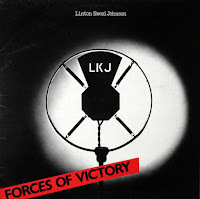


 Grant Goddard : radio broadcasting expert : media analyst : writer/author