New upstarts clobber complacent commercial radio industry two-decade market monopoly : 1973-2005 : Independent Local Radio, UK

 The UK commercial radio industry has grown dramatically since the first station launched in 1973. The history of the industry can usefully be divided into two chapters:

1.  1973 to 1990

At the beginning of this period, local commercial radio stations were opened only in the UK’s biggest cities and then, in the 1980’s, new stations were launched in smaller cities and in largely rural counties. The regime was characterised by the word ‘monopoly’, as only one commercial station was licensed in each location (London was the only exception, with two stations licensed with very different formats). Each station broadcast its programmes simultaneously on the AM and FM wavebands, enabling it to reach the maximum possible audience in its coverage area. Each station’s success depended upon its ability to attract listeners away from national and local BBC stations, and its ability to attract advertising to the new radio medium and away from competitors such as the local press and regional television.

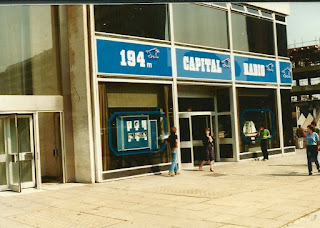
Listening figures to local commercial stations were generally very high. They were new, exciting and offered something more local and less stuffy than BBC stations. Because each local station was a separate local company, run by a local Board and financed by local shareholders, each station cultivated its ‘localness’ to the maximum in order to attract listeners. London’s ‘Capital Radio’ was a prime example of the success such a strategy could have. Using the slogan ‘In Tune With London’, every day the station used its converted red double-decker bus to visit a different London location, handing out stickers and leaflets, as well as offering listeners the opportunity to meet presenters and request songs. These ‘personal contact’ strategies paid enormous dividends and generated substantial loyalty between listeners and their local station. By the 1980’s, they were supplemented by community outreach projects and charity fundraising marathons. ‘Capital Radio’ had a JobCentre branch and a flat share information service in its foyer [see blog], which became young Londoners’ first means of finding accommodation in the city.

By the end of the 1980’s, local commercial radio was a big success with listeners and had developed a loyal following across two generations of listeners, giving it substantial audience figures across a wide variety of ages. Up and down the country was a range of fiercely individualistic, quirky stations, each with their own name, each with their own ‘star’ presenters, and each adopting their own idiosyncratic music format. By now, each had woven itself into the fabric of its community and was as much a part of local life as the town’s football team or the local bakery chain.

The one aspect of local commercial radio that proved problematic was stations’ inability to surpass their 2% share of total UK advertising expenditure. This percentage stubbornly refused to grow, even during times of an advertising boom and radio became known within the advertising industry as the ‘2% medium’. It was viewed as an ‘extra’ to be added to media campaign plans in times of boom, but quickly struck off when the economy was not so good. As a result, advertising revenues fluctuated enormously during downturns in the economic cycle and one local station was even forced into liquidation.

Radio’s main problems in attracting national advertising were:

• Even all the stations added together did not cover the whole UK

• Because each station was independently owned, buying a campaign on all existing stations was a labour-intensive task

• Station advertising rates and packages varied hugely, more dependent upon stations’ ability to extract such prices from local advertisers than any standard cost per thousand

• Station formats varied as much as their names, so that some stations delivered considerably older or more female-orientated audiences than others.

Because national advertising was so problematic, the majority of advertising sold on local commercial stations was derived from local businesses. By the late 1980’s, local radio had proved its effectiveness at marketing local products to local listeners, and a bond had been forged between local business owners and the local sales teams of stations that was the economic lifeline of these broadcasters.

At the same time, by the late 1980’s, complacency started to infiltrate local radio that resulted directly from stations’ lack of competition for listeners and lack of competition for local advertisers. Stations started to work less hard than they used to in order to please both their audience and their local business community. The government’s regulator released stations from having to fulfil many of their community obligations. Instead of seeing that work as an intrinsic part of their loyalty-building strategy, stations such as ‘Capital Radio’ closed their Community Department overnight [see blog]. At the same time, stations had their eye on merging with nearby stations to increase profitability, or arranging stock market flotations to generate capital for acquisitions. Several stations diversified into all sorts of businesses from theatres to restaurants, seeing themselves as ‘entertainment’ rather than purely ‘radio’ companies. In the 1980’s, anything that involved making money seemed a good idea.

For the first time in its history, the late 1980’s saw ‘Capital Radio’ suffering declining audiences and, like other local commercial stations, it had no idea what to do about the problem. It had only ever competed against the BBC for audiences and, only then, back in its very early days. Since then, it had always taken its audience for granted and simply presumed that listeners would never turn to any other station. All the local stations still enjoyed a monopoly over commercial radio advertising in their patch. It was something they felt they had a right to. The 1980’s economy was booming. Everyone was getting rich quick.

2.  1990 to now

The existing radio stations received their first major shock when the regulator suddenly licensed a range of ‘incremental’ stations in areas that already had existing local stations. This was the first time that the so-called ‘heritage’ stations had ever faced competition from newcomers. For example, in London, ‘Capital Radio’ lost audience straight away to ‘Melody Radio’ (targeting older people), ‘KISS FM’ (young people), ‘Jazz FM’ (wealthy middle-aged people) and ‘Choice FM’ (the Afro-Caribbean community). Suddenly, the audience that ‘Capital’ had taken for granted for so long was deserting it in droves for stations that sounded new, fresh, innovative and in touch with London, something that ‘Capital’ had done less and less of in recent years.

The second shock came when the regulator licensed three national commercial radio stations, a full thirty years after local commercial stations had been introduced. The industry had been arguing for years that it could never break through the 2% barrier (of all advertising spend) unless businesses and agencies were able to offer clients a proper ‘national’ opportunity to book a single campaign across the whole UK. New national commercial stations could offer such a deal and give the existing local radio stations a chance to share in radio’s enhanced visibility. As a compromise, the new stations were deliberately introduced in such a way so as not to impact local commercial radio audiences too greatly. The national ‘popular music’ station was to be confined to the poor-quality AM waveband, while only a minority-interest music station would be allowed the coveted national FM slot.

The third shock came when, having seen the success achieved by some of the specialist music stations that were part of the ‘incremental’ experiment, the regulator decided to roll out a programme of many more new local stations in more areas with existing ‘heritage’ stations. Thus, the 1990’s heralded the biggest and fastest expansion of radio stations the UK had ever seen, immediately after a period of relatively slow industry growth in the 1980’s. The shock of moving from a stagnant period of complacency to suddenly being immersed in a highly competitive situation where they had to fight for both listeners and advertisers proved a wake-up call for many local stations. What followed still has a considerable impact on the radio landscape of today. The radio industry underwent a fundamental re-structuring that included:

a.   The emergence of radio groups

A limited amount of consolidation had occurred during the 1980’s, largely based on regional geography, whereby groups were formed from the combination of several local stations in a region (i.e. Midlands Radio Group Ltd, Suffolk Group Radio Ltd). As early as 1985, GWR Radio Ltd started a series of acquisitions based on the simple motivation that ‘big is better’ and the trend continued throughout the 1990’s with stations bought and sold for greater and greater sums of money.

b.   The entry of media groups

Starting in 1990, large cross-media groups such as EMAP plc, Virgin Group Ltd and Chrysalis plc bought their way into the radio industry, acquiring a mix of heritage stations and newly launched stations. This substantially increased the sale prices of local stations.

c.   National advertising

The launch of the three national radio stations had the desired effect of attracting national advertisers and agency media buyers to radio for the first time. With local stations now consolidated into fewer groups, it became easier to buy campaigns through a single selling point to run on stations across a region or regions. Both the national and local stations benefited from the influx of national revenues.

d.   Cost cutting

In an industry where costs are mostly ‘fixed costs’ and revenues are almost infinitely ‘variable’, GWR Group pioneered the strategy of cutting costs to the bone at the many stations it acquired. According to GWR CEO Ralph Bernard: “It became very evident that if you don’t have size, you don’t have the ability to do things and you are forever trying to find the money to fix leaks, literally.” GWR’s policy of implementing economies of scale across its stations led to the centralisation of many tasks.

e.   Local advertising

As stations became incorporated within larger and groups, national advertising became of more and more importance to their owners. The bedrock of local radio, local advertisers, soon became serviced by regional rather than local sales teams, until eventually they were serviced hardly at all from a national sales office. As a result, local advertising revenues became less and less important to groups that were growing bigger and bigger.

f.   London agencies

With the rise of youth brands in the marketplace, and the evident success of London youth station ‘KISS FM’ [see blog] in creating a commercial focus for a demographic that had never before been served by commercial radio, London advertising agencies suddenly wanted to buy campaigns on stations that delivered 15- to 34-year-olds. Faced with both local and national competition for audiences and revenues for the first time, local heritage stations suddenly started chasing a younger audience. As a result, the middle-aged audience that had been loyal to their local commercial stations for many years started to drift away (mainly to ‘BBC Radio Two’), alienated by stations playing too much dance and rap music.

g.   ‘BBC Radio One’

Although the turn of the 1990’s had been a scary time for local heritage stations as they suddenly faced competition in their own areas from competing commercial stations for the first time, they were all helped immeasurably by the BBC’s decision to change drastically the programming of its most popular station, ‘Radio One’. Until then, this station had a remarkably large audience of diverse ages that overshadowed local commercial stations in most regions of the country. As a direct result of the BBC’s bizarre volte-face, between 1992 and 1994 five million listeners left ‘Radio One’ and most sought refuge in local commercial radio. These latter stations’ audiences suddenly boomed and they became the most listened to in their markets, without having to change or do anything different. The BBC had unintentionally saved their backsides.

h.   Lack of investment

With audiences growing hugely because of the demise of ‘BBC Radio One’; with revenues booming because of the ability to sell national advertising on larger and larger groups of stations; and with stock market values of radio groups buoyed by the industry’s breakout from its former position as the ‘2% medium’, group owners were quick to redistribute their substantial profits to shareholders. After a relatively lean period in the 1980’s, ‘radio’ was suddenly riding on a ‘high’ in the financial community. Ignoring the fact that their product had only become popular as a haven of last resort for listeners fleeing ‘Radio One’, group owners invested almost none of their lucky profits back into the development, improvement or update of their product.

i.   Networked programmes

Instead, station owners sought ways to cut even further the fixed costs of their station operations. Led by GWR Group plc, groups persuaded the regulator to let them network some programmes from a central production studio, instead of each of their stations producing all of its own content. In a lengthy process of attrition, by bullying a regulatory agency that lacked any long-term strategic plan for the industry, group owners were allowed piece by piece to extract the ‘localness’ from their local stations. Local voices, local station names, local celebrities, local music, local content and local news all became sidetracked or dispensed with by many group-owned stations.

j.   The rise of brands

Led by EMAP plc, which championed the notion that nationally recognisable brands were preferable to local identities, many local radio stations were stripped of the very characteristics that had made them ‘local’ in the first place. In an attempt to make their product controlled, homogenous and universal, the largest radio groups invested considerable sums in state-of-the-art technology that enabled stations up and down the country to be playing exactly the same record at exactly the same time, appended at the end of the song by a jingle that said ‘Coventry’ or ‘Newcastle’ as appropriate, depending upon the station’s location.

k.   Format convergence

Although the listener is now offered a considerably wider choice of commercial radio stations in most local markets than was the case in the 1980’s, the industry is plagued with competitors who are all trying to move towards the same middle ground [see blog]. In yet another war of attrition that the regulator has lost again and again, many stations have stretched the definition of their prescribed programme formats to (and often beyond) their limits. This has created a situation where stations that are (by the regulator’s definition) meant to be complementary are in fact found to be competing for the same audience demographic and for the same advertisers in the very same market, by playing exactly the same music. This leads to substantial market ‘cannibalisation’ whereby competitors merely steal audience from each other, rather than attract listeners from the biggest competitor, the BBC.

l.   The decline of the music industry

Commercial radio in the UK, modelled on ‘BBC Radio One’, has always relied upon the universal popularity of ‘popular music’ to be the cornerstone of its programmes’ appeal. Until around 1990, almost everyone in the UK had a common notion of what a ‘pop hit’ was. But from the time that ‘Radio One’ refused to play the first ‘house music’ record that reached Number One in the singles chart, it was obvious that such communal experiences were on their way out. The subsequent rise of ‘dance’ music amongst young people polarised popular music and led to a substantially fractured music market. Now, the market for singles is all but dead, CD sales are at an all-time low, and the cult of ‘celebrity’ has replaced the cult of ‘pop stars’. Frankly, commercial radio stations have almost no idea any more what music they should play to attract listeners.

[Excerpt from ‘A Brief History Of United Kingdom Commercial Radio & A Strategy To Create Genuinely Local Radio‘, Grant Goddard, 2005, 33 pages]

[First blog published at https://peoplelikeyoudontworkinradio.blogspot.com/2025/10/new-upstarts-clobber-complacent.html ]

Traitor at the gates of soul : 1990 : Tony Blackburn, Capital Radio versus KISS 100 FM, London

 Pop music had been outlawed by the British government. Twiddle the dial of an AM transistor radio and you would not have found a single UK radio station playing the hits of the day. It was crazy. Contemporary popular music, along with the latest fashions and art, had become Britain’s biggest cultural exports. The ‘British Invasion’ had taken America by storm a few years earlier. Liverpool’s Beatles were the most popular pop group in the world. Yet none of this music could be heard on radio in Britain. It was so crazy.

The British establishment, populated by the upper classes, had always looked down their monocled noses at popular culture. It had never touched their lives because they inhabited a world of people just like themselves who valued classical music, opera and English literature. Not only did pop music appear entirely frivolous to them, but it was an artform they found difficult to completely control. Not only did pop music’s lyrics (‘Lucy In The Sky With Diamonds’?) baffle their sensibilities, but they suspected songs were laced with messages (‘Won’t Get Fooled Again’?) that might incite rebellion against their rightful position at the apex of British society.

The radio waves of Britain had been tightly controlled by the British government almost since the earliest invention of the medium. Although commercial radio stations playing pop music had existed in the United States since 1920, Britain’s elite remained doggedly determined to maintain a firm grip on every item broadcast to a heathen population that needed to be managed and patronised. From its beginnings until the present day, our government-controlled BBC has been stuffed with Oxbridge graduates who resolutely uphold the class status quo.

Despite the birth of rock’n’roll in 1954, BBC radio had remained determined throughout the 1960’s to ignore the resultant resurgence of British popular music that held unprecedented appeal amongst the young generation. Though The Beatles had sold more records than any other musicians in history, you would never know it from listening to BBC radio. The Fab Four’s songs were mostly confined to occasional live guest appearances on the ‘BBC Light Programme’ that my father anxiously recorded on his second-hand Uher reel-to-reel tape recorder so that we could replay their beloved pop music ad nauseum. Otherwise, the BBC’s lone music radio station remained firmly stuck in a bygone era.

On 14 August 1967, the United Kingdom parliament had passed ‘The Marine Broadcasting Offences Act’ whose outcome was to ban the British population from listening to pop music on the radio. From the early 1960’s, to the annoyance of the country’s elite, smart entrepreneurs from the US, Canada and Ireland had filled the yawning gap in the British radio market for pop music by anchoring ships off its coast, transmitting unscripted North American disc jockeys playing chart hits from beyond Britain’s territorial waters. Whenever we journeyed in our family car, I was always sat on the front bench seat of our Rambler between my parents, in charge of the volume and tuning dials of its American-made AM radio. Our favourite listening since its arrival in 1964 had been pirate radio ‘Big L’ on 266 metres that played lots of Motown soul and pop songs.

At midnight on 14 August 1967, Big L and its offshore companions closed forever, all made illegal by the new legislation. Suddenly and unexpectedly, the pop music radio station we adored had been eradicated from our lives. Pirate radio ships had enjoyed immense audiences, too popular for bigwigs at the non-commercial BBC and the stuffy British establishment to control, and (shock horror) they had used advertising revenues to fund their unlicensed activities. Commercial radio would remain outlawed in Britain until the following decade. Our household was reduced to listening to the multiple reel-to-reel tapes my father had previously recorded with a microphone from radio and television shows, though we already knew the songs’ running order by heart.

Weeks passed until 30 September 1967, the memorable day that pop music returned to the British airwaves when the BBC launched a new national station it named ‘Radio One’. The British government had implemented a ‘stick and carrot’ strategy by having banned the popular pirate stations whilst simultaneously forcing a reluctant BBC to initiate a replacement pop music service. This was a repeat of the 1945 fiasco when the government had had to force the BBC not to close its much-loved temporary wartime radio service of popular entertainment, the ‘BBC General Forces Programme’, and instead maintain transmissions to motivate Britain’s post-war weary working class [see blog]. Ironically, both these stations, BBC Radio 1 and the renamed ‘Radio 2’, would attract considerably larger audiences by playing recorded music than the BBC’s more expensive networks of original drama, discussions, classical music and news (‘Radio 3’ and ‘Radio 4’) that targeted the chattering classes predominantly in the Home Counties.

To those of us who had been committed fans of Big L, the BBC’s new pop station sounded like a pale carbon copy, even employing many presenters who were already household names from their pirate days. ‘Innovation’ at the BBC has long been the outcome of it copying someone else’s ideas that had already proven successful (viz BBC launched ‘1Xtra’ only after the success of my ground-breaking black music format at ‘KISS 100 FM’). Not desiring its new team of young, long-haired, non-Oxbridge presenters to spoil the refined atmosphere so carefully cultivated in Broadcasting House, the BBC installed these recruits in an out-building across the road named Egton House.

Bizarrely, the BBC made no attempt to ensure Radio 1 possessed brand integrity, frustrating its intended young audience by making the new station ‘share’ some daytime shows with long-time Radio 2 old fogey presenters (such as former 1950’s crooner Jimmy Young), and by not broadcasting at all during evenings when teenagers were most readily available to listen. The resulting junctions were jarring. I recall the Number One pop chart single unveiled before seven o’clock every Sunday by Alan Freeman on Radio 1’s ‘Pick of the Pops’ show, then immediately switching to Radio 2’s anachronistic ‘Sing Something Simple’ show of post-war karaoke tunes that ran for 42 years from 1959. I can still sing its dreadful theme tune that signalled my rush to the radio’s ‘off’ button.

From his very first Radio 1 programme, for years to come I would wake every weekday to Tony Blackburn’s breakfast show on my bedside radio alarm clock. I already knew him from his pirate Big L days, but the national exposure on the new station’s most listened to show catapulted him into national celebrity status. He went on to present the weekly BBC TV pop music show ‘Top of the Pops’, to appear on Mike Read’s ‘Pop Quiz’ TV game show and to host the ITV series ‘Time for Blackburn’. When he split from his actress wife Tessa Wyatt, the tabloid newspapers had a field day. His radio shows were always upbeat, optimistic and entertaining, accompanied by the barking of his fake pet dog Arnold.

Blackburn was an unabashed fan of soul music and was able to slip in the odd personal favourite amongst the playlisted pop records mandated by his staid BBC producer, Johnny Beerling. His persistent airplay of the song ‘Remember Me’ from the Diana Ross album ‘Surrender’ persuaded EMI Records to release it as a UK-only single that reached chart position seven in 1971. He wrote sleeve notes for several UK soul albums including the ‘Motown Chartbusters’ series and live albums by The Temptations and The O’Jays.

In 1973, the BBC put thirty-year old Blackburn out to pasture on Radio 2’s mid-morning show, replacing him on the Radio 1 breakfast show with twenty-four-year-old clever clogs Noel Edmonds, much heralded as the station’s ‘rising star’ since joining in 1969 rather than accepting his university place. It was time to retune my morning radio alarm to new offshore pirate radio station ‘RNI’. Although Radio 1 had been broadcasting a weekly soul show on Saturday afternoons, Blackburn was inexplicably never its presenter. However, in 1980 Blackburn did return to Radio 1 as host of the weekend breakfast show which would abandon its previous, child-centric ‘Junior Choice’ identity under which posh presenter Ed ‘Stewpot’ Stewart had played almost the same ‘comedic’ records week in week out for the last twelve years.

In 1981, Blackburn joined local station ‘BBC Radio London’ where, freed from the musical straightjacket exerted by Radio 1 producers, he could play soul music to his heart’s content on its weekday afternoon show. Fellow soul music fans Robbie Vincent and Dave Simmons had already played much black music there since its launch in 1970. Blackburn’s arrival, followed by Dave Pearce in 1984, cemented the station’s reputation amongst London’s black music fans as the only legal station worth a listen alongside the capital’s multiple pirate broadcasters.

In a masterstroke of mismanagement, this soul music ‘beacon’ on London’s airwaves was destroyed at a stroke in 1988 when the BBC decided to transform its predominantly music station into an all-talk station, sacking existing presenters and appointing Matthew Bannister from Capital Radio’s daily evening news show ‘The Way It Is’ to manage the renamed ‘GLR’. I attended the Corporation’s overhyped launch press conference (everyone arriving by Thames ferry) where it was self-evident that disaster loomed, Bannister having an excellent track record as journalist but no experience managing a radio station, let alone marketing a new brand image. Despite much bollocks propagated in the media that ‘GLR’ was the face of a revolutionary style of radio, the ratings testified otherwise. The station’s share of London radio listening nosedived from 5.0% in 1987 to 1.6% by 1992 (source: JICRAR) when it had become the second least listened to of the city’s fourteen licensed stations. The BBC had deliberately abandoned London’s soul music fans and sent us hordes back to pirate radio listening.

Immediately, Blackburn joined Capital Radio’s newly launched all-oldies ‘Capital Gold’ London AM station (previously programmes had always been simulcast on FM and AM), presenting its weekday breakfast show of pop music plus a Sunday soul music show syndicated to Capital’s co-owned UK stations outside London. This new station attracted 10.2% of London radio listening in its launch year (source: JICRAR), surpassing earlier ratings achieved during Blackburn’s seven-year tenure at BBC Radio London. His national profile was raised by television appearances on Channel 4’s ‘After Dark’ show in 1987 and Sky One’s weekday morning show ‘Sky by Day’ in 1989. I purchased his 1985 autobiography ‘Living Legend: The Tony Blackburn Story’ in an ex-library book sale and enjoyed reading it as a fan who had spent thousands of hours listening to his radio shows since the 1960’s.

When the government announced in 1988 the opening of bids for new commercial radio licences for London, the first since 1973, there was substantial hope amongst the capital’s myriad pirate stations that a black music station would be selected. Alliances were forged between existing commercial radio owners greedy for more licences so as to eliminate competitors, moneybags who had witnessed commercial radio become a ‘licence to print money’, music enthusiasts and contemporary pirate station owners. I teamed up with London pirate ‘KISS FM’ which, although not the longest running black music broadcaster, nor the most pervasive (on-air only during weekends, rather than 24 hours per day like others), had the greatest potential to win a licence.

‘Blues & Soul’ magazine published a rumour that Tony Blackburn was considering a licence bid in association with former ‘Radio Luxembourg’ DJ Tony Prince. In his autobiography, Blackburn had written that “if the [Controller] job at [BBC] Radio One is filled, I would like to open a twenty-four hour a day soul music station in London.”

In the KISS FM open plan basement room at Blackstock Mews, a planning meeting attended by more than a dozen people was held to report on progress of the licence application that would be submitted to the broadcasting regulator. Introduced to us was Dave Cash who had been hired to co-ordinate the production of the document. To this day, I have no idea how he came to be involved, how much he was paid or by whom. He had had no prior involvement in KISS FM’s pirate activities and had demonstrated no particular interest in black music during a radio career remarkably similar to Blackburn’s: presenting for pirate ship Big L, joining BBC Radio 1 at launch in 1967 to present a weekday daytime show, then defecting in 1973 to become launch production manager of London’s Capital Radio where he presented shows for the next 21 years.

The resultant KISS FM licence application submitted by Cash was weak, lacked relevant market research, offered a flimsy business plan and failed to argue a convincing case. The bid failed despite Cash’s experience from two decades in the radio industry. Whether any application would have won up against the government’s preferred bevy of old jazz music chums we will never know [see blog]. Cash’s involvement in KISS FM ended the day the licence outcome was announced. Maybe he was busy clinking champagne glasses with Capital Radio’s directors in their boardroom at Euston Tower. A jazz station would prove no competition to Capital’s fifteen-year commercial monopoly over music radio in London. Maybe even more champagne would be gulped the following year after the launch of the ‘Jazz FM’ station proved to be a ratings and commercial disaster (1% share of London listening, 1990 JICRAR).

Tony Blackburn had been moved to comment to ‘Music Week’ trade magazine: “I was amazed that the new London FM was a jazz station. I think KISS FM should have got the licence. I would have thought it would have been a soul station. If I’d been the IBA [broadcast regulator], that’s the one I would have given. The problem is, if they don’t give a proper legalised soul station soon, there’s going to be more and more pirate radio stations.”

To cut a long story short [see book], following Dave Cash’s rejected application, the government eventually offered two further London radio licences as the consequence of a lobbying campaign by Heddi Greenwood and myself at KISS FM. I co-ordinated, researched and wrote the second KISS FM licence application which won [see blog]. I then launched the newly legal station ‘KISS 100’ on 1 September 1990 [see blog] as its programme director, the sole management team member with prior UK commercial radio experience.

Tony Blackburn wrote in ‘Jocks’ magazine: “Now that KISS FM are legal, it will be interesting to see how they face up to the challenge of broadcasting for the first time on a truly competitive basis. Gone are the days when they paid nothing for playing records. Gone are the days when a truly amateur DJ, sitting in a makeshift studio in someone’s bedroom, was tolerated because he was a ‘pirate.’ And gone are the days when DJs on the station was [sic] paid little or nothing for their services. Now that KISS FM is legit, it will have to put out a truly professional sound to attract audience and advertisers alike.”

‘Blues & Soul’ magazine correctly responded that it had been the pioneering work of the many soul pirate stations, from ‘Radio Invicta’ in 1970 onwards [see blog], that had spearheaded the long running campaign for a legal black music station in London. Despite Blackburn’s evident affinity for soul music, there was nothing he had done personally to further that particular cause.

Asked his opinions about KISS FM’s launch by ‘Radio & Music’ magazine, Blackburn responded: “I’m pleased KISS FM is coming on air. I think it’s good for radio, but it isn’t guaranteed to get an audience. It’s not enough to play the right music any more – it has to be presented well.”

However, following the station’s launch, Blackburn wrote in Jocks magazine: “KISS FM didn’t so much open up on September 1st, it staggered onto the air with all the professionalism of a British Rail station announcement, infact [sic] I think some of the station announcers have better voices than a lot of the KISS FM DJs. For a whole weekend, we were subjected to humourless, badly spoken amateurs thanking the management and telling us all that they were now legal, something we’d all worked out for ourselves. At least every half hour, I was told how much the DJ loved me and that everything was ‘crucial.’ At one stage on the first day, I heard a DJ actually play a record for ‘everyone who knows me’ and then invited listeners to send in ‘fax messages on a fax ‘cause our phones ain’t workin’.’“ 

Blackburn continued in this vein for a further three paragraphs before concluding: “On radio, a good voice is important and the ability to use it properly, a lot of the DJs on KISS talk on a monotone, all sound the same and are not a bit entertaining. These people might be very good in clubs but make the station sound so bad I would go as far as to say it is not professionally acceptable. Naturally these remarks don’t apply to the professionals they have on the station such as Robbie Vincent, David Rodigan and a few others.”

A profile of Blackburn also appeared in the ‘Sunday Telegraph’ newspaper, in which he said: “When you listen to those new stations like KISS FM, it shows up how good these old guys are.” The interviewer noted, with understatement, that Blackburn “has a bit of a bee in his bonnet about KISS FM.”

Every Monday morning at nine o’clock, the heads of each KISS FM department met in its upstairs boardroom. At our next meeting, managing director Gordon McNamee insisted upon playing in its entirety from VHS cassette a five-minute commentary Tony Blackburn had broadcast on ‘Channel 4’. He seemed to take Blackburn’s criticisms very personally and asked me what was to be done. I expressed the opinion that this commentary, along with Blackburn’s similar press articles, had been cleverly staged by Capital Radio, but gave KISS FM nothing to worry about. After Blackburn had left BBC Radio One, he had criticised the station in the harshest tones. Then, after he had left BBC Radio London, he had criticised that station too. Blackburn was highly self-opinionated and conveniently seemed happy to damn any station that was not his current employer.

I suggested that, if Blackburn’s main criticism of KISS FM was that it sounded very different from Capital Radio, then it should be taken as a compliment. The huge volume of market research I had commissioned pre-launch demonstrated conclusively that, if KISS FM had launched sounding the same as every other music radio station, it would fail. It was our station’s very differences from its competitors that would make us successful. In fact, Blackburn’s stance in criticising KISS FM should only demonstrate to us that he had no idea what young people wanted from a radio station. His criticisms might even encourage more young people to listen to KISS FM than if he had said that he loved the station.

McNamee seemed unconvinced by my arguments. He was wounded by Blackburn’s comments and suddenly seemed filled with self-doubt about the station’s ‘different’ sound. I was reminded of the accusations he had lobbed in my direction late one night before the station’s launch – that it was I who would be personally responsible for the station’s failure. Now, at this management meeting, I was feeling that McNamee was too eager to blame me for Blackburn’s criticisms. Neither did I feel I was receiving support from the other heads of department present.

I could not understand what was going on inside my boss’ head. Had McNamee lost the courage of his convictions about the radio station he had co-founded? Rather than be a strong leader who demonstrated commitment to his loyal staff, McNamee already seemed to be floundering, only days after the station had launched. Through its employee Tony Blackburn’s criticisms, Capital Radio had scored a direct hit on the managing director of its first ever competitor in the London commercial radio market. It seemed to be left to me now to hold the ship steady and to demonstrate that KISS FM would only succeed if it refused to follow Tony Blackburn’s ‘advice.’

Already, I was becoming used to hearing highly critical opinions expressed publicly about KISS FM. The station was being targeted by the DJs of radio stations competing with KISS FM, and by people who were themselves probably outside of the youth audience the station was seeking to attract. For me, the fact that long established radio stations were bothering to criticise KISS FM on national television must have meant that our new, little London radio station was worrying them considerably. They had not made similar comments when Jazz FM or ‘Melody Radio’ had launched. I felt that this validated what we were doing. However, these issues would not go away and, if anything, they had started to become more significant within the station.

At the beginning of October 1990, Gordon McNamee showed me a two-page letter that KISS FM non-executive director Tony Prince had written to him, criticising the station’s unprofessionalism and expressing doubts about the daytime music policy. I met with McNamee and head of marketing Malcolm Cox and, together, we drafted a detailed response for McNamee to send back to Prince. It explained that KISS FM sounded this way not because we were sloppy or unprofessional, but because all the pre-launch market research that the station had commissioned demonstrated that this was the style of broadcasting that would prove popular with young people. KISS FM’s potential audience had stated categorically that they would not tune to a new radio station that sounded like a pale imitation of BBC Radio One or Capital Radio.

Having received McNamee’s reply, Prince still expressed reservations about the station’s direction, so I was asked to meet him in the boardroom to discuss the matter. This was a rare occasion for me to chat with one of the station’s directors. Prince’s main criticism was that there were insufficient features in KISS FM’s daytime programmes, something that, he believed, made successful radio. Why, he asked me, were there not more competitions in the morning show aimed at housewives? Could not the station introduce recipes or features that would specifically attract housewives to listen? I explained to Prince that the notion that housewives constituted the majority of radio’s daytime audience was a myth. I had painstakingly analysed the radio industry audience data to determine KISS FM’s likely listenership during the day, and it was certainly not housewives. The commercial radio industry had propagated the myth of the ‘housewife’ listener since its inception in 1973. I was programming KISS FM to appeal to the agreed target audience of fifteen- to thirty-four-year-olds. I did not believe that they wanted silly competitions or recipes. Forty-six-year-old Prince listened to me, but still seemed unconvinced. 

I knew that the only incontrovertible proof of the appropriateness of KISS FM’s current programming policy would be statistics that showed the station was attracting a significant audience. Fortunately, only a few days later, the station received the results of a market research survey that its advertising agency, BBDO, had commissioned. It showed that the station had just over 750,000 listeners between 19 and 25 September. These numbers were a solid indication that KISS FM was already on target to achieve the one million listeners it had promised advertisers by the following September. The figures also showed that 96% of listeners were within the ten- to thirty-four-year-old demographic that the station was targeting. McNamee called a meeting in the boardroom to inform the staff of this good news, and the station issued a press release the same day. More than anything, this press release helped calm the internal rumblings from Tony Prince.

Whilst I was pleased with the 750,000 figure, I knew that the only data that mattered were the official JICRAR radio industry numbers that would not be published until January 1991. Neither did I want the programming staff to think that the battle for listeners had already been won and that they could work less hard from now on. I circulated a note to all fifty-seven personnel in my department:

“Many thanks for all the hard work you’ve put in to help achieve these impressive results. We all need to keep it up so that we reach our ultimate goal of getting one million listeners tuned in … In the meantime, it’s worth remembering that that our first full-scale audience research is underway. JICRAR started last month and continues into December. Thousands of people all over London are filling in diaries right now every day with what they listen to on the radio hour by hour … So, we’ve come a long way in the first month. Let’s carry on in the knowledge that we’re on the right course and can turn KISS into the most successful new radio station ever heard in London.”

The target demanded of me by the business plan was to attract one million listeners per week by the end of KISS FM’s first year on-air. I achieved 1,078,000 listeners within the first few months (2.7% of London listening, 1990 JICRAR; growing to 3.4% in 1991), while the proportion of housewives listening to our daytime shows was proven to be a mere 9%. If I had failed, I would have been sacked. Once I succeeded, I was sacked anyway by a boss desperate to take the credit and my job [see blog]. I took no pleasure observing him then lead the station on a downward ratings spiral to a low of 2.3% (1993 JICRAR).

I never met or heard from Tony Prince again. I never met Tony Blackburn. Both had frustrated my work. Neither had managed the launch of a new radio station, let alone one with a ground-breaking music format that truly became “the most successful new radio station ever heard in London” … since Capital Radio’s arrival on 16 October 1973.

[Includes extracts from ‘KISS FM: From Radical Radio To Big Business: The Inside Story Of A London Pirate Radio Station’s Path To Success’ by Grant Goddard, Radio Books, 2011, 528 pages]

[First published at https://peoplelikeyoudontworkinradio.blogspot.com/2025/08/traitor-at-gates-of-soul-1990-tony.html ]

Land of a thousand cockroaches : 1986-1987 : Deptford Housing Co-operative, London

 “Gimme your money!” he shouted, pointing a pistol at me. He had jumped out from behind some bushes. It was a dark winter evening. I was alone. Nobody was about. I was ten metres from the entrance to New Cross railway station, about to return home, having walked my girlfriend to her train after an evening together. Street lighting beyond the railway was abysmal. I jumped with surprise. It was my first mugging. It was my first year living in London. I was aware of the advice: hand over your wallet and do not argue. I knew the fate of Thomas Wayne.

Except that I had no wallet to give. I had a five-pound note in the left pocket of my black Levi 501’s and some loose change. That was it. No credit cards. In London, I knew to carry as little as possible. I had not carried a wallet since an embarrassing incident in 1978 when I had parked my little yellow Datsun at the end of Upper Gordon Road, opposite Elmhurst Ballet school, and walked into the town centre. Within the hour, I returned to the car and drove home, only to receive a phone call from Camberley police station. Somebody had picked up my wallet from the gutter and handed it in. It must have fallen from the side pocket of my jacket as I stooped to enter the car. I had no idea it was missing. I collected the wallet and found it intact. I have never forgotten that anonymous ‘good Samaritan’. After that, I gave up carrying a wallet.

Later that same year, I had robbed myself through carelessness as a twenty-year old student union vice-president. Following an extensive survey of the photocopier market, having used such machines since the 1960’s, I decided that the Rank Xerox 3600 was the most modern and robust to rent and install on the mezzanine level of the student building in Durham. Once the company’s technicians had set it up and departed, I was so keen to test it that I wanted to make the first copy. However, I had not been carrying any papers so I reached into my pocket and pulled out the only banknote I had. It was £50 because, in the pre-debit card era, I would withdraw £100 monthly from Lloyds Bank’s cash machine opposite Dunelm House. I put the note on the platen, pressed the button and out came a perfect monochrome copy which I then rushed off to let my peers admire. Minutes later, I realised I had left the £50 note in the machine and returned to find it … gone. The copier’s first student user must have been delighted!

Now, accosted in the shadow of South London 24-storey high-rises, within seconds I had to decide how to react. I had no wallet. If I were to offer my meagre five-pound note, this highwayman might become angry and violent. It was never a good idea to argue with a man pointing a gun at you. I stared at my mugger, his face mostly hidden by a blue bandana. He was barely five feet tall. Was he even an adult? 1981’s ‘Stand and Deliver’ music video flickered in my head (no relation). I recalled childhood streets that encompassed Gibbet Lane where, times past, robbers like him on the main road to London had been hanged. I took the rash decision to simply turn and walk away … briskly. I might be shot in the back. I might be attacked from behind. My heart was beating so fast but I knew not to break into a run. And, incredibly luckily, nothing at all happened.

Home was five minutes’ walk away. On the payphone inside the front door, I immediately called 999 to report the incident. While I was sat waiting in the kitchen for a police officer to arrive and take my statement, one of my female co-tenants arrived. I explained breathlessly what had just happened. She quietly recounted that she had suffered the same experience in precisely the same place, a few days previously, and had been relieved of her handbag. Had she reported the robbery? No. I was aghast. Why not? I waited several hours, no police arrived. In the weeks and months that followed, my crime report was never followed up. I lost my faith in ‘the Met’ that night.

What the hell was I doing living in this rundown, sometime scary part of London? It was desperation. In January 1986, I had taken my first job in London, managing a job creation scheme at ‘Radio Thamesmead’. The daily commute by coach and multiple trains from my mother’s home in west Surrey to southeast London was hellish, consuming four to six hours per day. My government pay was too low to afford private rented accommodation in London. Neither could I register for council housing because I was not already dwelling in a London borough. I consulted ‘Yellow Pages’ directories in Camberley library and typed individual letters to every housing co-operative in London, enquiring whether I could rent a room. There was only one encouraging reply, from ‘Deptford Housing Cooperative’, telling me it would contact me when a place became available.

Months passed without a word. I wrote again. I was invited to a meeting. I was eventually offered a three-metre by three-metre room in a ten-person house at a reasonable rent. I took it. My travel-to-work time was cut from hours to minutes and my cost to very little as I was journeying the opposite direction to suburban commuters. The morning trains I was now taking to work were almost empty, whereas I would never forget my first day at Radio Thamesmead when, changing trains at London Bridge station, I had been knocked down the staircase of platform six by a hard briefcase wielded like a battering ram by a descending bowler-hatted gentleman. It had been my first lesson in commuter rage.

Some of my nine new housemates were lovely, some not quite so. Before my arrival, they had jointly decided at a ‘house meeting’ to rent a colour television from ‘Radio Rentals’ but, within weeks, it had disappeared one night from the living room, allegedly stolen and fenced by housemate Knollys. There were characters. One young bearded dropout seemed to model himself on ‘Citizen Smith’, railing against capitalism whilst living on benefits, wearing a denim jacket covered in badges and smoking roll-your-owns. One young woman attended a friend’s Berber wedding in the mountains of Algeria and returned with amazing photos and stories.

My room in the house was thankfully dry and secure, though somewhat noisy as it was adjacent to the railway line. However, I quickly learned never to use the ground-floor kitchen. Switching on the kitchen light triggered a loud sound like the noise of a receding wave washing pebbles down a beach. I learned it was made by cockroaches scuttling to hide from the light, a phenomenon new to me. Not dozens of them. Hundreds! We contacted the housing manager who ordered a pest control specialist to come and fumigate the kitchen. Days later, the noise was still occurring. If you opened any kitchen drawer, you could watch them scatter.

A further visit by pest control was organised. This time, the kitchen and adjoining living room were fumigated simultaneously and cordoned off-limits for a whole day. We were more hopeful. But hope proved not enough to kill the vermin. Within days, the expert had to be recalled to examine our evidence that bugs were still present in massive numbers. He looked. He saw. He told us: “the only way to get rid of so many of them would be to demolish the building”.

Demolition was not going to happen. Our house was in the middle of a terrace of eight three-story units on Rochdale Way that had only been constructed in 1978. Yet already our unit should have been condemned as unsanitary. But notification to health inspectors would have made all ten of us homeless. Instead, we suffered the bugs and I saw some housemates continue to use the kitchen for preparing meals, despite the evident health risk.

Filth and crime quickly became my initial impressions of London living. When my cassette deck developed a fault, I returned it to the closest branch of ‘Comet’ in nearby Lewisham which agreed to repair it under guarantee and return it within a fortnight. A month later, I was still waiting. The shop stonewalled me for a few weeks more before admitting that its lorry, with my equipment inside, had been stolen. Would I accept a brand-new replacement? Yes, I would and selected a top-of-the-range model that would substitute perfectly for my vanished bottom-of-the-range purchase.

After having started work in Thamesmead in January 1986, it had taken until September for me to be offered this room in Deptford, six miles away. However, my one-year work contract there ended in December, after which I took a seasonal job at ‘Capital Radio’ in central London. Then, in the new year, I started a long commute three days a week to work at ‘Ace Records’ in Harlesden, twice as far away on the opposite side of the city. Once again, most of my earnings were being spent on travelling to work. I would have saved more money if I could have used my house’s kitchen, rather than having to buy takeaway meals every evening.

It was time to find somewhere to live nearer my new workplace, hopefully a self-contained flat rather than another house share. My one year in Deptford had proven interesting – Deptford High Street market, Pearlie kings and queens, Jamaican patties, second-hand record shops, pirate radio, nearby Greenwich Sunday market – but it would be nice to sleep soundly without worrying whether thousands of cockroaches could climb the staircase overnight to invade my bedroom. I started buying the weekly ‘Willesden Chronicle’ local newspaper from the stand outside Harlesden station to scan the small ads. Presently, my house was not a home.

[Originally published at https://peoplelikeyoudontworkinradio.blogspot.com/2024/02/land-of-thousand-cockroaches-1986-1987.html ]

Knock me down with a mugger : 1986 : Share A Capital Christmas, Capital Radio, London

 Blam!! A sudden force on my back knocked me over in a second. No time to figure out what had just happened. I was sprawled front-down on the floor with a weight on my back. I shouted. People around me screamed. I could sense a struggle taking place overhead. The object on my back lifted and, from my ground level line of sight, I made out the feet of someone running ahead of me into the crowd.

“Are you alright?” asked one of the group of people standing around me, looking concerned.

“We saw that man push through the crowd,” explained another, “then knock you over and jump on top of you. We managed to pull him off but he ran away.”

They helped me to my feet and I realised that I was indeed alright and thanked them profusely for their swift action rescuing a complete stranger. I was wearing a thick winter coat that had broken my fall. I had been lucky not to have hit my head and to have landed on the soft bag I had been carrying in front of me. Nothing appeared broken. As I rejoined the throng of commuters journeying home, one of the Good Samaritans added:

“It looked as if he knew you were there amongst the crowd and targeted you. It was very strange.”

Indeed, it was. I had travelled this same journey every day and nothing untoward had happened. I always left work at the end of the afternoon, walked across Euston Road to Warren Street tube station, caught the southbound train and alighted four stops later at Charing Cross, one of London’s busiest hubs. I had been walking through the narrow, low-ceiling tunnel that led up from the Underground platform to the railway station concourse when I had been jumped. The train and tunnel had been more crowded than usual because it was Christmas Eve. It seemed bizarre to be jumped on not when I was alone in the winter darkness outside, but amongst a tightly packed crowd inside a well-lit underground travel conduit.

There was one significant difference between all the other days I had travelled home without incident and that day. Stuffed down the front of my underpants was a white envelope containing a substantial amount of cash representing payment for my last six weeks’ work. I had requested my employer’s accounts department pay me by bank transfer but, for reasons unknown, it had insisted on paying cash and only at the conclusion of my contract. If this money was the reason I had been attacked, then only the accounts department staff and the handful of people in my work team knew I had been paid that day. But the latter had just been paid that same day in the same way. So had I been merely a random victim of violence … or had something more sinister happened?

A few months previously, I had applied for a full-time job at ‘Capital Radio’. I was interviewed by Steve Billington, a social worker who had left his job in 1984 managing a social work team in Harrow to become the station’s head of community affairs. Although my application was unsuccessful, he contacted me weeks later to ask if I wanted to manage its Christmas charity appeal. I was soon to finish a non-renewable, twelve-month job creation role managing a team at ‘Radio Thamesmead’ so it was an ideal time for me to switch to a ‘proper’ job. I had dreamt of working at London’s only commercial music station since it had opened in 1973 and had even contemplated not going to university in order to take a programme production role there like Annie Challis on Tommy & Joan’s daily ‘Swop Shop’ show. Back then, I was innocent of the fact that to secure such a job in the media it was rarely, if ever, WHAT you knew about radio but WHO you knew.

Now, thirteen years after its launch, I was finally working at Capital Radio. My first two weeks were spent in the office, sat opposite the amiable charities manager Millie Dunne who helped me organise files of paperwork for the huge volume of goods she had persuaded businesses to donate, a task at which she was extremely proficient. During the subsequent four weeks leading up to Christmas, I worked in the station’s foyer, organising the receipt of donated goods and their delivery to London charities who would distribute them as gifts to needy families. I managed a small team that Steve had already appointed, all of whom were incredible and worked hard collecting and delivering goods as needed.

Steve had also appointed a ‘deputy’ to help me with the project’s management. His name was Pol. Never call him ‘Paul’! Unlike me, he was loud and extrovert, networking relentlessly with anyone remotely important who passed through the revolving door entrance to the foyer. He seemed to view the job as a sinecure that would permit him to further his ambition to be … something famous. While the rest of us worked long hours and weekends, Pol was AWOL for chunks of that time, claiming that he had had to attend appointments for this or that. In the pre-mobile-phone era, it was impossible to call someone to demand “where the hell are you?” I was regularly tempted to complain to Steve about this young man’s work ethic deficiency but I had no inkling if he had been recruited by some friend or relative within the company. He appeared to possess no relevant skillset for our work so I just had to grit my teeth and hold my tongue.

Despite this frustration, the job turned out to be one of the most enjoyable and rewarding I have done. Knowing that the radio station was making a practical difference to Londoners’ lives was incredibly heart-warming. The foyer – our ‘office’ – was enormous, more than 1000 square meters, with a ridiculously high ceiling and permanent home to three freestanding stalls: the ‘Capital Radio Shop’ sold station merchandise, ‘Capital Radio Jobspot’ offered job vacancy details and ‘Capital Radio Flatshare’ produced a printed sheet every Thursday afternoon listing rental accommodation available. The building’s ground floor full-length windows on a corner site enabled traffic passing on busy Euston Road and Hampstead Road to view the impressive Christmas decorations within, including a massive, illuminated pine tree. Pedestrians would stop and peer through the glass at us working inside.

Capital Radio’s decision prior to the station’s launch to rent the foyer and first floor was a brilliant marketing strategy, as its logo and name were emblazoned across the building at ground level around one of London’s busiest road junctions. To passers-by, it appeared that the station occupied the entire 36-storey tower, the capital’s tallest office block when completed in 1970. In reality, its upper floors were filled with unconnected businesses including the UK government’s military intelligence department intercepting mail. Capital Radio’s high-profile visibility was in stark contrast to its competitor ‘Radio One’ which had operated from an anonymous outbuilding (Egton House) since launch in 1967. BBC bigwigs had feared its youthful staff (including former pirate radio ship presenters) might scare the ‘serious’ broadcasters in Broadcasting House employed on its existing talk and classical music networks.

Another significant difference with its competitor was Capital’s open-door policy, permitting anyone to enter its impressive foyer through the revolving doors without a security check. Music fans would stand around hoping to get a glimpse of pop stars visiting for interviews. Radio presenters walked in and out and up the grand curved staircase to the first-floor studios. During the charity appeal, many generous listeners ventured in clutching their donations of toys which we added to the piles of presents. For amusement, we unboxed and put batteries in one state-of-the-art toy mouse that ran around on wheels with a movement sensor, enabling it to independently charge at speed across the polished floor towards anyone who entered through the revolving door and then chase them wherever they walked. Only on one occasion did we have to close and evacuate the foyer for several hours due to a bomb scare.

Christmas Eve was a sad day when the team had completed the charity appeal and parted ways for the final time. Following my mysterious attempted mugging, I reached home and found I was lucky to have escaped with mild bruising on my forearms. I packed a bag and headed to Deptford railway station, only to discover that the last train had already left. I had to return to my rented room, phone my mother and ask if she would come and collect me as there was no public transport during the next two days. Though she hated driving through London, she kindly drove fifty miles from Camberley to pick me up on Christmas morning so that I could spend the holidays with her and my sister.

In the New Year, I returned to the Capital Radio office to type up a report that catalogued, with Millie’s help, the volume of goods we had distributed during the Christmas appeal and the number of charities and families we had helped. Though no such post mortem had been requested, I considered it ‘good practice’ and I hoped to impress my boss with my thoroughness as a manager.

Much later that year, Steve Billington requested a further meeting in his office. Perhaps a full-time vacancy at the station had arisen? Sadly, it had not. I was asked if I would work on the next Christmas charity appeal. I was grateful for the opportunity. However, I was flummoxed to be told that I was to be demoted to the role of ‘deputy co-ordinator’ despite me having believed I had achieved a satisfactory job the previous year. Then I was gobsmacked to be told that the co-ordinator that year was to be … Pol. It seemed like some kind of voodoo that the person within our team who had demonstrated the least commitment last year should now be appointed to manage the rest of us.

Once activity started in December 1987, did Pol step up to his promotion and manage everything smoothly? No change of spots was evident. The only thing he seemed interested in managing was his own social calendar. It was Hobson’s choice: either the charity appeal would rapidly descend into chaos or I would have to manage it, just as I had the previous year. I took the reins informally, even though it proved frustrating when the most regularly spoken phrase by everyone involved was “Where’s Pol?” The charity appeal proved as successful as the previous year, though on this occasion Pol would take the credit. Did he write a report afterwards, as I had done? Er …

With the exception of the baffling change of co-ordinator, Steve Billington had been a fantastic boss and, in the New Year, he invited our whole team to reunite for a lunchtime meal at a restaurant in Tottenham Court Road to express his gratitude. I was appreciative of the start he had offered me at Capital Radio and the opportunity it presented to further develop my management experience. I had thoroughly enjoyed my time working there and, like my earlier job at ‘Metro Radio’, it taught me a lot about the problems that can befall a commercial radio station.

And so to ‘The Epilogue’:

In 1988, Camilla ‘Millie’ Dunne (daughter of Sir Thomas Dunne) married The Honourable Rupert Soames (grandson of Sir Winston Churchill) at a society wedding attended by her friend Lady Diana, Princess of Wales.

In 1989, I co-ordinated and wrote former pirate station ‘KISS FM’s successful second application for a London commercial radio FM licence, beating 39 competing bids.

In 1990, Capital Radio closed its community department as a result of the new commercial radio regulator ‘The Radio Authority’s ‘light touch’ strategy no longer requiring commitments from licensees to community activities. Steve Billington left Capital Radio.

In 1991, I attracted a weekly audience of more than one million listeners a week to black music station ‘KISS FM’ within six months of its successful launch, as its Programme Director, exceeding the Year One target.

As for Pol …

[Originally published at https://peoplelikeyoudontworkinradio.blogspot.com/2023/10/knock-me-down-with-stalker-1986-share.html]